Best Camera Polarizing Filters of 2026

A reflection isn't a color problem, so editing software can't remove one. The shine on wet rocks, the glare on open water, the ghost of your own reflection in a shop window — that's light bouncing off a surface, and the only practical fix is glass in front of the lens. A circular polarizer kills that glare and brings back the color it was washing out.

The trouble is these filters look identical in product photos and range from lunch money to a nice dinner out. The differences show up while you're shooting: a green cast in overcast whites, a coating that smears instead of wiping clean, a ring so stiff you overshoot the sweet spot every time. Size is the other trap — a filter fits only the thread it's cut for.

I once had a bargain filter seize onto a lens and come off with a rubber band and some swearing. Over six months, my team and I shot with 12 polarizers in sizes from 52mm to 77mm, and the keepers were the ones that disappeared into the workflow. Here's what earned a place in the bag.

The Best Camera Polarizing Filters

1

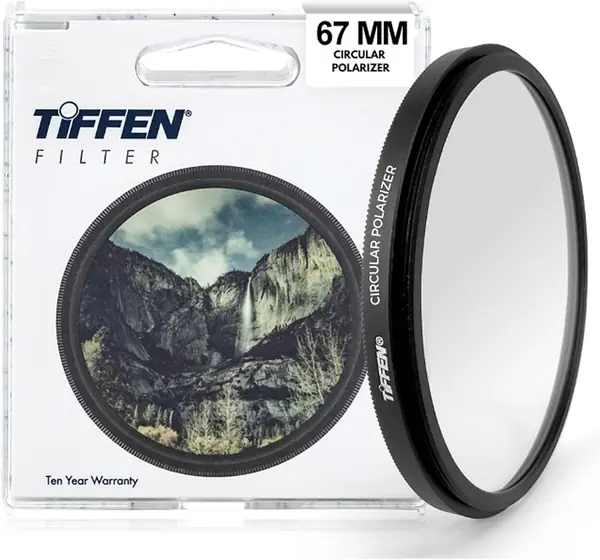
Tiffen 67mm Circular Polarizer Best Overall
93 /100
Traveler Score Outstanding

Key details

Thread Size
67mm
Frame
Slim aluminum
Glass
Schott B270
Coating
Uncoated
Check Details on Amazon

Rotate the ring a quarter turn and the world loses its sheen. Wet rocks stop being silver and turn back into rock, a car hood stops mirroring the sky, and a hazy blue sky darkens into something with weight to it. That is the whole promise of a circular polarizer, and this is the filter in our group that delivered it most reliably.

The 67mm thread covers a lot of the lenses people actually carry, from kit zooms up to a 70-200, and the slim screw-in frame keeps a low profile on a wide zoom. There's nothing fussy about using it: thread it on, turn until the reflection drops away, shoot. The ring holds the angle you set instead of drifting in the bag, which sounds minor until you open a file and find the effect had rotated halfway off.

Where the money was saved is the coating, or rather the lack of one, because this filter ships uncoated. In flat or side light you'll never know. Point it into a low sun or a bright window and you may pick up flare and a flattening of contrast that a multicoated filter holds back, and with no water-repellent layer, cleaning takes a little more care. A lens hood does most of the flare work a coating would, so use one.

That is a trade we're happy to make. The effect is the thing you're buying, and this filter delivers it for less than most of the alternatives here. Buy a hood if you don't own one; it's the cheapest insurance against the single weakness this filter has.

Pros

  • Cuts glare on water, glass, and foliage
  • Deepens blue skies without a strong cast
  • Schott B270 glass for less than most picks here

Cons

  • Lens caps don't grip the front thread
Our verdict

The one we recommend first: it delivers the glare-cutting, sky-deepening effect visibly and consistently, and it costs less than most of the filters here.
Check Latest Price
2

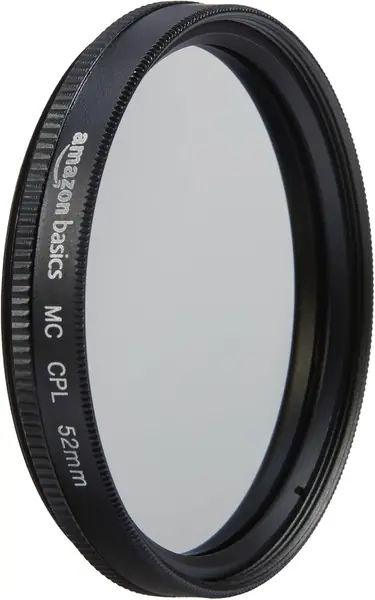
Amazon Basics 52mm Circular Polarizer Best Budget

92 /100
Traveler Score Outstanding

Key details

Thread Size
52mm
Frame
360° rotatable
Coating
Multi-coated
Weight
0.61 oz
Check Details on Amazon

It's the least expensive polarizer in this group by a wide margin, and it does the basic job: screw it onto a 52mm kit lens, rotate, and the sky deepens while the glare slides off a shop window. For the money, that's a fair trade. What we don't count on is consistency.

Sharpness is where it gets shaky. Some frames come back clean and some come back soft in the corners, and a few carry a cool or brownish shift that has to be corrected afterward. If you shoot raw and correct everything anyway, you'll shrug. If the JPEGs out of your camera are the finished product, that's an annoyance you'll notice.

Two habits keep it out of trouble. Don't stack it on another filter, because the ring is thin and a second filter on top is how a filter welds itself to a lens, and take it off when you're done rather than leaving it mounted for months. Treat it as a learner filter and it earns its keep.

Pros

  • Real polarizing effect for very little money
  • Multi-coated glass at an entry price
  • Standard 52mm size for kit lenses

Cons

  • Soft corners and a color cast can appear
  • Can seize onto the lens or a stacked filter
Our verdict

The cheapest way to find out whether you'll actually use a polarizer, as long as you accept soft corners and a color shift now and then.

Check Latest Price
3

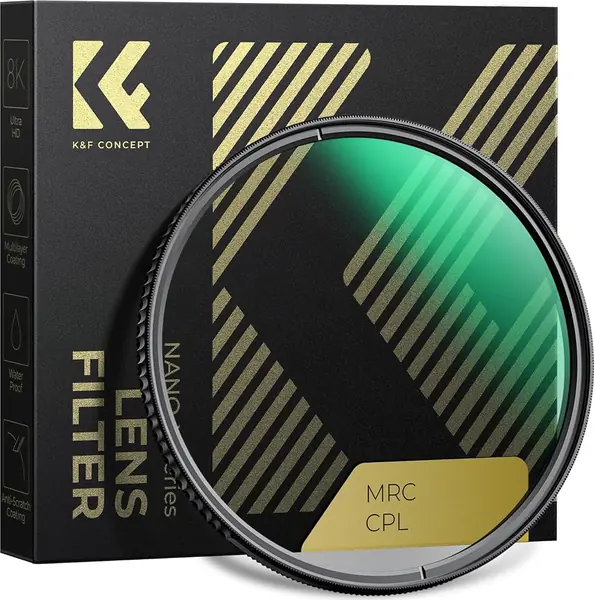
K&F Concept 58mm Nano-X CPL Best Midrange Value

91 /100
Traveler Score Outstanding

Key details

Thread Size
58mm
Coatings
28-layer, double-sided
Frame Material
Aluminum-magnesium alloy
Frame Thickness
5.3mm
Check Details on Amazon

Twenty-eight layers of coating on both sides sounds like marketing arithmetic until you're wiping spray off the front of the filter with your sleeve. This one sheds water and fingerprints in a way the budget picks don't, and after a wet morning the glass still looks clean.

That's the reason it earns its place: it's the filter we leave mounted when the weather is uncertain. The glass is AGC, the frame is aluminum-magnesium and just 5.3mm deep, and it arrives with a case and a cloth. For the money, it's the best balance of sealing, sharpness, and slimness in this group.

The catch is the mounting ring. It's thin, and on a lens whose front element sits deep in the barrel there isn't much to grab when you want the filter off, the same trouble that follows most ultra-slim designs. Thread it on gently and don't crank it down and it's a non-issue; on a lens with a flush front element you'll never think about it again.

Pros

  • 28-layer coatings shed water and oil
  • 5.3mm frame stays out of wide shots
  • Solid alloy build with case and cloth

Cons

  • Thin ring is hard to grip on recessed lenses
  • Ring turns stiffly when new
Our verdict

The midrange pick for anyone shooting outdoors in bad weather: sealed coatings, a slim frame, and real optical quality well below premium prices.

Check Latest Price
4

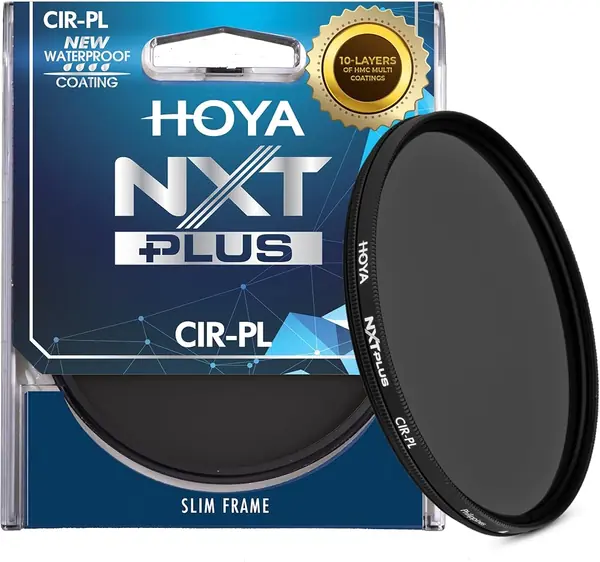
Hoya NXT Plus 58mm CPL Best for Keeping Clean

89 /100
Traveler Score Excellent

Key details

Thread Size
58mm
Coatings
10-layer HMC
Filter Factor
1.72x
Weather Sealing
Waterproof top coat
Check Details on Amazon

A wet morning at the coast is the test that separates filters: salt spray dries into a film that smears badly if the glass has any grip to it. This one wiped clear in a couple of passes with a dry cloth, which is the practical payoff of the waterproof top coat.

Under the coating it's a 10-layer multicoated polarizer on a low-profile aluminum frame, and Hoya rates the filter factor at 1.72x, under a stop of light loss and less than a lot of polarizers cost you. That matters at golden hour when you're already chasing shutter speed, and it's why this one tended to stay on the lens between shots.

The effect is what you want from a name-brand filter: reflections come off water and glass smoothly as you turn the ring, color stays believable, and the low-profile frame doesn't intrude on a wide zoom. It is not a filter to buy on impulse, though, because the step up from the midrange picks is a real one.

Pros

  • Waterproof top coat wipes clean easily
  • 1.72x factor limits light loss
  • Low-profile frame resists vignetting

Cons

  • Costs noticeably more than the midrange picks
Our verdict

For sea spray, rain, and dusty trails the sealed top coat pays for itself: it wipes clean in one pass and costs you less light.

Check Latest Price
5

Breakthrough X4 CPL 77mm Most Color Neutral

88 /100
Traveler Score Excellent

Key details

Thread Size
77mm
Coatings
MRC16 nano
Glass
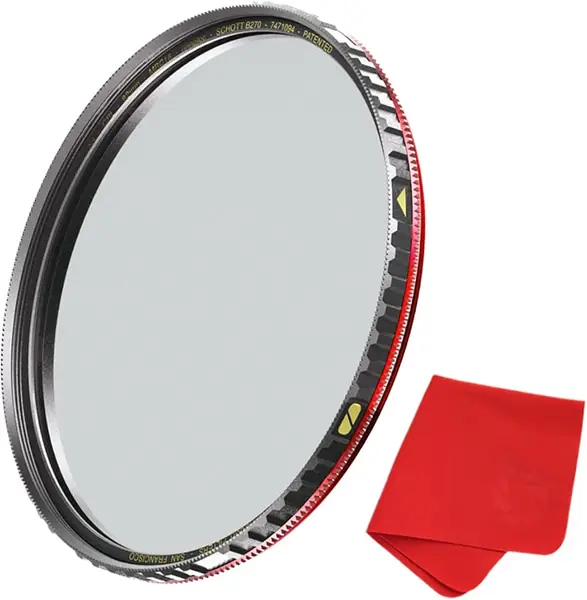
Schott B270
Support
25-year guarantee
Check Details on Amazon

Point the X4 into a low sun and the frame stays clean where an uncoated filter starts to haze over, which is 16 layers of MRC nano coating doing their job. The other half of the pitch is color: Breakthrough builds the filter around a flat transmission curve and a Schott B270 blank, and the frames read neutral, with no green or yellow cast to fix later.

It's also the best-built filter in this group by a distance. The knurled ring gives your fingers something to hold even with gloves on, the frame is weather sealed, and every filter carries a laser-engraved serial number backed by a 25-year guarantee. That last part is unusual enough in this category to be worth the mention.

The counterweight is cost. This is comfortably the most expensive filter here, several times the price of our top pick, and you feel it every time you leave it hanging off a lens in a crowd.

For a landscape or architecture shooter whose files go to a client, the trade is easy: neutral color and a guarantee that outlasts the camera. For everyone else, the midrange picks do the same work with far less at risk if the filter takes a scratch.

Pros

  • Neutral glass with no cast to correct
  • MRC16 nano coating controls flare
  • Knurled ring, weather sealing, 25-year support

Cons

  • Low-profile notches make removal fiddly
Our verdict

The filter for color-critical work: neutral glass, MRC16 coatings, and a 25-year guarantee for shooters whose files go to a client.

Check Latest Price
6

Hoya HRT CPL-UV 52mm Best Two-In-One

87 /100
Traveler Score Excellent

Key details

Thread Size
52mm
Frame
Low-profile aluminum
Filter Factor
1.36x
Type
CPL plus UV
Check Details on Amazon

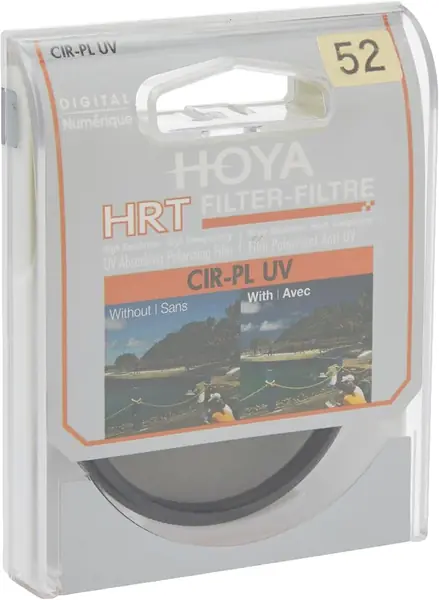
The pitch is consolidation: a circular polarizer and a UV filter in the same ring, so a lens that would otherwise wear two filters wears one. That's genuinely useful when you're packing light, and the 1.36x filter factor, which Hoya rates about 25 percent higher in visible light transmission than a conventional polarizer, means roughly a third of a stop you don't have to give up.

In use the polarization is the real thing: reflections slide off wet stone and car paint as you turn the ring, colors come up richer without looking fake, and the slim aluminum frame stays tidy on a wide zoom. The one part of the pitch we ignore is the UV half, which is solving a problem most digital sensors no longer have the way film did. Buy it for the polarizer and the light transmission; the UV is a bonus you'll forget about.

Pros

  • Polarizer and UV filter in one ring
  • 1.36x factor passes more light than most
  • Well-built slim aluminum frame

Cons

  • Can bind and be hard to unscrew
Our verdict

A good travel compromise: one ring that polarizes, absorbs UV, and passes more light than most polarizers, with a slim frame for wide lenses.

Check Latest Price
7

B+W 77mm Basic CPL MRC Best for Full-Frame Zooms

86 /100
Traveler Score Excellent

Key details

Thread Size
77mm
Coatings
MRC multi-coating
Mount
Black knurled
Wide-angle Ceiling
24mm full frame
Check Details on Amazon

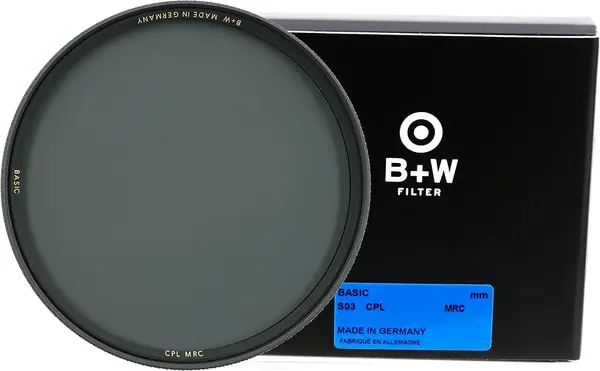
B+W rates this one for use down to 24mm on full frame, and that single line decides whether it's for you. On a 24-70 or a 70-200 it's fine; put it on a 16-35 at the wide end and the frame is deep enough that you'll want something slimmer.

What you get otherwise is the MRC multicoating, which is the real reason to pay B+W prices: it suppresses flare and ghosting, and the black knurled mount gives your fingers something to hold when your hands are cold. There's a QR code on the packaging to confirm authenticity, which tells you how often these get counterfeited. It's a specialist's filter, so buy it for the coating and the grip rather than as a first polarizer.

Pros

  • MRC coating controls flare and ghosting
  • Knurled mount is easy to grip
  • Authenticity QR code on the packaging

Cons

  • One-year manufacturer warranty
Our verdict

A well-coated, easy-to-grip 77mm filter for full-frame shooters whose widest lens stops around 24mm.

Check Latest Price
8

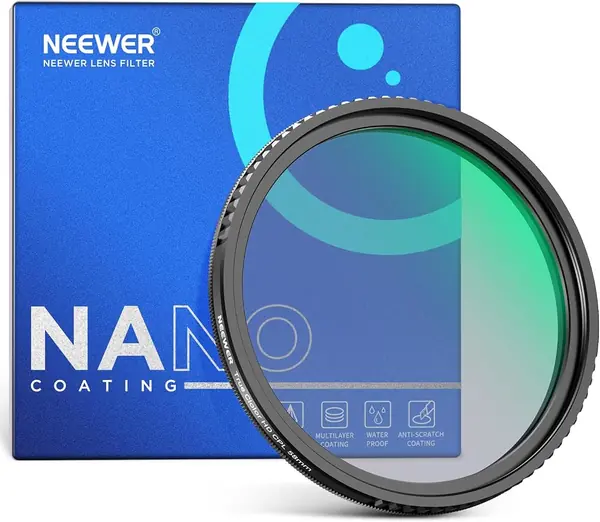
NEEWER 58mm True Colors CPL Best for Beginners

85 /100
Traveler Score Excellent

Key details

Thread Size
58mm
Coatings
AR and AF multicoated
Includes
Case and cleaning cloth
Rotation
Limited hard stop
Check Details on Amazon

Most polarizers spin freely, which means nothing stops you from turning past the angle where the effect is strongest and then wondering why the sky went flat. NEEWER's answer is a hard stop: the ring travels a set arc and stops, so you sweep from one end to the other and watch the sweet spot go by. It's a small thing that makes the filter easier to learn on.

The rest of the build is better than the price implies. HD optical glass with anti-reflection and anti-fingerprint coatings, a slim metal frame that won't crowd a wide-angle shot, and a kit that includes a case and a cleaning cloth. NEEWER also tunes the glass for true color, the usual weak point at this end of the market, so check it against a gray card before a shoot that matters.

For a first filter, or a second size for a lens you don't use often, it's an easy call: the mechanism teaches you the effect, the frame doesn't feel disposable, and it sits closer to the budget picks than the midrange ones. Hand it to someone who has never used a polarizer and the ring does the teaching for you.

Pros

  • Hard stop makes the effect easy to find
  • AR and anti-fingerprint coatings on HD glass
  • Slim metal frame with case and cloth

Cons

  • Ring stops at fixed limits instead of spinning freely
Our verdict

A sensible first polarizer: the hard stop keeps you from over-rotating past the effect, and the build is better than the price suggests.

Check Latest Price

How We Tested the Best Polarizing Filters

We started by pulling every circular polarizer we could find with multi-layer coatings and a rotating frame, then narrowed by the thread sizes people actually own — 52mm through 77mm — and by price, so the list spans first-filter to lifer. Twelve made the cut, and we shot with each one for six months on the same lenses, often on the same day.

Most of it happened where polarizers earn their keep: a lake at dawn, wet rocks in a creek, foliage after rain, a windshield at midday, museum glass. For glare, I framed the same scene twice, ring turned to maximum polarization and then to minimum, and compared the frames at 100 percent on a calibrated monitor. For color, I shot a gray card and an overcast sky through each filter and looked for the green or magenta shift that shows up in cheap glass. Value was judged per millimeter of thread, not by sticker alone.

Ease of use was the most physical part. I threaded each filter onto the same lens, noting whether it caught or cross-threaded, then turned the ring in small increments on a tripod, marking where the polarization kicked in and whether the ring drifted after I let go. I measured frame depth with calipers and shot at my widest focal length to see if the corners vignetted, then put a fingerprint on each one and wiped it with a microfiber to see whether the coating cleaned or smeared. Water beading, lens-cap grip, and whether anything had seized after a cold morning all went in the notes.

How to Choose a Camera Polarizing Filter

Match the thread, not the camera

Filters are sized in millimeters to the thread on the front of the lens, printed next to a ø symbol on the barrel or under the cap. A 52mm filter will not go on a 67mm lens without a step-up ring, and a step-up ring is a legitimate way to run one filter across several lenses. Just know that it can block a lens hood, and that stacking rings on a wide lens is where vignetting starts. The size in a product title refers to the lens, never to the camera body.

Find the angle: polarization is directional

A polarizer does most of its work when the sun sits roughly 90 degrees off the direction you're facing. That's when skies go deepest and reflections vanish. Shoot with the sun behind you and you'll wonder what you paid for. Rotate slowly and watch the sky or the water rather than the ring, because the effect peaks and then reverses. On a wide lens the sky can darken unevenly across the frame, so either embrace the gradient or zoom in.

Coatings are what the extra money buys

Two filters can both polarize and still feel nothing alike. Multicoating cuts the flare and ghosting you get when you shoot toward bright light, and a water-repellent top coat is the difference between wiping spray off in one pass and smearing it around. An uncoated filter like the Tiffen is genuinely fine in flat or side light and one of the best values here, but it needs a hood and gentle cleaning. If you shoot into the sun, in rain, or near salt water, pay for the coatings.

Slim frames, light loss, and the trade behind them

Slim frames, 5.3mm among several picks here, keep the filter out of the corners of a wide-angle shot, but a very thin ring gives your fingers less to grab, and that is where most stuck-filter trouble begins. The filter factor tells you what a CPL costs you in light: the Hoya HRT's 1.36x is about a third of a stop, the NXT Plus at 1.72x a little more, and plenty of polarizers take a full stop or more. That is shutter speed you have to find again at dusk.

Getting it back off

Aluminum on aluminum, tightened by warm hands, is how a filter becomes permanent. Thread it on until it seats and then stop, with no extra turn for luck. Don't stack a polarizer on another filter, especially on a wide lens. If one does seize, a rubber strap or a purpose-made filter wrench applied to the outer ring will usually break it loose; squeezing the ring itself only makes it grip harder.

Frequently Asked Questions

Final Verdict

Start with the Tiffen 67mm. It cuts glare and deepens skies as reliably as anything here, it costs less than most of the group, and it's the filter we keep going back to when we don't want to think about the gear at all.

Spend more only for a reason. The Hoya NXT Plus is the one to take into spray and rain, because the sealed top coat wipes clean in a pass, and the Breakthrough X4 earns its premium when color has to be right in the file. If you're still unsure whether a polarizer belongs in your bag, the Amazon Basics settles the question with very little at stake.