Best Camera Shutter Remotes of 2026

A shutter remote looks like a solution in search of a problem—until you're standing behind a tripod at dusk, trying not to breathe on the camera during a two-second exposure. The job is simple: fire the shutter without touching the camera, so long exposures stay sharp and group photos don't require a sprint back to the tripod. What separates one remote from another is less obvious: whether it speaks your camera's language, whether it focuses on a half-press or just fires, and whether it's wired, infrared, radio, or Bluetooth.

I've used cable releases since my film-school days, and I still keep one in my bag for night shots. Over the past four months, our team tested 14 shutter remotes—wired, infrared, RF, and Bluetooth—on tripods, tabletops, and hikes. The biggest trap is compatibility: a remote that lists your camera brand may still need the right sub-mini plug, and some cameras have no IR receiver at all. We also paid attention to the small stuff—cord length, pocketability, and whether pairing is truly plug-and-play. The right remote should disappear in your hand and let you get the shot, not become another gadget to troubleshoot.

The Best Camera Shutter Remotes

1

PROfezzion Wireless Canon Remote Best Overall
92 /100
Traveler Score Outstanding

Key details

Connection
2.4 GHz wireless
Power
4 AAA batteries
Range
50 m (164 ft)
Modes
5, including bulb
Check Details on Amazon

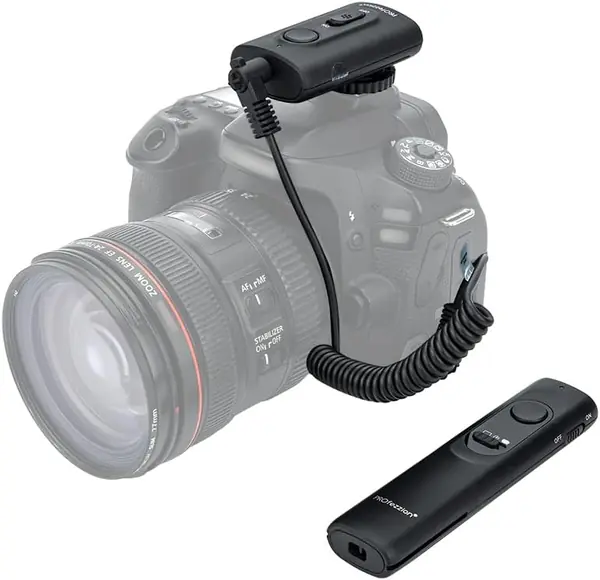
The 164-foot range on PROfezzion's remote is the sort of number that sounds like marketing until you are the person setting up a group shot from the far side of a lawn. This is a 2.4GHz radio system, so it does not need to see the camera the way an infrared remote does. The receiver also has a 1/4-inch-20 tripod socket on the bottom, which means it can live on the tripod under the camera instead of dangling by its cable.

Five shooting modes cover the situations we care about: single frames, a five-second delay, three-shot bursts, unlimited continuous shooting, and bulb. That mix makes it useful for more than self-portraits. We also appreciate the 16 channels, which give you room to move off a crowded frequency when several photographers are working in the same place.

Setup is plug-in simple: connect the receiver to the camera, pair it with the transmitter, and shoot. The Canon compatibility list is long but specific, so match your body against it before ordering rather than assuming every EOS camera uses the same port. The receiver stays on the tripod and the transmitter goes back in the bag pocket, which is the kind of everyday handling that makes a remote feel like part of the kit.

What earns this one the top spot is the combination of range, modes, and mounting. It lets a Canon shooter move from a quick family portrait to a long exposure without changing tools. The separate receiver is the detail that sells it: leave it mounted on the tripod, and the controller can disappear into a pocket until you need it.

Pros

  • 164-foot radio range needs no line of sight
  • Five modes including bulb and continuous
  • Receiver mounts to a tripod
  • Simple plug-in pairing

Cons

  • Four AAA batteries add cost and weight
Our verdict

For Canon DSLR and EOS R shooters who want reliable wireless triggering at a distance, the PROfezzion is the one we recommend first.
Check Latest Price
2

Nikon ML-L7 Bluetooth Remote Best Nikon Wireless

91 /100
Traveler Score Outstanding

Key details

Connection
Bluetooth
Power
1 CR2 battery
Compatibility
Nikon Z, Coolpix P1000
Controls
Four buttons
Check Details on Amazon

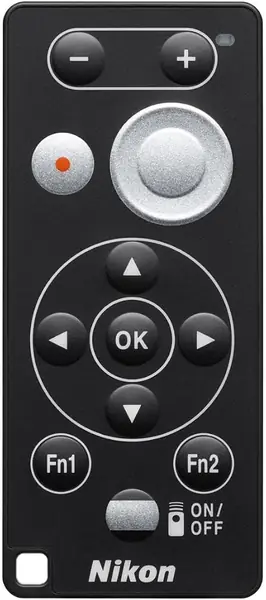
If your Nikon is a Z body or a P1000, the ML-L7 is the least fiddly way to get the camera's own controls into your hand. It pairs over Bluetooth and triggers the shutter without a cable, and it can also reach some camera settings rather than just fire the shutter. That matters when the camera is on a tripod or a copy stand and you do not want to touch it between frames.

The remote is small enough to disappear in a closed hand, which is useful for self-portraits and video where you do not want the controller in frame. It has four buttons and a simple layout. Nikon's compatibility list is the one to check: this is built for the Z series and the Coolpix P1000, not every Nikon DSLR.

We like it most for Nikon owners who want a brand-matched remote and are willing to pay for that convenience. The connection can drop when the camera goes into standby, so you may need to wake the body before the remote responds again. That is a minor pause in a portrait session, but it is the kind of thing to know before relying on it for a one-shot event.

Pros

  • First-party Nikon Bluetooth control
  • Works with Z bodies and P1000
  • Small enough to hide in a hand

Cons

  • Requires a CR2 battery
  • No lanyard included
Our verdict

Nikon Z and P1000 owners who want a brand-matched Bluetooth remote should start here, provided they can live with a CR2 battery.

Check Latest Price
3

AODELAN Sony OLED Remote Best for Sony

90 /100
Traveler Score Outstanding

Key details

Connection
Bluetooth
Power
USB-C rechargeable
Range
32.8 ft
Display
OLED
Check Details on Amazon

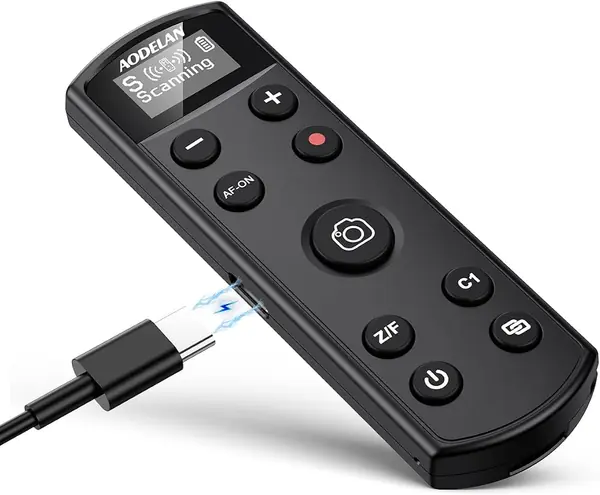
The OLED screen and USB-C charging are the two reasons we reach for this AODELAN over a button-only Sony remote. The screen shows the mode and connection status at a glance, and the built-in battery charges over USB-C instead of sending you hunting for coin cells. For a remote that lives in a camera bag, that is a small convenience we notice every time we use it.

It connects over Bluetooth, so it works without line of sight, and it controls stills, video, zoom, and focus within its roughly 33-foot range. The zoom and focus controls are the part that makes it more than a shutter button: for macro work or a camera on a gimbal, you can make adjustments without walking back to the body. Pairing requires the camera's Bluetooth remote setting to be on, not just Bluetooth itself.

Sony owners get a rechargeable, screen-equipped remote that replaces the Sony RMT-P1BT without the OEM price. The screen is a status display rather than a monitor, so you still compose through the camera. If you mostly shoot stills from a tripod, the extra controls may be more than you need; if you shoot video or zoom from a distance, they earn their place.

Pros

  • USB-C rechargeable battery
  • OLED screen shows settings
  • Shutter, video, zoom, and focus control
  • Bluetooth works without line of sight

Cons

  • Screen can wash out in sunlight
Our verdict

Sony shooters who want a rechargeable, screen-equipped remote for stills and video will find this AODELAN the most useful of the set.

Check Latest Price
4

Godox TR-N1/N3 Remote Best for Nikon Time-Lapse

89 /100
Traveler Score Excellent

Key details

Connection
2.4 GHz wireless
Power
2 AA batteries
Range
100 m
Functions
Intervalometer and exposure timer
Check Details on Amazon

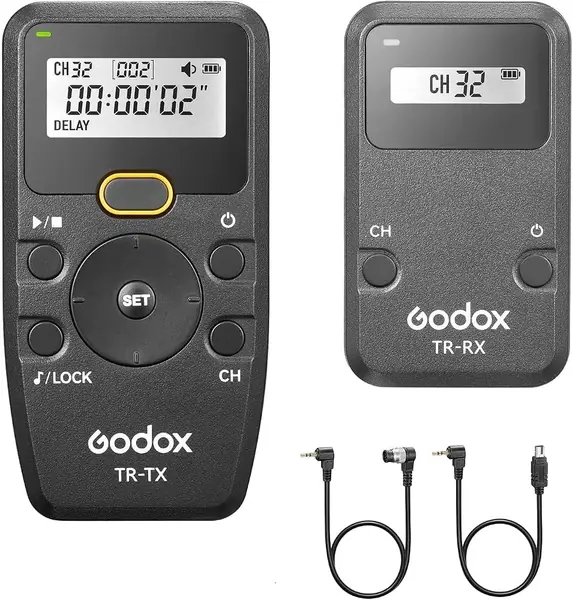
The Godox TR-N1/N3 is not the remote for a Nikon Z8, and that is the first thing to settle. The kit is built around Nikon's 10-pin and DC2 connections for bodies such as the Z9, Z7, Z6, Z5, D850, and D750, but Z8 owners are left out. If your camera is on the compatible list, the rest of the package makes sense.

This is an intervalometer as much as a shutter release. It handles long exposures, exposure timing, and interval shooting, and its 2.4GHz radio link reaches up to 100 meters. The trade-off is a more complex controller: 12 buttons and a body that weighs 184 grams. It is not the remote you hand to a friend for a quick group photo.

The Godox X integration is the feature that separates it from the other Nikon picks. You can trigger the camera and Godox flashes together, which is useful for studio work, product shots, and any setup where the lights and the shutter need to be on the same schedule. For a Nikon shooter already using Godox lights, that is a real workflow advantage.

We recommend it for time-lapse, long-exposure, and flash-heavy work, not as a general-purpose first remote. The extra TR-N3 cable can sit at the bottom of the box, so empty the packaging before you decide something is missing. Once you have the right cable and fresh batteries, it is a capable controller for the photographers who need its timer.

Pros

  • Intervalometer and exposure timer
  • 100-meter 2.4GHz range
  • Triggers Godox flashes with the camera
  • Includes both Nikon connector cables

Cons

  • Not compatible with Nikon Z8
  • Two AA batteries not included
Our verdict

Nikon users who need intervalometer control, long exposures, and Godox flash triggering should choose the TR-N1/N3, unless they shoot a Z8.

Check Latest Price
5

Canon RC-6 Wireless Remote Best Simple Canon IR

88 /100
Traveler Score Excellent

Key details

Connection
Infrared
Power
1 CR123A battery
Range
16 ft (5 m)
Delay
Immediate or 2 seconds
Check Details on Amazon

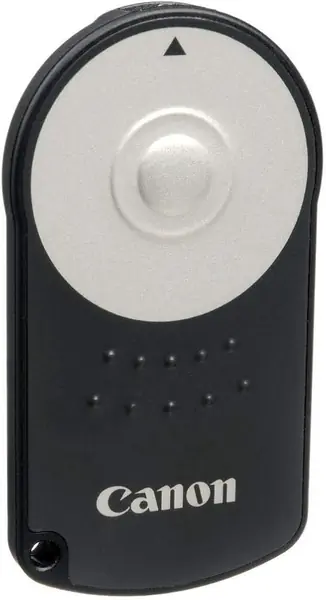
A group photo is the simplest test of a remote: set the camera on a tripod, walk into the frame, and fire. The Canon RC-6 is built for exactly that kind of front-facing shot. It is an infrared remote, and its listed reach is 16 feet. Within that setup, it is about as simple as a remote gets.

There is no receiver to mount and no pairing sequence. The single button fires immediately or with a two-second delay, and it works in bulb mode for longer exposures. The remote is small enough to close your hand around, and the included pouch attaches to a camera strap so it stays with the camera. Canon's compatibility list is specific, especially across Rebel models, so check your body before ordering.

We reach for the RC-6 when we want a remote that lives in the camera bag and does not need a battery check before every session. For self-portraits, family photos, and tripod work where you stay in front of the lens, the little pouch and one-button simplicity are the whole appeal.

Pros

  • Tiny body fits in a closed hand
  • Pouch attaches to camera strap
  • Instant or two-second delay

Cons

  • Infrared needs a clear line to the camera front
Our verdict

Canon photographers who want the simplest pocketable remote for front-facing portraits and group shots will get the most from the RC-6.

Check Latest Price
6

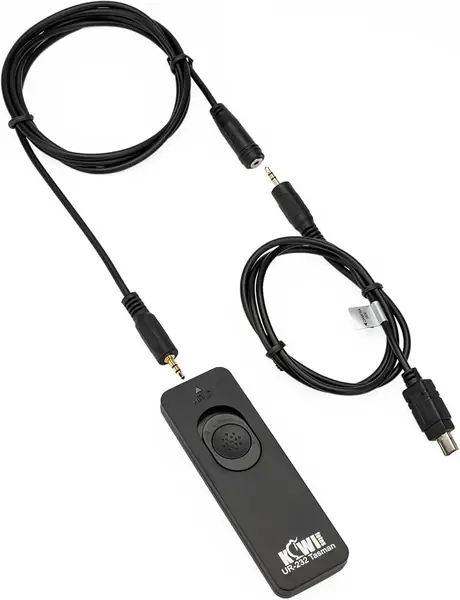
Kiwifotos RS-60E3 Remote Switch Best Budget Canon Wired

87 /100
Traveler Score Excellent

Key details

Connection
Wired
Compatibility
Canon RS-60E3 bodies
Cable
2.3 ft (70cm) long camera connection cable + 4.3 ft (130cm) long extension cable
Functions
Autofocus and shutter
Check Details on Amazon

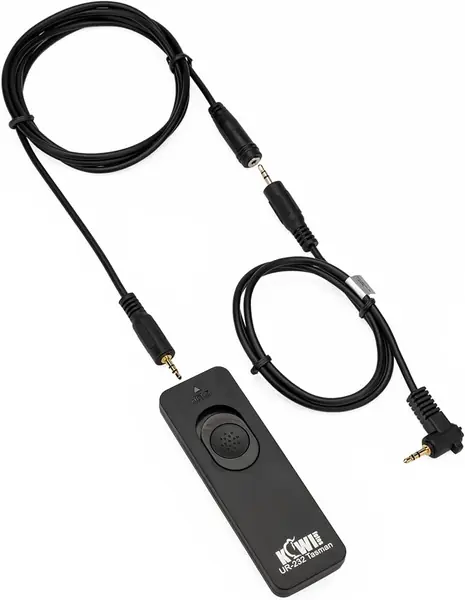
The case for the Kiwifotos RS-60E3 is simple: a wired release should fire the shutter without shaking the camera, and this one does that for very little money. It has a 70-cm cord at the camera plus a 130-cm extension, so you can stand about two meters back when you need to. It also gives you half-press autofocus and a shutter button, with a slide lock for bulb exposures.

We found the plastic housing feels lighter than the camera's own controls, and the shutter button lacks the crisp half-press of a better remote. It still works for tripod portraits and long exposures, but it is a budget part, not a heritage accessory. The extension cable is the practical bit: leave the short cord on the camera and add length only when you need it, which keeps the setup tidy for close-up work.

Compatibility is the usual Canon split: this version fits many Rebel and EOS R bodies with the RS-60E3-style port, but not the pro bodies that use a 3-pin connector. That makes it a sensible spare or a first wired release for a lightweight Canon kit. The two-piece cord is also easier to manage than one long cable when you are working close to the tripod.

Pros

  • Two-piece cord reaches about 6.5 feet
  • Half-press autofocus and shutter
  • Plug-in operation with no pairing

Cons

  • Cable can loosen near the handle
Our verdict

Canon shooters who want a no-battery wired release for tripod work should buy the Kiwifotos RS-60E3 and accept its budget feel.

Check Latest Price
7

Nikon MC-30A Remote Release Best for Nikon Pro Bodies

86 /100
Traveler Score Excellent

Key details

Connection
Wired, 10-pin
Compatibility
Nikon 10-pin bodies
Cable
31.5" (80cm)
Check Details on Amazon

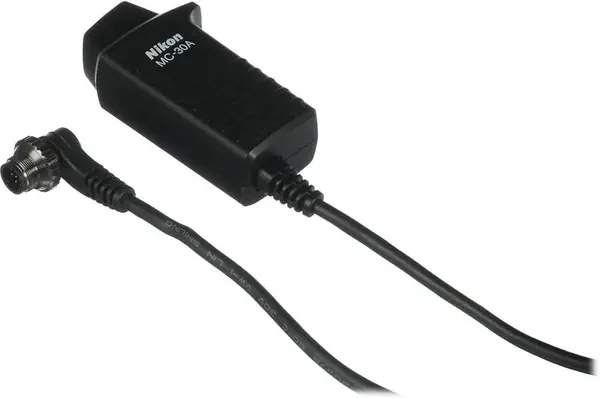
The MC-30A costs more than the budget wired releases here, and what it buys is a simpler, sturdier object. The 80-cm cord ends in Nikon's 10-pin connector, so it fits pro-style bodies such as the D850, D800, D700, D300, and D4 rather than the DC2 port used by many consumer Nikon DSLRs. There is no pairing and no receiver to lose.

We recommend it for a D850 or D800 that lives on a tripod. The shutter release feels positive and immediate, and the lock holds the shutter open for bulb exposures. If you change bodies often or want one remote for a mixed kit, the mount-specific fit is the limitation; for a dedicated pro body, it is the one we trust.

Pros

  • Solid Nikon build and 80-cm cord
  • Immediate shutter response
  • Shutter lock for long exposures
  • No pairing or receiver to manage

Cons

  • Premium price for a wired release
  • Shutter lock can be bumped
Our verdict

Nikon 10-pin body owners who value a durable, battery-free release over saving money should pick the MC-30A.

Check Latest Price
8

Kiwifotos MC-DC2 Remote Switch Budget Nikon Wired

85 /100
Traveler Score Excellent

Key details

Connection
Wired
Compatibility
Nikon DC2 bodies
Cable
2.3 ft (70cm) long camera connection cable + 4.3 ft (130cm) long extension cable
Functions
Autofocus and shutter
Check Details on Amazon

The Nikon version of Kiwifotos's wired release uses the same two-piece, no-battery formula: a 70-cm cord at the camera and a 130-cm extension when you need to stand farther back. It gives you half-press autofocus and a shutter button, works in bulb mode, and plugs straight into the camera. It fits Nikon bodies with the DC2 port, including the Z7, Z6, Z5, and many D5000- and D7000-series DSLRs.

We keep this one in the bag for occasional tripod work because it is light, inexpensive, and ready to plug in. The plastic body feels light and the button action is not as crisp as Nikon's own MC-30A, but the price difference is real. If you shoot every day or need the most durable release, spend for the Nikon; if you need a spare-length cord for the occasional long exposure, this does the job.

Pros

  • Two-piece cord reaches about 6.5 feet
  • Half-press autofocus and bulb
  • Plug-in operation with no pairing

Cons

  • Cable can loosen near the handle
Our verdict

Nikon DC2 shooters who want a spare-length wired release for occasional tripod work will find the Kiwifotos MC-DC2 an easy buy.

Check Latest Price

How We Tested Camera Shutter Remotes

We began by researching the current crop of shutter releases and filtering out anything that didn't clearly state which camera bodies it supported, what connection it used, and what powered it. From that shortlist, we chose 14 models that represented the main approaches—wired, infrared, RF, and Bluetooth—and covered a range of prices without chasing the absolute cheapest. Testing ran for four months, long enough to live with each remote through several shoots rather than a single afternoon.

We used them where remotes actually get used: a tripod in the backyard for family portraits, a dusk session shooting long exposures of traffic, a kitchen-table macro setup, a birthday party group shot, and a few hikes where the camera stayed on a tripod and the remote stayed in a pocket. We paired each remote with at least two compatible camera bodies and timed how long it took from opening the box to firing the first frame. For wired models, we measured the cord from plug tip to remote and noted whether it reached from a tripod-mounted camera to a jacket pocket; for wireless models, I walked away until the shutter stopped firing and paced off the range.

Button feel mattered more than we expected. We half-pressed to confirm focus, then full-pressed to fire, noting mushiness, lag, and whether we could find the button by feel in low light. We also looked at build quality—strain relief at the cord, battery-door fit, and how each remote survived being tossed in a camera bag and clipped to a tripod. Value for money wasn't about the lowest price; it was whether the remote did its one job without fuss, paired quickly, and felt like it would last a season of real use.

How to Choose a Camera Shutter Remote

Check the Camera Connection First

Camera remotes are not universal. Canon uses more than one connector across its own line, Nikon separates its 10-pin pro bodies from the DC2 port used by many consumer DSLRs and Z cameras, and Sony's Multi-Terminal is its own shape. A wired release is often sold as a remote switch, and the model name matters more than the brand on the box. Look up your exact body, not just the brand, and confirm the plug, IR receiver, or Bluetooth profile before you order. If the listing gives a long compatibility list, find your model on it.

Choose Wired, Infrared, or Radio

Wired remotes are the simplest and most reliable: no pairing, no line-of-sight, and the camera cannot ignore them. The trade-off is a cord, so check its length and whether an extension is included. Infrared is small and cheap, but it needs a clear view of the camera's front receiver; the Canon RC-6 is limited to about 16 feet and will not fire from behind the body. Radio and Bluetooth remotes work without line of sight, which is why the PROfezzion and AODELAN picks are better for group shots and distant tripods. They add batteries and pairing, so keep spares.

Match the Modes to the Shot

Half-press autofocus and a shutter button are the minimum. For long exposures, look for a bulb mode and a lock that holds the shutter open without your finger on the button. For family photos, a two-second delay gives you time to pocket the remote. For time-lapse or repeated frames, an intervalometer is the feature that matters; the Godox TR-N1/N3 is the specialist here. Continuous shooting and multiple channels are useful for events and crowded locations, but do not pay for a 12-button controller if you only need to fire the shutter.

Plan for Power, Cable Reach, and Build

Wireless remotes run on AAA, CR2, CR123A, or built-in rechargeable batteries, and the small camera batteries are easy to forget until the remote dies. Add a spare to your bag and check that the remote has an off switch you can trust in transit. Wired models avoid battery anxiety but put wear on the cable joint, especially where the cord meets the handle. A two-piece cord with an extension is more flexible than a single short cable. If you shoot often, pay for better button feel; if you shoot occasionally, a budget release is easier to justify.

Frequently Asked Questions

Final Verdict

For most Canon shooters, the PROfezzion is the remote we recommend first. Its radio range, five modes, and tripod-mounted receiver cover the three jobs that send people looking for a shutter release: self-portraits, group shots, and long exposures. Nikon Z and P1000 owners should start with the ML-L7 for brand-matched Bluetooth control, while a tripod-only shooter can save with a wired Kiwifotos.

Let the camera decide the connection and let your shooting distance decide the rest. If you need to stand away from the body, choose radio or Bluetooth; if you only need to keep your hand off the camera, a wired remote is simpler and more reliable.