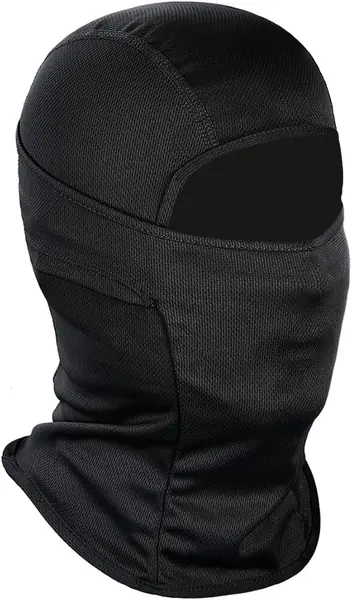
Best Balaclavas of 2026

A balaclava is the piece of winter gear you notice only when it fails: wind cuts through a seam, glasses fog the second you stop moving, or the fabric bunches under a helmet until you pull it off. The right one disappears—warm at the neck and forehead, breathable enough that you are not stewing on a climb, and cut so it covers your face without swallowing it. That balance is the whole purchase, and it is what separates a mask you tolerate from one you reach for.

I spent four months wearing 14 different balaclavas—thin cooling masks, fleece ski masks, and convertible designs that pull down into a neck gaiter—on bike commutes, ski weekends, and evening dog walks. My team and I compared warmth, breathability, fit, coverage, and how each one felt under a helmet or goggles, plus whether it looked presentable enough to leave on after a run. The biggest surprise was that thickness is not the same as warmth; a thin, wind-blocking layer often beat a bulky fleece. The picks below got the small details right, from glasses clearance to seams that do not rub.

The Best Balaclavas

1

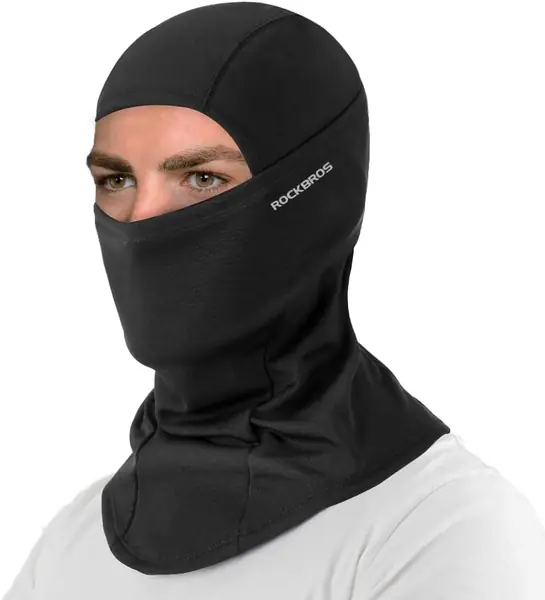
ROCKBROS Winter Thermal Balaclava Best Overall
95 /100
Traveler Score Outstanding

Key details

Material
Thermal fleece
Intended Use
Cycling, running, skiing
Department
Unisex adult
Wind Protection
Windproof
Check Details on Amazon

Warmth is the easy part for a fleece balaclava. Fitting under the thing you are already wearing is the hard part, and the ROCKBROS mask handles both, which is why it is the one we hand to someone who wants a balaclava and does not want to think about it. The fleece holds heat across your neck and ears, the windproof front stops a headwind from cutting in, and there is still room for a ski, bike, or motorcycle helmet on top.

That last part is where we paid the closest attention, because bulk is where masks fall apart. The fleece is dense without much loft, so a helmet settles close to the height it sits at bare, and the hood does not bunch at the crown. Under a very tight shell the hood seams can make themselves felt, but that is the trade for a mask warm enough to matter.

The stretch is the other half of the fit story. This is one of the few masks in this group that a small frame and a six-foot, 200-pound one can genuinely share: the fabric pulls wide without going baggy at the chin, and it springs back rather than stretching out for good. The inside is soft enough that the itch you brace for never arrives, and it stays where you put it instead of creeping up your forehead when you look down at a binding or a phone.

What you get is one mask that handles skiing, commuting, and shoveling the driveway the same way, at about the same money as most of the field — a rare case where the middle of the price range is also the safe answer. If you run hot or ride hard, the fleece does not vent like a mesh-fronted mask, and that is a real reason to look at the Tough Headwear instead.

Pros

  • Warm fleece that still fits under a helmet
  • Generous stretch covers a wide range of heads
  • Soft lining that does not itch or slide
  • Priced with the middle of this field

Cons

  • Hood seams can press under a tight helmet
Our verdict

Our default pick for winter: warm fleece, a windproof front, and enough stretch to sit under a helmet without a fight.
Check Latest Price
2

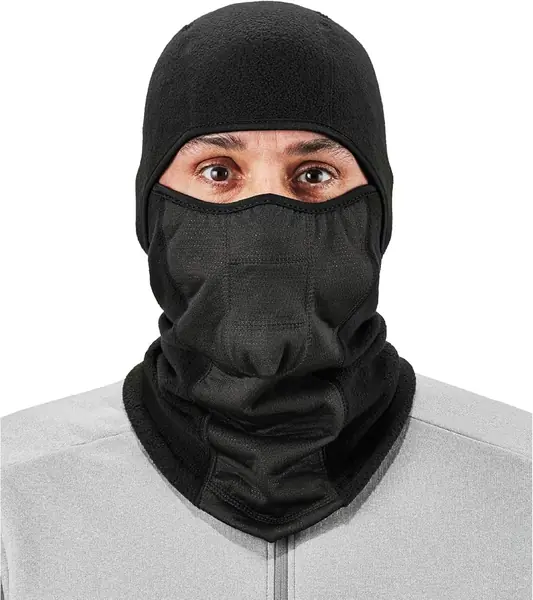
Ergodyne N-Ferno 6823 Balaclava Best for Bitter Cold

94 /100
Traveler Score Outstanding

Key details

Wind Protection
Wind-resistant
Model
6823
Design
Hinged, converts to neck gaiter
Check Details on Amazon

A hinged front panel sounds like a small thing until you have spent a morning pulling a mask down to talk and pushing it back up again. On the N-Ferno 6823, the face piece folds from your nose down to your chin and stays there, so you can cool off, eat, or hold a conversation without taking the hood off or letting cold air pour down your neck.

It is the mask we point people toward when temperature is the entire story. Warmth is the strongest thing about it in this group, and it is built for people who are outside because the job says so — freezer work, plowing, outdoor construction — rather than for a two-hour ski window. Wind resistance and coverage that runs well down the neck are why it holds up in that kind of cold, and the mesh panel from nose to chin keeps you from rebreathing your own air all shift.

The mesh vents breath well enough for hours of wear, but it is not a fog cure: glasses and goggles haze over when you are pushing hard in the cold. The hinge makes that easier to live with, since you can drop the front and clear them without undoing anything. On money, it is one of the cheaper masks here, which we read as value rather than compromise — the cost goes into the fleece and the hinge instead of a logo.

Pros

  • Face panel hinges down to the chin
  • Warmth that holds up in sub-zero work
  • Cheaper than most of the field

Cons

  • Snug cut runs small on larger heads
Our verdict

Our pick for serious cold and long days outside: the hinged front drops to your chin so you can cool off without stripping the hood.

Check Latest Price
3

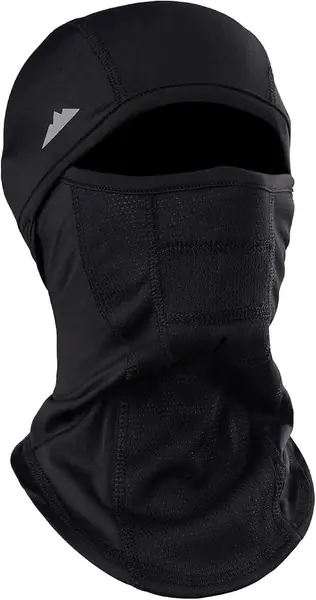
Tough Headwear Balaclava Ski Mask Best for Wind and Hard Effort

93 /100
Traveler Score Outstanding

Key details

Intended Use
Skiing, motorcycle riding
Season
Winter
Style
Pull-on balaclava
Check Details on Amazon

Mesh across the mouth is the whole argument for this mask, and it cuts both ways. The perforated front lets your breath out instead of trapping it in the fleece, which is what makes a long climb or a full shift tolerable, but the same panel lets cold straight through to your lips when you are moving fast on a snowmobile or a bike. That is not a flaw so much as a design that picks which half of winter you care about.

Away from the vent, the wind protection is the strong suit. This is the mask in this group built most obviously for snowmobiles, ski helmets, and cold-weather riding, and it stays put when you turn your head to check a lane or a line. The fabric blocks gusts without going stiff, and the neck coverage is long enough that it tucks into a jacket collar rather than riding up over it.

Where it lands for us: the best of these for windy, active cold, and the one to choose if your winter involves an engine or a lift line rather than a walk to the car. It is also the pick that has been worn by the widest range of people in the coldest settings, which counts for something when you are buying a mask you cannot try on first.

Pros

  • Mesh front vents breath on hard efforts
  • Wind protection built for riding and snowmobiling
  • Stays in place under a helmet

Cons

  • One size runs large on smaller heads
Our verdict

The one to buy if your winter happens at speed: strong wind protection and a vented front for hard effort under a helmet.

Check Latest Price
4

Fuinloth Summer Cooling Balaclava Best for Summer Sun

92 /100
Traveler Score Outstanding

Key details

Fabric Weight
Thin, cooling
UV Protection
Yes
Helmet Friendly
Yes
Check Details on Amazon

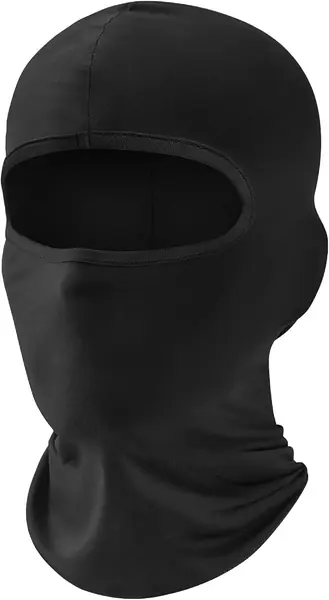
Most of the masks on this page are built for February; this one is built for July, and judging it by winter standards is the mistake people make with it. The Fuinloth is a thin, stretchy synthetic layer sold for summer riding and UV coverage. It fits snug, breathes like a T-shirt, and slides under a motorcycle or bike helmet without adding heat. If you ride in the heat and want your face and neck out of the sun, this is the obvious pick here.

Versatility is why it earns a permanent spot in a gear bag. Worn as a full mask, pulled down as a neck gaiter, or rolled up as a head covering, it does the work of three pieces and takes no space doing it. Breathability is the standout — air moves through it well enough for a humid commute — and it is the mask we reach for on a hot ride when the helmet and sunglasses already feel like too much coverage.

Pros

  • Breathes well in heat
  • Fits under a helmet without bulk
  • Wears three ways: mask, gaiter, head cover
  • Costs less than anything else here

Cons

  • Thin fabric adds almost no warmth
Our verdict

Buy it for heat, sun, and helmet shade — a thin, breathable layer that costs less than anything else here and does three jobs.

Check Latest Price
5

Carhartt A202 Fleece 2-in-1 Hat-First Wear

91 /100
Traveler Score Outstanding

Key details

Material
Fleece
Model
A202-412
Design
Hat with pull-up face panel
Check Details on Amazon

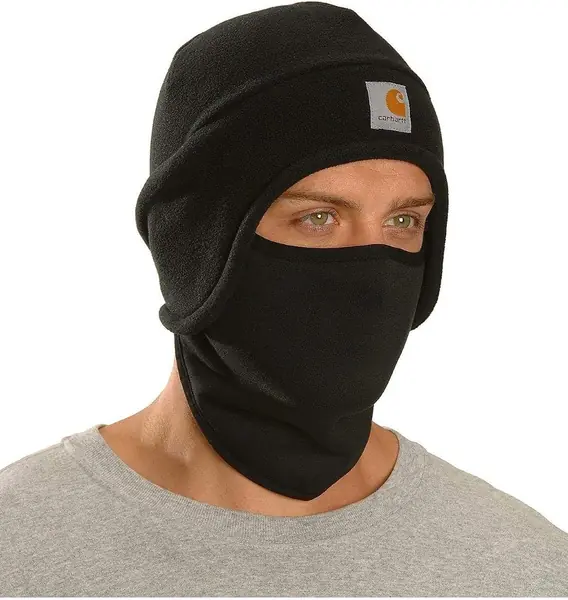
The A202 is not a balaclava in the way the rest of this list is. It is a fleece beanie with a face panel that pulls up over your nose and rolls back into the hat when you do not need it, which means you get a hat that covers your ears and a panel that covers your face, but not the sealed, crown-to-collar coverage of a pull-on mask. It is a hat with a trick, and the trick is a good one.

For the right person it is the most usable thing here. If you are outside in bursts — clearing a driveway, walking the dog, working under a hard hat — a hat you can leave on all day with a mask that appears when the wind picks up beats a mask you pull on and off. Warmth is the strongest part of it, and the fleece is heavy enough that you will wear it with the flap down most of the time. The one thing to know before you commit is that the panel sits close to the bridge of your nose, so glasses fog almost as soon as it is up.

Pros

  • Face panel stows into the hat
  • Fleece warmth for outdoor and hard-hat work
  • Covers ears and neck without gaps

Cons

  • Runs small on larger heads
Our verdict

The pick if you want a winter hat first and a face mask second — fleece warmth, a panel that stows away, and one piece to keep track of.

Check Latest Price
6

Sireck Water-Resistant Balaclava Wet Snow

90 /100
Traveler Score Outstanding

Key details

Material
Fleece
Intended Use
Motorcycle, cycling, snow
Water Resistance
Water resistant
Check Details on Amazon

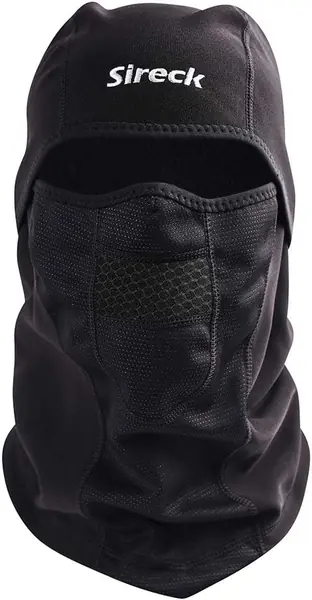
Wet snow is the weather that exposes most winter masks. Fleece soaks, wind cuts through the damp, and by the time you get inside the front is a cold sponge. The Sireck is the one here with a water-resistant face, which is why it is the mask for snowmobiling, plowing, and slushy commutes rather than a dry, bluebird day on the hill.

Coverage is full on paper — hood over the crown, panel over the nose, hem well down the neck — and in practice the cut is roomier than the snugger masks here, which is comfortable over a beard and less so if you land between sizes. The one place it slips is the nose bridge, where the panel can sit loose enough to leave a gap for cold air.

Set against the rest of the list, it is the specialist. Buy it if your winter means wet snow and an engine, and take the roomy fit as part of the deal. For dry cold under a helmet, the ROCKBROS is warmer and neater, and it will not leave you adjusting a nose panel at the trailhead.

Pros

  • Water-resistant face for wet snow
  • Windproof fleece that holds heat
  • Full coverage down the neck

Cons

  • Fogs glasses quickly in the cold
Our verdict

Our pick for wet snow and engine-powered winters: water-resistant fleece with full neck coverage for slushy rides and plowing.

Check Latest Price
7

SAITAG Fleece Balaclava Everyday Winter Wear

89 /100
Traveler Score Excellent

Key details

Material
Warm fleece
Intended Use
Skiing, snowboarding, cycling
Department
Men
Face Cover
Movable mesh panel
Check Details on Amazon

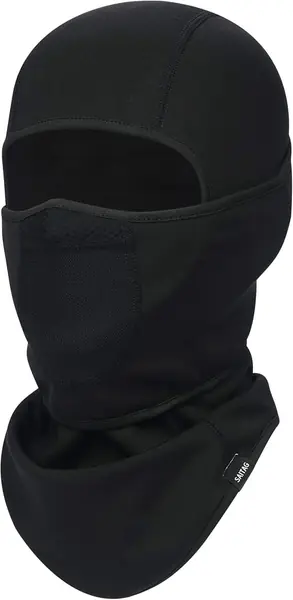
The face panel on this one moves independently of the hood, which sounds like a catalog line until you have tried to scratch your nose through two layers of fleece. Pull the front down and it becomes a neck gaiter; pull it up and the mesh sits over your mouth instead of flat against it, so you can breathe through the fabric rather than around it.

The two-sided fabric is the detail we appreciated most: a soft microfiber against your skin and a smooth face outside that does not grab a jacket collar or a helmet liner. Your ears do not end up pressed flat, which is more than most masks here can claim after an hour, and the mesh at the mouth keeps the inside from turning into a sauna on a long walk.

Warmth is where it earns its keep: fleece over the ears and down the neck, mesh at the mouth, and enough stretch to go on over a beard without a fight. It is the quiet all-rounder of this group — not the warmest, not the cheapest, not the toughest, but competent at every job on this page, and the one we would hand to someone who wants a normal winter mask rather than expedition gear.

Choose it if you want something softer and lighter-wearing for ordinary winter days — commuting, walking, working outside in a cold snap — and you do not need the warmest thing available. It gives up a little bite in a hard headwind compared with the fleece picks above, and it gives up nothing in comfort.

Pros

  • Soft microfiber lining, smooth outside
  • Mesh at the mouth for easier breathing
  • Warm fleece with full neck coverage

Cons

  • Panel can fog glasses while riding
Our verdict

A comfortable, well-rounded winter mask for everyday use, with a soft lining and a mesh mouth panel that makes long wear easy.

Check Latest Price
8

Achiou All-Season Balaclava Budget All-Season

88 /100
Traveler Score Excellent

Key details

Department
Women
Wind Protection
Windproof
Season
All-season
Fit
Adjustable
Check Details on Amazon

This one is filed under motorcycle and powersports gear rather than ski gear, and it shows. The Achiou is built for riders who want their face and neck out of the sun and wind, with a thin stretch fabric, an adjustable fit, and enough breathability to wear through a hot commute without cooking.

Worn as a full mask, pulled under the chin as a gaiter, or rolled up as a head covering, it covers the bases. The stretch handles a beard without complaint, which is more than the snugger fleece masks in this group manage, and it goes under a helmet without changing how the helmet sits. As a spare in a glove box or a jacket pocket, it is the least fuss of anything here.

Breathability is the best thing about it. Air moves through easily and the fabric does not hold sweat the way fleece does, so it works as hard in July as in November. Sun coverage is the practical benefit — a fabric barrier over your face and neck beats sunscreen that sweats off by noon — though if sun protection is the main reason you are shopping, look for a mask that states a UPF rating rather than assuming this one has it.

Buy it as a spare, a helmet liner, or a summer mask, and treat the winter claims as optimistic. For a cold January commute on a bike, the ROCKBROS is the one. This is the mask that lives in the car for everything else, and at its price that is a sensible thing to own two of.

Pros

  • Breathes well on hot rides
  • Adjustable fit with plenty of stretch
  • Covers face and neck under a helmet

Cons

  • Thin for genuine winter cold
  • One-size fit is inconsistent
Our verdict

A cheap, breathable all-rounder for sun, wind, and helmet duty — the one to keep in the car rather than rely on in January.

Check Latest Price

How We Tested Balaclavas

We built the shortlist by reading reviews and spec sheets, then filtering for full head-and-neck coverage, wind-blocking fabrics, and designs that could work under a helmet. We checked size charts and stretch, since a one-size mask still has to fit a range of heads, and we noted fabric weight before ordering. The final field was 14 balaclavas across price points and styles, including thin cooling masks, fleece ski masks, and two-in-one designs that convert to a neck gaiter.

Testing ran for four months, from late fall into early spring. Each mask went through a 20-minute bike commute, a weekend ski lap, a few motorcycle rides, and evening dog walks in wind and wet snow. I wore them under helmets, goggles, and a winter hat, and I wore glasses with every one. I also washed each mask repeatedly to see how the seams, stretch, and face panel held up.

To judge warmth, I wore each one on a 25-degree morning and a wet, windy afternoon, then noted whether cold air leaked at the neck or forehead. For breathability, I watched how quickly moisture built up during a hard climb and whether the fabric stayed clammy after I stopped. Fit and coverage got checked by pulling the face panel up, down, and under a helmet; I logged whether it stayed put, left a gap at the chin, or pressed on glasses frames. Quality came down to stitching, seam bulk, and how the fabric felt after washing. I also compared thickness against the label—some thin masks were warmer than bulky fleece—and noted which ones looked neat enough to wear into a coffee shop after a run.

How to Choose a Balaclava

Start With the Fabric, Not the Season Label

A balaclava's warmth comes almost entirely from its fabric, and the listings blur that difference. Thin synthetic masks — the kind sold for summer riding and sun coverage — breathe well and add almost nothing below freezing. Fleece and knit masks trap heat and block wind, at the cost of moisture and fog. A mask sold as all-season is nearly always the thin one.

Our rule: if you will be outside below freezing for more than a few minutes at a stretch, buy fleece and accept that you will pull it down to breathe hard. If you are layering under a helmet in warm weather, buy thin and treat it as sun and wind cover.

Fit Under a Helmet Is a Bulk Question

Any mask adds thickness to your skull, and helmets are sized without it. A dense fleece can make a snug ski or motorcycle helmet press at the crown, while a thin layer usually disappears. Seams matter as much as thickness, since a seam across the forehead becomes a pressure point after an hour.

If the mask lives under a helmet, take the thinner of two options and check that the helmet still sits level and low. In the cold, choose a windproof front over extra loft — wind resistance does more for warmth per unit of bulk than a thicker fleece.

Where the Mesh Sits Decides How Much You Fog

Vent panels work, but placement matters more than the marketing. Mesh over the mouth lets exhaled air pass out through the fabric instead of up past your eyes.

If you wear glasses or goggles, a panel that seals across the bridge of your nose is the worst case: your breath has nowhere to go but up. Look for a mask whose mesh mouth panel sits slightly off your face, and expect a little fog on the hardest climbs no matter what you buy.

Full Mask, Hinged Front, or Hat With a Panel

Three shapes cover this category. A pull-on balaclava gives the most coverage and the most warmth for the least fuss. A hinged front folds down to the chin so you can cool off without taking anything off. A hat with a stowable face panel is what to buy when the mask is a sometimes thing and a warm hat is the everyday one.

Pick by your day rather than the forecast. If you are in and out of doors, the hinge earns its keep; if you are standing still in the cold, the pull-on is warmer and simpler.

Frequently Asked Questions

Final Verdict

If you want one balaclava for winter, buy the ROCKBROS. It is warm without becoming a helmet problem, it blocks wind, and the stretch covers more head sizes than most one-size masks manage — which is why we recommend it without a caveat about your head size.

Two situations change the answer. If you work outside in serious cold, the Ergodyne's hinged front and deeper warmth are worth switching for. If your riding happens in heat and sun, the Fuinloth costs the least here and does a job a fleece mask cannot.