Best Snowboard Bindings of 2026

The chairlift unloads, everyone scoots three feet, and half the line drops to one knee to fight two ratchet straps through a pair of gloves. Bindings are the least glamorous thing on a snowboard and the one that decides the most: how much of what your legs do actually reaches the edge, how you feel at hour six, and how much of a powder day you spend bent over.

We rode 12 pairs through one full season, November through April, and two things surprised me. Flex ratings are only loosely comparable — a 6 out of 10 from one brand can feel like a 4 from another — and rear-entry designs, genuinely faster in the lift line, still give up a little edge-to-edge precision to a well-fitted two-strap binding.

Fit is the one thing that doesn't change: bindings are sized to your boot's shell length, not your shoe size, and a pair that fights your boot's heel profile will wreck a day. Below are the ones that held up, from budget straps to rear-entry and step-in systems, in men's and women's specific fits.

The Best Snowboard Bindings

1

Nidecker OG Supermatic Best Overall
92 /100
Traveler Score Outstanding

Key details

Size
X-Large (US Men's 11.0-13.0 / US W +11.5)
Weight
6 lb
Closure
Auto lock buckles
Flex
6/10
Check Details on Amazon

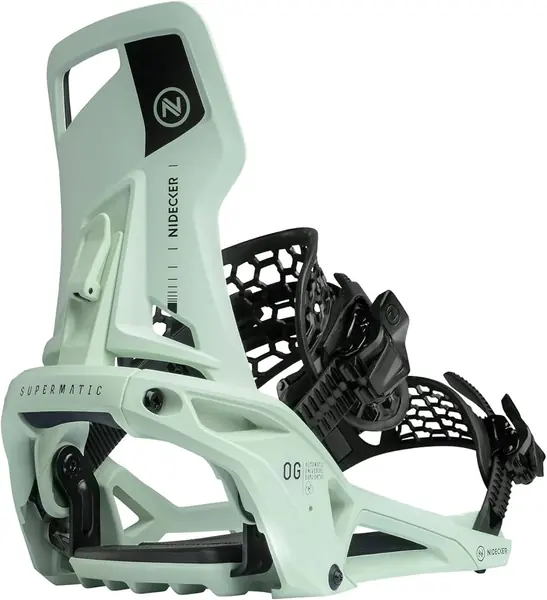
A rear-entry binding earns its keep at the top of a lift. Instead of sitting down and cranking two ratchets, you drop the highback with the heel of your hand, step in, and push off — and the Nidecker OG Supermatic is the best execution of that idea in this group, because it does it with the boots you already own.

That's the detail that decides it. Burton's Step On is faster still, but it only works with Step On boots, so the convenience arrives with a boot purchase attached. The Supermatic's auto-lock buckles close over a standard boot instead. Underneath, the platform is the most planted here: a rigid base, a flax-fiber highback, and a recycled carbon hanger and post that keep the binding from twisting when you load an edge.

The trade-offs are honest ones. The version listed is an extra-large for men's 11 to 13, so the first thing to check is whether that's your size. The release lever is the other: it can be stubborn to depress in cold, and it has failed outright in some cases, which is what the warranty is for. It frees up as the mechanism breaks in, and pulling back on the boot releases you if the lever hangs.

At six pounds it's the heaviest binding here, and this is the largest outlay in the roundup. What the weight and money buy is a 6-out-of-10 flex that drives a carve without turning the park into punishment, plus plush straps and a padded highback that keep a long day off your arches.

Pros

  • Step-in speed on standard boots
  • Rigid, planted all-mountain platform
  • 6/10 flex balances carving and park
  • Plush straps and padded highback

Cons

  • Release lever can be stiff or freeze
  • Heaviest binding in this set
Our verdict

We recommend the Supermatic to riders who want to stop sitting down for every strap-in and will pay for the best-feeling rear-entry binding in this group.
Check Latest Price
2

Union Flite Pro Best Traditional Strap Binding

88 /100
Traveler Score Excellent

Key details

Size
Large (US 10.5-13)
Weight
4.4 lb
Closure
Buckle
Mounting
All mounting systems
Check Details on Amazon

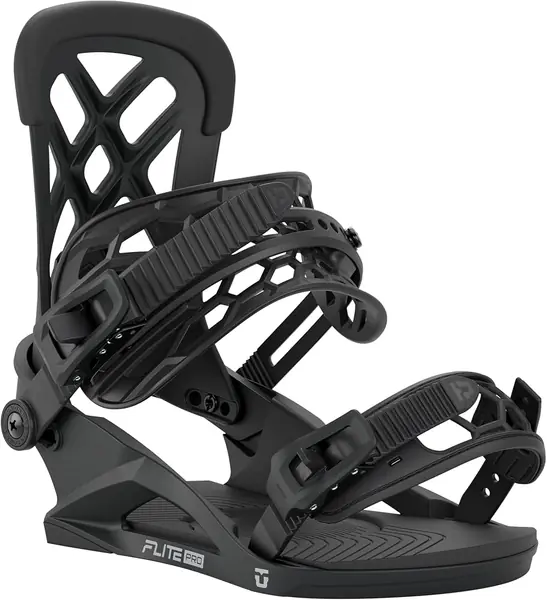
If the Supermatic's price and moving parts give you pause, the Union Flite Pro is the binding we point most riders to instead. It's a conventional two-strap binding — nothing to learn, nothing to break in — and at 4.4 pounds it's one of the lighter pairs here, which you notice on a long traverse with the board under your arm.

Union builds this one to a price without making it feel cheap. The extruded aluminum heelcup takes a beating, the Forma straps lock in fast and stay put, and the ratchets keep working in cold weather instead of gumming up. It also fits every mounting system going, so it drops onto a Channel board or a standard four-hole pattern without a scavenger hunt for the right disc.

The toe strap is the part to watch. It has snapped clean off under hard riding, and it's the single thing keeping this from challenging for the top spot. Check the strap's tension before a big day, replace it at the first sign of fraying, and it will otherwise do everything a progressing rider asks of it.

One more thing worth knowing if you're on an older board: the mounting disc can end up grabbing only three of the four screws on a Burton 3D pattern. Test-fit before you ride. For everyone else — beginner through solid intermediate, any board, any mountain — this is the least fussy good binding in the roundup.

Pros

  • Light at 4.4 pounds
  • Bombproof aluminum heelcup
  • Mounts to any board
  • Straps lock in quickly

Cons

  • Toe strap can snap
Our verdict

We recommend the Flite Pro to riders who want a light, uncomplicated two-strap binding that fits any board and grows with them.

Check Latest Price
3

Burton Step On Re:Flex Best Step-In

87 /100
Traveler Score Excellent

Key details

Size
Large (11-13)
Weight
4 lb
Cushioning
Re:Flex FullBED
Binding System
Burton Step On
Check Details on Amazon

The Step On Re:Flex only works with Burton's Step On boots. That isn't a footnote, it's the whole purchase: if you're not building your setup around those boots, this binding isn't for you, and the Union is.

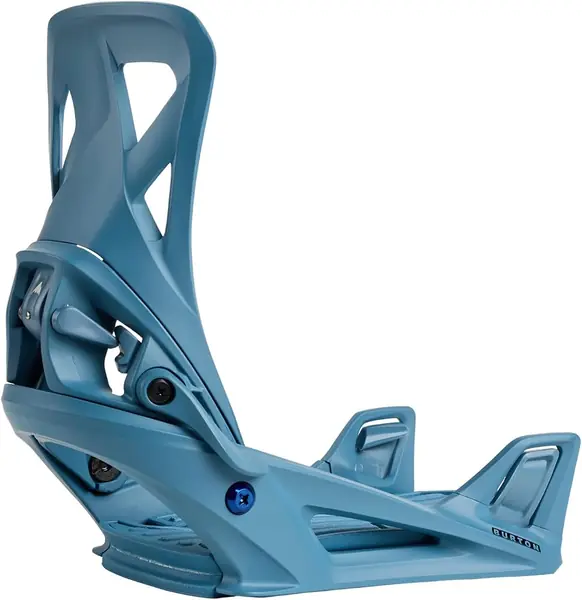
If you are, the payoff is real. There are no straps to clear of snow and no ratchets to crank with cold hands — you step down onto two toe hooks and a heel point, feel it seat, and ride off. Getting out is one lever behind the calf. On a powder day with a long lift line, the difference shows up in your feet by late afternoon.

We rank this Re:Flex build above Burton's Genesis step-in because it costs less and has far more riding behind it, and because the Re:Flex FullBED cushioning — with its trap-door for reaching the mounting hardware — takes the chatter out of refrozen groomers. The connection itself is the stiffest, most precise feel in this guide. If you want a binding that lets the board flex freely underfoot, this isn't it.

Two practical notes. The highback comes with zero forward lean built in, and Burton's FLAD lever lets you dial in what you want, so spend the two minutes on it. The listed size is a large for men's 11 to 13, and with Step On there's no strap to open up around a wider boot — the boot either matches the binding or it doesn't.

Pros

  • Fastest entry and exit here
  • FullBED cushioning with hardware trap-door
  • Three-point connection holds firm

Cons

  • Requires Burton Step On boots
  • Stiff, preset feel with no strap tuning
Our verdict

Our step-in pick: the fastest way on and off the board here, provided you're already riding Burton Step On boots.

Check Latest Price
4

System MTN Best Budget Rear-Entry

86 /100
Traveler Score Excellent

Key details

Size
Large (US 9-11)
Weight
4.85 lb
Closure
Step In
Mounting
4-hole and Channel
Check Details on Amazon

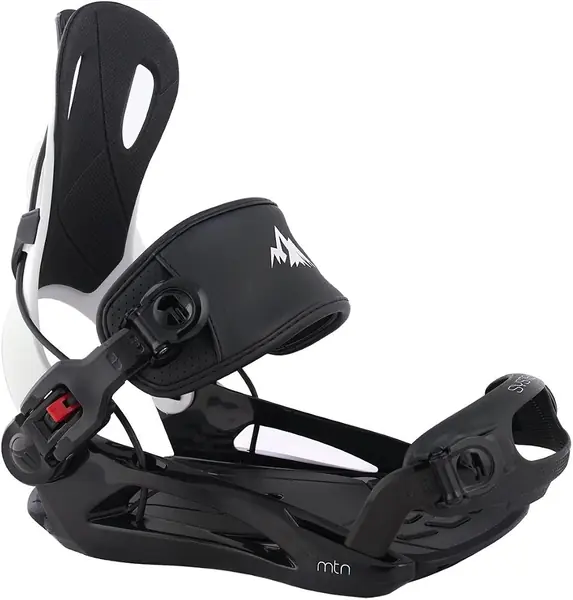
Rear-entry bindings usually sit at the expensive end of the shelf. The System MTN is the value play: the same fold-the-highback-down idea as our top pick, at a fraction of the price.

It doesn't feel like a corner-cut either. The highback is fully padded with EVA, the footbed is dense enough to soak up choppy snow, and the 3D-molded ankle strap is wrapped in polyurethane so it grips your boot instead of sliding over it. The multidisc baseplate mounts to a standard four-hole pattern or a Burton Channel board, and it comes with a three-year manufacturer warranty.

The compromises show up in the small adjustments. The toe strap height doesn't move, so a boot that lands off-center in the strap stays off-center — set your boots in the binding at home before you commit. Bigger-footed riders also find the extra-large snugger than the size chart suggests.

Our read: this is the binding for the rider who gets out a handful of weekends and wants to stop sitting down, not for the one logging real vertical every week. At this money the compromises are a fair trade, and the savings buy a lot of lift tickets. If you ride hard and often, put the difference toward the Nidecker and skip the second purchase.

Pros

  • Rear-entry speed at a budget price
  • Padded highback and dampening footbed
  • Mounts on 4-hole and Channel

Cons

  • Straps and buckles can loosen while riding
Our verdict

We recommend the MTN to weekend riders who want rear-entry convenience on a budget and don't need fine fit adjustment.

Check Latest Price
5

Burton Citizen Best for Women

85 /100
Traveler Score Excellent

Key details

Size
Medium
Weight
5.2 lb
Closure
Smooth Glide buckle
Forward Lean
MicroFLAD
Check Details on Amazon

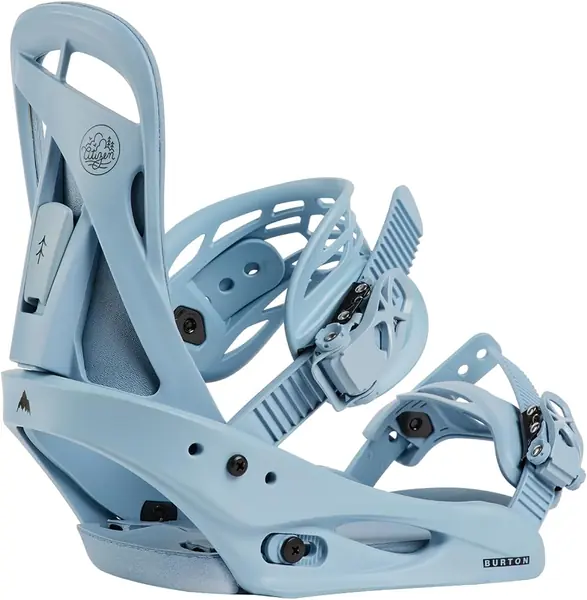
If you're shopping women's-specific and don't need step-in speed, the Burton Citizen is the one we point to first. The canted highback is angled to follow the leg instead of sitting flat against it, which is the difference you feel across the back of your calf after a long traverse, and the MicroFLAD lever sets forward lean by hand.

The build is deliberately playful. A single-component polycarbonate baseplate and a medium disc let the board flex underfoot rather than deadening it, which is what you want for park laps and soft-snow days. Re:Flex FullBED cushioning soaks up groomer chatter, and the trap-door in the footbed gets you to your mounting hardware without pulling the binding off the board.

It's the newest design here, so there's less long-term history behind it than the Step On line has — that's the trade for buying current. What you get instead is a women's-specific fit that most of this roundup doesn't offer at all, plus Smooth Glide buckles and a stance that doesn't fight your knees on a long catwalk.

One practical snag: this listing carries only the medium, so check your boot against Burton's chart before you order rather than assuming you'll size up later. For a rider who wants one binding to learn on and keep riding, the flex is forgiving enough to grow into and lively enough to stay interesting.

Pros

  • Canted women's-specific highback
  • Playful polycarbonate baseplate
  • Tool-free forward lean adjustment

Cons

  • Second-heaviest binding here
  • Only a medium in this listing
Our verdict

Our women's pick for riders who want a strap binding with a playful flex and a highback that actually follows the leg.

Check Latest Price
6

Rossignol Battle Best Budget

84 /100
Traveler Score Excellent

Key details

Size
Small-Medium
Weight
4.7 lb
Closure
Buckle and strap
Highback
MainFrame
Check Details on Amazon

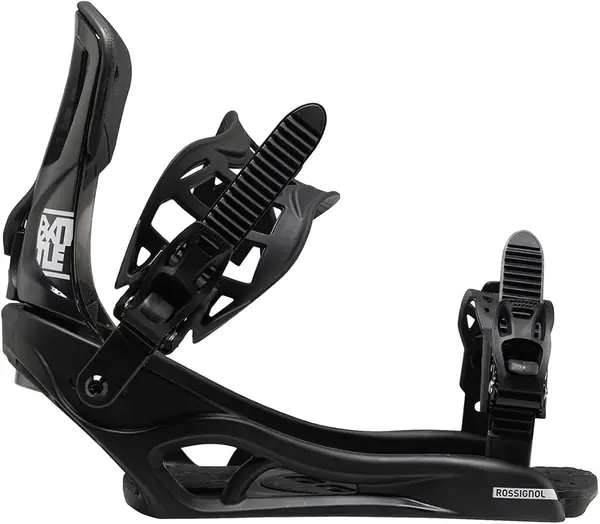
Nothing about the Rossignol Battle is clever. Two straps, a highback, a footbed — no rear entry, no step-in hooks, no learning curve — and that's exactly why it's the least expensive binding in this guide that we're happy to recommend.

The parts that matter beat the price. The MainFrame highback has a rigid spine down the middle with flex zones at the sides, the footbed is dual-zone thermoformed EVA, and the 3D-molded One Shot straps wrap the boot instead of pinching across the instep. The Baselight buckles are nylon rather than metal, which is where some of the savings come from.

Two things keep it out of the top tier. The heelcup sits proud of the board's edge, which you can feel on a hard toe-side carve, and the fit runs narrow — a size 11 boot crowds it. The small-medium listed here is aimed at smaller feet anyway, so bigger riders should look at the Union Flite Pro instead.

For a first setup, or a second board you don't want to spend much on, it does the job: installation takes minutes, the straps adjust without drama, and the value is hard to argue with. It isn't the pair you'll keep for a decade — ratchet clamps and clasps have let go — so check the buckles at the start of each day and treat it as a good first binding, not a last one.

Pros

  • Least expensive binding here
  • Easy to install and adjust
  • 3D-molded straps and dual-zone EVA

Cons

  • Narrow fit in larger boots
  • Heelcup overhangs the board edge
Our verdict

We recommend the Battle as the budget buy for a new rider on smaller feet who wants simple, adjustable bindings.

Check Latest Price
7

System LUX Women's Rear Entry

83 /100
Traveler Score Excellent

Key details

Size
Medium-Large
Weight
4.81 lb
Closure
Rear entry
Mounting
4-hole and Channel
Check Details on Amazon

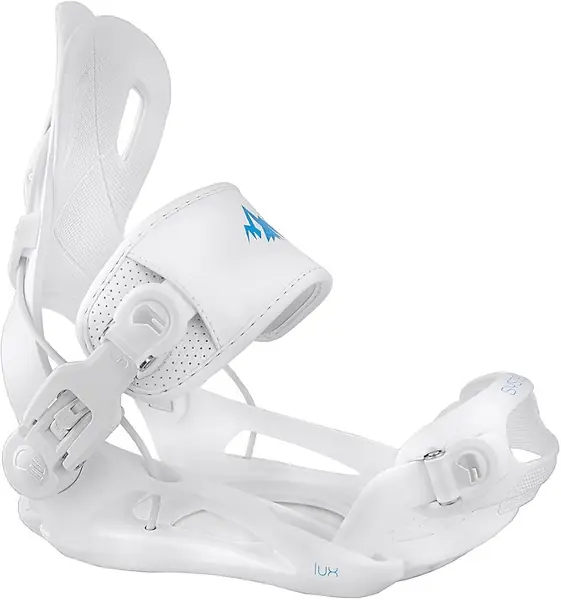
The System LUX is the women's version of the System rear-entry design, and the pitch is simple: drop the highback, step in, pop the rear latch, go. On a good day it's the quickest women's binding here short of a Step On setup, and it costs less than the Burton Citizen.

The catch is the latch. In dry cold it does what it should, but a wet or snow-packed latch can let go when it shouldn't, and that's the kind of failure that ends a run early. Clear the latch of snow and check that it clicks home every time you get in — this design rewards a moment of attention.

Everything else is reasonable for the money. The multidisc baseplate mounts to a standard four-hole pattern or a Burton Channel board, the highback and footbed are fully padded with EVA, and there's a three-year warranty behind it. Sizing runs snug, so don't plan on it covering a boot at the very top of the range.

Where that leaves us: as a lighter rider's first rear-entry binding, or a second pair for a small quiver, it's a sensible buy. As your only binding for a big-mountain season, the latch gives us pause. Buy it knowing what you'll be checking.

Pros

  • Rear-entry step-in built for women
  • Mounts to 4-hole and Channel
  • Three-year warranty

Cons

  • ⚠️ Rear latch can release in wet snow
  • Sizing runs snug at the top of the range
Our verdict

Our women's rear-entry pick, with one habit attached: clear the latch of snow and confirm it clicks home every time.

Check Latest Price

How We Tested the Best Snowboard Bindings

We started with every binding we could find that had a real following among riders, then narrowed to a mix of traditional two-strap, rear-entry, and step-in designs in men's, women's, and unisex sizing. Anything with plastic that flexed under a hard hand squeeze got cut, and we made sure each model came in enough sizes to cover a range of boot shells. We kept budget options and premium ones in the mix so the list wouldn't turn into a price shootout, and we weighed what each pair asked of your wallet against what it gave back on the hill.

All 12 pairs were mounted to the same two boards and ridden by testers from a 130-pound intermediate to a 210-pound ex-racer, using boots from three different brands so we could see how each binding handled different heel profiles and shell lengths. We timed how long it took to get in from a standing start on a slope, then did it again in mittens. We changed forward lean, highback rotation, and strap length mid-run to see whether it could be done without tools or peeling a glove off, and we asked our feet at the end of each day about hot spots over the instep, heel lift, and ankle-strap pressure.

Durability testing happened where bindings actually get hurt: early-season rock and ice, a few park laps, and cold enough to make plastic brittle. We checked mounting screws after every session, inspected ratchet teeth for rounding, and looked for cracks at the baseplate corners. On snow, we noted how quickly each one answered when we rolled edge to edge and whether the baseplate quieted chatter or sent every bump up through the boot.

How to Choose Snowboard Bindings

Strap, Rear Entry, or Step On

A traditional two-strap binding works with any boot, adjusts around almost any foot, and costs the least. Rear entry flips the highback down so you can step in without sitting, and it also runs on standard boots. Step On is fastest of the three, but it's a two-part system: the binding only works with Burton Step On boots, so the real price is bindings plus boots.

Our position: if you already own boots you like, rear entry buys most of the step-in convenience without the lock-in. That's why the Nidecker Supermatic takes our top spot and the System MTN covers the budget end. Step On earns its place only for a rider ready to commit to the whole boot ecosystem at once.

Check the Mounting Pattern and the Size Range

Start with the board. A standard four-hole pattern is the most common, Burton's Channel needs a compatible disc, and older Burton 3D boards are the odd one out — some discs only grab three of the four screws there. Measure the inserts before you order, and look at the heelcup: a wide binding can hang off the edge of a narrow board and feel different on a hard toe-side carve.

Then look at the size. Binding ranges are stated as boot sizes and they overlap oddly between makers — the System MTN in large covers a men's 9 to 11, while the Union Flite Pro in large runs 10.5 to 13. Go by your boot against the binding's own chart, and treat the top of a range as optimistic rather than generous.

Match Flex to How You Actually Ride

A stiffer binding transfers input faster and holds an edge with less effort, which is why the Supermatic's 6-out-of-10 flex feels calm at speed. A softer binding is more forgiving, easier on the feet, and better in the park. A beginner on a stiff binding gets punished for every sloppy weight shift; an aggressive rider on a soft one feels the board wander.

Buy for the rider you are this season, not the one you plan to be. If you're still linking turns, aim soft to medium and expect to upgrade. If you're carving groomers and hitting jumps with confidence, pay for stiffness.

Know What Fails First

Bindings rarely fail at the baseplate. They fail at the soft parts: toe straps that crack or snap, latches that stop returning, footbeds that peel off, ratchet clamps that slip. That's why a heavier binding with plain straps can outlast a lighter one with more hardware, and why the cheapest pair here is a first binding rather than a forever one.

Before your first day on any new set, check the toe strap for cracks, confirm the highback latch clicks and holds, and re-check the mounting screws after your first few runs, since new hardware settles.

Frequently Asked Questions

Final Verdict

Our pick is the Nidecker OG Supermatic. Nothing else here combines a fold-down rear-entry highback, standard boots, and this much support underfoot, and it makes the top of every run shorter. If the price is a step too far, the Union Flite Pro is a lighter, simpler binding that mounts on any board and won't hold back a progressing intermediate.

Already committed to Burton boots? Then the Step On Re:Flex is the faster way to the lift, and its stiff feel is a feature rather than a compromise. Riders with smaller feet and a tighter budget can drop to the Rossignol Battle and put the savings into a lesson.