Best Women's Hiking Shoes for Narrow Feet

A hiking shoe that's too wide doesn't announce itself in the store. It shows up three miles in, when your heel lifts with every step and your foot slides forward into the toe box on the descent. If your feet are narrow, you've probably sized down to feel secure and paid for it in blackened toenails. What actually fixes it is a shoe that locks the midfoot and heel without cranking the laces into a tourniquet, and still gives your toes room to spread on a steep downhill.

Narrow lasts are usually the first thing a brand drops from a lineup, so the options that remain skew stiff or thin on cushioning, and a pair that feels perfect at 8 a.m. can turn mean once your feet swell at hour four. We put 11 pairs through eight months of gravel, rock, and root to find the ones that hold a narrow foot without punishing it. The picks below suit different terrain and different appetites for cushioning, but each one keeps a narrow heel planted.

1

Best Overall

Merrell Siren Edge 3

89 /100
Traveler Score Excellent

Key details

Style
Women's low-cut hiking shoe
Package Weight
1.74 lb
Package Dimensions
12.2 x 8.5 x 4.2 in
Check Details on Amazon

The place narrow feet fail on a trail is the descent. When there's spare volume through the midfoot, the foot slides forward, the toes jam into the front of the shoe, and what felt fine on the climb turns painful on the way down. The Siren Edge 3 is the shoe in this guide that handles that best. The heel sits close, and on downhill stretches our toes stayed off the front of the shoe instead of scrunching into it.

Thin, bony feet with high arches are the shape that tends to swim inside a hiking shoe, and they happen to be the shape this one suits. Sizing runs true, which matters more than usual here: on a narrow foot there is no spare volume to size around. Merrell lists the packaged pair at 1.74 pounds against 2.6 for the Moab 3, and that gap is obvious at the end of a long day.

Underfoot it's more supportive than its weight suggests. The arch support is substantial, the outsole grips steep, pebbly trail well, and it's happiest on hikes rather than on pavement. It's a low-cut shoe, so it won't brace an ankle the way a boot does — that's the trade for the weight, and for day hikes we make it happily.

The stock insole is firm, firm enough that it's the first thing we change. Pull it out and drop in the insole you already use; the support underneath doesn't go anywhere and the shoe gets noticeably more comfortable. That's a five-minute fix rather than a reason to look elsewhere, and it's why this is the pair we point narrow-footed hikers to first.

Pros

  • Close heel hold for low-volume feet
  • Light enough to forget on a long day
  • Grips steep, pebbly trail
  • Runs true to size

Cons

  • Toe box is roomier than the heel
Our verdict

If your feet are narrow and you want one light, grippy shoe for day hikes, this is the pair we recommend first — the heel hold is what earns it.

Check Latest Price
2

Best in Wet Weather

Columbia Transverse Suede

90 /100
Traveler Score Outstanding

Key details

Style
Women's low-cut hiking shoe
Upper
Suede
Model Number
210359
Check Details on Amazon

Suede is heavier than mesh and slower to dry, but it holds its shape, and shape is what stops a low-volume foot from wandering inside a shoe. The Transverse Suede is the most structured upper in this guide, and on a narrow foot that structure does more for comfort than another few grams of foam ever will.

Wet weather is where it earns its place. Water stayed out through puddles and shallow streams, and grip held on the far side of them. There's also more ankle support here than in most of the low-cutters in this guide, which shows up on cobblestones and root-covered trail rather than on smooth gravel.

Fit runs true to size, with room for thicker socks and toes, and a couple of feet found it snug across the toe box at first before it settled. That's a good pattern for narrow feet: snug-and-settling beats roomy-and-sliding every time, and it's why we're comfortable sending people here without a sizing caveat.

Against the Siren Edge 3 it gives up some lightness. What it returns is a shoe that keeps its shape, shrugs off wet weather, and looks tidy enough to wear into town — the one we hand to someone who wants a single pair to do everything on a trip.

Pros

  • Suede upper holds its shape
  • Keeps water out of puddles and streams
  • More ankle support than most low-cutters here
  • True to size for most feet

Cons

  • Suede dries slowly after a soaking
Our verdict

When your trails are wet and you want an upper that holds a narrow foot in place, this is the pair to buy.

Check Latest Price
3

Best for Long, Rocky Days

Merrell Moab 3

91 /100
Traveler Score Outstanding

Key details

Style
Women's low-cut hiking shoe
Package Weight
2.6 lb
Package Dimensions
13.4 x 9 x 5.1 in
Check Details on Amazon

The Moab 3 is the roomiest shoe in this guide, which is an odd place to start a recommendation for narrow feet. Stay with us: the volume sits in the toe box rather than the heel, the heel doesn't slip, and a locked heel with roomy toes is a far better arrangement for a narrow foot than a shoe that pinches everywhere and still lets the foot slide.

What the extra room buys is a full day of support. It's comfortable straight out of the box — no blisters, no break-in — and the arch support is the kind that holds up under a loaded pack on rocky ground. Traction on gravel and wet rock is dependable, and it feels stable on the loose, sandy descents where light shoes start skating.

It's also built like a workhorse. The upper and outsole take repeated use without the sagging and creasing that turn a roomy shoe into a sloppy one, and of everything here this is the pair we trust most with a long, rough season.

For narrow feet the adjustment is simple. If your foot is genuinely low-volume, try half a size down from your normal size; if you wear thick socks in cold weather, keep your usual size and let the toe box stay roomy. A roomy toe box isn't what hurts narrow feet — a loose heel is, and this shoe doesn't have that problem.

Pros

  • Cushioned enough for all-day hiking
  • Strong arch support on rocky ground
  • Durable upper and outsole
  • No break-in period

Cons

  • Roomier toe box than the rest of the group
Our verdict

The most supportive, most durable shoe here, and a good narrow-foot choice as long as you accept a roomy toe box and lock the heel down.

Check Latest Price
4

Best Budget

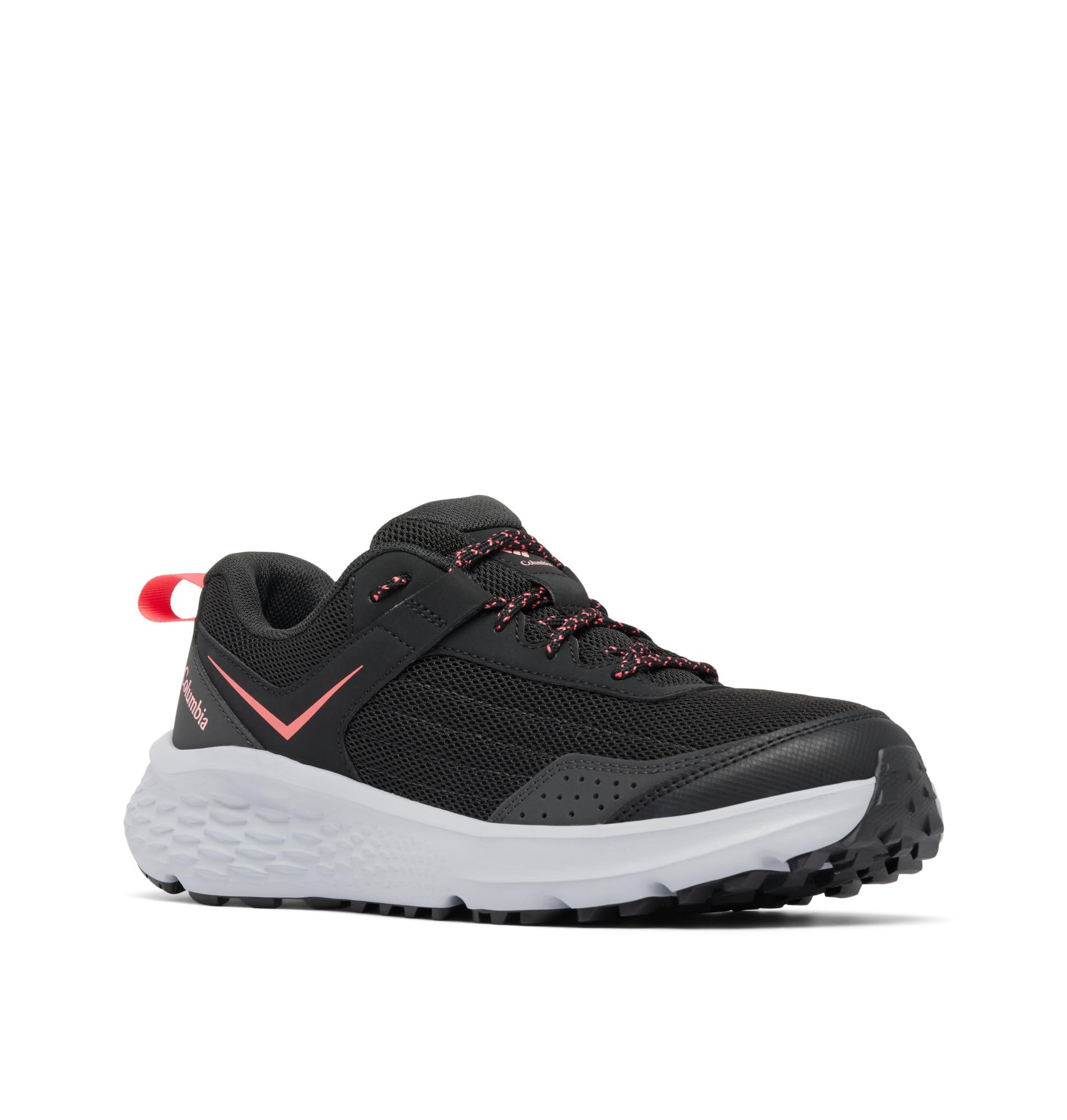
Columbia Vertisol Trail

89 /100
Traveler Score Excellent

Key details

Style
Women's low-cut hiking shoe
Outsole
Omni-Grip
Model Number
207737
Check Details on Amazon

The Vertisol Trail is the shoe we throw in a carry-on. It's light enough for a day of city walking and grippy enough for the trail at the end of it, and that double life is unusual in a hiking shoe — most of them announce themselves as hiking shoes by lunchtime.

The fit is the part that matters for narrow feet. It comes up snug around the foot with no sliding and no pinching across the toes, and it runs true to size, so there's no guesswork about which size to order. That snugness is the whole game here: it's what stops you bracing with your toes on a descent instead of walking normally.

It also costs less than most of the shoes in this guide, which makes it a sensible first pair or the second pair that lives in a suitcase. Grip is better than the price suggests and held on wet and dry rock alike, and it doesn't look like orthopedic footwear, which matters if one pair has to cover dinner as well as the trail.

Be honest about what it isn't. It's happiest on non-technical trails, gravel paths, and travel days, and it's excellent at those; take it onto scree with a heavy pack and you'll feel the lack of structure. That's a narrow brief rather than a flaw, as long as you match it to the walking you actually do.

Pros

  • Snug, no-slide fit
  • Light enough to pack
  • Grip holds on wet and dry rock
  • Costs less than most picks here

Cons

  • Not built for rocky, loaded hikes
Our verdict

A light, sure-fitting shoe for travel and easy trails, and the best value in this guide if your hikes stay non-technical.

Check Latest Price
5

Occasional Light Hikes

NORTIV 8 Quick Lace

85 /100
Traveler Score Excellent

Key details

Style
Women's low-cut hiking shoe
Closure
Quick-lace drawcord
Department
Women's
Check Details on Amazon

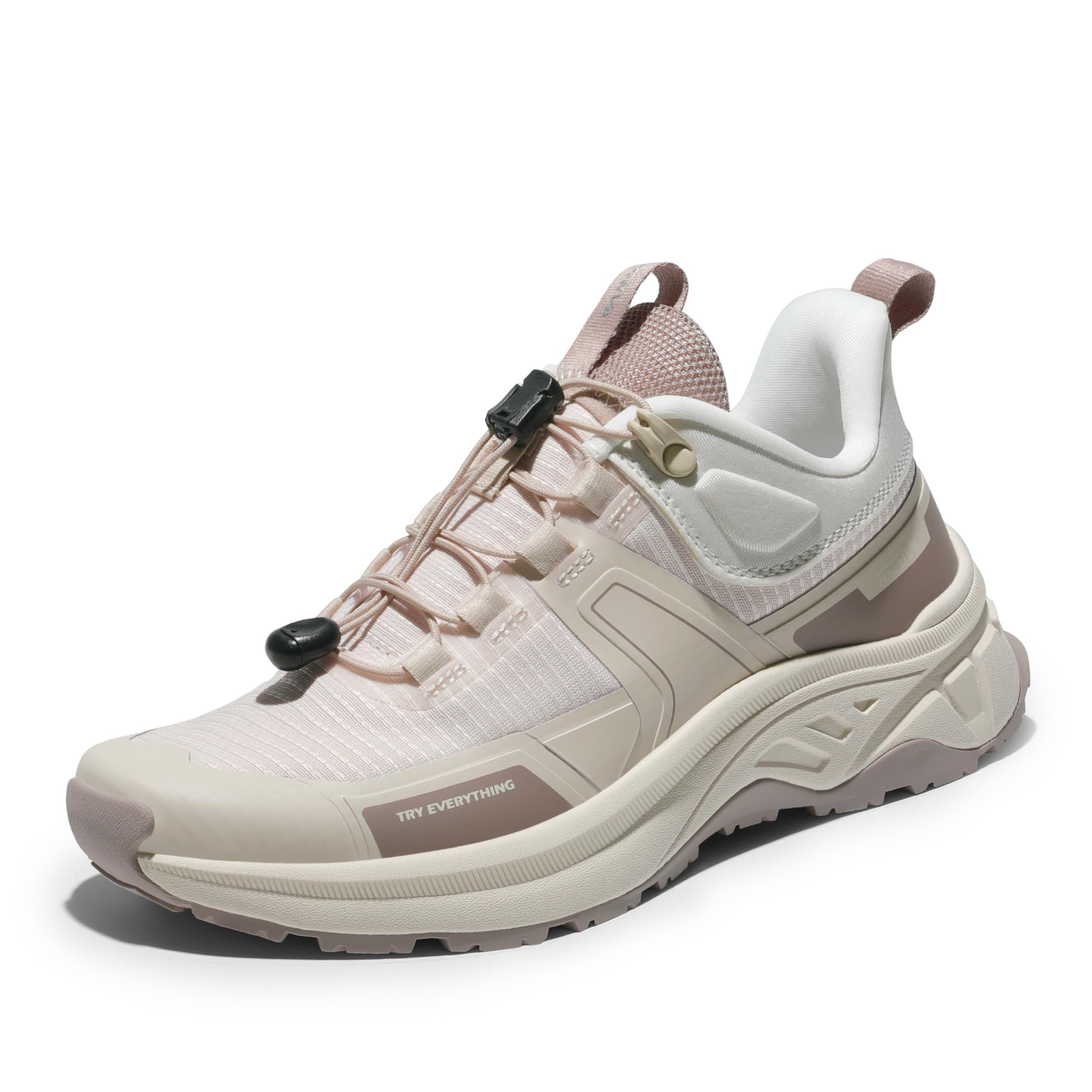
The NORTIV 8 is the least expensive shoe here, and it's aimed at a different kind of use: a few hikes a year, a lot of walking, and a pair you don't mind getting muddy. The quick-lace drawcord is the first thing you notice — pull it, tuck the end, and there's nothing to come untied on a wet descent.

It runs narrow, which is why it's in this guide at all. If your feet are on the slim side, it's worth a try for the money, though the sizing is genuinely mixed: some feet needed a half size up, others found their normal size right. Expect to send one pair back before you land on the fit.

Grip is the pleasant surprise, holding on rock and gravel better than the price suggests, and the look is closer to a sneaker than a hiking shoe, so it doubles for everyday wear. Where it gives ground is longevity — the sole and upper don't hold up like the Merrells and Columbias here — and water resistance stops at damp grass rather than stream crossings. Buy it as a light-use shoe and it makes sense; ask it to be your only pair and it won't.

Pros

  • Quick-lace closure, nothing to tie
  • Runs narrow
  • Grip better than the price suggests
  • Lowest-priced shoe here

Cons

  • Durability falls short of other picks
  • Not waterproof in stream crossings
Our verdict

A cheap, narrow-fitting trail shoe for occasional hikes — just don't expect it to last like the picks above it.

Check Latest Price

How We Chose and Tested Narrow-Fit Hiking Shoes

We built the shortlist from brands that publish a narrow-specific last or sell a genuine narrow width, then cut anything that only came in a standard fit — several well-reviewed shoes never made it past that filter. We also dropped pairs that were effectively sold out in narrow sizes, since a pick you can't buy is no help. That left 11 pairs, worn over eight months.

Every pair went on the same three routes: a gravel loop near my house, a rocky climb with a long loose descent, and a wet morning walk after rain. On the first wear I hooked a finger behind each heel and tried to lift the shoe off my foot, then took the descent deliberately fast to see whether my toes slid forward and jammed. I noted where pressure appeared — across the forefoot, over the instep, at the arch — during the first mile and again at hour four, when feet swell.

Traction was judged on wet rock and muddy switchbacks, not on pavement. For water resistance, I stood each shoe in a shallow puddle and ran a hose over the toe box for a minute, then checked whether my socks came up damp. Over the months I watched the stitching, toe caps, and how the uppers cleaned up after mud, and I kept track of whether the midsole still felt springy twenty miles in or had packed out to a plank.

How to Choose Women's Hiking Shoes for Narrow Feet

Start at the Heel, Not the Toe

The most useful thing to know about narrow feet in hiking shoes is that a roomy toe box isn't the enemy — a loose heel is. Feet slide forward when the midfoot has spare volume, and on a descent that means jammed toes and bruised nails. Look for a close-fitting heel, lacing that runs well down toward the toes so you can take up volume, and a collar that hugs rather than gapes. Then test the pair on stairs before you commit, because a flat shoe-store carpet hides exactly the problem you're trying to avoid.

Sizing, Insoles, and Taking Up Volume

Start with your normal size and expect it to be right: the Siren Edge 3 and the Vertisol Trail both run true. If you sit between sizes, take the smaller one — a narrow foot has nothing to fill extra length with, and a shoe that's too long will let the heel lift.

The other lever is the insole. The Siren Edge 3 ships with a notably firm footbed, and swapping in the insole you already use takes up a little volume while adding the cushioning you want. Thick socks are a stopgap, not a fix; they compress underfoot within a mile and bunch at the heel, which is the one place a narrow foot needs contact.

How Much Shoe You Need

A light low-cut shoe is the right call for day hikes, travel, and well-made trails. The Vertisol Trail is the clearest example here — it handles gravel and non-technical paths happily and packs down to nothing. If your days involve scree, long rocky descents, or a loaded pack, the extra structure and cushioning of something like the Moab 3 is worth the weight. Match the shoe to the worst trail you actually walk, not the best one you daydream about.

Waterproofing versus Breathability

Membranes and suede uppers keep water out and heat in. The Transverse Suede stayed dry through puddles and shallow streams; a mesh shoe like the NORTIV 8 soaks through in a crossing and stays damp for the rest of the walk. If you hike in wet climates or shoulder seasons, pay for the water resistance. If your trails are dry and hot, mesh is cooler and lighter, and wet feet for an hour aren't the disaster the marketing implies.

Traction and Terrain

Lug depth and rubber compound matter more than the pattern looks. For gravel paths and packed dirt a moderate lug is plenty; for wet rock and steep descents you want a softer compound that holds. All the shoes here grip adequately for their intended terrain, and the Vertisol Trail's outsole held on both wet and dry surfaces. If slickrock is a regular part of your week, spend your weight budget on traction rather than on cushioning.

Frequently Asked Questions

Final Verdict

The Merrell Siren Edge 3 is the pair we recommend first. It holds a narrow heel without pinching the toes, it's light on the foot, and it grips rock well enough for real trails — which is the combination most narrow-footed hikers are actually shopping for.

Change the requirement and the answer changes. For wet weather and a more structured upper, the Columbia Transverse Suede is the better buy; for one pair that covers town days and easy trails, the Vertisol Trail is the travel pick. What we don't suggest is buying a roomy shoe and hoping thick socks fix it.