Best Overall
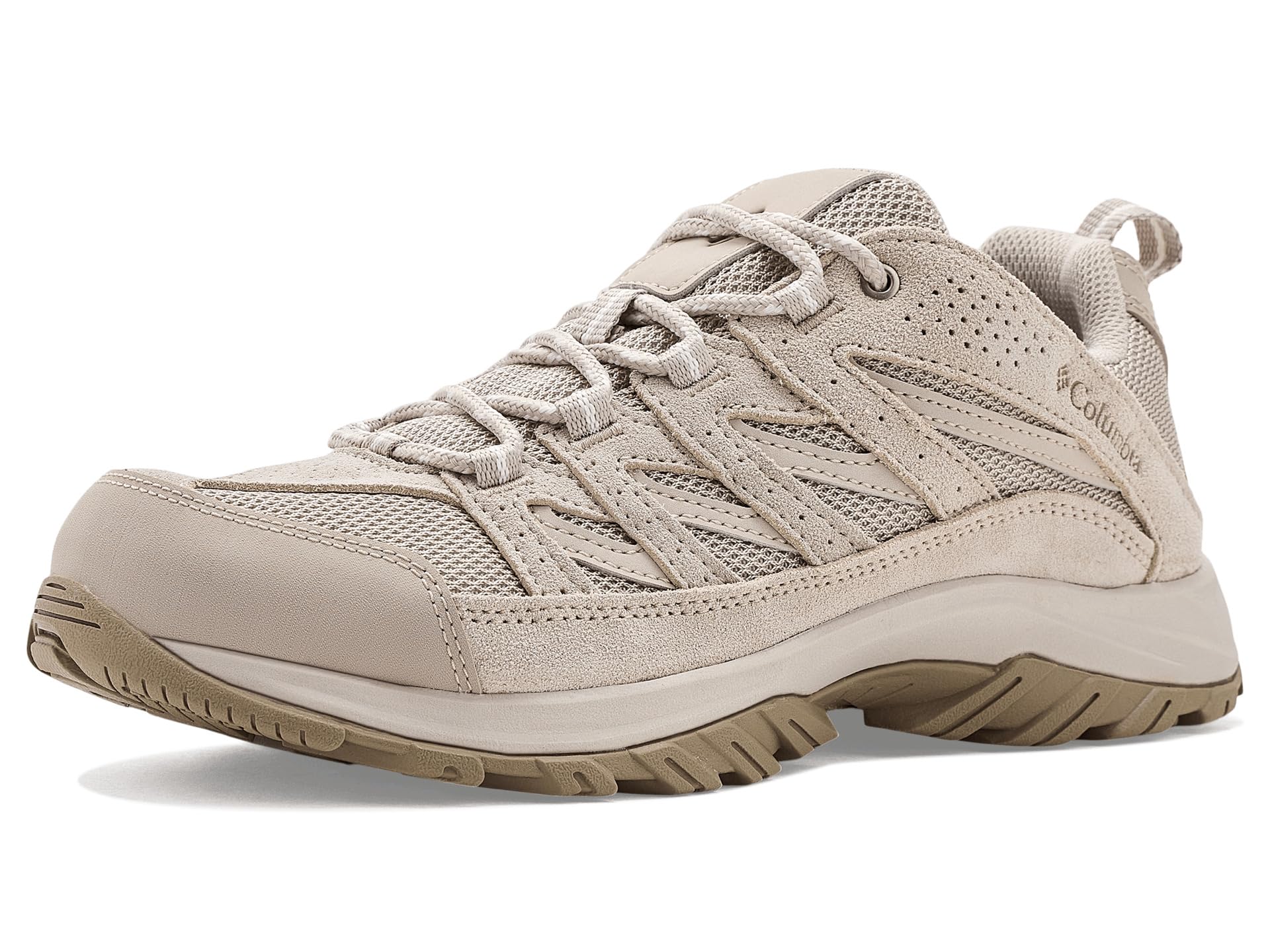
Columbia Crestwood
Key details
- Upper
- Mesh
- Widths
- Standard and wide
- Toe Box
- Roomy
Heat is what turns a good hiking shoe into a long afternoon. The Crestwood handles it better than anything else in this guide because Columbia left the upper open and cut the toe box generously, so toes have somewhere to spread once feet swell at midday. We put miles on these over dry, rocky ground and never had to stop and relace to relieve a pinch across the forefoot. That combination is why this is the pair we point most desert hikers toward first.
The mesh cuts both ways, and we're happy with the trade. Water moves through the upper easily, so a creek crossing or an unexpected shower soaks your feet, and dust works in through the same panels. On a desert trip that's the right bargain: air moves through, the shoe dries out, and you aren't carrying a membrane that turns into a sauna by noon. If your route runs through sandy washes, low gaiters are the cheap fix.
The rest is quietly competent. Grip held on dry rock and packed gravel, the outsole has lasted longer than we expected from a shoe in this bracket, and sizing ran true for us. Weight is where it gives a little ground, since it's a touch heavier than a walking shoe, and support is honest rather than plush. For a first desert shoe that won't punish you, start here; if you need a wider platform and can live with more warmth, the Moab 3 is the step up.
Pros
- Roomy toe box leaves space in heat
- Mesh upper moves air on exposed trails
- Grip holds on dry rock and gravel
- Wide width option at a midrange price
Cons
- Mesh lets dust and stream water in
- A touch heavier than a walking shoe
Our first recommendation for desert trails: a mesh upper that vents heat, a toe box with real room, and grip that holds on dry rock, at a midrange price.