Best Hiking Shoes for Women with Plantar Fasciitis of 2026

Plantar fasciitis introduces itself in the first ten steps out of bed, a sharp, grabby pain in the heel that has you walking on your toes to the bathroom. I know that walk well, and the hiking shoe that finally made trails feel normal again was not the softest one I tried. A shoe that works for a cranky fascia does two things at once: it puts real structure under the arch so the tissue isn't stretching with every step, and it cushions the heel without turning the whole shoe into a marshmallow. Get those right, along with a fit that holds your heel down and leaves room in the toes, and the rest of it — weight, looks, how long the outsole lasts — starts to matter the way you'd expect it to.

Eight months and 11 pairs later, the surprises were mostly about fit. The shoes that helped most had an arch that pushed back and a heel that stayed locked in place, while a couple of the plushest pairs made things worse by letting my foot roll inward all day. Two of the strongest supporters were also among the lightest, a few looked enough like everyday sneakers that I kept them on for errands after a hike, and only some showed real wear by the end. The picks below are the ones that earned their spot by the door.

1

Best Overall

Merrell Moab 3 Hiking Shoes

91 /100
Traveler Score Outstanding

Key details

Cut
Low-cut
Toe Box
Roomy
Traction
Grippy on gravel and rock
Arch Support
Supportive
Check Details on Amazon

The low-cut Moab 3 is the pair we reach for first when heel pain is the deciding factor. What earns it the top spot is the combination of a supportive arch, a roomy toe box, and enough cushioning to make a long day on gravel and rock feel ordinary rather than punishing. We noticed the support most on uneven ground, where the shoe keeps the foot from rolling inward and lets the heel settle instead of chatter. The roomy toe box matters for plantar fasciitis because it leaves space for a thicker insole or orthotic without crowding the toes.

Traction is another strong point: the outsole grips gravel and slippery rock with more confidence than the budget picks here. If you hike in wet weather, the mid-cut waterproof Moab is the better version. We also appreciate that it needs little break-in, which is not something we can say for every stiff-soled hiker in this group. The fit is roomy rather than precise, so narrow feet may find it loose through the middle.

What settled it for us was the way the roomy fit and supportive arch worked together; neither one alone would be enough on a long descent. It is the most complete balance of support, comfort, and trail grip in this group, and the one we hand to most hikers first.

Pros

  • Supportive arch for long trail days
  • Roomy toe box leaves space for insoles
  • Reliable traction on gravel and rock
  • Comfortable with little break-in

Cons

  • Roomy fit can feel loose on narrow feet
Our verdict

For most women with plantar fasciitis, this is the hiking shoe we recommend first: supportive under the arch, roomy enough for an insole, and comfortable over long miles.

Check Latest Price
2

Best Ankle Support

Merrell Moab 3 Mid Waterproof

91 /100
Traveler Score Outstanding

Key details

Cut
Mid-cut
Toe Box
Generous
Ankle Support
Supportive
Waterproofing
Waterproof
Check Details on Amazon

The mid-cut Moab 3 is the wet-weather answer to our top pick. It uses the same supportive, roomy fit that makes the low-cut version easy to recommend, then adds a waterproof upper and a higher collar that wraps the ankle on rocky, sodden trails. We wore it on days when puddles and mud were unavoidable, and the dry-footed feeling lasted through the hike; the ankle coverage also made us less picky about where we placed our feet.

Where it wins over the low-cut shoe is confidence. The higher collar and waterproof build make it the better choice for shoulder-season hikes, stream crossings, and trails with roots and rocks that punish a turned ankle. We also like that it still feels comfortable right out of the box, with enough toe room for a thicker sock or a support insole.

If your hikes regularly include wet roots, shallow streams, or cool-weather mud, this is the version we reach for. The extra coverage is the point; on fast, dry days, the low-cut Moab is the easier carry.

Pros

  • Waterproof upper keeps feet dry
  • Ankle coverage adds confidence
  • Roomy toe box for thicker socks
  • Comfortable with little break-in

Cons

  • Bulkier than a low-cut trail shoe
Our verdict

Choose this mid-cut Moab when wet trails and ankle coverage matter more than saving weight; it keeps the supportive fit of our top pick and adds waterproof protection.

Check Latest Price
3

Best for Wide Feet

KEEN Voyageur

91 /100
Traveler Score Outstanding

Key details

Cut
Low-cut
Footbed
Removable
Toe Box
Wide
Arch Support
High-arch friendly
Check Details on Amazon

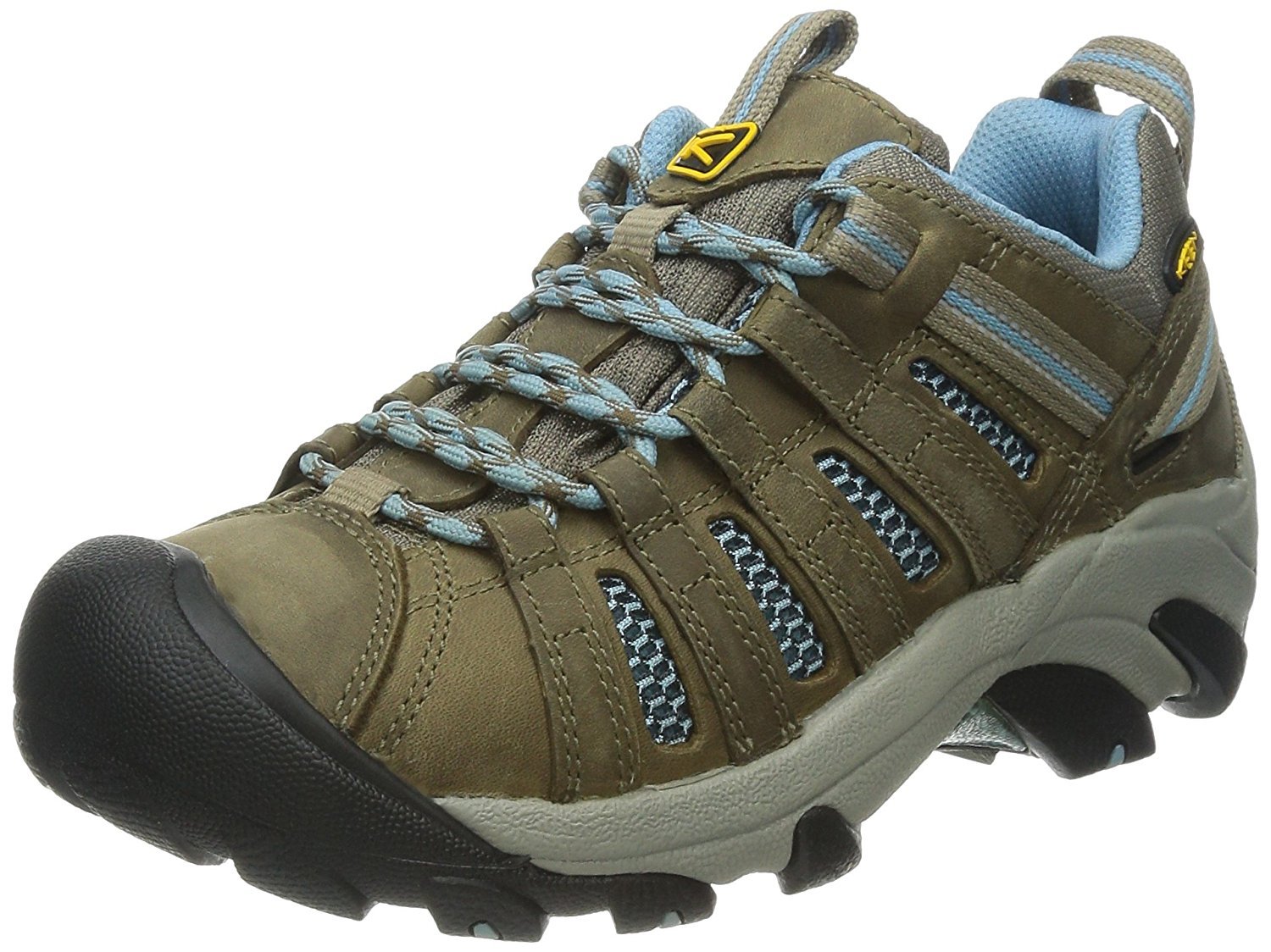
The Voyageur is the wide, orthotic-friendly option in this group. The toe box is genuinely wide, the arch support is aimed at high arches, and the footbed comes out so you can fit a custom orthotic or a thicker support insole. For a plantar-fasciitis hiker who has been squeezing a wide foot into a standard women's shoe, that combination is the reason to start here.

We like the Voyageur most on rocky, uneven ground. The shoe feels stable underfoot, and the wide platform gives your toes somewhere to spread when you push off. It is not a soft, squishy shoe; the support comes more from a firm, structured ride than from pillowy cushioning. If you want maximum plushness under the heel, the Moab 3 is the easier choice. If you want room for an orthotic and a secure, planted feel, this is the one we recommend.

What we keep coming back to is the roomy toe box: it lets you wear the shoe with the insole you actually need, rather than the one the shoe came with. That is a small design choice with a big effect on a long day.

Pros

  • Wide toe box accommodates orthotics
  • Strong arch support for high arches
  • Removable footbed for custom insoles
  • Stable on rocky, uneven ground

Cons

  • Generous fit runs large for some feet
Our verdict

For wide feet, high arches, or custom orthotics, the Voyageur is the women's hiking shoe we recommend first; it trades plushness for a stable, roomy ride.

Check Latest Price
4

Best Budget

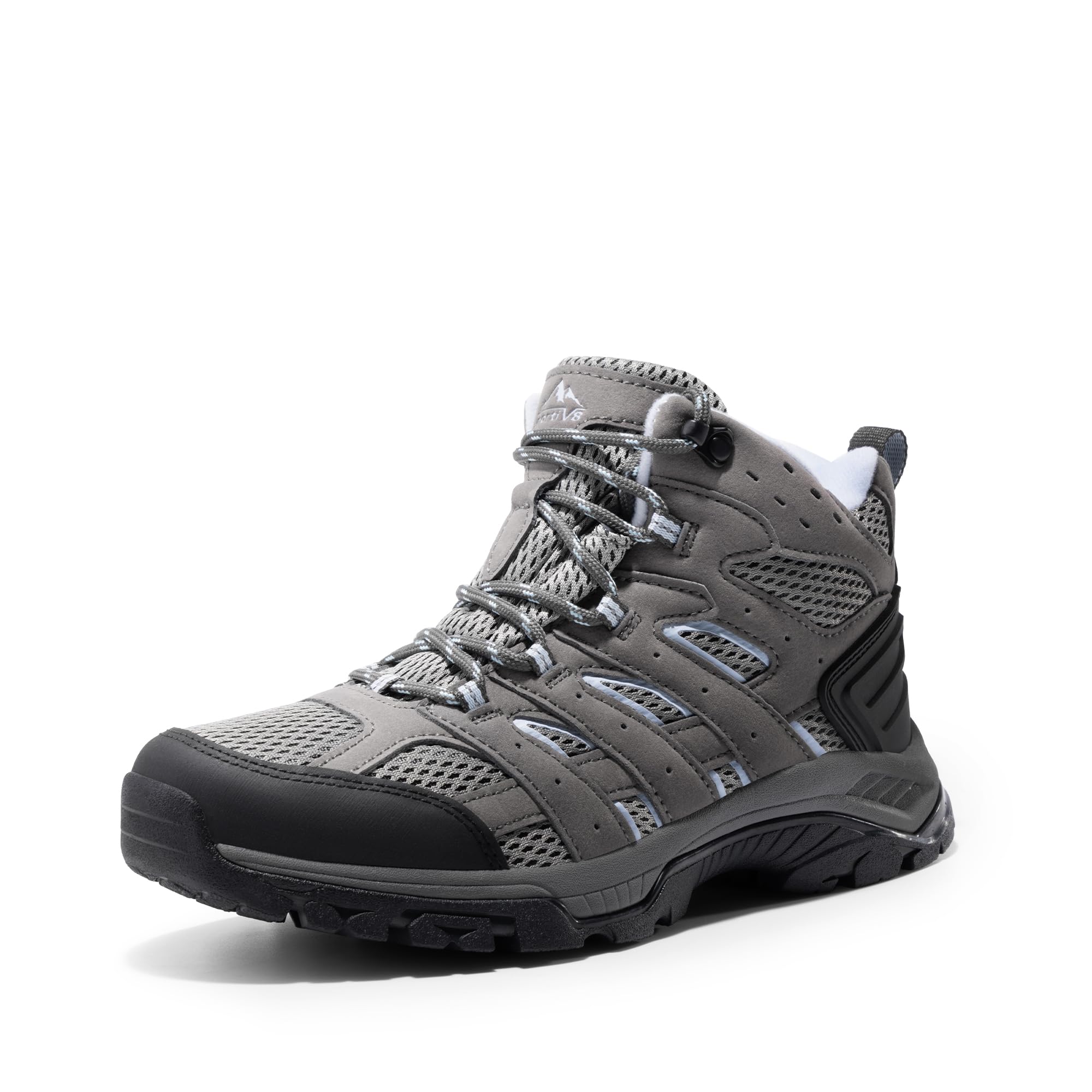
NORTIV 8 Waterproof Hiking Boots

91 /100
Traveler Score Outstanding

Key details

Cut
Mid-cut boot
Arch Support
Supportive
Ankle Support
Supportive
Waterproofing
Waterproof
Check Details on Amazon

The NORTIV 8 Waterproof is the budget boot we suggest when a hiker wants a supportive, dry-footed start without paying a premium. It has a mid-cut collar, a waterproof upper, and enough arch and ankle support to feel more purposeful than its price suggests. We found it comfortable for weekend trails and everyday outdoor wear, especially when the ground is wet but the route is not extreme.

The fit is the main thing to watch. The toe box is not as generous as the Moab's, and some feet will feel it across the sides, so if you need room for a thick orthotic, the KEEN Voyageur is the better match. We also noticed the boot feels heavier than the lightweight Columbia, which is worth knowing if you cover a lot of miles.

Where it earns its place is as a value boot for easy-to-moderate trails, wet walks, and hikers who want ankle coverage without a premium spend. It is not the most refined shoe in the group, but it covers the support basics and handles wet ground and shallow puddles well.

Pros

  • Budget-friendly waterproof boot
  • Supportive arch and ankle
  • Comfortable for weekend trails
  • Handles wet ground and shallow puddles

Cons

  • Traction can slip on loose ground
Our verdict

For wet-weather weekend hikes on a tight budget, this is the boot we recommend; it covers arch, ankle, and waterproofing basics without a premium spend.

Check Latest Price
5

Best Lightweight

Columbia Transverse Hike Waterproof

91 /100
Traveler Score Outstanding

Key details

Cut
Low-cut boot
Weight
Lightweight
Traction
Grippy on wet rock
Waterproofing
Waterproof
Check Details on Amazon

The Columbia Transverse is the lightweight waterproof hiker we pack when the trip is more about easy trails and town miles than scrambling. We think it is the best choice here for travel because it feels light on the foot, keeps water out in wet grass and shallow puddles, and has a flexible, comfortable ride that does not need a long break-in. For a plantar-fasciitis hiker who wants a second pair for trips, that combination is appealing.

The fit is on the narrow side, so if you need a roomy toe box for a thick insole or a wide forefoot, the KEEN Voyageur is the more accommodating shoe. Otherwise, the flexible sole and light weight make it easy to wear all day, and the waterproof upper handles wet grass and shallow puddles without feeling clammy.

Where it makes sense is as a travel and easy-trail shoe: light enough to pack, waterproof enough for a drizzly day, and comfortable enough for long airport walks and flat paths. It is not the most supportive shoe here for serious rock, but it does not pretend to be.

Pros

  • Lightweight and easy to pack
  • Waterproof upper for wet grass
  • Comfortable with little break-in
  • Good value for travel hikes

Cons

  • Modest underfoot protection on sharp rock
Our verdict

For travelers who want a light, waterproof hiking shoe for easy trails, this is the pair we recommend; it is comfortable, packable, and quick to wear in.

Check Latest Price
6

Budget Ankle Support

NORTIV 8 Lightweight Ankle Boots

90 /100
Traveler Score Outstanding

Key details

Cut
Ankle-height
Weight
Lightweight
Support
Ankle and arch
Toe Box
Roomy
Check Details on Amazon

The NORTIV 8 Lightweight Ankle Boot is the budget ankle option we keep for short hikes and yard work. It is lighter and less expensive than the waterproof NORTIV 8 in this guide, with a softer, easier feel from the first wear. We found the ankle support useful on uneven ground, and the fit is true to size with enough room for a medium-weight sock.

The toe box is roomy without feeling sloppy, and the boot is comfortable enough for short hikes and long errands. The ankle collar is soft enough to wear all day, and the laces tighten down without pinching. It is a simple boot, but the basics are right.

What we keep coming back to is the comfort-to-cost ratio: it feels like a more expensive boot on easy ground, and that is enough for a second pair. It will not replace a technical hiker, but it does not need to.

Pros

  • Low-cost ankle support
  • Lightweight and comfortable
  • Roomy toe box
  • True to size

Cons

  • Water resistance is inconsistent
Our verdict

For a low-cost ankle boot on easy trails, this is the pair we recommend; it is comfortable, supportive, and light enough to wear all day.

Check Latest Price

How We Chose and Tested These Hiking Shoes

We started by pulling every women's hiking shoe that addressed heel pain on paper: a structured arch, a firm midfoot that doesn't fold in half in your hands, a removable footbed so a custom orthotic could go in, and enough width options that a narrow or high-volume foot could be fit properly. Each pair got weighed on a kitchen scale before its first hike, since a supportive shoe that's a burden to lift tends to stay in the car. Anything that flexed like a sock with lugs got cut. That left 11 pairs, worn over eight months.

Every pair went through the same opening test: the ten steps from bed to bathroom in the morning, when the fascia is at its crankiest. From there we hiked four to six miles on rocky, rooty trails, walked a treadmill at a steep incline, and did one deliberately wet descent on slick rock. We pressed a thumb into each arch to feel whether it held or flattened, twisted the shoe to see where it flexed, and stood on a hard kitchen floor for an hour after a hike to judge how the heels felt.

Fit was checked twice — with thin socks and thick ones, and again at the end of a long day when feet swell. Durability came down to miles: after eight months we inspected outsole lugs, toe caps, and upper seams, and pressed the heel cushioning to see whether it had packed out. We also wore the least trail-looking pairs into town, because a shoe you'll actually put on is a shoe that supports you more often.

How to Choose Hiking Shoes for Women with Plantar Fasciitis

Put Support Under the Arch and Heel

Plantar fasciitis is sensitive to how load travels through the arch and heel, so start with a shoe that feels supportive rather than merely soft. A structured arch and a stable heel counter keep the foot from sliding and let the midsole do its job on uneven ground. The Merrell Moab 3 is the strongest all-around example here: it has a supportive arch and a roomy forefoot without feeling like a stiff brick. If you want a firmer, more planted ride for high arches, the KEEN Voyageur is the other one we point to. Cushioning still matters, but plushness alone will not fix a loose heel.

Leave Room for the Insole You Actually Wear

Many hikers with plantar fasciitis end up using a custom orthotic or a thicker support insole, and that changes the fit. Look for a roomy toe box and, where possible, a removable footbed; the KEEN Voyageur is the most accommodating here because its footbed comes out and the toe box is wide. A standard shoe can work too—the Moab 3 has enough forefoot room for a support insole—but do not size up just to make room. Try the shoe with the insole you plan to hike in, and check that your heel stays locked while your toes can wiggle.

Choose the Cut for the Terrain, Not the Diagnosis

A mid-cut boot does not treat plantar fasciitis, but it can add stability on rocky, wet, or uneven trails where a turned ankle is part of the risk. The Merrell Moab 3 Mid Waterproof is the obvious step up from our top pick when you want ankle coverage and a waterproof upper. For easy paths, travel, and warm weather, a low-cut shoe is lighter and less restrictive; the Columbia Transverse is the lightest waterproof option here. The trap is assuming more boot always means more support—if the heel is loose, a higher collar will not save the fit.

Treat Waterproofing and Traction as Conditions

Waterproofing is useful for wet grass, mud, and shallow stream crossings, but it also makes a shoe warmer and less breathable, so it is not automatic. The Columbia Transverse and Merrell Moab 3 Mid Waterproof are the wet-weather picks; the low-cut Moab is the simpler everyday choice. Traction matters just as much: deep, sticky lugs help on wet rock and loose gravel, while a worn sole is a slip risk. The budget NORTIV 8 boots are a good example of the trade-off—they cover the waterproof basics, but their grip is less secure on loose ground than the premium picks.

Frequently Asked Questions

Final Verdict

The Merrell Moab 3 Hiking Shoes are the pair we recommend first for most women with plantar fasciitis. They get the fundamentals right—supportive arch, roomy toe box, reliable traction, and all-day comfort—without forcing you into a heavy boot. If you need more room for an orthotic, choose the KEEN Voyageur; if wet trails and ankle coverage matter more, the Merrell Moab 3 Mid Waterproof is the better buy. Start with the Moab, then let your terrain and insole decide whether you need one of those alternatives.