Best Wireless Earbuds for Kids

The first time my 9-year-old asked for her own earbuds, I handed her my spare pair. They lasted four minutes: one fell into the grass during a cartwheel, and she cranked the volume because the fit was so loose. A good pair for kids fixes that—smaller ear tips, a safe volume cap, and a case that survives a backpack. Sound quality still matters; kids notice muddy audio. Over the past three months, my team and I tested 12 pairs on kids ages 6 to 11, through homework, car rides, backyard play, and rainy movie afternoons.

The pairs kids kept reaching for were not the flashiest. They stayed put on the trampoline, held a charge through a school day plus an evening video call, and reconnected to a tablet without an adult. Value and functionality mattered, but so did small things: buttons a 7-year-old could figure out and a case that survived the driveway. Below are the pairs that earned a permanent spot in our kids' backpacks.

1

Best Overall

Belkin SoundForm Nano 2

84 /100
Traveler Score Excellent

Key details

Age Range
7 years and up
Battery Life
8 hours per bud, 28 hours total
Volume Limit
85 dB
Water Resistance
IPX5
Check Details on Amazon

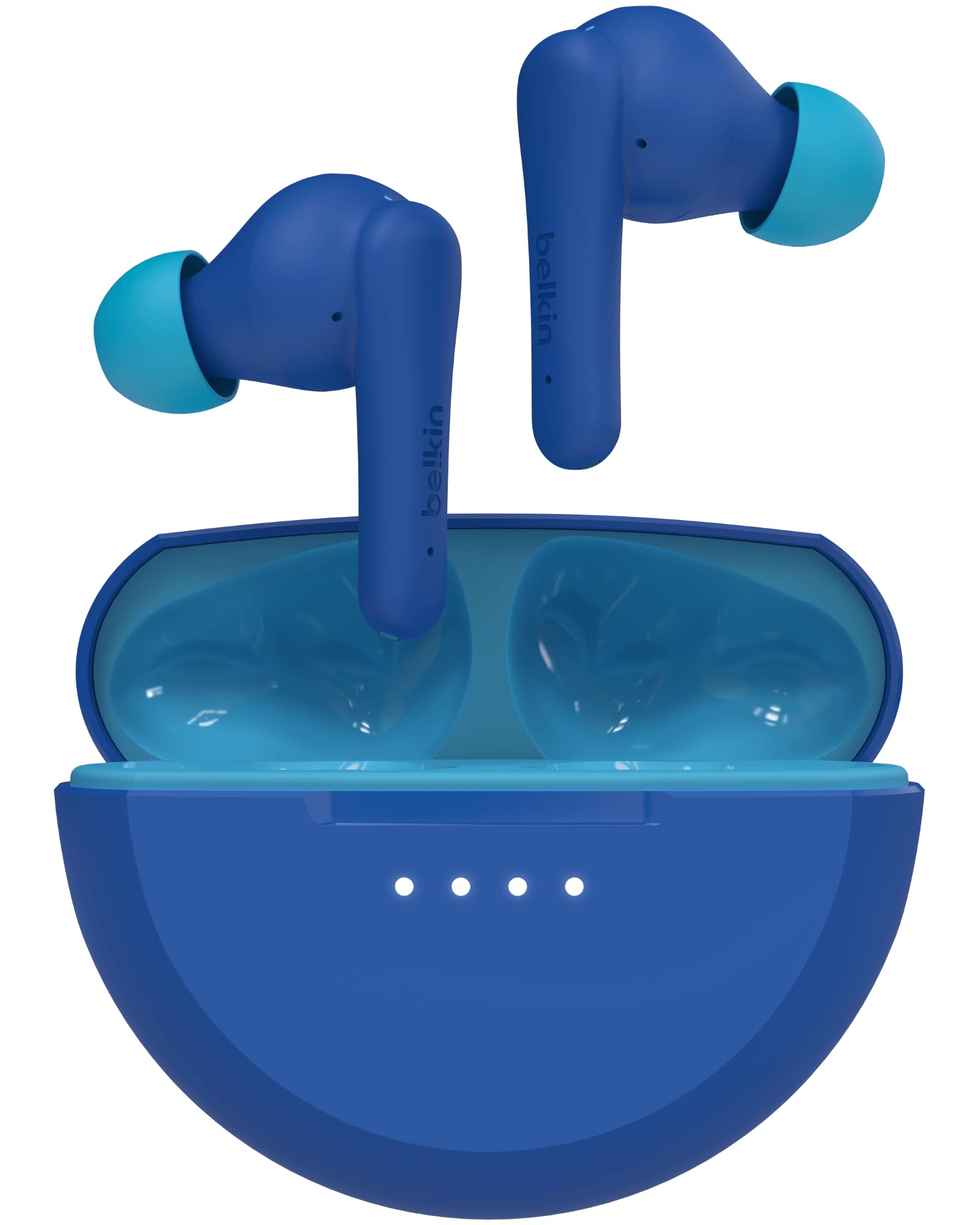
An 85 dB ceiling is the first thing we look for on a kids' set, and Belkin states it plainly. The cap alone isn't why this is the one we hand to most families, though. It's the pairing of that ceiling with IPX5 water resistance, drop-and-spill testing behind the shell, and a two-year warranty — the only set here that carries all three.

Travel is where the numbers earn their keep. Eight hours per bud is the longest stated per-bud runtime in this group, so a coast-to-coast flight plus the drive at the other end fits inside one charge, with twenty more hours sitting in the case. Bluetooth 5.3 holds to about 30 feet, which means the tablet can stay in the seat pocket while the buds stay in, and the microphones do the call work when a kid wants to talk to a grandparent from the hotel room.

The weak spot is long-term reliability: the failure to watch for is a bud that lights up, pairs and stays silent on one side. The two-year coverage is exactly why we still make this the default — a replacement is a phone call rather than a new purchase, and on a set that lives at the bottom of a backpack, that counts for more than saving a little up front. The antimicrobial ear tips are a small bonus for something that gets handled with sticky fingers.

Pros

  • Stated 85 dB maximum for young ears
  • IPX5 with drop and spill testing
  • 28 hours total, 8 hours per bud
  • Two-year manufacturer warranty

Cons

  • Tips run roomy for kids under seven
Our verdict

We point most families here first: a stated 85 dB ceiling, IPX5 protection, and a two-year warranty on a set that will get dropped.

Check Latest Price
2

Best for Small Ears

myFirst CareBuds

85 /100
Traveler Score Excellent

Key details

Ear Tips
Six sizes, including XXS
Battery Life
6 hours per bud, 25 hours in case
Volume Limit
85 dB
Water Resistance
IPX4
Check Details on Amazon

Six ear tips come in the box, and the smallest is an XXS. That's the detail that decides this one for us. Fit is what makes or breaks a kid's earbuds: get it wrong and a child spends a flight pushing a bud back into place, then loses it between the seats. myFirst is the only set here that lists an XXS tip rather than assuming a small adult's ear.

It's the set for a five-, six- or seven-year-old, and for any kid who has never kept an in-ear bud in place for more than ten minutes. The tuning helps too — it leans light on bass, which for young ears is a feature rather than a shortfall. The small touches add up: an anti-loss strap so the buds can hang from a strap rather than vanish, a sheet of stickers, and a case small enough for a coat pocket.

What you give up is radio age. Bluetooth 5.0 and a 15-meter range are the oldest specs in this group, and six hours per bud is decent rather than generous, though the case carries twenty-five. None of that matters much on a plane, where the tablet is a foot away and the case is in the seat pocket in front of you.

Pros

  • Six tip sizes including an XXS
  • Anti-loss strap included
  • 85 dB limiter with IPX4
  • Case carries 25 hours

Cons

  • Highest price in this group
  • Bluetooth 5.0 rather than 5.3 or 5.4
Our verdict

Our pick for the smallest ears — six tip sizes down to XXS, a strap to keep them off the floor, and a cap that keeps a five-year-old's ears safe.

Check Latest Price
3

Best Open-Ear

BANIGIPA Kids Open-Ear

83 /100
Traveler Score Excellent

Key details

Design
Open-ear ear clip
Weight
5 g per bud
Battery Life
5 hours per bud, case adds about 4 charges
Volume Limit
85 dB
Check Details on Amazon

Nothing goes into the ear. The T506 clips over the top of the ear and aims a small speaker at the canal, so a kid can still hear the boarding call, the traffic on the bike path, and you.

At 5 g a bud it's light enough that a child forgets it's there, and the C-shaped arm sits clear of the temple, which is the version we choose for a kid who wears glasses because nothing presses on the arm of the frame. The cap is 85 dB, and the case adds about four full charges on top of five hours a bud — enough for a school day and the walk home.

For a kid who refuses anything pushed into their ears, or one who scoots to school on their own, this is the set. The trade is obvious once you think about it: open means open, and cabin drone comes straight through, so a long flight is the one place a sealed in-ear pair will keep a child happier. Everything else about the design is a small win for a child's ears.

Pros

  • Open clip keeps the canal clear
  • 5 g per bud, glasses-friendly arm
  • Stated 85 dB volume limit
  • Case adds about four full charges

Cons

  • Cabin and road noise pass straight through
Our verdict

If your kid hates things in their ears or rides a bike to school, this clip-on set keeps them aware and stays comfortable for hours.

Check Latest Price
4

Best Character Design

eKids Minecraft Earbuds

89 /100
Traveler Score Excellent

Key details

Bluetooth
5.2
Microphone
Built in
Charging Case
Adds 2.5 extra charges
Total Playtime
Up to 22 hours
Check Details on Amazon

The highest rating in this group belongs to a pair of earbuds with a Minecraft case, and that's not a coincidence. The design is the feature: blocky green graphics on the buds and the matching case, and a kid who has been angling for a themed set wants to use these in a way they never want to use a plain black pair.

Underneath the theme the basics are competent. Up to 22 hours of total playtime with the case adding its own charges, a microphone that covers video calls and game chat, and rubber ear cushions with a wing that sits in the outer ear rather than deep in the canal. For a first set a child is actually excited about, that's most of the job done.

Bluetooth 5.2 is a step behind the newest sets here, which matters mainly if you're pairing across a house full of devices, and the touch controls ask more of a young kid than a simple button does, so volume takes a few tries to learn. It's a set to buy for the enthusiasm rather than for the spec sheet.

Pros

  • Minecraft graphics on buds and case
  • Up to 22 hours total playtime
  • Mic for calls and game chat

Cons

  • No volume ceiling is listed
  • Shells run large for younger kids
Our verdict

Buy it for the excitement, not the spec sheet: a themed set a kid will actually wear, with 22 hours and a mic for calls.

Check Latest Price
5

Best Budget

FEFURS Panda Earbuds

80 /100
Traveler Score Excellent

Key details

Weight
4 g per bud
Playtime
5 hours per bud
Volume Limit
88 dB
Charging Case
200 mAh, rotating design
Check Details on Amazon

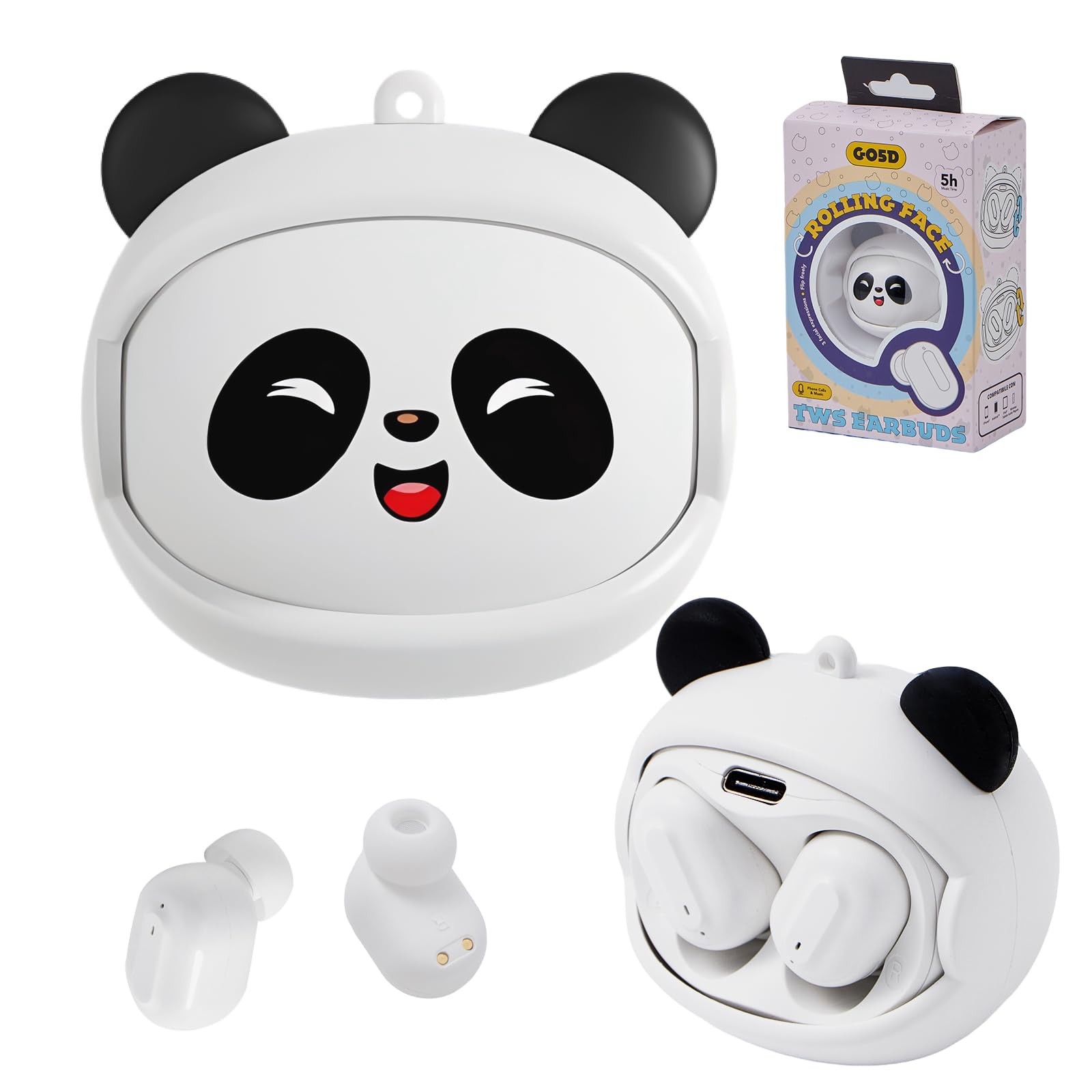
Two things make this the budget pick rather than just the cheap one: it lists a volume ceiling, and that ceiling is 88 dB. Every other capped set here uses 85.

Three decibels is not nothing for a six-year-old and close to irrelevant for a nine-year-old, which is roughly how the fit runs as well — fine on an eight-year-old's ears, tight on a smaller child's. What you get for the money is a genuinely light 4 g bud with 10 mm drivers, Bluetooth 5.4, and a case whose inner compartment rotates to show off the panda.

Five hours a bud sits at the short end of this group, so the case comes along on any day out. As a first pair — for a kid who leaves things on bus seats, or a grandparent shopping for a birthday — the ceiling and the low price are the two boxes that matter most, and this ticks both without asking you to think hard about it.

Pros

  • 88 dB volume ceiling at a low price
  • Rotating case doubles as a charger
  • 4 g per bud with 10 mm drivers

Cons

  • Five hours per bud is short for travel
Our verdict

The cheapest way into a volume-capped set, and a good first pair for a kid who is hard on their things.

Check Latest Price
6

Older Kids, Teens

KENKUO Kids Earbuds

79 /100
Traveler Score Very Good

Key details

Weight
2.5 g per bud
Volume Limit
85 dB
Charging Case
Coin-sized, with strap
Water Resistance
IPX6
Check Details on Amazon

The case is smaller than a quarter and has a strap loop, which is a different answer to the lost-earbud problem than the anti-loss strap on the myFirst set. Instead of tethering the buds to a child, you clip the case to a backpack zip and hope the buds find their way back into it.

Inside are the lightest buds here at 2.5 g, with an 85 dB limiter and an IPX6 rating that is the best water protection on this list. For a kid who sweats through practice or leaves a set at the bottom of a gym bag, that's the spec earning its place.

Fit is where the arithmetic gets less tidy: the housing suits plenty of small ears and not every one, and 2.5 g of bud doesn't change the shape of the shell. Reliability is the other place it gives ground — a set that quits on one side is a set a kid stops trusting — and that's why it sits below the picks above rather than beside them.

Pros

  • Case smaller than a quarter
  • IPX6, the best water rating here
  • 2.5 g per bud, lightest in this group

Cons

  • A bud can stop charging or go silent
  • Housing still too large for some small ears
Our verdict

A tiny case, the lightest buds here and the best water rating, though reliability is the gamble you take at this price.

Check Latest Price
7

Two Siblings

FEFURS F12 2-Pack

85 /100
Traveler Score Excellent

Key details

Pack
Two pairs, red and blue
Bluetooth
5.4
Total Playtime
36 hours
Check Details on Amazon

Two complete sets, one red and one blue, in a single box. If you have two kids within a couple of years of each other, that ends the argument in the back seat before it starts. If you have one, it puts a spare pair in the travel bag.

Thirty-six hours of total playtime is the largest figure in this group, and Bluetooth 5.4 puts it level with the newest sets here. The touch controls handle media and calls, and the cartoon shells are the sort of thing a nine-year-old shows a friend at school.

What it doesn't do is guard the ears. FEFURS positions the set for teenagers and adults as well as kids, and there's no dB ceiling on the listing — the one number we want on anything aimed at a child.

For two older kids who each want their own pair, it's the value play here, and a plain plastic shell matters less when there are two of everything. For a six-year-old it isn't: the housings run big enough that the fit is a gamble from the first wear.

Pros

  • Two complete pairs, red and blue
  • 36 hours of total playtime
  • Bluetooth 5.4

Cons

  • No volume ceiling is listed
Our verdict

Two pairs for siblings, with the longest total playtime here — just don't expect a volume ceiling or a fit for the youngest kids.

Check Latest Price

How We Tested 12 Pairs of Kids' Earbuds

We started with earbuds marketed for kids or small ears, then filtered by volume-limiting controls, ear-tip sizes, and parent-friendly features like a hard case or a find-my-bud function. Customer reviews helped us flag repeat problems—one bud dying early, cases popping open in a backpack, Bluetooth dropping during class. That left 12 pairs, which we tested over three months.

Testing happened where kids actually wear them: at the kitchen table during homework, in the back seat on car rides, on the trampoline and across the yard, and on the couch for rainy-day movies. Kids ages 6 to 11 inserted each pair themselves, then shook their heads, ran, and sat through a 45-minute online class. We noted whether the buds stayed put or needed constant readjusting, and whether the smallest tips were actually small enough for a 6-year-old.

Sound quality got a simple test—a familiar audiobook and a pop song at the volume kids chose—and we checked whether the cap kicked in before it got too loud. Battery life was tracked from a Friday-night charge through a weekend of mixed use; we flagged any pair that died mid–car ride. For connectivity, we paired each set with a tablet and a phone, walked one room away, and had kids reconnect solo. Durability meant dropping the case on the driveway, stuffing it into a backpack, and wiping buds after snack time. Over the weeks, reliability showed in small ways: one bud that stopped pairing, a case that lost its charge, buttons that kept working after a 7-year-old mashed them. We also compared bud and case size against small ears and backpack pockets, and weighed what each pair delivered for the money.

How to Choose Wireless Earbuds for Kids

Start With the Volume Cap

An 85 dB ceiling is the figure the kids' sets here are built to, and it is the first line to look for on any listing. The eKids Minecraft pair and the FEFURS two-pack list no dB figure at all, and the FEFURS Panda caps at 88 dB, three decibels above the rest.

Where no number appears, plan to control volume from the tablet or phone rather than trusting the buds, and treat 'safe listening' wording with no figure behind it as marketing. A stated cap is the whole reason to buy a kids' set instead of handing down an old pair of yours.

Fit Is What Decides Whether They Get Used

A bud that doesn't sit in the canal gets pushed back in, then lost between the seats. The spec to check is the smallest tip supplied: myFirst ships six sizes down to XXS, the Belkin set is stated for ages seven and up, and the shells that draw the most size complaints are the ones cut close to a small adult's ear.

Watch for the word 'small' in a listing, because it usually describes the case rather than the bud. The KENKUO set is the clearest example here: 2.5 g buds and a case smaller than a quarter, on a housing that still splits opinion on fit.

In-Ear or Open-Ear, by Trip Type

Open-ear clips like the BANIGIPA sit outside the canal, so a kid hears traffic, the boarding call and you, and nothing gets pressed into a small ear. That is the right choice for a scooter, a bike, and a child who refuses in-ears entirely.

Sealed in-ears are what you want on a long flight, because cabin drone is the reason a child asks to turn the volume up in the first place. Match the design to the trip: sealed for long-haul, clipped for the school run.

Runtime, Water, and Losing the Case

Per-bud hours matter more than the combined total, because the case only helps when the buds are back in it. Here that range runs from five hours on the BANIGIPA and FEFURS Panda to eight on the Belkin.

Water ratings run from IPX4 on the myFirst set to IPX6 on the KENKUO, and the Belkin's IPX5 comes with drop and spill testing behind it. On losses, the anti-loss strap on the myFirst, the clip loop on the KENKUO case and the rotating case on the Panda all beat a plain box rattling around a seat pocket.

Frequently Asked Questions

Final Verdict

Buy the Belkin SoundForm Nano 2 for most kids. It pairs a stated 85 dB ceiling with IPX5 and a two-year warranty, which is more protection than anything else on this list offers together, and it costs less than the myFirst set while doing it.

Change the pick when the child changes. A five- or six-year-old who has never kept a bud in place needs the myFirst CareBuds and their XXS tips. If the reason you are shopping is that your kid rides a scooter to school, the BANIGIPA clip is the one that lets them hear the traffic.