Best Wireless Travel Headphones for Kids of 2026

The flight was barely two hours, and the earbuds I handed my kid lasted about forty minutes before one disappeared between the seats. That's the trouble with headphones for children: the pair that survives a car ride often doesn't survive a plane, a backpack, or a little brother. What you actually want is straightforward — something that stays on a small head, keeps the volume at a level you can live with in a crowded cabin, holds a charge through a long travel day, and pairs to a tablet without a five-minute negotiation. Get those right and a set of headphones stops being a gadget and starts being the thing that buys you a quiet row and a happily absorbed kid.

Over the past five months, my team and I have put 14 pairs through school runs, two round-trip flights, a very long drive, and a lot of waiting around in terminals. One thing first-time buyers don't realize: a volume limit is only as good as the connection it's applied to, so we paid close attention to how each pair behaved when switched between devices. Some of these are built for rough handling, some are built for sound, and a couple manage both — the ones that made the list are below.

1

Best Overall

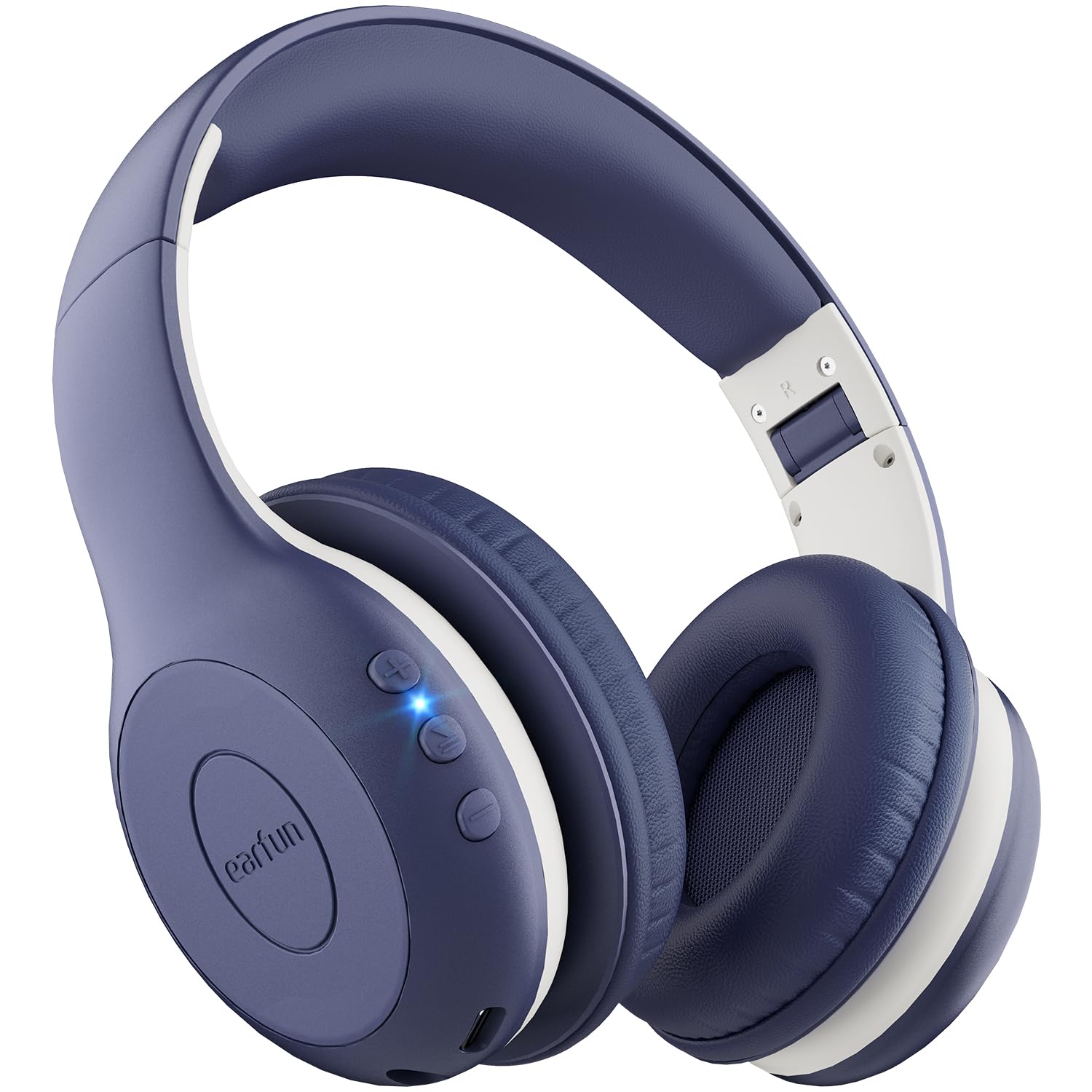
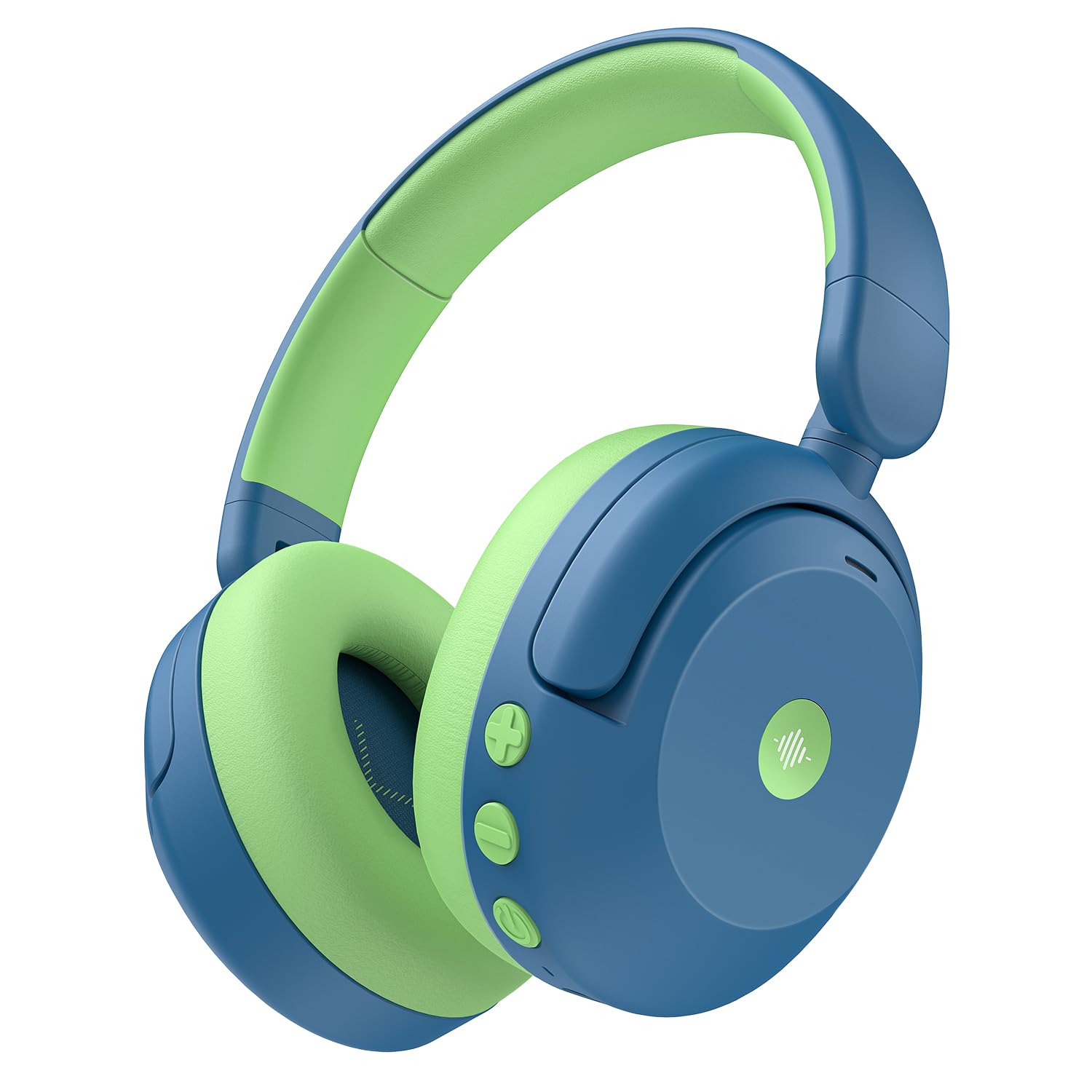
EarFun K2 Kids Headphones

92 /100
Traveler Score Outstanding

Key details

Weight
6.17 oz
Playtime
60 hours
Wired Backup
3.5 mm cable included
Volume Limits
74/85/94 dB
Check Details on Amazon

Three volume ceilings rather than two is the detail that put the EarFun K2 at the front of this group. The lowest is quiet enough for a four-year-old on a night flight, the middle one suits a six-year-old, and the top setting gives an older child enough volume to follow dialogue over engine noise, so one pair can move up through a family instead of being replaced.

It is also one of the lightest pairs here at 175 g, which we noticed most on a four-hour stretch when nobody asked to take them off. The cups fold flat against the headband and slide into a backpack pocket beside a tablet, and the materials are certified to CPC and RoHS standards — worth having when foam sits against a small head for a whole trip.

Sixty hours of playtime is the number that does the real work: charge it the night before and a week of airport waits, hotel cartoons and back-seat films does not need a cable. Bluetooth 5.4 paired with the tablets we brought without any coaxing, and the included 3.5 mm cable covers the seatback screen that has no Bluetooth at all — the moment where a wireless-only pair becomes dead weight. A full charge takes about two hours, short enough to top up over lunch in a departure lounge.

The controls are the quiet win. Buttons on the ear cup mean a five-year-old works out play and pause in a minute or two, which spares whoever is sitting alongside from leaning over every ten minutes. Nothing here is clever for its own sake, and that is the appeal.

Pros

  • Three volume ceilings, toddler to older kid
  • 60 hours of playtime, two-hour charge
  • 3.5 mm cable included for wired screens
  • Light at 175 g and folds flat

Cons

  • Plastic headband joint is the likely failure point
  • Pads rest on the ear rather than around it
Our verdict

Our pick for most families: three volume tiers cover a toddler and a nine-year-old, with 60 hours and a cable for the seatback screen at the budget end.
Check Latest Price
2

Best for Flights

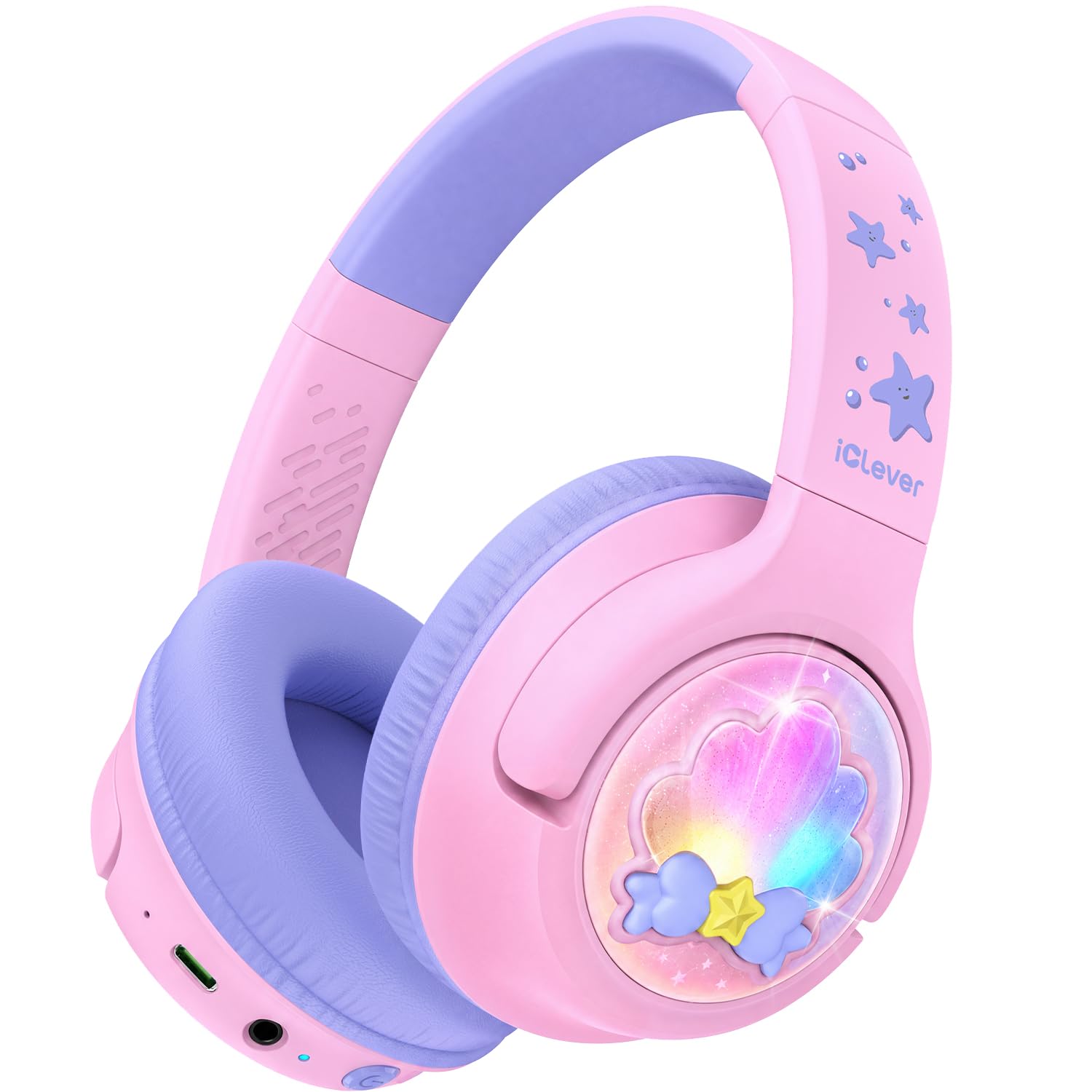
iClever BTH20 Kids ANC

89 /100
Traveler Score Excellent

Key details

Weight
7.68 oz
Playtime
60 hours (ANC off)
Volume Limit
80 dBA default
Noise Cancelling
Active, two modes
Check Details on Amazon

Cabin drone is the problem the BTH20 was built for, and it is the one pair here whose noise cancelling changes a flight rather than simply taking the edge off. That is why it earns the flight recommendation even though it sits at the top of the price range in this group.

The cancellation runs in two modes from a single button, the deeper of the two aimed at aircraft and the lighter one at cars and classrooms. iClever sets the default ceiling at 80 dBA through its Sound Refiner processing, lower than the 85 dB most kid pairs allow, and that is a genuine plus for a child who turns everything up. It also means less headroom: a loud film on a noisy plane can feel like it wants more than the headphones will give.

Weight is the price of the extra hardware. At 7.68 oz it is the heaviest pair we recommend, and a small five-year-old will feel it after an hour or two; the pressure-reducing cushions and the cups' pivot do a lot to make up for that. iClever quotes 60 hours with noise cancelling off, the 3.5 mm cable detaches so a broken wire does not retire the headphones, and the frame folds into the same pocket as a tablet.

None of it is fussy to use. Pairing took a couple of taps, the L and R markings are printed large enough for a child learning to put them on alone, and the cups are deep enough that a child with sensory sensitivities tends to keep them on. That last point is where this pair quietly beats the cheaper ones.

Pros

  • Noise cancelling strong enough to change a flight
  • Safer 80 dBA default ceiling
  • 60 hours with ANC switched off
  • Detachable cable and folding frame

Cons

  • Some units stop taking a charge
  • Heaviest pair here at 7.68 ounces
Our verdict

The flight pick for a reason: the strongest noise cancelling here, a safer 80 dBA ceiling and 60 hours with ANC off make the premium easy to justify.

Check Latest Price
3

Best for Toddlers

iClever P550 Kids

93 /100
Traveler Score Outstanding

Key details

Weight
5.64 oz
Playtime
48 hours (lights off)
Bluetooth
6.0
Volume Limits
74/85 dB
Check Details on Amazon

The cups on the P550 swivel flat, which reads like a small piece of engineering and turns out to be the reason a toddler keeps them on: the ear pieces settle at whatever angle the child holds still for instead of being levered into place by a rigid headband.

Two volume ceilings, and the lower one is a real toddler setting rather than a token gesture. The LED rings on the outside are what a child will talk about; they switch off, which matters in a dark cabin and matters again for the 48-hour playtime figure. The frame is 160 g, among the lightest here, and it folds at the cups.

For a first pair this is the one we hand over without a tutorial. Bluetooth 6.0 paired cleanly with an iPad, the AUX cable is in the box for the seatback screen, and the adjustment runs from about three years old to a small seven-year-old. Nothing about it feels like a compromise for the money.

The lights draw on the same battery, so treat the 48 hours as the lights-off figure. The bigger limit is the ceiling: 85 dB is as loud as it goes, which is right for a small child and leaves a seven- or eight-year-old wanting the 94 dB tier that the EarFun and Acer pairs offer. Under six, this is the easiest of these to live with.

Pros

  • Real 74 dB toddler setting
  • Swivelling cups that sit flat on small heads
  • Light 160 g frame
  • Bluetooth 6.0 with an AUX cable supplied

Cons

  • Tops out at 85 dB, so older kids lose headroom
  • Cups can crack where they swivel
Our verdict

For a toddler or a child who resists headgear, we choose the P550: swivelling cups, a 160 g frame and a genuine 74 dB setting keep it on small heads.

Check Latest Price
4

Best Budget Noise Cancelling

MIDOLA B-07 Kids ANC

87 /100
Traveler Score Excellent

Key details

Playtime
68 hours
Bluetooth
5.4
Volume Limits
85/94 dB
Noise Cancelling
Active, one button
Check Details on Amazon

Noise cancelling usually arrives in this group attached to a heavier frame and a bigger number on the box; the B-07 is the exception, wrapping a one-button ANC mode in the sort of pair you buy as a spare and end up using as the main set.

It works, within its limits. The ANC is a single on/off step rather than the layered modes on the iClever BTH20, and it takes the rumble out of a cabin without the near-silence the more expensive pair manages — roughly what we expected at this end of the range, and still enough to change a two-hour flight.

The rest is competent rather than clever. MIDOLA quotes 68 hours, the ceilings are 85 and 94 dB, and the headband extends through four steps, which is how a pair bought for a five-year-old ends up on a teenager's head. The 3.5 mm cable and USB-C charging are both in the box, the whole thing folds small enough for a jacket pocket, and the sheet of stickers inside is a hit with the under-sevens.

Pros

  • Noise cancelling at the bottom of the price range
  • 68 hours of playtime
  • Headband extends to teen and adult heads
  • Folds small, with cable and USB-C charging

Cons

  • No low-volume tier for toddlers
  • One fixed noise-cancelling level
Our verdict

The cheapest way to get usable noise cancelling here, with 68 hours and a headband that stretches from five-year-olds to teenagers.

Check Latest Price
5

Best for School-Age Kids

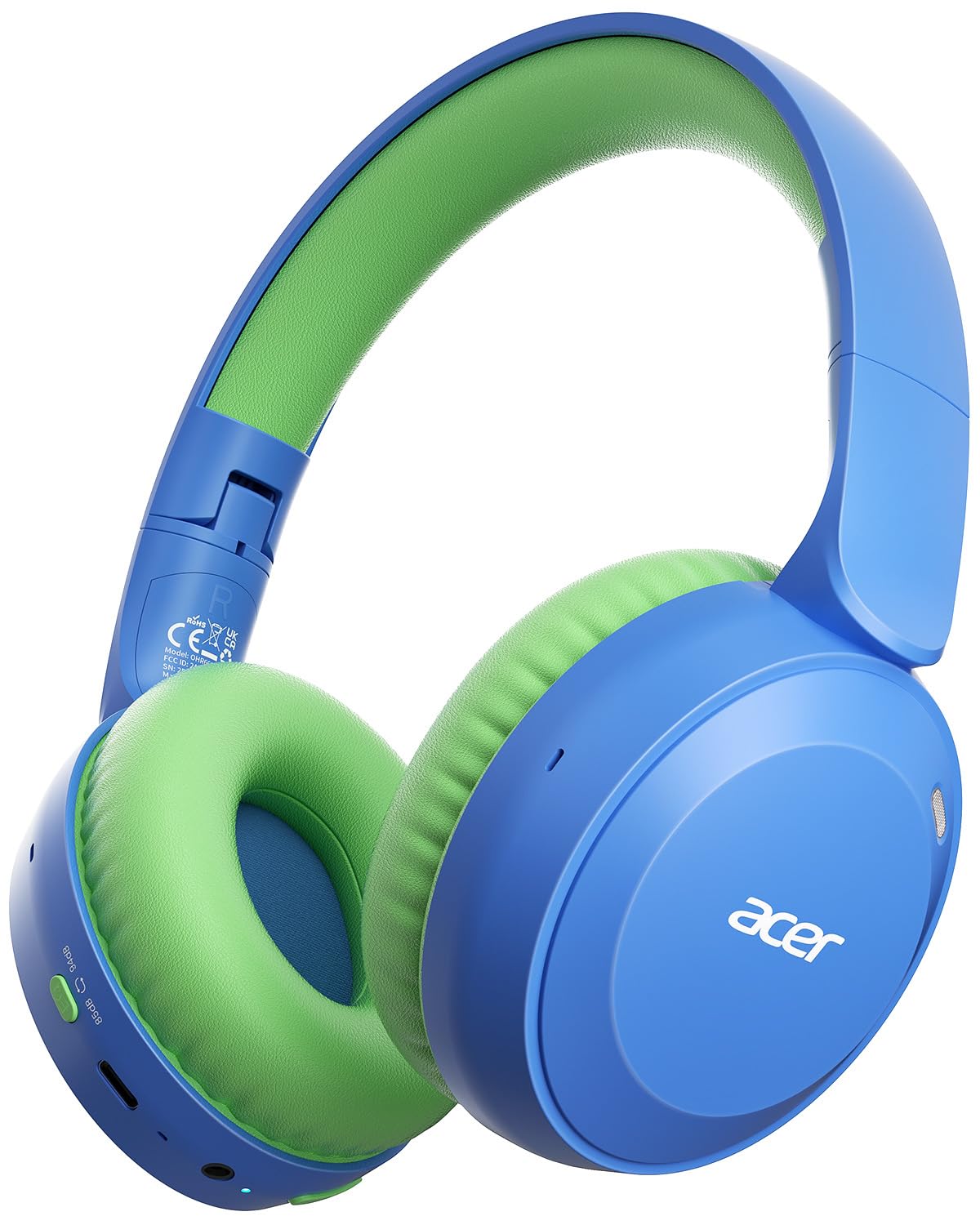
Acer OHR668 Kids

88 /100
Traveler Score Excellent

Key details

Weight
6.7 oz
Playtime
60 hours
Bluetooth
6.0
Volume Limits
85/94 dB
Check Details on Amazon

Bluetooth 6.0 is the least romantic thing about the Acer pair and the most useful: it is the newest radio in this group, and it is why pairing with a tablet, a Switch or a YOTO player is a one-tap job. At the budget end, that plus 60 hours of playtime makes this the one we suggest for a school-age child who uses headphones most days.

Sixty hours covers a school week and a long weekend away, and the battery is the most consistently well-liked part of this pair's record. At 0.19 kg it is light enough for a seven-year-old's head, the frame folds at the cups, and the 2.5-hour charge over USB-C is quick enough to do overnight.

Two things to sort before you pack it. The box lists a user manual and nothing else, so no 3.5 mm cable comes with it — the jack is there and the cable is not, which matters the moment you meet a seatback screen. And the ceilings are 85 and 94 dB with no toddler setting, which is right for a six-year-old and wrong for a three-year-old.

Fit is the other reason it is a school-age pick rather than a family one: the headband closes down far enough for a small seven-year-old and not for a toddler, so a three-year-old rattles around in it. Within those years, it is the least fussy pair here.

Pros

  • Bluetooth 6.0 pairs quickly with tablets and consoles
  • 60 hours of playtime for a school week
  • Light at 0.19 kg and folds flat
  • Budget price for a 60-hour pair

Cons

  • Sized for school-age heads, not toddlers
  • Volume ceiling feels low in noisy places
Our verdict

We point school-age kids to this one: Bluetooth 6.0, 60 hours and a light folding frame, as long as nobody in the family is still a toddler.

Check Latest Price
6

Travel Spare

JoySpark B08 Kids

91 /100
Traveler Score Outstanding

Key details

Weight
8.82 oz
Playtime
60 hours
Bluetooth
5.4
Volume Limits
85/94 dB
Check Details on Amazon

At 0.25 kg the B08 is the heaviest pair in the budget half of this group, and the weight is the first thing to weigh up: this is a pair for a six-year-old rather than a three-year-old, and it sits more solidly on a bigger head than the light ones do.

What you get for it is 60 hours of playtime, Bluetooth 5.4, a switch between 85 and 94 dB, and a 3.5 mm cable in the box. The charge is the part that holds up: a week of evening use and a couple of travel days came and went between top-ups, and USB-C means the same cable as everything else in the bag.

As a second pair it makes a lot of sense — the set that lives in the car or at a grandparent's house and does not need a charger along for the ride. The buttons are big, the cups are padded enough for a feature film, and the 18-month warranty is one of the longer ones in this group.

Pros

  • 60 hours per charge
  • Bluetooth 5.4 and a cable in the box
  • 18-month warranty
  • Folds for a car or grandparents' spare set

Cons

  • 94 dB setting is loud for young ears
  • Headband and hinge are the failure points
Our verdict

A solid second pair: 60 hours, Bluetooth 5.4 and a cable in the box, sized for a six-year-old rather than a preschooler.

Check Latest Price
7

Daily School Use

Belkin SoundForm Mini Kids

87 /100
Traveler Score Excellent

Key details

Controls
Touch controls
Playtime
30 hours
Warranty
2 year manufacturer
Volume Limit
85 dB
Check Details on Amazon

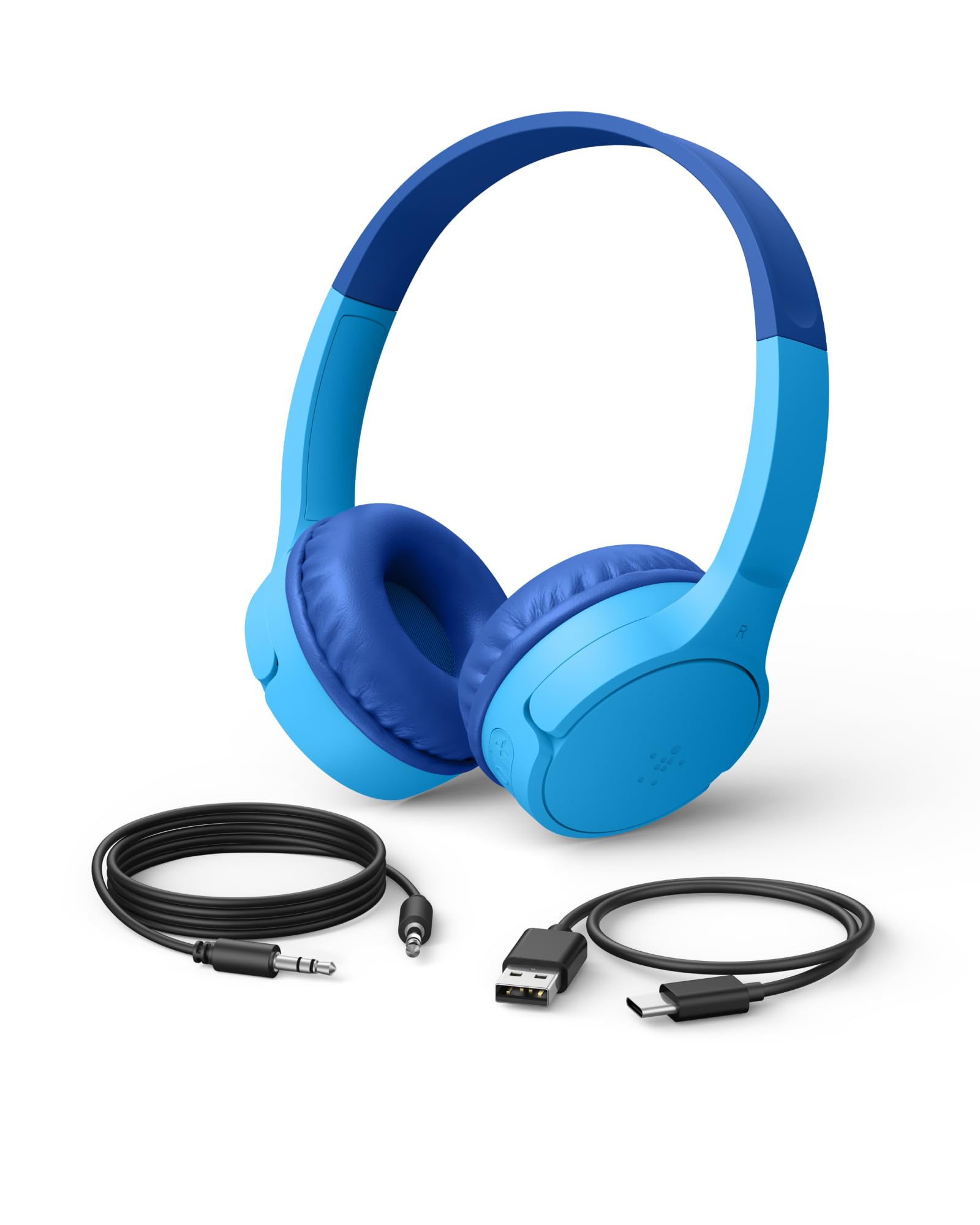
Touch controls are the Belkin's party trick: a tap on the ear cup for play, pause and volume instead of a hunt for a small button under the padding. In our hands they were the quickest controls for a child to learn, and the only ones here that a four-year-old got right on the first attempt.

Around that sits a sensible school pair: a fixed 85 dB ceiling, 30 hours of playtime, USB-C, and a four-foot 3.5 mm cable in the box for the plane. It cannot be used while it is charging, which is the one thing to plan around — charge it overnight and the 30 hours covers a trip.

The warranty is the longest of anything here at two years, and a two-year promise from a name with a support line is easier to use than twelve months from a marketplace listing. The cushions are shaped for a child's head rather than shrunk from an adult pair, and the whole thing disappears into a backpack.

So it comes down to what you are buying. The cheaper pairs here give you twice the playtime for less money; the Belkin gives you controls a small child can work alone, the longest warranty in this group, and a name you can call if the frame cracks. For a child who wears headphones daily rather than twice a year, that trade is worth making.

Pros

  • Touch controls a young child learns fast
  • Two-year manufacturer warranty
  • 3.5 mm AUX cable included for flights

Cons

  • 30 hours is short for a long trip
  • One fixed 85 dB ceiling, no louder tier
Our verdict

We recommend it where a child uses headphones daily: touch controls a small child can work alone, a two-year warranty and a name to call if the frame cracks.

Check Latest Price
8

Character-Loving Kids

eKids Spiderman Kids

93 /100
Traveler Score Outstanding

Key details

Playtime
18 hours
Bluetooth
4
Wired Backup
Detachable 3.5 mm cable
Volume Control
Reduced; level not published
Check Details on Amazon

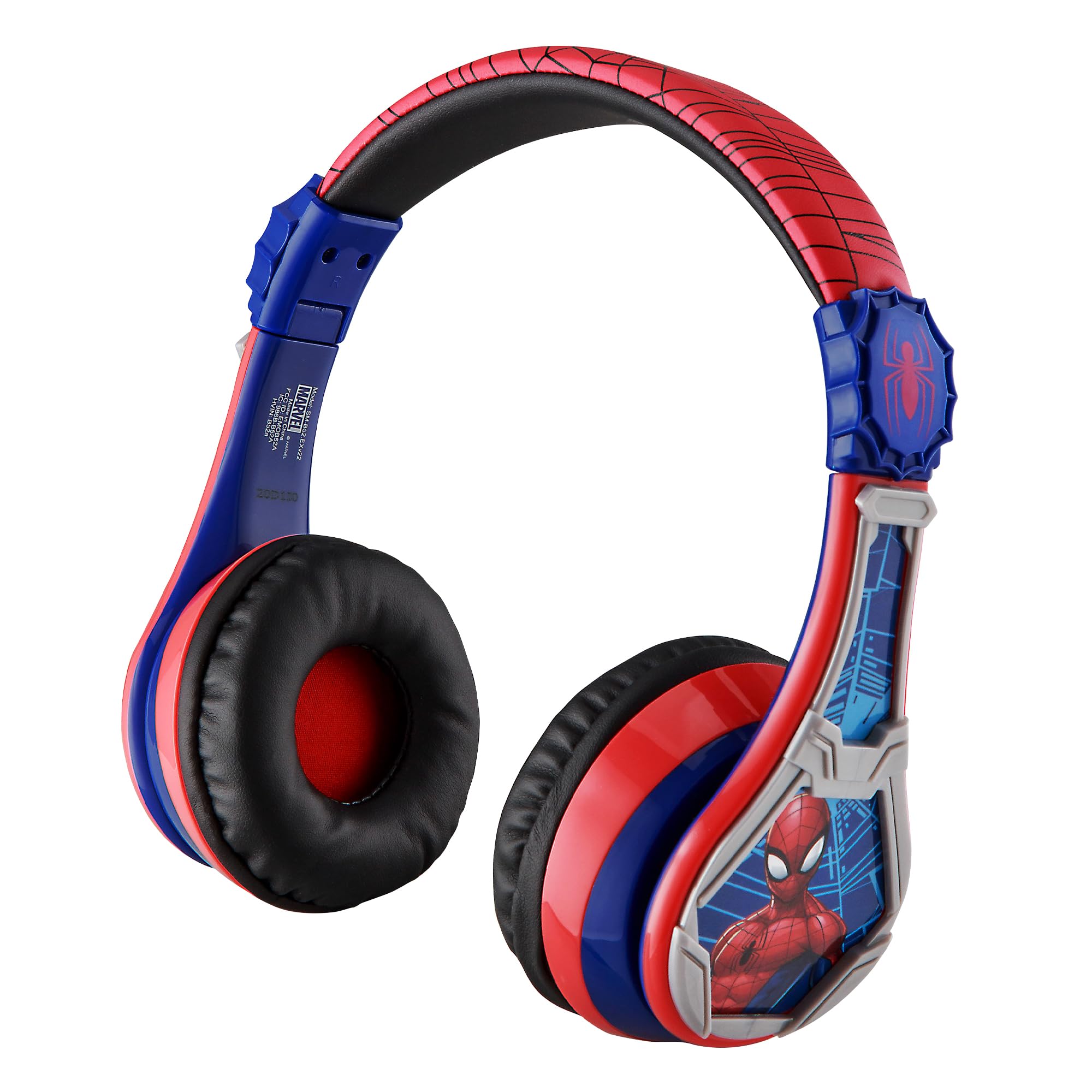
Spiderman is the entire pitch, and for the child it is aimed at, it works: this is the pair a reluctant four-year-old puts on without being asked, which is more than most of the plainer sets here manage.

Behind the mask it is an ordinary pair: 18 hours of playtime, a built-in microphone, a detachable 3.5 mm cable for the plane, a folding headband and a one-year warranty. The volume is reduced for children, though eKids does not publish the ceiling, and the Bluetooth is version 4 — the oldest radio in this group.

Eighteen hours is fine for a flight and short for a week away, so it wants a charge mid-trip, and the headband runs large: a small four-year-old will feel it shift, while a six-year-old is about right. That is the honest shape of it — a big, friendly, kid-magnet pair rather than a precise one.

What decides it is the child, not the spec sheet. If the mask is what gets the headphones onto the head, nothing else here competes and the older Bluetooth will not matter. If the child is indifferent to Spiderman, one of the plain pairs gives you a newer radio and three times the playtime for the same money.

Pros

  • Character design children actually want to wear
  • Detachable cable and folding headband
  • 18 hours per charge, enough for a flight

Cons

  • Bluetooth 4 is the oldest radio here
  • Headband and slider crack under rough handling
Our verdict

Buy it for the mask: for a Spiderman-obsessed child the character is what gets the headphones onto the head, and the newer, longer-running pairs suit an indifferent one better.

Check Latest Price

How We Picked and Tested Kids' Travel Headphones

We started with a shortlist built from spec sheets and parent reviews, filtering for a stated volume cap, current Bluetooth, a claimed battery life of at least 20 hours, and a folding or flat-folding shape that would actually fit in a seat-back pocket. That narrowed a very crowded field to 14 pairs, which we tested over five months with kids ranging from four to ten years old.

Pairing came first. We timed how long each pair took to connect to a tablet and to an older hand-me-down phone, then walked into another room and shut the door to see whether the audio held or stuttered. In the car, we switched between two devices mid-movie to check how gracefully each one handed off. For battery, we charged to full, played an audiobook at a realistic volume until the set died, and compared the real runtime to the number on the box.

Durability got the least gentle treatment: we dropped each pair from kid height onto tile, stuffed them loose into backpacks, twisted the earcups the way a child does when pulling them off one-handed, and yanked on the cable where a wired option existed. We also watched how they sat on the smallest and largest heads in the group, and whether they stayed put when a hood went up. Kid buy-in counted for a lot — we noted which pairs got reached for without being asked, and which ones drew complaints about clamping or hot ears within twenty minutes.

How to Choose Wireless Travel Headphones for Kids

Start With the Volume Limit

Kid headphones are sold on their decibel ceiling, and the useful question is how many ceilings there are. A single 85 dB limit is right for a school-age child. A pair with a 74 dB setting is the one to buy for a toddler, who will otherwise spend four hours at the top of the range. The 94 dB tier is not a safety failure — it exists for a noisy car or a plane — but it is the setting an older child finds and a younger one shouldn't.

If two children will share one pair, buy for the younger of them. It is easier to move a child up a tier than to talk one down from the loudest setting.

Weight and Fit Decide Whether They Stay On

Head size changes fast between three and eight, so look for a headband with several extension steps and cups that swivel flat. Both let the headphones settle on a small head instead of being levered into place, which is why the swivelling 160 g pair here is the one a toddler tolerates.

Weight matters more than most parents expect. The pairs at 160 to 180 g stay on for a full flight; the 250 g option is the one a small child tips out of. Under-fives do best below 180 g.

Plan for the Screen Without Bluetooth

Seatback entertainment and older school tablets are still wired, so the 3.5 mm cable is not a legacy extra — it is the difference between a working pair and a dead one four hours into a flight. Check the box contents before you pack: the Acer pair here lists a manual and no cable, and its jack is useless on a plane without one.

Some aircraft sockets are two-prong and need a cheap airline adapter, which belongs in the same pocket as the cable.

Battery, Noise Cancelling and What You Pay For

Playtime is quoted with the lights off and noise cancelling switched off, so read 48 or 60 hours as a ceiling rather than a promise. Thirty hours covers a trip; the longer figures mean a week away without the charger.

Noise cancelling is the one upgrade here that changes a flight rather than a feature list, and it is worth paying for if you fly more than once a year. It also adds weight and cost, and the pairs without it are the lighter ones in this group.

Buy for the Hinge, Not the Driver

Almost everything in this category fails the same way: a plastic joint at the headband or the cup slider gives out after a drop or a stretch. Sound quality is rarely what goes wrong.

So read the warranty before the spec sheet. A year is standard here, and the two-year cover on the Belkin is the longest in this group. A folding pair is easier to pack, but a hinge is one more thing to break.

Frequently Asked Questions

Final Verdict

The EarFun K2 is the pair we point most families to. Three volume tiers cover a four-year-old and a nine-year-old, 60 hours of playtime covers a week away, and the cable in the box covers the seatback screen — all at the bottom of the price range in this group.

Spend more only for a specific reason. Take the iClever BTH20 if the trip is long-haul and cabin noise is the enemy, or the iClever P550 if the wearer is under five and weight is what decides whether the headphones stay on at all.