7 Best Travel Headphones for Kids 2026: Ones That Last Real Trips

The best travel headphones for kids balance volume limits, battery life, and real-world durability for planes, cars, and school bags.

Nearly every kids headphone listing promises a 'kid-proof' build and a safe volume cap. In real use, the pair that makes it through a school year is the exception, not the rule. Hinges crack, cables go quiet on one side, and charging ports loosen after months in a backpack.

The fix is not to buy the toughest-looking pair. It's to choose the weak point you can plan around. Wired headphones remove battery anxiety but depend on a cable and plug. Wireless pairs give kids freedom on long flights but rely on charging and headband joints. Active noise cancellation is the best upgrade for loud cabins, yet it often arrives in models with less long-term owner history than simpler picks.

This guide sorts the options by how families actually travel: budget wireless for school and road trips, a strict 80dBA ANC pair for airplane seats, and wired backups for parents who never want to charge anything.

1

Best Overall Travel Headphones for Kids
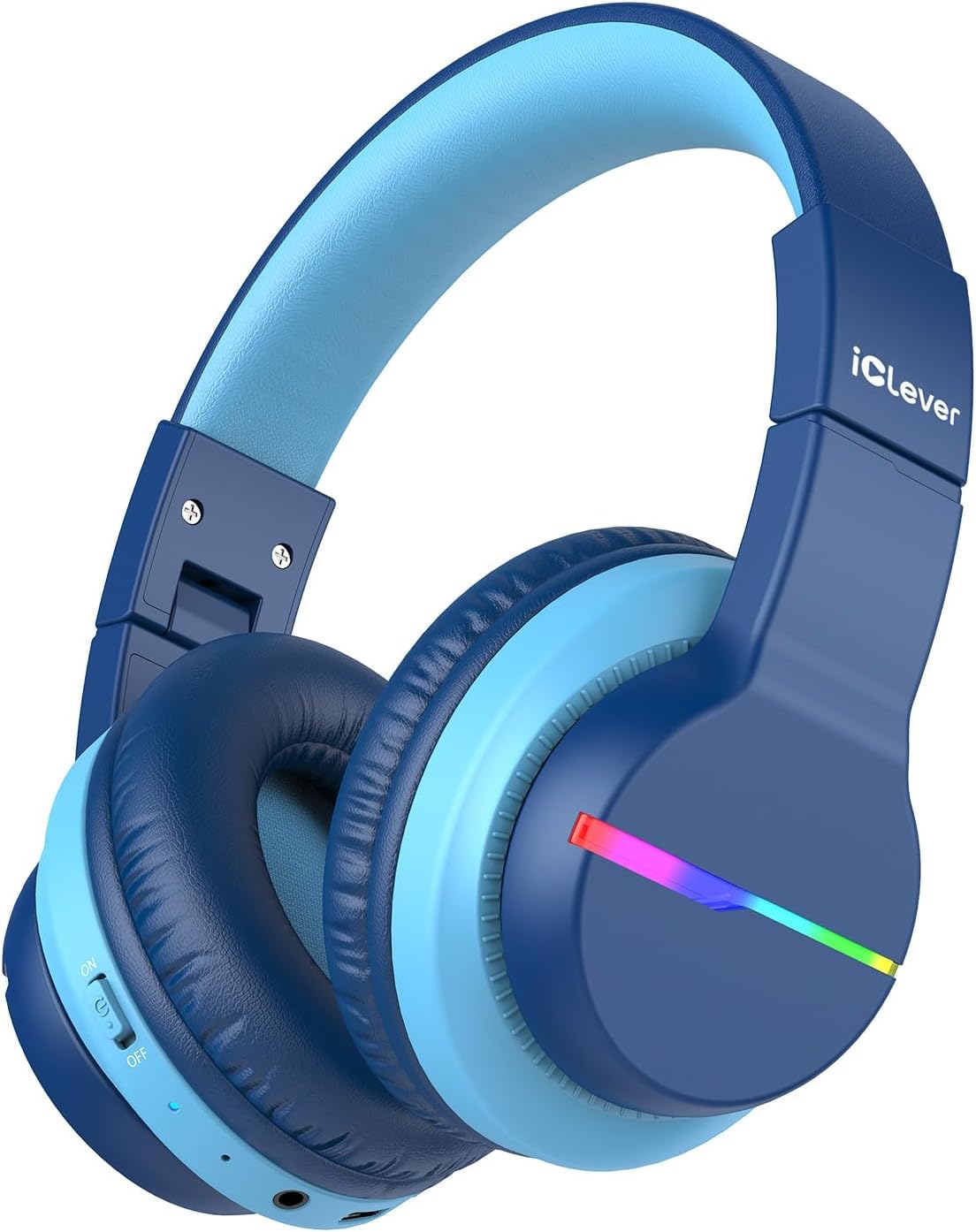
iClever BTH12

93 /100
Traveler Score Outstanding

Key details

Battery
85 hours
Connection
Bluetooth 5.2, AUX
Portability
Foldable
Volume Limit
74/85/94dBA
Check Details on Amazon

An 85-hour Bluetooth battery and a switchable 74/85/94dBA volume limit cover the travel essentials before a flight even takes off. The foldable over-ear build weighs 7 ounces, so it stows in a backpack without a dedicated case, and the 3.5mm AUX cable keeps it usable after Bluetooth runs dry. That combination gives parents volume safety, wireless freedom, and a wired fallback in one unit.

Bluetooth 5.2 pairs with tablets, car systems, and school devices quickly enough that parents do not have to manage the connection. The LED lights are the part kids respond to, and the sound is clear enough for streaming dialogue at the 85dB setting. Battery life holds up across multi-day trips, which makes the AUX port a backup rather than an everyday adapter. Controls are simple enough that older kids can adjust volume without asking for help.

This is the right match for families who want one headphone for flights, road trips, and school and want an AUX fallback when Bluetooth runs dry. The tradeoffs are specific: a headband adjuster that can snap on some units and occasional units that may lose pairing or ignore charging after a few months. Pack it flat, leave the volume switch at 85dBA, and it keeps serving as a travel tool.

The mid-range price maps cleanly to the feature set: wireless listening, volume limiting, long battery, and a foldable build. There is no premium for hybrid ANC, which keeps the cost down for families who do not need it. Families who do need a quiet cabin should look at the hybrid-ANC option in this lineup; the BTH12 handles the rest of the travel checklist better. LED lights make the headphone easy to spot in a dark car or crowded backpack.

The 7-ounce weight and foldable hinge suit younger kids, and comfort holds up during long listening sessions in the car or on a plane. Ear pads stay comfortable on extended use, and the headband keeps position without constant readjustment. For a family that packs it flat instead of shoving it into a stuffed bag, this is an easy travel companion.

πŸ’‘ Set the volume switch to 85dBA before handing it over to younger kids.

Pros

  • Long battery life carries through multi-day trips without a charger.
  • The 74/85/94dBA switch gives parents a simple volume ceiling for young ears.
  • Bluetooth pairing is quick enough for kids to connect without parental help.
  • LED lights make this the headphone kids reach for on travel days.

Cons

  • No active noise cancellation, so cabin engine drone stays prominent.
  • Headband adjuster can snap under hard travel bending.
  • Some units can lose Bluetooth pairing or ignore charging after a few months.
Our verdict

One headphone for flights, road trips, and school: long battery, volume limiting, AUX fallback, and child appeal in a package that responds better to careful packing than roughhousing.
Check Latest Price
2

Best Noise-Cancelling Travel Pick

iClever BTH20 ANC

89 /100
Traveler Score Excellent

Key details

Battery
35/60 hours
Connection
Bluetooth 5.4, AUX
Portability
Travel case
Volume Limit
80dBA
Check Details on Amazon

The BTH20 is the quiet-cabin pick for travel: hybrid ANC up to 40dB plus an 80dBA fixed volume cap, with USB-C charging and a travel case included. That makes it the strongest option here for a child who covers their ears during engine noise.

The over-ear frame has an adult-feeling build quality that younger ears generally tolerate well: the ear-cup padding is soft enough for a full flight, and the headband spreads weight without pinching. ANC takes the edge off engine drone without fabricating total silence, which suits kids who simply need a lower noise floor to nap or watch a tablet.

Families who prioritize cabin quiet over battery endurance β€” and who are comfortable with a premium-priced travel purchase β€” will get the most from this set. The 60-hour non-ANC battery drops to 35 hours with ANC on, which covers a long-haul leg but makes the USB-C cable a regular carry-on item. Noise-sensitive kids get real relief from the hybrid ANC. Some pairs may develop one-side audio or power trouble after several months, so a generous return window is worth having.

Compared with the all-rounder top pick, this model leans into ANC rather than all-around flexibility. If the child's main travel complaint is airplane drone rather than general boredom, the BTH20 addresses exactly that.

πŸ’‘ Keep the included AUX cable in the travel case as a wired fallback.

Pros

  • Hybrid ANC quiets engine and cabin noise for kids who struggle to settle on flights.
  • Padded ear cups and a solid frame feel more substantial than typical kids' headphones.
  • The over-ear fit keeps young listeners comfortable through long journeys.
  • Bluetooth 5.4 pairing is quick, and the AUX cable covers wired backup.

Cons

  • The 80dBA ceiling may be too quiet for older kids who expect louder playback.
  • Ear-cup hinges can loosen after months of folding, so the included case is worth using.
Our verdict

For a noise-reactive child, the BTH20 is the headphone to pack for a plane.

Check Latest Price
3

Best Budget Wireless

EarFun K2

92 /100
Traveler Score Outstanding

Key details

Battery
60 hours
Connection
Bluetooth 5.4, AUX
Portability
Foldable
Volume Limit
74/85/94dBA
Check Details on Amazon

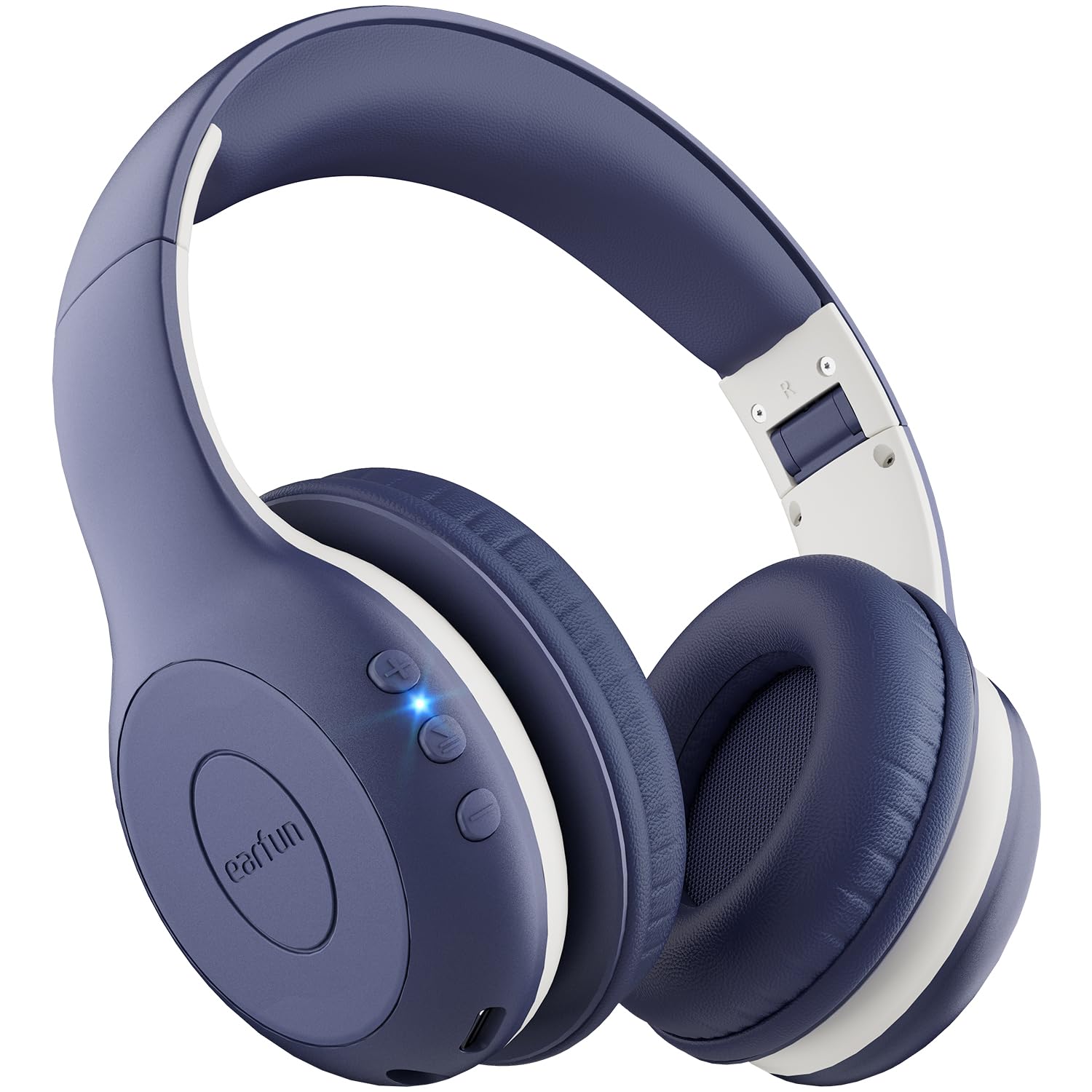
The EarFun K2 is the budget wireless travel value in this set: Bluetooth 5.4, a 60-hour battery, 74/85/94dBA volume limiting, USB-C and AUX inputs, and a foldable over-ear shape. It skips LED lights and ANC to keep the price down, which fits families who mainly want a wireless headphone for school, car rides, and flights.

The three-way volume switch locks the listening level before handing it over, and the ear cups stay comfortable for young heads during long sessions. Bluetooth pairing is quick, battery life stretches through multi-day trips, and the AUX cable covers the inevitable forgotten-charge moments. The ear cups stay light enough for younger kids to wear through a full movie.

Buy this for budget-conscious families who want a wireless headphone for school, car rides, and flights and do not need LED extras or active noise cancellation. It does not have ANC, so it will not quiet a loud cabin beyond the on-ear seal. The tradeoff: headbands can give out under rough use, and units can stop charging or refuse to power on, so this is best treated as a value travel companion rather than a multi-year investment.

πŸ’‘ Set the volume switch to 85dBA before handing it over; the 74dBA setting is best for quiet rooms.

Pros

  • Strong budget value for wireless school and travel listening.
  • Clear audio keeps dialogue and videos easy to follow.
  • Long battery life stretches across multi-day trips.
  • Comfortable on-ear fit works well for smaller heads.

Cons

  • For families expecting multi-year use, long-term dependability can vary and a replacement may be needed.
Our verdict

For families that want wireless travel coverage without paying extra for LED visuals or ANC, the K2 is the budget pick to start with.

Check Latest Price
4

Best for Younger Kids / Sticker Customization

Belkin SoundForm Mini

88 /100
Traveler Score Excellent

Key details

Battery
30 hours
Connection
Bluetooth 5.0, AUX
Portability
Compact on-ear
Volume Limit
85dBA
Check Details on Amazon

Belkin’s 2-year warranty, 85dBA volume cap, and 30-hour battery put the SoundForm Mini in a compact on-ear package that suits younger kids. The sticker-ready ear cups make it easy for a child to personalize, and the USB-C port plus 3.5mm aux input give families a wired backup when the battery runs out. The on-ear frame stays light enough for small heads, which matters more than raw battery life for travel.

This is best for parents who want a kid-specific travel headphone with warranty support, and for younger children who like to decorate their gear. The 85dBA cap keeps volume at the pediatric benchmark, but it also means there is no booming bass for older kids who expect more punch. Families moving between cars and planes will appreciate the compact on-ear form, and the Bluetooth 5.0 connection pairs quickly for a tablet or phone.

The main compromise involves the Bluetooth connection: after idle periods it can need a device-side reconnect before sound returns. The included 3.5mm aux cable is a clean workaround, and the 30-hour battery makes wired mode the exception rather than the rule.

Pros

  • Compact on-ear shape and 85dBA cap make this a comfortable travel headphone for younger kids.
  • Two-year warranty from a well-known brand makes the price easier for parents to trust.
  • Light frame and cushioned ear pads, plus easy Bluetooth pairing, make this simple for kids to wear and start.

Cons

  • Plastic around the ear cups can crack under light-to-normal use.
  • A pair can go silent in one side after months of use.
Our verdict

For young kids who need an 85dBA cap and a sticker-friendly design, this compact on-ear covers the travel basics without a lot of bulk.

Check Latest Price
7

Manual-Volume Families

noot K11

95 /100
Traveler Score Outstanding

Key details

Battery
β€”
Connection
Wired 3.5mm
Portability
Foldable
Volume Limit
None
Check Details on Amazon

Padded on-ear cups and a 5-foot braided cable make the K11 comfortable for car rides and easy to reach a seatback jack, while the foldable hinge tucks into school bags. Sound stays clear for a budget wired model, and the smaller headband fits younger kids well. The limitation is volume control: there is no built-in cap, so a parent has to set and check the source level. This is a mismatch with the safety-first reason families look for kids travel headphones, and it puts the K11 below volume-limited alternatives. Build quality is respectable for the price, though the headband joint and plug are the parts to watch; an occasional pair can lose audio on one side after months of use.

Pros

  • Padded on-ear fit is comfortable for smaller heads on long rides.
  • Long braided cable and foldable hinge suit school bags and airplane seatbacks.
  • Budget-friendly price with a solid build for the cost.

Cons

  • Headband joint and plug are the spots to watch; an occasional pair can lose audio on one side.
  • No built-in volume cap; in a car or plane, safe listening depends on parent-managed levels.
Our verdict

Use it as a budget school or car headphone when you will manage volume yourself. If a fixed listening limit is required, choose a volume-limited model instead.

Check Latest Price
8

Open-Ear Awareness

Mehomeli Open-Ear

88 /100
Traveler Score Excellent

Key details

Battery
β€”
Connection
Wired 3.5mm
Portability
Bendable neckband
Volume Limit
None
Check Details on Amazon

At 20 grams, the Mehomeli is the lightest option in this group, and its defining trait is the open-ear shape: kids hear traffic and announcements while audio plays. The 16.2mm driver sounds clear for an open-air unit, and the bendable titanium neckband handles daily packing.

The trade-off is the form factor. It sits outside the core travel intent because nothing covers the ears, so airplane and road noise pass through undiminished. That makes this a situational-awareness pick for walks, car rides, or classroom use, not a substitute for a sealed over-ear model. Fit also skews toward younger heads. As a lightweight backup rather than a noise blocker, it is a budget-friendly add-on.

Pros

  • Lets kids hear surrounding sounds while listening, a real safety plus for outdoor walks and travel.
  • At 20 grams, it is light enough for long wear without complaints from young kids.
  • 360Β° bendable titanium neckband handles the rough treatment of school-bag packing.

Cons

  • Fit is best for smaller heads; older children may find the headband snug.
  • Not an over-ear/on-ear headphone, so it misses the sealed travel headphone requirement.
Our verdict

Best as a lightweight backup for outdoor days or classroom use when your child needs to stay aware of the room; for the plane-focused traveler, a sealed over-ear model belongs in the bag.

Check Latest Price
9

Budget Wireless Backup

JoySpark T5

92 /100
Traveler Score Outstanding

Key details

Battery
60 hours
Connection
Bluetooth 5.3, AUX
Portability
β€”
Volume Limit
85/94dBA
Check Details on Amazon

JoySpark's T5 is a budget-friendly wireless pick for younger kids: memory-foam earpads keep the fit light, Bluetooth 5.3 pairs quickly, and the 60-hour battery outlasts typical travel days. The 85/94dB switch and AUX cable cover the basics. Durability varies between units, and charging or power-on issues can appear, so this works best as a backup travel pair rather than a daily classroom headphone. That keeps it a step behind the EarFun K2, which is the stronger all-rounder for families who plan to hand the same pair to multiple kids over several years.

πŸ’‘ Set the switch to 85dB before handing it to younger kids; the 94dB setting is best reserved for older children.

Pros

  • Strong functionality for the price: wireless freedom, AUX backup, and volume limiting in one package.
  • Memory-foam earpads keep the fit light and comfortable for toddlers and younger kids.
  • 60-hour battery outlasts long travel days without a charger nearby.

Cons

  • The lower volume setting is 85dBA rather than the 74dBA option found on some rivals.
  • No active noise cancellation, so engine and cabin noise are not reduced on flights.
Our verdict

Choose it as the occasional-travel pair for a younger child, not the everyday classroom workhorse.

Check Latest Price

How to Choose

Volume Limiting: The Real Safety Number

Volume limiting caps the maximum output before it reaches the speaker. The pediatric benchmark is 85dBA, so a fixed 85dB cap protects young ears even at max volume. Switchable 74/85/94dB models allow more flexibility, but 94dB is not a hearing-protection level for young children. A fixed-cap model can sound quiet on weak devices, so test it with the tablet or screen you plan to use.

Wired vs Bluetooth

Wired headphones remove battery and pairing variables, but the cable and 3.5mm plug become the strain points. Bluetooth headphones avoid cord damage but add charging and pairing hardware that can stop working over time. For plane travel, a Bluetooth pair with an AUX cable is the most flexible: use Bluetooth for tablets, switch to the cable for seatback screens.

Foldable Design and Portability

Foldable headphones pack more easily, but each hinge is a potential wear point. If a child throws the headphone into a bag, a simpler reinforced headband often lasts longer than a multi-joint folding design. A travel case adds a little bulk and protects the hinges in transit.

Battery Life and Charging

Battery life ranges from 30 to 85 hours; longer batteries help on multi-leg trips, but the charging port determines long-term reliability. USB-C is the better buy because replacement cables are easy to find. Fast charging helps in an airport crunch, and AUX playback with a dead battery means a forgotten charge is not the end of the trip.

Durability Signals

When kids headphones wear out, it usually happens at the headband adjuster, ear-cup hinge, 3.5mm plug, or charging port. A detachable braided cable, reinforced headband, and standard USB-C port make repairs easier. A long warranty is the most concrete durability backstop; no kids headphone is indestructible, but a replaceable-parts design is the practical choice.

Frequently Asked Questions