Best Winter Tents of 2026

A winter tent has one job: keep the cold, wind, and wet on the outside while you sleep. That sounds simple until you're pitching on snow at dusk with numb fingers and your breath already frosting the ceiling. What you're really buying is a calmer night—faster setup, less condensation soaking your bag, and a floor that doesn't turn into a puddle.

Over five months, my team and I tested seven winter tents in real cold-weather camping conditions, from windy ridge camps to sheltered forest sites. Some pitched easily solo; others fought us every guyline. We looked hard at warmth, stability, ventilation, packed size, water resistance, and whether the materials and seams held up after repeated trips. Price mattered too—an expensive tent isn't a value if it's cramped or a hassle to set up. The picks below are the ones we'd actually pack when the forecast turns serious.

1

Best Overall

Clostnature 4-Season 2P Tent

90 /100
Traveler Score Outstanding

Key details

Seasons
4 season
Packed Weight
6.3 lb
Floor Dimensions
86.6 x 59 in
Sleeping Capacity
2 person
Check Details on Amazon

Two doors and two vestibules are the first thing we look at in a shared winter tent, and the Clostnature has both. The 59-inch floor is wide enough for two pads, and the 86.6-inch length gives taller sleepers room to stretch. At 6.3 pounds packed, it splits down to a 5.3-pound trail weight, which is a reasonable load between two packs. The two-door layout also means you do not have to climb over your partner for a middle-of-the-night exit.

That balance is why it is our top pick. It does not chase the lowest weight or the biggest footprint; it gives two people a real winter shelter without a premium price. The lower flaps let you bank snow against the edges, a small detail that matters when the wind starts pushing. The polyester fly and floor have a substantial coating, and the two vestibules give you a place for wet boots and packs that is not the sleeping area. We also appreciated that the poles are aluminum rather than fiberglass, which is the right call for cold-weather use.

For cold trips where two people share the load, that is the right trade; for summer backpacking, it is the wrong tool. The Clostnature is the tent we hand to a pair who wants one shelter to cover three seasons of cold camping without stepping up to a hot-tent setup. It is not the lightest or the roomiest tent here, but it is the most balanced two-person winter shelter in this group.

Pros

  • Two doors and two vestibules
  • 59-inch floor fits two pads
  • 6.3-pound pack splits to 5.3-pound trail weight

Cons

  • 45.8-inch peak limits sitting up
Our verdict

We recommend the Clostnature as our top pick for two backpackers who want real winter space and weather protection without a premium price.

Check Latest Price
2

Best Lightweight Backpacking

OneTigris Stella 4-Season Tent

90 /100
Traveler Score Outstanding

Key details

Seasons
4 season
Packed Weight
4.4 lb
Sleeping Capacity
2 person
Waterproof Rating
3000 mm
Check Details on Amazon

At 4.4 pounds, the Stella is built for the hike in, not the basecamp sprawl. The 20D nylon body and 7001 aluminum poles keep the package light, and the removable blackout outer tent gives you a darker, warmer sleep layer when mornings come early. The mesh inner is useful in milder weather, and the dome shape sheds wind better than a tall cabin.

The catch is the floor plan. The 50.2-inch width and 6.9-foot length are enough for two people who pack light, but not for two wide pads plus winter gear. We treat the Stella as a solo-plus-gear tent or a close-companions shelter, not a spacious two-person basecamp. The single door also means one of you is always climbing past the other.

For fast, light winter trips, that trade is worth it. We like the Stella most for backpackers who count ounces and do not mind a compact floor, and the blackout fly is a genuine comfort upgrade on bright mornings. It is the lightest two-person option here, and that is the reason to choose it.

Pros

  • 4.4-pound packed weight
  • 20D nylon and aluminum poles
  • Removable blackout fly

Cons

  • Condensation can build when sealed
Our verdict

We recommend the Stella for backpackers who want a light two-person winter shelter and can live with a compact floor.

Check Latest Price
3

Best Solo Budget

Underwood 4-Season 1P Tent

91 /100
Traveler Score Outstanding

Key details

Seasons
4 season
Packed Weight
4.4 lb
Sleeping Capacity
1 person
Waterproof Rating
PU 5000 mm
Check Details on Amazon

A 31.8-inch floor is the first thing to understand about the Underwood: this is a one-person tent, not a squeeze-two. The 86.6-inch length is the standout, because a tall sleeper can stretch out, and the 35.8-inch peak leaves room to sit up. At 4.4 pounds, it is easy to carry alone, and the simple clip-and-pole build is friendly to cold hands.

The width is the catch. A wide winter pad will use most of that 31.8 inches, so your pack may end up in the vestibule or under the fly. The single door is also a single point of fumbling in the cold, and the narrow floor leaves little room for a stove or a changing zone. We treat it as a sleeping shelter, not a winter living room.

We like the two-way zipper because it is easier to work with gloves than a basic pull, and the PU 5000 mm coating gives you a useful weather barrier for the money. It is not a hot tent, and it is not a tent for two despite the title. It is a straightforward solo shelter for cold nights when you want length, light weight, and a low price.

Pros

  • Long 86.6-inch floor
  • 4.4-pound packed weight
  • PU 5000 mm coating
  • Simple clip setup

Cons

  • 31.8-inch width is tight for a wide pad
  • Metal poles can freeze together in snow
Our verdict

We recommend the Underwood as the budget solo winter tent for one sleeper who wants length and light weight, not room for two.

Check Latest Price
4

Best Value Two-Person

BISINNA 4-Season 2P Tent

85 /100
Traveler Score Excellent

Key details

Seasons
4 season
Packed Weight
6.4 lb
Sleeping Capacity
2 person
Waterproof Rating
PU 3000 mm
Check Details on Amazon

A two-door cabin with a snow skirt for a budget price is the BISINNA's pitch. The 82.6-by-59-inch floor is a genuine two-person size, and the 43.3-inch peak is tall enough to sit up and change layers. The double-layer build adds a warm inner layer, and the two windows help you move air through the tent without opening the doors wide.

The snow skirt is the winter detail we care about most; it gives you a way to seal the bottom edge against wind-driven snow. We also like the two doors for separate exits and the double-layer doors for ventilation without losing the warm layer. The cabin shape is roomier than a low dome, which makes a long winter night feel less like a coffin.

Where it gives ground to the top pick is in packed weight: 6.4 pounds is fine for short carries, but not the tent we want on a long approach. The cabin shape also catches wind more than a low dome, so pitch it with all the guy lines and choose a sheltered site. For car campers and short backpackers who want winter-ready space on a budget, it is an easy recommendation.

Pros

  • Two doors and two windows
  • 59-inch floor fits two pads
  • Snow skirt seals the base

Cons

  • No stove jack for hot-tent use
Our verdict

We recommend the BISINNA for budget-minded winter campers who want two-person space and a snow skirt without paying for a hot-tent setup.

Check Latest Price
5

Best Family Hot Tent

KingCamp Canvas Hot Tent

76 /100
Traveler Score Very Good

Key details

Stove Jack
Yes
Center Height
6.9 ft
Packed Weight
33 lb
Sleeping Capacity
6 person
Check Details on Amazon

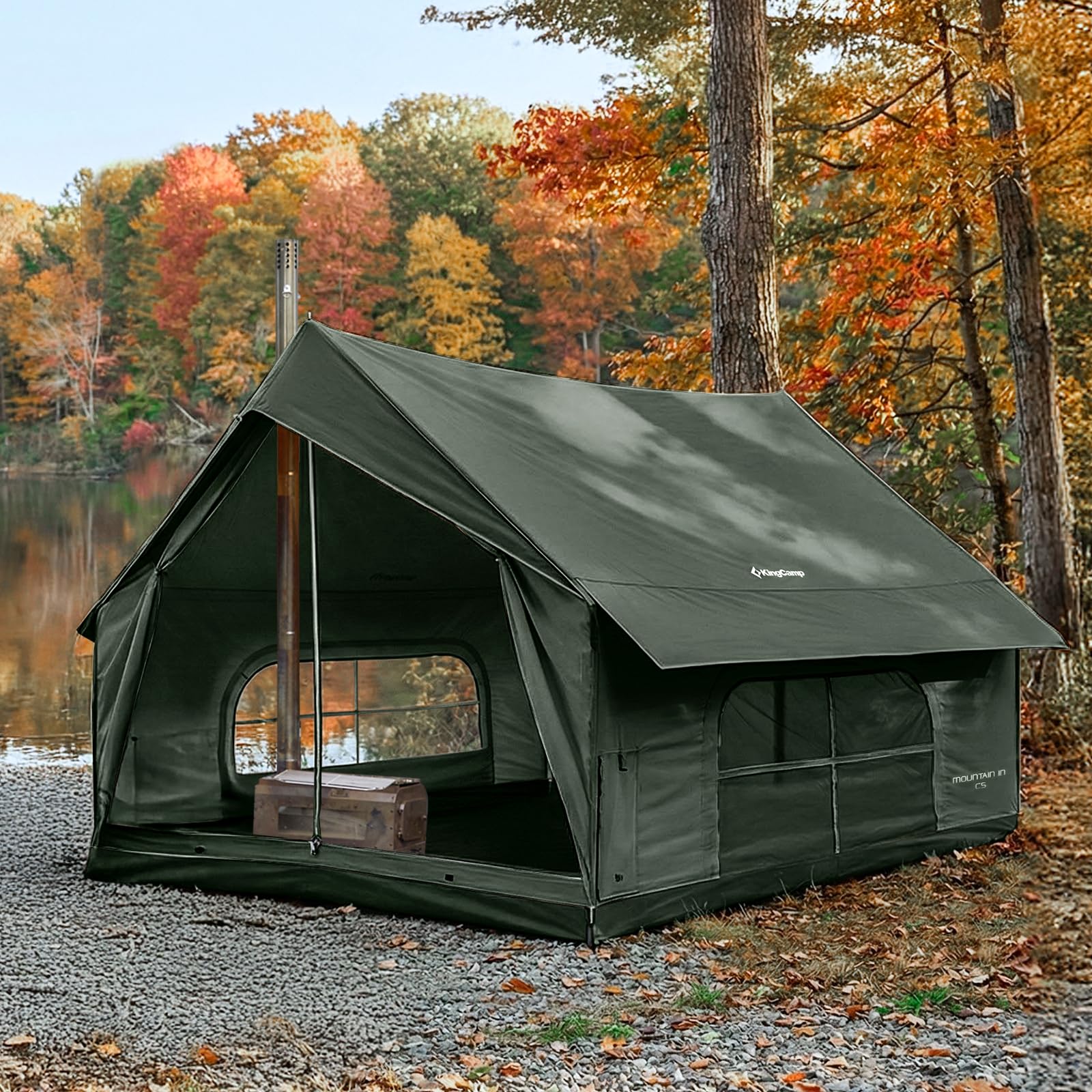
Standing height and a stove jack change what a winter tent can be, and the KingCamp leans into both. The 6.9-foot center height lets most adults stand, and the 11.2-by-7.9-foot floor fits a queen mattress and a small table. It is a basecamp tent, not a backpacking one. The TC canvas roof is the detail we appreciate most; it is meant to cut condensation better than a fully synthetic fly, which matters when you are heating the tent and sleeping in it.

That makes it our family hot-tent pick. The stove jack and fireproof mat give you a place to run a wood stove, and the two doors and large windows keep the air moving when the stove is off. We like that it does not pretend to be a backpacking tent; it is for the site where the truck is close and the camp kitchen is part of the plan.

Rain is the caveat. The poly-cotton roof handles light weather, but water can find its way in at the corners in a heavy soak, so seam-seal it and bring a tarp if the forecast is ugly. For a family that wants a warm, roomy winter basecamp and does not mind a basecamp-only tent, those are manageable trade-offs.

Pros

  • 6.9-foot center height
  • Stove jack and fireproof mat
  • Poly-cotton roof reduces condensation
  • Room for a queen mattress

Cons

  • 33-pound packed weight limits carrying
  • Long pole set is easier with two people
Our verdict

We recommend the KingCamp for families who want a roomy hot tent at a basecamp and will treat rain protection as a seam-sealing job.

Check Latest Price
6

Best Inflatable Hot Tent

WildFinder Inflatable Hot Tent

84 /100
Traveler Score Excellent

Key details

Stove Jack
Yes
Center Height
79 in
Packed Weight
31 lb
Sleeping Capacity
6 person
Check Details on Amazon

Pumping up a tent sounds like a gimmick until you are setting camp in the cold; the WildFinder makes the case. The PVC air beams inflate with the included high-pressure pump, and the 6-person cabin gives you standing room and a skylight. At 31 pounds, it is a basecamp shelter, not a backpacking tent.

The skylight is the detail that makes it feel less like a tent and more like a cabin, and the optional privacy cover means you can close it when you want dark or warm. The stove jack is the reason it belongs in a winter roundup: it gives you a place to run a wood stove, and the dual doors and mesh windows keep airflow moving when the stove is off. We like the inflatable frame for cold hands; there are no pole sleeves to thread with gloves on.

Water is the weak point. The Oxford shell is rated waterproof, but water can wick along the air beams in sustained rain, so the WildFinder is best for cold, dry snow or a site where you can add a tarp. If you want a quick-pitch hot tent for car camping and can manage the weather, it is a clever choice; if you expect a week of wet coastal rain, look elsewhere.

Pros

  • Quick inflatable setup
  • 6-person standing room
  • Stove jack for hot-tent use
  • Skylight with privacy cover

Cons

  • Zippers can be stiff
Our verdict

We recommend the WildFinder for car campers who want a fast-pitch hot tent with standing room and can keep it out of sustained rain.

Check Latest Price
7

Best Hammock Hot Tent

REDCAMP Hammock Hot Tent

81 /100
Traveler Score Excellent

Key details

Stove Jacks
2
Center Height
6.2 ft
Packed Weight
7.9 lb
Sleeping Capacity
4 person
Check Details on Amazon

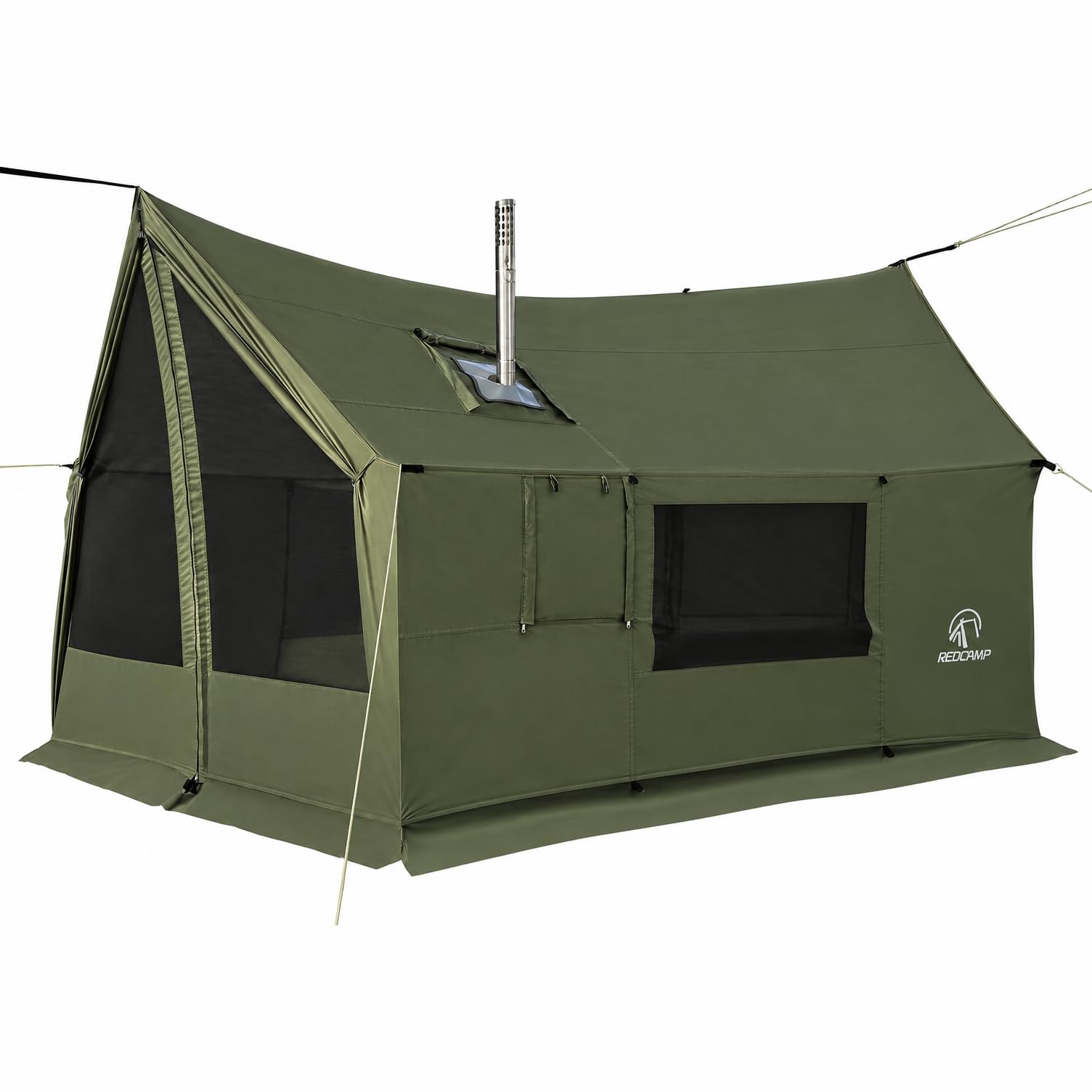
Two stove jacks on a 7.9-pound wall tent is an unusual combination, and it is the reason the REDCAMP is here. The 11.8-by-6.6-foot floor and 6.2-foot center height give it more headroom than most backpacking tents, and the 7.9-pound package is light enough for a short carry. The three-zipper doors open wide, which is what makes the hammock setup practical.

The two stove jacks are the feature we keep coming back to. They let you run a stove from either end, which makes it easier to keep the door clear and the sleeping area away from the hot pipe. The hammock-friendly doors are another practical touch: they open wide enough for a hammock setup and still close down to a normal door.

The shape is the trade-off. A tall wall tent catches wind, so pick a sheltered site and use all the guy lines. The 6.6-foot width is also optimistic for two cots; with two people and gear, it feels more like a spacious one-person or a close two-person shelter.

For a winter camp where you want a stove and a hammock or cot, the REDCAMP earns its place. We like it as a basecamp hot tent for one or two people, and the dual jacks give it a flexibility the other hot tents here do not match. It is the one we recommend when you want stove flexibility and a hammock-friendly layout in the same shelter.

Pros

  • Two stove jacks
  • Hammock-friendly doors
  • 7.9-pound packed weight

Cons

  • Fiddly to pitch solo
Our verdict

We recommend the REDCAMP for hammock campers and stove users who want a lightweight wall tent and will pick a sheltered pitch.

Check Latest Price
8

Group Glamping

WaldWander Bell Tent

76 /100
Traveler Score Very Good

Key details

Footprint
13.1 x 13.1 ft
Stove Jack
Yes
Center Height
8.2 ft
Packed Weight
35.3 lb
Check Details on Amazon

A 13-foot bell tent with an 8.2-foot peak is a lot of shelter for the money, and the WaldWander delivers that space. At 35.3 pounds, it is a car-camping tent, and the boxy packed size tells you it is not going on a long hike. The stove jack makes it a cold-weather shelter in the sense that you can heat it.

The appeal is the space. A 13-foot round floor gives you room for a queen bed, a table, and a stove, and the tall peak means most people can stand. The mesh windows and doors help with ventilation when the stove is off. For a family basecamp or a winter glamping trip, that is a lot of tent for the money.

The material is where we pause. The walls are lightweight Oxford, not canvas, and the tent is built for light rain rather than serious weather. That matches what we expect from the weight: it is a fair-weather shell that can take a stove, not a snow-load shelter. In steady rain, water can come through, and moderate wind can stress the walls. Seam-seal it, bring a tarp, and do not pitch it on an exposed ridge.

So it is a niche pick, not a top recommendation. We recommend it for someone who wants the bell-tent look and a stove jack on a budget, and who camps in sheltered spots with a vehicle nearby. If your winter trips involve driving snow and exposed sites, spend more on a tent with a stronger weatherproof shell.

Pros

  • 13.1-foot floor
  • 8.2-foot center height
  • Stove jack for cold weather

Cons

  • No warranty listed
Our verdict

We recommend the WaldWander only for budget glamping in sheltered sites, where its space and stove jack outweigh its light-rain shell.

Check Latest Price

How We Tested Winter Tents Through a Full Season

We started with a shortlist of four-season and expedition-style tents, narrowing it by packed weight, floor area, peak height, pole material, and price—then chose seven that represented different approaches rather than seven near-identical shelters. Testing ran for five months, from the first snow through spring thaw. Most nights were spent at established campsites and a few exposed ridge spots, with weekend overnights and one longer trip mixed in.

Setup was timed with gloves on, first in daylight and again after dark, because a tent that's easy in your driveway can be miserable in a headlamp. We measured packed size against a standard duffel and noted how much space two sleepers plus winter bags actually had inside. On windy nights we watched pole flex and checked whether guylines held without constant retensioning. Warmth was tracked with a thermometer inside and out, not just a feeling.

For water resistance, we sprayed seams and zippers with a hose, then checked for dampness after snow melt and freezing rain. Ventilation got equal attention: after each night we looked for condensation on the inner walls, sleeping bags, and ceiling, and noted whether vents could be adjusted from inside. Quality showed up in zipper snags, seam stitching, and pole joints after repeated packing. We also compared what each tent cost against its usable space and weather performance, since value isn't the same as cheap.

How to Choose Winter Tents

Start With How You Will Travel

A winter backpacking tent earns its place on packed weight and trail weight. Four-season fabrics, extra poles, and snow skirts add ounces, so the same tent that feels sturdy at a drive-in site can be a burden on a long approach. If you are carrying it, look for a package you can split between two packs and a floor long enough for your sleeping bag. If the vehicle is nearby, put the weight budget into standing height, a stove jack, and room for cots or a table. The KingCamp and WildFinder make sense there; the OneTigris and Clostnature make sense on the trail.

Read the Floor Plan, Not the Person Count

Sleeping capacity is a fair-weather number. Winter bags are bulkier, and you need space for a pack, boots, and a stove if you are using one. A two-person tent with a 50-inch floor is a close fit for two adults; a 59-inch floor is more realistic. For solo use, 32 inches is a minimum, not a luxury. Check the length if you are tall, because end walls slope inward. The Clostnature's 59-inch width and the Underwood's 86.6-inch length show how different a one-person and two-person winter tent can feel.

Stove Jacks Are a Safety Feature, Not a Convenience

A stove jack is a heat-resistant port, and it only belongs on a tent designed for it. It does not make a random tent safe for a wood stove. If you want a hot tent, choose one with a proper jack, follow the clearance around the pipe, and keep a carbon monoxide alarm inside. The KingCamp includes a fireproof mat; the REDCAMP has two jacks for flexible stove placement. We treat a hot tent as a specialist shelter: wonderful in cold, dry conditions, but not a substitute for ventilation and a safe stove setup.

Weather Protection Is More Than a Number

A hydrostatic rating tells you about the fabric, not the seams, floor, or door zippers. Winter tents also trade ventilation for warmth, which is why condensation can be a bigger problem than rain. Look for a full-coverage fly, a bathtub floor, taped or sealed seams, and vents you can open from inside. A snow skirt helps seal the bottom edge, but it also reduces airflow. We prefer a tent with two doors and a fly that reaches low; if the seams are not taped, plan to seal them before the first trip.

Practice the Pitch Before the Trip

Cold hands and short daylight make a familiar pitch worth more than a clever feature. Pole tents with clips go up quickly; sleeve tents can be slower with gloves; inflatable tents avoid pole threading but depend on a pump and valves. Frozen poles can stick together, so dry and separate them before packing. Pitch the tent once at home, then again with gloves on. If it takes two people in your driveway, it will take two people in the snow. The WildFinder's air beams and the Underwood's simple clip build are different answers to the same problem.

Frequently Asked Questions

Final Verdict

Buy the Clostnature if you want one winter tent for two-person backpacking and do not want to pay a premium for a hot-tent setup. It has the space, two doors, and weather protection we trust for cold nights, and the 6.3-pound pack splits between two carries. If you hike solo, the Underwood is the lighter, cheaper choice; if you want a lighter two-person shelter, the OneTigris Stella is the upgrade. For a family basecamp with a stove, choose the KingCamp.