6 Best 4-Season Tent of 2026: The Ones That Keep Snow Out

Which 4-season tents actually keep snow and wind out for winter travel — and which 2-person models really fit one adult plus gear.

The 4-season tent label is more elastic than most buyers expect. Some tents carrying it skip the snow skirt or leave the rain fly short of the ground, so spindrift can work its way in. In this category, the badge tells you less than the fly coverage and pole design.

That is not a reason to avoid winter camping. It is a reason to read the specs that matter before a winter trip: fly-to-ground coverage, snow skirt, pole strength, ventilation, and the real floor area behind the '2-person' claim.

A 2-person winter tent usually means one adult plus gear, and even a warm shelter can collect condensation if the vents and fly are mismatched. Match the tent to the trip—solo overnight, exposed ridge, or family base camp—and the choices get much clearer.

1

Best Overall

Clostnature 2P 4-Season

90 /100
Traveler Score Outstanding

Key details

Poles
2 aluminum poles
Weight
5.33 lb trail
Interior Size
87L, 59W, 46H in
Waterproofing
PU5000 fly, bathtub floor
Check Details on Amazon

The Clostnature 2P 4-Season brings the full winter checklist: snow flaps to block drifting snow, a PU5000 fly and bathtub floor that handle rain and slush, two aluminum poles for durability in wind, and twin vestibules for gear storage. The fly-to-ground coverage seals the tent against the weather, and the heat retention keeps the interior noticeably warmer than open-air shelters on 24-30 degree nights. The fly reaches low on the sides, and the snow flaps add a sealed layer that blocks wind-driven snow from creeping underneath. That package undercuts comparable purpose-built winter tents by a wide margin, yet it doesn't skip the details that matter in snow country.

Setup takes minutes; the two-pole frame and clip-on fly are forgiving for a first-time winter camper. The sleeves and clips align intuitively, and the fly attaches with reinforced corners rather than fiddly hooks. In wet weather, the bathtub floor and taped seams hold up in rain and snow when the tent is tensioned correctly — a taut pitch is the difference between dry and soggy. The bathtub floor wraps several inches up the walls, so a damp footprint won't soak through the sleeping area. The dual doors open wide enough for two campers to enter without scrambling over each other, and the zipper pulls are shaped for use with gloves.

Ventilation is managed by two double-layer doors that open from the top or bottom, and the mesh inner allows fine-tuned airflow. In snow, the fly's snow flaps add an extra layer of protection, and the two vestibules provide dry storage for wet boots and packs. The mesh panels double as insect screening in milder months. Both doors can be zipped shut quickly when a squall hits, which matters in sudden winter weather.

This tent is for couples or solo campers who want one affordable shelter for three-season outings plus weekend winter trips. The 59-inch floor width means two average adults will be cozy; it's a more honest fit for one adult plus gear or a large dog. For taller campers, the 3-foot-10 peak height isn't a full sit-up, and side clearance is tight for anyone over 6 feet. The 7-foot-3 length, however, gives average-height sleepers full extension without crowding the doors, and the 4-foot-11 width fits standard air pads side by side.

For the money, the Clostnature includes dual vestibules and snow flaps — features several pricier competitors omit. On a group trip where two or three tents are needed, the per-tent cost doesn't force a downgrade in winter capability. The design leaves nothing to figure out in a snowstorm, and it works as well for a late-autumn hunt as for a first winter backpacking trip. It's the rare budget tent that doesn't make you sacrifice the weather sealing that actually matters. That's a trade worth making when the alternative is a three-season tent that struggles with frost.

💡 Keep both vestibules cracked in freezing temps to manage condensation.

Pros

  • More floor room than typical for the category
  • Pitches in minutes with a two-pole design; solo setup is realistic.
  • Fly-to-ground coverage handles heavy rain and snow when the tent is tensioned correctly.
  • Dual doors and two-layer mesh vents manage airflow without a major heat loss.
  • Budget-friendly for a full four-season feature set

Cons

  • Occasional ground moisture can seep through the floor seam if you skip a footprint.
  • At 5.33 pounds trail weight, this won't suit ultralight backpackers.
Our verdict

For budget-minded campers who need genuine four-season protection, this is the tent to measure the others against.

Check Latest Price
2

Best Ultralight 4-Season

OneTigris Stella 4-Season

90 /100
Traveler Score Outstanding

Key details

Poles
Weight
4.4 lb trail
Interior Size
Waterproofing
3000mm rain fly
Check Details on Amazon

At 4.4 lb trail weight, the Stella is the lightest winter-rated shelter in this roundup, and its cross-pole pitch goes from stuff sack to standing in about three minutes. That combination makes it the default starting point for solo travelers who want a four-season rating without hauling a basecamp tent.

The 20D nylon body and 40D floor hold up on rocky snowfields better than the featherweight numbers suggest, and the 3000mm fly sheds rain and snow when pitched taut. A proper winter sleeping bag does the work at the coldest points, but the low shell keeps heat in around freezing and below.

This fits the solo ski tourer or ultralight backpacker who covers long miles before camp and values a fast, simple pitch over a sealed snow fortress. The fly stops short of the ground and no snow skirt is fitted, so drifting snow can enter under the edge on exposed slopes; full fly-to-ground coverage belongs to the technical alpine shelter in this set. Condensation also requires vent discipline in cold, humid weather, and two average adults will find the floor better suited to one person plus gear.

💡 Pitch the cross-pole dome taut on firm snow and use deadman stakes if the surface is soft.

Pros

  • Build quality stands up to repeated winter use across seams, zippers, and pole sockets.
  • Cross-pole dome sets up in under five minutes with no confusing sleeve routing.
  • Traps heat in sub-freezing conditions when paired with a proper sleeping bag.
  • The 4.4-lb trail weight is the lightest among the winter shelters in this set.

Cons

  • Cold, humid nights can leave condensation on the shell if the vents are shut.
  • The fly gap at the base lets snow drift in on exposed, wind-loaded sites.
Our verdict

For solo ski tourers and ultralight winter campers, the Stella's 4.4-lb trail weight and three-minute pitch carry the day.

Check Latest Price
3

Best Budget 4-Season

Underwood Aggregator 1/2P

89 /100
Traveler Score Excellent

Key details

Poles
Aircraft-grade aluminum
Weight
5.73 lb packed
Interior Size
Peak 45.3 in
Waterproofing
PU5000 rain fly
Check Details on Amazon

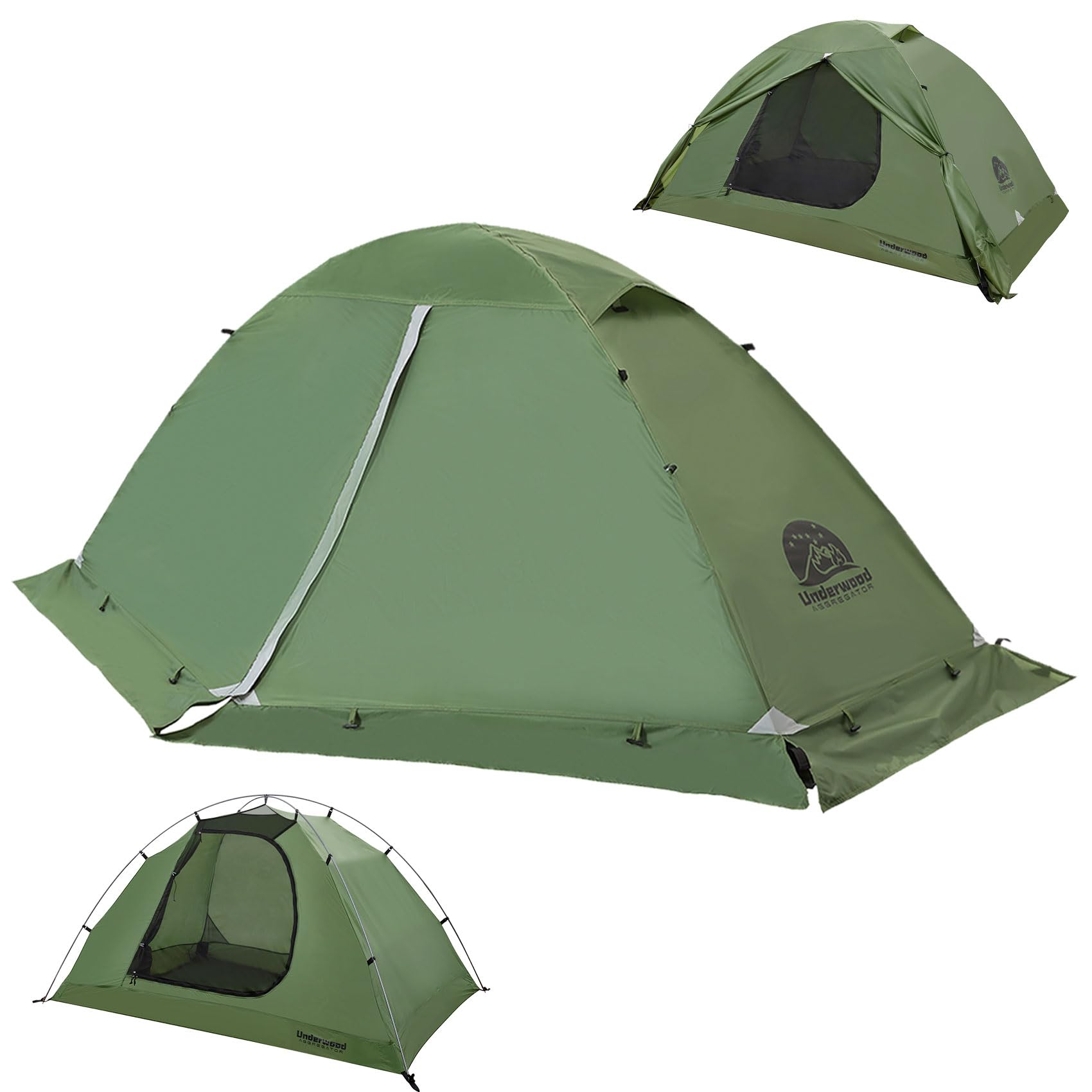
The Underwood Aggregator pairs aircraft-grade aluminum poles, a PU5000 rain fly, and a snow skirt at an entry-level price. Included stakes hold well in firm ground, and one person can have the tent up quickly when temperatures are falling. It is not the lightest option in this comparison, but that trade-off keeps the price within reach.

Snow and wind are the tests that matter here. The snow skirt blocks drafts, and the pole structure stays composed in gusty conditions; below freezing, the tent holds heat instead of becoming a cold shell.

Budget-minded solo winter backpackers are the primary audience. Durability at floor, zipper, and strap stress points can vary, so a footprint and gentle zipper handling are part of owning this tent. That care is a fair trade for getting a snow skirt and strong poles at this price.

Pros

  • Well-made aluminum poles and stakes hold up in wind and cold.
  • One person can pitch it quickly in cold conditions.
  • Packs small and carries well on a backpack for this price tier.
  • Holds heat on below-freezing nights.

Cons

  • Tall campers can find the 45.3-inch peak too low for upright sitting at the edges.
  • Two average adults expecting side-by-side space can feel cramped; the 2-person rating fits one adult plus gear more comfortably.
Our verdict

For a solo winter backpacker on a budget, this is a legitimate way into 4-season camping without paying alpine-tent prices.

Check Latest Price
4

Best for Alpine and Mountaineering Build

GEERTOP Navigator 2P

83 /100
Traveler Score Excellent

Key details

Poles
Aluminum
Weight
6.3 lb trail
Interior Size
Waterproofing
PU8000 fly, PU5000 floor
Check Details on Amazon

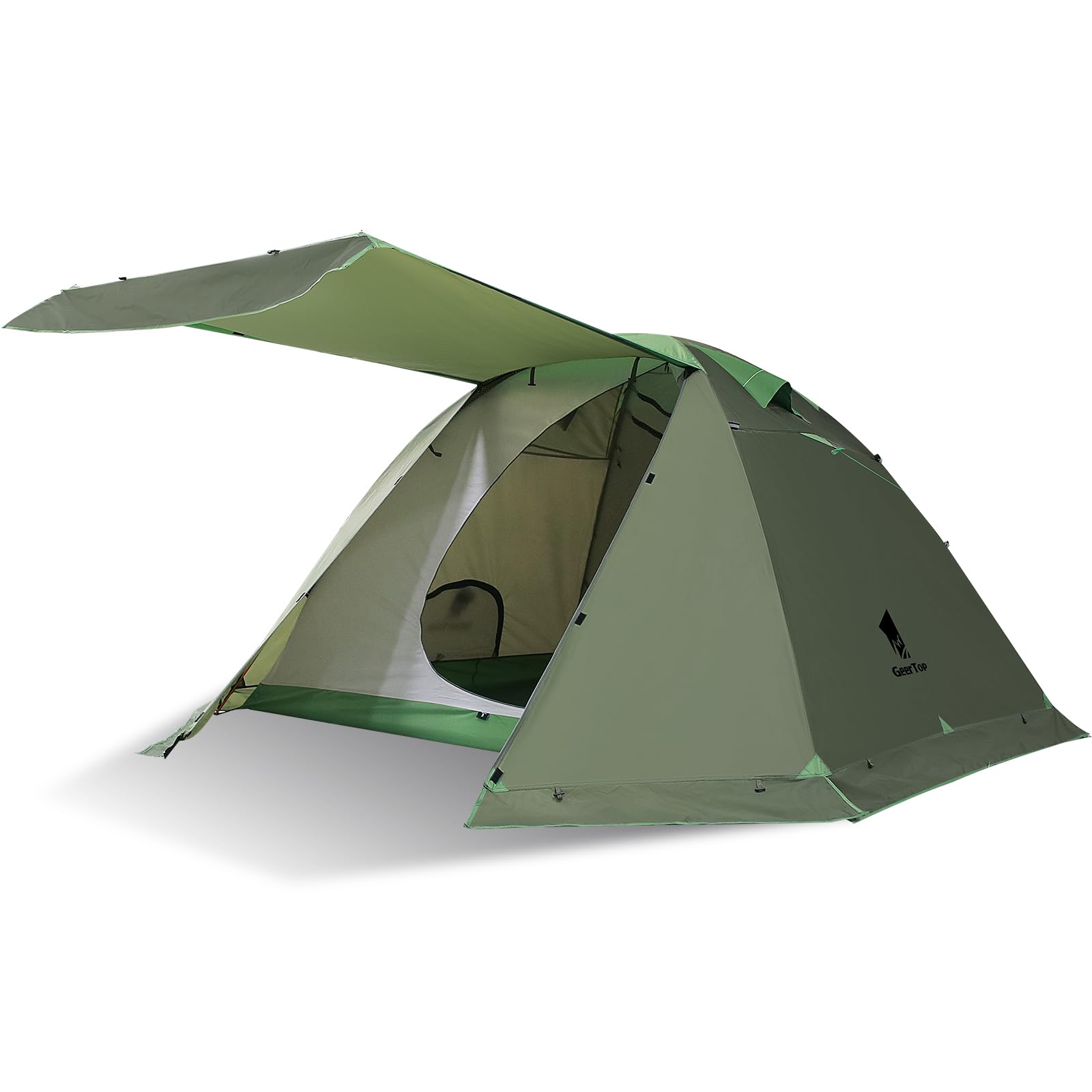
The GEERTOP Navigator 2P is a technical alpine tent: 360-degree snow skirts, a PU8000 fly, and a fly-first pitch that keeps the inner shelter dry while the outer shell goes up in falling snow. The aluminum pole set and reinforced corners handle exposed ridgelines, and the freestanding frame stays planted when staked out. The setup order matters less once it becomes routine; the reward is a dry inner tent in wet weather.

Cold-weather warmth is the payoff. The tent stayed comfortable on 20-degree nights, and the fly shed thunderstorms and high winds without leaking. At 6.3 lb trail weight it is light enough for a solo backpacker to carry with winter gear, though not an ultralight shelter. The pole tension holds in gusty conditions once the fly is pulled taut.

This is for solo winter campers and alpine backpackers who want a real winter shell at a mid-range price. The fly-first pitch needs practice at home before an emergency setup, and condensation can be significant in cold weather, but the snow skirts and high fly waterproofing deliver where exposed sites are the norm. Buyers who want a base-camp layout should look to the larger option in this set. For a climber moving through high terrain, the tradeoffs make sense.

💡 Snow skirts need staking on all sides to keep drifting snow out.

Pros

  • 360-degree snow skirts and a PU8000 fly keep snow and driven rain out at exposed sites.
  • Aluminum poles and reinforced stress points keep the frame steady in gusty ridgeline winds.
  • The tent stays comfortable on 20-degree nights, covering real winter conditions.
  • At 6.3 lb trail weight, it is light enough for a solo winter backpacker to carry with a full load.

Cons

  • The 2-person rating is compact: one adult plus gear fits naturally, while two adults share a tight floor.
  • Zipper and pole hardware can vary between units; checking both before a trip is worth the time.
Our verdict

For solo winter backpackers, the Navigator delivers snow skirts, a stable fly-first frame, and enough warmth for cold camps.

Check Latest Price
5

Best for Families and Group Base Camp

GEERTOP Toproad 4P

84 /100
Traveler Score Excellent

Key details

Poles
Aluminum freestanding
Weight
9.1 lb
Interior Size
Floor 6.9x7.8 ft
Waterproofing
PU3000 fly, PU5000 floor
Check Details on Amazon

The Toproad 4 Plus is a family-sized four-season base camp with an integrated snow skirt, freestanding aluminum poles, and enough floor area for a queen air mattress plus gear. The two-pole frame keeps setup simple even in low light, and the 6.9 x 7.8 ft floor gives a group room to spread out instead of stacking pads edge-to-edge. It is not a technical mountaineering tent, but it does not need to be; this is a shelter you drive to, unfold, and inhabit for cold-weather weekends.

The full-coverage fly sheds moderate rain, and the snow skirt limits drafts underneath in cold winds. In storms, the interior stayed dry, while the two-pole frame kept the shell taught without extra fiddling. Waterproofing on the fly and floor covers wet snow and slush well enough for a base-camp tent at this price.

This is a base-camp tent for family campers and overlanders who drive to the site and can carry 9.1 lb without complaint. Backpackers counting ounces or solo minimalists will not want this footprint; the technical alpine tent in this roundup offers stiffer storm performance but far less room. The included stake and guyline kit can be under-supplied for every anchor point, so a few extra stakes are worth carrying for exposed pitches. With a vehicle nearby, the weight is irrelevant and the interior volume becomes the whole point.

Pros

  • Freestanding two-pole frame sets up quickly even in low light.
  • Queen-mattress floor space with gear room suits a family base camp.
  • Full-coverage fly with snow skirt and PU-rated surfaces handles wet winter weather.
  • Construction quality at this price holds up for a large four-season tent.

Cons

  • In humid or freezing campsites, rain-fly condensation can form when vents are closed; leaving one open keeps things drier.
  • On gravel or rocky ground, the floor can wear thin; a footprint protects it.
Our verdict

The Toproad 4 Plus is the family base-camp answer in this set: winter sealing, easy poles, and space to spread out without carrying a wall tent.

Check Latest Price
6

Ultralight Budget Backpackers

Naturehike 4-Season 2P

83 /100
Traveler Score Excellent

Key details

Poles
Weight
4.1 lb trail
Interior Size
W53, H45 in
Waterproofing
PU3000mm
Check Details on Amazon

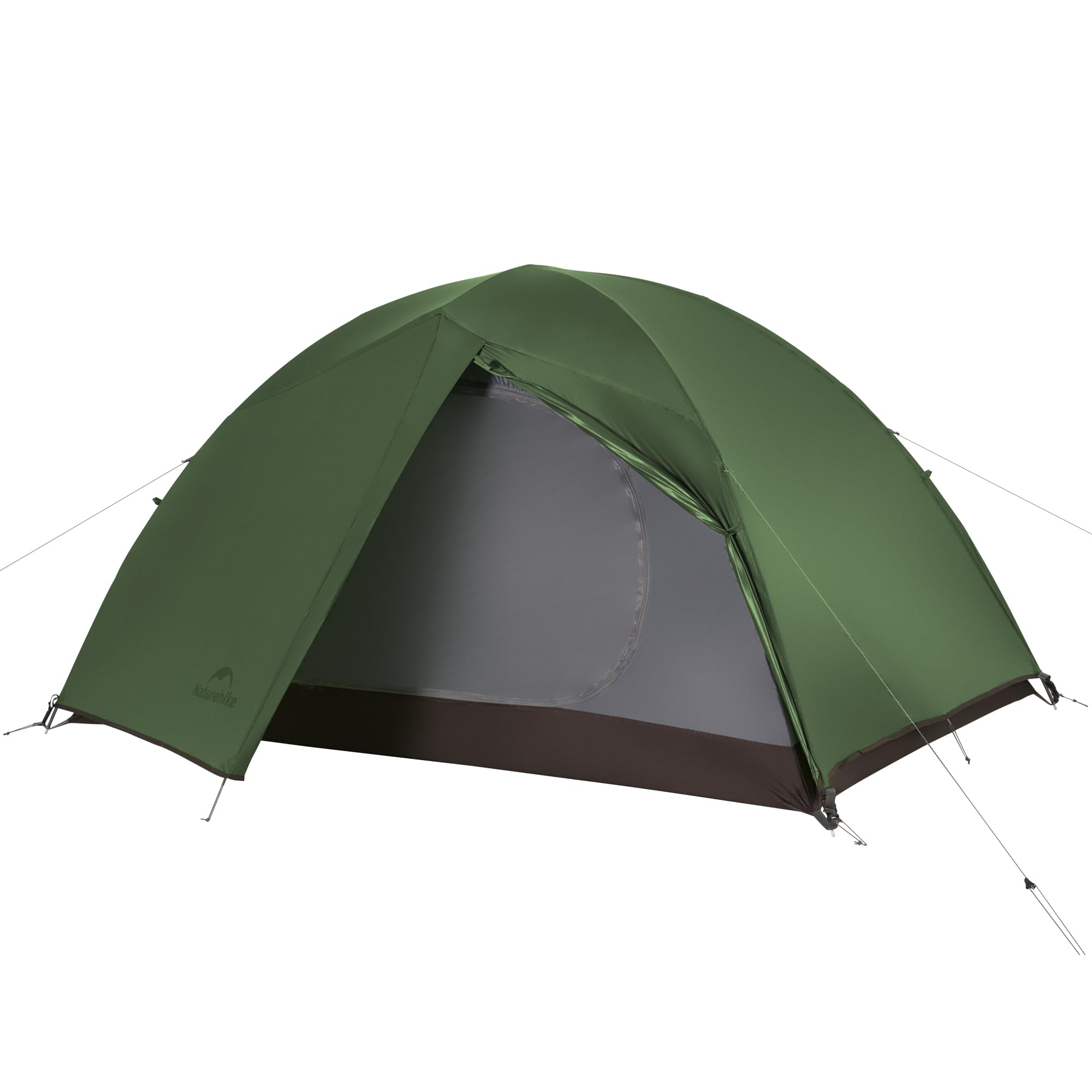
The 4.1-lb trail weight and included footprint make this the compact choice in this set, and the cross-pole setup is quick. For anyone shopping a true 4-season tent, though, the label overreaches: no snow skirt is included and storm moisture can reach the interior, so this is best treated as a cold-weather 3-season tent until its winter seal is tested in snow. It suits ultralight backpackers, motorcycle tourers, and bike tourers who need a small packed size and are okay with three-season duty plus occasional cold snaps.

Pros

  • Carries easily on a bike or in a backpack with a 4.1-lb trail weight.
  • Setup takes minutes thanks to a simple cross-pole layout.
  • Two doors and two vestibules keep two occupants comfortable when packs stay outside.

Cons

  • Two people sleep comfortably only when packs and boots stay in the vestibules.
  • Cold-weather camping needs vent care; interior condensation can drip at low temperatures.
Our verdict

For the right user, this is a fair-priced three-season-plus shelter with a genuinely small pack. For a winter objective, keep scrolling.

Check Latest Price

How to Choose

Weight vs. Endurance

Every pound saved comes out of fabric thickness, pole gauge, or snow-loading headroom. A 4-lb tent gets you down the trail faster, but it flexes more under heavy snow and leaves less fabric margin for wind-driven moisture. A 6-9 lb freestanding dome gives stiffer poles and a more forgiving interior.

Solo tourers should choose the lightest shelter they can pitch quickly; car campers should not pay a premium to shave pounds they will never carry.

Waterproof Coatings

Waterproof ratings describe the water-column pressure a fabric resists in lab testing. PU3000 handles steady rain; PU5000 adds margin for snowmelt and wind-driven water; PU8000 helps only on exposed ridges. The floor coating matters as much as the fly because ground moisture works upward through a thin bathtub floor.

Higher coatings mean heavier, stiffer fabric, so match the rating to the worst weather you actually expect.

Snow Skirts and Drift Control

Snow skirts stop spindrift from blowing under the fly, but they only work when the fly reaches the ground. A fly that stops short leaves a gap that turns a snow skirt into decoration. A fully sealed tent also traps moisture, so vents or a top gap are the escape route for condensation.

For dry, cold snow, a skirted tent with full-coverage fly is safer; for humid winter conditions, seek twin vents you can open without letting snow in.

Pole Strength

Pole material and gauge control how much snow the frame can shed before it flexes or snaps. Aluminum is the baseline; thicker gauges add stiffness and weight. Thin budget aluminum can bow under a wet, heavy dump, so check the gauge rather than trusting the word 'aluminum'.

On an exposed ridge, a pole that bends under wind load is safer than one that snaps, but too much flex lets the fly touch the inner tent and transfers condensation inside.

Floor Space and Height

The 2-person label in 4-season tents usually describes packed sleeping bags, not two average adults with winter clothes and gear. A 53-59 inch floor width fits one person plus gear or two close friends. Peak height matters more for changing layers than for sleeping: a 45-inch ceiling is fine for lying down, while a 60-inch dome lets you sit up and manage gear.

If two adults will share the tent regularly, move up to a 4-person model; the extra weight is easier to split between two packs than a cramped night.

Frequently Asked Questions