9 Best Winter Camping Tent of 2026: Match the Shelter to the Trip

Find a winter camping tent that matches your actual trip - stove-jack basecamp or light 4-season dome - and see which capacity labels shrink once cold-weather gear is inside.

Winter tent listings make every '4-season' shelter look capable of a basecamp push. The real constraint is fit: a 2-person dome that feels roomy for one hiker with a winter bag, or a 6-person hot tent that sleeps four once the stove, wood, and gear are in place. Capacity labels are the least reliable number on the box.

This guide sorts shelters by the trip they actually handle. Stove-jack basecamp tents earn their size for car-campers and groups, while lighter 4-season domes make more sense for backpackers who need to carry every pound. The dividing line is whether you plan to burn a stove, not just what the season rating says.

Buy for your load, not the label. That means checking floor dimensions, packed weight, and how much room a stove consumes before you settle on a tent. Get those three right, and the difference between a good and frustrating winter camp shrinks dramatically.

1

Best Overall

GEERTOP 4-Season 2P

90 /100
Traveler Score Outstanding

Key details

Stove Jack
No
Construction
Snow skirt, double wall
Packed Weight
6.9 lbs
Waterproofing
PU3000
Check Details on Amazon

The GEERTOP 2-Person 4-Season Backpacking Tent leads this winter set with a double-wall build, snow skirt, twin vestibules, and aluminum poles. The 6.9-pound packed weight splits the difference between backpacking and basecamp duty, and the pole-and-clip layout goes up without a learning curve. Materials and stitching hold up across repeated cold-weather camps, which is why this dome anchors the category. The fly's integrated snow skirt sits low enough to block draft without making access awkward.

Pitching is a two-step process: inner tent clips to the aluminum poles, then the fly drapes over and hooks at the corners. In wind, a second pair of hands helps, but a solo camper can manage by staking the windward side first. The two doors and vestibules make the layout genuinely two-person; gear stays covered on both sides without crowding the sleeping area. One person with a full winter kit can use the extra floor space instead of stacking bags inside the entrance.

Sub-freezing comfort comes from the double-wall design and snow skirt, which hold body heat while the fly blocks wind. The inner tent's mesh panels vent condensation when the weather allows, and the fly's PU3000mm coating sheds snow and normal winter rain. The snow skirt can be staked flat or left loose to bank additional snow against the base. In calm sub-freezing camps, the double-wall design keeps the sleeping area warm without a stove.

Best for weekend winter campers, couples, and cold-weather car or basecamp users who want one shelter that works across trip styles. The zipper and rain-fly material are the main wear points, and occasional heavy-rain leaks have been noted; for snow and normal winter storms the double-wall structure holds well. This is not an expedition tent for high alpine ridge camps, but that sits outside the role this dome fills.

At a mid-range price, this dome undercuts premium expedition shelters without stripping out the features a winter camper actually uses. The packed size is manageable for short backpacking approaches, and the weight becomes irrelevant once it is in the trunk for car-to-camp trips. For a two-person winter shelter, the balance between capability and cost is hard to beat.

Pros

  • Double-wall build, aluminum poles, and an integrated snow skirt give the tent a durable feel across repeated winter camps.
  • Clip-and-pole setup pitches quickly; the two-person team can have it standing while snow starts to accumulate.
  • Double-wall interior and snow skirt hold heat in sub-freezing camps without relying on a stove.
  • Floor plan is roomier than typical 2P domes, giving one camper with winter gear space to spread out.
  • Mid-range pricing undercuts expedition domes while keeping the 4-season features that matter for snow-country camping.

Cons

  • At 6.9 pounds, the packed weight is noticeable on long approaches; this suits short backpacking hauls more than thru-hikes.
  • No stove jack means campers who want inside wood heat need a dedicated hot-tent design.
Our verdict

Weekend winter campers and couples who alternate between short backpacking trips and car-accessible basecamps get a functional 4-season dome that pitches easily and sleeps two comfortably.

Check Latest Price
2

Best Budget 4-Season

Clostnature 4-Season

90 /100
Traveler Score Outstanding

Key details

Stove Jack
No
Construction
Snow skirt, double wall
Packed Weight
6.28 lbs
Waterproofing
PU5000
Check Details on Amazon

The Clostnature 4-Season brings the winter-specific features that matter most at a budget price: a PU5000 fly, snow flaps, two doors, and a double-layer door system that holds heat while staying ventilated. It does not carry the same field consensus as the category's leading all-round dome, but it covers the essentials at a lower price. That combination makes it a strong-value entry into 4-season camping rather than a stripped-down shell.

Cold-weather behavior is where this tent earns its keep. Heat retention stays comfortable in the mid-20s to 30°F range, and the double-layer doors let one side stay open for airflow while the other blocks wind and snow. Setup is quick when hands are cold, and the compact footprint fits small tent pads without forcing you to leave gear outside.

This is a natural fit for budget-conscious winter backpackers, solo campers who want room for gear, and first-time 4-season buyers. Waterproofing can vary between units, with floor moisture possible after prolonged wet ground, so the tent suits campers who manage that variable carefully. Two large adults should look for a roomier two-person layout.

💡 Lay a ground cloth under the floor when wet ground is likely; that simple step covers the main variable.

Pros

  • Quick setup gets camp established before cold and dark set in.
  • Snow flaps and a PU5000 fly shed snow and rain across a range of winter trips.
  • Heat retention stays comfortable in the mid-20s to 30°F range.
  • The budget price delivers most 4-season capability without forcing compromise on the core winter features.

Cons

  • At 6.28 pounds, this is not the lightest 4-season option; ounce-counters should look elsewhere.
  • Sustained severe storms are outside its strengths; a heavier basecamp shelter is the right call there.
Our verdict

Budget winter backpackers get the core 4-season features here without the premium price.

Check Latest Price
3

Best Ultralight 4-Season

OneTigris Stella

90 /100
Traveler Score Outstanding

Key details

Stove Jack
No
Construction
4-season, ultralight dome
Packed Weight
4.4 lbs
Waterproofing
PU3000
Check Details on Amazon

The OneTigris Stella delivers a full 4-season setup at 4.4 pounds, making it the lightweight alternative to the heavier all-round 4-season dome in this group. The pitch is fast and simple, with clips that line up cleanly, and the fabric and seams feel substantially built for a tent this light. This is a winter shelter you can actually pack on skis, a bike, or a long trail approach.

The double-wall body holds heat and stays stable in wind, while the PU3000mm fly shrugs off snow and rain that would push a typical 3-season tent past its limits. For a 4-season tent at this weight, the warmth retention and weather stability are the standout traits. It is a purpose-built winter shelter rather than a mild-weather tent with extra poles.

For solo winter hikers and bikepackers, this is a strong match. It suits campers who want 4-season protection without basecamp weight. The floor plan is a roomy solo shelter with gear, so two average adults will find it tight; in cold, humid nights, active venting is required to keep condensation under control. Extreme spindrift is beyond its envelope, but for routine winter camps the trade is a fair one for a solo backcountry kit.

Pros

  • At 4.4 pounds, it trims real weight from a winter load without losing 4-season structure.
  • Fast clip-and-pole pitch gets the shelter up quickly when daylight is short.
  • Fabric, stitching, and pole attachments feel durable for a tent at this weight.
  • Double-wall warmth and wind stability hold up in true winter conditions.

Cons

No notable drawbacks to flag.

Our verdict

For the solo winter hiker, this is the lightweight 4-season package that fits in a pack without an expedition-sized load.

Check Latest Price
4

Best Hot Tent for Groups

Naturehike Massif Hot Tent

82 /100
Traveler Score Excellent

Key details

Stove Jack
Yes
Construction
Snow skirt, two rooms
Packed Weight
17.6 lbs
Waterproofing
PU3000
Check Details on Amazon

The Massif is a 4-person hot tent with a stove jack, snow skirt, two inner rooms, and a large vestibule — a standing-height group shelter that stands apart from the single-room tipi-style hot tents in this winter set.

Setup is manageable for a tent this size, and the interior is where the Massif makes its case. Two sleeping rooms give a group separate space, while the center height is enough to stand in and dress without crouching. The stable frame in wind is a plus for open hunting camps, and the large vestibule keeps wood, boots, and packs out of the sleeping area. That layout turns a winter basecamp into something closer to a small cabin.

This is a vehicle-based winter shelter, not a backpacking tent. The 17.6-pound build and large footprint suit hunters, ice fishers, and families who drive to camp and want a stove-heated basecamp. This is a stove-first shelter: plan to run the fire for meaningful warmth, and make a habit of inspecting the plastic clip connectors before exposed pitches. Groups that value a ready-to-heat room over packability will find the tradeoff easy to live with.

The premium price tracks the size and layout rather than the last word in materials. For groups that will use two rooms and the vestibule across a winter season, this is a cost-effective way to get a stove-jack basecamp; solo winter campers or ounce-conscious backpackers will find the single-room tipi-style shelters in this set a better fit.

Pros

  • Standing height and two inner rooms give a group real space to sleep and stage gear.
  • Solid materials and a stable frame handle open winter camps well once staked.
  • Setup for a tent this large is clear and achievable.
  • Stove jack, snow skirt, and roomy vestibule make it a complete basecamp package.

Cons

  • Plastic clip and connector hardware can be a wind weak point, so inspect them before exposed pitches.
  • Without the stove burning, the tent fabric alone does not hold heat and the large space cools quickly.
Our verdict

For stove-heated car camps and hunting camps, the Massif is the roomy option that gives a group stand-up height and separate sleeping rooms.

Check Latest Price
5

Best Budget Hot Tent / Hammock Camp

REDCAMP Hammock Hot Tent

83 /100
Traveler Score Excellent

Key details

Stove Jack
Yes
Construction
Snow skirt, wall style
Packed Weight
7.9 lbs
Waterproofing
210T polyester
Check Details on Amazon

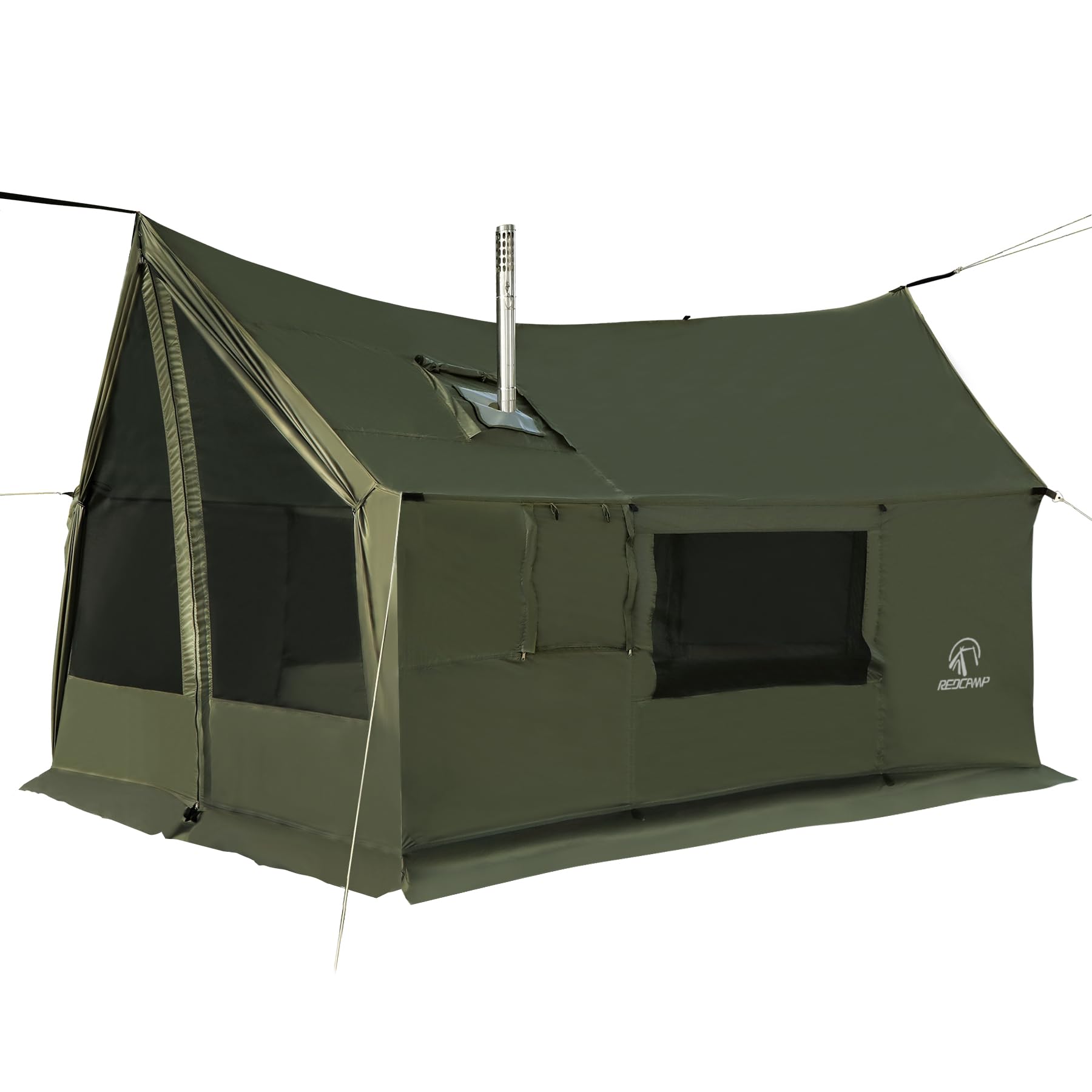
REDCAMP's hammock hot tent is the budget-friendly stove-jack shelter in this set, pairing a snow skirt, stove jack, and screened windows in a compact wall-tent format. One person stayed comfortable in a t-shirt at 15°F while the stove ran, which is the kind of heat retention winter campers need from a hot tent.

Without the stove, the floor plan feels roomy for one or two, and the 7.9-pound build with 210T polyester grid suits hammock camping and short snowshoe trips. The screened windows vent condensation and let in fresh air while the snow skirt seals the hem on packed snow.

This is a solo-oriented shelter for hammock campers and bushcrafters who want stove heat without dragging a full basecamp tent into the winter woods. Separate poles or trees are required, because the tent does not ship with poles, and with the stove in place the layout sleeps one person comfortably.

The tradeoff is that this is not a freestanding cabin or a group basecamp. Its weight and floor plan keep it in the solo-to-duo category, which is why it appeals to a hammock camper who wants winter shelter at a budget price without the bulk of a standing-height wall tent.

Pros

  • Good build quality for the price
  • Roomy for one or two when the stove is not installed
  • Strong heat retention with the stove running
  • Screened windows are well designed and add value

Cons

  • Pitch geometry can be finicky; getting the height right is what pulls the walls taut.
  • With a stove and cots, the interior leaves little room for two adults.
Our verdict

For a solo hammock camper who can supply poles or trees, this delivers stove warmth, snow protection, and screened ventilation at a budget price.

Check Latest Price
6

Budget Solo 4-Season Specialist

Underwood 4-Season Tent

89 /100
Traveler Score Excellent

Key details

Stove Jack
No
Construction
Snow skirt, freestanding
Packed Weight
5.73 lbs
Waterproofing
PU5000
Check Details on Amazon

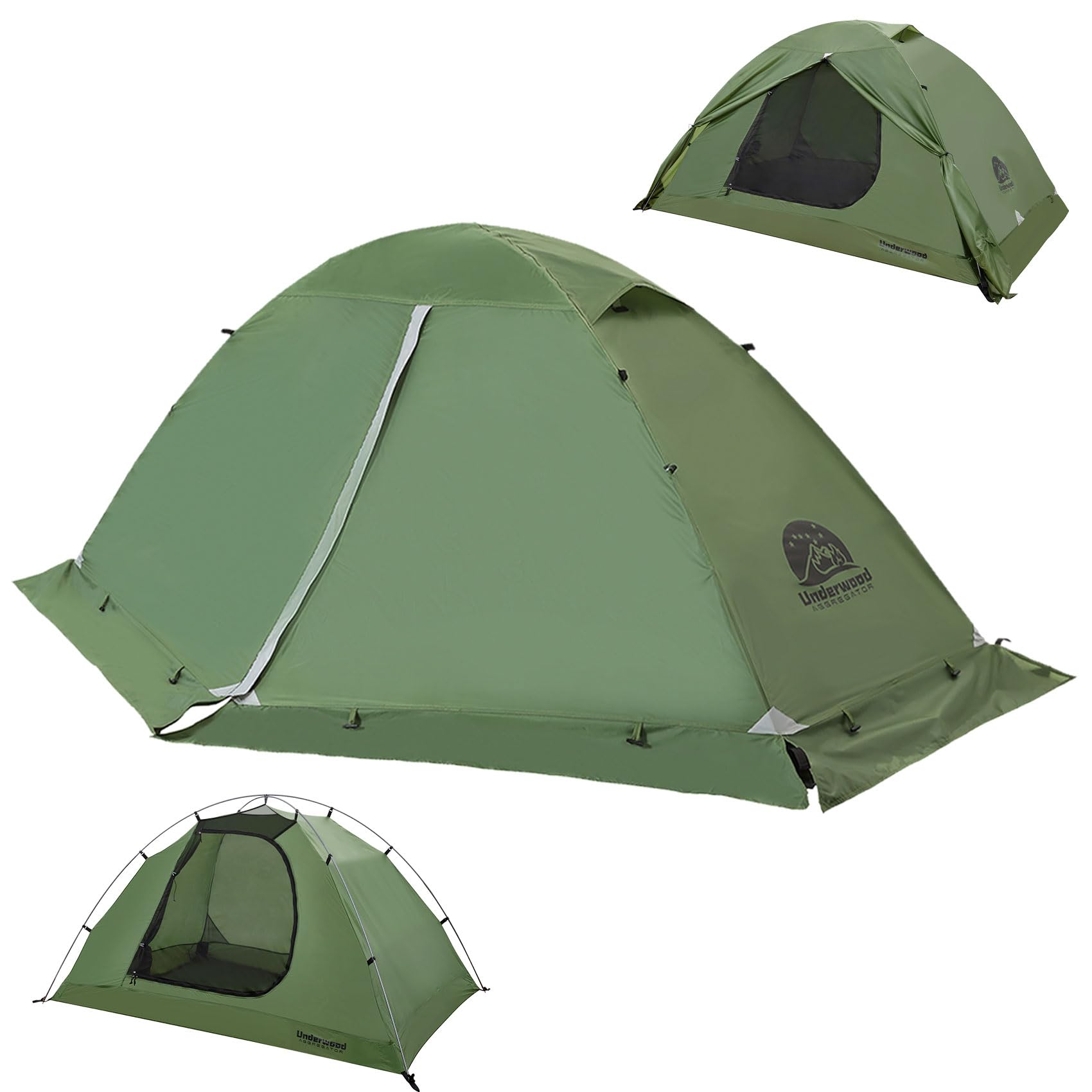
The Underwood Aggregator brings the core 4-season checklist together at a budget price: a PU5000-rated fly, snow skirt, and freestanding frame in a 5.73-lb package. That places it ahead of 3-season tents that get pushed into cold-weather duty, without the price premium of the top pick in this set.

Setup moves quickly, so you spend less time handling hardware in cold wind. The double-wall build sheds wind and holds warmth, and a six-hour thunderstorm has passed without water getting inside.

This is a solo winter shelter in practice. The floor plan works best for one backpacker plus gear, and taller campers may not sit upright inside. It is not an ultralight option, but for a budget 4-season dome the packed weight is acceptable.

Pros

  • Strong build for the entry-level price, with a PU5000 fly and snow skirt ready for cold-weather trips.
  • Quick setup that keeps exposed skin and gloved hands out of the wind for less time.
  • Backpackable 5.73-lb weight for a winter-capable dome, without turning into a car-camp burden.
  • Wind protection and warmth hold up in real storms, with a six-hour downpour staying outside.

Cons

  • In extreme cold, aluminum pole joints can seize and strap tension may need attention.
  • With two average-sized adults, the interior width gets tight and gear storage shrinks.
Our verdict

A solo backpacker who wants a low-cost 4-season shelter gets real wind protection, a snow skirt, and a manageable pack weight in one tent.

Check Latest Price
7

Car Camping Families

WildFinder Inflatable Hot Tent

82 /100
Traveler Score Excellent

Key details

Stove Jack
Yes
Construction
Air-beam hot tent
Packed Weight
Waterproofing
PU3000
Check Details on Amazon

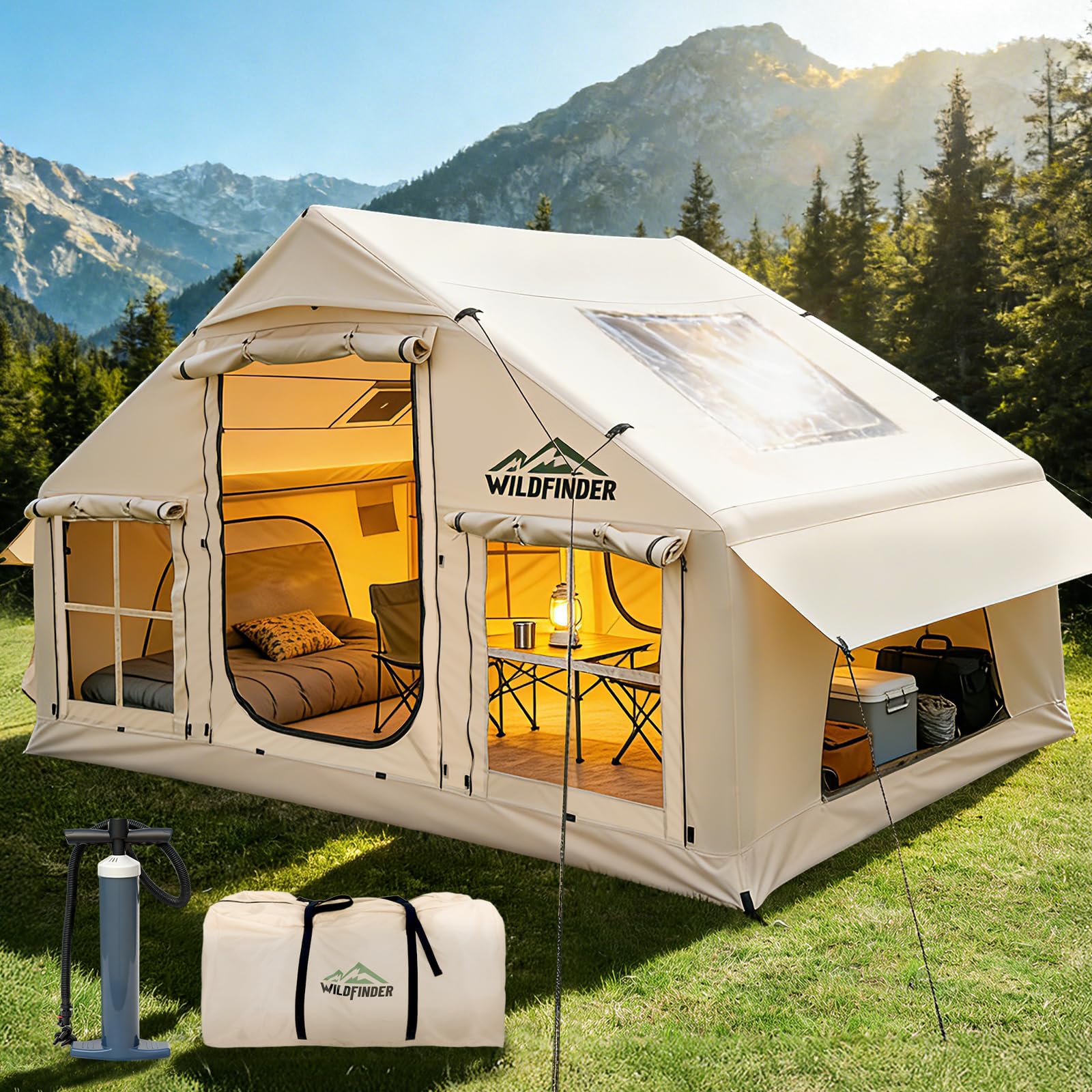
An inflatable pole-free hot tent with a stove jack and skylight that pitches in minutes and holds its shape in wind. The stand-up interior fits a queen/twin mattress setup and gives car-camping families a comfortable basecamp, though air-beam consistency can vary between units; a fully inflated tent may not stay upright, and isolated tents have let in light rain despite the PU3000 coating. That keeps it a niche pick below the group basecamp with separate rooms for serious winter use. Families who drive to camp and want quick setup plus stove heat will find the tradeoff easy to accept.

Pros

  • Air-beam setup gets the tent standing in minutes without pole assembly.
  • Stove jack and skylight bring heat and daylight to a standing-height winter basecamp.
  • Interior fits a queen/twin air mattress setup for four adults with space to move.

Cons

  • Packed size and weight suit a car-camp trip, not a backpacking load.
  • Four adults is the realistic sleeping limit even though the label says 4-6.
Our verdict

A drive-in family basecamp for campers who want the tent up before dinner and stove warmth without pole assembly.

Check Latest Price
8

Solo Tipi Campers

Naturehike Ranch Fire

82 /100
Traveler Score Excellent

Key details

Stove Jack
Yes
Construction
Teepee hot tent
Packed Weight
10.6 lbs
Waterproofing
PU3000
Check Details on Amazon

The Ranch Fire is a traditional tipi hot tent with a stove jack and standing headroom, and it pitches with little fuss. The clean stitching and 10.6-lb build give it a solid feel for car-camp winter use, but the sizing reality matters: with a stove inside, one or two campers plus gear is the honest capacity, not the four-person rating. Zipper quality and water resistance can vary between units, which is what keeps it below the runner-up tier. For hunters, fishermen, or budget-conscious tipi fans who want wood-stove warmth without a large cabin footprint, this is a mid-range entry into stove-jack camping.

Pros

  • Pitches with minimal fuss
  • Clean stitching and durable fabric hold up through cold and wet camping conditions.
  • Stove jack adds wood-stove heat to a 10.6-lb shelter suited to car-camp winter trips.

Cons

  • Zippers can feel underbuilt and may catch in cold-weather use.
  • In wet snow or cold rain, interior dampness can appear despite the PU3000 coating.
Our verdict

For solo or duo wood-stove campers who want standing headroom on a moderate budget, the Ranch Fire fits the winter niche.

Check Latest Price
9

Family Canvas Camping

KingCamp Canvas Hot Tent

80 /100
Traveler Score Excellent

Key details

Stove Jack
Yes
Construction
Canvas stove tent
Packed Weight
33 lbs
Waterproofing
PU3000
Check Details on Amazon

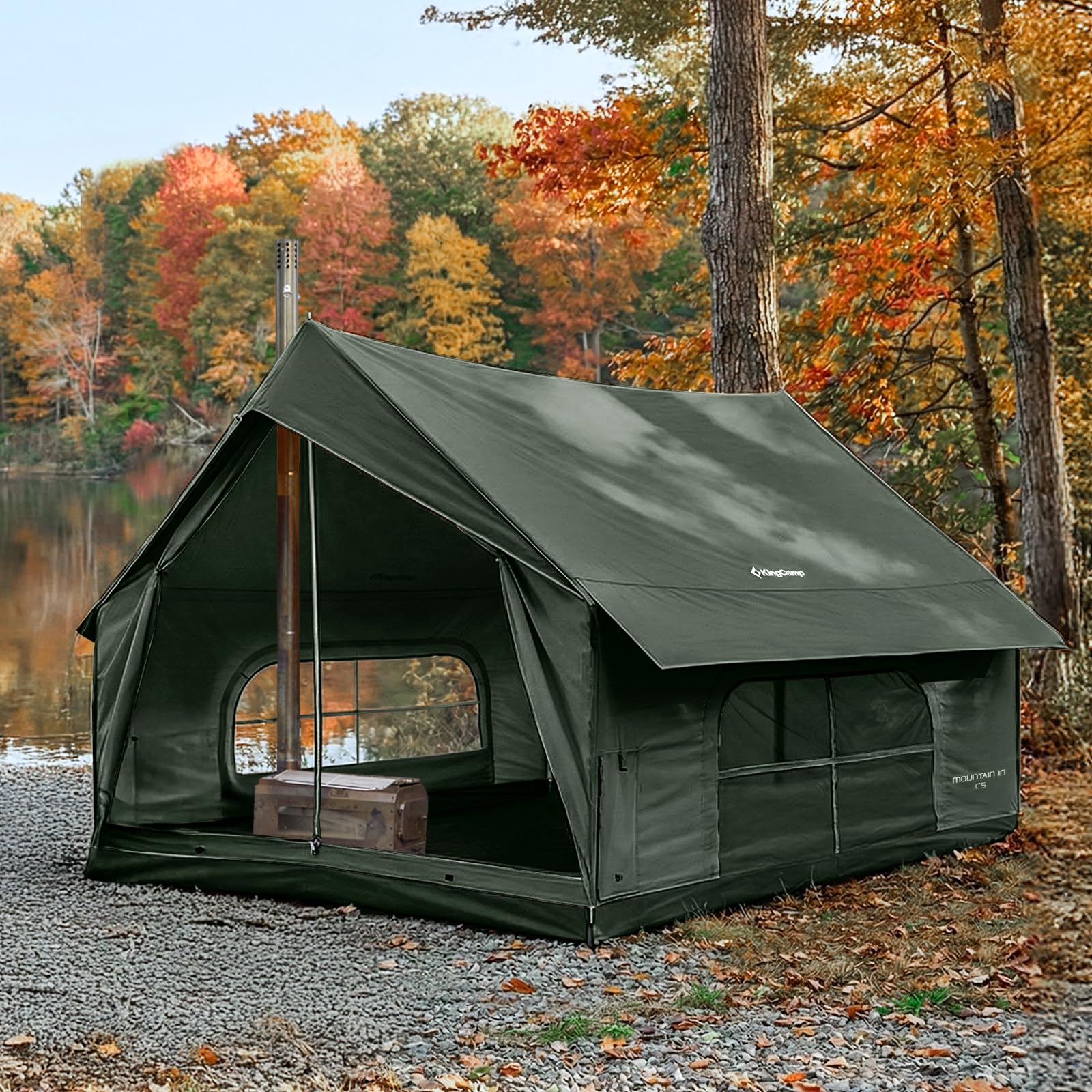
For families car-camping with a stove, this KingCamp cabin delivers the tall, open interior that turns a winter basecamp into a group hub. The canvas shell is a 33-lb drive-in shelter, so one-person setup is demanding; two adults should pitch it together. The stove jack allows wood-heat comfort, and room for six to eight gives everyone space. Waterproofing consistency can vary between units, with occasional moisture in sustained rain, so wet-weather buyers should treat it as a mixed-condition tent rather than a guaranteed dry fortress. The space, stove compatibility, and canvas character suit glampers, but rainproof performance is not assured.

Pros

  • Tall canvas cabin gives a family-sized interior with space for six to eight around a stove.
  • Classic canvas look and solid materials hold up over repeated car-camp weekends.
  • Stove jack plus 4-season build offers wood-heated comfort at a group scale for the price.

Cons

  • At 33 lbs, one-person setup is a strain; a second adult makes assembly manageable.
  • Waterproofing consistency can vary; some units let moisture through in heavy rain.
Our verdict

Choose it for car-based winter camping or glamping where a tall, stove-warmed group tent matters more than pack weight; accept that wet-weather performance needs checking before relying on it.

Check Latest Price

How to Choose

Snow Skirt and Full-Coverage Fly

Snow skirts seal the bottom edge against drifting snow and wind, while a full-coverage fly creates a second skin above the inner tent. That air gap is where condensation goes instead of dripping onto your bag.

The trade-off is weight and airflow: a skirted, fully covered tent traps more warmth but needs vents to stay breathable. If you plan to sleep in wet snow, this construction should be non-negotiable.

Stove Jack or No Stove Jack?

Stove-jack tents have a fireproof opening for a wood stove pipe, and that changes the whole heat equation. A tent without one can only retain body heat; a tent with one can run a stove at 15°F in a t-shirt.

Running a stove also changes ventilation: you need the flue drawing air and a vent cracked to release moisture, so expect to trade a little heat for drier air. For car campers and basecamps, that trade is almost always worth it; for backpackers, a stove adds weight and setup time.

Waterproofing and Sealed Seams

Hydrostatic-head ratings like PU3000 describe how much water pressure the fabric can hold before soaking through. That number matters less than seam taping, because stitch holes are the first place water enters.

Condensation can look like a leak: warm breath and wet clothing vapor hits the cold fly and forms droplets on the inside. A high rating does not stop that, so choose a tent with vents and expect to manage moisture every morning.

Packed Weight vs Interior Space

Every pound of tent fabric is a trade against pack weight. A 5-6 lb dome fits a backpack; a 17 lb hot tent only makes sense within a few steps of a car.

The lightest shelters also have less floor space, so a 2-person winter tent often works as a 1-person-plus-gear shelter. Measure your sleeping pad and winter bag before comparing floor widths.

Zippers, Poles and Beams

Zippers are the mechanical weak point because they flex in cold, ice up, and see hundreds of opening cycles. Metal zippers and aluminum poles tend to survive repeated winter use better than plastic hardware.

Inflatable beams make setup fast but depend on airtight bladders; a pole break is easier to repair in the field than a punctured beam.

Frequently Asked Questions