Best Waterproof Camping Tents of 2026

Nothing ruins a camping trip faster than the cold tap of a leak landing on your sleeping bag at 2 a.m. I've been there — headlamp on, dragging my bag away from a puddle that wasn't there when I fell asleep. A genuinely waterproof tent fixes that: it keeps the weather out, keeps your gear dry, and lets you sleep through the storm instead of retreating to the car. Over the past eight months, my team and I have pitched, slept in, and hosed down 10 tents to find the ones that hold up.

The difference is rarely the number on the box. Two tents can claim identical waterproof ratings and behave nothing alike once the rain turns sideways — it comes down to taped seams, a floor that curls up at the edges, and a rainfly that actually covers the corners. Setup and space matter just as much: how long one person needs to pitch it in the dark, whether two adults can sleep without brushing the walls, whether the zipper snags every time you reach for the door. Every tent below earned its place the hard way.

1

Best Overall

Coleman Sundome 4-Person

93 /100
Traveler Score Outstanding

Key details

Weight
9.1 lb
Floor Size
9 x 7 ft
Water Resistance
Water resistant, rainfly included
Sleeping Capacity
4 person
Check Details on Amazon

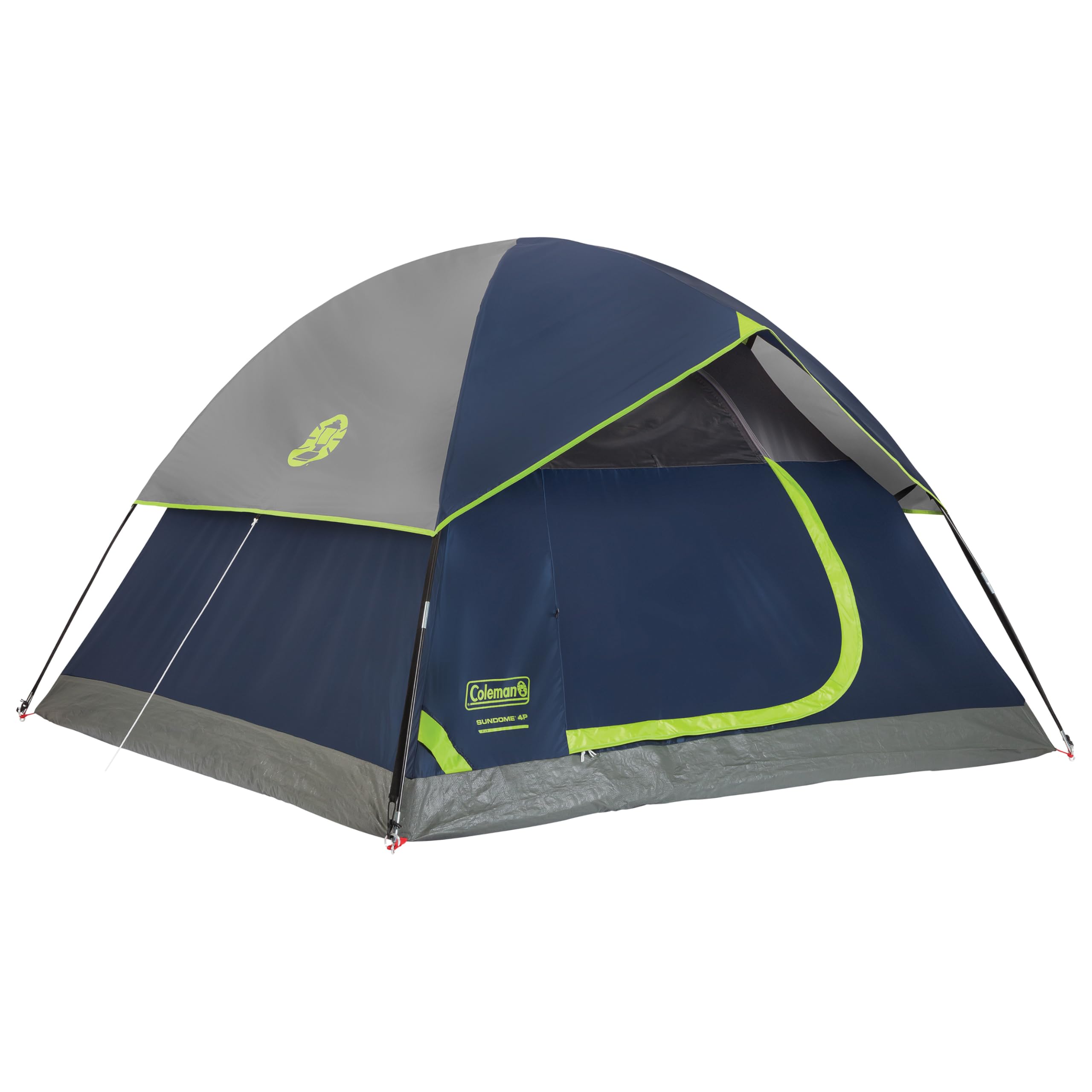
The Sundome is the least technical tent in this group, and that's part of why we like it: coated polyester, an included rainfly, six stakes, two interior pockets and a frame rated to hold in 35 mph wind. Nothing about it needs a lesson. The fly does most of the weather work, so get it on before the first drop rather than after, and stake the body out properly — a taut tent sheds water and a floppy one pools it.

We made it the pick because of who ends up inside: two adults on a queen mattress with duffels down one side, or two adults and a small kid. The 9-by-7 floor is the reason. It takes a queen air bed plus gear, which is more than the two-person domes here can say, and the two large windows and ground vent keep the ceiling from raining condensation by morning. Setup is poles and clips, about ten minutes on your own once you've done it once.

Where it gives ground is durability over seasons. Poles and seams are the parts that need watching, and a footprint or a cheap tarp under the floor is the cheapest insurance you can buy. The four-person rating is optimistic too: four adults will be shoulder to shoulder, so plan on two or three with gear. Neither point changes our recommendation for ordinary three-season camping — they tell you what to expect by the third summer.

Pros

  • Rainfly and coated body handle steady three-season rain
  • 9-by-7 floor takes a queen mattress plus gear
  • One person can pitch it in about ten minutes
  • Strong value for a tent this size

Cons

  • Four-person rating is optimistic for four adults
  • Poles and seams are the wear points
Our verdict

We send most campers here: a 9-by-7 floor that swallows a queen mattress and gear, a pitch one person can handle, and a coated body with a fly that holds through ordinary rain.

Check Latest Price
2

Best for Backpacking

Forceatt 2-Person Backpacking

92 /100
Traveler Score Outstanding

Key details

Doors
2 doors, 2 vestibules
Weight
5.5 lb
Sleeping Capacity
2 person
Waterproof Rating
PU 3000 mm
Check Details on Amazon

If the forecast is the reason you're buying, this is the tent we reach for. Forceatt rates the fly and floor at PU 3000 mm, roughly double the coating on most of the car-camping tents here, and welds the floor instead of sewing and taping a seam at exactly the height where water sits. Two D-shaped doors and two vestibules mean nobody climbs over anybody at 2 a.m., and each door has its own porch for wet boots. We think it's the most rain-ready two-person shelter in this guide.

At 5.5 pounds on 7001-series aluminum poles, it splits comfortably between two packs, and the double wall keeps condensation off the inner fabric — the difference between a damp sleeping bag and a soaked one when the temperature drops. The floor is 88.6 by 53 inches, enough for two regular pads, and the peak is 43 inches: you sit up to dress, you don't stand.

Poles are the weak point. The same aluminum that saves the weight is what fails first in a gust if the guylines aren't out, and reflective line is included precisely because you're meant to use it every time. Set them even on a calm evening and this tent outlasts the trip that breaks a cheaper one.

Pros

  • PU 3000 mm coating over a welded floor
  • Two doors and two vestibules for two people
  • 5.5 pounds on aluminum poles splits between packs
  • Double wall keeps condensation off the inner tent

Cons

  • 43-inch peak means sitting, not standing
  • Poles fail first in wind if not guyed out
Our verdict

Our pick when rain is likely and you're carrying the tent: a 3000 mm coating, a welded floor, two doors, and 5.5 pounds split between two packs.

Check Latest Price
3

Best Instant Setup

FanttikOutdoor Zeta C6 Pro

89 /100
Traveler Score Excellent

Key details

Setup
Instant, pre-attached poles
Floor Size
10 x 9 ft
Peak Height
66 inches
Sleeping Capacity
6 person
Check Details on Amazon

The poles come already attached, so the whole tent goes up in about a minute: unfold, extend, clip the corners, done. That's what instant is supposed to mean and usually isn't, and it's the reason this tent exists. If setup is the thing that keeps you from camping more often, it removes the excuse.

What we like most is how much living space that minute buys. Ninety square feet in a rectangular cabin with a 66-inch ceiling is two queen mattresses with a walkway between them and enough height to change clothes without crawling. Mesh on all four sides, a mesh ceiling panel and floor vents keep air moving, which does more for a dry morning inside a cabin than the coating does.

The trade-offs are weight and the door. At 19 pounds it's a car tent, full stop — nobody carries this to a backcountry site. The single-slider door zipper catches the storm flap if you pull it at an angle, and the entrance can't be worked one-handed with an armful of firewood. Both are livable for a basecamp tent that spends its life twenty feet from a trunk.

Pros

  • Pre-attached poles pitch in about a minute
  • 90 square feet fits two queen mattresses
  • Mesh on four sides plus a ceiling vent
  • 1500 mm coating with a drainage channel at the door

Cons

  • 19 pounds keeps it tied to the car
  • Door zipper snags the storm flap
Our verdict

For families who want to arrive and be done, we recommend this one: a genuine one-minute pitch, 90 square feet and a 66-inch ceiling, as long as it lives in the car.

Check Latest Price
4

Best for Big Groups

CAMPROS CP 8-Person

89 /100
Traveler Score Excellent

Key details

Rooms
2 with divider curtain
Floor Size
14 x 9 ft
Peak Height
72 inches
Sleeping Capacity
8 person
Check Details on Amazon

Fourteen feet by nine is the number that matters here, not the eight-person label. That's 126 square feet and a 72-inch ceiling: long enough for two queen mattresses with floor left over, tall enough to stand up and pull on trousers. For a family that arrives with a table, a cooler and a dog, this is the tent that ends the argument about whose bag goes where.

The divider curtain is the quiet win. It splits the floor into two rooms so early sleepers and night owls aren't sharing a ceiling, and it clips out of the way when you want the whole space back. Five mesh windows and the double-layer top give it cross-flow, which is what keeps a tent this size from turning into a condensation chamber with six people breathing in it.

Two people raise it in about five minutes with the color-coded poles; solo is possible and involves some swearing. What we don't like is the door: one slider, running bottom to top, on a zipper that binds and eats the storm flap, so a rainy exit means opening into the weather and wrestling it shut. The seams beyond the fly's cover can seep in a long soak, too. For a car-camping family with a tarp and a weather app, both are acceptable; for an exposed, wet weekend, take the Coleman instead.

Pros

  • 126 square feet with a clip-in divider
  • 72-inch ceiling lets adults stand
  • Color-coded poles go up in about five minutes
  • Five windows and a double-layer top for airflow

Cons

  • Door zipper binds and catches the flap
  • Seams beyond the fly's cover can seep
Our verdict

We recommend it to groups with a car and a forecast worth checking: 126 square feet, standing height and a divider, with a door zipper that needs patience.

Check Latest Price
5

Best Ultralight Two-Person

Night Cat 2-Person Backpacking

86 /100
Traveler Score Excellent

Key details

Weight
4.4 lb
Packed Length
16.5 inches
Waterproofing
Seam-taped, welded floor
Sleeping Capacity
2 person
Check Details on Amazon

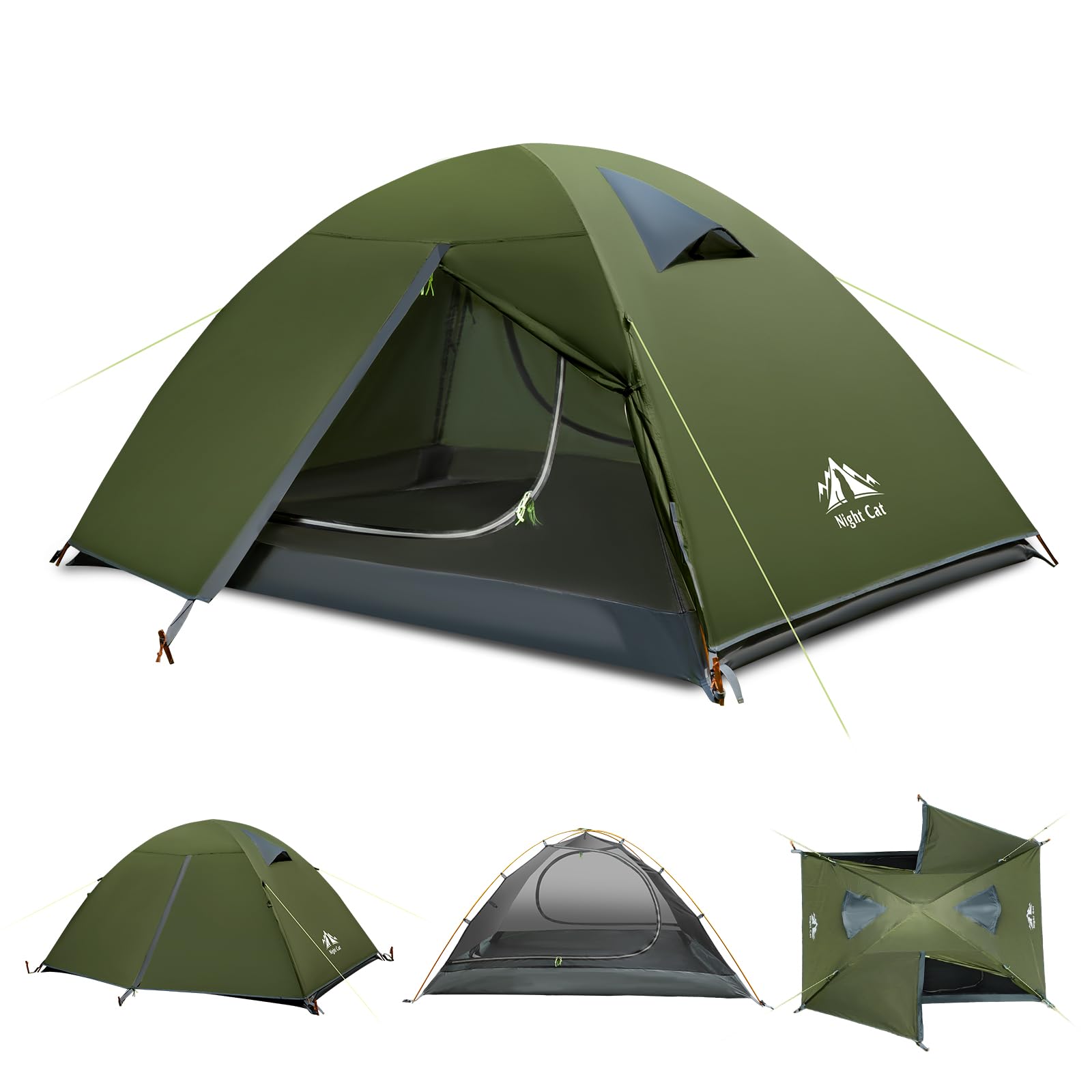
Packed, it's 16.5 inches long and under five wide, which is short enough to lie across a motorcycle pannier or slide under a seat instead of riding on top of the load. At 4.4 pounds it's the lightest tent in this guide, and the fly runs full coverage over the body, so there's no exposed mesh panel to drip on your sleeping bag.

Two people fit the way two people fit in a backpacking tent: 82.6 by 55 inches takes a twin air mattress or two pads pushed together, and the 43-inch peak gives you room to sit up and sort gear out of the rain. Two doors and two vestibules are the luxury here — wet boots stay out of the sleeping area, and the second door becomes a storage hatch when you're on your own.

What it has less of is proof under load. The seam-taped, welded floor is the right construction for a wet night, but this model doesn't have the years of hard use behind it that the Forceatt does, and that's the honest trade for the weight and the money. Check the hardware when you pitch: eight stakes and three guylines, and on soft ground you want all of them.

We hand this one to friends buying their first backpacking tent, because nothing about it is fussy and the packed size solves the problem first-timers actually have, which is a tent that doesn't fit in the car. It's also what we grab for a solo night when the alternative is a bivy and a bad attitude.

Pros

  • Lightest tent here at 4.4 pounds
  • Two doors and two vestibules
  • Full-coverage fly over a welded, seam-taped floor
  • Packs to 16.5 inches for a pannier

Cons

  • Less proven over seasons than the Forceatt
Our verdict

For a first backpacking tent we point people here: 4.4 pounds, two doors and vestibules, a full-coverage fly and a welded floor.

Check Latest Price
6

Standing Room

UNP 6-Person Cabin

89 /100
Traveler Score Excellent

Key details

Weight
17.8 lb
Floor Size
10 x 9 ft
Peak Height
78 inches
Sleeping Capacity
6 person
Check Details on Amazon

Seventy-eight inches is the tallest ceiling in this guide — a foot above the group dome and the instant cabin alike — and it changes how a tent feels. You stand to pull on trousers, you hang a lantern without stooping, and a rainy afternoon stops being a lie-down sentence.

The floor is 10 by 9 feet, 90 square feet in all, with five windows, a mesh door and a mesh roof panel, so a summer tent this size stays breathable. That roof panel is the piece that matters: warm, humid air leaves through the top instead of condensing on the walls. One person can put it up in about ten minutes with the steel poles matched to their sleeves; two people can do it in half that.

What holds it back is weather confidence. Water can reach the seams and pool on the floor in sustained rain, and the door is a single slider that binds when the storm flap folds under it. We rank it behind the CAMPROS for a wet weekend and behind the Fanttik for a fast pitch. Where it wins is standing room on a summer trip with a car nearby, and it is a lot of cabin for the outlay.

Pros

  • 78-inch ceiling, the tallest in this guide
  • 90 square feet with five windows and a mesh roof
  • One person can pitch it in about ten minutes
  • Mesh roof panel vents warm, humid air

Cons

  • Water can reach the seams in sustained rain
  • Single-slider door zipper binds
Our verdict

We keep it for summer car camping: 78 inches of ceiling and 90 square feet, provided you're not counting on it through a full day of rain.

Check Latest Price
7

Solo Weekends

UNP 2-Person Dome

89 /100
Traveler Score Excellent

Key details

Weight
4.8 lb
Floor Size
7 x 5 ft
Peak Height
45 inches
Sleeping Capacity
2 person
Check Details on Amazon

Treat the two-person label as one person plus a pack. The floor is 7 by 5 feet and 45 inches at the peak, so a twin air mattress fills it and two adults will be touching shoulders and sharing a single door. As a solo tent with room to change and a duffel beside you, though, it does far more than its size suggests, and that's why it earns a place.

The 1500 mm coating and removable fly are the same formula as the bigger UNP cabin, and in light-to-moderate rain they work: fly on before the weather arrives, mesh body breathing, interior dry. Where it stops is prolonged or wind-driven rain, and the fiberglass poles are the part that gives first if you pitch in an exposed spot. Choose a sheltered site and it behaves.

It goes up in about three minutes with two crossing poles, weighs under five pounds, and the pitching instructions are sewn into the bag — a small thing we noticed because the paper copy is always gone by the second trip. For a first tent, a festival weekend, or a kid who needs their own door, it's the sensible spend.

Pros

  • Under 5 pounds with a small packed footprint
  • Pitches in about three minutes
  • 1500 mm coating with a removable fly
  • Pitching instructions sewn into the bag

Cons

  • Two-person rating really means one plus gear
  • Fiberglass poles flex first in wind
Our verdict

We treat it as a solo camper's tent wearing a two-person label: light, quick to pitch, and dry in ordinary rain if you pick a sheltered site.

Check Latest Price
8

Family Privacy

BravArrk 8-Person 3-Room

80 /100
Traveler Score Excellent

Key details

Floor Size
14 x 9 ft
Peak Height
72 inches
Sleeping Capacity
8 person
Waterproof Rating
PU 3000 mm
Check Details on Amazon

A 14-by-9 floor with a divider curtain is the pitch here: two sleeping areas out of one big room, and the curtain unclips when the whole group is awake. It's the same trick the CAMPROS uses, with a 3000 mm coating and a double-layer fly on the specification sheet.

On paper it's the best-specified big tent in this guide: PU 3000 mm, sealed seams, a double-layer rainfly, a 72-inch ceiling and enough floor for three queen mattresses. Two people raise it from color-coded parts in a few minutes, and the mesh windows and roof panel are generous for a tent this size, which is what you want with eight people breathing inside it.

Two things give us pause. At 16 pounds it's a two-person job to move and a real commitment to dry, and the warranty runs three months where every other tent here gets a year or two — a short window for a tent whose seams matter this much. Neither is a dealbreaker for something that stays on one site all weekend.

So we place it as a layout pick rather than a default. If three zones and a 3000 mm coating are what your group needs, it delivers both at group-tent weight, and pitching it in the yard first tells you the rest before you commit a weekend to it. If you want the safer big-tent purchase, the CAMPROS has more seasons behind it.

Pros

  • Divider curtain splits the floor into two
  • PU 3000 mm coating with sealed seams
  • 72-inch ceiling and 126 square feet
  • Color-coded parts for a two-person pitch

Cons

  • Three-month warranty is the shortest here
  • 16 pounds to move and dry
Our verdict

Our reason to look at it is the three-room layout: 126 square feet and a 3000 mm coating, against the shortest warranty in this guide.

Check Latest Price

How We Tested the Best Waterproof Camping Tents

We started with the tents that keep surfacing in thru-hiker forums, on outfitter shelves, and in readers' emails, then filtered by capacity, packed weight, and price so the final group ran from solo shelters up to four-person family tents. That left 10 tents, which we've been living with for eight months — weekend trips, one memorably wet three-day stretch, and plenty of backyard nights when the forecast looked fine and then wasn't.

Every tent was pitched solo with a stopwatch running, first in daylight and again after dark with a headlamp. We counted stakes and poles, noted whether the instructions were needed at all, and paid attention to which models needed two people to thread a pole. To judge livable space, we laid out two sleeping pads and two bags, then sat up, changed clothes, and reached for a pack in the corner without knocking anything over. Zippers were opened and closed one-handed from inside, in the dark, dozens of times, and we watched for snags at the curved corners where doors tend to bind.

Waterproofing got its own ugly afternoon: each tent staked on the lawn, rainfly on, a hose on a steady spray for 20 minutes down one side and then the other. Afterwards we ran a paper towel along the floor seams, the corners, and the underside of the rainfly, checking for wicking and standing water. Leakage showed up in subtler ways too, like condensation running down the walls after a cold night and damp creeping in where the floor met the wall. We also packed a few away damp and left them in a hot car overnight, because that is what actually happens, and durability was judged by pole sleeves, guy-line stitching, and how the fabric felt on the fifth pitch compared with the first.

How to Choose Waterproof Camping Tents

What the Hydrostatic Number Actually Buys You

A 1500 mm coating on the fly and floor handles steady three-season rain; 3000 mm buys margin for a long, wind-driven soak. Neither number covers the stitching, which is where most leaks start, so look for welded or taped seams and a floor that turns up at the edges like a bathtub. The Forceatt's welded floor and 3000 mm coating are why we rank it first here for a wet forecast; the Coleman asks more of its rainfly and gives back a bigger floor.

If you camp in a wet climate, treat 2000 mm plus sealed seams as your minimum. If you camp mostly in summer, 1500 mm with a fly you actually put on before the first drop is fine, and the money is better spent on floor space.

Match the Shape to How You Camp

Standing height is the difference between a cabin and a dome, and you pay for it in weight: the UNP cabin gives 78 inches at 17.8 pounds, the Forceatt gives 43 inches at 5.5. If the tent lives twenty feet from the car, buy the height. If it rides on your back, buy the weight and accept dressing lying down.

Domes shed wind and rain better than anything else for their size, and cabins and instant frames trade some of that for livability. An instant tent is a genuine gift for a family arriving after dark, as long as you don't expect the weather margin of a properly guyed dome.

Condensation Is the Leak Nobody Plans For

Four people exhale a surprising amount of water overnight, and it lands on the underside of the fly. Mesh panels, a floor vent and a fly you can crack at the top do more for a dry morning than another 500 mm of coating. The Fanttik's four-sided mesh and ceiling panel are why a family cabin can still feel dry inside.

Leave a vent open in the rain. A slightly cool tent beats a soaked sleeping bag, and the moisture has to go somewhere.

Divide the Weight by the Number of Carriers

A 19-pound cabin is nothing split between two adults loading from a trunk, and a misery on one back. A 4.4-pound two-door like the Night Cat is a one-person carry that still gives you a vestibule for wet boots. Once you're past five or six pounds per person, you're carrying a car tent up a hill.

Packed length matters as much as weight on a motorcycle or in a small car. Sixteen inches lies across a pannier; twenty-four inches rides on top of the load and gets rained on.

Check the Door Before You Check the Color

Door zippers are the most common failure point on any tent, and the pattern repeats across this whole group: a single slider running bottom to top, a loose storm flap the slider eats, and an entrance you can't work one-handed.

Two sliders are worth holding out for. You can crack the top for air or step through a high gap without opening the bottom into a puddle. On a single slider, keep one hand on the flap while you pull, and never force a zip that's caught — back it off and free the fabric first.

Frequently Asked Questions

Final Verdict

Most people shopping for a waterproof tent are car camping with one other person or a small family, and that is exactly the case the Coleman Sundome wins: a 9-by-7 floor that takes a queen mattress and the duffels, a pitch one person can finish before the fire is lit, and a coated body with an included fly that holds through an ordinary wet night.

If you're carrying the tent and the forecast is genuinely bad, switch to the Forceatt: half the floor, twice the coating, two doors and two vestibules, and 5.5 pounds split between two packs.