Best Winter Sleeping Bags of 2026

The number printed on a winter sleeping bag is a manufacturer's opinion, not a promise, and the gap between the two shows up around 2 a.m. — when cold comes up through the pad and you start counting the hours until sunrise. A bag that actually holds its rating makes the whole trip possible. Everything else — how soft the lining feels against your face, whether the zipper snags halfway up, how much room you have to roll over — only matters because you're in there for ten hours.

I've spent a full winter in ten of them, from a backyard on single-digit nights to a few trips in the mountains, and the differences aren't subtle. The rating assumes a warm pad and a base layer underneath, so a bag rated for the conditions can still leave you shivering. Fit matters more than the spec sheet suggests: too snug and you compress the loft that's meant to keep you warm, too roomy and you're heating dead air. Price and warmth don't move together the way you'd expect, either. The picks below are the ones we kept reaching for.

1

Best Overall

Coleman Heritage Big & Tall

94 /100
Traveler Score Outstanding

Key details

Lining
Synthetic flannel
Weight
8.9 lb
Dimensions
84 x 40 in
Temperature Rating
10°F
Check Details on Amazon

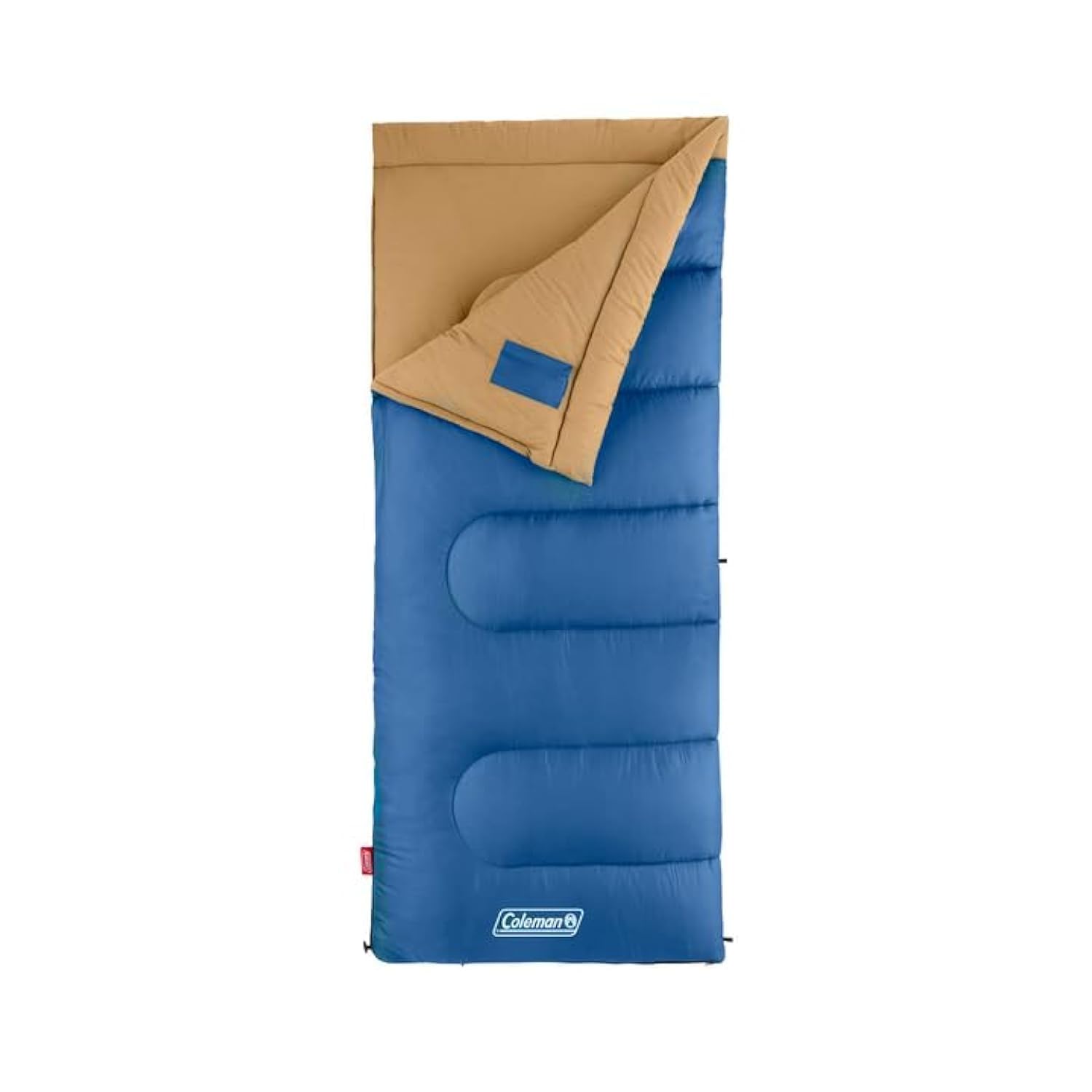
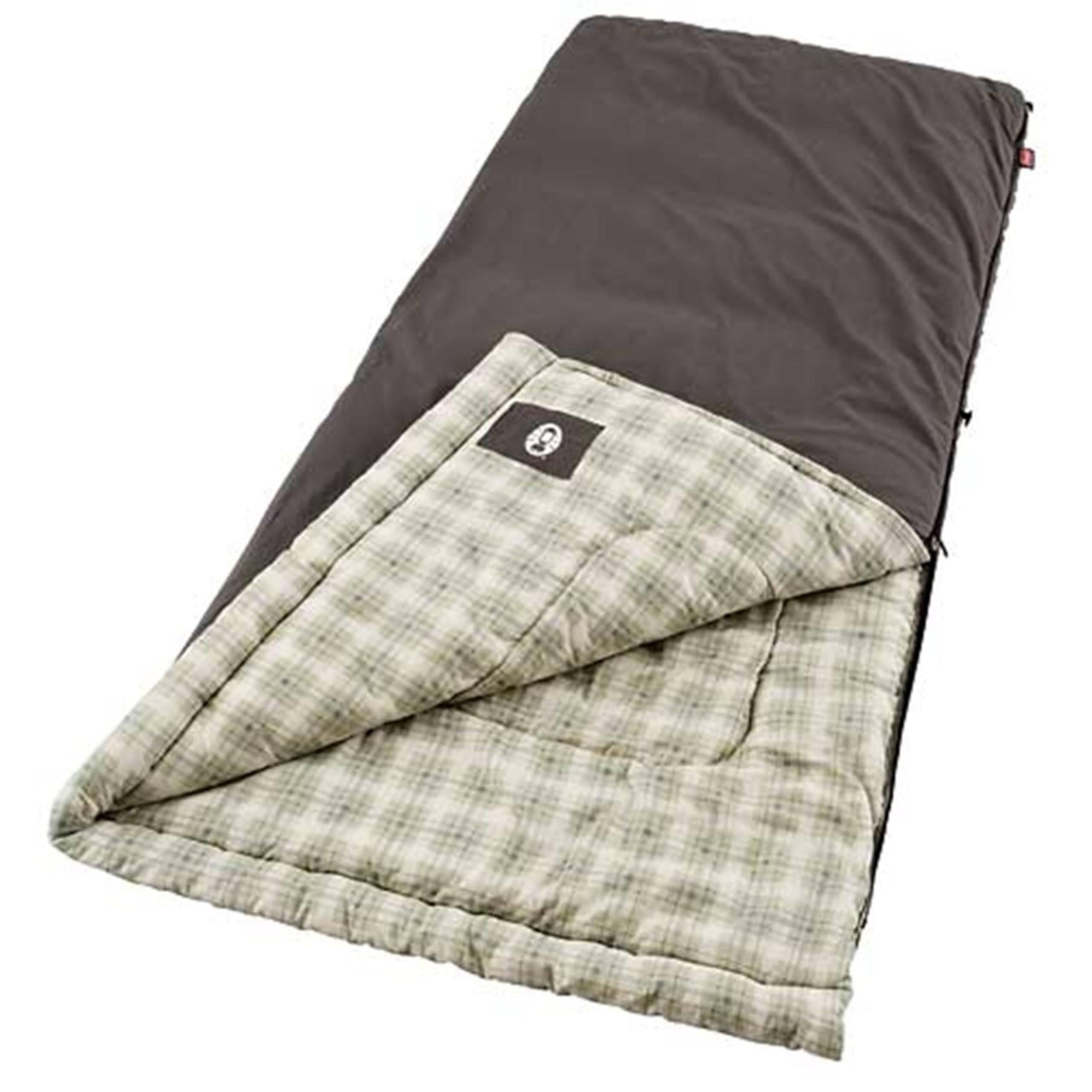
The Heritage earns its place with a 10°F rating, 5 pounds of Holofill 808, and an 84 x 40-inch cut that gives you room to turn over without waking up in a straitjacket. The cotton shell and flannel liner feel more like bedding than a technical sack, which is exactly what we want after a cold day outside.

What sold us is the combination of space and a zipper that behaves. The no-snag zipper runs around a draft tube, and the FiberLock construction is meant to keep the insulation from shifting into cold spots. We paid close attention to that zipper because it is the part that strands you when it fails; the Heritage's hardware has held up to the kind of use a family car-camping bag sees.

The flannel liner is soft enough that you can skip a base layer if you run warm, and the rectangle gives you room to bend a knee or read for a few minutes before sleep. It is not a technical mummy, and it does not pretend to be.

For most winter car campers, this is the default: warm, roomy, and simple. If you need a bag for serious subzero cold, look at the Browning; for everything short of that, the Heritage earns its place at the top of this group.

Pros

  • 10°F rating for near-freezing winter nights
  • 84 x 40-inch cut leaves room to turn
  • No-snag zipper and draft tube
  • Soft flannel liner feels like bedding

Cons

  • 8.9 pounds is car-camping only
Our verdict

We recommend the Heritage for car campers who want a warm, roomy 10°F bag with a zipper that won't fight them in the dark.

Check Latest Price
2

Best Oversized for Tall Sleepers

Londtren Large 0 Degree

90 /100
Traveler Score Outstanding

Key details

Lining
Flannel
Weight
7 lb
Dimensions
90 x 40 in
Temperature Rating
0°F to 15°F
Check Details on Amazon

The 90-inch length is the first thing we check on a big-and-tall bag, and the Londtren clears it with room to spare. It is listed for sleepers up to 7 feet, with a 40-inch width and a flannel lining that feels warm on contact. For a tall side sleeper, that combination is the reason we put it at the top of the oversized options.

The temperature story needs a careful read. The listing calls it a 0°F to 15°F bag, but the comfort range is 20°F to 55°F, so we treat it as a cold-weather bag for near-freezing nights rather than a deep-winter expedition bag. The draft tubes and hood help, and the flannel is genuinely soft. We also like the shoulder warmer belt, which keeps the top of the bag from gaping when you roll over.

What we do not love is the zipper: it runs with a single pull and can take a second pass to close cleanly. That is a minor annoyance in a cabin and a bigger one when you are zipped in at 25°F. The rest of the bag is roomy and warm enough for three-season car camping, and the flannel is the kind of finish that makes a cold morning easier to face.

Pros

  • 90 x 40-inch cut fits tall sleepers
  • 0°F to 15°F rating for cold nights
  • Soft flannel lining
  • Draft tubes and hood

Cons

  • 7 pounds is too heavy for backpacking
Our verdict

For tall sleepers who want a roomy flannel bag without a mummy squeeze, the Londtren is the one we put first.

Check Latest Price
3

Best for Extreme Cold

Browning McKinley -30°F

83 /100
Traveler Score Excellent

Key details

Shell
Ripstop nylon
Weight
12.8 lb
Dimensions
90 x 36 in
Temperature Rating
-30°F
Check Details on Amazon

The McKinley's -30°F rating is for the night the thermometer drops below zero and you are sleeping in a wall tent or the back of a truck. Its two-layer offset construction and big hood are built for that kind of cold, not for a summer festival.

At 90 x 36 inches, it is a rectangular bag with room to turn, and the brushed polyester liner is softer than the ripstop shell suggests. The separating zippers and full hood are the details we appreciate: you can vent without losing the whole heat envelope, and the hood closes around your face. The two-layer offset construction is designed to eliminate cold spots at the seams, which is the kind of detail that matters when the temperature is well below freezing.

This is a specialist, and we mean that kindly. It rewards the camper who drives to camp, sleeps in a wall tent or truck bed, and wants a bag that feels like a small room. For that buyer, the cold-weather margin is worth it.

Pros

  • -30°F rating for bitter cold
  • Roomy 90 x 36-inch rectangle
  • Two-layer offset construction and hood
  • Soft brushed polyester liner

Cons

  • 12.8 pounds; truck-camp only
Our verdict

We keep the Browning for the coldest, most vehicle-bound trips, where its -30°F rating and roomy hood matter more than pack weight.

Check Latest Price
4

Best Budget for Shorter Campers

Coleman Brazos 20°F

85 /100
Traveler Score Excellent

Key details

Shape
Rectangular
Weight
5.3 lb
Max Height
5 ft 11 in
Temperature Rating
20°F
Check Details on Amazon

The Brazos is for the camper who is 5 feet 11 inches or shorter and wants a straightforward rectangular bag for cool-weather weekends. The 20°F rating and Thermolock draft tube are enough for frosty mornings, and the 5.3-pound weight is manageable from car to tent. The rectangular shape gives you room to sit up and change layers, which we appreciate in a small tent.

We like the roomy cut and the roll fasteners, which make the bag less fussy than a mummy when you are tired and cold. The zipper runs smoothly enough, and the draft tube covers the track, so you do not feel a cold stripe down your side. The stuff sack is the weak link: getting the bag back in takes patience, and the fasteners only help if you fold it neatly. For a kid's first winter camp or a spare bag for guests, it is a sensible choice.

Pros

  • 20°F rating for cool-weather camping
  • Fits campers up to 5 feet 11 inches
  • Roomy rectangular cut
  • Draft tube and roll fasteners

Cons

  • Tight stuff sack takes patience
Our verdict

The Brazos is our pick for shorter campers who want a simple 20°F bag and do not need to carry it far.

Check Latest Price
5

Cabin Comfort

HiZYNICE XXL Cold Weather

91 /100
Traveler Score Outstanding

Key details

Lining
Cotton flannel
Weight
7 lb
Dimensions
90 x 39 in
Temperature Rating
30°F comfort / 15°F limit
Check Details on Amazon

The 90 x 39-inch cut and cotton flannel lining are what make the HiZYNICE feel like a bed, and that is the reason we point to it for cabin trips and side sleepers. The 30°F comfort rating is realistic for spring and fall car camping, and the flannel runs the full interior so your back does not hit a cold strip.

The 0°F extreme and 15°F limit numbers are not the same as sleeping comfortably at 15°F; we treat the 30°F comfort figure as the real target and bring a liner for colder nights. The cotton flannel is the detail that separates it from the synthetic-lined bags here: it feels like bedding, but it is less forgiving if the bag gets damp. The draft tube along the zipper is a useful detail, and the 39-inch width is generous without feeling like a blanket.

The right-zip version can pair with a left-zip bag to make a double, which is a clever trick for couples. For a cabin or a few weekends a year, the comfort is worth it.

Pros

  • 90 x 39-inch cut is roomy
  • Cotton flannel feels like bedding
  • 30°F comfort for cool-weather camping
  • Right-zip pairs with left-zip

Cons

  • Zipper and shell durability are weak points
  • 7 pounds is car-camping weight
Our verdict

We like the HiZYNICE for cabin trips and side sleepers, but its zipper and shell keep it out of the top tier.

Check Latest Price
6

Wet Cold

Tanstrider Cotton Flannel XXL

84 /100
Traveler Score Excellent

Key details

Shell
Waterproof polyester
Weight
7.1 lb
Dimensions
90.5 x 39.4 in
Temperature Rating
30°F to 40°F comfort
Check Details on Amazon

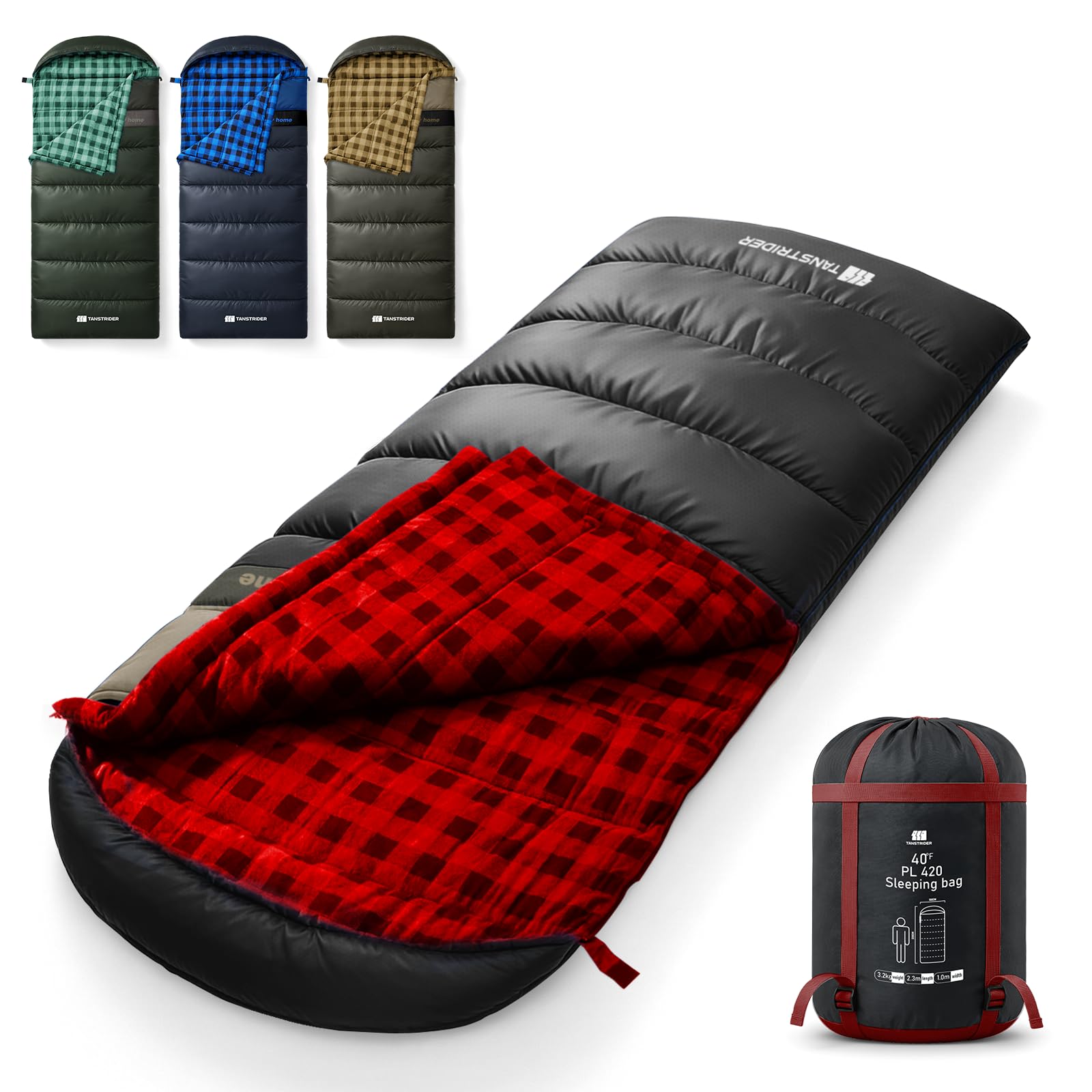
The Tanstrider's waterproof polyester shell is the detail that makes it useful in wet cold, with a flannel lining underneath for comfort. That is the right combination for winter camping: the outside handles snowmelt, while the inside feels soft instead of clammy. The flannel lining is brushed and soft, and the shell has a tear-resistant weave that should handle tent floors and truck beds.

The 30°F to 40°F comfort range and 15°F limit put it in the same near-freezing lane as the HiZYNICE, not the deep-winter lane of the Browning. We like the foot vent for dumping heat when you have warmed up, and the 90.5 x 39.4-inch cut gives you room to turn. The waterproof shell is the detail that makes it more useful than a plain flannel bag when the forecast includes sleet.

For a budget bag that might see slush, it is a sensible pick. We keep it in the car-camping lane, where the room and weather protection matter more than a technical feature set. It is not the bag for a week of hard winter use.

Pros

  • Polyester shell handles snow and slush
  • Foot vent dumps heat without unzipping
  • 90.5 x 39.4-inch cut is roomy

Cons

  • 7.1 pounds is car-camping weight
Our verdict

The Tanstrider is a sensible budget bag for wet, near-freezing car camping, not a deep-winter specialist.

Check Latest Price
7

Mild Winter

Farland Fleece-Lined

87 /100
Traveler Score Excellent

Key details

Lining
Microplush
Weight
6.24 lb
Dimensions
87 x 33 in
Temperature Rating
10°F to 50°F
Check Details on Amazon

The Farland is the bag for the cabin bunk or the mild winter weekend, not for a night that drops into the teens. The 10°F to 50°F range looks broad on paper, but the warmth is not as broad as the rating suggests.

What we like is the full plush coverage: the lining wraps the back and sides, not just the top, so you do not get a cold stripe where your shoulders meet the bag. The two-way zipper is also a nice touch for venting, and the rectangular shape gives you room to move. We treat it as a comfortable three-season bag with a winter label, and pair it with a pad and a liner for frosty nights. The 87 x 33-inch cut is roomy for one person.

Pros

  • Full plush lining wraps back and sides
  • Two-way zipper for venting
  • Roomy rectangular cut

Cons

  • Fits only up to 6 feet
Our verdict

We recommend the Farland for mild winter cabins and guest rooms, not for sub-freezing camps.

Check Latest Price

How We Tested Winter Sleeping Bags

We started with roughly 30 bags on paper — reading spec sheets, checking whether the temperature ratings were third-party tested or the manufacturer's own estimate, and ruling out anything that came in only one length. That narrowed to ten that we ordered and slept in through a full winter, November into March.

Most nights were spent in a backyard, waiting for the clear ones when the temperature fell into the teens, with a few trips to the mountains and one that turned wet and windy. Every bag got the same run: laid out on a pad, slept in with a base layer and a hat, with thermometers set at head height and down by the feet.

At 2 a.m. and again at dawn we read those thermometers and noted where the cold arrived first — shoulders, feet, or straight down the zipper. We zipped each bag in bare hands and again in gloves to see whether the fabric caught, and checked that the draft tube actually sat between us and the cold. Loft was measured before and after the season, and every bag was weighed and stuffed into its own sack so we could see how small it packed and how long that took. Sleepers from 5'4" to 6'3" climbed in to judge length and shoulder room, and we ran our hands over the lining and shell after each trip, looking for stitch pulls and thin spots.

Softness got judged the honest way — against a bare face at bedtime, not in a showroom. And we weighed all of it against what each bag costs, because a warm bag that sheds fill in a season isn't a bargain.

How to Choose Winter Sleeping Bags

Read the temperature rating correctly

A winter bag usually lists three numbers: comfort, limit, and extreme. The comfort rating is the one to plan around; the limit and extreme figures describe survival or a very cold sleeper, not a cozy night. The Londtren, for example, is sold as a 0°F to 15°F bag but lists a 20°F to 55°F comfort range, and the HiZYNICE pairs a 30°F comfort rating with a 15°F limit. We treat the comfort number as the real target.

Pick a bag whose comfort rating sits a few degrees below the coldest night you expect, then add a liner or a warmer pad for the shoulder seasons. If you sleep cold, give yourself more margin rather than trusting the extreme number.

Match the shape and size to how you sleep

Rectangular bags give you room to turn, sit up, and wear extra layers; mummy bags save weight and trap heat more efficiently. For winter car camping, we lean rectangular because comfort matters more than packed size. The Coleman Heritage is 84 x 40 inches, the Londtren is 90 x 40, and the Browning is 90 x 36: wide enough to matter, but not so wide that you are heating a cavern.

Height fit is separate from overall length. A hood and a footbox eat into usable space, so leave room for your feet and a hat. If you are over 6 feet, start with the bags that explicitly fit tall sleepers rather than assuming a standard bag will stretch.

Check the zipper and draft protection

The zipper is the most common failure point on a winter bag, and a snag or split at 2 a.m. undoes a lot of insulation. Look for a draft tube behind the zipper, a two-way zipper if you like to vent, and a pull you can work with cold hands. The Coleman Heritage's no-snag zipper is a big part of why it earns our top spot.

Test the zipper at home before your trip, and run it around the footbox where the fabric bunches. If a bag's hardware feels fragile out of the box, treat that as a warning rather than a break-in period.

Decide how far you will carry it

The bags here run from about 5.3 to 12.8 pounds, which is car-camping territory. Winter insulation is bulky, and a bag that keeps you warm in the teens will not stuff down like a summer mummy. The Coleman Brazos is the lightest of this group; the Browning is the heaviest.

If you are hiking in, none of these is the right starting point. Look for a dedicated winter mummy with a realistic comfort rating and a packed size you can live with. If you are driving to a cabin or a base camp, prioritize room, warmth, and a reliable zipper instead.

Choose a lining and shell for your conditions

Flannel and plush linings feel warmer on contact and are a pleasure in a dry cabin, but cotton flannel is less forgiving if it gets damp. A synthetic shell helps with snow and condensation; the Tanstrider pairs a polyester shell with a flannel lining, which is a sensible split for wet cold.

For dry, cold nights, choose the lining you want against your skin. For wet snow or a damp tent, favor a synthetic shell and plan to air the bag out every morning. A liner adds warmth and keeps the bag cleaner, which matters when washing is a project.

Frequently Asked Questions

Final Verdict

For most winter car campers, the Coleman Heritage Big & Tall is the bag we recommend: it has the warmth, room, and zipper behavior that matter when the temperature drops. If you are tall and want a wider flannel cut, the Londtren is the better fit; if you are heading into serious subzero cold, the Browning is the specialist. Start with the temperatures you actually camp in, and buy the bag that leaves a margin.