9 Best Summer Sleeping Bag in 2026: Find One Actually Warm at 50°F

The best summer sleeping bag for warm-weather trips is one whose 50°F comfort rating survives real nights outdoors — here's how to choose it.

Most summer sleeping bags are rated for 50°F nights, but that number assumes a sleeping pad, base layers, and a dry tent. On bare ground in a t-shirt, the same bag gets noticeably colder. Warmth ratings are a starting point, not a guarantee.

The real trade-off in this category is weight versus warmth. A 1.5-pound ultralight sack disappears into a backpack but asks you to add layers below 60°F, while a three-pound rectangular bag sleeps warmer for car camping and family trips. Knowing where your nights are actually spent matters more than the tag.

Choose a summer bag by matching its shape, width, and fill to your sleep style and destination. That means looking beyond the average star rating and checking whether the zipper and seams are built for repeated packing. The quiet differences are what keep you sleeping through mountain breezes, not just backyard summer nights.

1

Best Overall Summer Sleeping Bag
MalloMe 3-Season Sleeping Bag

91 /100
Traveler Score Outstanding

Key details

Width
31.5 in
Packed Weight
3 lb
Comfort Rating
50–80°F
Check Details on Amazon

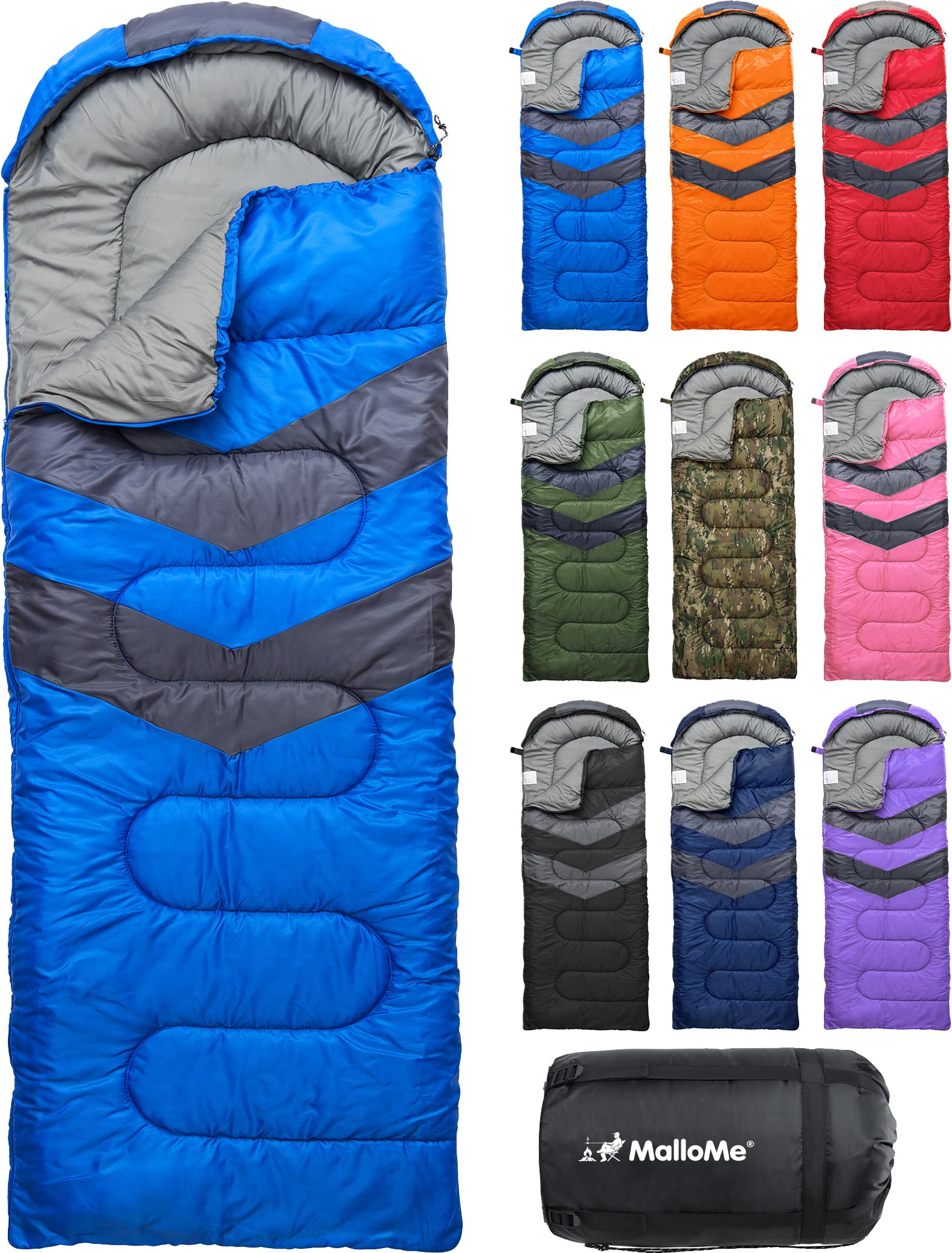
The MalloMe 3-Season is an 86.6 x 31.5-inch rectangular sleeping bag rated for 50–80°F. The rectangular cut gives average-framed adults room to shift positions, bend a knee, or sleep on their side without feeling confined. Hollow-fiber fill holds warmth in the low 60s when paired with a sleeping pad and base layers, which is exactly what a three-season bag should do.

At roughly 3 lb, the MalloMe is a car-camping and festival bag, not a backcountry shell. That weight is the trade-off for a thicker fill that keeps the 50°F lower end credible without turning the bag into a winter-grade behemoth. It rolls into a compact bundle for travel, though ounce-counting hikers will find lighter mummy-style bags that fit better in a pack.

Above 60°F, the bag breathes well enough for warm sleepers to stay comfortable without unzipping fully. The rectangular envelope also makes middle-of-the-night exits easier than a mummy bag, since you can sit up and swing your legs out without fighting a hood or draft collar. That ease of movement is what separates this from the slimmer ultralight options in the same price class.

The right audience is a family, casual camper, or festival-goer who wants one bag for mild three-season nights. It fits sleepers up to 6 feet with average-to-narrow frames; broader or taller adults may find it snug, and zipper quality can vary between units. Side sleepers get more room here than in a mummy bag, but wide-shouldered users should compare shoulder width before ordering.

This is not a bag for extreme conditions, and it does not pretend to be. At a budget-friendly price, the MalloMe gives you a comfortable bed for the temperatures family campers actually meet: cool forest evenings, mild mountain nights, and warm summer festivals. The trade-off is weight, not comfort — a fair exchange for anyone driving to the trailhead or rolling a cart across a campsite.

The hollow-fiber fill keeps its loft through repeated pack-and-unpack cycles, so the bag stays comfortable for a full season of weekend trips. The rectangular shape also means there is no hood to fuss with, which suits campers who move around or sleep on their back. That simplicity is part of the appeal at this price.

💡 For nights near 50°F, add a sleeping pad and base layers; the comfort rating assumes both.

Pros

  • Room to bend a knee or roll over without wrestling a mummy cut.
  • Hollow-fiber fill holds warmth down to 50°F when paired with a pad and layers.
  • Packs easily for car trunks, festival trips, and family-camping gear loads.
  • Budget-friendly price that keeps the full three-season range affordable.

Cons

  • Before a long trip, zipper action can bind on some units; a full zip check avoids surprises.
  • Broader or taller adults may find the 31.5-inch width snug; average-framed campers get the full benefit.
Our verdict

For car-based family camping and festival trips, the MalloMe 3-Season is the one to bring: a roomy, breathable 50–80°F bag that delivers real comfort at a budget-friendly price.
Check Latest Price
2

Best Ultralight Summer Bag

ECOOPRO Warm Weather Bag

91 /100
Traveler Score Outstanding

Key details

Width
30 in
Packed Weight
1.7 lb
Comfort Rating
55–60°F
Check Details on Amazon

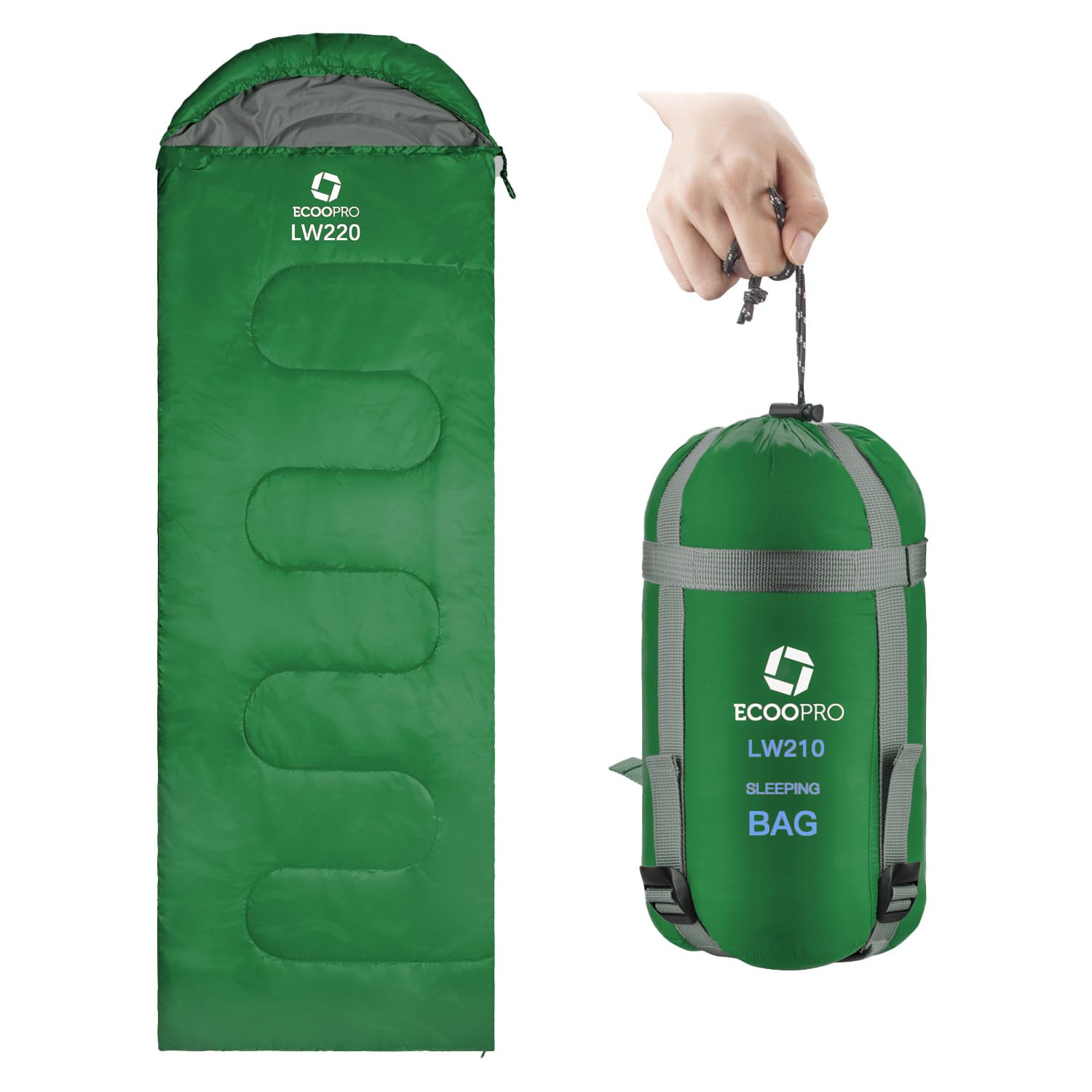
At 1.7 pounds, the ECOOPRO brings a full-length rectangular sleep surface into ultralight territory and packs down far smaller than the 3-pound family rectangle that tops this lineup. That compression footprint is what lets it disappear into a multi-day summer pack without forcing a choice between tent and sleep setup.

On nights in the 55–60°F comfort range, the polyester fill holds warmth without turning the bag into a sweatbox. The rectangular shape gives summer campers room to move a foot out or fully unzip the bag when the tent heats up.

This is for warm-weather backpackers who plan routes above 50°F and want a small sleeping kit for overnight carries. Slim-to-average builds will find the cut efficient; anyone who needs more width or plans to push the comfort range should look at the roomier family bag in this lineup.

💡 On trips near the 50°F end, pair the bag with base layers or a liner to keep the warmth range honest.

Pros

  • At 1.7 pounds, it keeps pack weight low and compresses small for multi-day summer hikes.
  • Polyester fill holds warmth on 55–60°F nights without turning the bag into a bulky layer.
  • Compact enough to store easily in a gear closet or pack, so it gets taken along instead of left behind.

Cons

  • The 30-inch width can feel restrictive for broad-shouldered or restless sleepers.
  • Zipper and strap attachment can vary between units, so a quick pre-trip check is part of the routine.
Our verdict

Take this when the route is long and the nights are warm; it keeps the sleep system from becoming the heaviest part of your pack.

Check Latest Price
3

Best Budget Family Pick

PTEROMY Summer Sleeping Bag

90 /100
Traveler Score Outstanding

Key details

Width
31 in
Packed Weight
3 lb
Comfort Rating
50–80°F
Check Details on Amazon

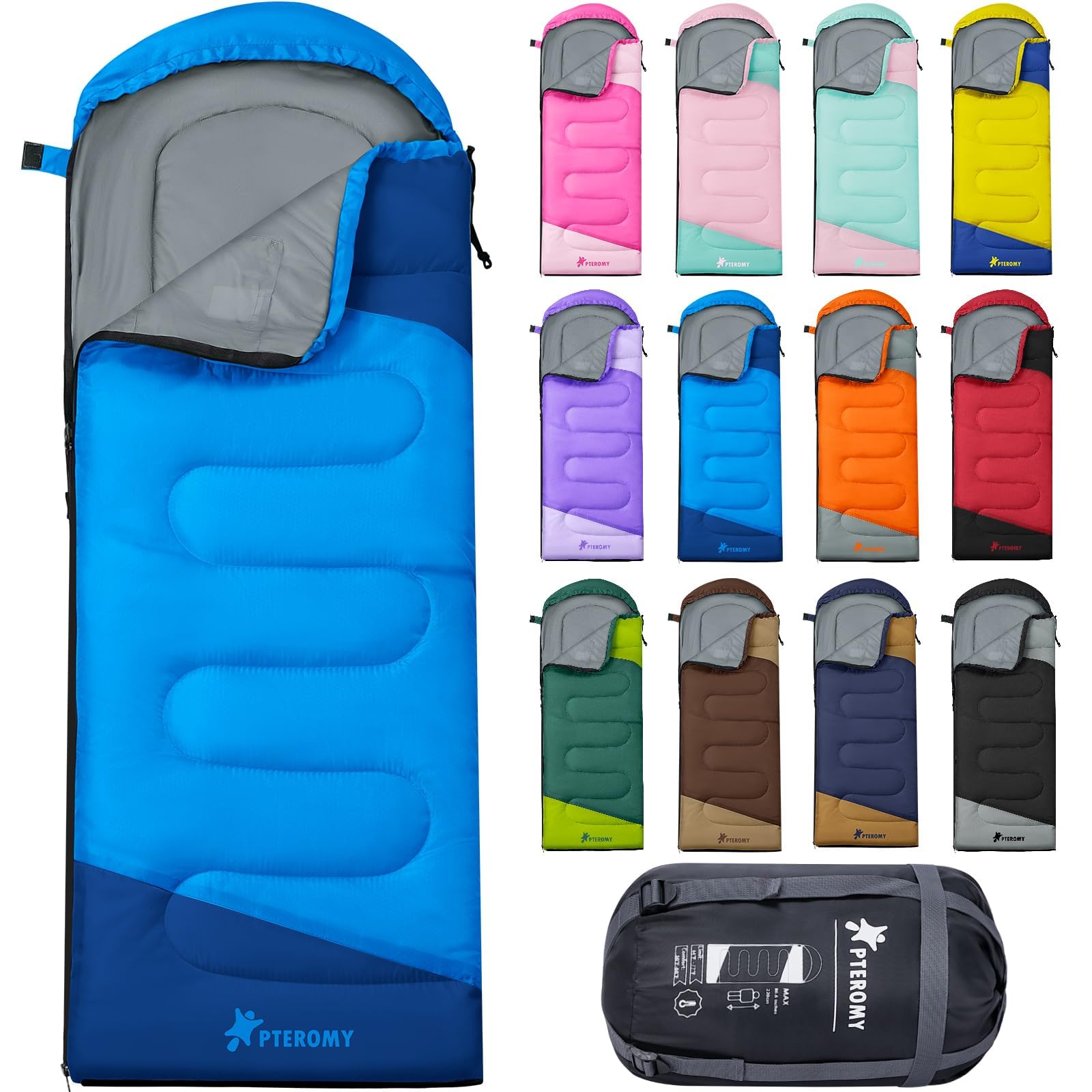
The PTEROMY pairs a roomy 87 x 31-inch rectangular cut with a 50–80°F comfort range, so sleepers get space to turn over without overheating. It shares the top pick's family-camping focus but hits a lower price point, making it the runner-up choice for campers who want a solid all-rounder.

Roll-up is quick, the hollowfiber fill holds its loft, and the bag unzips into a blanket when nights stay warm. That flexibility gives it a longer useful season than the temperature rating alone suggests.

This is the right fit for family campgrounds, teen group trips, and warm-weather hikers who prefer rectangular shoulder room over mummy efficiency. It also sizes up better than the kids-focused alternative in this set, so teens and adults can use the full length. At about 3 pounds and with a 50°F lower limit, it is not an ultralight backpacking bag or a winter bag; cold sleepers near the low end should bring base layers and a sleeping pad.

Pros

  • Well made and comfortable: the shell and lining hold up through regular family-camping use.
  • Warm for chilly summer nights: keeps the 50–60°F range comfortable without overheating in warmer weather.
  • Easy to roll up and tote from car to campsite.
  • Great value: compares with pricier family bags on comfort and warmth for a budget price.

Cons

  • The rectangular cut uses more tent floor than a tapered mummy bag, which matters in a crowded shelter.
Our verdict

For family campgrounds and warm-weather group trips, this is the budget rectangle to grab.

Check Latest Price
4

Best Premium Ultralight

Naturehike 650FP Down Bag

86 /100
Traveler Score Excellent

Key details

Width
28.3 / 31.5 in
Packed Weight
1.3 lb
Comfort Rating
52°F comfort, 42°F limit
Check Details on Amazon

A 650-fill RDS down bag at 1.3 pounds sits at the far light end of this warm-season lineup. It is noticeably lighter than the synthetic envelope alternatives here, and the stuffed size shrinks enough to share a pack with a tent and cook kit. The tapered shape is the reason, and the trade shows up as a compact bundle that disappears inside a multi-day pack.

This suits backpackers and thru-hikers who plan around 52°F comfort nights and count every ounce on the way to camp. Use it for warm-weather and three-season trips, not winter camping or as a liner or travel sheet. Cold sleepers should treat the 42°F lower limit as a boundary and bring base layers. The narrow cut also puts slim-to-average builds in the sweet spot; broader shoulders or habitual side sleepers should measure hip and chest width before committing.

The down stays lofty when kept dry, and the zipper track and seams feel secure through repeated stuffing. The bag breathes well on mild nights, so it works for warm-weather trips without turning into a sweat trap. On cooler nights, the rating assumes a sleeping pad and dry shelter; adjust layers before you head out.

Pros

  • Weighs 1.3 pounds, so the carry weight drops noticeably on long approaches.
  • Compressed size leaves room in a small pack for food and gear.
  • Stitching and zipper track hold up to daily pack-stuff routines.
  • Tapered fit feels close without binding for slim-to-average builds.

Cons

  • Cold sleepers may need extra insulation below the stated comfort range.
  • Shoulder and hip room is tight for wider frames or side sleepers.
Our verdict

For warm-weather hikers who count ounces, the premium price buys a 1.3-pound down package that belongs on a thru-hiker gear list.

Check Latest Price
5

Best for Kids & Growing Campers

HTMEYBG 3-Season Sleeping Bag

91 /100
Traveler Score Outstanding

Key details

Width
31.5 in
Packed Weight
3.3 lb
Comfort Rating
50–68°F
Check Details on Amazon

The HTMEYBG 3-Season Sleeping Bag gives kids and teens a generously sized 86.6-inch semi-rectangular sleeping space, and the hollow-microfiber fill holds warmth through typical 50–68°F nights. At 3.3 lb it is light enough for a trip from the car to the tent, while the relaxed cut lets a growing camper roll over without wrestling the bag.

The semi-rectangular shape is the main reason to choose this over a mummy-style bag: kids get more shoulder freedom, and taller teens get extra length. It is not an adult backpacking bag, and the 3.3-lb weight will feel heavy if the plan involves hiking the bag miles into camp.

This bag suits value-focused families shopping for a first real sleeping bag for warm-weather campouts, sleepovers, and summer camp. For families buying for growth, the 86.6-inch length covers most teen heights. The zipper, velcro closure, and flimsy carry sack are the main budget tradeoffs here, so this is a casual-use bag rather than a backcountry tool. A sleeping pad and base layers are needed for nights near the 50°F end of the comfort range, and this is not a winter bag.

💡 Store the bag loosely in a larger sack to keep the insulation from bunching.

Pros

  • Warmth holds through typical 50–68°F nights, so kids stay comfortable at summer camp.
  • Semi-rectangular cut gives kids and teens room to move and grow without feeling trapped.
  • At 3.3 lb, it is light enough for car camping and family trips.
  • Budget-friendly price makes it a low-risk first sleeping bag.

Cons

  • The included carry sack is tight and thin, so home storage or a spare sack works better.
  • The zipper can unzip during active sleep, and the velcro closure may not hold.
Our verdict

For families with kids or teens, this is a budget-friendly warm-weather bag with the length and width to cover several summers of growth.

Check Latest Price
6

Mild-Weather Backpackers

Naturehike Ultralight Envelope

91 /100
Traveler Score Outstanding

Key details

Width
33.5 in
Packed Weight
1.67 lb
Comfort Rating
59°F comfort, 32°F limit
Check Details on Amazon

At 1.67 pounds, this synthetic envelope is light for the space it offers, and the 33.5-inch width gives average-size sleepers room to move. Packed size suits a kayak hatch or daypack. The zipper can snag on the shell when entry is rushed, and the official spec sheet is sparse on fill details. What keeps it below the top ultralight pick is a warmth range that favors summer nights over 50°F shoulder-season conditions. For summer tent or hammock camping, the small packed size and mid-range price make it a sensible pick next to pricier ultralight options.

Pros

  • At 1.67 pounds, it trims real weight from a summer pack while keeping an envelope cut.
  • Packs down small enough for a kayak hatch or daypack on multi-day trips.
  • Synthetic fill balances comfort and build quality at a mid-range price.

Cons

  • The 33.5-inch envelope is confining for wide or tall sleepers; average builds get the most room.
  • The insulation is thin for nights below 60°F; a liner or extra layers become necessary.
Our verdict

For a summer tent or hammock setup that values light packing, the mid-range price makes it a reasonable buy before stepping up to a premium down bag.

Check Latest Price
7

Slim-Frame Backpackers

NewDoar Ultralight Backpacking

87 /100
Traveler Score Excellent

Key details

Width
29.5 in
Packed Weight
1.5 lb
Comfort Rating
50–70°F
Check Details on Amazon

The 1.5-pound NewDoar compresses to an 11.8 x 6.5-inch bundle, so it disappears into a weekend pack. Its 50–70°F rating suits mild backpacking nights, and the rectangular shape leaves more foot room than a mummy bag.

It stops short of a broader recommendation because the fit is specialized: this is a lean-build bag aimed at slim-framed hikers on short-to-medium trips. For that body type, the mid-range price and 1.5-pound carry weight make it a cost-effective ultralight choice, especially if you prefer a rectangular sleep position over a mummy's taper.

Pros

  • Very light and packable for weekend backpacking loads.
  • Warm for 45–50°F nights with base layers.
  • Comfortable and neatly made for a mid-range ultralight bag.

Cons

  • Rated for 50°F and up, so near-40°F nights need a liner or extra layers.
  • The 29.5-inch shoulder width is snug for broad-shouldered or plus-size sleepers.
Our verdict

For slim-framed hikers on mild-weather trips, this is a cost-effective ultralight bag that packs small enough for a short-to-medium route.

Check Latest Price
8

Casual Summer Use

Active Era Ultralight Bag

84 /100
Traveler Score Excellent

Key details

Width
30 in
Packed Weight
2 lb
Comfort Rating
50–60°F
Check Details on Amazon

The 2-pound hollow-fiber envelope is soft, light, and compact — a natural for sleepovers, summer camp, and casual travel. The 75 x 30-inch cut suits kids, teens, and slim-framed adults; larger frames can feel snug. Warmth holds up on mild nights, but the margin thins near 60°F, so cool sleepers need a base layer. It is a comfortable secondary bag for light-duty use, not a replacement for a roomier family rectangle with more temperature range.

Pros

  • Weighs only 2 pounds and packs compactly for travel and camp toting.
  • Soft envelope shape keeps kids and slim adults comfortable through the night.
  • Fabric and build quality justify the cost for casual use.

Cons

  • Adults with large frames can find the 30-inch width snug.
  • Nights around 60°F are the practical low end; a layer helps.
Our verdict

A soft, low-cost sleepover and summer-camp bag for kids and slim travelers; broad adults or cold nights need a different option.

Check Latest Price
9

Ultralight Backpackers

QEZER 600FP Down Bag

83 /100
Traveler Score Excellent

Key details

Width
32.3 in
Packed Weight
1.3 lb
Comfort Rating
59–68°F
Check Details on Amazon

The QEZER gets the ultralight formula right: 600-fill duck down in a 1.3-pound mummy shell that compresses small enough for summer packs. Warmth lands at 59–68°F comfort, which suits mild nights and high-altitude summer camps rather than cold-weather trips.

The mummy cut is efficient for heat retention but snug across the shoulders and torso, and the 45°F extreme rating is a survival boundary rather than a comfort target. At this premium price, the practical buy is for backpackers who prioritize a small pack and low weight over a roomy fit or a long history of hard use.

Pros

  • Sub-1.5-pound weight keeps summer pack loads light.
  • 600-fill down compresses small for multi-day trips.
  • Mummy cut holds warmth efficiently for still sleepers.

Cons

  • Broader-shouldered and side-sleeping backpackers may find the mummy cut tight.
  • Below 59°F, comfort drops off quickly, so this is a summer bag rather than a true 3-season option.
Our verdict

The right pick for ounce-counting summer backpackers who sleep still and pack a liner for cooler nights.

Check Latest Price

How to Choose

Read the Comfort Number, Not Just the Limit

A 50°F comfort rating is a starting point, not a guarantee. It assumes an insulated sleeping pad, dry base layers, and shelter from wind. Without those, the same bag runs noticeably colder.

The limit rating is a survival threshold, not a sleeping target. Choosing a bag by its limit number usually ends with a shivering night.

Packed Weight vs. Insulation

Every pound you save comes out of insulation or shell fabric. A 3-pound synthetic bag traps more air and sleeps warmer, while a 1.5-pound bag is easier to carry but needs warmer conditions or extra clothing.

Match the weight to the trip: hikers covering miles in 60°F nights can choose light; car campers should take the extra insulation and leave the ounces at home.

Compressed Size and Fill Type

Down compresses far smaller than synthetic at the same warmth, which is why ultralight bags favor down. Synthetic fill loses loft when stored compressed, so keep it loose between trips and compress it only for travel.

If you fly or backpack, packed dimensions matter more than weight alone. If the bag lives in a car or closet, this spec barely affects the decision.

Width and Room to Move

Width determines whether you can turn over at night. A 30-inch bag works for slim sleepers but restricts broad shoulders and side sleepers, especially in a mummy cut. Rectangular bags near 31.5 inches give most adults room to move.

Tapered bags trade that room for warmth and packability. Know your sleep style before choosing a cut.

Zipper and Seam Construction

The zipper is the first part of a budget bag to wear out. A plastic slider can catch fabric, bind, or separate from the track after repeated use, while a smooth slider with an anti-snag guard handles hundreds of cycles. A zipper that feels rough at the store will not smooth out with use.

Seams around the zipper track and hood take the most stress. If the stitching looks loose or the zipper feels rough in the store, expect it to get worse on a trip.

Frequently Asked Questions