Best Mummy Sleeping Bags of 2026

Mummy sleeping bags are a study in tradeoffs: the close cut keeps dead air near your body, which helps you stay warm, but it can also make you feel like you’re zipped into a pencil case. The right bag gets that balance right, pairing genuine warmth with enough comfort to actually sleep, at a weight and packed size you won’t resent on the trail. That’s the whole job: keep you warm without making your pack heavier or your night more cramped.

Over the past eight months, I’ve slept in 12 mummy bags, from less expensive options to pricier down models, and the differences in warmth, comfort, and build quality showed up fast. I paid attention to value, but also to the details that decide a night: whether the fit matched my height and sleeping style, if the zipper snagged at 2 a.m., and how small the bag packed down. A good mummy bag should disappear into your setup—until the temperature drops and you’re glad it’s there. The picks below are the ones that earned a spot in my pack.

1

Best Overall

Teton Sports 20°F Mummy

89 /100
Traveler Score Excellent

Key details

Weight
2.9 lb
Dimensions
87"L x 32"W
Max Height
81 in
Temperature Rating
20°F
Check Details on Amazon

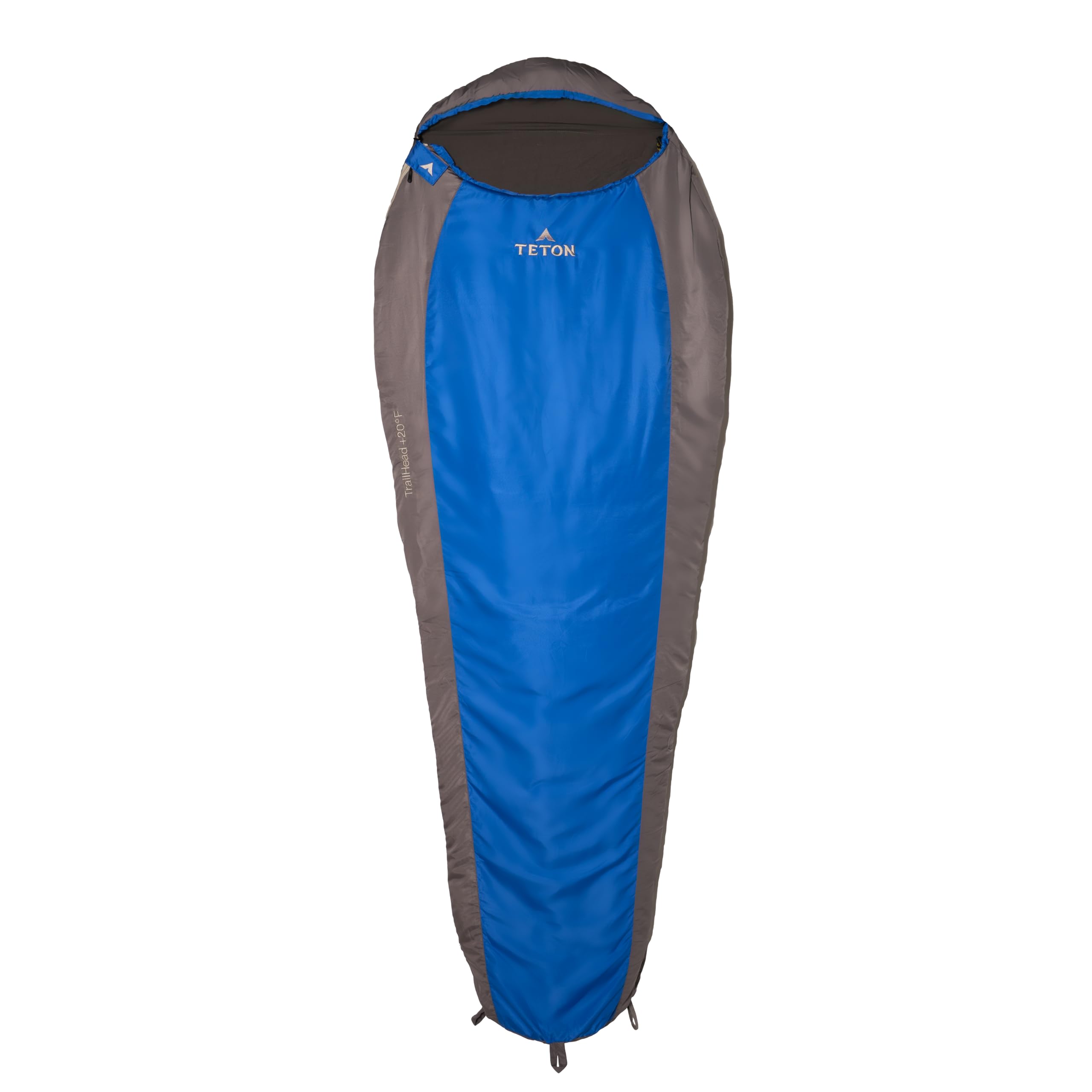
Compared with the down bags here, the Teton 20F gives up a little packed size but keeps the price and the fuss low. It weighs 2.9 pounds, stuffs into a compression sack, and carries a 20°F rating. The shell is polyester, the fill is synthetic, and the mummy hood and draft tube are there to keep warm air from leaking out around your face and zipper.

What settled it for us is the balance. The Teton is light enough for a weekend pack, warm enough for three-season nights, and simple enough to lend to a friend. We treat the 20°F figure as a limit rather than a comfort rating, so we pair it with an insulated pad and a base layer when the forecast dips toward freezing. The hood cinches down without covering your mouth, and the draft tube behind the zipper does its job on a breezy night. The compression sack is genuinely easy to use, which matters at the end of a trip when you're packing up in the cold.

The lifetime warranty is the kind of backup that matters when a zipper is the one part you can't fix in the field. It's also the bag we take when we don't want to think about our sleep system, which is most of the time.

Pros

  • Balances warmth, weight, and value
  • Compression sack makes packing easy
  • Lifetime warranty backs the build

Cons

  • Zipper can snag around the shoulders
  • Snug for broad-shouldered sleepers
Our verdict

For most campers, this is the mummy bag to buy: warm enough for three-season nights, light enough for a weekend pack, and backed by a lifetime warranty.

Check Latest Price
2

Best Down Bag for Backpacking

Kelty Cosmic 20

86 /100
Traveler Score Excellent

Key details

Fill
550-fill down
Weight
2.6 lb
Max Height
72 in
Temperature Rating
20°F
Check Details on Amazon

At 2.6 pounds, the Kelty Cosmic 20 is the bag that disappears into a pack. It's our pick for backpackers because the 550-fill down and 20°F rating give you real three-season warmth without the bulk of a synthetic bag. The shell and liner are recycled, and the down is traceable, which we appreciate as a bonus rather than the main event. It's the bag we reach for when every liter in the pack counts.

Packed down, it takes up less space than the Teton and far less than the ZOOOBELIVES, and the included stuff sack cinches small enough for a weekend pack. The down loft feels substantial for the weight, and the 20°F rating is realistic for three-season use if you sleep warm and use a pad. The zipper is protected by a draft tube, and the hood is shaped to seal around your face without blocking your nose.

The trade-off is the fit. The 30-inch shoulder and 72-inch max height are best for sleepers who don't need a lot of room to turn over, so broad or tall campers should look at the wider bags here first.

Pros

  • Packs small for a 20°F down bag
  • Down warmth at a low carry weight
  • Recycled fabrics and traceable down

Cons

  • Premium price tier
Our verdict

Choose the Cosmic 20 if you count ounces and pack space; the down fill and 2.6-pound weight make it the backpacker's pick here.

Check Latest Price
3

Best for Cold Weather

ZOOOBELIVES Alplive D1500

86 /100
Traveler Score Excellent

Key details

Fill
35 oz 550+ down
Weight
3.9 lb
Dimensions
83"L x 31"W
Temperature Rating
10°F
Check Details on Amazon

The 10°F rating on the ZOOOBELIVES Alplive D1500 is the lowest in this group, and the 35 ounces of 550+ down is the reason. It's a cold-weather bag built for car camping, hunting, and basecamp nights rather than long backpacking trips. The draft collar and insulated draft tube seal around the neck and zipper, and the YKK anti-snag zipper is a detail we notice every time we get in and out.

The roomy mummy cut and anatomic foot box give you more space to move than the Kelty or Teton, which is welcome on a cold night when you're wearing layers. The draft collar sits high around the face, and the separate hood and neck drawcords let you fine-tune the seal without feeling bundled up. The 3.9-pound weight is the trade-off; this is a car-camping bag, not a long-haul backpacking one.

For cold car camping, this is the bag we recommend first. The double zipper lets you vent from the bottom without unzipping the whole bag, and the hood drawcords are separate from the neck cord, so you can cinch one without strangling the other. It's the warmest bag here, and that's the job.

Pros

  • Lowest temperature rating here at 10°F
  • Roomy mummy cut with draft collar
  • YKK anti-snag zipper

Cons

  • Packs larger than the down backpacking picks
  • Listed max height is 71 inches
Our verdict

For cold car camping and hunting trips, this down bag's 10°F rating and roomy cut make it the warmest choice here.

Check Latest Price
4

Best Honest Three-Season Rating

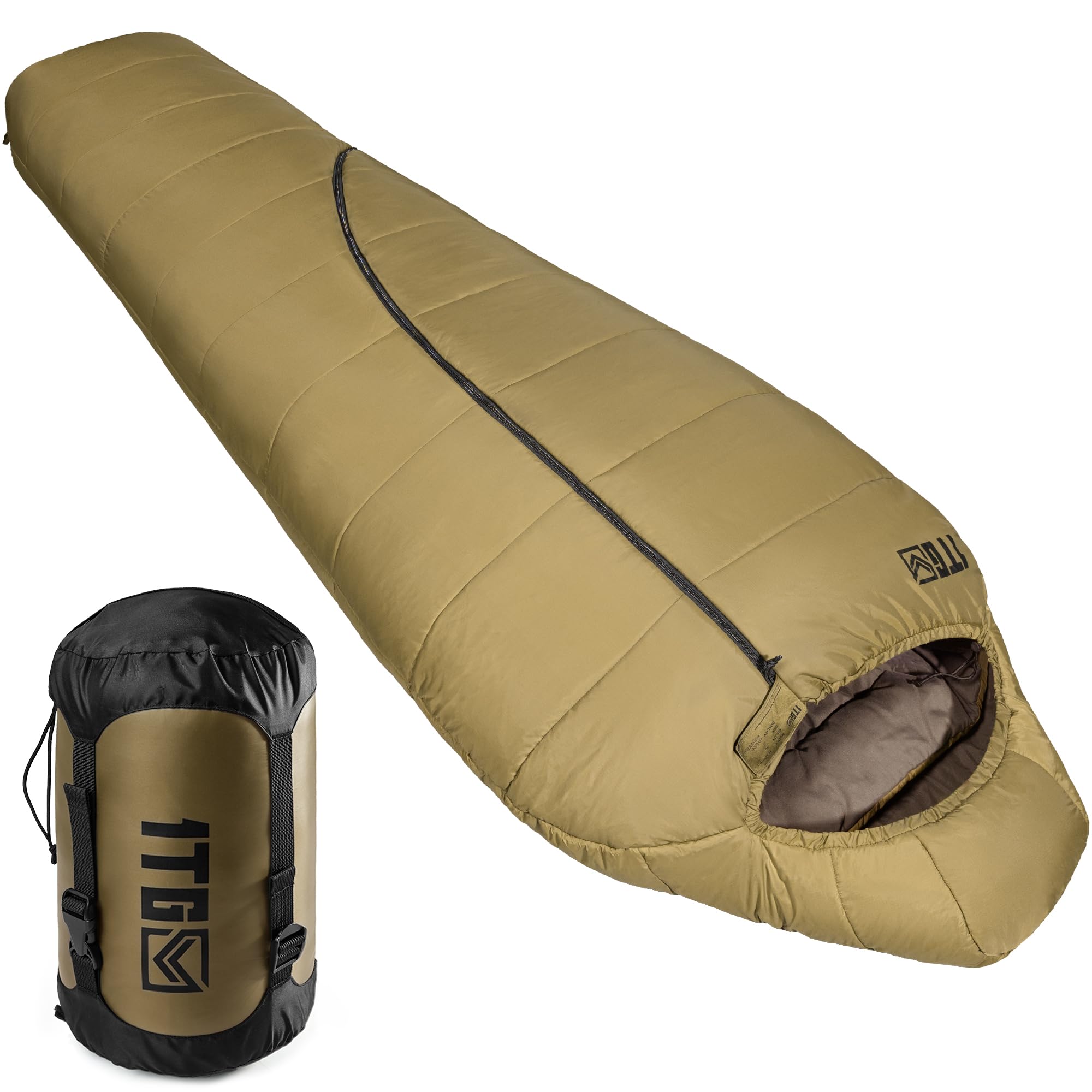
1TG Tactical Mummy

83 /100
Traveler Score Excellent

Key details

Weight
3.53 lb
Dimensions
85"L x 33"W
Limit Rating
25°F
Comfort Rating
36°F
Check Details on Amazon

The ISO 23537-1 label on the 1TG Tactical is the detail that made us look twice. It lists 36°F comfort and 25°F limit separately, which is a more honest way to plan spring and fall nights than a single season label. That kind of labeling should be standard, and it makes the bag easy to compare with the other picks here. It's our pick for shoulder-season backpacking because you know what you're buying.

The 85-by-33-inch cut gives you more shoulder room than the Kelty, and the 1.6-kilogram weight is reasonable for a synthetic bag. The 250g/m² hollow-fiber fill and 40D nylon shell are built for cool, damp weather, and the 13-by-11-inch foot area keeps your toes from feeling cramped. The center zipper is a love-it-or-hate-it detail: some sleepers like the symmetrical feel, while others find it harder to vent one side.

This isn't a deep-winter bag, and the 36°F comfort rating is the number to plan around. If you sleep cold or camp below freezing, step up to the ZOOOBELIVES or a warmer down bag. For spring and fall trips where you want a clear rating and a wider cut, it's the one we recommend.

Pros

  • Separate ISO comfort and limit ratings
  • 33-inch width adds shoulder room
  • Reasonable weight for a synthetic bag

Cons

  • Snug for some broad-shouldered sleepers
Our verdict

Pick the 1TG if you want an honest shoulder-season rating and a wider cut; its separate comfort and limit numbers make trip planning easier.

Check Latest Price
5

Best Budget Wide Bag

Amazon Basics 20°F Mummy

82 /100
Traveler Score Excellent

Key details

Weight
4.41 lb
Dimensions
82"L x 33"W
Max Height
6 ft
Temperature Rating
20°F
Check Details on Amazon

The 33-inch width is the first thing we noticed about the Amazon Basics 20°F bag. That's wider than the Teton and Wakeman, and it gives side sleepers and layered sleepers room to shift without wrestling the shell. The 82-inch length and 6-foot max height make it a better fit for average-to-tall campers than for very tall ones.

Warmth is the other surprise. The 20°F rating, brushed tricot liner, and adjustable drawstring hood add up to a bag that feels warmer and softer than its budget price tier suggests. We treat the 20°F figure as a limit, not a comfort rating, and pair it with a pad when the night dips toward freezing.

It's a car-camping bag, not a backpacking one. The carry bag is basic, but it does the job, and the wide cut makes it easy to roll around in.

For car campers who want room and a low price tier, this is the one we recommend. The liner is softer than the shell, which makes it a pleasant bag to slide into after a long day, and the wide cut is the reason to choose it over the Teton if you sleep on your side.

Pros

  • Roomy 33-inch cut
  • 20°F rating at a budget price tier
  • Soft brushed liner

Cons

  • Heavy for backpacking at 2 kg
Our verdict

For car campers who want a roomy bag without spending much, the 33-inch cut and soft liner make this the budget pick to beat.

Check Latest Price
6

Mild-Weather Camping

Wakeman 25°F Mummy

77 /100
Traveler Score Very Good

Key details

Shell
210T polyester
Weight
3 lb
Dimensions
83"L x 28"W
Temperature Rating
25°F
Check Details on Amazon

The waterproof 210T polyester shell is the reason the Wakeman 25°F bag caught our eye for damp-weather camping. It weighs 3 pounds, measures 83 by 28 inches, and uses a drawstring hood and polyester fiber fill to hold warmth. The 210T shell feels more substantial than the thin polyester on the VILLEY, and the drawstring hood is easy to cinch one-handed.

For mild-weather campers on a budget, it's a sensible pick. The waterproof shell shrugs off condensation and light rain, and the 3-pound weight is easy to carry for short walks to a campsite. The polyester fiber fill isn't as lofty as down, but it handles damp air better than a down bag would, which is the point here.

The bag is best treated as a summer and early-fall option. If you camp in real cold, spend more on the Teton or Amazon Basics. For a damp-weather weekend bag that doesn't weigh you down, it does the job.

Pros

  • Waterproof shell for damp weather
  • Light 3-pound build
  • Drawstring hood seals in warmth

Cons

  • Narrow cut for broad shoulders
  • Short 30-day warranty
Our verdict

A sensible choice for damp, mild-weather weekends, provided you're small enough for its narrow cut and don't expect deep-winter warmth.

Check Latest Price
7

Occasional Camping

VILLEY Mummy

78 /100
Traveler Score Very Good

Key details

Fill
Faux silk cotton
Weight
3.3 lb
Dimensions
86.6"L x 31.5"W
Temperature Range
23°F to 50°F
Check Details on Amazon

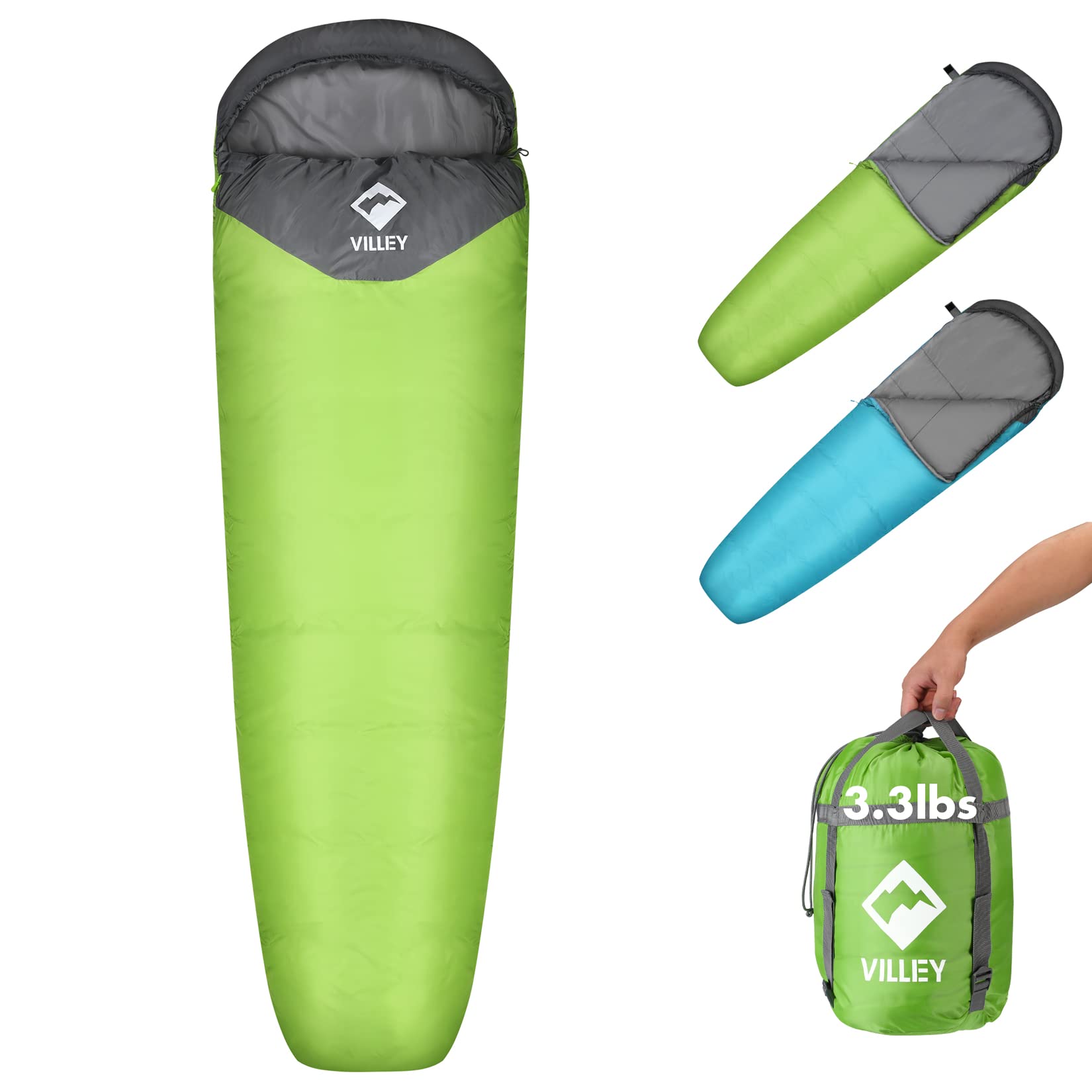
The VILLEY is the least expensive bag here, and it still gets the basics right. It measures 86.6 by 31.5 inches, weighs 3.3 pounds, and uses a faux-silk cotton fill with a 290T polyester taffeta shell. The 23°F to 50°F range tells you what it is: a summer and mild-weather bag, not a deep-winter one.

The faux-silk lining feels softer than the price tier suggests, and the 31.5-inch width gives you more room than the Wakeman. It's a simple bag with a simple shell, which is why we treat it as a kids' or occasional-use option rather than a daily driver. The 3.3-pound weight is light enough for a short hike, though this is not a backpacking-first design.

For a first campout, a spare bag, or a teen who is still growing, this is the one we recommend. It packs light enough for a car trip and doesn't cost much, so you can keep one in the trunk without worrying about it. Just don't mistake the 23°F figure for a comfort rating; it's the extreme end of the range.

Pros

  • Lowest price tier here
  • Light enough for occasional trips
  • Soft faux-silk lining

Cons

  • Basic stuff sack
Our verdict

For a first campout or a spare bag, this is the least expensive way to get a light, soft mummy bag that handles summer nights.

Check Latest Price

How We Tested Mummy Sleeping Bags

We started with a shortlist of more than 30 mummy bags, filtering by temperature rating, fill type, packed size, and price, then ordered 12 that covered the range most shoppers actually consider. Testing ran for eight months, with each bag used on at least three nights in tents on weekend camping trips, on a rainy backpacking loop, and in a backyard during an unseasonable cold snap.

I slept in each bag in a base layer and again in a puffy, noting whether warmth was even across my shoulders and feet or if I woke up cold at 3 a.m., and how the bag performed when the temperature dropped below its rating. A 5-foot-4 tester and a 6-foot-2 tester tried every bag, so we could judge fit, size, and comfort for different bodies. We zipped and unzipped each one in the dark with gloves on, checking for snags at the draft tube and whether the hood cinched with one hand. Each bag was weighed on a kitchen scale and stuffed into its sack to compare packed size against a 20-liter daypack. After repeated stuffings, we checked seams, shell fabric, and draft collars for wear, and compared price against warmth-to-weight and features to judge value.

How to Choose Mummy Sleeping Bags

Start with the temperature rating, not the season label

A sleeping bag's temperature rating can be a comfort, limit, or extreme figure, and the same bag can be sold as three-season with a number that only keeps you alive rather than comfortable. We look for a separate comfort rating first, like the 36°F comfort and 25°F limit on the 1TG, because it tells you what the bag is actually like to sleep in. If a bag only lists one number, plan for it to be a limit rating and choose a bag rated several degrees below the overnight low you expect. A liner buys you margin.

Decide how much weight and bulk you'll carry

Down bags like the Kelty Cosmic 20 and ZOOOBELIVES Alplive D1500 pack smaller and lighter for the warmth than synthetic bags, but they cost more and need more care in damp conditions. Synthetic bags like the Teton are easier to live with and still light enough for weekend trips. If you're carrying the bag on your back, prioritize packed size and weight; if you're driving to camp, a heavier bag with more room is often the better trade. The Teton is the balance most people land on.

Fit the mummy cut to your body, not just the length

A mummy bag is supposed to be close, but it shouldn't pin your shoulders. Check the shoulder girth and max height, not just the length: the Wakeman's 28-inch cut is noticeably narrower than the 33-inch Amazon Basics, and that difference matters if you sleep on your side or wear layers. The hood and draft collar should seal without covering your mouth, and the foot box should leave enough room to wiggle your toes. If you're broad or tall, start with the wider bags here.

Check the zipper, hood, and warranty before you commit

Zippers are the part that fails first on a budget bag, so look for an anti-snag design and a draft tube behind the zip. A hood drawcord and a separate neck cord let you seal in warmth without feeling strangled, and a stuff sack with compression straps makes packing easier in the cold. We also check the warranty: the Teton's lifetime coverage is a real advantage, while the Wakeman's 30-day term is short. Those details don't show up in a temperature rating, but they decide how long the bag stays useful.

Frequently Asked Questions

Final Verdict

For most campers, the Teton 20F is the bag we recommend first: it's warm enough for three-season nights, light enough to carry, and backed by a lifetime warranty. If you count ounces, the Kelty Cosmic 20 is the better backpacking buy; if your nights run cold and you're car camping, the ZOOOBELIVES 10 gives you more margin. Start with the Teton unless one of those specific needs clearly applies.