7 Best Ultralight Sleeping Bags of 2026: Real Comfort Temps

Find a genuinely sub-2-lb sleeping bag for backpacking and travel — with honest temperature guidance for real-world nights.

Ultralight sleeping bags have a marketing problem: the temperature number printed on the tag often describes a survival limit, not a comfortable night's sleep. Across the most popular budget and mid-range down bags, the advertised comfort rating runs several degrees optimistic for average sleepers.

That does not mean the category is full of bad products. It means the right bag depends on matching the rating to your sleeping style, your trip's expected low, and your tolerance for a narrow mummy cut. This guide sorts through the trade-offs that actually matter — weight, packed size, fit, and honest warmth — so you can pick a bag that earns its place in your pack.

1

Best Overall Ultralight Down

Naturehike 650FP 42-52°F

86 /100
Traveler Score Excellent

Key details

Weight
1.3 lb
Fill Power
650
Packed Size
10.2 x 4.7 in
Comfort Temp
42°F
Check Details on Amazon

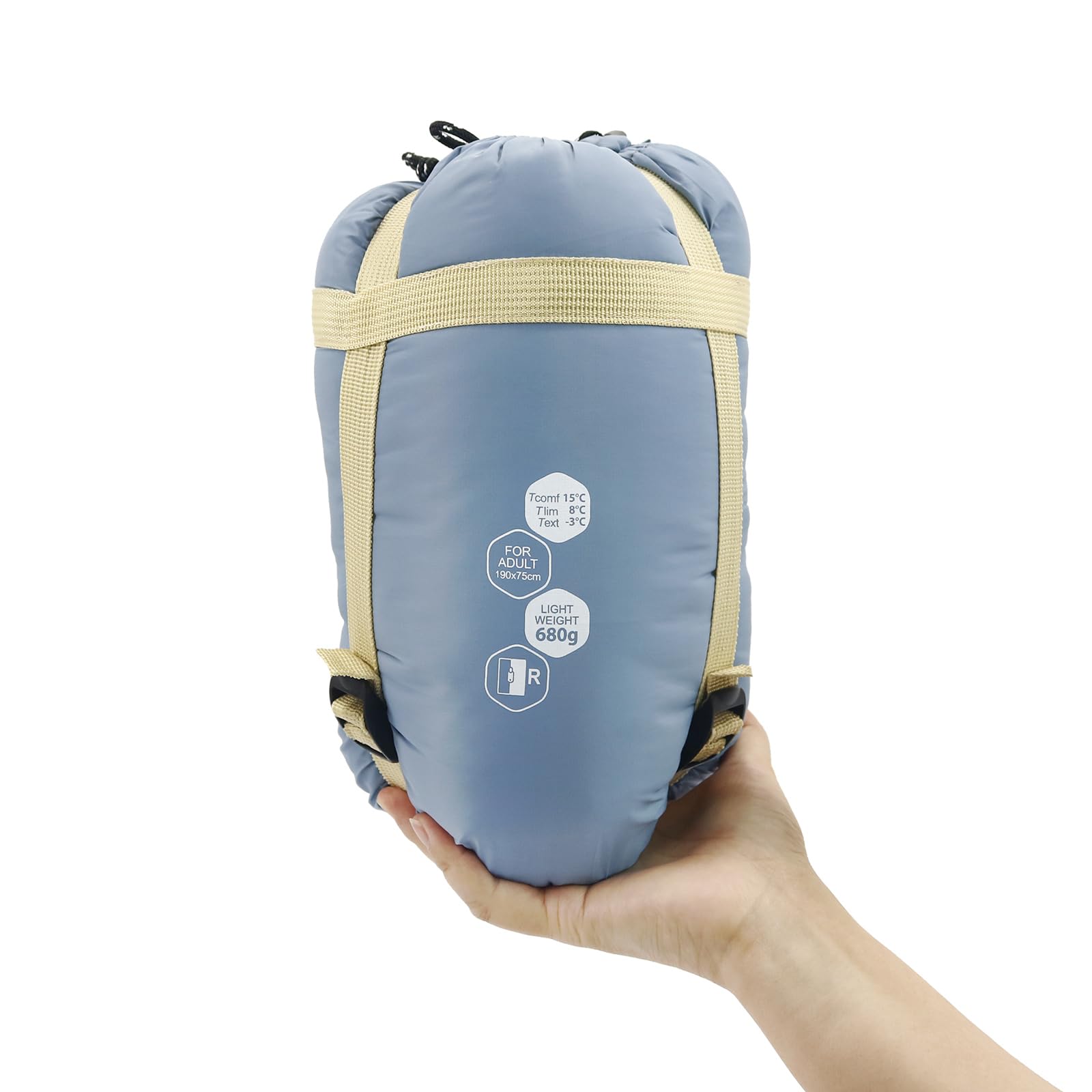
At 1.3 lb, the Naturehike 650FP is the lightest verified sleeping bag in this lineup and a clear step below the usual 2-lb lightweight class. The 650-fill RDS down is paired with a 20D nylon shell, and the 10.2 x 4.7-inch packed size leaves room in a full pack for other gear.

The rectangular cut gives a little more side-to-side room than a mummy bag, which side sleepers will appreciate. The YKK zipper and 20D shell hold up in regular backpacking use, and the down loft stays consistent from the first night through repeated compressions.

This bag suits thru-hikers and gram-counting backpackers who want a true ultralight kit and sleep warm. The short variant runs narrow, and the 42°F comfort rating is optimistic for cold sleepers, so choose the medium/long version if you are tall or broad and carry a liner if you tend to run cold.

Pros

  • Shaves more than a half-pound off a typical lightweight bag.
  • Packs down smaller than typical 2-lb sleeping bags, freeing pack space.
  • Holds warmth for mild three-season nights when paired with the right base layers.
  • YKK zipper and 20D nylon shell are built to handle regular backpacking use.
  • Mid-range pricing keeps the weight savings within reach for budget-conscious hikers.

Cons

  • The zipper can catch on the baffle in some cases.
Our verdict

For a gram-counting backpacker who sleeps warm, this is the lightest verified 650-fill bag in the set and a clear mid-range value.

Check Latest Price
2

Roomiest Ultralight Comfort Pick

Naturehike 650FP 40°F

85 /100
Traveler Score Excellent

Key details

Weight
2 lb
Fill Power
650
Packed Size
13.8 x 7.1 in
Comfort Temp
40°F
Check Details on Amazon

At 2 lb, this semi-rectangular 650-fill bag is a legitimate ultralight option, and its hood and footbox provide a roomier alternative to the tight mummy shape in this category. It splits the difference between a tight mummy and a bulky rectangular bag. The extra width matters for side sleepers who normally fight for leg room in a tapered bag. Packed size stays small enough for backpacking, which is why it fits the ultralight intent.

The 650-fill down holds comfort around its 40°F rating for average sleepers; the hood traps heat without the constricted feel of a mummy hood. RDS down and a YKK zipper handle repeated pack/unpack cycles, and the 13.8 x 7.1-inch packed size remains compact for a bag with this much internal space.

Side sleepers and travelers who dislike tight mummy cuts will appreciate the roomy footbox and the hood. The 2-lb weight is at the edge of the ultralight threshold, and the zipper can occasionally snag if you close it quickly. Cold-sensitive campers should add a liner or wear layers below 40°F instead of expecting the rating to do all the work.

Pros

  • Carries well at 2 lb and compresses into a compact bag-packing bundle.
  • Comfortable around its 40°F rating for average sleepers; layering covers colder nights.
  • Semi-rectangular footbox and hood give side sleepers room without a mummy squeeze.
  • RDS down and YKK zipper add durability for repeated pack/unpack cycles.

Cons

  • Down loft can migrate overnight in cold weather, leaving thin spots in the insulation.
Our verdict

For campers who prioritize sleep position over every ounce, this is the roomier ultralight trade worth making.

Check Latest Price
3

Best Budget Down with Space

QEZER 600FP Down 45°F

83 /100
Traveler Score Excellent

Key details

Weight
1.59 lb
Fill Power
600
Packed Size
9.84 x 5.51 in
Comfort Temp
45°F
Check Details on Amazon

The QEZER 600FP is a 1.59-lb down bag built around a roomy 85-inch semi-rectangular shape, a combination that sets it apart from the narrow mummy silhouettes in the ultralight category. The wider cut gives side sleepers enough room to bend a knee and lets taller backpackers up to roughly 6-foot-2 stretch out without fighting the shell. It lands at a mid-range price, making it a cost-effective alternative to premium ultralight bags that weigh the same but fit tighter.

This bag suits warm-sleeping backpackers who want a mild-to-cool weather system. The 45°F comfort rating is a boundary: cold sleepers should carry extra layers once temperatures drop below 40°F, and the roomy shape means there is more air space to warm than in a tight mummy. That same space makes it easier to shift positions at night, which is why side sleepers and toss-and-turn campers prefer this cut.

For packability, the 600-fill down compresses to roughly 10 by 6 inches, which tucks into the bottom of a small pack or a side pocket. The packed size is consistent with the weight, so it does not hog pack space. The shell fabric and stitching hold up to routine weekend trips, and the loft stays evenly distributed through the night. On mid-40s nights, a base layer and a hat are enough to keep the down doing its job.

Pros

  • Down loft at 1.59 lb keeps pack weight low for multi-day hikes.
  • Spacious 85-inch semi-rectangular cut gives side sleepers room to move.
  • Shell fabric and stitching handle routine trail use without premature wear.
  • Down fill holds warmth well on mild-to-cool nights.

Cons

  • Zipper pull can snag when the bag is closed in a hurry.
  • Down fill requires careful drying and dry storage after damp trips.
Our verdict

For backpackers who sleep warm and want leg room without a weight penalty, the QEZER 600FP delivers a practical 1.59-lb down bag at a mid-range price.

Check Latest Price
4

Proven Tiny-Pack Summer Down

ZOOOBELIVES Alplive T400

83 /100
Traveler Score Excellent

Key details

Weight
1.7 lb
Fill Power
650
Packed Size
11 x 6.7 in
Comfort Temp
50°F
Check Details on Amazon

The ZOOOBELIVES Alplive T400 pairs a 1.7-lb 650-fill down body with a packed size smaller than a Nalgene bottle, which puts it in genuine ultralight territory for summer loads. It is not the lightest bag in this comparison — the top pick shaves another 0.4 lb — but the slightly tapered cut gives it a more relaxed feel than a narrow mummy. For anyone who moves around at night, that extra width is worth the added ounces.

The interior is soft, and unzipped the bag opens flat like a quilt for warm evenings. The 650-fill down recovers quickly after compression, so daily setup and pack-down stay simple. Side sleepers get enough width to turn over without feeling strapped in, and the open collar avoids the stuffy feel of a hooded mummy.

This bag suits warm sleepers, summer backpackers, and van travelers who prioritize small packed size over cold-weather security. It also works for gram-conscious hikers who run warm and don't need a thick hood. Treat the 32°F rating as optimistic — nights in the 50s are its real comfort zone. Duck down odor can be strong until aired out, and zipper durability can vary, so air it before your first trip and inspect the zipper action.

Pros

  • Packs to a smaller-than-Nalgene size that frees up room for other gear.
  • 1.7-lb weight keeps the load light enough for real backpacking.
  • Soft interior and roomy cut suit side sleepers; unzipped it becomes a quilt.
  • Mid-range price gets you 650-fill down for summer trips without a premium tag.

Cons

  • Zipper can catch on the baffle when closing.
  • Cold sleepers will want extra layers below 50°F; the 32°F limit oversells the bag's warmth.
Our verdict

For warm nights where packed size matters more than rated low-end warmth, this is a practical summer pack bag — just leave the 32°F label at home.

Check Latest Price
5

Budget Fair-Weather Pick

NewDoar Ultralight 50-70°F

87 /100
Traveler Score Excellent

Key details

Weight
1.5 lb
Fill Power
Packed Size
11.8 x 6.5 in
Comfort Temp
50°F
Check Details on Amazon

At 1.5 pounds, the NewDoar is a true ultralight entry at a budget price, and its two-way zipper lets two bags join into a double for couples. It undercuts the semi-rectangular down bag on cost while keeping packed volume down to an 11.8 x 6.5-inch stuff sack, which is small enough to nest in a daypack.

The rectangular cut gives side sleepers room to turn, and the shell feels soft against skin at around 50°F, which matches the bag's intended summer niche. The 50–70°F rating is honest for warm nights; a colder evening will require a base layer or liner, and cold sleepers should treat 55°F as the practical floor rather than a comfort rating.

Meant for first-time backpackers, summer campers, Scouts, and couples who want a cheap zippable double bag. The narrow cut can feel snug for larger or wide body types, and some users feel cold below about 55°F — so this is a fair-weather bag rather than a three-season replacement. For anyone staying within that range, the low price and 1.5-lb carry weight make it an easy ultralight-on-a-budget starting point.

Pros

  • 1.5-lb carry weight puts it in true ultralight territory for a summer bag.
  • Budget-friendly price makes it an accessible first backpacking bag.
  • Soft shell and pleasant feel around 50°F suit fair-weather sleep.
  • Two-way zipper lets two bags zip together into a double.

Cons

  • Width is snug for larger or wide body types.
  • Cold sleepers may need extra layers below about 55°F.
Our verdict

The lowest-priced 1.5-lb bag in this group, and one of the few budget options that zips into a double for couples.

Check Latest Price
6

Synthetic-Only Campers

iClimb 3M Thinsulate Mummy

88 /100
Traveler Score Excellent

Key details

Weight
2.4 lb
Fill Power
Packed Size
10.6 x 7.9 in
Comfort Temp
41°F
Check Details on Amazon

The iClimb 3M Thinsulate mummy bag brings genuine synthetic warmth in the 40s, and the machine-washable build gives down-averse campers a practical wet-weather option. But at 2.4 lb with a 10.6 x 7.9-inch packed size, it lands clearly above the 2-lb ultralight threshold that defines this search — think light camping bag rather than true backpacking gear. The zipper can also snag on the baffle, so closing the bag requires a slower pass. For budget-conscious car campers, wet-weather users, or anyone avoiding down, it still offers comfort and cleanable construction; for a thru-hiker weighing every ounce, the weight penalty is the boundary.

Pros

  • Warmth exceeds expectations for a synthetic bag
  • Soft, cozy interior with strong comfort and value feedback.
  • Well-made construction for the budget price

Cons

  • Zipper can catch on the baffle, so closing the bag needs a slower, more careful pass.
  • At 2.4 lb, it lands above the 2-lb ultralight ceiling backpackers are aiming for.
Our verdict

Fits best as a durable, machine-washable synthetic bag for car campers and down-averse users who accept 2.4 lb; strict ultralight backpackers should skip it.

Check Latest Price
7

Also Great

Naturehike Envelope 59/32

91 /100
Traveler Score Outstanding
Check Details on Amazon

Naturehike's envelope-style bag pairs a roomy cut with a 59°F comfort / 32°F limit rating, making it a sensible match for fair-weather campers and side sleepers. The rectangular shape leaves more room for movement than a mummy bag, but it also loses heat faster, so the 32°F number should be read as a limit rating, not a comfort rating. The listing does not publish extractable weight or pack-size specs, and performance details are not included, so its ultralight status and real-world behavior remain unconfirmed. That puts it behind the verified sweet-spot picks for backpackers who need a known sub-2-lb weight.

Pros

  • Roomy envelope shape gives side sleepers and active sleepers more room than a mummy bag.
  • 59°F comfort / 32°F limit rating covers warm nights and cool shoulder-season camps.

Cons

  • The roomy cut sacrifices thermal efficiency, so the same insulation will not feel as warm as a mummy bag.
  • The 32°F lower limit is not a comfort rating; cold sleepers should expect the comfort zone to sit nearer 50°F.
Our verdict

For casual fair-weather campers who want a roomy envelope cut and do not need verified specs, it works - but backpackers chasing a true sub-2-lb bag should start with the guide's confirmed ultralight options.

Check Latest Price

How to Choose

Total Weight

The ultralight threshold for a sleeping bag is roughly 2 pounds. A standard lightweight camping bag often weighs 3 to 4 pounds; a true ultralight bag sheds that bulk through lighter shell fabric, higher-fill-power down, or a more tapered cut.

Every ounce saved in the sleeping bag is an ounce you can spend on a warmer pad, a better tent, or more food. But weight alone does not make a bag good — a 1.3-pound bag that is too narrow to move your legs is worse than a 1.8-pound bag you actually sleep well in.

Comfort Temperature Rating

Manufacturers publish a comfort rating and a limit rating. The comfort rating is the temperature at which an average warm-sleeping woman can sleep without shivering; the limit rating is the temperature at which a man can survive without frostbite risk. Neither number guarantees a comfortable night for you.

Cold sleepers should subtract 5 to 10 degrees from the comfort rating and plan accordingly. A bag rated 40°F comfort might feel fine at 45°F for a warm sleeper but require a liner, down booties, or a puffy jacket at 40°F for someone who runs cold.

Packed Size

Down bags compress far smaller than synthetic bags of the same warmth because down filaments collapse under pressure and re-loft when released. A 650-fill down bag at 1.3 to 1.7 pounds typically compresses to the size of a large water bottle; a 2.4-pound synthetic bag may still pack down to a similar size but weighs more on your back.

Packed size determines whether the bag fits inside your backpack's stuff sack compartment or must be strapped to the outside. If you travel by plane or motorcycle, a bag that compresses below 10 inches in length is easier to wedge into a carry-on or pannier.

Insulation Type and Fill Power

Down provides the best warmth-to-weight ratio and compresses the smallest, but it loses insulation value when wet and requires careful drying. Higher fill power means larger down clusters trap more air per ounce — 650-fill is a solid mid-range choice, 800-fill and above is premium ultralight territory.

Synthetic insulation like 3M Thinsulate keeps working when damp, dries faster, and can be machine-washed, but it is heavier and packs larger for the same warmth. The trade-off matters most for wet climates, kayak trips, or campers who cannot commit to down maintenance.

Shape and Fit

Mummy bags taper sharply at the feet and hug the body to reduce the air volume you need to heat. They are the most thermally efficient shape but can feel restrictive for side sleepers and broad-shouldered users. Semi-rectangular bags offer more leg room and a blanket-like feel in exchange for a few extra ounces and slightly more air to warm.

Envelope bags are the roomiest but also the heaviest and often the least warm for their weight. Check the unpacked dimensions, not just the weight: a narrow 1.3-pound bag will not fit a 6-foot-2-inch broad-shouldered sleeper comfortably, even if the temperature rating is correct.

Frequently Asked Questions