Best Waterproof Hiking Shoes for Men of 2026

Waterproofing is the easiest thing to add to a hiking shoe and the hardest thing to add well. Seal up the upper and you seal in heat too; stiffen it and you tack on ounces and a break-in period. I've squelched through enough muddy Aprils to know the good pairs are the ones you forget are waterproof until the moment you need them — light on the climb, cushioned on the descent, and roomy enough at the toes that the sizing doesn't turn on you eight miles in.

That balance is what we went looking for, and it's rarer than the price tags suggest: an expensive pair can feel like a brick, and a cheap one can out-hike it. Comfort, fit, and looks all matter, but the real question is whether a shoe is still dry, still supportive, and still worth what you paid after a season of actual use. We spent six months in 12 pairs to find the ones that answer yes.

1

Best Overall

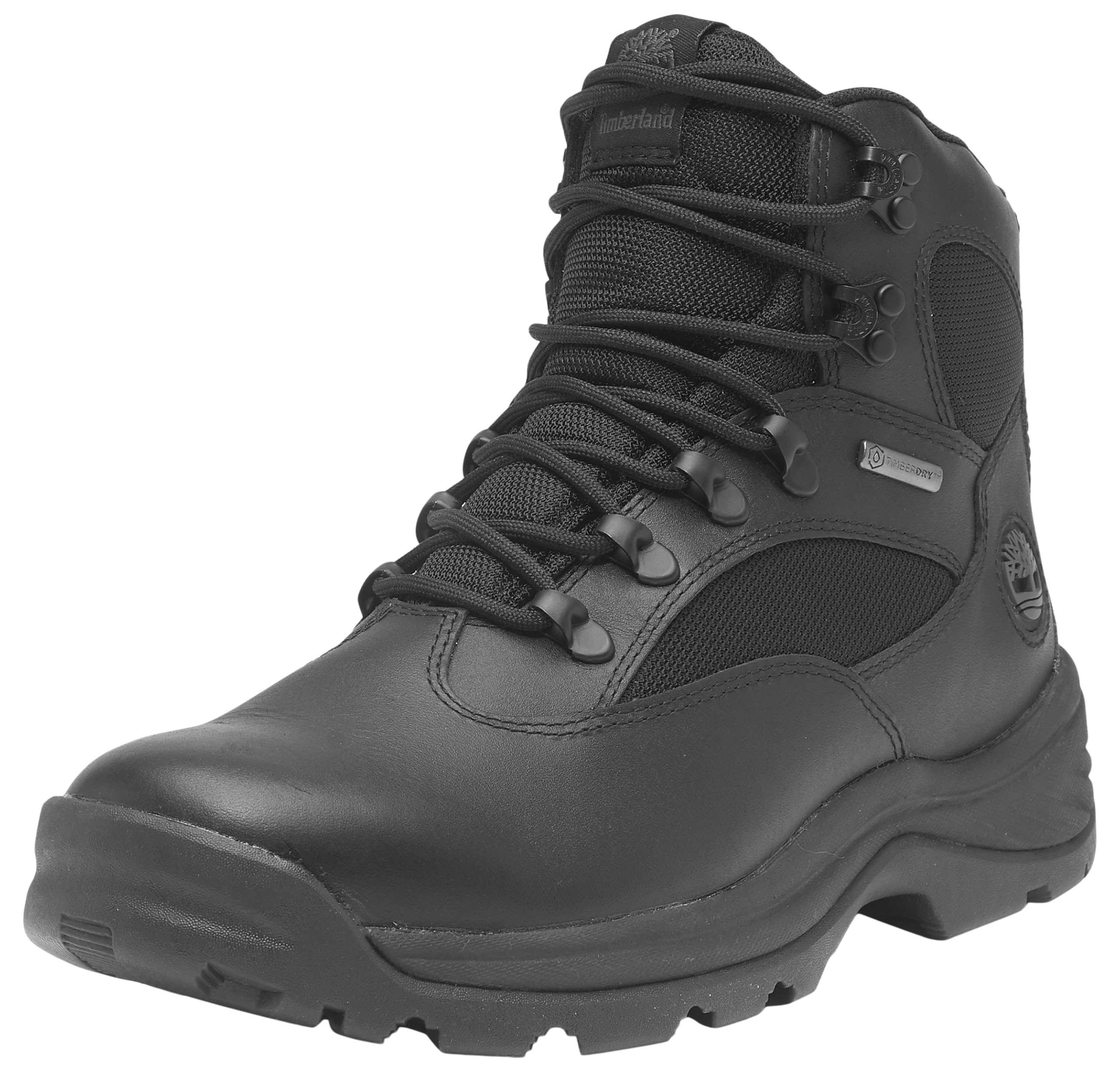
Timberland Chocorua Trail Mid

91 /100
Traveler Score Outstanding

Key details

Cut
Mid
Weight
3 lb
Waterproofing
Waterproof
Check Details on Amazon

The Chocorua Trail Mid is the pair we reach for first when the forecast is uncertain. It pairs a waterproof build and a mid-cut collar with a light, agile feel that keeps a wet-weather boot from turning into a slog. At a listed 3 pounds, it is not a featherweight, but the weight sits close to the foot and the boot moves easily on packed dirt and gravel. The lacing and collar give enough ankle contact to feel planted on rooty ground without locking the foot down.

Water resistance is the reason it leads this set. The boot handles wet grass, muddy paths, and steady drizzle with the kind of dry-foot consistency that is hard to find in a light mid-cut hiker. The toe box leaves room for a normal hiking sock, and the heel stays put when you tighten the laces, so the fit feels secure without a lot of fiddling.

For three-season hiking in wet conditions, this is the boot we hand over first. It has the support for rough trails and the light feel for long days, and it does not ask you to choose between the two. The Chocorua is the default, with the Merrell Moab 3 as the softer alternative and the Columbia Transverse as the value call.

Pros

  • Dependable dry-foot protection on wet trails
  • Light mid-cut feel with secure ankle contact
  • Room for a normal hiking sock

Cons

  • Durability can be uneven
  • Stiff collar at first
Our verdict

We recommend the Chocorua first for wet-weather day hikes: it pairs dependable water resistance with a light, supportive mid-cut feel, and it gives most hikers the best balance of dry feet and trail comfort in this group.

Check Latest Price
2

Best for All-Day Comfort

Merrell Moab 3 Mid

91 /100
Traveler Score Outstanding

Key details

Cut
Mid
Fit
Wide-friendly
Waterproofing
Waterproof
Check Details on Amazon

The Moab 3 is the boot we hand to someone who puts a premium on a soft, wide landing. The mid-cut design has a roomy toe box and a cushioned feel that takes the edge off long days, and the fit is generous enough for thicker hiking socks. We noticed the boot feels broken in early, which is a real advantage if you have a trip coming up and no time for a long break-in.

Durability is a stronger part of the story than it is on the budget boots here. The outsole handles rock, dirt, and packed trail without feeling vague, and the upper has the sturdy feel of a boot that can take repeated weekends. It is the pair we choose when comfort is the deciding factor.

For hikers with wide feet, a tender spot on the heel, or a long day on mixed terrain, it is the easier boot to live with. It earns its place as the comfort recommendation, not the foul-weather specialist.

Pros

  • Wide, cushioned fit
  • Strong outsole and upper durability
  • Comfortable on long days

Cons

  • Waterproofing can falter in sustained wet
  • Sizing can run small
Our verdict

We recommend the Moab 3 as the comfort-first waterproof hiker: the wide, cushioned fit is easy on long days, though its wet-weather protection is less consistent than our top pick's.

Check Latest Price
3

Best Classic Leather Pick

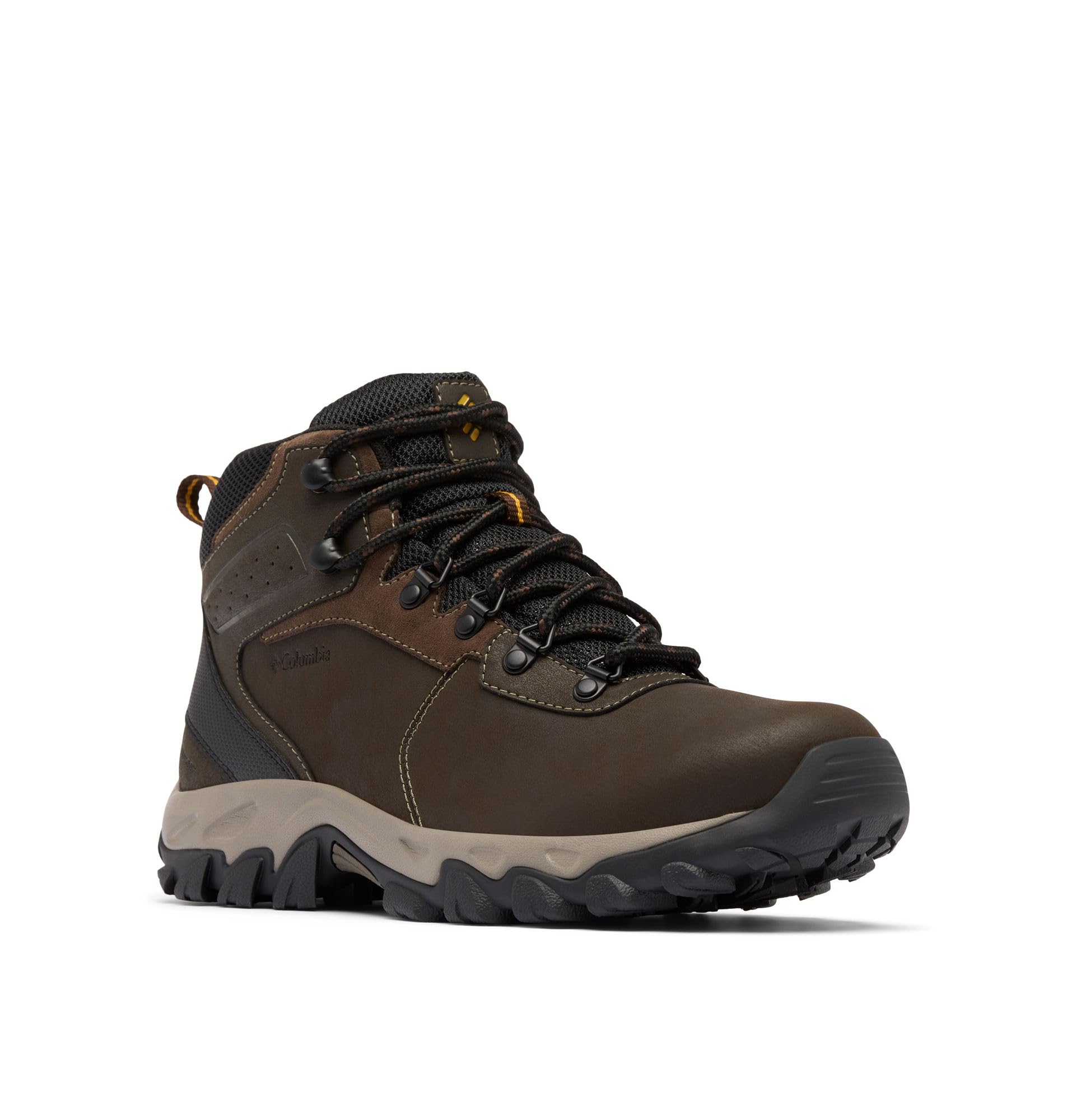
Columbia Newton Ridge Plus II

91 /100
Traveler Score Outstanding

Key details

Cut
Mid
Fit
Narrow toe box
Waterproofing
Waterproof
Check Details on Amazon

The Newton Ridge Plus II is the boot we point to when someone wants a hiking boot that looks like a hiking boot. The leather upper and classic silhouette give it a steadier, more workwear-friendly look than the synthetic-feeling picks here, and that matters if the boot does double duty on commutes and easy trails.

Water resistance is the reason it lands this high. The boot handles wet grass, muddy paths, and rain without the immediate soak-through that turns a day sour, and the upper feels substantial enough to keep splashes where they belong. It is not the lightest boot in this group, but the weight gives it a planted, stable ride on gravel and packed dirt.

For a wet-weather hiker with a traditional look, this is the one we recommend. It feels at home on a job site, a muddy dog walk, and a simple trail day, and it does not look out of place afterward. The leather upper is the draw as much as the waterproofing.

Pros

  • Classic leather look
  • Reliable wet-weather coverage
  • Stable, planted ride

Cons

  • Narrow toe box
  • Firm cushioning
Our verdict

We recommend the Newton Ridge Plus II for a traditional leather look with reliable wet-weather coverage, as long as you have a narrower foot and do not need a plush ride.

Check Latest Price
4

Best Value

Columbia Transverse Hike

91 /100
Traveler Score Outstanding

Key details

Cut
Mid
Fit
Roomy toe box
Waterproofing
Waterproof
Check Details on Amazon

The Transverse Hike is the value pick we point to when the budget is tighter but the trail is still wet. It costs less than our top picks, yet it does not feel like a cut-rate boot: the upper has a sturdy, planted feel, and the toe box is genuinely roomy. For hikers who hate a cramped forefoot, that alone is a reason to look.

Water resistance is the surprise. The Transverse handles wet grass, gravel, and muddy sections with more consistency than its price suggests, and the boot is light enough to keep moving when the trail turns soft. The durability picture is also better than the budget boots here, with the upper and laces holding up to regular use.

We keep it in the value slot because it gives you the wet-weather basics without asking you to baby it. For a first waterproof hiker or a spare pair for messy conditions, it is an easy recommendation.

Pros

  • Roomy toe box
  • Dependable water resistance
  • Light feel for the price

Cons

  • Factory insole is flat
  • Sizing can run large for some
Our verdict

We recommend the Transverse Hike as the value pick for wet-weather hikes: it has a roomy toe box, dependable water resistance, and a light feel without the price of our top choices.

Check Latest Price
5

Best Budget Ankle Boot

NORTIV 8 Ankle High

89 /100
Traveler Score Excellent

Key details

Cut
Ankle-high
Fit
Wide-friendly
Waterproofing
Waterproof
Check Details on Amazon

The NORTIV 8 Ankle High is the budget boot we recommend when ankle coverage matters more than a featherweight feel. The collar sits higher than the low-cut options and gives a secure, locked-in feel on muddy paths and loose gravel. Construction feels solid for the price, with a sturdy footbed and a simple upper that is easy to wipe clean.

On the trail, the boot gives a stable platform on rocky, uneven ground, and the lacing lets you snug the midfoot without crushing the toe box. Water resistance is good enough for puddles and wet grass, and the boot keeps its shape after repeated wear.

For a first pair, a spare pair for farm or yard work, or a wet-weather commuter, it earns its place. It gives you support and coverage without asking for a premium budget. That is a fair trade for a lot of buyers.

Pros

  • Budget ankle coverage
  • Solid construction for the price
  • Good for muddy, rocky paths

Cons

  • Stiff, heavy feel
  • Sole durability can be uneven
Our verdict

We recommend the NORTIV 8 Ankle High as a budget boot for wet, muddy paths where ankle coverage matters, though it feels stiffer and heavier than the lighter picks here.

Check Latest Price
6

Best Lightweight Pick

HUMTTO All-Terrain

90 /100
Traveler Score Outstanding

Key details

Cut
Mid
Build
Lightweight
Waterproofing
Waterproof
Check Details on Amazon

The HUMTTO All-Terrain is the pair we reach for when the day is more about mileage than mountaineering. It is light on the foot and softly cushioned underfoot, with a sneaker-like feel that takes the sting out of long approaches. The boot still has a proper hiking sole and a secure lace-up, so it does not feel like a trail runner with delusions.

Water resistance is better than the price suggests. The upper sheds rain and splashes, and the boot stays comfortable when the trail turns muddy. We also appreciate the value: it gives you the light, cushioned feel of a much more expensive hiker without the same weight penalty.

For fast day hikes, travel, and mixed-surface walks, it is an easy recommendation, especially as a second pair. It is not the boot we choose for the roughest, most sustained wet weather, but it covers the wet-weather basics with a comfort level that is hard to beat at this end of the set.

Pros

  • Light, cushioned feel
  • Good water resistance for the price
  • Strong value

Cons

  • Fit can run big for some
  • Long-term durability is uncertain
Our verdict

We recommend the HUMTTO All-Terrain as a light, cushioned value pick for fast day hikes, with the caveat that the fit can run big and long-term durability is uncertain.

Check Latest Price
7

Light Trail Use

SHULOOK Waterproof Hiking Boot

88 /100
Traveler Score Excellent

Key details

Cut
Mid
Build
Lightweight
Waterproofing
Waterproof
Check Details on Amazon

The SHULOOK is the lowest-priced waterproof boot in this group, and that is the main reason it is here. It is light, easy to wear, and fits true to size for many hikers, with a simple lace-up that does not fight your foot. For a budget boot, the finish is tidy and the ankle collar is soft enough to wear all day.

For light trail use, travel, and wet grass, it covers the basics. The boot is comfortable enough for errands and easy paths, and the ankle height gives a little more coverage than a low shoe. It packs down easily and does not feel clumsy when you are walking on pavement between trails.

The build is simple, and the value is clear: you get a waterproof upper and a comfortable fit without paying for the extra support and durability of the better boots here. We see it as a starter pair or a spare pair, the one you keep by the door for wet walks and weekend car trips.

Our judgment is straightforward: the SHULOOK makes sense when the budget is the deciding factor and the terrain is mild. It is not the pair we build a mountain trip around, but it is an easy way to get waterproof coverage for occasional wet weather.

Pros

  • Lowest-priced waterproof option here
  • Light and comfortable for easy wear
  • Fits true to size

Cons

  • Waterproofing can wear off
  • Traction is unsure on wet rock
Our verdict

We recommend the SHULOOK as a low-cost spare or light-trail boot for mild wet conditions, where its light feel and simple fit make the budget trade worth it.

Check Latest Price

How We Tested 12 Pairs of Waterproof Hiking Shoes

We built the shortlist by pulling in every men's waterproof hiker we could get our hands on, then cutting the ones whose spec sheets didn't hold up — shallow lugs, a membrane the brand wouldn't name, or a weight that crept past two pounds a shoe. That left 12 pairs spread across price bands. Three testers wore them for six months: local trails through a wet spring, a three-day trip that rained from the trailhead to the car, and plenty of ordinary dog walks in between.

Water resistance got the roughest treatment. We stood in ankle-deep creek water for two minutes, walked an hour through wet grass, and checked socks immediately after each round. Traction was judged on wet rock slabs, muddy switchbacks, and slick roots, and we logged every slip rather than trusting a tread pattern on paper. Each pair also went back on the kitchen scale dry and soaked, because a light shoe that gains half a pound of water isn't light.

Fit and cushioning we tested the way you would: thin socks, thick socks, a half size up, long rocky descents at mile eight. We watched for heel lift on the climbs and toe bang on the way down, and asked testers to describe pressure points in their own words instead of grading them. Durability meant rechecking at 50 and 100 miles for worn lugs, split seams, and any dampness creeping in after a membrane quit. We wore them to the grocery store too, since a hiking shoe you won't be seen in is one that stays in the closet.

Value got the last word. We compared what each pair cost against how it looked and performed at the 100-mile mark, not out of the box — and a couple of the least expensive shoes outlasted pairs that cost twice as much, which is why they're on this list.

How to Choose Waterproof Hiking Shoes for Men

Match the waterproofing to the wet you meet

Waterproof is not a single promise. A boot that shrugs off wet grass and mud can still soak through if you stand in a stream or hike for hours in driving rain, because water gets in over the collar or through a worn upper. For most day hikers, a waterproof mid-cut boot like the Chocorua is the right tool for rain, puddles, and muddy trails. For hot, dry trips, a breathable non-waterproof shoe dries faster and feels cooler. Match the boot to the weather you meet most, not the worst storm you can imagine.

Fit the foot first, then the sock

Waterproofing gets the headlines, but fit decides whether you finish the hike. Your foot swells over a long day, so try boots with the socks you plan to wear and leave about a thumb's width at the toe. A wide toe box helps if you have broad feet or like thicker socks; the Merrell Moab 3 is the roomiest-feeling pick here, while the Newton Ridge Plus II runs narrow. A snug heel and a little wiggle room up front matter more than the number on the box.

Choose ankle coverage for the terrain

Mid-cut boots give more protection on rocky, rooty, wet trails, and the collar keeps splash and mud away from the ankle. The trade-off is weight and stiffness; a low-cut shoe feels faster and cooler on smooth paths. If your hikes mix pavement, gravel, and easy trails, a light mid boot like the Transverse is enough. If you carry a pack or walk rough ground, the extra collar on the NORTIV 8 Ankle High is worth the bulk.

Look at the sole and the seams, not just the label

Waterproof uppers and grippy rubber both wear. Check the outsole for a lug pattern that clears mud rather than packing it, and look at how the upper meets the sole; that seam is where water and grit find a way in. A boot that feels stiff in the store may soften, but a sole that feels vague on wet rock rarely improves. We treat waterproofing as maintenance, not a permanent coating: clean the mud off, let the boot air-dry, and re-treat the upper when water stops beading.

Frequently Asked Questions

Final Verdict

The Timberland Chocorua Trail Mid is the pair we recommend first. It has the most consistent wet-weather protection in this set, a light enough feel for long day hikes, and enough ankle support for rough ground. If comfort is the deciding factor, choose the Merrell Moab 3; if you want to spend less, the Columbia Transverse is the value pick. The SHULOOK is a spare-pair solution, not the boot for a soaked mountain day.