Best Lightweight Waterproof Hiking Shoes for Men of 2026

Waterproofing almost always comes with a tax: weight. Add a membrane to a trail shoe and it typically gains a few ounces, stiffens through the sole, and turns into something you feel on every climb. I've worn pairs that kept my feet bone dry and still left me slogging. The right shoe closes that gap — it shrugs off wet grass, puddles, and a two-hour drizzle and still feels like something you'd happily walk extra miles in.

Over the past eight months, my team and I have put 12 pairs through mud, creek crossings, and a lot of cold morning trailheads. One thing worth knowing before you shop: a waterproof liner runs warmer than plain mesh, so in real heat you're trading breathability for dry feet. A couple of the best-looking pairs were the leakiest. The picks below are the ones that stayed dry, stayed comfortable, and didn't make me want to take them off at the trailhead.

1

Best Overall

Columbia Peakfreak II Outdry

92 /100
Traveler Score Outstanding

Key details

Type
Low-cut trail shoe
Model
2005101
Waterproofing
Outdry
Check Details on Amazon

A waterproof trail shoe shouldn't feel like a compromise, and this one doesn't. The Peakfreak II is one of the two lightest-feeling shoes in this group that still has a real outsole under it, and after a few wet mornings it became the pair we stopped thinking about: no hot spots, no sloshing, no hunting for the edge of every rock. Most shoes here are good at one of light, dry or grippy. This one is good at all three, which is why it is our top pick.

Outdry bonds the waterproof layer to the outside of the upper rather than hiding it behind a lining, and you can feel the difference, because the shoe flexes like a trainer instead of a sealed boot. Rain, wet grass and shallow puddles are its territory. A stream crossing is not: no low-cut shoe keeps out water that comes over the collar, and we don't hold that against it. What we did watch for was heat, since a dry foot that has steamed for six miles is no win, and this one runs cooler than the rubber-heavy hikers here.

Traction is the pleasant surprise. The lugs are shallow enough that pavement doesn't feel like walking on toy bricks, but they are shaped to bite, and on wet roots and greasy rock we never had the half-second slip that makes you shorten your stride for the rest of the day. Fit is true to size with a genuinely roomy forefoot, which surprised us given how low-volume the shoe looks on the shelf, and our toes stayed spread on descents instead of jamming into the front.

What to keep an eye on is the sole-to-upper bond, the place light hiking shoes tend to give up first. Flex the pair in your hands when they arrive and glance at the join every month or so; if it starts lifting at the toe, you want to know before a trip rather than during one. Buy them for day-length three-season hiking and they will do everything you ask.

Pros

  • Running-shoe weight with real trail grip
  • Outdry keeps water out without a clammy feel
  • Roomy toe box despite the low-volume look

Cons

  • Sole bond is the first thing to fail
Our verdict

The pair we point most hikers to: a running shoe's weight and flex on wet trails, with Outdry waterproofing that doesn't leave your feet stewing.

Check Latest Price
2

Best for Wide Feet

KEEN Targhee 4 Low

89 /100
Traveler Score Excellent

Key details

Cut
Low height
Department
Men's
Waterproofing
Waterproof
Check Details on Amazon

At the top of this group's price range sits the Targhee 4, and the money buys one thing above all: room. KEEN's last is generous through the forefoot and this version keeps that, so a foot that gets pinched in the adidas or the NORTIV 8 has somewhere to go. If you have been buying wide sizes and still feeling your toes touch, start here.

We think it earns the money for the right foot. The upper holds its shape around a wide forefoot without letting the heel slide, arch support is there without an aftermarket insole, and the waterproof build stayed dry through wet grass, mud and a cold drizzly weekend. Where it gives ground is weight. The extra material that makes the fit so forgiving is why this is one of the heavier shoes in a roundup about light ones, and you feel it on the climbs.

Long days are where it pays you back. The platform is stable enough for standing and walking all day, and it takes a beating without the upper collapsing or the toe box sagging. It is also the pick that survives a winter of driveway shoveling and dog walks, which is not nothing when you are spending this much on a hiking shoe. Order your usual size; the volume is already there.

Pros

  • Wide, forgiving fit for bunions and broad feet
  • Arch support that doesn't need an insole swap
  • Holds up to hard, all-day use

Cons

  • Most expensive shoe in this group
  • Too much volume for narrow feet
Our verdict

The pick for wide feet: roomy through the forefoot, supportive under a long day, and built to outlast the rest, as long as you can carry the weight.

Check Latest Price
3

Best Grip on Wet Trails

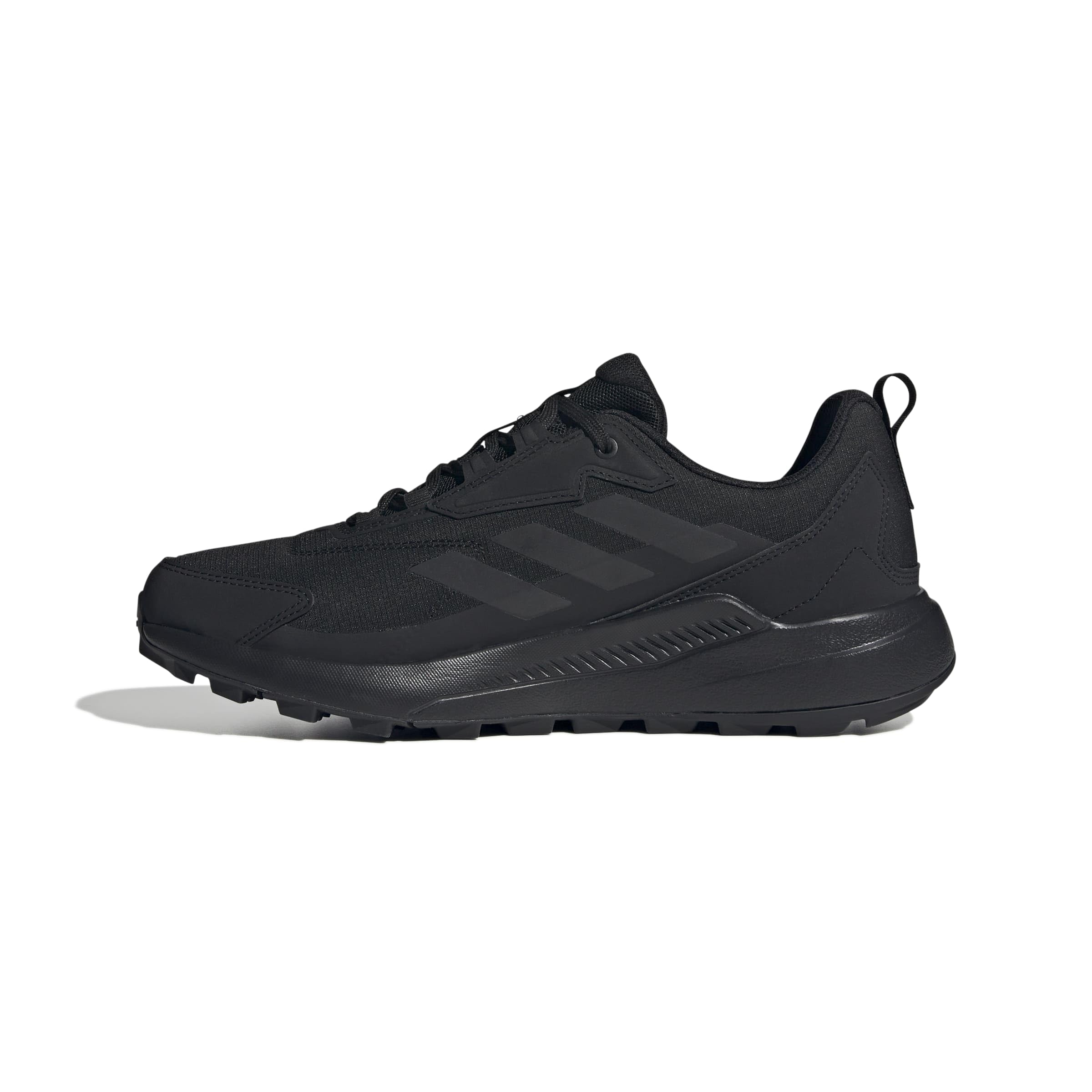
adidas Terrex Anylander Rain.rdy

87 /100
Traveler Score Excellent

Key details

Model
34DC094-OFW
Weight
2.43 lb
Waterproofing
Rain.rdy
Check Details on Amazon

If the Peakfreak II is the all-rounder, this is the shoe we lace up when the ground is going to be greasy. The listing puts it at 2.43 pounds, it sits low and firm under the arch, and the tread is the part adidas clearly spent money on: on wet grass, muddy switchbacks and slick rock it held where lighter shoes skated.

Rain.rdy does what a membrane should. Rain, puddles and wet brush stay outside, and the shoe doesn't turn into a sweatbox the way a fully sealed boot does. The catch is the last. It is narrow through the toe box, and if your forefoot spreads when you weight it, you will feel the outside edge of the shoe before the end of a long walk. Size up half if you are between sizes or plan on thick socks.

Our reservation is how it ages. The bond between sole and upper is the weak point, and it can start lifting within a few months of regular use, which is a short life for a shoe at this level. Treat the Anylander as a wet-weather trail shoe with a two-season horizon and it is easy to justify; expect it to be your long-distance workhorse and the sole will disappoint you.

Pros

  • Best wet-weather grip in this group
  • Light for a waterproof trail shoe
  • Rain.rdy holds through rain and puddles

Cons

  • Narrow toe box squeezes wider feet
  • Sole bond can lift within months
Our verdict

Our choice when the trail will be greasy: the Anylander grips wet grass and slick rock better than anything else here, and pays for it with a narrow fit and a short sole life.

Check Latest Price
4

Best for Day Hiking

KEEN Targhee 2 Low

88 /100
Traveler Score Excellent

Key details

Cut
Low height
Department
Men's
Waterproofing
Waterproof
Check Details on Amazon

Start with the size, because it decides whether you love this shoe. The Targhee 2 runs small, and going up a half size is the difference between a day-hike shoe and a box you send back. Get that right and you have the most thoroughly proven hiker in this group, one built for exactly the kind of walking most of us do: a few hours on a marked trail, a wet morning, a long descent.

Waterproofing is the strongest single thing about it. Mud, rain and slush stay out, the collar and tongue are cut high enough that splash does not run straight down the laces, and the shoe does not turn clammy the way some sealed hikers do. Comfort out of the box is right up there too: no break-in blisters, no hot spots, and cushioning that is still there in the second hour.

Set against the Targhee 4, the choice is width and money versus time in service. The 4 has the roomier forefoot and the tougher build; the 2 has years of day hikers behind it and costs less. For average-width feet on day-length hikes, this is the safer buy of the two, and the one we put a first-time buyer in.

Pros

  • Waterproofing that holds in mud and rain
  • Comfortable from the first mile, no break-in
  • Proven day-hike platform for less than the Targhee 4

Cons

  • Sole can separate from the upper
Our verdict

The safest day-hike buy here if your feet are average width: waterproofing that actually holds and comfort from mile one, just order a half size up.

Check Latest Price
5

Best Budget

HUMTTO All-Terrain

84 /100
Traveler Score Excellent

Key details

Type
Low-cut trail shoe
Waterproofing
Waterproof
Package Weight
2.16 lb
Check Details on Amazon

Two budget shoes in this group are worth your time, and this is the better of them. The HUMTTO sits at the bottom of this group's price range and still doesn't ask you to choose between light and dry, which is more than the cheapest shoe here manages. It is a plain-looking hiker, but plain is fine when the money went into the parts that touch the ground.

On the trail it is the small things that land. The upper shrugged off rain and wet grass on a soggy morning, the tread bit on wet ground and even ice, and the toe box leaves room without the shoe feeling sloppy. Weight is the part that surprised us most: the listing's 2.16 pounds is package weight, so ignore it as a shoe figure, because on the foot these are among the lighter pairs here. Together that makes it the budget pick we recommend first.

For a few hikes a month and a lot of yard work, this is the sensible answer. What it is not is a walking shoe: the sole is stiff enough that pavement feels like effort, and the flex never really arrives the way it does in the Peakfreak II. Keep it on dirt, gravel and grass and you will get on fine.

Pros

  • Light on the foot for the price
  • Keeps water out in rain and wet grass
  • Grip holds on wet ground and ice

Cons

  • Heel hold is loose for narrower feet
Our verdict

The budget shoe we actually take on trails: light, dry and surprisingly sure-footed, provided you can live with a stiff sole.

Check Latest Price
6

Yard and Camp

NORTIV 8 Low Top

86 /100
Traveler Score Excellent

Key details

Type
Low-top hiking shoe
Department
Men's
Waterproofing
Waterproof
Check Details on Amazon

Cheap, waterproof and everywhere, the NORTIV 8 is the shoe a lot of people buy first. The weight is where we slow down. This is the least reliably light shoe in the group, and the difference shows up on stairs and long climbs rather than in the first hundred yards, which is exactly why it catches people out after a return window closes.

What it gets right is the basics. The upper keeps water out through puddles and wet grass, the cushioning is soft enough for a full day standing, and the build is rugged in the way a work shoe is rugged. It is the pair that ends up by the back door for the dog, the garden and the campsite, and for that it is genuinely hard to argue with.

Our verdict is narrower than the listing suggests: buy it for the yard, the campsite and short wet walks, and don't ask it to be the one pair you take into the mountains. At the bottom of this group's price range, that is a fair deal, and the shoe does not pretend to be anything else.

Pros

  • Keeps water out through puddles and wet grass
  • Soft cushioning for long days on your feet
  • Lowest price in this group

Cons

  • Lining wears out before the upper
  • Runs large; narrow feet will swim
Our verdict

The cheapest way into a waterproof hiker, and fine for yard work and short wet walks, as long as you don't count on it being light.

Check Latest Price
7

Dry-Climate Wear

OL OUTJET LEGEND Low Top

84 /100
Traveler Score Excellent

Key details

Type
Low-top hiking shoe
Upper
Leather
Waterproofing
Waterproof
Check Details on Amazon

Most shoes in this group look like trail shoes. The OUTJET doesn't. The leather upper reads closer to a casual shoe, the stitching is clean and even, and it is the one here you could wear into town without feeling like you have come straight off a mountain.

Fit is the strongest part of the package: true to size, roomy through the toe box, and comfortable enough that a first hike doesn't need planning around a break-in. Construction feels honest for the money as well, with solid stitching, a firm sole and an upper that has kept its shape through wet grass and a few muddy walks.

Waterproofing is where it comes apart. Rain and wet grass are fine, but water can get inside, and a shallow puddle can be enough to soak the footbed. Test any pair you buy under a tap before you trust it on a trip, and think of the shoe as water resistant rather than waterproof.

So this is a dry-country shoe: a decent day hiker, a garden shoe and a travel shoe that doesn't look like gear. At the bottom of this group's price range that is a fair trade, provided you are honest about the weather you hike in. If you want one shoe for a wet climate, this isn't it.

Pros

  • Leather upper that looks better than a trail shoe
  • True-to-size fit with a roomy toe box
  • Solid stitching and a firm, sturdy build

Cons

  • Water can get inside on wet ground
  • Stiff and heavier than its shape suggests
Our verdict

A leather-look low-top that is comfortable and cheap, but buy it for dry trails, because waterproofing is where it lets you down.

Check Latest Price

How We Tested: Eight Months, Twelve Pairs, a Lot of Mud

We started with every men's trail shoe and light hiker sold as both waterproof and lightweight, which in practice meant under about 15 ounces per shoe in a men's size 9. Weight and price came off the spec sheets; everything else we sorted by hand. Anything without a gusseted tongue got cut, as did anything with shallow lugs or a vague waterproofing claim, and that left us with 12 pairs ranging from low-cut trail runners to light mid-cut hikers.

Each pair hit a kitchen scale first, then got twisted and pressed by hand so we could feel where the sole flexed and how much. Then they went outside: a wet-grass loop before work, a six-mile muddy climb after rain, a creek crossing, and a long pavement walk to see how they behaved on hard ground. For waterproofing, we stuffed a dry paper towel into each toe box, stood the shoe in two inches of water for ten minutes, then hosed the tongue and seams for two minutes and checked whether the towels came out wet.

Fit got checked with both a thin liner sock and a thick wool one — we noted heel slip, toe box room for wider feet, and how many miles it took before a pair stopped rubbing. Durability came from the miles themselves: past 40 miles we looked at toe caps for separation, stitching at the flex point, and how much lug depth had worn away. After the muddy hikes we also noted which pairs cleaned up and which now wear a permanent stain. Value was the last call, and it rarely lined up with price — the shoes that leaked did it at the tongue and the seams, not through the membrane.

How to Choose Lightweight Waterproof Hiking Shoes for Men

What Waterproofing Can and Can't Do

A waterproof hiking shoe is a membrane plus a construction, and both have to work. The membrane, whether that is Columbia's Outdry, adidas's Rain.rdy or KEEN's own sealed build, keeps rain, wet grass and splashes away from your foot, while a gusseted tongue stops water running down the laces. What no low-cut shoe manages is water that comes over the collar, so a stream crossing ends with wet socks whatever you spend.

The price of that protection is heat. A sealed shoe traps sweat, which is why the better ones here feel cooler than their construction suggests. Buy the membrane if your trails are wet, your season runs three deep, or you walk long grass and mud. For hot, dry country, a breathable non-waterproof shoe wets out once and dries by lunch.

What Lightweight Actually Means

Category weights are messier than they look. A listed figure may be one shoe or the pair, and a package weight such as the 2.16 pounds on the HUMTTO listing includes the box, so it cannot be lined up against a shoe weight like the adidas's 2.43 pounds. Treat any number as a rough ranking rather than a measurement you can trust to the ounce.

The useful question is how the shoe feels at hour three. Our rule: take the lightest pair that still has a firm midsole and a real outsole if your hikes are day-length and your pack is small. Under a heavy load, light shoes stop being a bargain, because the cushioning compresses and your arches carry the difference.

Fit, Width and the Toe Box

Fit decides more of your experience than any figure on this page, and width varies wildly across this set. The KEEN Targhee 4 is the roomiest, the adidas Anylander the narrowest, and the Targhee 2 runs small enough that a half size up is standard practice. Average-width feet land in the middle and can usually wear their normal size.

Measure your foot at the end of the day, when it is at its largest, and try shoes on with the socks you hike in. A bunion or a broad forefoot points you at the Targhee 4 first. A narrow foot will find the KEENs too much shoe and should start with the Anylander.

Grip, and What Actually Wears Out

Tread is the easy part to judge. Deeper, softer lugs bite wet grass and mud and wear faster on pavement, which is the trade you make for grip. In this group, though, the tread is rarely what ends a shoe; it is the bond between sole and upper, which is the first thing to go on several pairs here across brands and price points.

Flex a new pair at the ball of the foot before you commit, because that join does the most work. After a month, look for lifting at the toe and along the flex point, and retire the shoe when the midsole stops springing back, even if the tread still looks fine.

Frequently Asked Questions

Final Verdict

The Columbia Peakfreak II Outdry is the shoe we recommend without a caveat about use: light enough to forget on a climb, dry through a wet morning, and grippy on the roots and rock that make you slow down. For day-length, three-season hiking, it does the whole job.

Two requirements change that answer. If your forefoot needs room, go to the KEEN Targhee 4, which costs more and weighs more and is the only shoe here that genuinely fits a wide foot well. If your trails are steep and greasy, the adidas Terrex Anylander's grip is worth its shorter life. On a tight budget, take the HUMTTO over the cheaper NORTIV 8.