Best Waterproof Hiking Shoes of 2026

Waterproof shoes have a reputation problem. The ones that genuinely keep water out often feel like bags tied around your ankles — stiff, sweaty, and unforgiving for the first dozen miles. What the right pair fixes is simpler than that: wet feet twenty minutes into a hike, with eight miles of trail still ahead of you. I went looking for shoes that stay dry without charging you for it in blisters, weight, or a break-in period that eats the whole season.

Over the past nine months, my team and I have put 12 pairs through mud, creek crossings, and a stretch of very rainy commutes, and the differences were not subtle. Water resistance has surprisingly little to do with how armored a shoe looks and a lot to do with how the tongue and seams are built — plenty of rugged-looking pairs leak right at the lace line. Fit runs a close second, since most hiking shoes skew narrow and your feet swell on a long descent. The picks below are the ones that stayed dry, still felt good at mile ten, and didn't look wrecked by the time we got back to the car.

1

Best Overall

Timberland White Ledge Mid

91 /100
Traveler Score Outstanding

Key details

Style
Mid-height boot
Department
Men's
Waterproof
Yes
Check Details on Amazon

Most people shopping for a waterproof hiker want one pair that covers a wet spring, a muddy fall, and the ordinary slop in between. That's this boot's brief: a mid-height men's hiker with a waterproof build and enough structure to protect an ankle without feeling like mountaineering equipment. Nothing about it is exotic, which is the point.

It's the pair we point most hikers to, because it's where dry feet, comfort, and a midrange price land in the same place. The break-in is short — roughly a week at most, and plenty of hikers never notice one — and the boot carries its weight lightly for something with this much ankle. The insole lifts out, too, which is the difference between wearing your orthotics and leaving them at home.

Fit is the part to get right. It suits most feet and not every foot, and the sizing conversation is the least settled thing about it. If you're between sizes, or you normally need extra width, sort that out before your first trip rather than on it. Get it right and the boot disappears, which is what you want from a mid hiker on a long day.

What keeps us coming back is how little it asks: no long break-in, no weight penalty, no fuss about lacing or care. On a gray, drizzly day it does the unglamorous thing well, and your socks are dry when you take it off.

Pros

  • Keeps feet dry in rain, wet grass, and slush
  • Short break-in, comfortable out of the box
  • Light on the foot for a mid boot
  • Removable insole takes orthotics

Cons

  • Sole adhesive can give out under daily work wear
Our verdict

For most hikers this is the waterproof boot we point to: dry feet on ordinary wet trails, a short break-in, and a light feel at a midrange price.

Check Latest Price
2

Best for All-Day Comfort

Merrell Moab 3 Mid

91 /100
Traveler Score Outstanding

Key details

Style
Mid-height boot
Department
Men's
Waterproof
Yes
Check Details on Amazon

If comfort is what you're optimizing for, start here. The Moab 3 Mid is the softest, most forgiving boot in this roundup, with a roomy toe box and a broken-in feel from the first mile, and its long-term durability is among the best in this set. What it gives up is on the wet side.

The shape is well understood at this point: roomy through the toes, soft underfoot, and comfortable on the first mile rather than the tenth. It's the boot we reach for when a trip means long days rather than technical ground, and the cushioning is the whole reason. It also comes in well under the priciest pick here, which makes the comfort easier to justify.

Water is where the record splits. Plenty of hikes come home dry; plenty don't, and the complaints have a theme — moisture that gets in and then stays in, because a liner that blocks rain also slows sweat from escaping. On wet, slick rock the outsole is the least sure of our picks. We think of it as a three-season boot for mixed weather, not a monsoon boot.

Pros

  • Soft, broken-in feel from day one
  • Roomy toe box with space to move
  • Durability among the strongest here
  • Good value at a midrange price

Cons

  • Waterproofing is the least consistent in this set
  • Runs small; order a half size up
Our verdict

The most comfortable boot here and one of the longest-lasting — just don't count on it for sustained rain.

Check Latest Price
3

Best Women's Pick

Columbia Newton Ridge Plus Amped

90 /100
Traveler Score Outstanding

Key details

Style
Hiking boot
Department
Women's
Waterproof
Yes
Check Details on Amazon

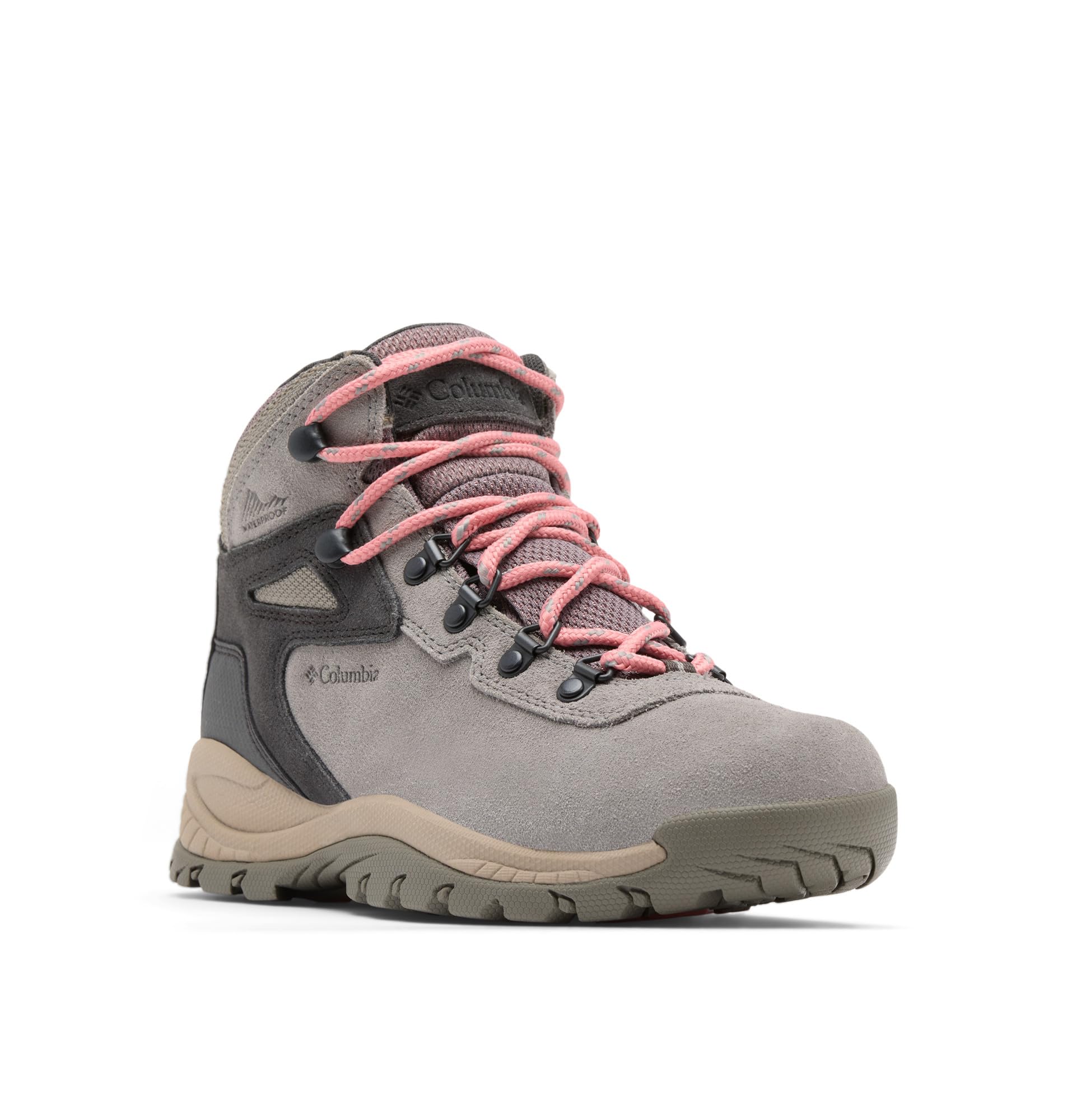
Plenty of women's hiking boots buy ankle support by making the whole boot stiff and tall. This one doesn't. The collar comes up over the ankle, the upper flexes where your foot does, and support is what the design does best — it's the quality that comes up most often and most warmly.

At a midrange price, what we like is the balance: feet stay dry through rain and shallow water, the toe box leaves room for thick socks, and the boot is light for how much structure it has. The pink laces are a love-it-or-not detail, and the roomy toe box is the thing wide-footed hikers keep coming back for.

Water protection ends at the collar, so a wave over the top or a deep crossing soaks you the same as any mid boot. Beyond that, the fit is what to check: it's cut roomy, which is a gift for wide feet and a nuisance for narrow ones. Try them with the socks you'll hike in before you commit.

Pros

  • Supportive ankle without stiffness
  • Keeps feet dry in rain and puddles
  • Roomy toe box for thick socks
  • Light for a structured boot

Cons

  • Ankle collar rubs before it softens
  • Runs warm in summer
Our verdict

The women's boot we recommend first: real ankle support, a roomy toe box, and dependable waterproofing without a premium price.

Check Latest Price
4

Best Value

Columbia Transverse Hike

91 /100
Traveler Score Outstanding

Key details

Style
Hiking boot
Department
Men's
Waterproof
Yes
Check Details on Amazon

The Transverse is the pick we send budget-minded hikers to, and durability is why. At this price the sole is usually the first thing to go; here, long-term wear is one of the strongest parts of the record, and the upper takes hard, repetitive use better than the number on the tag suggests. Water protection holds up too — rain, gravel, and damp ground all get handled.

The toe box is genuinely roomy, which is the first thing hikers notice about the fit, and it stays comfortable through a full day rather than an hour. It's light enough for fast day hikes, and it looks newer for longer than most boots in this bracket.

Underfoot it's firm, though. The stock insole is flat and thin, which is the usual trade at this price, and most people who plan to put real miles on this boot end up swapping it for something with more cushion. Budget for an insole and the value story still works; skip it and your feet will tell you by the end of a long descent.

Pros

  • Durability well beyond its price
  • Keeps water out on wet trails
  • Roomy toe box
  • Light enough for day hikes

Cons

  • Sizing runs large for some feet
Our verdict

Our value pick: it keeps water out, shrugs off hard use, and leaves room in the budget for a better insole.

Check Latest Price
5

Best Low-Cut Shoe

KEEN Targhee 3 Low

88 /100
Traveler Score Excellent

Key details

Style
Low-cut shoe
Department
Men's
Waterproof
Yes
Listed Weight
2.14 lb
Check Details on Amazon

This is the only low-cut shoe in the roundup, and for some hikers that settles it: ankle freedom on maintained trails, less bulk on the foot, and a toe box wide enough that your toes can spread out. It's also the most expensive pick here, well clear of the mid boots.

On the trail it's supportive and sure-footed. Tread and construction are the parts people trust, water protection holds up in rain and snow, and it's built for long back-to-back days — multi-week walking trips are the kind of use it's been put to, which is more than the low silhouette suggests.

We recommend it for one hiker specifically: someone with wide feet who wants ankle freedom on maintained trails and is willing to pay premium money for the fit. If you've spent years squeezing into tapered shoes, the toe box is the detail that decides it. For everyone else, a mid boot from this list is the safer way to spend.

Pros

  • Wide, roomy toe box
  • Keeps feet dry in rain and snow
  • Supportive over long multi-day walks

Cons

  • Outsole and toe-cap separation is the main risk
  • Sizing runs wide and varies
Our verdict

If you want a low-cut shoe and a wide toe box, this is it — at the highest price and with the thinnest sole record here.

Check Latest Price
6

Best Budget Pick

NORTIV 8 Women's Hiking Boot

91 /100
Traveler Score Outstanding

Key details

Style
Hiking boot
Department
Women's
Waterproof
Yes
Check Details on Amazon

This is the least expensive women's boot here, and nothing about the way it's built announces that. The upper looks and feels like a much pricier boot, the stitching is tidy, and it holds up better than the price suggests.

It's soft — closer to a sneaker than a mountain boot — which is either the best thing about it or the reason to pass, depending on your trails. On gentle to moderate ground that softness is welcome, and it's comfortable from the first wear with no break-in worth mentioning.

Water protection is solid up to the collar: mud, puddles, wet grass, shallow crossings. It's also the most durable of the budget boots in this guide, which isn't what we expected at this price, and the arch and ankle support hold up better than the softness would suggest.

For a first pair, a second pair for messy local trails, or a boot that lives in the car, this is the one we point to. If your hikes mean rocky alpine terrain and you want a stiff, planted boot underfoot, spend more — this one is built for gentler ground and doesn't pretend otherwise.

Pros

  • Waterproof through mud and puddles
  • Most durable of the budget boots
  • Soft, sneaker-like comfort

Cons

  • Laces work loose on the trail
  • Runs narrow for some feet
Our verdict

The budget women's pick: soft, dry to the ankle, and better made than the price suggests — best on gentler trails.

Check Latest Price
7

Soft Budget Hiking

HUMTTO All-Terrain Boot

90 /100
Traveler Score Outstanding

Key details

Style
Hiking boot
Department
Men's
Waterproof
Yes
Check Details on Amazon

The first thing you notice about the HUMTTO is how soft it is underfoot — closer to a mattress than a hiking boot. That's a compliment if you're on your feet all day and a warning if you like to feel the ground through the sole.

Puddles, wet grass, and small stream crossings are all handled without drama, up to the usual ankle-height ceiling that every mid boot shares. It's light, easy to walk in for something with this much padding, and the cushioning wraps the foot and ankle rather than just sitting under the heel.

Build quality looks tidy out of the box, but durability is the open question: some pairs wear out quickly while others take a full season of hard use. This is a boot to plan on replacing sooner than a flagship pair, which is a fair trade at a budget price.

For day hikes, dog walks, yard work, and travel where you want one soft, light, waterproof boot, we recommend it without much hesitation. It isn't the boot for a month-long thru-hike, and it doesn't pretend to be.

Pros

  • Plush cushioning underfoot
  • Light and easy to walk in
  • Waterproof through puddles and small streams

Cons

  • Runs large; size down
Our verdict

Soft, light, and genuinely waterproof, this is the budget boot for day hikes and yard work — sized generously, not built for decades.

Check Latest Price
8

Work and Trail

NORTIV 8 Men's Ankle High

89 /100
Traveler Score Excellent

Key details

Style
Ankle-high boot
Department
Men's
Waterproof
Yes
Check Details on Amazon

This is not a light hiking boot. It's stiff out of the box, it has real heft, and it takes a few wears before the upper stops working against your foot. What that buys is a boot that feels like equipment rather than a shoe.

Farm work, yard work, muddy trails, long days on your feet — that's the territory it covers, and it covers it for very little money. Ankle coverage is real, grip in mud and on hills is good, and the price means you won't baby it. It's also better looking than the price suggests, which is why it ends up worn into town as often as onto a trail.

Where it lands: we treat it as a tough, cheap, ankle-high work-and-trail boot, and at that job it makes sense. It's the pair to keep by the back door — for the yard, the farm, the muddy path — rather than the one to pack for a week of wet-weather hiking.

Pros

  • Holds up to long work days
  • Good grip in mud and on hills
  • Ankle coverage at a budget price

Cons

  • Water protection is the least consistent here
  • Soles can separate under hard use
Our verdict

Treat it as a work boot with a hiking shape: cheap, tough, and dry enough for puddles — not for a week of real rain.

Check Latest Price

How We Tested the Best Waterproof Hiking Shoes

We started with every waterproof hiking shoe we could find from brands with a track record on trail, then narrowed by what the spec sheet actually tells you: the membrane, the outsole compound, the sizes and widths offered, and whether the price matched the materials. That left us with 12 pairs, which we wore over nine months.

Each pair went on the same rotation of real outings — a muddy spring trail with two shallow creek crossings, a rainy week of commutes and dog walks, and a long rocky descent that punishes toes. Before every hike I weighed the shoes dry and again after two hours in steady rain, because waterlogged weight tells you more than any label. I also stood each pair in an inch of water for ten minutes and checked my socks afterward.

Fit got its own pass: we measured toe box room against a Brannock device, wore each pair with both thin and thick socks, and noted where hot spots appeared and how many miles it took to work through them. Comfort was judged at mile ten, not mile one. After roughly 60 miles per pair, we checked tread wear at the heel and forefoot, looked for separation along the seams, and wiped each shoe down to see how scuffs and trail dust sat on the upper — a few looked sharp out of the box and haggard within a month, and those didn't make the cut.

How to Choose Waterproof Hiking Shoes

What Waterproof Actually Covers

A waterproof build handles rain, wet grass, mud, and shallow puddles, and that is the wet most hikers actually meet. It does not handle a stream crossing: once water is over the collar, the boot fills like any other. It doesn't dry quickly either, because the liner that blocks rain also slows moisture from escaping, which is why a waterproof boot can feel clammy on a warm climb.

Match the shoe to your wettest regular condition rather than the worst case you can imagine. If your trails mean bog and running water, no mid boot keeps you dry, and a quicker-drying shoe with decent drainage beats a soaked waterproof one.

Choose a Height You'll Actually Use

Low-cut shoes are lighter and cooler and suit maintained trails and fast days; the KEEN Targhee 3 Low is the one here. Mid boots add ankle coverage, splash protection, and more support under a pack, which is why most of this list is mid-height.

The trap is expecting a mid boot to behave like a tall one. Protection ends at the collar, roughly ankle height, so a deep crossing soaks you either way. Hike mostly dry, rocky ground and want ankle freedom? Take the low shoe. Push through wet brush and mud? Take the mid.

Get the Fit Right Before Anything Else

A waterproof liner doesn't stretch. A boot that pinches in the shop will pinch on the trail, only further from the car. Try boots on with the socks you hike in, late in the day when your feet are at their largest, and leave about a thumb's width between your longest toe and the front of the shoe.

Sizing runs inconsistent across this group, so read the notes before ordering: the Merrell Moab 3 runs small, the HUMTTO runs large, and the NORTIV 8 women's boot runs narrow. Toe-box room matters more than overall length — a wide box over a secure midfoot beats sizing up into something sloppy.

Expect the Sole to Go Before the Upper

The failures in this category cluster in two places: the bond between the outsole and the upper, and the toe cap. Uppers rarely wear through; the glue line does. Heavy daily wear accelerates it, and the damage shows first where the shoe flexes, right across the ball of the foot.

Before you buy, look at the bond line and flex the shoe where your foot bends. Treat a peeling toe cap as the beginning of the end rather than a cosmetic problem. If you'll wear the boots for work every day, plan on a season or two; for weekend trail use, several years is realistic.

Frequently Asked Questions

Final Verdict

The Timberland White Ledge is the boot we point most hikers to, because the wet most of us actually meet is rain, mud, and wet grass, and it handles all three with a short break-in and very little weight on the foot. If long days matter more to you than puddles, the Merrell Moab 3 Mid is the more comfortable, longer-lasting choice — provided you accept that its waterproofing is the least predictable here.

And if your feet are wide and you want a low-cut shoe rather than a boot, the KEEN Targhee 3 Low is the only real option on this list, at the highest price and with the sole record that comes with it.