11 Best Water Filters for Hiking of 2026: Lightweight, Bottle-Ready Hydration

Find the right hiking water filter for your trip - whether you need ultralight straw or fast-flow bottle system, and avoid overpaying for virus protection you don't need.

The biggest decision when buying a hiking filter is not price - it is whether you want to drink directly from a stream or filter into a bottle. Many hikers buy a lightweight straw only to find it awkward to use on the trail. The better choice for most is a filter that screws onto a standard water bottle, allowing you to sip as you go. That convenience adds a couple of ounces but transforms the experience.

This guide cuts through the marketing to match you with the right design for your hiking style. Whether you are a day hiker wanting fast hydration or an ultralight backpacker trimming every gram, the right filter exists - and it does not require paying for features you will not use, like virus removal in typical backcountry water.

1

Best Overall

Sawyer Mini Filter

95 /100
Traveler Score Outstanding

Key details

Weight
2 oz (57g)
Pore Size
0.1 micron
Filter Lifespan
100,000 gallons
Filtration Method
0.1 micron hollow fiber
Check Details on Amazon

At 2 ounces and under $30, the Sawyer Mini eliminates the need for a dedicated filter bottle or straw. It screws directly onto standard disposable water bottles, hydration pack bladders, and the included squeeze pouch. The 0.1 micron hollow fiber membrane removes bacteria, protozoa, and microplastics — the same filtration found in larger backcountry filters. Flow rate is adequate for solo drinking; expect to wait about 15 seconds per 500ml when the filter is clean.

This filter suits solo hikers and backpackers who value bottle compatibility over maximum speed. The flow does slow after several liters, especially in silty water, and the included pouch may leak at the seams over time. Neither limitation matters for someone drinking directly from a bottle — the real-world tradeoff is a slightly slower fill versus the convenience of not carrying a dedicated container. Occasional backflushing restores flow quickly.

💡 Backflush the filter after each trip to maintain flow — the included syringe makes it simple.

Pros

  • Screws onto standard water bottles and hydration packs without adapters
  • Weighs 2 ounces and packs small for any daypack or emergency kit
  • Field maintenance is simple

Cons

  • Flow rate drops after filtering a few liters of silty water
  • Included squeeze pouch seams may develop leaks over time; many users replace it with a standard bottle
Our verdict

For solo hikers who want to drink directly from a bottle, this is the most practical filter at this weight and price.
Check Latest Price
2

Best Ultralight

LifeStraw Personal Water Filter

96 /100
Traveler Score Outstanding

Key details

Weight
1.41 oz (40g)
Pore Size
0.2 micron
Filter Lifespan
4,000 liters
Filtration Method
Microfiltration
Check Details on Amazon

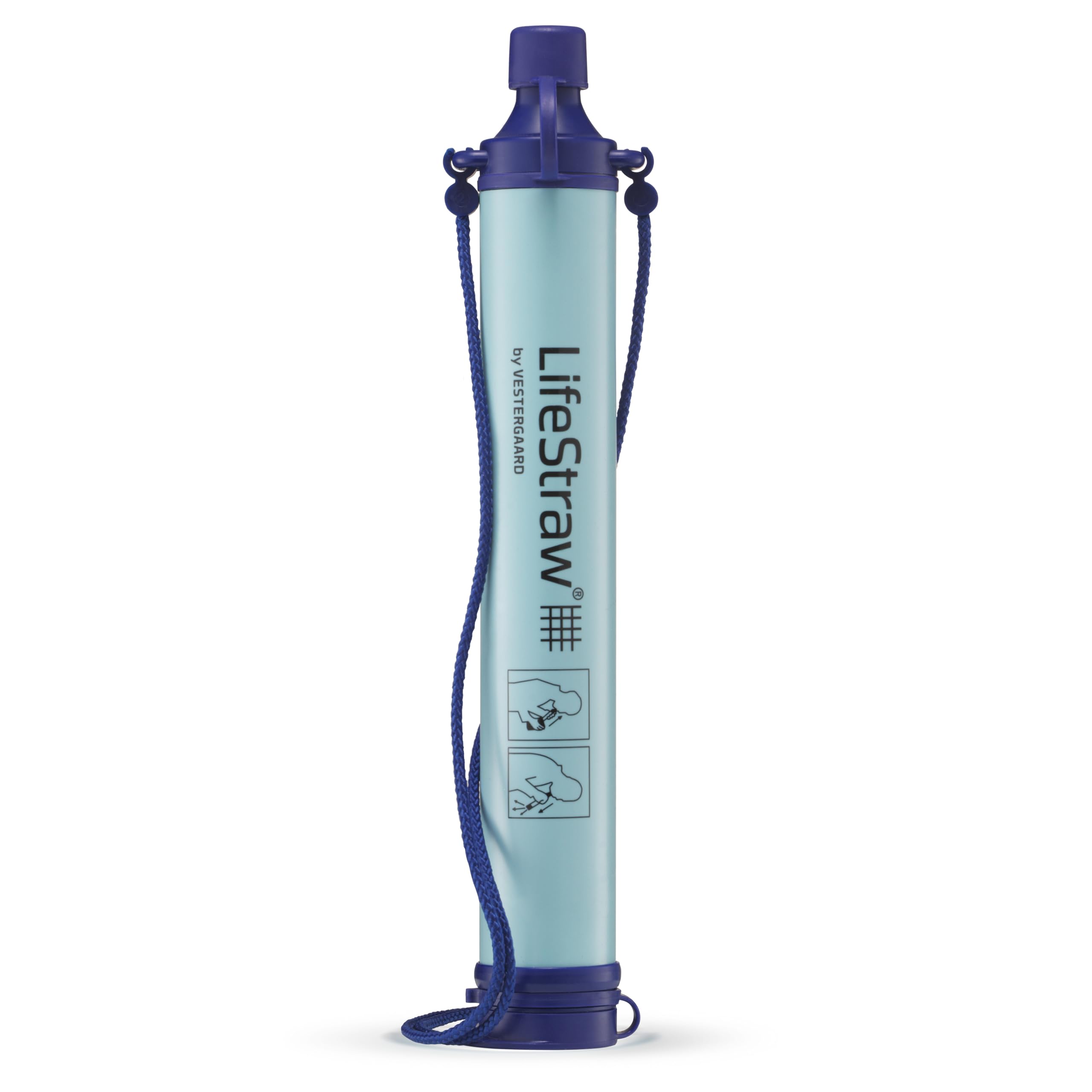
The LifeStraw is the lightest option at just 1.4 oz, making it a no-fuss addition to any ultralight pack or emergency kit. The tradeoff: you must drink directly from the source, which means kneeling or lying flat in shallow streams — a non-issue for solo hikers who don't mind, but impractical for groups or those who prefer bottle compatibility.

💡 Keep the straw attached to your pack strap for quick access — best used where you can kneel to drink directly.

Pros

  • Weighs only 1.4 oz and fits in any pocket or pack corner.
  • Long lifespan of 4,000 liters reduces need for frequent replacements.

Cons

  • Drinking directly from the source requires lying flat or kneeling, which can be awkward in shallow streams.
Our verdict

For the solo hiker or prepper who values every gram and doesn't mind an occasional awkward sip, the LifeStraw delivers unmatched portability at a budget price.

Check Latest Price
3

Best for Groups

Sawyer Squeeze Filter

95 /100
Traveler Score Outstanding

Key details

Weight
2.5 oz (71g)
Pore Size
0.1 micron
Filter Lifespan
100,000 gallons
Filtration Method
0.1 micron hollow fiber
Check Details on Amazon

The Squeeze delivers the fastest flow in Sawyer's lineup at 1.7 L/min, and its included two 32oz pouches allow an easy gravity setup for camp. It's best for small groups (2-4) or basecamp trips where you filter many liters daily. The tradeoff: the pouches can develop holes after moderate use, and the filter is heavier than the Mini – but those who need speed and volume will find it a capable mid-range option.

💡 The included pouches can wear out; using a 28mm threaded bottle as an alternative avoids the issue.

Pros

  • Flow rate of 1.7 L/min keeps water moving fast even with multiple people waiting.
  • Gravity-ready design with two 32oz pouches suits group trips and basecamp filtering.
  • Durable hollow-fiber membrane backed by a lifetime warranty against defects.

Cons

  • Heavier and bulkier than the Sawyer Mini; less ideal for ultralight solo hikes.
  • Included pouches may develop leaks or holes after repeated use.
Our verdict

For groups prioritizing fast flow and gravity convenience, the Squeeze delivers – just plan for pouch replacement or use with a standard bottle.

Check Latest Price
4

Best Virus Protection

GRAYL GeoPress 24oz

93 /100
Traveler Score Outstanding

Key details

Weight
15.9 oz (451g)
Pore Size
Filter Lifespan
65 gallons per cartridge
Filtration Method
Electroadsorption + carbon
Check Details on Amazon

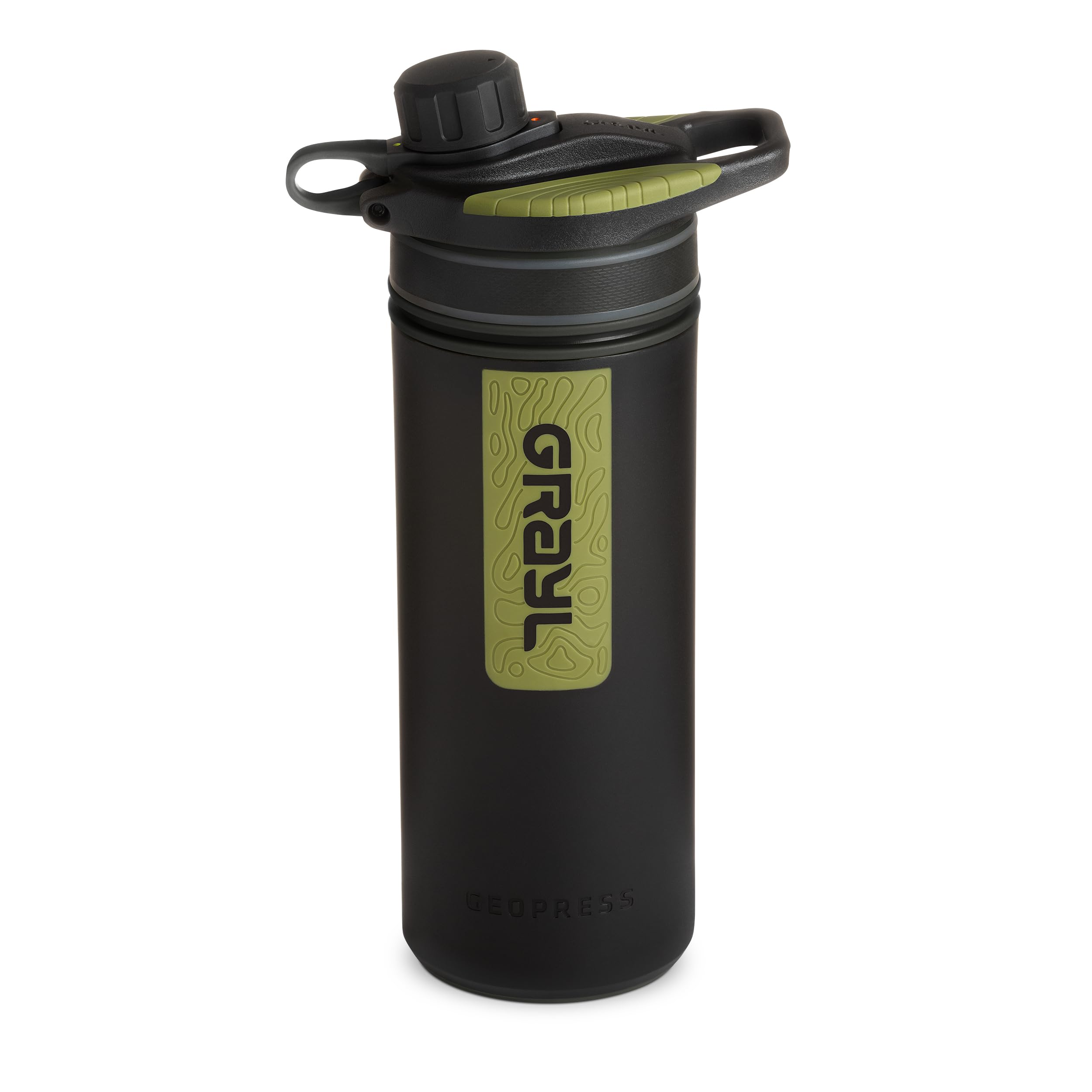
The GRAYL GeoPress removes viruses, heavy metals, and chemicals – capabilities no other hiking filter in this guide offers. Its eight-second press action is far faster than any pump or squeeze system, and the integrated bottle is ready to drink from without extra parts.

This makes it the right choice for international travelers visiting regions with unsafe tap water, or preppers who want a single bottle that handles nearly any contaminant. For backpackers carrying their shelter and food, the 15.9 oz weight and premium-priced replacement cartridges are tough to justify – the top pick is far lighter and cheaper.

💡 Pressing against a rock or tabletop reduces hand strain – consider this if you have limited grip strength.

Pros

  • Removes viruses, bacteria, protozoa, heavy metals, and chemicals
  • Purifies in 8 seconds with a simple press
  • Integrated bottle design is straightforward for travel and day trips.

Cons

  • At 15.9 oz, it is seven times heavier than the top pick
  • Pressing the filter requires notable hand strength
Our verdict

A robust purifier for international travel and emergency preparedness, but not the tool for lightweight hiking.

Check Latest Price
5

Best All-In-One Bottle

Katadyn BeFree 1L

93 /100
Traveler Score Outstanding

Key details

Weight
2.24 oz (63g)
Pore Size
0.1 micron
Filter Lifespan
1,000 liters
Filtration Method
0.1 micron hollow fiber
Check Details on Amazon

The BeFree combines the filter and bottle into one unit, delivering the fastest squeeze flow among portable filters. The soft bottle may develop pinhole leaks in some cases, and the filter must stay wet between uses. This setup is best for day hikers and travelers who prioritize packability and instant drinking over long-term durability.

Pros

  • All-in-one design
  • Flow rate reaches 2 L/min and cleaning simply requires swishing the membrane.
  • Ultralight and packs flat when empty, fitting easily into a pocket.

Cons

  • Proprietary bottle design cannot be used with standard water bottles or hydration bladders.
Our verdict

For day hikers wanting a grab-and-go filter with top flow, the BeFree delivers; for longer treks, a more robust system makes more sense.

Check Latest Price
6

Faster LifeStraw

LifeStraw Peak Series

96 /100
Traveler Score Outstanding

Key details

Weight
3.53 oz (100g)
Pore Size
Filter Lifespan
4,000 liters
Filtration Method
Microfiltration
Check Details on Amazon

The Peak Series improves on the original LifeStraw with a 2.5 L/min flow rate and a threaded bottom that screws onto standard 28mm bottles — a genuine convenience for day hikers who already carry a reusable bottle. It removes bacteria, parasites, and microplastics with the same filtration membrane, and the build feels durable for rugged use. The tradeoff is weight: at 3.5 oz it’s over twice as heavy as the original, and no pouch or bottle is included. The Sawyer Mini offers similar bottle compatibility at a lower price with longer filter life, which is why this sits as an alternative rather than a top pick.

Pros

  • Fastest flow rate among straw-style filters at 2.5 L/min
  • Threaded bottom cap fits any 28mm bottle for hands-free use

Cons

  • At 3.5 oz it is significantly heavier than the 1.4 oz original LifeStraw
Our verdict

Best for day hikers who already carry a reusable bottle and want faster drinking from a LifeStraw they know — skip if weight or budget are top concerns.

Check Latest Price
7

Ultralight Solo

Sawyer Micro Squeeze

92 /100
Traveler Score Outstanding

Key details

Weight
1.87 oz (53g)
Pore Size
0.1 micron
Filter Lifespan
100,000 gallons
Filtration Method
0.1 micron hollow fiber
Check Details on Amazon

At 1.87 oz, this is the most packable Sawyer filter, and it works with standard Squeeze accessories. The flow rate is slower than the full-size Squeeze, and the included pouch may develop leaks — manageable for solo hikers who prioritize weight savings over speed.

Pros

  • Compact and ultralight at 1.87 oz for minimal pack weight.
  • Compatible with all Sawyer Squeeze accessories and pouches.

Cons

  • Flow rate is noticeably slower than the full-size Squeeze, which can be frustrating when filling larger bottles.
Our verdict

Best for ultralight solo hikers who can accept a slower flow and are prepared to replace the included pouch.

Check Latest Price
8

Car Camping

Waterdrop Gravity Straw + Bag

92 /100
Traveler Score Outstanding

Key details

Weight
4.64 oz (131g)
Pore Size
0.1 micron
Filter Lifespan
1,400 gallons
Filtration Method
0.1 micron hollow fiber + carbon
Check Details on Amazon

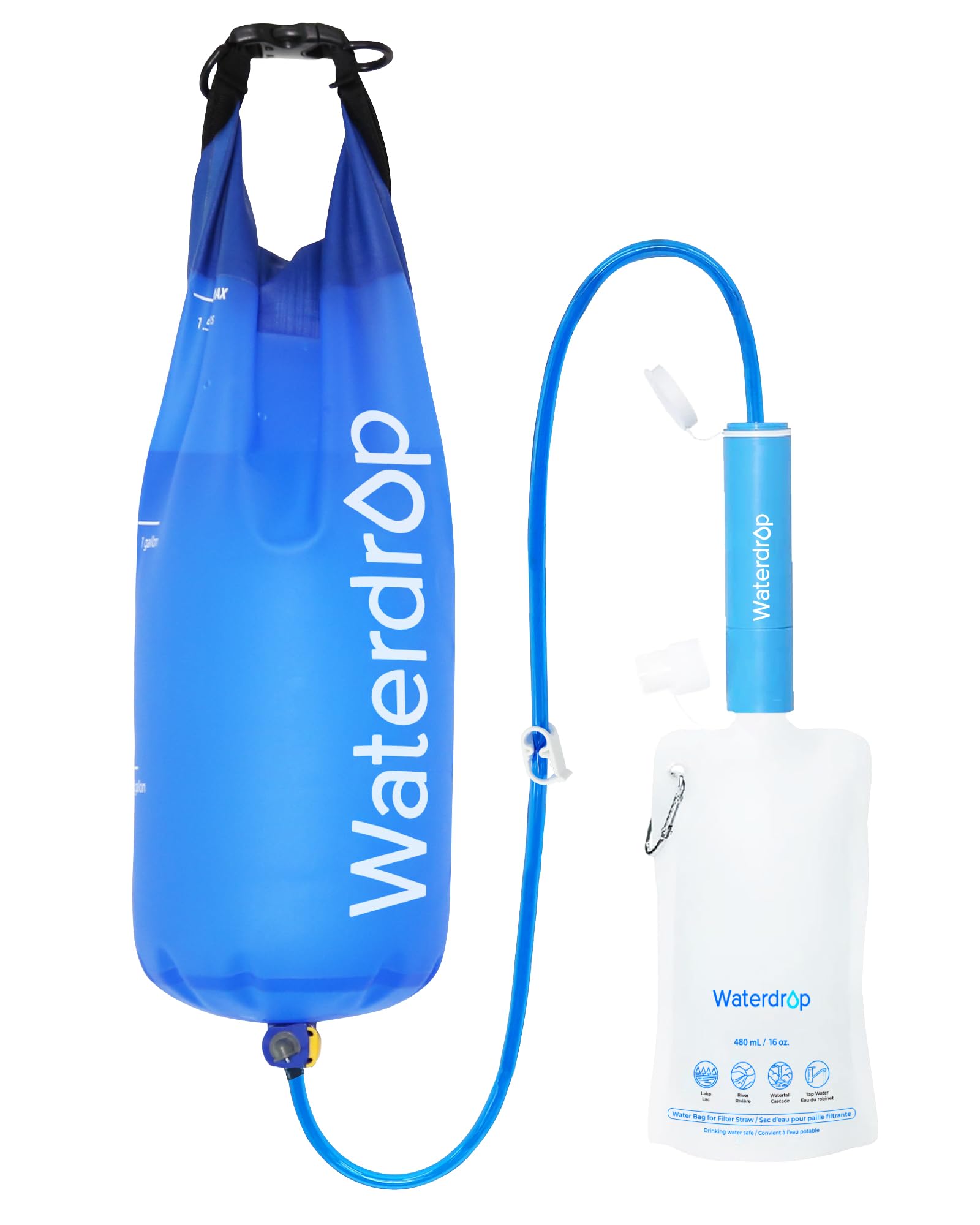
The Waterdrop gravity system offers a big 1.5-gallon bag and five-stage filtration that improves taste, making it a practical choice for car camping or basecamp setups. However, the flow rate drops noticeably after moderate use and requires frequent backflushing, and the bag material can feel flimsy when trying to hang it. At over 4.6 oz for filter and bag, it's too heavy and bulky for solo hiking or backpacking, and the slower flow isn't suited for situations needing many liters quickly.

Pros

  • Large 1.5-gallon capacity gravity bag supplies a group at basecamp.
  • Five-stage filtration improves taste compared to basic filters.

Cons

  • Flow slows significantly after moderate use, requiring backflushing to restore speed.
Our verdict

Best kept for car camping or emergency preparedness with family where weight and flow speed are less critical.

Check Latest Price
9

Family Kits

Practical Survival 5-Pack Straws

94 /100
Traveler Score Outstanding

Key details

Weight
2 oz each
Pore Size
0.1 micron
Filter Lifespan
1,800 gallons per filter
Filtration Method
0.1 micron hollow fiber
Check Details on Amazon

Each straw removes bacteria, parasites, and microplastics down to 0.1 micron, and the individually sealed packaging with backflush plunger means they store indefinitely. The real appeal is cost per unit: about $16 each lets you equip an entire family kit without breaking the bank. However, the threads don't fit all standard water bottles, so these are best used as direct-drink straws rather than inline bottle filters. Also, there's no independent NSF certification, only manufacturer claims. That trade-off matters less for emergency stashing or group camping where each person uses their own straw directly from the source.

Pros

  • Great value for a 5-pack
  • Sealed individually with backflush plunger, no expiration date for long-term storage.

Cons

  • Filter threading may not fit all standard bottles
Our verdict

If you need multiple straws for a family emergency kit or group camping where each person drinks directly, this pack delivers solid value despite the lack of certifications and threading quirks.

Check Latest Price
10

Taste, Emergency

Membrane Solutions S1 Straw

95 /100
Traveler Score Outstanding

Key details

Weight
2 oz (57g)
Pore Size
0.1 micron
Filter Lifespan
1,320 gallons
Filtration Method
0.1 micron 5-stage
Check Details on Amazon

The Membrane Solutions S1 delivers noticeably cleaner-tasting water than bare hollow-fiber straws thanks to its 5-stage filtration with activated carbon. It fits standard 28mm bottles and offers straw, squeeze, and gravity modes. However, durability can be inconsistent — cracking has occurred in some units, and the filter carries a shelf-life limit, making it better suited as a backup or for occasional trips rather than a long-term workhorse.

Pros

  • NSF certifications for taste, lead-free materials, and microplastic reduction add confidence.
  • Fits standard 28mm bottles and works as a straw or inline filter for flexible use.

Cons

  • Durability can be inconsistent
Our verdict

Best for hikers who value better taste and NSF certifications over proven durability, or as a lightweight backup in emergency kits.

Check Latest Price
11

Traditional Pump

Katadyn Hiker Pump

93 /100
Traveler Score Outstanding

Key details

Weight
11 oz (312g)
Pore Size
Filter Lifespan
750 liters
Filtration Method
Pleated glassfiber
Check Details on Amazon

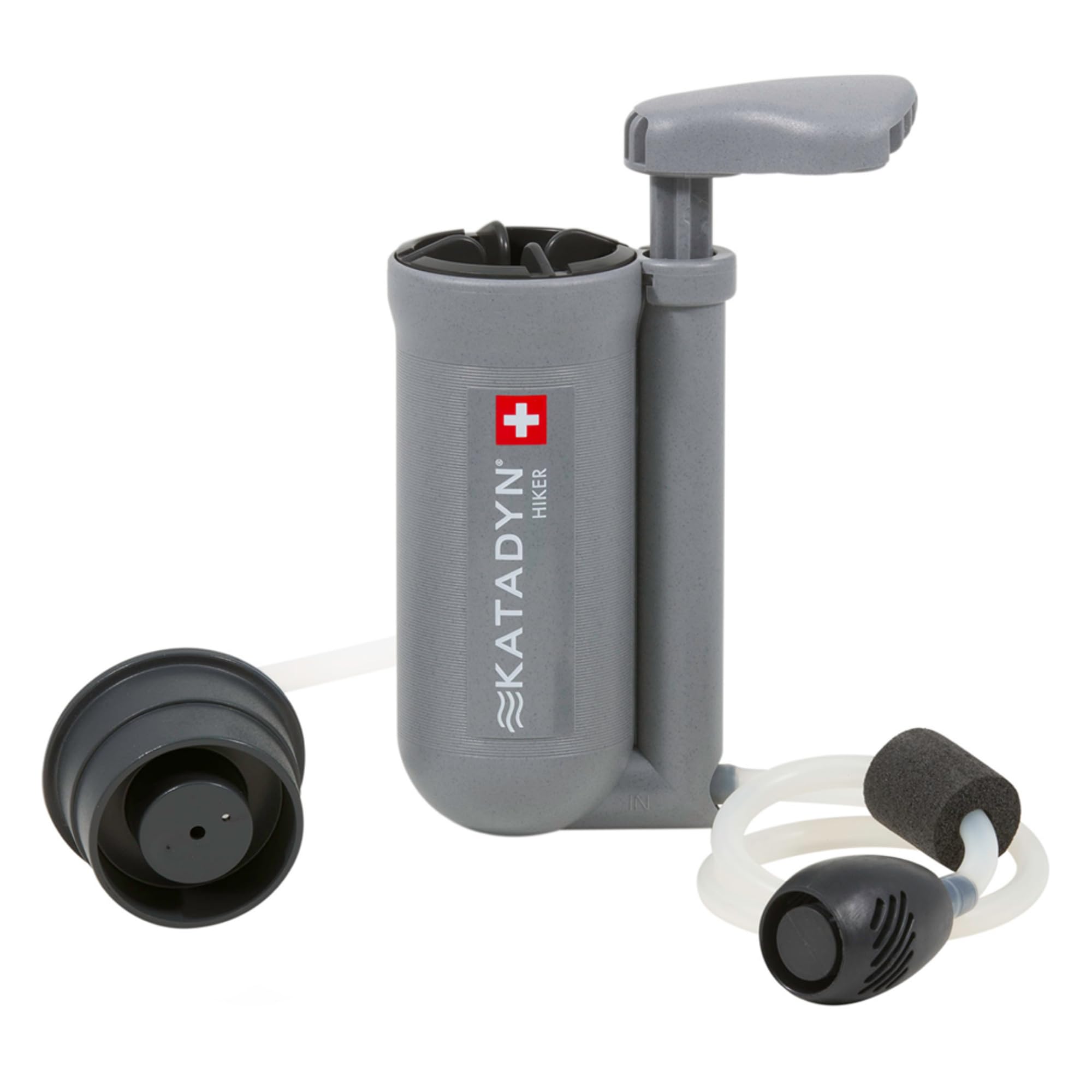
The Katadyn Hiker Pump delivers a straightforward, field-cleanable design that has served backpackers and scout groups for years. It filters bacteria and protozoa at about 1 liter per minute and weighs 11 oz – reasonable for a pump. However, the cartridge costs more per liter than modern squeeze filters, and there is no activated carbon stage, so water may carry a plastic taste or chemical residues. This filter suits those who prefer pump action and don't mind the ongoing expense, but squeeze systems offer better value and lighter weight for most solo hikers.

Pros

  • Lightweight pump design (11 oz) that can be cleaned in the field without tools.
  • Proven track record with consistent pumping speed, refilling a bottle quickly.

Cons

  • No activated carbon
Our verdict

Best for backpackers committed to pump action and field maintenance, but consider a squeeze filter if cost-per-liter or taste matters more.

Check Latest Price

How to Choose

Filtration Method

Most portable filters use hollow fiber membranes that block bacteria and protozoa. Pump filters use a glassfiber cartridge that can be field-cleaned but are heavier. Gravity systems use the same membrane but rely on water weight to push through, which is slow for single use but efficient for group camp setups.

The trade-off: hollow fiber filters are lightweight and compact but can clog permanently if not backflushed. Pump filters are more robust for silty water but add bulk. Choose based on how many liters you filter per trip and the water clarity you expect.

Pore Size

A 0.1 micron pore size is the standard for removing bacteria and protozoa. Some filters claim 0.01 micron, which can remove viruses, but viruses are rarely a concern in North American backcountry streams. Paying extra for sub-0.1 micron filtration usually adds weight and cost without real benefit for hiking.

Weight and Packed Size

Filters range from 1.4 oz straws to 15.9 oz purifiers. Every extra ounce matters when you carry it all day, but a 2 oz filter that attaches to your bottle often replaces the need for a dedicated water bottle - effectively saving weight elsewhere. For day hikes, a 2-3 oz all-in-one bottle is the lightest complete solution.

Bottle Compatibility

Filters that screw onto standard 28mm bottles (the common bottle thread) let you use any plastic or metal bottle you already own. Straw-only filters force you to kneel and drink directly from the source, which is slow and awkward. Bottle compatibility is the single biggest quality-of-life improvement for hiking - it turns filtering into a normal drinking motion.

Filter Lifespan

Cheap straws last 1,000-4,000 liters, while Sawyer hollow fiber filters are rated for 100,000 gallons - enough for years of frequent use. However, real-world lifespan depends on water clarity and maintenance. A filter that clogs quickly with silty water may need replacement sooner regardless of the rated gallon count. Backflushing extends life but costs time and clean water.

Frequently Asked Questions