12 Best Hiking Water Bottles of 2026: Cold Retention vs. Reliability

Find the best hiking water bottle for your trips: insulated vs. lightweight, leak-proof vs. durable – no single bottle does both perfectly.

Every hiker knows the frustration of a bottle that leaks in the pack or loses ice by lunch. The reality: most insulated bottles under $40 have some reports of lid failure, while lightweight plastic bottles don't keep water cold at all.

The real choice isn't which bottle is 'best' – it's which trade-off matters more for your hikes. Do you prioritize cold water all day, even if it means checking the lid seal? Or do you want a nearly indestructible bottle that's easy to clean, even if water warms up within an hour?

This guide cuts through the marketing to match you with the bottle that fits your specific hiking style. No single bottle excels at both insulation and reliability, but each pick here is the best in its category.

1

Best Overall Hiking Water Bottle

Owala FreeSip 32 oz

95 /100
Traveler Score Outstanding

Key details

Capacity
32 oz
Insulation
Double-wall vacuum
Leak-Proof
Push-button lock gasket
Lid Design
FreeSip dual spout
Check Details on Amazon

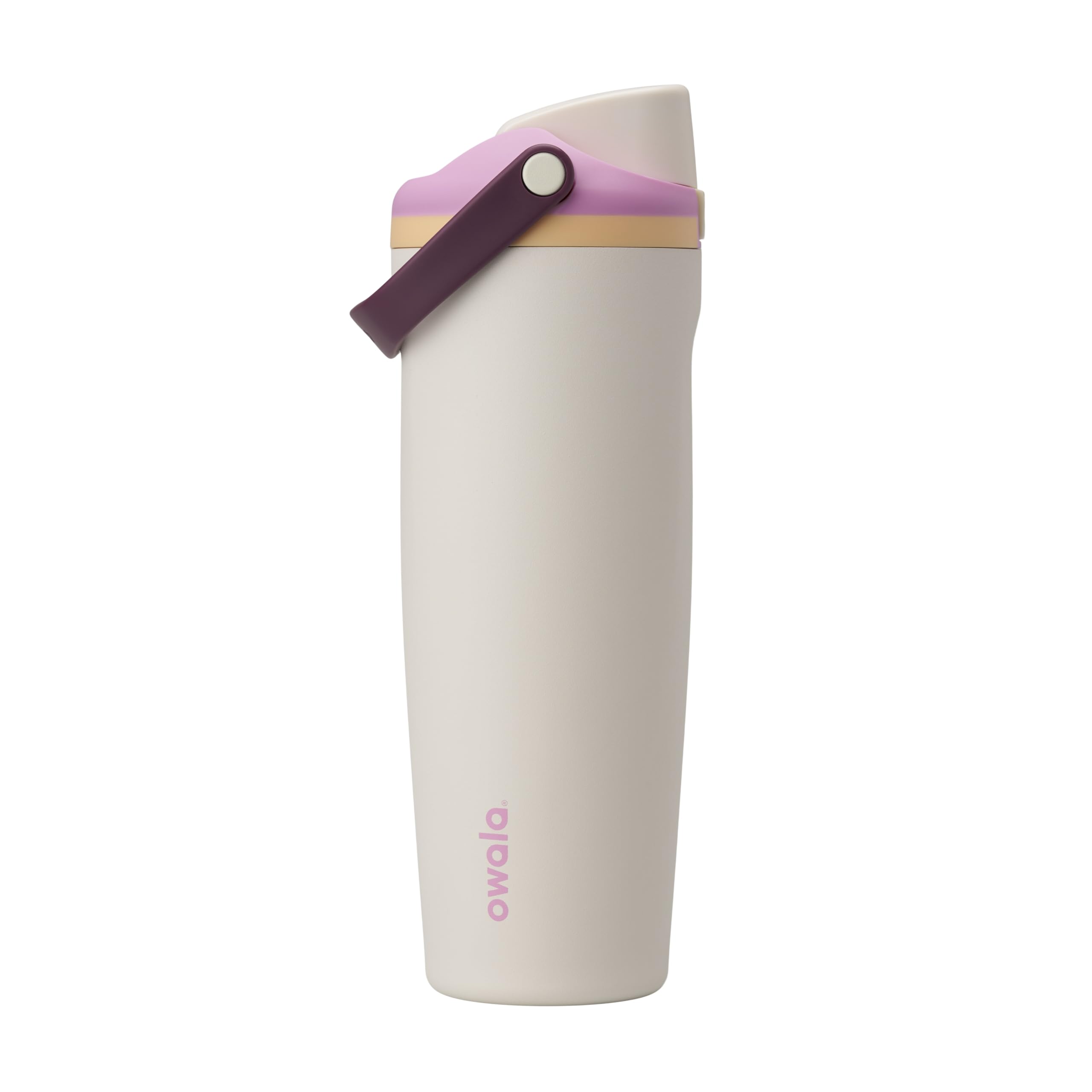
The Owala FreeSip gives hikers a single lid with both a straw for easy sipping on rugged terrain and a chug opening for quick hydration. Double-wall vacuum insulation keeps ice frozen for a full day, so your water stays cold through afternoon heat. The push-button lock secures the spout during transport, and the stainless steel body handles the occasional knock against rocks or gear.

This bottle suits hikers who value drinking flexibility and temperature control more than absolute durability. The spout mechanism can loosen or crack within a few months if handled roughly or disassembled frequently. For someone who tosses gear around or expects a bombproof lid, a simpler screw-top design may hold up longer.

💡 To extend lid life, avoid over-tightening and rinse the spout after sugary drinks.

Pros

  • Straw and chug spout in one lid for on-trail flexibility.
  • Keeps ice cold for a full day of hiking.
  • Lid seals tightly to prevent spills inside a pack.

Cons

  • Lid components may loosen or crack over time, especially under heavy use.
Our verdict

For hikers who want both drinking styles and solid insulation at a fair price, the FreeSip delivers. Just be prepared to treat the lid with care.

Check Latest Price
2

Best Ultralight & Durable Option

Nalgene 32 oz Wide

96 /100
Traveler Score Outstanding

Key details

Capacity
32 oz
Insulation
Single-wall plastic
Leak-Proof
Screw cap O-ring
Lid Design
Wide mouth screw cap
Check Details on Amazon

At 177 grams, the Nalgene 32 oz is one of the lightest wide-mouth bottles you'll pack, and its Tritan plastic survives drops that would dent metal. The wide mouth simplifies cleaning — it goes straight into the dishwasher. The tradeoff is single-wall construction: water warms up fast on hot trails, so it's best for hikers who value weight savings over cold drinks or who refill from streams.

Pros

  • Nearly unbreakable body withstands drops and rough handling
  • Weighs only 177 grams
  • Wide mouth makes cleaning simple and dishwasher-safe

Cons

  • No insulation
Our verdict

The right pick for ultralight hikers who prioritize weight and toughness over ice-cold water.

Check Latest Price
3

Best Premium Insulated Bottle

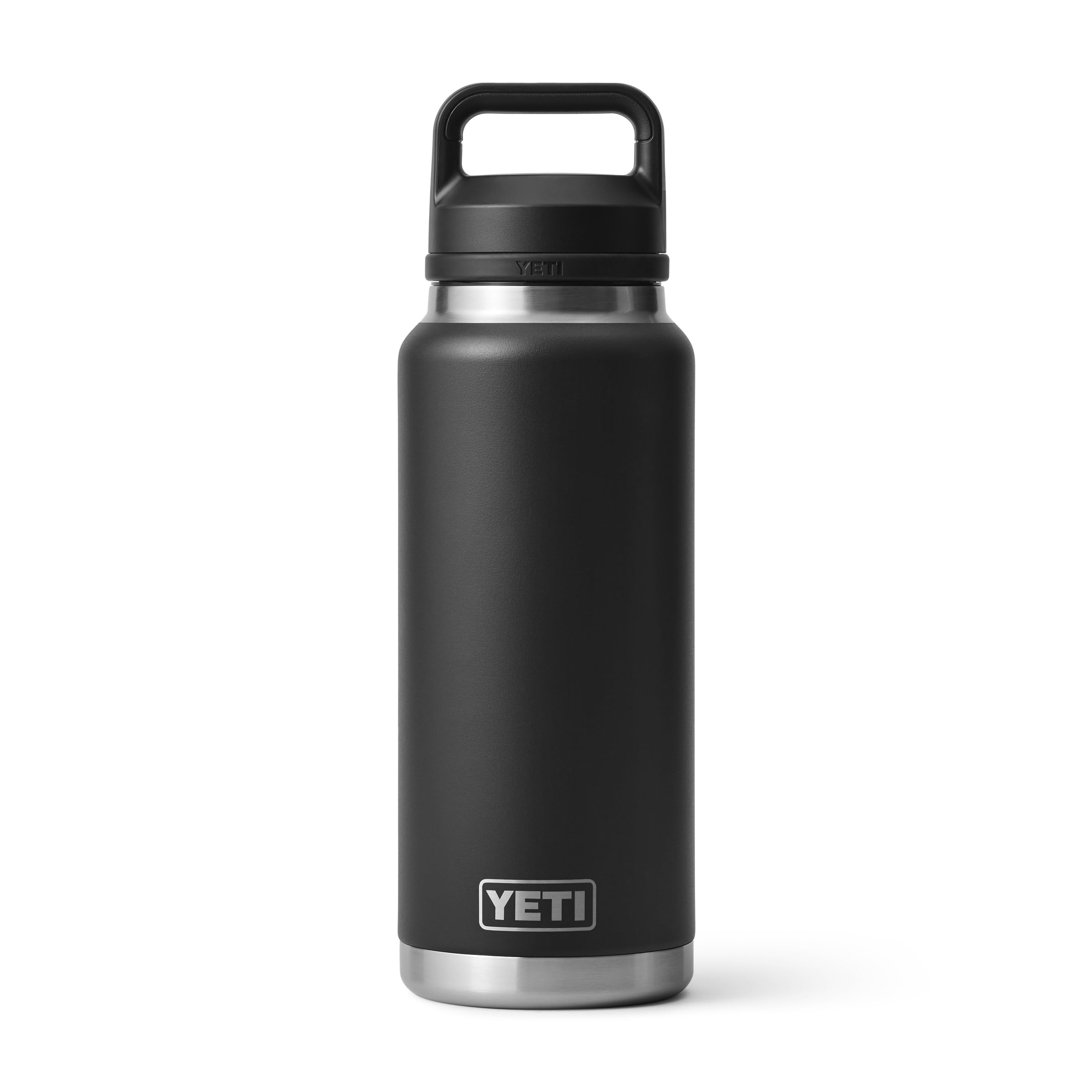
YETI Rambler 36 oz

96 /100
Traveler Score Outstanding

Key details

Capacity
36 oz
Insulation
Double-wall vacuum
Leak-Proof
Chug cap seal
Lid Design
Chug cap with handle
Check Details on Amazon

Ice retention easily surpasses 24 hours, giving it an edge over most insulated bottles in this guide. The chug cap works well for one-handed drinking on the trail, though the powder-coated finish will pick up scratches and dents with normal use, and a small number of units may have lid sealing inconsistencies. This bottle suits hikers who care for their gear and want maximum cold performance over cosmetic durability.

💡 Keep the bottle upright when not in use to reduce leak risk; the finish will show wear, but performance remains strong.

Pros

  • Ice remains frozen for over a full day, even in warm conditions.
  • High-quality stainless steel construction feels solid and durable.

Cons

  • Powder-coated finish shows scratches and dents from normal trail use.
  • Lid seal may be inconsistent, allowing occasional leaks.
Our verdict

Choose the YETI Rambler if ice retention is your top priority and you can live with cosmetic wear and occasional lid variance.

Check Latest Price
4

Best Budget Insulated Bottle

Iron Flask 32 oz

95 /100
Traveler Score Outstanding

Key details

Capacity
32 oz
Insulation
Double-wall vacuum
Leak-Proof
Multi-lid gaskets
Lid Design
Three-lid set
Check Details on Amazon

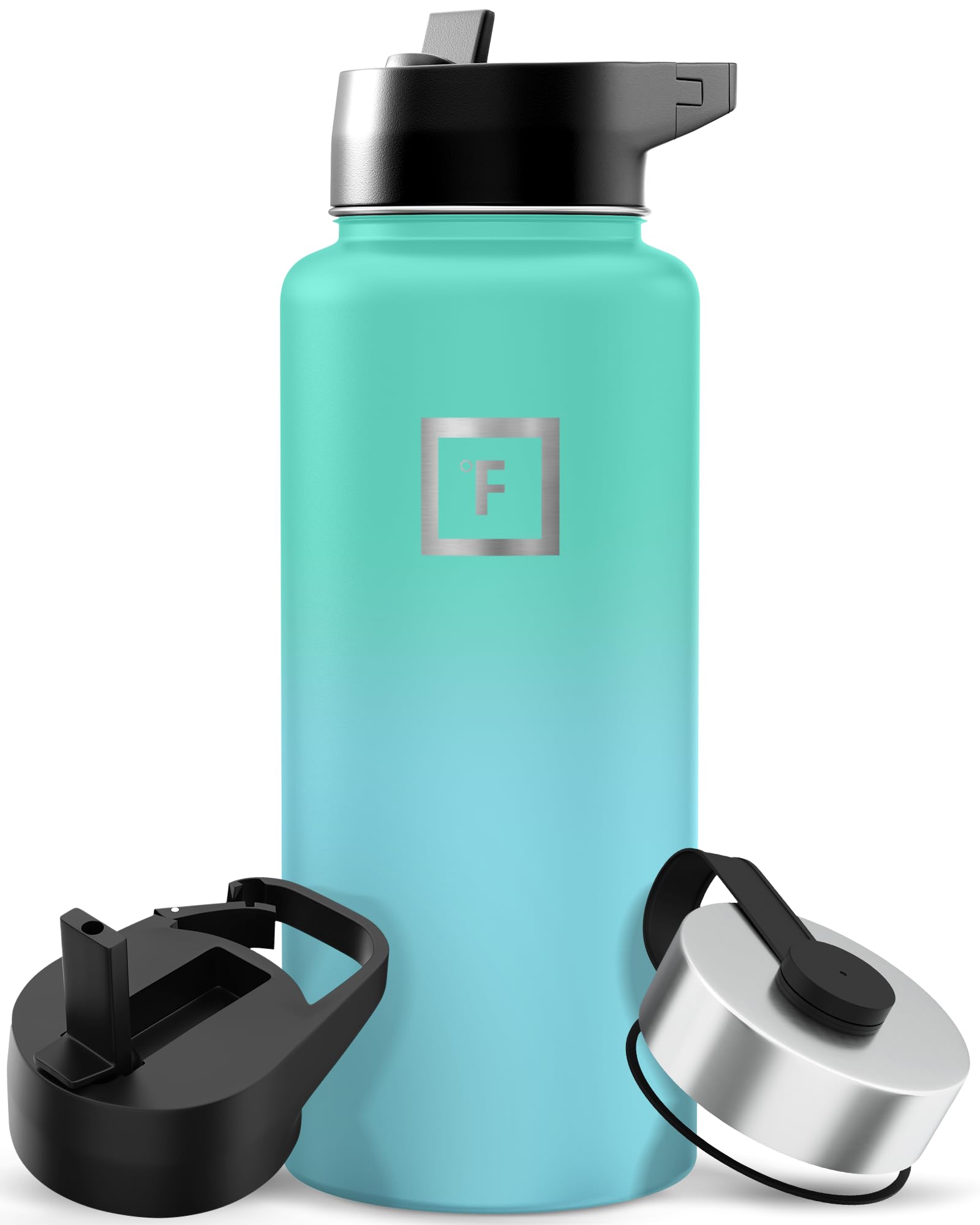
The Iron Flask delivers exceptional value for its price — three lid options and solid cold retention that lasts through a day hike. The wide mouth makes adding ice easy, and the stainless steel construction feels substantial for the cost.

Where it falls short for active hiking is leak control. When the bottle rides sideways in a pack, the lids can let water escape. Paint chipping and denting have also been noted with regular use. This bottle suits budget-conscious hikers who keep it upright and handle it gently, or those who prioritize cold water and lid variety over rugged dependability.

💡 Store upright in a pack or use the straw lid for sipping without fully opening — sideways leaks are less likely that way.

Pros

  • Three lids included for different drinking preferences
  • Keeps water cold for hours during a day hike
  • Budget-friendly price with good insulation

Cons

  • Leaks can occur when the bottle is on its side
  • Paint chips and dents may appear with regular use
Our verdict

For the price, you get a well-insulated bottle with versatile lids — just plan to keep it upright and accept some cosmetic wear over time.

Check Latest Price
5

Best for Car Cup Holders

Owala FreeSip Sway 30 oz

95 /100
Traveler Score Outstanding

Key details

Capacity
30 oz
Insulation
Triple-layer vacuum
Leak-Proof
Locking lid gasket
Lid Design
FreeSip lock+handle
Check Details on Amazon

The Sway keeps the same FreeSip spout as the standard model but reshapes the bottle to slide into most car cup holders — a rare trait for an insulated bottle. A locking lid and a sturdy bucket handle make it convenient to carry from the car to the trail.

This bottle suits hikers who want cold water on the go and need something that stays put in a vehicle cup holder. The lid mechanism may wear over time, so those who plan to toss it in a pack daily should check for play in the hinge.

💡 Inspect the lid lock periodically; if it feels loose, replacement lids are available separately.

Pros

  • Fits most car cup holders without tipping over.
  • Bucket handle provides a secure and comfortable grip.
  • Locking lid prevents accidental spills when stowed.

Cons

  • Lid hinge can become unreliable after extended use.
Our verdict

Worth picking if cup-holder fit and a secure handle matter more than absolute lid longevity — the same tradeoff as the standard FreeSip applies here.

Check Latest Price
6

Best Insulation on Sale

Hydro Flask 32 oz

95 /100
Traveler Score Outstanding

Key details

Capacity
32 oz
Insulation
TempShield double-wall
Leak-Proof
Flex Cap silicone
Lid Design
Flex Cap leak-proof
Check Details on Amazon

The Hydro Flask’s TempShield insulation keeps cold drinks icy for a full day and hot beverages warm for hours, while the wide mouth makes adding ice and cleaning straightforward. This performance is best appreciated when the bottle is bought on sale—at full price, the tradeoffs become harder to accept. The Flex Cap can allow moisture past the seal when the bottle is packed sideways in a daypack, and the stainless steel body picks up dents and scratches from routine drops. That makes it a better match for hikers who are willing to check the lid each time and who don’t mind cosmetic wear, especially compared to the more dent-resistant Owala FreeSip.

💡 Tightening the Flex Cap until the gasket seats fully before each hike reduces the chance of leaks in a pack.

Pros

  • Strong temperature retention keeps drinks cold or hot for extended periods.
  • Wide mouth simplifies cleaning and adding ice cubes.
  • Matte finish and color options add visual appeal.

Cons

  • When packed sideways in a daypack, the Flex Cap can leak
  • The stainless steel body shows dents and scratches from moderate drops
Our verdict

For hikers who value insulation above all and can buy at a discount, the Hydro Flask is a worthy alternative to the Owala – just plan to check the lid seal and accept some cosmetic wear.

Check Latest Price
7

Large Capacity

CamelBak Chute 50 oz

95 /100
Traveler Score Outstanding

Key details

Capacity
50 oz
Insulation
Single-wall plastic
Leak-Proof
Magnetic cap seal
Lid Design
Magnetic cap
Check Details on Amazon

The CamelBak Chute Mag delivers 50 oz at just 192g – impressive for a bottle this size. The magnetic cap flips back and stays out of the way, making one-hand drinking easy. However, there's no insulation, so water warms up quickly in hot weather, and the magnetic lid can leak if not aligned just right.

Pros

  • Very large capacity relative to its weight
  • Magnetic cap stays out of the way while drinking

Cons

  • Magnetic lid may not seal if not aligned correctly
Our verdict

Carry this when weight and volume matter more than cold water – it's a capable partner for long, hot hikes where refills are frequent.

Check Latest Price
8

Compact Budget

POWCAN 26 oz

93 /100
Traveler Score Outstanding

Key details

Capacity
26 oz
Insulation
Double-wall vacuum
Leak-Proof
2-in-1 lid seal
Lid Design
2-in-1 lid
Check Details on Amazon

The POWCAN 26 oz offers solid insulation for the price and a compact shape that fits most cup holders, making it a good choice for short day hikes where you keep the bottle upright. However, the straw lid can leak when the bottle is on its side, and some units have experienced cracking in the straw or hinge — so it’s best suited for those who won’t toss it into a pack sideways.

Pros

  • Insulation keeps drinks cold throughout a day hike.
  • Compact size fits most car cup holders.

Cons

  • Straw lid can leak when the bottle is placed on its side.
Our verdict

Worth considering for short day hikes where you keep the bottle upright and don’t need maximum leak protection.

Check Latest Price
9

Day Hikes

Coleman Autoseal 24 oz

95 /100
Traveler Score Outstanding

Key details

Capacity
24 oz
Insulation
Double-wall vacuum
Leak-Proof
Autoseal button seal
Lid Design
Autoseal button
Check Details on Amazon

The Coleman Autoseal 24 oz uses a push-button lid to stop drips between drinks, and double-wall vacuum insulation keeps water cold for over 24 hours. At a mid-range price, it delivers solid temperature retention and easy cleaning via the flip-down inner cover. However, the button mechanism can stiffen or lock up with extended use, and the 24 oz capacity is better suited for short day hikes than all-day treks.

Pros

  • Button-top seals between sips, reducing spills on the trail.
  • Double-wall vacuum keeps drinks cold beyond 24 hours.

Cons

  • Autoseal button may become stiff or fail to function over time.
Our verdict

Good for hikers who prioritize spill-free sipping and don’t need maximum capacity, but durability limits its use for rugged, multi-day trips.

Check Latest Price
10

Urban Hikers

Stanley Quick Flip 24 oz

93 /100
Traveler Score Outstanding

Key details

Capacity
24 oz
Insulation
Double-wall
Leak-Proof
Push-button flip seal
Lid Design
Push-button flip
Check Details on Amazon

Push-button one-handed operation and a slim profile that fits most cup holders make this a convenient companion for daily commutes or short urban walks. The hinge may show wear over time, so this bottle suits lighter use rather than demanding hikes where long-term durability is key.

Pros

  • Push-button lid opens with one hand while you’re moving.
  • Slim shape fits standard car cup holders easily.

Cons

  • Lid seal can allow water to leak when the bottle is placed on its side.
Our verdict

Ideal for urban commuters who value easy sipping and cup-holder convenience, but best reserved for low-impact use rather than hiking.

Check Latest Price
11

Base Camp

BUZIO 64 oz

93 /100
Traveler Score Outstanding

Key details

Capacity
64 oz
Insulation
Triple-wall copper
Leak-Proof
Straw/spout seals
Lid Design
Straw+spout lid
Check Details on Amazon

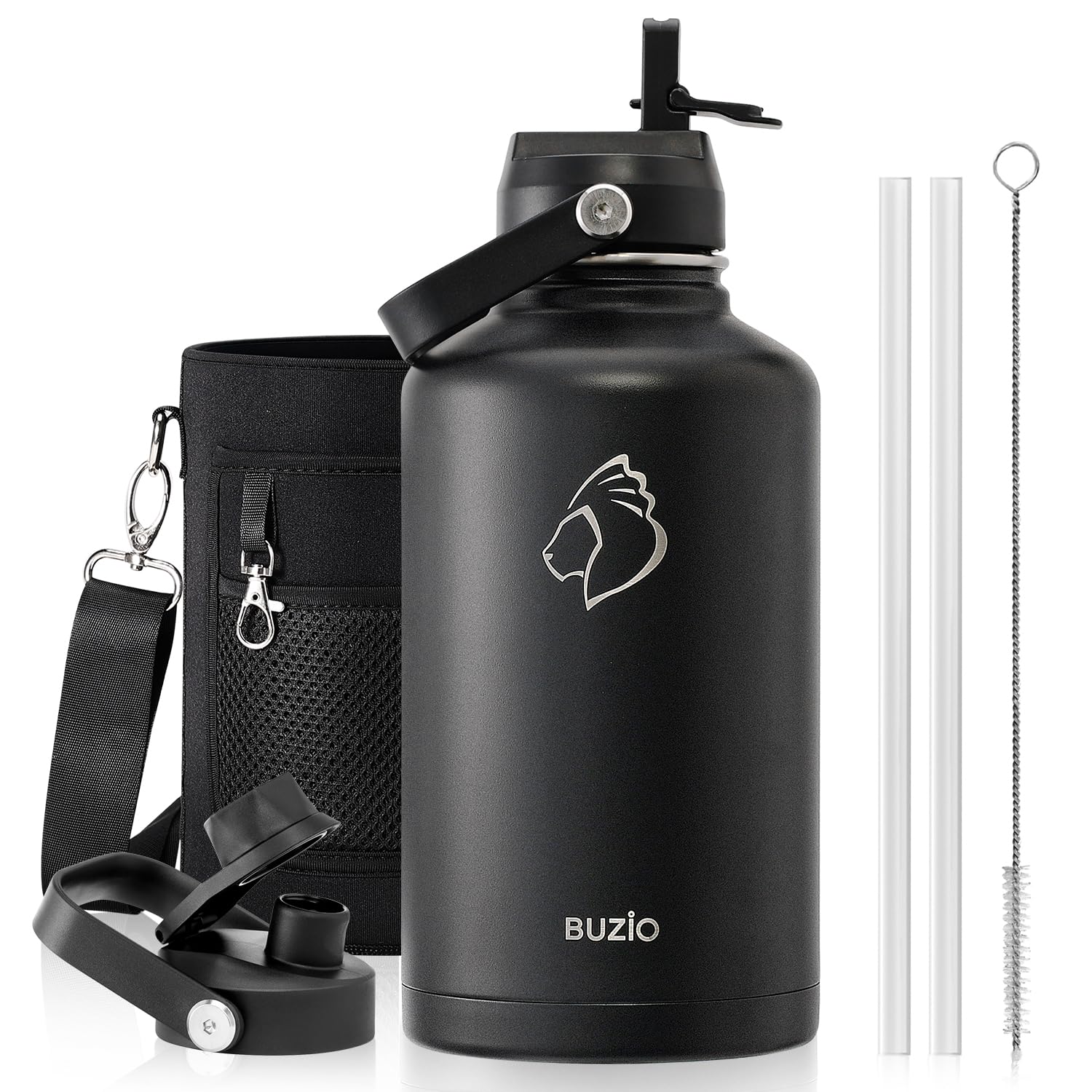
This 64-ounce bottle keeps ice cold for days and comes with a carrier bag and extra lid — a solid value for stationary use. But both lid types can leak when tipped, and the strap hardware may break over time, so it is not suited for active hiking where the bottle goes on its side.

Pros

  • Large 64-ounce capacity with 48-hour cold retention.
  • Includes carrier bag, extra lid, and straw cleaner for added utility.

Cons

  • Both lid types can leak when the bottle is tipped over.
Our verdict

Ideal for car trips or base camp where the bottle stays upright, but not for hiking where leaks and accessory fragility matter.

Check Latest Price
12

Car Camping

Coolflask 64 oz

93 /100
Traveler Score Outstanding

Key details

Capacity
64 oz
Insulation
Triple-wall copper
Leak-Proof
Three lid seals
Lid Design
Three-lid set
Check Details on Amazon

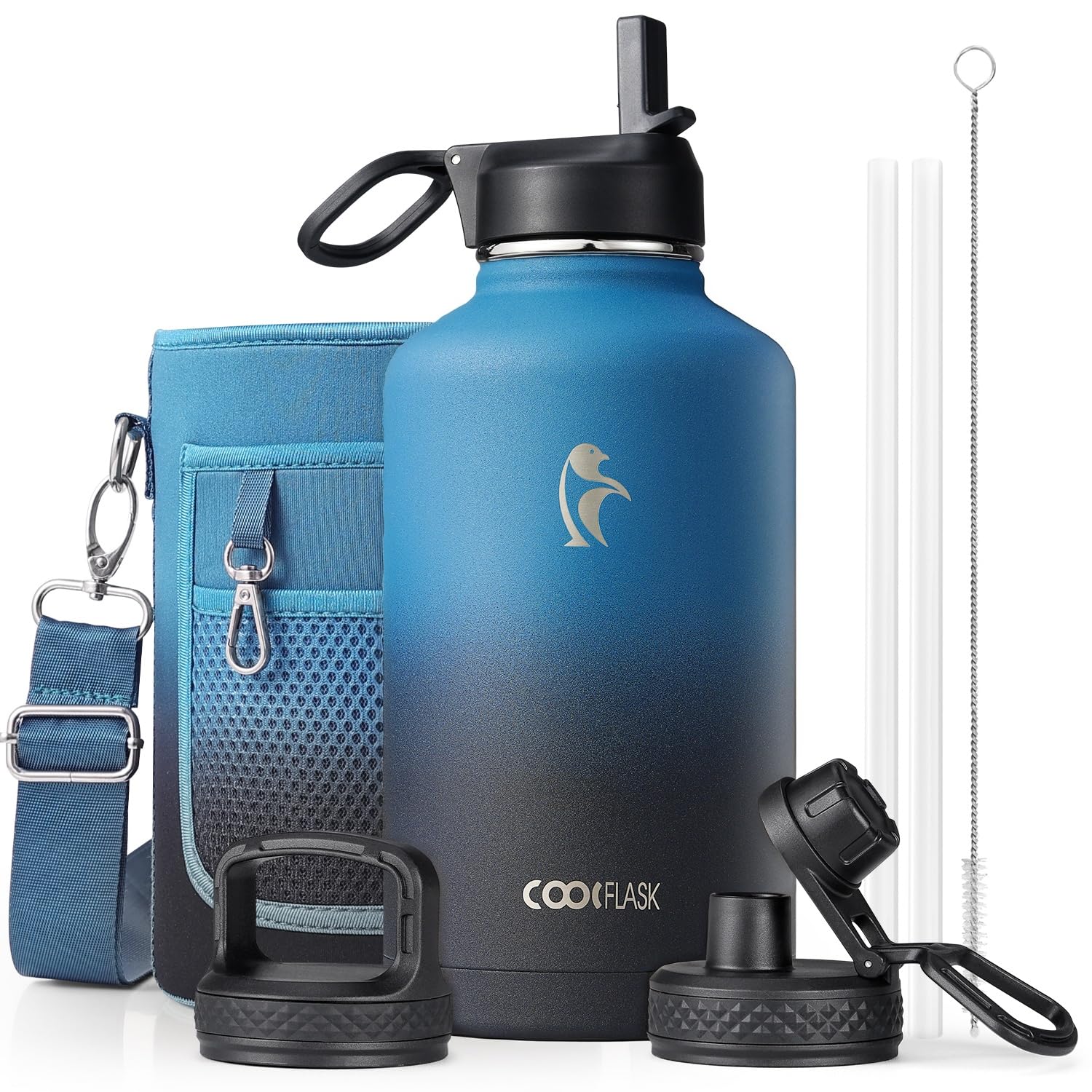
This half-gallon bottle keeps drinks cold for over 24 hours and includes three lids for flexibility. However, the lid seals may leak, and the accessory strap and handles do not hold up well. These issues make it more suited for stationary use than active hiking.

Pros

  • Ice retention extends well beyond 24 hours, keeping drinks cold all day.
  • Three lid options (straw, spout, handle) let you choose your preferred drinking style.

Cons

  • Lid seals can be inconsistent, resulting in leakage when the bottle is tipped on its side.
Our verdict

Best kept on a desk or in a car — not for a backpack where leaks would cause problems.

Check Latest Price

How to Choose

Insulation Type

Double-wall vacuum insulation traps cold by removing air between two steel walls. Single-wall plastic bottles let heat transfer quickly, so water warms up within an hour in hot weather. If you need ice-cold water for afternoon hikes, vacuum insulation is necessary – but it adds weight and cost.

The trade-off: vacuum-insulated bottles are heavier and more expensive, and their lids have more parts that can fail. Plastic bottles are lighter and simpler, but you'll be drinking warm water by mid-morning.

Capacity

32 oz is the sweet spot for most day hikes – enough water for a few hours without being too heavy. Larger 50-64 oz bottles are great for long, remote trails or base camping, but they're bulky and may not fit in standard backpack side pockets.

A 24 oz bottle is sufficient for short, casual hikes but can leave you refilling often. Consider your typical hike duration and whether you have access to clean water sources along the trail.

Lid Design

Lid types affect drinking convenience and cleaning difficulty. Straw lids allow sipping without tilting, but require thorough weekly cleaning to prevent mold. Chug or wide-mouth caps are easier to clean but require tilting. Push-button and autoseal designs reduce spills but add moving parts that can break.

For hiking, a locking lid (push-button lock or screw cap) is safer than a flip-top that can open in a bag. The more complex the mechanism, the more failure points – simple screw caps are most reliable.

Leak-Proof Reliability

Most leaks happen when a bottle is laid on its side in a pack. Screw caps with O-rings are generally reliable, but the seal can degrade over time. Push-button and flip-top lids often rely on gaskets – if the gasket shifts or the lid isn't fully closed, water escapes.

The most reliable configuration for hiking is a screw cap that you can tighten fully. Autoseal and magnetic caps are convenient but have more gaps where leaks can occur. Always test a new bottle by placing it on its side with water before a hike.

Weight and Fit

Weight matters on long hikes. A 32 oz insulated steel bottle weighs around 400-600g, while a plastic bottle of the same capacity weighs about 170g. That 230g difference adds up over miles. For backpacking, lightweight plastic bottles are the standard.

Fit in backpack side pockets is also critical. Many insulated bottles are too wide for standard bottle pockets. Check your pack's pocket dimensions – some bottles (like the Owala Sway) are designed to fit car cup holders, which also means they fit narrower pockets.

Frequently Asked Questions