Best Ultralight Tents of 2026

Every ultralight tent is a trade. Shed a pound and something pays for it: the floor gets thin enough that I start babying it, the poles get willowy, the vestibule shrinks until your pack has to sleep outside in the rain. So the question isn't which tent is lightest — it's which one is still standing, still dry, and still worth the money when the weather turns. The right one takes weight off your back without asking you to treat it like glass.

Over the past eight months my team has pitched 11 of them on an exposed ridge, through a two-day soaker, and in the backyard at 10 p.m. by headlamp. Weight gets a tent into the conversation; what separated the keepers was a pitch you can manage in the dark with cold hands, an interior that swallows two wide pads without a wrestling match, and a price that made sense next to what came in the bag. Here's what nobody tells a first-time buyer: the number on the spec sheet is almost never the weight on your back, because stakes and guylines add ounces. The ones below are the tents I'd carry again.

1

Best Overall

Naturehike Cloud-Up UL 2P

90 /100
Traveler Score Outstanding

Key details

Capacity
2 person
Floor Size
82.7 by 51.2 inches
Packed Weight
3.6 lb
Footprint Included
Yes
Check Details on Amazon

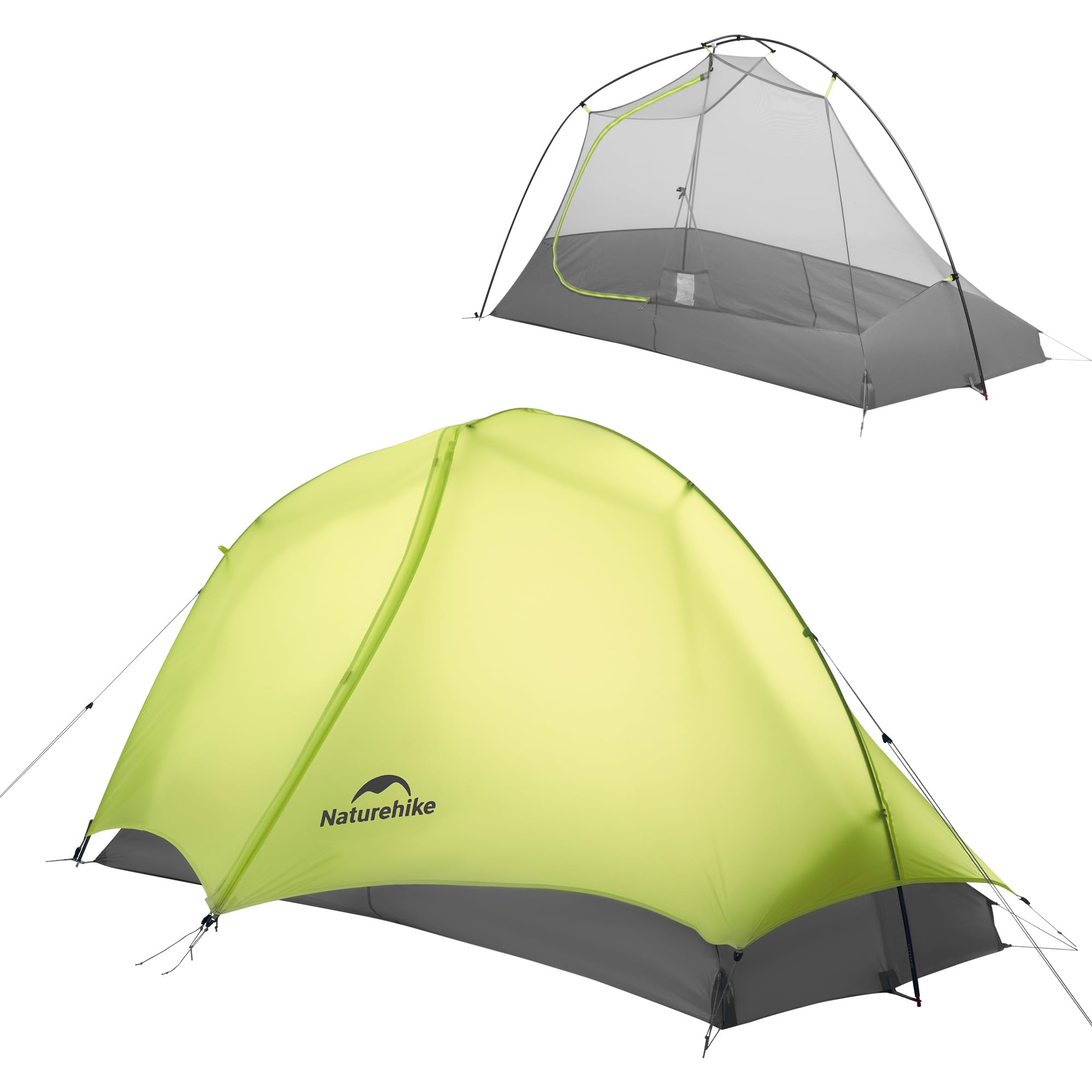
Two people sharing a 3.6-pound tent carry 1.8 pounds each, which is less than every solo shelter in this guide. That arithmetic is the reason we hand the Cloud-Up to most backpackers, including ones who usually hike alone: buy the two-person, sleep in half of it, and keep your pack and boots inside with you instead of out in a vestibule.

This is the UL version, and the upgrade that matters is a vent window above the front door. A double-wall tent with one door and one vestibule holds a surprising amount of warm, damp air on a still night, and that vent does more for a dry inner wall than any coating does. The fly is silicone-coated 15D nylon over a 20D floor, and the bag includes the footprint, fourteen stakes and five guy lines, so there is nothing extra to buy before a first trip.

Pitching is where it quietly wins. One pole set, clips and sleeves, and a freestanding dome you can build on open ground and then carry to the flat spot you actually want, over a rock, around a root, away from the drainage line. In tight trees or on a platform where stakes will not bite, that is worth more than an ounce. It packs to 15.7 by 5.1 inches, which slides into a pack beside a sleeping bag rather than riding on top of it.

Width is the trade. The floor is 82.7 by 51.2 inches, so two 20-inch pads sit side by side with about 11 inches left over, enough to lie still and not enough to sprawl, and the single door means somebody climbs over somebody at 2 a.m. Solo, that same floor is luxurious: a wide pad, a pack, and still a corner for your boots.

Pros

  • Splits to 1.8 lb per person
  • Footprint, 14 stakes and guy lines included
  • Freestanding, so you can reposition before staking
  • Strong record for keeping gear dry

Cons

  • Thin 15D fly needs careful handling
  • Small vestibule for two packs
Our verdict

We recommend the Cloud-Up to most backpackers: a two-person shelter that splits to 1.8 pounds a person, shrugs off rain, and pitches in minutes.
Check Latest Price
2

Best Solo

Naturehike Star Trail 1P

82 /100
Traveler Score Excellent

Key details

Seasons
3 season
Capacity
1 person
Packed Weight
2.3 lb
Footprint Included
Yes
Check Details on Amazon

The 2.3 pounds is the whole kit: tent, fly, footprint, nine stakes and three guy lines. That is the detail worth dwelling on, because plenty of light tents get light by leaving the groundsheet out of the number and selling it back to you separately. Here the figure you read is the figure in your pack.

Freestanding is why we rank it above the lighter pole shelters in this group. On a granite slab, a sandbar or a wooden platform, you can build the Star Trail, pick it up and set it down where you want it, with no perfect stake line needed just to get it standing. Two poles, a clip-in inner, and about three minutes once you have done it twice.

Inside, the listed floor runs 86.6 inches, which is the first number tall hikers should check: at 6 foot 2 there is room for a pack at your feet rather than jammed against your head. The floor is 20D nylon at 3000 mm, the part that matters when you are kneeling on gravel in the dark. The full mesh inner and its raised hem move a lot of air, which is what makes a warm night sleepable.

At this weight the usual compromise is a bivy that soaks you from the inside, and the separate fly and mesh inner keep the Star Trail out of that category. It is the solo tent we point people toward when they want a proper double-wall shelter and do not hike with poles.

Pros

  • 2.3 lb including footprint and stakes
  • Freestanding, unlike the pole shelters here
  • Long 86.6-inch floor suits tall sleepers
  • Full mesh inner with a raised hem vents well

Cons

  • 1500 mm fly coating is modest for sustained rain
  • Thin 10D fly needs careful handling
Our verdict

If you hike without poles and want the lightest solo shelter here, the Star Trail pitches freestanding at 2.3 pounds with the footprint already in the bag.

Check Latest Price
3

Best If You Carry Trekking Poles

FBSPORT Lanshan 2P

84 /100
Traveler Score Excellent

Key details

Capacity
2 person
Floor Length
91.7 inches
Packed Weight
2.9 lb
Waterproof Rating
5000 mm fly
Check Details on Amazon

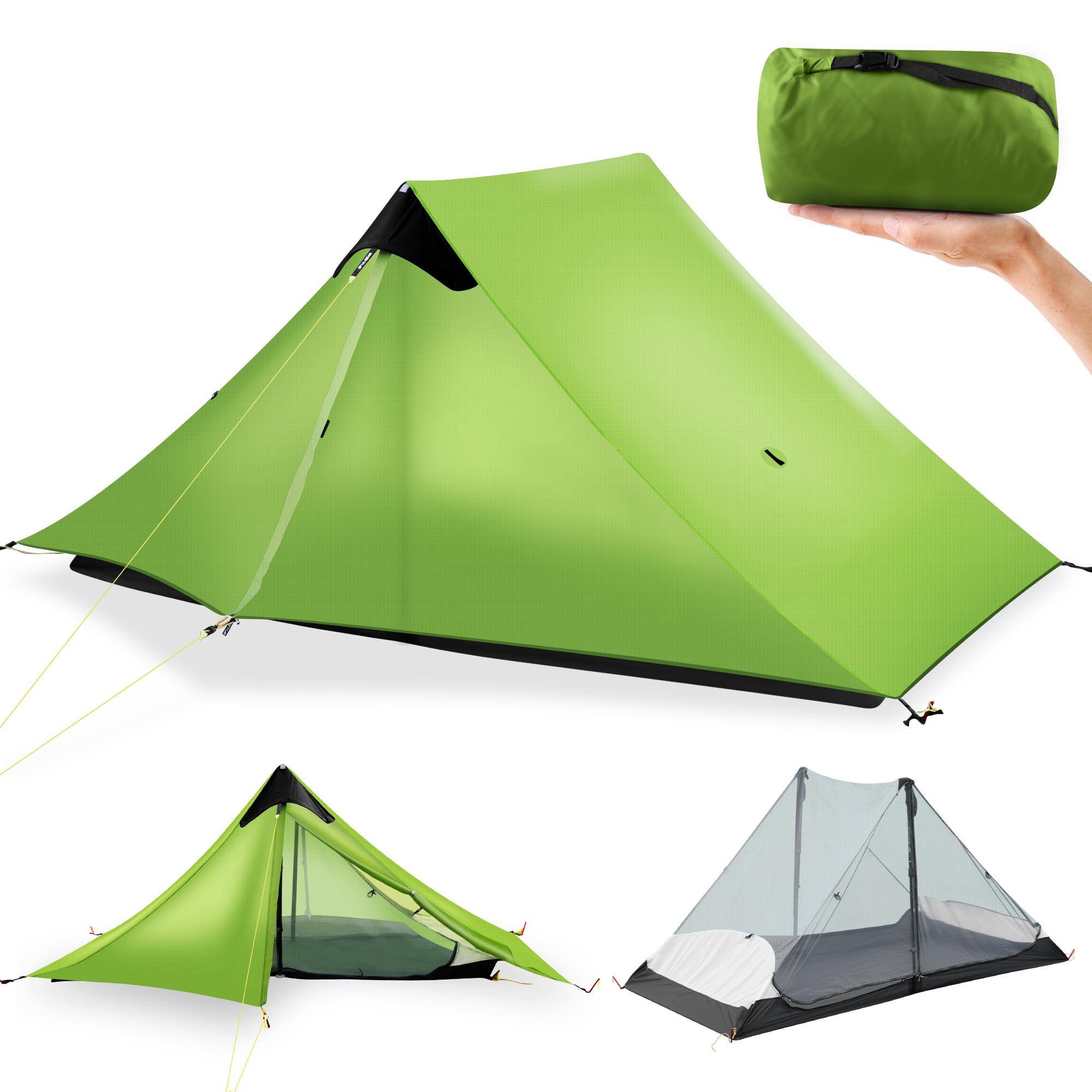
Two trekking poles, eight stakes and eight guy lines, and you have a two-person shelter at 2.9 pounds, or 1.45 pounds a person, the lightest pair in this guide. The dependency is the point: without poles you are carrying a tent you cannot stand up, so this one is for people who already hike with them, or who do not mind adding a pole to the load.

Waterproofing is where it beats tents that cost more. The seam-taped 15D fly is rated at 5000 mm and the 20D bathtub floor at 6000 mm, the highest figures here, and the inner and outer connect with hooks so you can pitch both together in the rain instead of soaking the inner first and hanging it out later.

Pitching is the part to rehearse. It is a tension structure: get the stake angles right and it goes rigid, get them wrong and it flaps all night. The awkward pitches happen in wind, when you are holding a panel that wants to leave. One calm-day practice in a park turns the trail version from a wrestle into a routine.

The listed floor is long, at 91.7 inches, and the single door is the compromise: two people share one opening, and whoever sleeps at the back climbs out over a pad. For one person plus a pack, or two who do not mind the shuffle, that is a lot of shelter for the weight.

Pros

  • 1.45 lb per person for two hikers
  • 5000 mm fly and 6000 mm floor
  • Inner and fly pitch together
  • Long 91.7-inch floor

Cons

  • Single door for two sleepers
  • Fiddly to pitch in wind until practiced
Our verdict

For hikers already carrying poles, this is the lightest two-person shelter here, and its fly and floor carry the highest waterproof ratings in the group.

Check Latest Price
4

Bushcraft Camping

OneTigris Backwoods Bungalow 2.0

87 /100
Traveler Score Excellent

Key details

Capacity
2 person
Floor Size
81.6 by 49.2 inches
Packed Weight
3.2 lb
Waterproof Rating
1500 mm
Check Details on Amazon

Roll the front panel up and the Backwoods Bungalow becomes a covered porch; zip it shut and it is a closed baker tent. That flexibility is the whole appeal, and none of the other shelters here offers anything like it: somewhere to sit out a shower, cook under cover, or leave wet gear that is not your sleeping bag.

The dimensions back the idea up, with a 6.8 by 4.1 foot floor, 3.7 feet of headroom at the door and 1450 grams in the bag. It is built from 75D ripstop nylon, several times the fabric weight of the 10D and 15D tents here, which makes it the one for brush, paddling trips and camps where the shelter gets dragged around rather than babied.

Weather is the caveat, and it is a real one. The coating is rated at 1500 mm, on the light side of this group, and the wet-weather picture is mixed: some nights dry, some mornings damp, with condensation on the walls coming up again and again. Seal the seams, pitch with the rear vent open, and treat it as a shelter for wooded, sheltered ground rather than an exposed ridge.

Setup needs two trees about 6.8 feet apart, or poles you supply, plus ten stakes and six guy lines, which is more fiddly than a dome and awkward above treeline. On a new one, inspect the corner strap stitching first, since that is the spot to watch. For bushcrafters and kayakers who camp in cover, it is a lot of living space and character for the money.

Pros

  • Roll-up porch for sitting out weather
  • 75D ripstop resists abrasion
  • 3.7 feet of headroom at the door

Cons

  • 1500 mm coating is modest for real rain
  • Needs trees or poles to pitch
Our verdict

A characterful shelter with a real porch and more headroom than the others, if you camp among trees and can live with the lightest waterproof rating here.

Check Latest Price
5

Budget Solo Trips

Night Cat Ultralight 1P

82 /100
Traveler Score Excellent

Key details

Seasons
3 season
Capacity
1 person
Peak Height
125 cm
Packed Weight
2 lb
Check Details on Amazon

Double-wall construction is the thing to notice here. At this end of the market plenty of light solo shelters are single-skin bivies that condense on the inside and soak your bag, while the Night Cat gives you a mesh inner and a separate fly, the same basic architecture as every tent in this guide, at the lowest price.

The side entry is a small thing we appreciated. You sit on the floor edge and swing your legs in rather than diving head-first into a tube, and the inner is compact enough that everything you brought is within reach from a lying position. Setup is quick once the pitch is dialed, though the pole sections can come apart as you break it down.

The compromises show up in the hardware. The poles are not part of the package, so you need trekking poles or a dedicated pole before it stands at all, and the grommets and pole joints are where this shelter wears first. Water resistance is the most divided part of the picture: enough for a passing shower, not something to plan a wet weekend around.

Set against the Star Trail, the trade is clear. You give up the freestanding pitch and the included footprint, and you keep the money. For someone whose trips are still mostly fair-weather weekends, that is the right way round.

Pros

  • Two pounds with a real double wall
  • Side door is easier to enter
  • Quick to pitch once dialed

Cons

  • Trekking pole not included
  • Light hardware and thin fabric wear first
Our verdict

A genuine double-wall solo shelter at two pounds for very little money; buy it as a first ultralight tent if you already own trekking poles.

Check Latest Price

How We Tested the Best Ultralight Tents

This started with research, not hiking. I pulled every shelter marketed as ultralight and under three pounds of trail weight, then filtered out anything with a floor too small for two 25-inch pads, a packed size that wouldn't ride sideways in a 40-liter pack, or a price that didn't match what came in the box — stakes, guylines, a footprint, or none of the above. That left 11 tents, which my team used over eight months and a few dozen nights out.

We weighed each one on a kitchen scale three ways: bare, with stakes and guylines, and stuffed into its sack, since the advertised figure rarely matches the load you actually carry. We timed the first solo pitch, timed it again after ten pitches, and noted which ones went up without a headlamp. Every tent sat through a two-day rain and a five-minute hose soak on the fly; each morning I wiped the interior walls to see how much condensation had run down onto the floor and our bags.

On a gusty ridge night I watched pole flex and counted how many guyout points actually needed staking before the canopy stopped flapping. Afterward I checked stake loops and floor fabric for abrasion from granite and roots, and I packed two of them away wet to see which sagged when re-pitched the next evening. Fit was measured, not eyeballed: two wide pads, two bags, and whether I could sit up without my head touching the ceiling. Appearance counted too, because a taut, even pitch is usually a tent that sheds wind well. Value came down to what each one included against what it cost.

How to Choose Ultralight Tents

Start With the Weight You Actually Carry

The number in the listing is rarely the number on your back. Add stakes, guy lines, a footprint and a stuff sack and a two-pound tent climbs past it. Weigh the whole kit before you compare anything.

For a two-person shelter, divide by two: our top pick's 3.6 pounds is 1.8 pounds a person, and the FBSPORT Lanshan's 2.9 pounds comes out at 1.45. That per-person figure decides whether a tent is ultralight for your trip, and it is the number that should be on the shelf label.

Freestanding or Trekking Pole

Trekking-pole shelters save the most weight for the money because you are already carrying the structure. The trade is ground: they need stakes to bite, which rules out granite slabs, loose sand and wooden platforms, and they take practice to tension in wind.

A freestanding dome can be built first and moved second, which is why we keep coming back to them for trips where the campsite is unknown. If you never hike with poles, add the weight of a pole to the tent before you compare the two designs.

Waterproofing Is More Than a Number

The hydrostatic head rating tells you how much water pressure a fabric resists before it leaks, and it is the least interesting number on the page next to coverage. A 1500 mm fly that reaches the ground and wraps the inner sheds weather better than a 5000 mm fly that leaves mesh exposed to driving rain.

Look for a bathtub floor, taped or welded seams, and a fly you can pitch with the inner already clipped in. Under about 1500 mm on the fly, plan for showers rather than storms and pick your campsite accordingly.

Fit the Floor to Your Pads

Two person means two pads, and sometimes not much more. A 51-inch floor takes two 20-inch pads with about 11 inches left over, enough to lie still and not enough to sprawl, and a pair of wide pads will have you touching the walls.

Check length as well: a 6-foot-2 sleeper wants 84 inches of floor and a peak high enough to sit up without pressing the fly. If you mostly go alone, buy the two-person anyway and enjoy the space.

What Thin Fabric Costs You Later

Ten- and fifteen-denier nylons are how a shelter gets under three pounds, and they behave like it: they abrade at the floor, fray at the zipper and hate being dragged over rock. Thicker 75D fabric shrugs off brush but adds weight and does not automatically buy weatherproofing.

Match the fabric to the trip: a 10D fly for fast summer routes where you look after your gear, a 20D floor or an included footprint for anything rocky, and a patch in the pack either way.

Frequently Asked Questions

Final Verdict

Our pick is the Naturehike Cloud-Up UL. It is the one shelter here that works both ways: a solo hiker gets a roomy one-person with somewhere to put a pack inside, and two people get a 3.6-pound tent at 1.8 pounds each. Nothing else in this group covers that range as convincingly.

If you hike alone and carry trekking poles, the FBSPORT Lanshan is lighter and better sealed against rain. If you do not carry poles, the Star Trail is the solo answer at 2.3 pounds with the footprint already in the bag.