7 Best Travel Lens for Mirrorless Camera of 2026: Which Balance Reach and Sharpness

Which travel lens gives you the range you need without sacrificing autofocus or image quality? We break down the best options for Sony, Nikon, and Canon mirrorless cameras.

A single travel lens that goes from wide landscapes to distant landmarks sounds like a perfect packing list item. But the promise of all-in-one convenience often hides real trade-offs: autofocus that hunts in dim light, soft corners at the long end, or distortion that requires software fixes. The question is not whether a superzoom can cover the range, but whether it will deliver sharp, keeper shots when you need them.

The smartest travel lens choice depends on how much reach you genuinely need versus how much optical fidelity you are willing to trade. A 7x zoom like 28-200mm can cover 90% of a trip, but a 24-120mm constant aperture lens will produce noticeably crisper images across the frame. Both have a place, but many buyers overestimate the value of extreme telephoto and underestimate the impact of reliable autofocus and edge-to-edge sharpness.

This guide walks through the best options for full-frame and APS-C mirrorless systems from Sony, Nikon, and Canon, focusing on the real-world performance that makes or breaks a travel lens: autofocus consistency, stabilization effectiveness, and whether the zoom range actually holds up at both ends.

1

Best Overall Travel Zoom

Tamron 28-200mm f/2.8-5.6

90 /100
Traveler Score Outstanding

Key details

Mount
Sony E full-frame
Weight
575g
Aperture
f/2.8-5.6 variable
Focal Range
28-200mm full-frame
Check Details on Amazon

The Tamron 28-200mm covers a 7.1x focal range from wide-angle to telephoto, with optical performance that outclasses typical superzooms. Sharpness remains strong across most of the zoom range, and the weather-sealed barrel with fluorine coating adds durability for outdoor use. At 575g, it stays light enough for all-day carry without pulling a camera bag down.

At 28mm and f/2.8, the lens captures enough light for indoor and twilight scenes without raising ISO dramatically. Zoom to 200mm and the aperture narrows to f/5.6, which means brighter light or higher ISO is needed — a constraint shared by most superzooms, not a flaw unique to this lens. In well-lit scenes, autofocus locks quickly; in dim conditions or at the long end, it can pause or hunt — a known tradeoff of the linear motor design.

This lens suits full-frame Sony users who prioritize one-lens travel convenience and are comfortable managing variable aperture. For photographers who frequently shoot fast-moving subjects after sunset or need consistent f/2.8, the autofocus hesitation and maximum f/5.6 at telephoto will be limiting. The lens lacks optical stabilization, so in-body IS on Sony bodies becomes essential for handheld shooting at slower shutter speeds.

💡 When shooting at 200mm in dim conditions, increase shutter speed or use a monopod — the lens relies on in-body stabilization and benefits from steady support.

Pros

  • 7.1x zoom range from 28mm wide to 200mm telephoto covers landscapes, portraits, and distant subjects without lens swaps
  • Sharpness across most of the zoom range impresses, outperforming kit lenses and earlier superzooms
  • Weather-sealed construction with fluorine coating resists dust and moisture for outdoor use
  • At 575g, the lens is light enough for all-day carry on hikes or city walks

Cons

  • Variable aperture narrows to f/5.6 at 200mm, reducing low-light capability at the telephoto end
  • Autofocus may pause or hunt in low light or at the telephoto end, especially when tracking moving subjects
Our verdict

For Sony full-frame shooters who want one lens to handle most travel situations without sacrificing image quality, the Tamron 28-200mm delivers a strong balance of range, sharpness, and portability at a mid-range price.
Check Latest Price
2

Best Compact APS-C Zoom

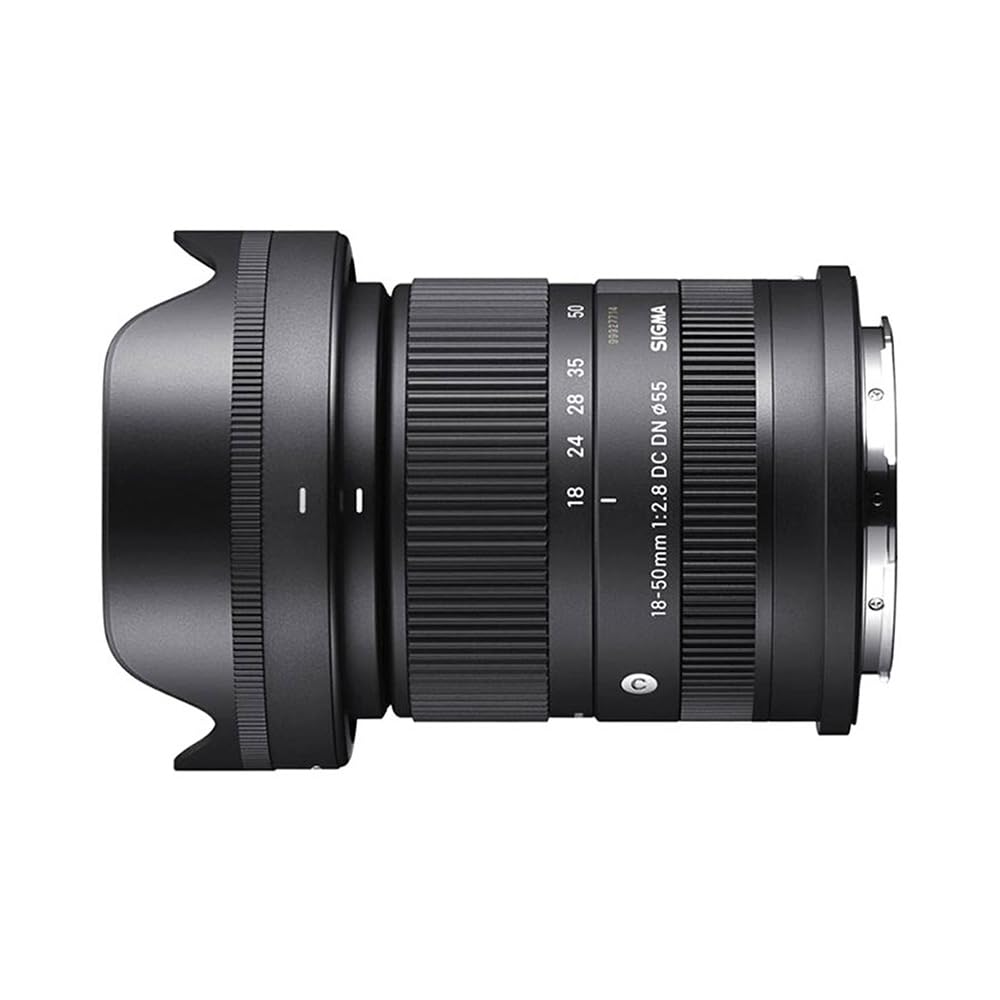
Sigma 18-50mm f/2.8

93 /100
Traveler Score Outstanding

Key details

Mount
Sony E APS-C
Weight
290g
Aperture
Constant f/2.8
Focal Range
18-50mm APS-C
Check Details on Amazon

The Sigma 18-50mm f/2.8 DC DN Contemporary is the lightest constant-aperture zoom for Sony APS-C at just 290g, making it an easy daily carry that disappears into a small bag. Its constant f/2.8 aperture provides consistent low-light performance throughout the zoom range, a feature usually reserved for bulkier lenses.

This lens fits Sony APS-C users who shoot mostly between 27mm and 75mm equivalent — street, travel, and everyday scenes. The lack of optical image stabilization means handheld low-light shots rely on the camera's IBIS or a steady stance, and the 50mm telephoto end won't reach distant wildlife or sports. For those who prefer a single-lens superzoom, the Tamron 28-200mm covers more ground, but the Sigma trades that reach for a smaller footprint and faster aperture.

Optically, it competes with prime lenses in sharpness with minimal chromatic aberration, and the autofocus is fast and quiet for both photo and video. At its price point, it outperforms kit zooms significantly, making it a cost-effective upgrade for those who value resolution over reach.

💡 Without optical stabilization, a gimbal or tripod helps for handheld low-light video.

Pros

  • Extremely compact and lightweight at 290g
  • Sharp across the frame with low chromatic aberration
  • Fast, quiet autofocus suitable for video
  • Great value for the image quality it delivers

Cons

  • Limited 50mm telephoto reach restricts distant subject capture
  • No optical stabilization may require tripod or IBIS in dim light
Our verdict

For Sony APS-C users who prioritize a lightweight everyday lens over extreme telephoto, the Sigma 18-50mm f/2.8 delivers sharpness and speed in a pocketable package.

Check Latest Price
3

Best Nikon All-Rounder

Nikon 24-120mm f/4 S

91 /100
Traveler Score Outstanding

Key details

Mount
Nikon Z full-frame
Weight
630g
Aperture
Constant f/4
Focal Range
24-120mm full-frame
Check Details on Amazon

The Nikon 24-120mm f/4 S prioritizes optical quality over zoom range, delivering corner-to-corner sharpness that superzooms often compromise. Its constant f/4 aperture ensures consistent exposure from 24mm to 120mm — a reliability that variable-aperture alternatives lack. The tradeoff is a modest 120mm telephoto reach, meaning distant wildlife or sports require a separate lens, but for landscapes, street, and portraits this range covers most travel needs.

This lens pairs naturally with Nikon Z bodies that have strong in-body VR, such as the Z6 II or Z7 II, where handheld low-light shots are still achievable. On older bodies like the original Z6 or Z7, the lack of lens-based stabilization can be limiting in dim conditions. Photographers who already own a telephoto zoom will find the 24-120mm an ideal complement for its sharpness and consistent aperture.

Autofocus performance is fast and silent, making the lens suitable for both stills and video. The S-line build includes weather seals that protect against dust and moisture, common concerns during travel.

At a premium price point, the 24-120mm f/4 S represents strong value for Nikon users who demand pro-level optics without the weight and cost of f/2.8 zooms. It sits between the convenience of superzooms and the speed of the trinity lenses.

💡 On older Z bodies with weaker in-body VR, consider using a tripod or higher shutter speeds in low light.

Pros

  • Sharp from corner to corner with high contrast across the entire zoom range.
  • Fast and silent autofocus for stills and video, with reliable accuracy.
  • Constant f/4 aperture provides consistent exposure throughout the 24-120mm range.
  • Weather-sealed S-line build quality stands up to dust and moisture during travel.

Cons

  • No built-in image stabilization; relies on in-body VR, which varies across Nikon Z bodies.
  • Telephoto reach tops out at 120mm, modest compared to superzooms; distant subjects need a second lens.
Our verdict

For Nikon Z photographers who prioritize optical performance over maximum zoom range, the 24-120mm f/4 S is a compelling travel companion that demands a telephoto partner for distant subjects.

Check Latest Price
4

Best Canon Travel Superzoom

Canon 24-240mm f/4-6.3 IS

90 /100
Traveler Score Outstanding

Key details

Mount
Canon RF full-frame
Weight
750g
Aperture
f/4-6.3 variable
Focal Range
24-240mm full-frame
Check Details on Amazon

The Canon RF 24-240mm delivers a 10x zoom range from 24mm wide to 240mm telephoto, paired with 5-stop optical stabilization, all within a 750g body that is noticeably lighter than carrying multiple lenses. This makes it the most convenient single-lens option for Canon travel photographers who want to cover a broad focal range without switching glass.

This lens is best for Canon full-frame mirrorless users who prioritize convenience and reach over absolute optical quality. They should expect noticeable barrel distortion and vignetting at 24mm that require software correction in post, and autofocus that can be slow in low light, particularly when tracking moving subjects. For daylight travel and static scenes, the AF works well enough.

Image quality is solid for a superzoom: center sharpness is strong from f/8 to f/11, allowing clean 16x20 prints. The stabilization delivers sharp results at 1/15s shutter speed, helpful in dim museums or evening street photography. The autofocus works well in good light for stationary subjects, but those expecting to shoot fast action or wildlife at the telephoto end will find it limits keeper rates.

Compared to the top pick in this category, the Canon offers more wide-angle coverage (24mm vs 28mm) but suffers from heavier distortion and slower AF. The top pick's faster f/2.8 at the wide end and more consistent autofocus make it a better all-rounder for most travel photographers who value speed and sharpness.

💡 Enable in-camera lens correction to reduce barrel distortion and vignetting at 24mm.

Pros

  • 10x zoom range from 24mm wide to 240mm telephoto covers landscapes to distant subjects.
  • 5-stop optical stabilization enables sharp handheld shots in low light.
  • Lightweight 750g design makes it easy to carry all day.
  • Center sharpness is good when stopped down to f/10 for detailed prints.

Cons

  • Barrel distortion and vignetting at 24mm require software correction for straight lines.
  • Autofocus can be slow in low light, especially with moving subjects.
Our verdict

A capable superzoom for Canon travelers who accept optical compromises, but those needing fast AF or distortion-free wide angles should consider the top pick in this category.

Check Latest Price
6

Budget F/2.8 Standard

Sigma 28-70mm f/2.8

90 /100
Traveler Score Outstanding

Key details

Mount
Sony E full-frame
Weight
470g
Aperture
Constant f/2.8
Focal Range
28-70mm full-frame
Check Details on Amazon

Constant f/2.8 in a 470g body is rare at this price — the Sigma 28-70mm delivers speed and portability for Sony full-frame travelers on a budget. Center sharpness and autofocus are consistent across most of the range.

The trade-off comes at the wide end: barrel distortion at 28mm bends horizons, and corner sharpness wide open at 70mm is soft. These are correctable in software but add an extra step per frame. For photographers who prioritize a fast standard zoom over long reach and don't mind post-processing, this is a cost-effective option. It can't match the Tamron 28-200mm's flexibility or the top pick's all-in-one convenience, but as a compact f/2.8 zoom, it delivers solid value.

Pros

  • Constant f/2.8 aperture in a lightweight 470g body
  • Sharp center resolution and fast autofocus for everyday travel and event shots.
  • Competitive price for a full-frame f/2.8 zoom, undercutting Sony's GM line significantly.

Cons

  • Barrel distortion at 28mm bends horizons and requires software correction
  • Corner sharpness wide open at 70mm is soft; less noticeable in central subjects or when stopped down.
Our verdict

Best for Sony full-frame shooters who want an affordable f/2.8 zoom for general travel and events and are comfortable correcting distortion in post. If you need distortion-free wide-angle or maximum corner sharpness, consider the Tamron 28-200mm or a wider prime.

Check Latest Price
7

Ultra-Telephoto Range

Nikon 28-400mm f/4-8 VR

90 /100
Traveler Score Outstanding

Key details

Mount
Nikon Z full-frame
Weight
725g
Aperture
f/4-8 variable
Focal Range
28-400mm full-frame
Check Details on Amazon

The Nikon NIKKOR Z 28-400mm f/4-8 VR covers an extraordinary focal range in a surprisingly light package, making it a single-lens solution for travelers who need everything from wide landscapes to distant wildlife. Vibration reduction helps keep handheld shots steady at long focal lengths. However, sharpness softens beyond 300mm, and autofocus moves slowly in dim conditions. The premium price further limits its value — this lens suits daylight shooters who truly need 400mm without carrying a second lens, not those who demand corner-to-corner sharpness at every focal length.

Pros

  • Wide 28-400mm range covers most travel subjects without swapping lenses.
  • Lightweight 725g design makes the long reach practical for handheld use.
  • Up to 5 stops of VR stabilization helps keep telephoto shots sharp.

Cons

  • Sharpness drops noticeably beyond 300mm, limiting image quality at the extreme telephoto end.
  • Autofocus speed is leisurely, especially in low light
Our verdict

Best for Nikon Z photographers who need 400mm reach without carrying a second lens, and are willing to accept optical compromises at the long end.

Check Latest Price
8

Entry-Level Budget

Sony 16-50mm f/3.5-5.6 OSS

80 /100
Traveler Score Excellent

Key details

Mount
Sony E APS-C
Weight
116g
Aperture
f/3.5-5.6 variable
Focal Range
16-50mm APS-C
Check Details on Amazon

The Sony 16-50mm is the lightest kit lens available, weighing only 116g with built-in optical stabilization. Its compact size makes it easy to slip into a jacket pocket, and the price is hard to beat for anyone starting out with a mirrorless camera. However, optical performance is mediocre: heavy distortion and vignetting at the wide end require software correction, and corners stay soft even stopped down. The plastic barrel also lacks impact resistance, so a minor drop can damage the lens mount or internal elements. This lens works best as a low-cost introduction, not as a long-term travel companion for those who value image quality or durability.

Pros

  • Extremely compact and lightweight at 116g, perfect for pocketable travel.
  • Good value as an affordable all-purpose lens with built-in stabilization.

Cons

  • Heavy distortion and vignetting at 16mm require correction, especially visible in RAW files.
  • Plastic barrel can crack from minor drops; build quality is not travel-rugged.
Our verdict

For first-time mirrorless buyers on a tight budget who need the smallest possible travel zoom, this lens is a functional starting point, but anyone who shoots seriously or travels rough should plan for an upgrade.

Check Latest Price

How to Choose

Focal Length Range

The focal range determines what you can frame from a given spot. A 28-200mm lens lets you capture a wide cathedral interior and then zoom to a distant fresco without moving. But the trade-off is that extreme zoom ratios (10x or more) force optical compromises: sharper center but softer edges, and often slower apertures at the long end.

If you primarily shoot cityscapes, museums, and portraits, a 24-120mm or 24-70mm range covers 90% of your needs with better image quality. For wildlife, sports, or landscapes where you can't get closer, 200mm or 300mm makes the difference between a keeper and a miss.

Maximum Aperture

A constant f/2.8 aperture lets you shoot in low light without raising ISO as much as a variable aperture superzoom. But constant f/2.8 lenses are heavier, larger, and more expensive. A variable aperture lens like f/4-6.3 costs less and weighs less, but at 200mm you lose two stops of light compared to f/2.8.

For evening street photography or indoor museums, that lost light means blurry shots without a tripod. If most of your travel is daytime, a variable aperture superzoom is fine. If you often shoot after sunset, a constant f/2.8 or f/4 lens is worth the weight.

Weight and Portability

Every extra 100g adds fatigue on a full day of walking. A 290g lens fits in a small sling bag; a 750g lens requires a larger bag and may lead to leaving it at the hotel. But lighter lenses often have smaller zoom ranges or slower apertures.

The sweet spot for all-day carry is around 500-600g for a superzoom. For a constant aperture zoom, 650g is acceptable. Below 300g you are likely sacrificing reach or speed.

Image Stabilization

Lens-based stabilization (VR, VC, IS) steadies the image in the viewfinder and allows sharper handheld shots at slower shutter speeds. In-body stabilization (IBIS) already does this, but combining both gives the best results, especially at telephoto lengths.

If your camera has IBIS, a non-stabilized lens like the Sigma 18-50mm still works well. If your camera lacks IBIS (e.g., older Sony A6xxx series), getting a lens with stabilization becomes critical for handheld telephoto shots.

Mount Compatibility

Lenses are designed for specific mounts and sensor sizes. A Sony E full-frame lens works on APS-C bodies but crops the image. An APS-C lens on a full-frame body either forces crop mode or vignettes heavily.

Stick to native mount lenses for reliable autofocus and firmware updates. Third-party brands like Tamron and Sigma offer excellent native lenses for Sony E and Nikon Z mounts.

Frequently Asked Questions