Best Compact Travel Cameras of 2026

A compact travel camera only earns its spot in your bag if it disappears into a jacket pocket and still beats your phone on the shots that matter. That's the trade-off built into this category: smaller bodies and lenses usually mean fewer controls, weaker low-light images, and battery anxiety by mid-afternoon. The right one closes that gap. It gives you a real zoom, better stabilization, and files you can crop without watching the detail turn to mush—without becoming a second piece of luggage.

I've spent the past seven months carrying eight compact cameras on weekend hikes, a weeklong coastal trip, and plenty of ordinary dinners and school runs. The pattern was clear: the ones I reached for weren't the most feature-packed—they were the ones that turned on fast, held a charge through a full day, and made the menu feel obvious after one pass. Spec sheets won't tell you that a slight lens bump can make a camera annoying to pocket, or that autofocus in a dim restaurant matters more than another megapixel. The picks below are the ones that survived daily life and still made me want to keep shooting.

1

Best Overall

Panasonic LUMIX ZS99

83 /100
Traveler Score Excellent

Key details

Sensor
20.3MP 1/2.3-inch BSI CMOS
Weight
11.4 oz
Charging
USB-C in-camera
Zoom Range
24-720mm (30x optical)
Check Details on Amazon

Thirty times zoom, and the camera still disappears into a jacket pocket. Panasonic's 24-720mm lens covers a courtyard doorway at the wide end and a gargoyle three buildings away at the long end without a second lens or a camera bag, which is the whole argument for carrying a camera instead of a phone. Of everything here, this is the one we recommend to most travelers.

The travel conveniences are what we noticed first. USB-C charging means the camera shares a cable with a phone, a tablet or the power bank in a daypack, so there's no proprietary brick to forget beside a hotel bed. The 1,840k-dot touchscreen tilts up and down, which matters more than it sounds when you're shooting over a crowd or holding the camera at waist height in a market.

Video runs to 4K at 30p, with 4K Photo bursts at 30fps for moments that won't hold still. Bluetooth 5.0 and a dedicated Send Image button move clips to a phone without pulling the card, and in daylight the 20.3MP BSI CMOS sensor produces the bright, saturated travel pictures most people want straight out of the camera.

There's room to grow, too: program, aperture-priority and manual modes sit behind the automatic ones, and the burst modes are there for parades and market scenes where a single frame rarely lands. Nothing about the ZS99 asks you to learn photography before your trip.

Pros

  • 24-720mm reach in a pocketable body
  • Charges over USB-C with any phone cable
  • Tilting touchscreen for crowds and low angles
  • 4K video and easy Bluetooth sharing

Cons

  • Small 1/2.3-inch sensor limits low-light shots
  • Aperture narrows to f/6.4 at full zoom
Our verdict

The one we recommend to most travelers: 30x reach, USB-C charging, and a tilting screen in a pocketable body, with a small sensor as the trade.
Check Latest Price
2

Best Image Quality

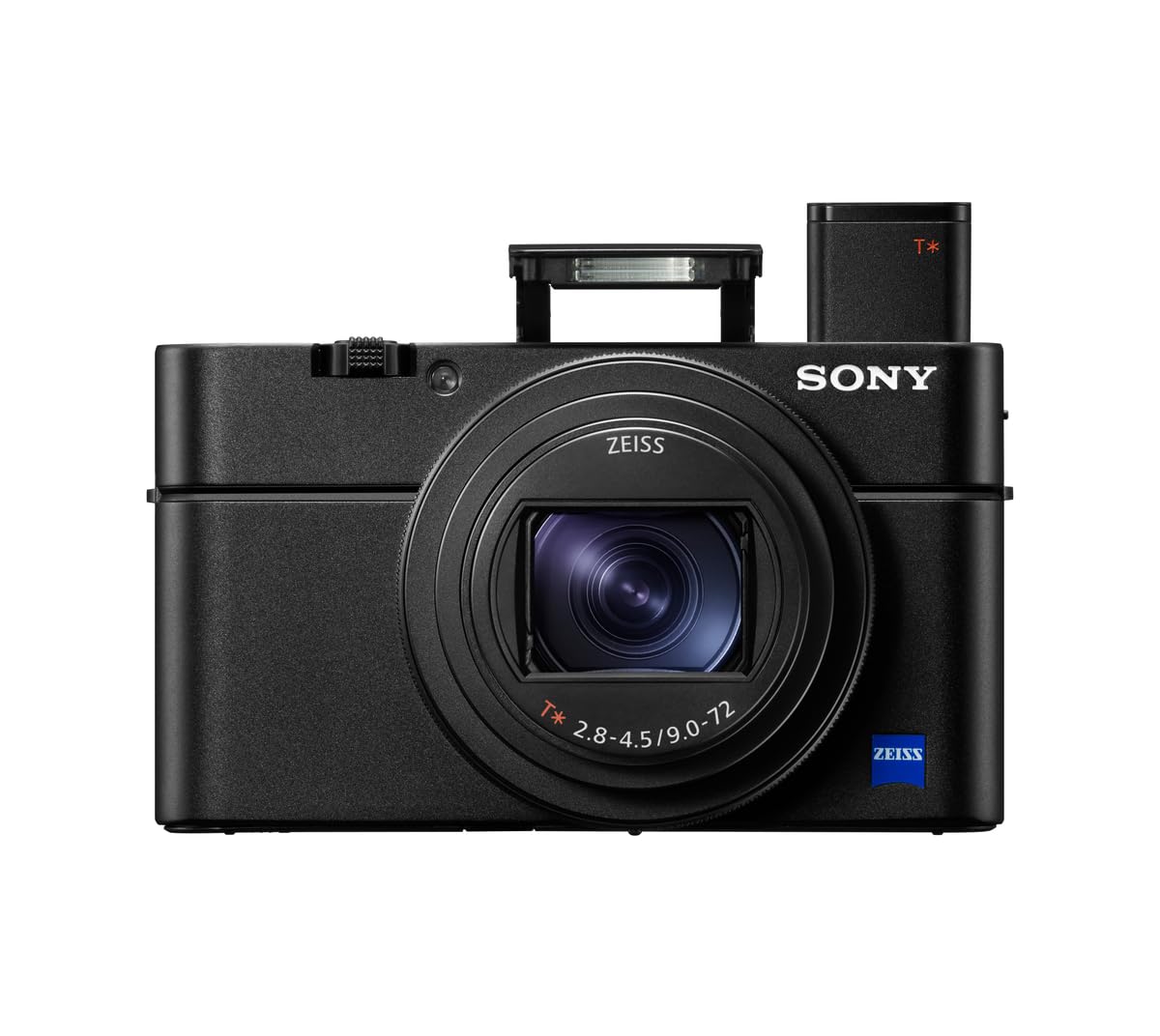
Sony RX100 VII

83 /100
Traveler Score Excellent

Key details

Video
4K UHD
Sensor
20.1MP 1-inch stacked CMOS
Weight
9.7 oz
Zoom Range
24-200mm (8x optical)
Check Details on Amazon

A one-inch stacked sensor in something this small is the whole reason the RX100 VII sits at the top of this group on image quality. The 20.1MP chip is many times the area of the 1/2.3-inch sensors in the pocket zooms, and paired with the 24-200mm Zeiss zoom it holds color and detail indoors and after sunset where cheaper cameras start smearing.

This is the one we take when the photos are the point of the trip. At 275 g it is lighter than the ZS99, it has a pop-up electronic viewfinder for bright days, and the autofocus — 357 phase-detection points with real-time eye tracking — locks onto a face or a passing scooter before you have finished framing. Twenty frames a second blackout-free sounds like a sports spec; on a trip it is what turns a crowded market into a usable picture.

Reach is the trade. A 200mm long end is a fraction of the 720mm the superzooms manage, so distant birds, stage shots and rooftop carvings stay out of range. Video is 4K with a microphone jack and a tilting screen that flips up for self-recording, which is more capability than most pocket cameras carry.

Pros

  • One-inch sensor for indoor and evening detail
  • Fast autofocus with eye tracking
  • Pop-up viewfinder and 275 g body

Cons

  • The most expensive camera in this group
Our verdict

We pick it when photo quality outranks reach: the one-inch sensor and fast autofocus are the strongest here, at the highest price in the group.

Check Latest Price
3

Best Long Zoom with a Viewfinder

Sony DSC-HX80

87 /100
Traveler Score Excellent

Key details

Screen
3-inch tilting LCD
Sensor
18.2MP 1/2.3-inch CMOS
Viewfinder
Pop-up OLED Tru-Finder
Zoom Range
24-720mm (30x optical)
Check Details on Amazon

A viewfinder in a pocket camera is the detail most travelers forget to want until noon on a bright day, when the rear screen turns into a mirror. The HX80's little OLED finder pops up out of the body, and it is the feature that earns this older model a place on a current list.

Behind it sits a 30x Zeiss Vario-Sonnar lens running 24-720mm, the same reach as our top pick, plus 5-axis stabilization to keep the long end steady in hand. The 18.2MP sensor, tilting three-inch screen and full PASM modes make it a camera you can shoot automatically for a week and then learn on.

Where it still wins is the combination: the finder, the reach, and a body that slips into a jacket pocket. If your travel days happen outdoors in strong sun and you want a long lens without a camera bag, this one covers the job for far less than the premium compacts.

Pros

  • Pop-up OLED viewfinder for sunny days
  • 30x Zeiss zoom from 24-720mm
  • 5-axis stabilization steadies the long end

Cons

  • Video tops out at 1080p
  • Built-in flash can stop working over time
Our verdict

A pop-up viewfinder and 30x zoom make this the bright-day travel camera we reach for when the rear screen would be useless.

Check Latest Price
4

Best for Sharing to Your Phone

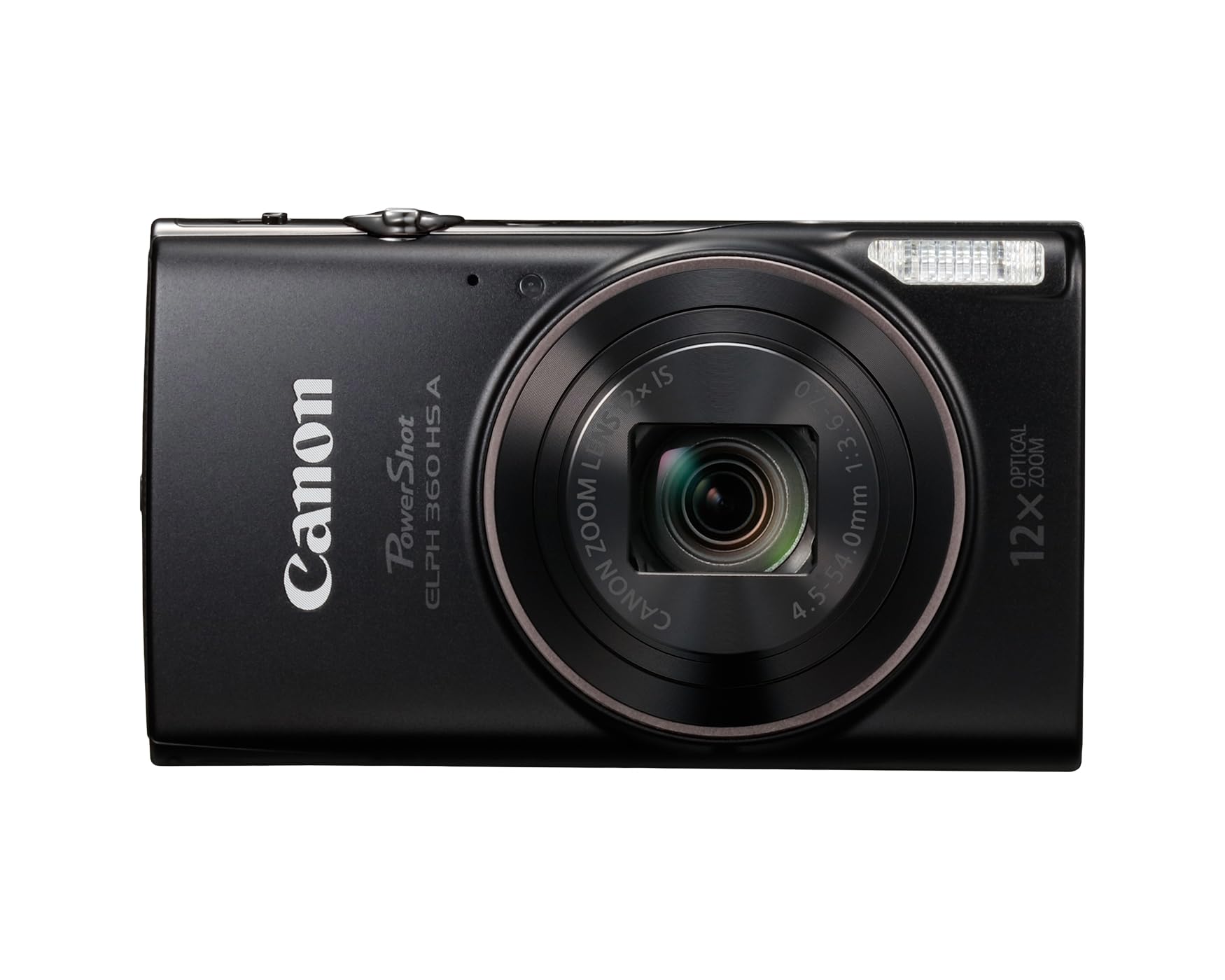
Canon PowerShot ELPH 360 HS A

85 /100
Traveler Score Excellent

Key details

Screen
3.0-inch LCD
Sensor
20.2MP CMOS
Wireless
Wi-Fi and NFC
Zoom Range
25-300mm (12x optical)
Check Details on Amazon

Canon squeezed a 12x zoom into the ELPH 360 HS A: 25-300mm, enough for a wide street corner and a detail on a church door three blocks away. The 20.2MP CMOS sensor and DIGIC 4+ processor handle the automatic work, and Hybrid Auto records a four-second clip before each still to stitch the day into a short video.

What keeps it in the bag is the wireless. Built-in Wi-Fi and NFC pair the camera to a phone so pictures land where you will actually post them, with no card reader and no laptop in the hotel lobby. That sounds like a small thing until you are three days into a trip with a card full of shots nobody has seen.

The battery is small enough that a spare belongs in your bag, and the body feels lighter-duty than the asking price suggests. Neither is a dealbreaker at this size, and the 3-inch screen is easy to read from a low angle.

Pros

  • Wi-Fi and NFC send photos to a phone
  • 12x optical zoom from 25-300mm
  • 20.2MP sensor with simple automatic modes

Cons

  • Color can come out over-saturated
  • No memory card in the box
Our verdict

We like it for the wireless sharing: a small 12x zoom camera that puts photos on your phone without a card reader.

Check Latest Price
5

Best Budget Buy

Kodak PIXPRO FZ55

89 /100
Traveler Score Excellent

Key details

Video
1080p
Sensor
16MP 1/2.3-inch CMOS
Weight
3.7 oz
Zoom Range
28-140mm (5x optical)
Check Details on Amazon

At 3.7 ounces the FZ55 is the smallest camera here and the easiest to forget you are carrying. Its 5x optical zoom runs 28-140mm — enough for a street scene and a friend across a table, not enough for a carving on a far roof — and the 16MP sensor, 1080p video and 2.7-inch screen are deliberately basic.

The rechargeable LB-012 battery charges inside the camera over USB in about two hours, so there is no cradle in your luggage. Charge it for at least four hours before the first use or you will be looking at a dead camera on day one. The black body has a retro point-and-shoot look that is half the appeal.

Here is the thing we keep coming back to: the FZ55 costs little enough that a scratched lens or a lost camera on a boat does not ruin a trip, and in good light it takes better pictures than you expect. What we cannot promise is longevity — some units stop powering on — so buy it somewhere with a straightforward return policy and test it properly in the first week.

Pros

  • 3.7 ounces and pocket-sized
  • Charges in-camera over USB
  • Cheapest camera in this group

Cons

  • Small 2.7-inch, 230k-dot screen
Our verdict

Our budget pick: light, inexpensive, and better in daylight than the price suggests, as long as you buy where a return is easy.

Check Latest Price
6

Value Superzoom

Panasonic LUMIX ZS25

84 /100
Traveler Score Excellent

Key details

Video
1080p
Sensor
16.1MP 1/2.3-inch CMOS
Weight
6.88 oz
Zoom Range
24-480mm (20x optical)
Check Details on Amazon

The ZS25 is a 2013 camera that is still on sale, and the numbers explain why it hangs around: a 20x Leica DC Vario-Elmar zoom running 24-480mm, a 16.1MP sensor, and a body that weighs under seven ounces.

It is a well-equipped old thing. Power O.I.S. stabilization with an active mode steadies walking video, there is 10fps burst shooting, HDR and panorama modes, and full manual control if you want it. The stabilization and the lens are why the long end stays usable in the hand.

Where it earns its place is value: 20x reach for very little money in a body that disappears into a shirt pocket. The catch is that it is a 2013 design and availability is thin, so it is a pick for the traveler who wants maximum zoom on a tight budget and does not need the latest anything.

Pros

  • 20x zoom from 24-480mm
  • Under seven ounces and pocketable
  • Stabilization, burst mode and manual control

Cons

  • Fixed screen rules out low-angle framing
  • 1080p video only
Our verdict

We keep it on the list for 20x reach on a tight budget, provided the listing actually shows stock.

Check Latest Price
7

Low-Light Streets

Nikon COOLPIX P300

81 /100
Traveler Score Excellent

Key details

Sensor
12.2MP 1/2.3-inch CMOS
Weight
6.72 oz
Aperture
f/1.8 at the wide end
Zoom Range
24-100mm (4.2x optical)
Check Details on Amazon

An f/1.8 lens at 24mm is the reason to look at a camera this old. The P300's NIKKOR zoom runs 24-100mm, and that bright wide end is what keeps shutter speeds workable in dim museums, candlelit restaurants and streets after the sun drops.

The rest of the package is more generous than its age suggests: a 3-inch 921,000-dot screen, full manual control with one dial for aperture and another for shutter speed, 7fps continuous shooting and 1080p video from a 12.2MP CMOS sensor.

It is a 2011 camera and it behaves like one, so treat it as a stills-first pick rather than a video or sharing tool. The layout, though, is pleasingly direct — two dials, a real mode selector and a screen you can actually see.

We keep it for one job: dim interiors and evening streets on a budget. If your trips are museums, night markets and cathedrals, a fast wide lens will do more for your pictures than another megapixel, and this is the least expensive way to get one here.

Pros

  • f/1.8 wide lens for low light
  • Twin dials and full manual control
  • 3-inch 921,000-dot screen

Cons

  • 4.2x zoom runs out quickly
  • 12.2MP leaves little room to crop
Our verdict

A bright f/1.8 lens makes this the bargain for dim museums and evening streets, if you can live with a short zoom.

Check Latest Price
8

First Camera

Duluvulu DC101

84 /100
Traveler Score Excellent

Key details

Zoom
16x digital only
Screen
3-inch 180° flip screen
Sensor
48MP 1/3-inch CMOS
Batteries
Two rechargeable included
Check Details on Amazon

What arrives in the box is the argument: a 32GB card, two rechargeable batteries, a bag, a strap and the camera itself for less than anything else here. For a first trip camera or a teenager's, that is a complete kit with nothing else to buy before you leave.

The specifications need translating. 48MP on a 1/3-inch sensor is a marketing figure rather than detail you will see, the lens is fixed, and the 16x zoom is digital — a crop of the middle of the frame, not optics. The 3-inch screen flips up 180 degrees for selfies, and there is 4K recording, autofocus, a fill light and a webcam mode.

In good light and at normal distances it does what a point-and-shoot should, and the two batteries plus the included card mean a full day out without hunting for a charger. It is genuinely easy to hand to someone who has never used a camera.

We do not recommend it as your main travel camera. Digital zoom only means every step past the wide end is a crop, and the small sensor will not out-resolve a modern phone. As a cheap second camera for a kid on a family trip — one you can lose without a disaster — it is the easiest recommendation here.

Pros

  • Two batteries, card and bag included
  • 180° flip screen for selfies
  • Cheapest complete kit here

Cons

  • Digital zoom only, no optical reach
  • Small sensor limits fine detail
Our verdict

We recommend it as a cheap first camera for a kid on a trip, not as a replacement for your phone or a real compact.

Check Latest Price

How We Chose and Tested the Best Compact Travel Cameras

We began with a shortlist of 20 current models and narrowed it to eight based on sensor size, zoom range, body thickness, and price relative to what you actually get. Every camera had to fit in a jacket pocket or a small crossbody sling with a wrist strap attached. We brought in each unit and used it as a daily carry for seven months—not a lab bench.

Each camera went on the same rounds: a two-week coastal trip, weekend hikes, city walks, and low-light dinners at home. We kept a log of battery percentage from first shot to last, timed how long it took to power on and grab a focus, and noted any freezes, lens errors, or card-write delays. To compare photo quality, we shot the same backlit tree, brick wall, and dim restaurant table with every model, then viewed the files side by side on a calibrated monitor and cropped into the shadows and corners. Lens quality got its own pass—we zoomed all the way in on distant signs, shot into the sun to see how flare was handled, and checked whether edges stayed sharp wide open.

We also tested features that matter on a trip: how quickly each camera paired with a phone, whether the menu made sense after a day, and if the screen was usable in bright sun. Value for money came down to what you get for the size and price: a camera with a smaller sensor had to handle low light exceptionally well to justify its spot, and a pricier model had to offer noticeably better lens quality or controls. We carried each one loose in a bag and in a pocket, wiped off fingerprints, and lived with the batteries through cold mornings and long days. The eight that stayed in rotation are the ones that never made me miss a shot because of a dead battery, a confusing menu, or a lens that couldn't keep up.

How to Choose Compact Travel Cameras

Decide How Much Reach You Need

Almost every compact here starts at 24 or 25mm, which is the wide end you want for streets, small hotel rooms and group shots. The real split is at the long end: 100-200mm covers portraits, food and architectural details, while the 20x and 30x models run out to 480-720mm and pull in wildlife, stage performers and roof carvings you'd otherwise crop away.

Reach usually costs sensor size, so a superzoom and a premium compact rarely do the same job equally well. For a city-and-coast trip the 24-200mm range of the RX100 VII covers nearly everything; for safaris, concerts and boat trips, the 720mm of the ZS99 earns its place every day.

Sensor Size Is What You're Paying For

Two sizes dominate: the 1-inch sensor in the RX100 VII and the 1/2.3-inch sensors everywhere else. The bigger chip gathers far more light, so indoor markets, restaurants and blue-hour streets stay clean instead of smearing, and you keep more room to crop afterward.

The small sensors are perfectly good in daylight and live in smaller, cheaper bodies. If most of your photos happen before dinner, put the money toward reach or a second battery; if you shoot into the evening, spend it on the sensor.

Plan How the Camera Charges

Charging is a travel feature, not a footnote. In-camera USB-C, as on the ZS99, means one cable and one power bank cover the camera and your phone. A model that needs its own cradle adds another thing to pack and another thing to leave in a hotel room.

Whatever you buy, carry a spare battery and charge both at night. A long day of shooting, especially in the cold, will flatten a single cell well before you're back at the hotel.

Viewfinder or Screen Only?

Rear screens turn into mirrors at noon. A pop-up electronic viewfinder, which the HX80 and RX100 VII both have, lets you frame with the camera at your eye and steadies a long handheld shot at the same time. Tilting screens, on the ZS99, HX80 and ELPH 360 HS A, help with low angles and shooting over a crowd.

A camera with only a fixed screen, like the ZS25, is fine for casual daylight snapping and awkward everywhere else. If you plan to shoot in bright sun or at arm's length above a crowd, weigh framing before you weigh megapixels.

The Pocket Test

Compact describes a category, not your jeans. The cameras here run from under four ounces to roughly eleven, and anything much past ten rides better in a jacket or a small sling than in a trouser pocket. Check the thickness with the lens retracted, because a zoom that extends an inch changes what fits.

Add a wrist strap. The lightest cameras are the ones that go over a balcony rail or into a canal, and a strap is the cheapest insurance in the bag.

Frequently Asked Questions

Final Verdict

The Panasonic LUMIX ZS99 is the compact travel camera we recommend to most people: 24-720mm of reach, USB-C charging that shares a cable with your phone, a tilting touchscreen and 4K video, all in a body that disappears into a jacket pocket.

Spend more only if low-light image quality matters more than reach. The Sony RX100 VII's one-inch sensor is the difference, and it is the better camera for evening streets, dim restaurants and interiors — just accept the shorter zoom and the higher price that come with it.