9 Best Action Cameras of 2026: Stabilization That Actually Holds

Find the action camera that fits your travel style: steady single-lens models, 360 flagships, and budget picks that hold up.

Action camera listings lean hard on headline specs like 8K and 4K, but the footage that survives a poorly mounted bike ride or a damp snorkeling trip comes down to stabilization, battery behavior, and how well the camera handles real-world motion. Those are the details that decide whether a camera gets used or gets left in the hotel room.

The right action camera for travel is the one that disappears into your day: steady enough for a winding coastal hike, waterproof enough for a reef drop, and simple enough to edit on a phone between destinations. The trade-off is usually between single-lens versatility and 360 reframing, or between saving money and buying a larger sensor that holds up in low light.

This guide sorts the category by use case so you can match a camera to the kind of travel you actually shoot, not the one the spec sheet wants you to imagine.

1

Best Overall

DJI Osmo Action 4

92 /100
Traveler Score Outstanding

Key details

Battery Claim
Up to 160 min
Stabilization
RockSteady
Video Resolution
4K/120fps
Waterproof Depth
18m
Check Details on Amazon

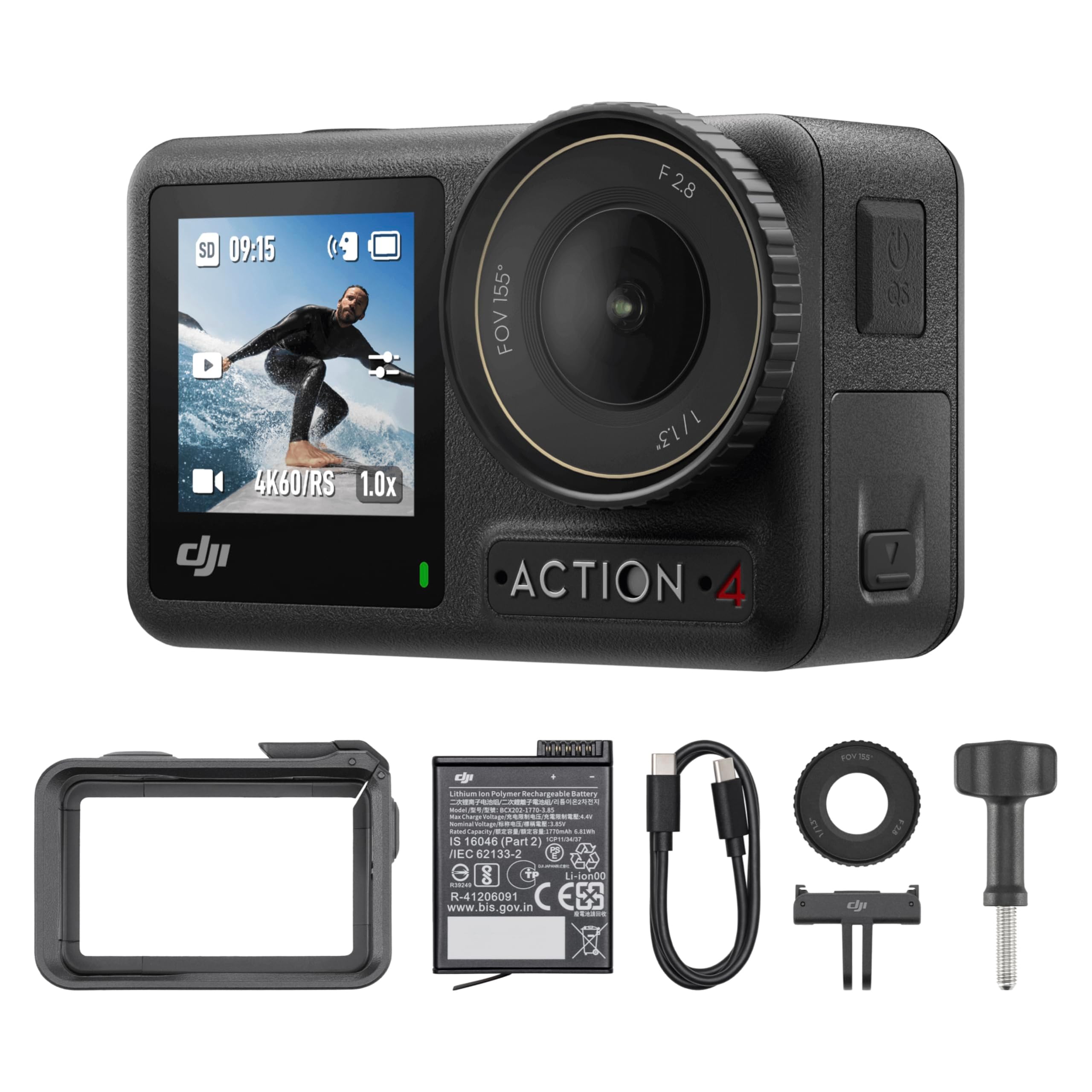
The DJI Osmo Action 4 pairs RockSteady stabilization, a 1/1.3-inch sensor, and 18m native waterproofing with touchscreens on the front and back. Its 4K/120fps capture mode offers a smooth slow-motion option for fast movement, and the larger 2.4µm pixels deliver natural color in overcast conditions plus usable low-light latitude after sunset. Magnetic mounts make transitions from helmet to chest to selfie-stick quick, and the on-screen controls are direct enough for fast exposure changes. Both screens make it easy to switch from rear-facing shooting to selfie mode, so a solo traveler can frame without guessing.

RockSteady holds walking and cycling footage steady enough for handheld use, while HorizonBalancing keeps the horizon level during fast pans and off-camber trail work. A vlogger can collect usable b-roll without balancing a gimbal, and the front touchscreen provides a framing check for interviews and self-recorded segments.

Snorkelers and shallow divers get the clearest payoff from the 18m rating: there is no housing to fog, no extra shell to carry, and only a freshwater rinse after saltwater use. The 18m rating reaches past typical snorkeling depths; a dedicated dive housing only becomes necessary for serious scuba depth. The magnetic mount makes helmet-to-hand transitions fast, and the front screen helps line up pre-dive self-shots before you go underwater.

This is the action cam for travelers, cyclists, and snorkelers who want one body for road, dirt, and sea. It covers the standard day-trip workload, and the same camera can move from a helmet mount to an underwater shoot. The clear boundary: buyers chasing 5.3K/8K resolution, lens mods, or 360 reframing need a different tool. First-time setup is tied to the DJI app, and phone linking can stall or require a retry before activation completes. Once activated, the camera records on its own.

The mid-range price lands between entry cams and flagship 8K models. It avoids the premium tax while still delivering a 1/1.3-inch sensor and stabilization that match the expensive group for standard action footage. For travelers who want a compact, durable, waterproof camera with steady high-quality video, the Action 4 covers the practical brief without paying for specs that matter less on a standard travel itinerary. That is the niche the Action 4 fills best: a daily driver that goes from pavement to trail to saltwater with no setup changes.

Pros

  • 4K/120fps video with natural color and good dynamic range from a larger action-cam sensor.
  • RockSteady and HorizonBalancing keep fast-moving footage smooth and level.
  • A mid-range price buys flagship-level stabilization, dual touchscreens, and 18m waterproofing in one package.
  • Magnetic mounts and clear on-screen controls reduce setup friction once the camera is running.

Cons

  • First-time setup requires the DJI app, and phone connection can be temperamental until activation is complete.
  • Continuous 4K/120fps recording can drain the battery more quickly than the 160-minute rating suggests.
Our verdict

For mixed land-and-water travel, the Action 4 is the practical money-for-performance pick of this group.

Check Latest Price
2

Best 360° Travel Camera

Insta360 X5

94 /100
Traveler Score Outstanding

Key details

Battery Claim
Up to 208 min
Stabilization
FlowState
Video Resolution
8K30 360°
Waterproof Depth
Waterproof
Check Details on Amazon

The compact Insta360 X5 records 8K 360 footage through dual 1/1.28-inch sensors, then lets you choose the angle after the action is over. FlowState stabilization and 360° Horizon Lock keep hiking and motorcycle shots level in rough terrain, and the waterproof body handles stream crossings and rain without a separate housing.

The dual sensors deliver crisp detail, and AI PureVideo cleans up dusk and forest-shade footage where 360 cameras can look noisy. That low-light headroom matters for adventure creators who start early, finish late, or shoot under tree cover.

The in-app AI reframing turns a full sphere into a shareable video clip without a desktop editor, and the invisible selfie stick effect creates a natural third-person view. It is a workflow built for riders and hikers who cannot know which direction the decisive moment will come from. The app menus stay intuitive enough for editors who have never touched a multicam timeline.

The X5 fits travel vloggers and adventure creators who want to shoot first and frame later, especially those producing hiking, motorcycle, or POV content. That workflow comes with its own constraints: heavy 8K/360 recording can drain the battery faster than a single-lens action cam, and phone pairing may require retries in some sessions. This is a premium-priced tool for creators who will actually use the 360 format, not for anyone looking for a simple point-and-shoot.

Pros

  • 8K 360 capture through dual sensors delivers crisp detail for action edits.
  • AI PureVideo improves low-light scenes where action cameras can struggle.
  • In-app AI reframing makes 360 editing approachable without a desktop editor.
  • Invisible selfie stick effect creates natural third-person shots for hiking and motorcycle content.

Cons

  • 360 footage needs a reframing pass before sharing, so it is not a grab-and-go action camera.
  • Unit-to-unit variability can surface in early sensor or control issues, so a full check after unboxing is worthwhile.
Our verdict

Travel storytellers who want the whole scene captured and the freedom to frame later will get the most from the X5. Anyone expecting straight-out-of-camera clips should pick a single-lens action cam instead.

Check Latest Price
3

Best Premium Single-Lens

Insta360 Ace Pro 2

90 /100
Traveler Score Outstanding

Key details

Battery Claim
Stabilization
FlowState
Video Resolution
8K30
Waterproof Depth
12m
Check Details on Amazon

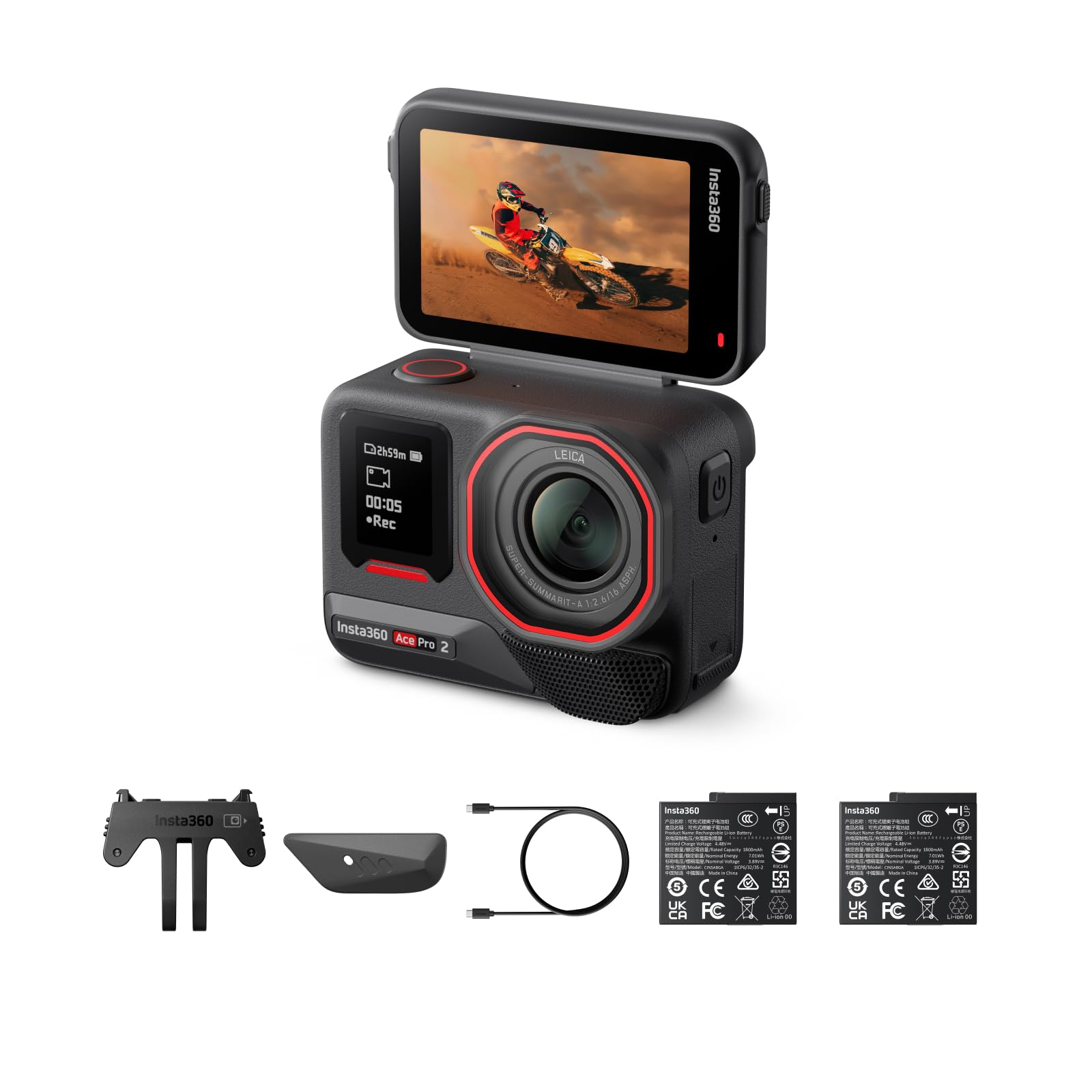
The Ace Pro 2 pairs a 1/1.3-inch Leica-tuned sensor with dual AI chips, and the result is 8K footage that stays sharp in light other action cameras turn muddy. PureVideo mode is the highlight: indoor gyms, night rides, and low-light city streets retain color and detail without the usual digital noise. FlowState stabilization and 39-ft waterproofing keep it usable in the same outdoor conditions as any other action cam, so the sensor work does not come at the cost of durability.

The camera keeps its composure on a motorcycle and handles high-contrast scenes without excessive processing. FlowState smooths vibration that makes cheaper cams wobble, and the 39-ft waterproofing covers pool and surf sessions. The dual-battery bundle is a practical response to 8K's power draw, giving owners a spare cell before the first one runs out. Build quality feels solid, and ordinary clip lengths do not invite the overheating that older compact action cams were known for.

This is the single-lens pick for night and indoor creators and motorcycle riders who want premium-grade footage. The tradeoff is that high-res modes drain the battery and can trigger heat shutdowns on long clips, and the bundled mount may rattle on rough off-road trails. Riders on pavement or short takes will not be slowed down by either limit.

💡 For night rides, keep 8K clips short and let PureVideo handle the exposure.

Pros

  • 8K footage is crisp, and low-light mode keeps night and indoor scenes clean.
  • Build quality feels solid, and ordinary clip lengths avoid the overheating seen in older compact cams.
  • Dual-battery bundle gives a spare cell before power-hungry 8K clips run it down.

Cons

  • No 360 capture, so reframing after recording requires a different camera.
  • Premium price puts it beyond budget-first shoppers.
Our verdict

The Ace Pro 2 is the premium single-lens answer for night and indoor creators who want cinematic 8K.

Check Latest Price
4

Best Traditional GoPro Bundle

GoPro Hero13 Black

90 /100
Traveler Score Outstanding

Key details

Battery Claim
Stabilization
HyperSmooth 6.0
Video Resolution
5.3K60
Waterproof Depth
10m
Check Details on Amazon

The HERO13 Black Accessory Bundle builds a complete travel kit around GoPro's 5.3K60 platform. HB-series lens mods widen the field of view beyond the standard lens, and HyperSmooth 6.0 keeps handheld, helmet, and chest-mount footage steady without a gimbal. That positions this bundle ahead of a bare GoPro body for creators who want the full system from day one.

The included two Enduro batteries, 64GB SD card, and Handler float grip turn this into a grab-and-go setup. The spare battery is the difference between a single short session and a full day of clips, and the bundled card removes the need to buy storage separately before a trip. The Handler grip gives a stable hold wet or dry, which matters for snorkel stops and boat days.

This bundle suits GoPro loyalists who want the lens-mod ecosystem and travelers who prefer a ready-to-go kit over piecemeal buying. Budget shoppers should look at a lower-priced action cam. Long high-bitrate 5.3K recording can drain the spare battery and generate heat, and phone pairing has been finicky for some iPhone users, so keep the touchscreen handy for quick adjustments.

💡 Keep the spare Enduro battery charged before long 5.3K sessions.

Pros

  • Crystal-clear 5.3K footage with HyperSmooth 6.0 keeps action shots steady and sharp.
  • Ready-to-go bundle includes a spare Enduro battery, 64GB SD card, and Handler float grip.
  • Quick start and intuitive menus make setup simple for first-time users.

Cons

  • Phone pairing has been finicky for some iPhone users, adding friction to transfers.
  • Battery life and thermals can vary during sustained high-bitrate recording, so long 5.3K clips may need the spare battery.
Our verdict

This is the GoPro for action travelers who want lens mods and a full accessory kit in one box, with battery and app caveats that are manageable when you plan around them.

Check Latest Price
5

Best Budget Travel Action Cam

AKASO EK7000 Pro

91 /100
Traveler Score Outstanding

Key details

Battery Claim
140 min/battery
Stabilization
EIS
Video Resolution
4K30
Waterproof Depth
131ft w/ case
Check Details on Amazon

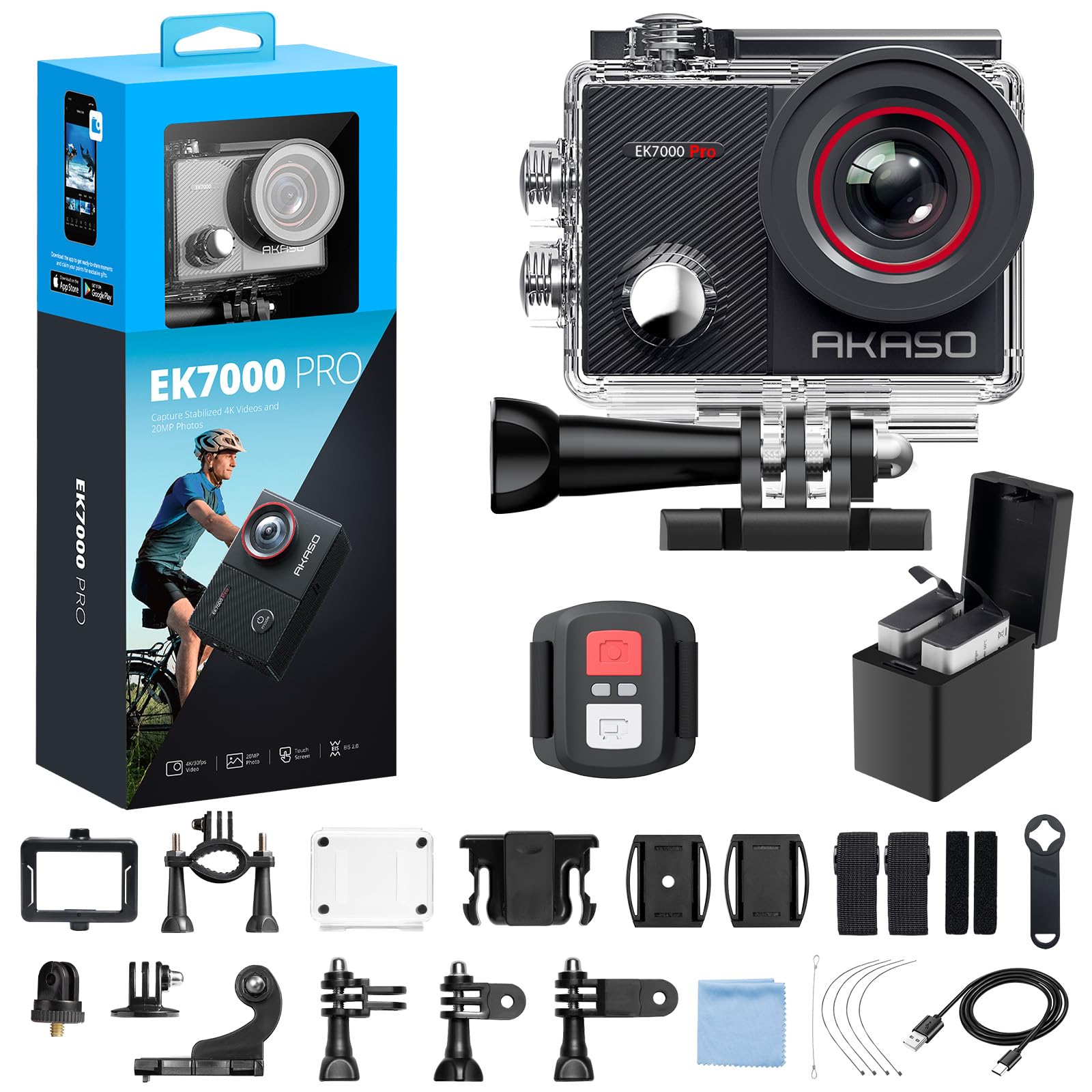
The EK7000 Pro sets itself apart from the classic budget entry point by making touchscreen control standard. A 2-inch touchscreen, a 131ft waterproof housing, and two batteries come in one entry-level package, so new action-cam users can frame shots and swap mounts without piecing together extra purchases.

Daylight footage has enough clarity for snorkeling, hiking, and family trip albums, and the included housing keeps the camera safe in saltwater and pool use. The mount kit supplies helmet, chest, and handlebar options that cover casual action scenarios from mountain trails to boat decks, and the touchscreen makes quick setting changes simpler than button-based budget cameras.

This is the right fit for budget travelers who want touchscreen control without jumping to premium pricing, especially first-time action-cam owners who value an easy framing experience over pro-grade color science. The 4K sensor is softer than premium models and battery life varies in real-world use, so treat it as a daylight clip-maker and carry the spare battery for longer outings. It suits snorkeling trips and family vacations where a dedicated camera is easier to handle than a phone.

💡 Keep the bundled spare battery charged and swap it before long recording days.

Pros

  • Solid construction that holds up to routine travel and outdoor use at a budget price.
  • Strong starter value with a low entry price and the essentials included.
  • Clear photos and video for casual daylight travel scenes.
  • The 2-inch touchscreen and full accessory set make setup and mounting simple.

Cons

  • 4K footage lands softer than premium models, with grain visible in demanding scenes.
  • Battery runtime can fall short of the 140-minute claim depending on resolution and screen use.
Our verdict

A practical first action cam for snorkeling, road trips, and family moments where touchscreen control and a full accessory bundle are the priority.

Check Latest Price
6

Long Backcountry Trips

DJI Osmo Action 5 Pro

89 /100
Traveler Score Excellent

Key details

Battery Claim
Up to 4 hours
Stabilization
360° HorizonSteady
Video Resolution
4K/120fps
Waterproof Depth
20m / IP68
Check Details on Amazon

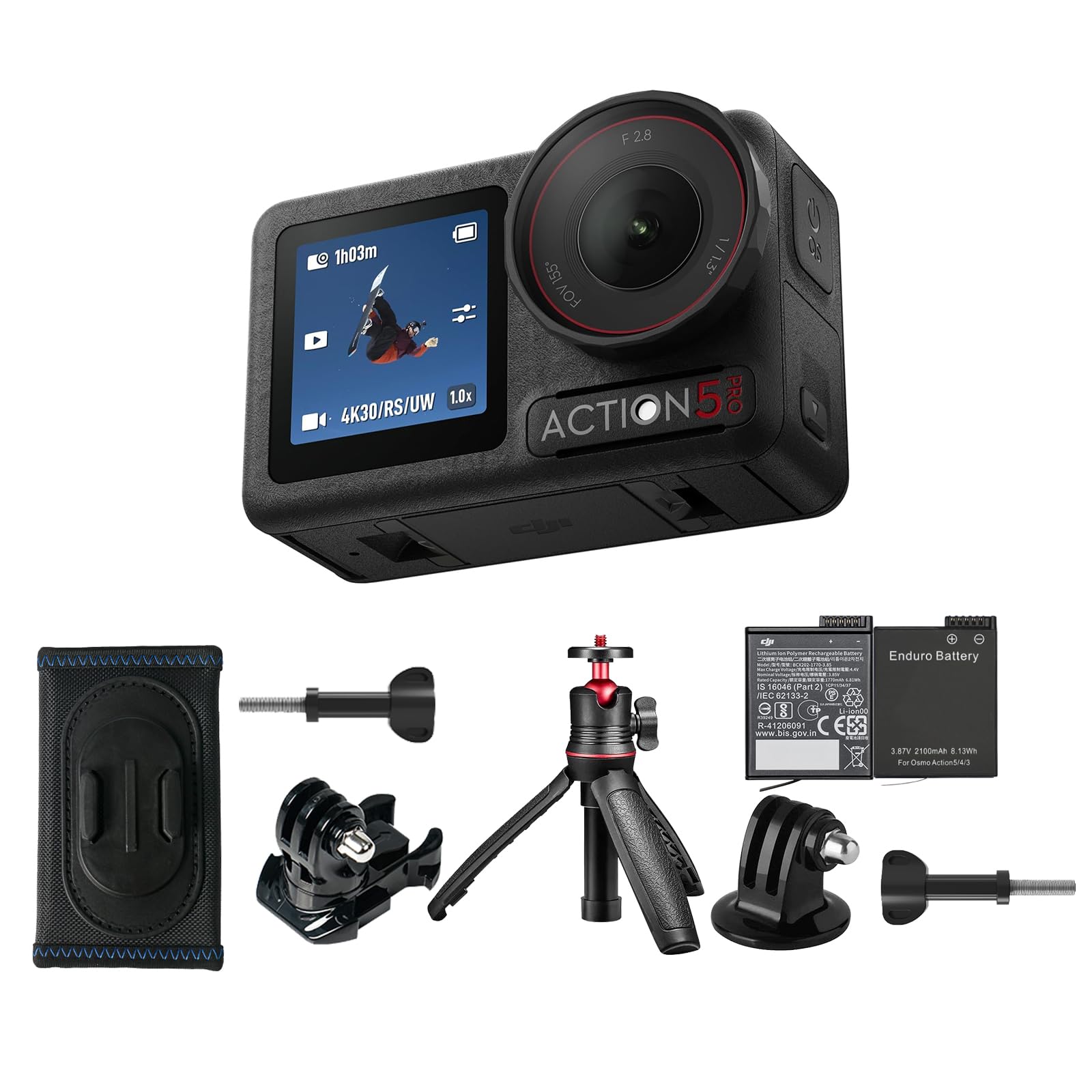
The Osmo Action 5 Pro Hiking Bundle captures crisp 4K/120fps footage with strong RockSteady stabilization, plus a 20m waterproof body for wet and snowy trails. Its four-hour runtime, cold-tolerant operation, and subject tracking make it a natural companion for multi-day hikes and moto rides where recharges are rare. The listing combines current and earlier Osmo model impressions, so 5 Pro-specific owner insight on this page is thinner than the top pick's. Buyers who want clean model-specific impressions can cross-check recent owner discussions elsewhere; the camera itself remains a capable all-day travel partner.

Pros

  • Crisp 4K/120fps footage with strong detail across varied outdoor conditions.
  • RockSteady stabilization smooths fast motion and uneven terrain.
  • Subject tracking keeps moving subjects framed during mounted outdoor rides and hikes.

Cons

  • The fixed lens means framing is set before recording; 360-style reframing after the fact is not possible.
  • The premium price sits above the previous-generation Osmo Action 4, which delivers similar core single-lens performance for less.
Our verdict

The 5 Pro Hiking Bundle suits backcountry travelers and riders who put runtime and subject tracking at the top of their list.

Check Latest Price
7

Entry 360 Creators

Insta360 X3

93 /100
Traveler Score Outstanding

Key details

Battery Claim
Stabilization
FlowState
Video Resolution
5.7K 360
Waterproof Depth
Waterproof
Check Details on Amazon

The X3 packs true 360 capture into a waterproof body, pairing 5.7K resolution with FlowState stabilization for steady action footage. The app's AI reframing turns a full-sphere clip into a shareable video without a desktop editor.

The older sensor shows in low light, which is why this camera sits below the current 8K flagship for serious 360 shooters. For daytime trail runs, travel clips, and first-time 360 creators on a budget, the X3 still covers the essentials.

Pros

  • Captures true 360 footage at 5.7K, so you can shoot first and choose the angle later.
  • FlowState stabilization and Horizon Lock keep action footage smooth without a gimbal.
  • The app's AI reframing turns 360 clips into shareable videos with minimal effort.

Cons

  • The mobile app can drop a connection or freeze during editing, which interrupts clip transfers.
  • Two batteries last about an hour of 360 recording, so all-day outdoor shoots need extra power.
Our verdict

For daytime outdoor creators who want 360 framing without the 8K premium, the X3 is a cost-effective entry point.

Check Latest Price
8

360 + Traditional Hybrid

GoPro MAX

85 /100
Traveler Score Excellent

Key details

Battery Claim
Stabilization
HyperSmooth
Video Resolution
5.6K30 360
Waterproof Depth
Waterproof
Check Details on Amazon

The MAX is a mid-range GoPro that pairs 360 capture with a traditional HERO mode, HyperSmooth stabilization, and a waterproof body. That dual-format flexibility is the main draw: travelers can shoot immersive footage and still frame a familiar single-lens shot without carrying two cameras. Steady footage holds up during active outdoor motion.

The 5.6K 360 sensor trails newer dedicated 360 flagships, and 360 editing depends on the Quik app and a subscription. Standby drain can be high when the camera is left on. Budget-conscious travelers who want one GoPro for both 360 and traditional clips get acceptable value here; 8K chasers and offline editors should look elsewhere.

Pros

  • Dual 360 and single-lens HERO modes put two shooting styles in one body.
  • HyperSmooth stabilization keeps footage steady through active outdoor motion.
  • Current pricing puts a 360 GoPro within reach of budget-focused buyers.

Cons

  • HERO mode tops out at 1080p, so traditional clips lack the detail of dedicated 4K action cams.
  • Startup behavior can be inconsistent in some units, so an early check after purchase is worthwhile.
Our verdict

The MAX fits an action-sports packing list when one camera needs to cover both immersive and traditional footage.

Check Latest Price
9

Hands-Free POV Clips

Sixmou i3

86 /100
Traveler Score Excellent

Key details

Battery Claim
150 min in 1080p
Stabilization
Digital (basic)
Video Resolution
4K
Waterproof Depth
131ft w/ case
Check Details on Amazon

The Sixmou i3 is the smallest option in this lineup: a 35.7g thumb camera that records 4K, mounts magnetically, and includes a waterproof case, mounts, and microSD card. That complete kit makes hands-free POV clips from a collar, helmet, or chest mount easy. Limited stabilization and basic audio keep it in secondary-camera territory, best for quick outdoor clips rather than a primary stabilized action rig.

Travelers who want a small, unobtrusive companion for short action moments will appreciate the one-button operation and compact mount options. For longer outdoor shoots, keep this as the lightweight backup in a bag, not the main camera.

Pros

  • Tiny 35.7g body clips onto collars, helmets, or magnetic chest mounts without adding bulk.
  • Records crisp 4K footage in a thumb-size form factor for quick hands-free POV clips.
  • Complete kit includes mounts, waterproof case, and microSD card at a budget-friendly price.

Cons

  • Built-in audio is basic, so vlog-style voice clips will need an external mic.
  • Digital stabilization is modest, so rough or fast motion can come through as shakiness.
Our verdict

Keep this as the pocket-sized secondary POV cam for helmet and collar clips; bring the touchscreen travel action cam from this set when stabilization is the priority.

Check Latest Price

How to Choose

Waterproof Depth and Housing Reliability

Waterproof depth ratings tell you how the housing seals behave, not just how deep the camera can sink. A camera rated to 18m without a case needs less pre-trip fuss than a budget cam that relies on a plastic housing with a rubber gasket.

For snorkeling and shallow reef dips, a 10m to 18m native rating is plenty and removes the risk of a cracked housing seal. For kayaking and rain, even a budget camera with a properly latched case handles splash and submersion, but the gasket needs occasional inspection and replacement.

Stabilization System

Electronic stabilization works by cropping the sensor and using a gyroscope to counter motion, which means smoother footage but a slightly narrower field of view. The quality of that algorithm differs a lot between brands.

A camera with strong stabilization lets you shoot a mountain bike descent or a fast boat ride without a gimbal. A camera with weak stabilization produces watchable clips only when you are standing still or moving slowly, no matter how sharp the sensor is.

Video Resolution and Frame Rate

Resolution is the least important part of the video spec. Most travelers edit on a phone and deliver 1080p, which means a soft budget 4K camera produces footage that looks closer to 1080p in practice.

Frame rate matters more for action: 4K60 or 4K120 gives you slow-motion flexibility and sharper frames when panning quickly. A camera that tops out at 4K30 still works for vlogs and hiking, but it will not produce the smooth slow-motion shots that define action footage.

Low-Light Sensor Size and Performance

Sensor size determines how much light each pixel captures. A 1/1.3-inch sensor with larger pixels captures noticeably more light than the small sensors in budget cameras, which is why premium models look clean at dusk while budget models turn grainy.

Dedicated low-light processing such as DJI's low-light modes or Insta360's PureVideo can recover detail in dim scenes, but those modes also require longer recording times and more processing headroom. If you shoot mostly in daylight, spending extra for low-light polish is optional.

Battery Life and Swappable Batteries

Battery chemistry has not caught up to 8K and 4K120 power demands. Any camera that records high-bitrate 4K or 360 video will burn through a battery faster than the marketing claim suggests, often 40 to 60 percent faster in continuous recording.

A camera with swappable batteries is the practical fix: two spares cover a day of travel clips without needing a solar panel or a long cafe stop. Built-in batteries are fine for short POV sessions, but they become a constraint on full-day hikes.

Mobile App and Editing Workflow

The app is the hidden half of the action camera. A camera that records beautifully but pairs unreliably can cost you an hour of frustration on a travel day.

Some brands require app activation before first use, which is a problem only if you take the camera straight from the box to a trail without setting it up at home. 360 cameras also depend heavily on app reframing, so a buggy editor directly degrades the value of the footage.

Build and Mounting Ecosystem

The mount is part of the camera. A standard mount that lets the camera flex or chatter at speed produces unusable audio and subtle micro-jitter even with the best stabilization.

Magnetic mounts are convenient for quick removal, but screw locks stay secure on rough terrain. For motorcycle and mountain bike use, a secondary tether or a metal mount removes the risk of losing a camera when the plastic fatigues.

Frequently Asked Questions