Best Action Cameras for Sports of 2026

The best line of your day is the one you'll want to watch again, and the fastest way to lose it is a camera that overheats on the second run or dies an hour into a ride. An action camera earns its mount only if it keeps recording while you're moving fast, getting soaked, and too busy to babysit a screen. I've wrecked plenty of good footage with cameras that promised 4K and delivered five minutes of it, so over the last eight months my team and I have been running 12 of the most-recommended models through real days out.

What separates them isn't the spec sheet, it's the small stuff: a battery that lasts a whole session, mounts that fit the helmet you already own, an app that doesn't drop the connection halfway through a download. The picks below are the ones I'd hand a friend before a trip, and each is honest about what it does well.

1

Best Overall

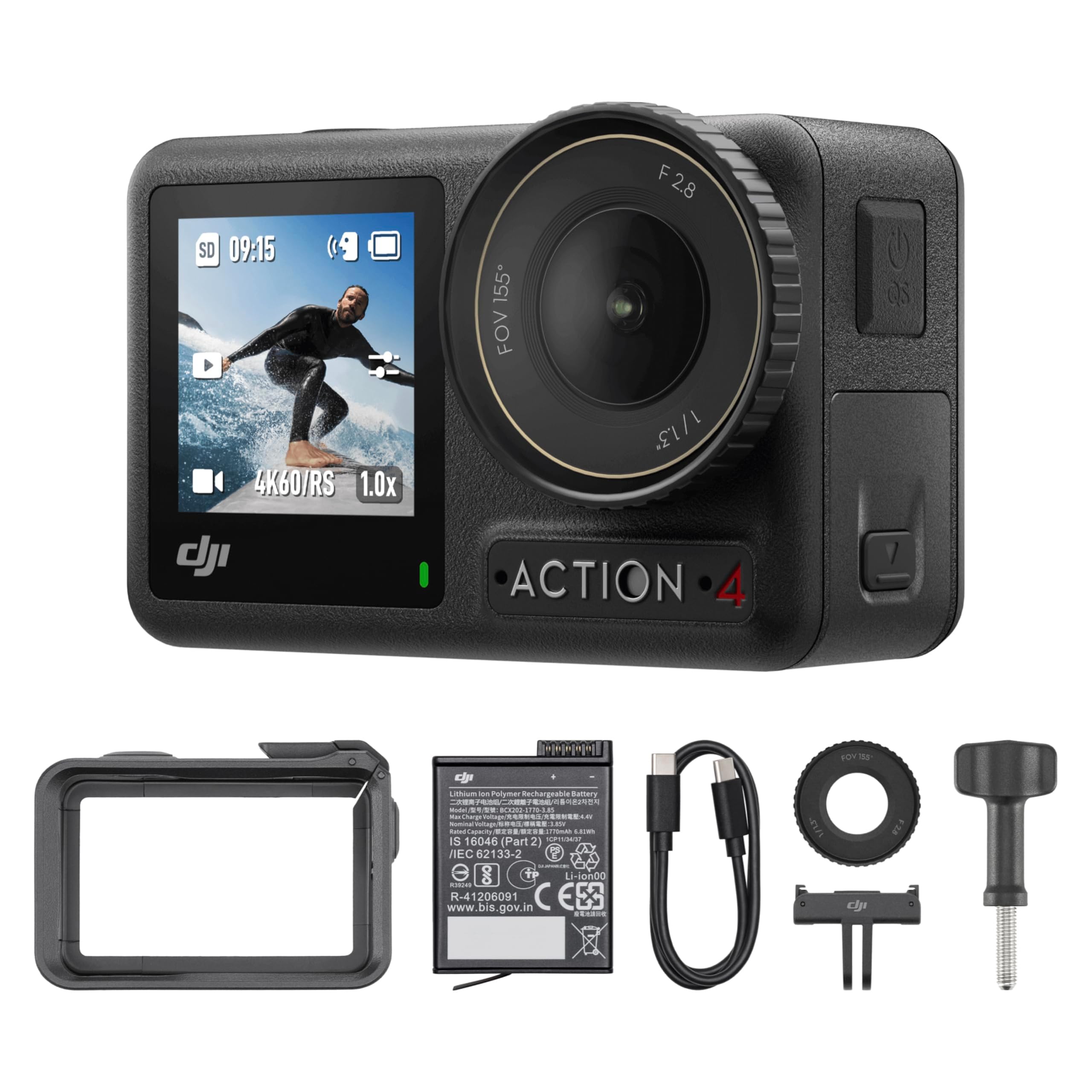
DJI Osmo Action 4

94 /100
Traveler Score Outstanding

Key details

Video
4K up to 120fps
Sensor
1/1.3-inch CMOS
Battery
1770mAh, up to 160 min
Stabilization
RockSteady, RockSteady+, HorizonBalancing
Check Details on Amazon

The gap between this and the GoPro shows up after the sun drops, not at noon. DJI's 1/1.3-inch sensor keeps color and detail in shade and at dusk, where the smaller chips in the budget cameras start to smear. Add 4K at 120fps and a 155-degree field of view and you get the most forgiving footage in this group to work with afterward — more of the scene in frame, and more of it usable when the light is not on your side.

Stabilization is what makes it our default for sport. RockSteady takes the chatter out of bar and helmet mounts, and HorizonBalancing keeps the frame level through a lean, which is the difference between footage people watch and footage they scroll past. We kept coming back to the magnetic quick release, too: bar to helmet to a vertical shot takes seconds, with no thumbscrew to hunt for in the dirt. The front screen is full color and touch-sensitive, so framing yourself is not a guess.

The trade is resolution. The GoPro shoots 5.3K to this camera's 4K, which matters if you like to crop into a wide shot or pull stills out of video. Everywhere else the numbers favor DJI: the 1770mAh battery is rated for well over two hours and keeps working down to minus 4 degrees Fahrenheit, the figure that matters on a ski day rather than a beach one.

Pros

  • Big sensor keeps color at dusk
  • RockSteady and horizon lock steady fast mounts
  • Magnetic mount swaps in seconds
  • Cold-rated battery suits ski days

Cons

  • No memory card in the box
  • App pairing can take a few tries
Our verdict

Our default for sport: the steadiest footage of the group, a sensor that still works at dusk, and no housing to fumble with before you jump in.

Check Latest Price
2

Best Video Quality

GoPro HERO12 Black

89 /100
Traveler Score Excellent

Key details

Video
5.3K up to 60fps
Sensor
1/1.9-inch CMOS
Waterproof
33 ft without a case
Stabilization
HyperSmooth 6.0
Check Details on Amazon

5.3K sounds like a marketing number until you crop. The HERO12 captures enough resolution to shoot wide and then push into a rider or a ridgeline later and still land on a clean 4K frame. The HDR is the quieter win: skies stop blowing out and shadow detail survives when the light is doing something difficult, in video and in 27MP stills.

Where it earns its place for sport is the body. It is waterproof to 33 feet without a housing, so you can take it into the surf and still press the buttons — something the cased AKASOs cannot offer. HyperSmooth 6.0 is smooth enough that we stopped thinking about gimbals, and the mount fingers fold flat when you want the camera in a pocket instead of on a bar.

Heat is the thing to plan around. At 5.3K in high temperatures the camera can shut itself down to protect the electronics, so give it airflow, keep it out of direct sun between takes, and drop the resolution for long, slow sessions where 5.3K buys you nothing.

Pros

  • 5.3K HDR survives a hard crop
  • Waterproof to 33 ft without a housing
  • HyperSmooth 6.0 steadies handheld footage

Cons

  • Battery drains fast when shooting 5.3K
  • The priciest camera in this group
Our verdict

Buy it for the sharpest footage here — 5.3K HDR that survives a crop — as long as your sessions are short and you carry a spare battery.

Check Latest Price
3

Best for Filming Yourself

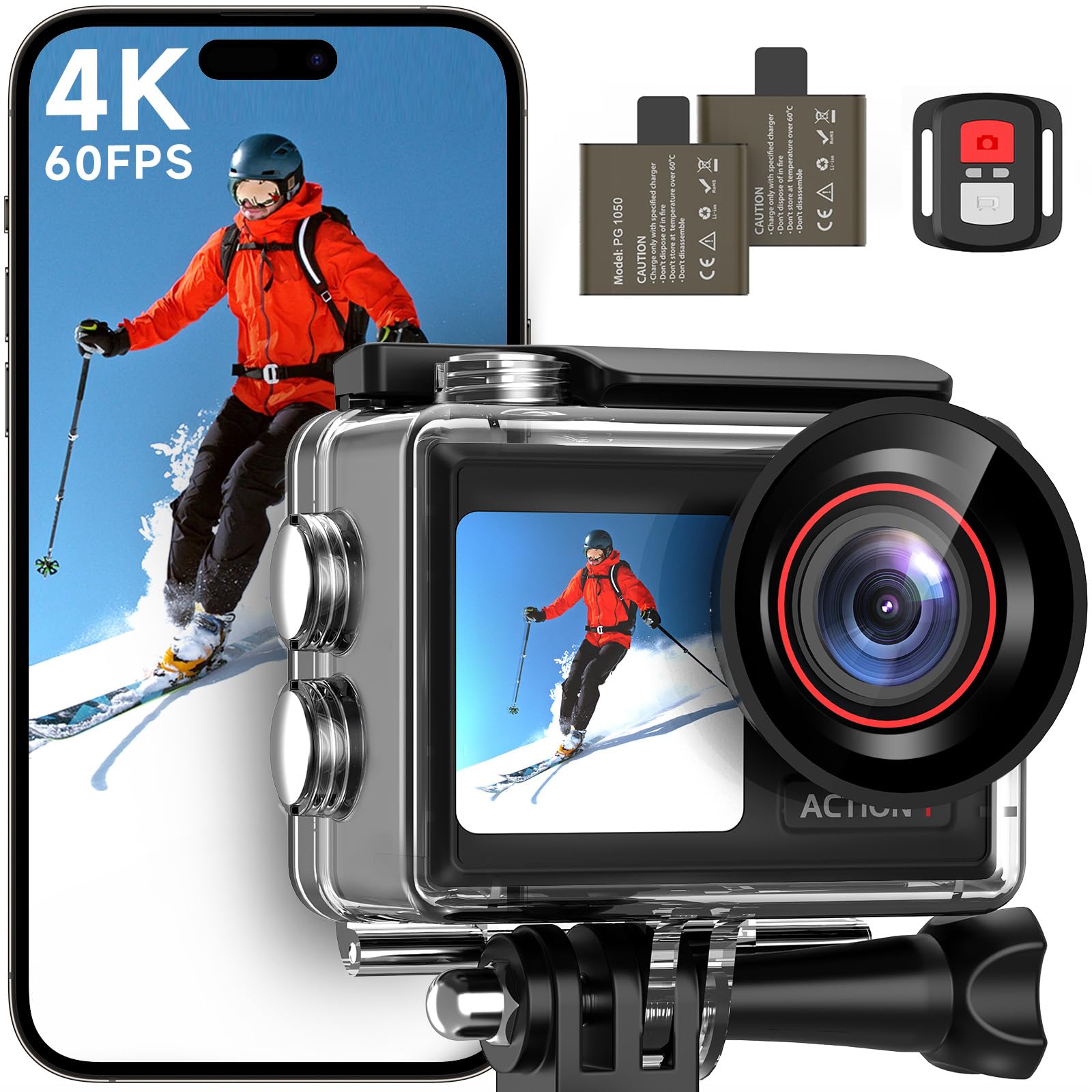
AKASO Brave 4 Pro

90 /100
Traveler Score Outstanding

Key details

Video
4K 30fps, 20MP photos
Battery
Two 1350mAh batteries
Screens
2-inch rear, front color screen
Waterproof
131 ft with case
Check Details on Amazon

If you film yourself — skiing, paddling, talking to camera on a trail — a screen on the front is worth more than another megapixel, and this is the cheapest way to get one. The color display faces you, so you can check framing between takes instead of guessing and hoping. That sounds small until you have come home with a day of footage and your head half out of frame.

What we appreciated most after the screen: the box covers almost everything. Two 1350mAh batteries, a dual charger, a wrist remote, and enough mounts for a helmet, bars, or a board. EIS 2.0 with a six-axis gyroscope is a clear step past the budget AKASO's stabilization, and the 4K30 footage is clean in good light.

The compromise lives in the case. It is rated to 131 feet, but once the camera is sealed inside you cannot reach the buttons, so choose your mode and settings before you close the latch. Learn that once and the housing stops being an inconvenience and starts being the reason you get the shot.

Pros

  • Front screen makes self-filming easy
  • Two batteries and a dual charger included
  • Mounts cover helmet, bars, and boards

Cons

  • Costs more than our budget pick for the same 4K
Our verdict

The pick for anyone who films themselves: the front screen changes how you shoot, and the bundle means there is nothing else to buy.

Check Latest Price
4

Best Budget

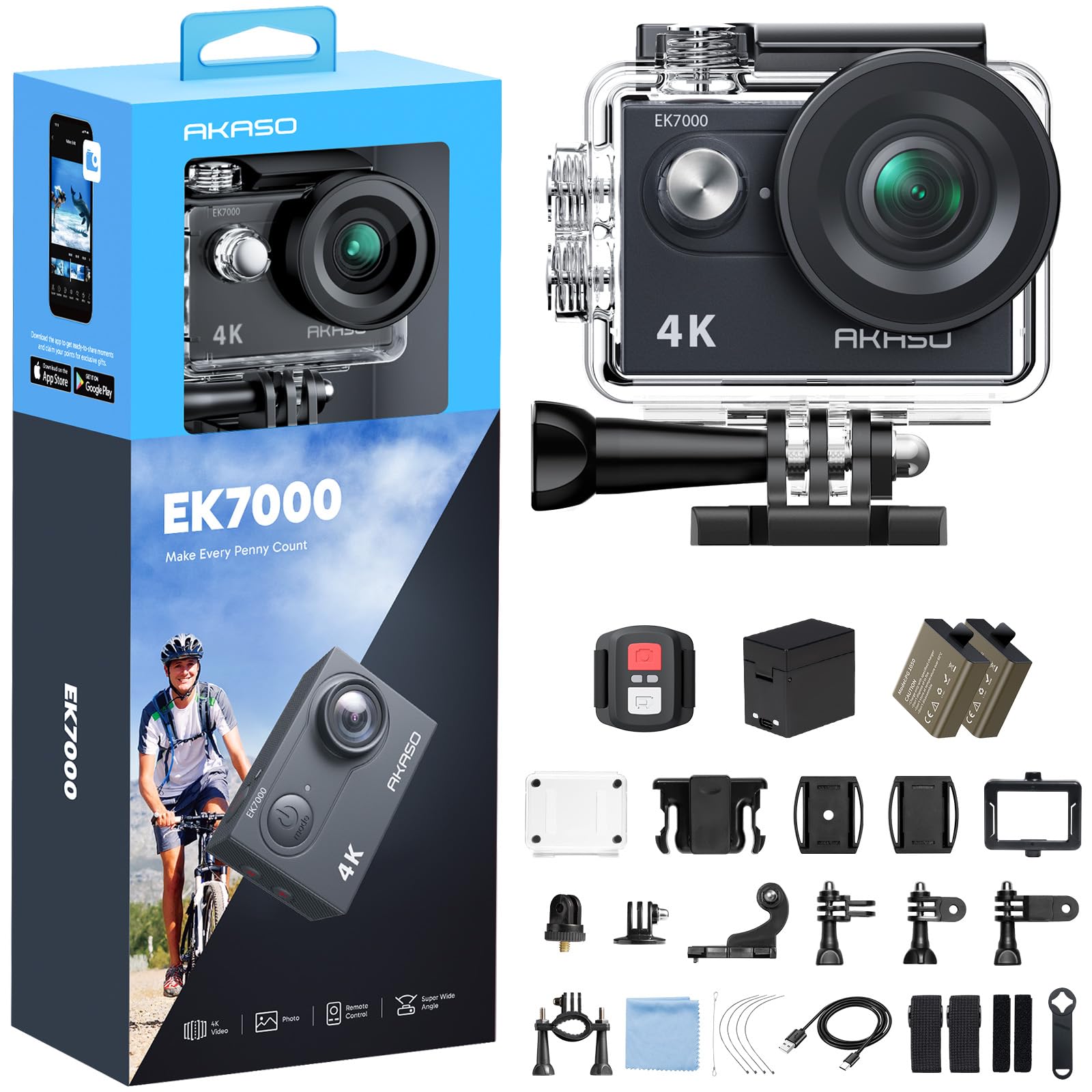
AKASO EK7000

89 /100
Traveler Score Excellent

Key details

Video
4K 30fps, 20MP photos
Battery
Two included, 90 min rated
Waterproof
131 ft with case
Stabilization
Digital EIS
Check Details on Amazon

This is the cheapest camera on the list, and it is the one we point at people who are not sure they will use an action camera. In the box: a 4K30 camera, a case rated to 131 feet, two batteries and a charger, a pile of mounts, and a 2.4G wrist remote.

The remote is the underrated part. On bars, a paddle, or a ski pole, starting and stopping a clip from your wrist is the difference between catching something and watching it go by. The rest of the kit is honest about the price: the stabilization is basic, the sensor is small, and footage that looks fine in sunlight is not going to hold up at dusk.

Battery life is the recurring weak spot, and the second cell is the fix — plan on a swap at lunch and an overnight charge for both. As a first camera, a second angle on the bars, or a travel camera you will not grieve if it goes overboard, we think it earns its place.

Pros

  • Complete kit for the least money here
  • Wrist remote starts clips hands-free
  • Case rated to 131 ft

Cons

  • Stabilization is basic on rough ground
Our verdict

A genuinely complete starter kit for the least money here — the camera to buy when you are not ready to spend flagship money on a sport you are still trying.

Check Latest Price
5

Low-Light Action

Xtra Edge Action Camera

84 /100
Traveler Score Excellent

Key details

Video
4K up to 120fps
Sensor
1/1.3-inch CMOS
Battery
Up to 160 min
Waterproof
Rated to 52 ft
Check Details on Amazon

The number that matters here is not the 4K — it is the 52 feet. That is the depth rating, and there is no housing in the box, so you can swim, snorkel, or ride out a rainstorm without clamping anything shut first. For anyone who has fumbled a case seal on a moving boat, that is a real improvement in the day.

The 1/1.3-inch sensor is the same size class as the DJI's, and 4K at 120fps at this price is unusual. In good light the footage has the depth and color you associate with the bigger chip, and the stabilization holds a bike-mounted shot together without the wobble cheaper electronic systems leave in. What you are buying is the sensor and the sealing, not yet a decade of mounts and firmware.

Two things we did not expect at this price: a rated 160 minutes of recording on a charge, and the ability to pair straight to DJI's wireless mics, which saves carrying a separate receiver. That combination makes it a serious second camera for someone who already shoots with DJI audio.

Pros

  • 1/1.3-inch sensor at a mid price
  • Rated waterproof to 52 ft with no case
  • Pairs directly with DJI wireless mics
  • Rated 160 minutes per charge

Cons

  • Newer name with a thinner accessory ecosystem
  • Not rated for dives past 52 ft
Our verdict

The value play: a 1/1.3-inch sensor and 52 ft sealing for less than the big names, if you are comfortable buying from a newer one.

Check Latest Price
6

Dual-Screen Budget

ODDV 4K60 Action Camera

76 /100
Traveler Score Very Good

Key details

Video
4K up to 60fps
Sensor
1/4-inch CMOS
Screens
2-inch touch rear, 1.4-inch front
Waterproof
132 ft with case
Check Details on Amazon

A 1/4-inch sensor is the first thing we check, and it explains the rest of this camera. Yes, it records 4K at 60fps and 30MP stills, and the box says so in large type, but a chip that small is at its best in daylight. Indoors, at dusk, or under tree cover, expect detail to fall apart faster than it does on the bigger-sensor picks here.

What you are actually paying for is the second screen. There is a 1.4-inch display on the front for framing yourself and a 2-inch touchscreen on the back, plus a wrist remote, six-axis electronic stabilization, and a case rated to 132 feet. As a package for a first season of riding or a kid's first camera, it is more thought-through than the price suggests.

Our read: it is a second camera, not a primary one. If you want screens on both sides and 60fps slow motion on a tight budget, and you will mostly shoot outside in good light, this does the job. If you want footage that holds up when the sun goes down, put the money toward the DJI instead.

Pros

  • Screens on both the front and back
  • 4K60 recording on a tight budget
  • Wrist remote and 132 ft case included

Cons

  • Small sensor struggles in low light
Our verdict

Worth it if two screens and 60fps matter more than picture quality — a fun second camera, not the one to build a trip around.

Check Latest Price

How We Tested Action Cameras in the Mud, the Pool, and the Cold

We started by pulling every action camera with a real following, reading spec sheets, manuals, and hundreds of owner reviews, then cutting anything that couldn't shoot stabilized 4K, mounted without a proprietary adapter, or survived a full day on one battery. That left 12 cameras, which we lived with for eight months alongside our regular riding, swimming, and ski days.

Ease of use got measured in seconds and fumbles: we handed each camera to someone who'd never touched it and timed how long a first clip took, then counted the taps needed to change a setting with cold hands. We inventoried every mount and adapter in the box and checked whether each base fit the handlebar and helmet hardware we already owned.

Battery life came from recording continuously until each camera shut itself down, all at the same resolution so the numbers compared fairly. For overheating, we ran 20-minute clips in direct sun and noted when a body got too hot to hold and whether recording stopped on its own. Durability meant drops from handlebar height onto pavement, a dunk in a bucket, and a session in the surf, and we logged every freeze and corrupted file along the way.

Because footage is useless if it stays on the card, we paired each camera with a phone and timed a clip download from a parking lot with no Wi-Fi. Final footage was reviewed on a 27-inch monitor, watching stabilization on rocky descents and how much detail held up after dark.

How to Choose Action Cameras for Sports

Start With Stabilization, Not Resolution

Every camera here records 4K; only some produce footage you can watch without flinching. Electronic stabilization works by shifting the frame from moment to moment, and the better versions — DJI's RockSteady, GoPro's HyperSmooth — keep the horizon level while they do it. That matters more than a resolution badge when the camera is clamped to bars, a helmet, or a chest rig.

Spend on steadiness first and resolution second. If you mostly shoot from a steady hand or a tripod, reverse the order and take the extra pixels.

Decide Whether You Want a Housing

A cased camera goes deeper — the AKASO models are rated to 131 feet once sealed — but the case puts the buttons out of reach, so you choose your mode and settings before you close it. That is the trap: people seal the camera first, then discover they cannot switch out of photo mode at the reef.

Native sealing is the easier way to live. The HERO12 is waterproof to 33 feet as it comes, and the Xtra Edge is rated to 52, which covers snorkeling, rain, and spray with no plastic box in the way. In and out of the water all day, go native; dedicated diving, take the case and set everything first.

Match the Sensor to When You Shoot

Sensor size decides how much light the camera has to work with, and it is the reason the DJI and the Xtra Edge keep their color at dusk while the cheapest cameras smear. A 1/1.3-inch chip is a real step up from the small sensors in budget models; a 1/4-inch chip wants daylight to look its best.

If your sport happens at dawn, under trees, or indoors, put sensor size ahead of megapixels and frame rates. If you shoot midday on open ground, bank the savings.

Budget for Power, Mounts, and Cards

Battery life is where this category disappoints most, and the honest fix is a second cell and a charger that takes both — which is why the two-battery bundles here are worth a little more. Check which mounts are in the box before you order; a helmet clamp bought separately can cost as much as the gap between two cameras.

Add a U3 or V30 microSD card, since several of these ship with no card at all.

Frequently Asked Questions

Final Verdict

The DJI Osmo Action 4 is the camera we point most people at, because it makes the fewest demands on you: seal it, mount it, shoot, and the footage comes back steady and usable in light the budget cameras cannot handle.

If your shooting happens in bright sun and you crop hard, the HERO12's 5.3K is worth the extra spend. And if you are still working out whether an action camera fits the way you travel, the AKASO EK7000 answers that for the least money.