Best Travel First Aid Kits of 2026

The moment a trip goes sideways is rarely dramatic. It’s a blister two miles into a hike, a toddler’s scraped knee at a rest stop, or a headache on the second leg of a flight—and the kit buried in your carry-on has six bandages and no tweezers. A good travel first aid kit fixes those small, trip-ruining problems without turning your bag into a pharmacy. It should be compact enough to forget you packed it, complete enough for a weekend for two, and sturdy enough that the ointment packets haven’t burst by the time you need them.

The hard part is that completeness and compact size pull against each other. Many kits advertise a huge supply count but fill it with bandages too small for anything but a paper cut. Over the past six months, my team and I have packed 14 travel first aid kits into carry-ons, glove compartments, and daypacks. The ones worth carrying got the basics right—quality adhesive, a useful mix of sizes, and a pouch that still zipped after we restocked it. I’ll point you to those below.

1

Best Overall

Vriexsd Mini 150-Piece Kit

96 /100
Traveler Score Outstanding

Key details

Case
Waterproof EVA hard shell
Pieces
150+
Weight
10.9 oz
Dimensions
6.49 x 4.92 x 2.76 in
Check Details on Amazon

The case is the reason this kit won us over. At 6.49 by 4.92 by 2.76 inches and 10.93 ounces, it fits a personal item or a glove box, and the EVA shell feels rigid enough to protect what is inside. The carabiners are a small thing we ended up using more than expected: clipped to a daypack, the kit stayed upright and easy to reach.

Inside, the independent labeled compartments do the quiet work. We opened it on a hotel-room floor and could put a hand on gauze, antiseptic wipes, or a bandage without emptying the case. The 150-plus pieces cover small cuts, scrapes, and blisters, and the smooth shell wipes clean after a spill. It is a minor-injury kit, not a trauma kit, and it should not be treated as one.

The one gap we noticed is that the contents lean on povidone-iodine and bandages rather than ointment, so we added a small tube to an empty slot. That is easy to fix, and it leaves the case ready for a weekend away. For a traveler who wants one protected kit that does not turn into a jumble, this is the default.

Pros

  • Labeled compartments keep supplies findable
  • Waterproof hard shell protects contents
  • Light enough for a personal item
  • Carabiners clip to a daypack

Cons

  • Too thick for a jacket pocket
Our verdict

For most trips, this is the kit we recommend: 150-plus supplies in a labeled, waterproof hard shell that fits a carry-on and stays organized.

Check Latest Price
2

Best Car and Family Kit

Band-Aid 160-Piece Kit

96 /100
Traveler Score Outstanding

Key details

Case
Hard plastic
Pieces
160
Dimensions
9.5 x 7 x 3.25 in
Included Medicines
Neosporin, Benadryl, Tylenol
Check Details on Amazon

The case is a rigid plastic box with compartments, the kind of kit you can open on a tailgate without everything sliding into the dirt. At 9.5 by 7 by 3.25 inches and 1.19 pounds, it has a place in a car, a vacation rental, or a checked bag. It is not shaped for a long hike.

What earns it a runner-up spot is the content mix. BAND-AID Brand adhesive bandages, Neosporin, Benadryl, and Tylenol are all in the box, so a cut, an insect bite, or a headache does not send you hunting for a pharmacy at midnight. The bandages are not made with natural rubber latex, which is a useful detail for mixed groups. The compartments keep those items visible, and the hard case has enough structure to stack on a shelf.

For a family that wants recognizable supplies and a case that can be restocked without repacking the whole thing, this is the one we reach for. The rigid case is why it stays orderly, and it is why the kit has a permanent place in the car rather than the bottom of a hiking pack.

Pros

  • Brand-name bandages and medicines
  • Rigid case keeps contents accessible
  • Latex-free bandages suit mixed groups
  • Easy to restock from a pharmacy

Cons

  • Costs more than generic kits
Our verdict

A rigid, organized case with real BAND-AID bandages and recognizable medicines, this is the family kit we leave in the car or pack in checked luggage.

Check Latest Price
3

Best Road-Trip Kit

First Aid Only 298-Piece Kit

96 /100
Traveler Score Outstanding

Key details

Case
Soft-sided, two layers
Pieces
298
Weight
1 lb
Dimensions
9.25 x 3 x 7 in
Check Details on Amazon

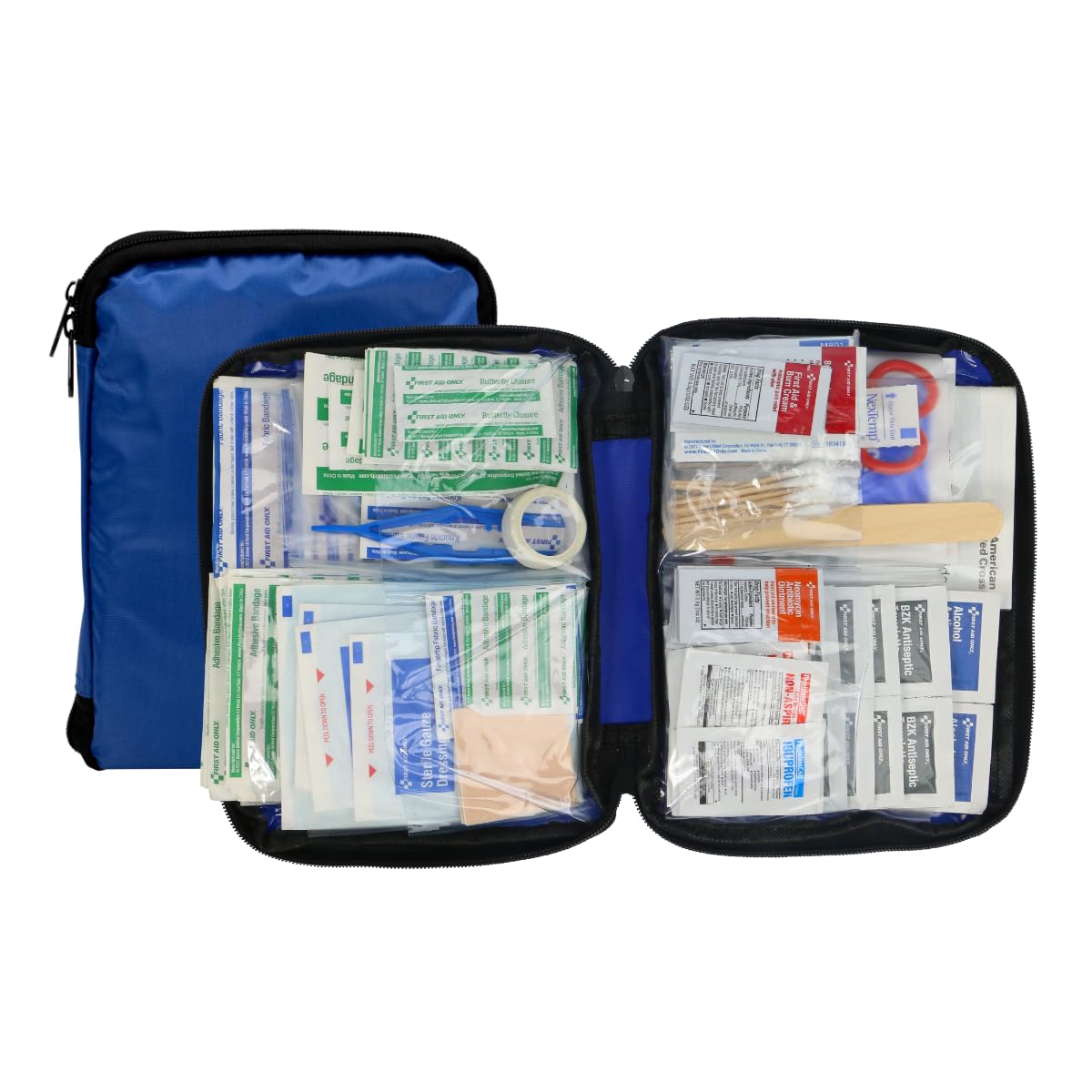
The 298-piece count sounds like overkill until you are on a road trip with two kids and a scraped knee every afternoon. The soft-sided case is 9.25 by 3 by 7 inches and about a pound, so it slides under a seat or into a backpack. The two layers separate bandages from gauze and tools, which makes the first open less chaotic than a single stuffed pouch.

We found the contents more practical than the count suggests: fabric and plastic bandages, antibiotic ointments, BZK wipes, burn cream, gauze, and tape. That range is why it earns a place in a car or a vacation rental, where a pharmacy may be twenty minutes away. The zipper case is light and flexible, which helps it fit into tight spaces.

For a family that wants a stocked base kit rather than a pocket-sized one, this is the value play in the group. We keep coming back to it for the car because the supply depth is real, not just a high piece count.

Pros

  • Deep supply mix for family trips
  • Two layers separate bandages and tools
  • Light enough to slide under a seat
  • FSA and HSA eligible

Cons

  • Soft case offers less protection
Our verdict

This is the kit we keep in the car for family trips: 298 pieces in a soft two-layer case, with enough bandages and gauze for a week away.

Check Latest Price
4

Best Slim Waterproof Kit

Protect Life 100-Piece Kit

95 /100
Traveler Score Outstanding

Key details

Pieces
100
Weight
9.88 oz
Dimensions
7.5 x 5.2 x 1.5 in
Emergency Extras
Foil blanket and guide
Check Details on Amazon

At 1.5 inches deep, this is the kit that slides into a glove box or the laptop sleeve of a daypack without a fight. The 7.5 by 5.2-inch hard case is waterproof and holds 100 pieces, including a thermal emergency blanket and a doctor-written first aid guide. That combination suits roadside stops and short hikes, where space is tight but weather can turn.

The contents lean toward basic wound care: bandages, gauze, antiseptic wipes, gloves, and scissors. It is packed tightly, so we repacked it with the most-used items on top after the first open. That is a small habit, not a flaw, and it makes the slim profile worth it.

It is not the kit for a family of four on a two-week road trip; the capacity is deliberately small. For one or two travelers who want a flat, protected kit that covers minor cuts and a cold night, it hits the sweet spot.

Pros

  • Slim enough for a glove box
  • Waterproof hard case
  • Foil blanket and written guide included
  • Organized basic wound-care supplies

Cons

No notable drawbacks to flag.

Our verdict

A slim waterproof case with a foil blanket and a written guide, this is the kit we reach for on hikes and in a glove box.

Check Latest Price
5

Best Ultralight Hiking Kit

General Medi 110-Piece Kit

95 /100
Traveler Score Outstanding

Key details

Pieces
110
Weight
5.6 oz
Dimensions
7.1 x 1.9 x 5.1 in
Included Extras
Foil blanket and scissors
Check Details on Amazon

There is a point on a long hike where every extra ounce is felt, and this 110-piece kit is the one that stays out of the way. The pouch weighs 5.6 ounces and measures 7.1 by 1.9 by 5.1 inches, so it fits a daypack lid or a saddlebag. It still includes an emergency foil blanket and scissors, two items we miss in tiny kits.

The trade-off is protection: the soft pouch will not keep supplies dry the way an EVA shell will, and the contents are packed tightly. We kept it in a zip bag inside the pack on wet days. For three-season hiking and travel where weight matters more than a rigid case, that is a reasonable compromise.

The 110 pieces cover bandages, gauze, antiseptic wipes, and the basics for blisters and small cuts. If you are building an ultralight pack, this is the version to start with; if you need a kit that can live in a car for years, choose a hard case.

Pros

  • Among the lightest kits here
  • Fits a daypack lid
  • Includes foil blanket and scissors

Cons

No notable drawbacks to flag.

Our verdict

At 5.6 ounces, this is the kit we clip into a hiking pack and forget about until a blister or scrape needs attention.

Check Latest Price
6

Best for Kids

KeepGoing 130-Piece Kids Kit

97 /100
Traveler Score Outstanding

Key details

Case
Water-resistant fabric
Pieces
130
Weight
9.6 oz
Dimensions
2 x 7 x 5 in
Check Details on Amazon

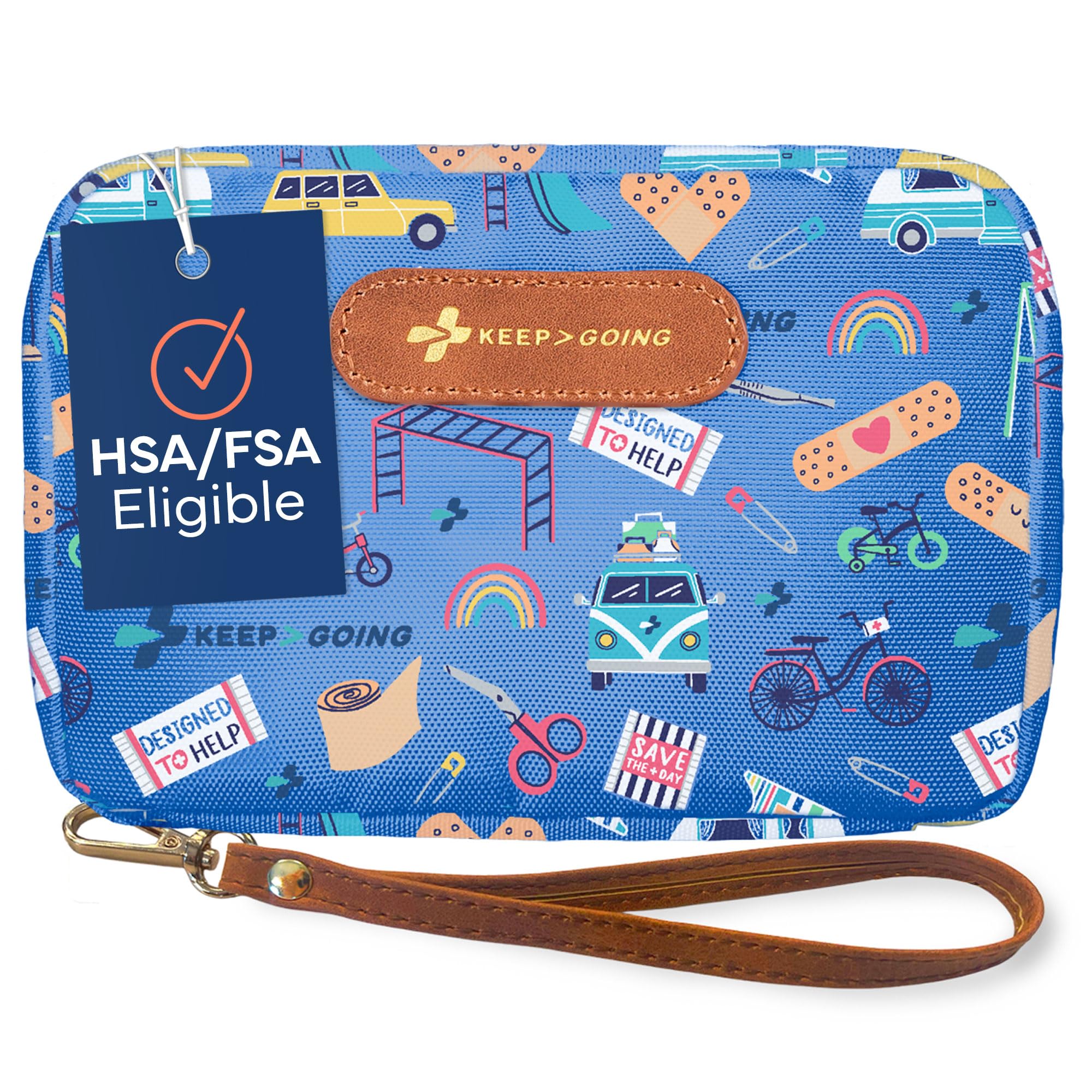
The bandages are the giveaway: bright prints, small sizes, and stickers for after the tears. The 130-piece kit is 2 by 7 by 5 inches and 9.6 ounces, so it fits a diaper bag or a purse, and the fabric case is stain- and water-resistant.

The organization matters more than the cute factor to us. The labeled sections make it easy to restock, and the case has room for a few kid-specific additions. It is TSA-approved as a travel-size kit, which takes one decision off the packing list for a flight. The 130 pieces cover cuts, burns, and the kind of bumps that show up on vacation.

What we appreciate most is that it does not feel like a clinical kit you hide in a closet; it is the one that stays within reach. For families with young children, that convenience is the point.

Pros

  • Kid-friendly bandages and stickers
  • Labeled sections simplify restocking
  • TSA-approved travel size

Cons

  • Premium price
Our verdict

For parents, this TSA-approved kit earns its place with kid-friendly bandages, stickers, and a compact case that fits a diaper bag.

Check Latest Price
7

Family Bandage Kit

Welly 130-Piece Kit

95 /100
Traveler Score Outstanding

Key details

Pieces
130
Weight
14.1 oz
Dimensions
2.7 x 6.5 x 6.5 in
Bandage Mix
Fabric and waterproof
Check Details on Amazon

The tin is the first thing you notice: a sturdy metal box that survives being tossed in a car or a beach bag. Inside, Welly packs 130 pieces, with a bandage mix that includes flexible fabric and waterproof strips, plus triple antibiotic, hydrocortisone, and ibuprofen.

The bandage mix is the strongest part of the kit. The fabric strips are designed to stay put through playtime, and the waterproof ones cover shower-time scrapes; that matters more than a high piece count when a child has a scraped knee.

The trade-off is weight and bulk. At 14.08 ounces and 2.7 by 6.5 by 6.5 inches, the tin is heavier than the compact cases here and takes up more room in a daypack. It is better suited to a car, a vacation rental, or a shelf by the door.

We reach for this one when the priority is bandage quality and a kit that does not look clinical. It is not the lightest or the most complete for bigger wounds, but for everyday family scrapes, it is the one we are happiest to have on hand.

Pros

  • Fabric and waterproof bandage mix
  • Ointments and ibuprofen included
  • Sturdy metal tin
  • Bandages designed to stay put

Cons

  • Bandage-heavy mix
Our verdict

A metal tin filled with flexible fabric bandages, ointments, and ibuprofen, this is the family kit that stays on through play and looks good on a shelf.

Check Latest Price
8

Group Trips

General Medi 2-in-1 258-Piece Kit

96 /100
Traveler Score Outstanding

Key details

Pieces
258 total
Weight
1.5 lb
Mini Kit
43 pieces
Dimensions
9.8 x 6.3 x 3.5 in
Check Details on Amazon

Two bags are the point. The main kit holds 215 pieces in a 9.8 by 6.3 by 3.5-inch bag, and the 43-piece mini is small enough to pull out for a day hike or keep in the glove box. At 1.5 pounds total, the pair is heavier than a single compact case, but it splits the load.

The contents are built for a group: bandages, gauze, tape, an ice pack, moleskin, and an emergency blanket. The moleskin and ice pack are the two items we appreciate most, because they cover blisters and sprains that many basic kits skip.

The main bag is well organized with multiple compartments, though it takes a minute to learn where everything lives. The mini bag is the one that gets used most, because it is easy to grab for a short outing without hauling the full kit.

For a family or a small group that wants a base kit and a satellite bag, this is a practical system. It is not the choice for a solo traveler who wants one small case; that is where the compact picks win.

Pros

  • Main kit plus grab-and-go mini
  • Includes moleskin and ice pack
  • Organized compartments
  • Good for group trips

Cons

  • Two bags take more room than one case
Our verdict

This is the kit we take for a group trip: a 215-piece main bag plus a 43-piece mini for the car, the tent, or a day pack.

Check Latest Price

How We Tested Travel First Aid Kits

We started by pulling more than 40 travel first aid kits from major retailers and brand sites, then cut the list to 14 based on stated dimensions, supply lists, and price. We left out oversized home kits and anything that looked like a single-use pouch.

For six months, those 14 kits lived in carry-on front pockets, glove boxes, daypacks on local trails, and a diaper bag. I weighed and measured each one packed, then carried it on a four-mile hike to see whether it bounced or dug into my back. I stuffed each into a quart-size pouch and a carry-on pocket without rearranging the bag, and noted whether the case was soft enough to squash or rigid enough to protect glass vials.

At the kitchen table, I emptied every kit, counted each item against the label, and sorted the supplies into a two-adult weekend scenario and a family-of-four day out. I noted whether there were gloves, tweezers, a CPR face shield, and enough large bandages for a knee, not just tiny spot bandages. To judge quality, I tugged bandages open, pressed them onto damp skin, squeezed ointment packets, and checked gauze for loose fibers.

We also restocked each kit with a few personal items and closed it repeatedly, watching for zippers that caught, seams that pulled, and hard cases that popped open in a bag. Kits that leaked, shed, or ran out of useful supplies before the weekend was over were cut.

How to Choose Travel First Aid Kits

Match the Case to the Trip

Start with the longest side, not the piece count. A kit that is 9 inches wide may fit a car console but not a small daypack, while a 1.5-inch-deep case like the Protect Life kit slides into a glove box or laptop sleeve. Hard shells protect supplies from crushing and moisture; soft pouches save weight and space. If you split time between a car and a plane, choose the case that fits the smaller space, then add a second pouch for the car.

Read the Contents, Not Just the Count

Piece counts sell kits, but the mix matters more. Look for multiple bandage sizes, gauze, tape, antiseptic wipes, gloves, and scissors; a 100-piece kit with those items can beat a 300-piece kit that is mostly bandages. For one or two travelers on a short trip, 100 to 150 pieces is a sensible range. Families and groups should look at 250 or more, or a two-bag system that lets you leave the bulk behind.

Choose a Case You Can Open in a Hurry

In a hotel room or on a trail, you are often opening the kit one-handed with a scraped knee in front of you. Labeled compartments and a case that holds its shape make a bigger difference than another layer of bandages. Rigid cases from Band-Aid and Vriexsd keep supplies visible; a soft case needs a little discipline, so pack the most-used items on top. Avoid any kit that turns into a single deep pouch the first time you open it.

Leave Room for Your Own Supplies

Every traveler has one item they reach for first. Leave a small gap in the case for prescription medicines, blister plasters, or a bandage brand that fits your family, and keep a list of what you added inside the lid. A kit packed to the zipper has no room for the thing that would actually help. A little empty space is more useful than another dozen bandages.

Frequently Asked Questions

Final Verdict

Start with the Vriexsd Mini 150-Piece Kit. It gives you the best balance here of a case that disappears into a carry-on, labeled compartments you can search in a hurry, and enough supplies for a weekend.

If you want brand-name medicines and a rigid case for the car, the Band-Aid kit is the family alternative; if every ounce counts on the trail, the General Medi 110 is the one to carry. Buy for the way you travel, not for the biggest piece count.