5 Best Backpacking First Aid Kit of 2026: Pack the Right Ounces

For ounce-conscious hikers: a backpacking first aid kit that matches your trip length and pack weight, without paying for survival extras you won't carry.

Many compact first aid kits are really general home kits in a rugged pouch, or survival kits with a first aid section bolted on. The word 'compact' can describe anything from a 3.5-ounce blister kit to a two-pound box of bandages, tools, and extras. The practical difference shows up in your pack: an ounce saved on the kit is an ounce available for food, water, or warmer layers.

For trail use, the goal isn't more supplies; it's matching treatment capability to the trip. A solo overnight can be covered by a few ounces of blister and wound care. A longer remote route justifies a trauma pad, elastic bandage, and medications even if they add a few ounces.

The other common catch is tool quality: even generously stocked kits cheap out on scissors and tweezers. Carry a dedicated pair of tweezers and trauma shears and the kit works far better. That small upgrade matters more than the number of bandages inside.

1

Best Overall Backpacking First Aid Kit
AMK Ultralight .5

93 /100
Traveler Score Outstanding

Key details

Weight
3.52 oz
Capacity
2 people, 2 days
Packability
Side-pocket pack fit
Trail Contents
Blister care, antiseptic, meds
Check Details on Amazon

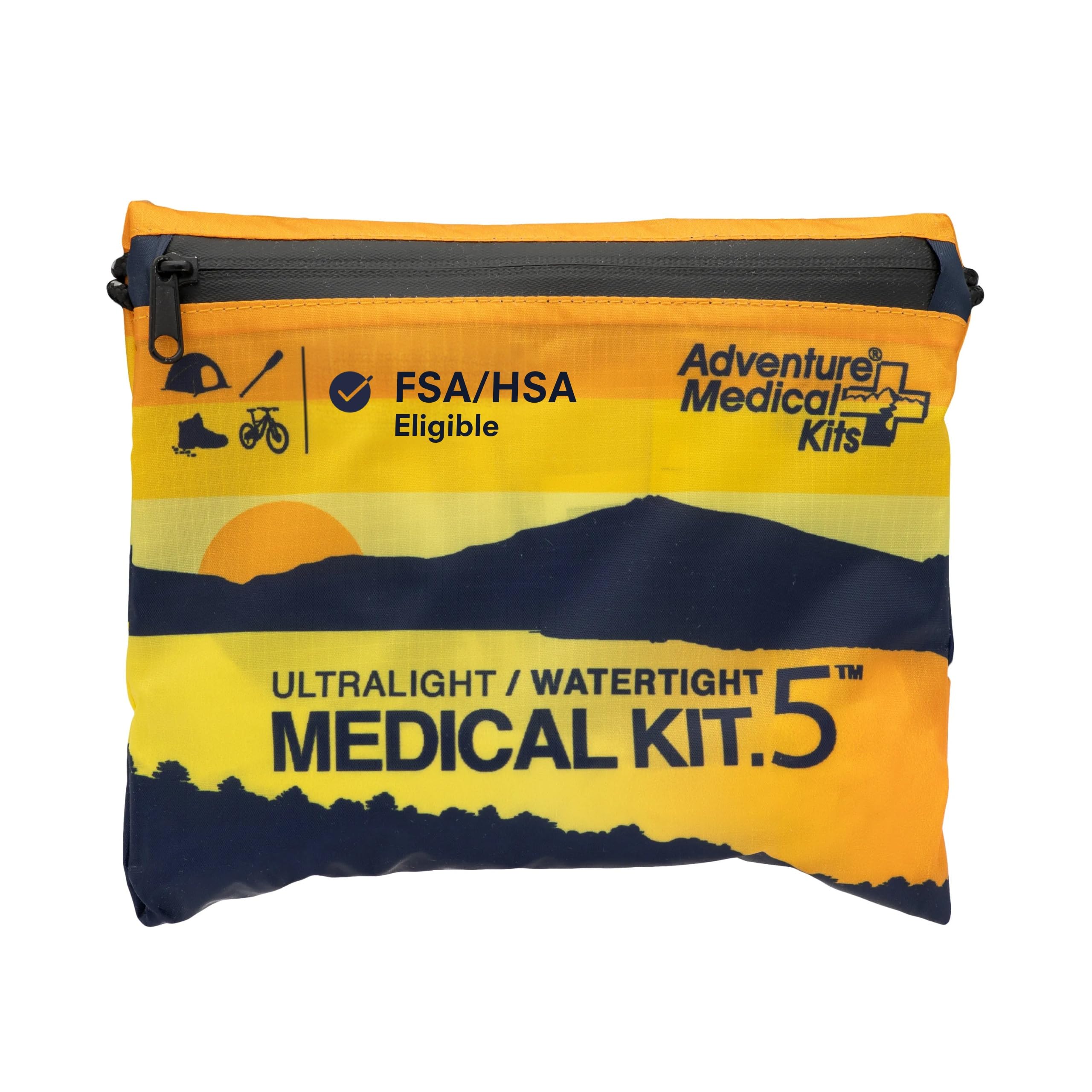
At 3.52 oz, the Ultralight .5 is built around the two specs that matter on the move: weight and water resistance. The soft pouch fits a pack side pocket without forcing a gear reshuffle, and the DryFlex inner bag provides a waterproof barrier for the contents. Inside, blister moleskin, antiseptic wipes, antibiotic ointment, pain meds, and a splinter picker cover the usual trail injuries, with a bit of spare room for personal additions.

The two-person, two-day capacity is honest for a kit this size. It suits a solo overnighter or a pair on a day hike, and the soft pouch has no hard shell or labeled compartments — that is the trade for a 3.52-oz kit. There is still enough room for an extra bandage or your preferred medication, and the contents lean toward blister treatment and wound cleaning, the injuries a day hike tends to produce.

The waterproof label comes from a real mechanism: the DryFlex inner bag is a separate sealed pouch, not a coating on the shell. Even if the outer bag is soaked, the supplies inside stay dry. For hikers who pack in wet weather, that distinction matters more than a few extra Band-Aids.

This kit suits ounce-counting solo and duo backpackers, day hikers, trail runners, and travelers who want a packable emergency kit with water resistance. It is not a heavily stocked group kit or wilderness trauma kit; those roles call for a larger kit with a trauma pad, elastic bandage, and a printed wilderness medicine guide. For a basic home or car spare, a heavier generic kit at a lower price makes more sense.

Pros

  • Weighs 3.52 oz and fits a pack side pocket or daypack without reworking your load.
  • DryFlex inner bag and water-resistant outer shell keep supplies dry in wet conditions.
  • Contents target blisters, scrapes, and splinters with room left for personal add-ons.
  • Build quality holds up to being stuffed in and out of a pack.

Cons

  • Precision tools are basic; the included tweezers can struggle with fine splinters until sharpened.
  • Supply count is modest for the price; this is a purpose-built trail kit, not a bulk box.
Our verdict

The Ultralight .5 does what a trail kit should: stays dry, stays light, and covers the injuries that end a hike.
Check Latest Price
2

Best for Treatment Depth

AMK Mountain Hiker Kit

91 /100
Traveler Score Outstanding

Key details

Weight
7.2 oz
Capacity
2 people, 2 days
Packability
Labeled soft compartments
Trail Contents
Trauma pad, medications, guide
Check Details on Amazon

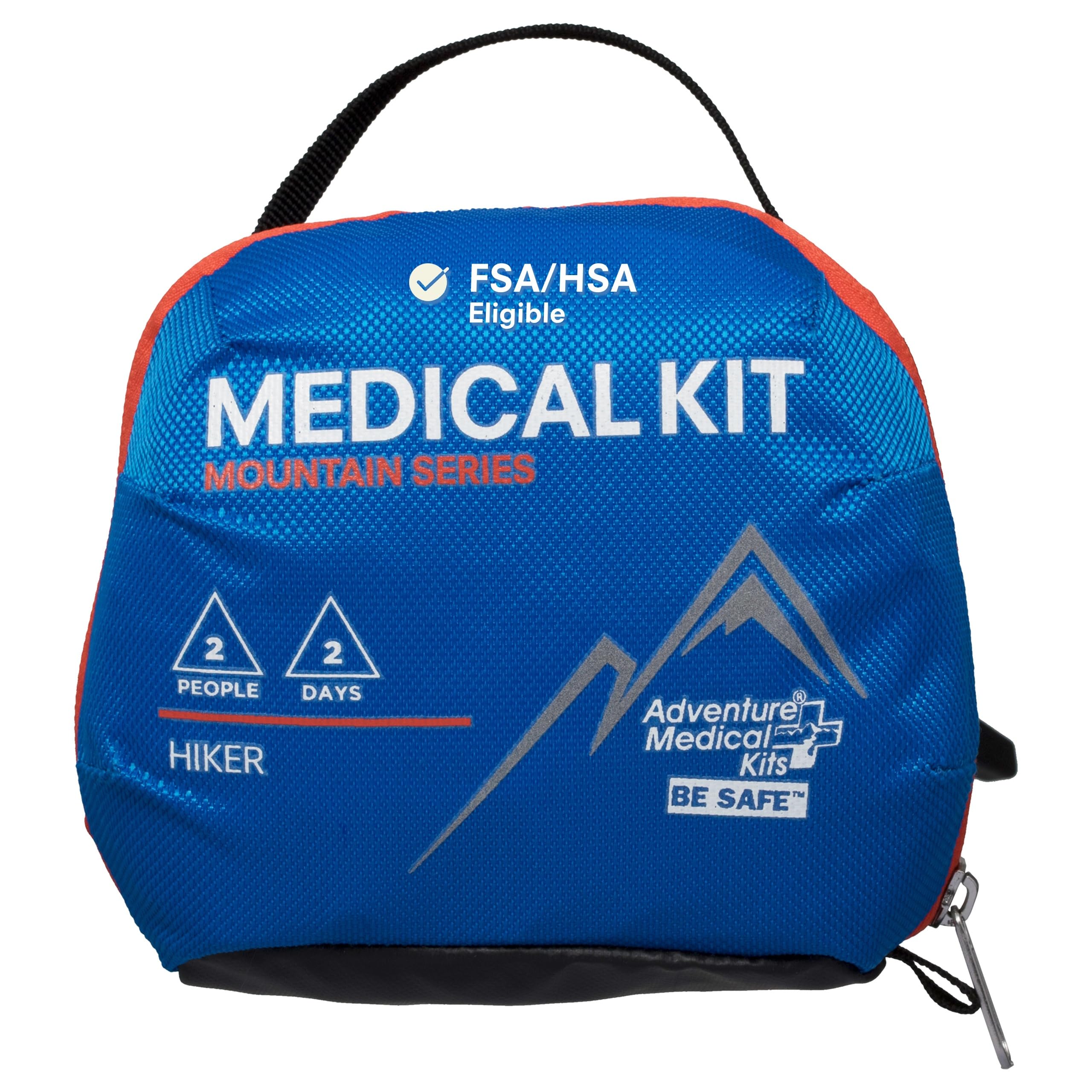
This kit adds treatment depth the slimmer trail kits leave out: a trauma pad, an elastic bandage, antihistamine and ibuprofen, and a printed wilderness medicine guide, all in clearly labeled compartments at 7.2 oz. That balance makes it a fit for day hikes and short backpacking trips where you want real medical capability without a heavy bag.

It suits overnight and multi-day hikers who want medications, bleeding response, and a reference guide rather than a bare blister kit. The 2-person/2-day sizing and room to add personal items make it a sensible starting point for new backpackers. Because some units can arrive with missing supplies or medications, verify the contents against the included checklist before your first trip; once restocked, the organized layout keeps the kit trail-ready. If you count every ounce, the slimmer option in this set is the lighter ultralight pick, but this one keeps the trauma and medication coverage that a bare trail kit lacks.

Pros

  • Clearly labeled compartments make it easy to find trauma care and medications under pressure.
  • Carries a trauma pad, elastic bandage, medications, and wilderness guide at 7.2 ounces.
  • Extra space lets you add personal medications or blister supplies without overstuffing the case.

Cons

  • The included tweezers can be too coarse for fine splinter work; personal tools often do the job better.
  • Zippers are light-duty, so the closure can strain when the kit is packed past its comfortable capacity.
Our verdict

For hikers who want treatment depth beyond a basic blister kit without moving up to a heavy medical bag, this is the middle-ground choice.

Check Latest Price
3

Best Organized Hard-Shell Kit

RHINO Rescue EVA Kit

93 /100
Traveler Score Outstanding

Key details

Weight
1.39 lb
Capacity
130 pieces
Packability
Lay-flat hard case
Trail Contents
Wound care, burns, sprains
Check Details on Amazon

The 130-piece RHINO RESCUE EVA kit organizes hiking first aid around a lay-flat EVA hard case with labeled compartments and a carabiner. The water-resistant shell protects supplies from compression and splashes, and the dual zippers open wide enough to see the main sections without digging.

That protection makes it a stronger fit for a car trunk, boat, college dorm, or basecamp than for an ultralight backpack. The hard case keeps contents from getting crushed, and the labeled layout helps you find a bandage or burn pad quickly.

Hikers who want a high piece count and visible organization should consider this kit before an ounce-counting soft pouch; the 1.39-lb shell is heavier than the slimmest options here, and the scissors and tweezers are the weak link. Strict gram-counters and anyone who needs serious cutting tools will want a lighter kit or their own shears.

💡 Use the carabiner to clip the case to a pack loop or seat hook for easy access.

Pros

  • Large 130-piece assortment covers cuts, burns, sprains, and blister care in one organized case.
  • Rigid EVA shell and dual zippers keep supplies protected from compression and splashes.
  • Lay-flat opening with labeled compartments makes mid-hike supply access quick.

Cons

  • Layered hard-case layout can feel tight, so the bottom row may need a second look.
  • Scissors and tweezers are light-duty; the 130-piece contents lean heavily on bandages.
Our verdict

A useful runner-up for anyone who wants a protected, 130-piece kit with visible organization and doesn't need to shave every ounce.

Check Latest Price
4

Best First Aid + Survival Combo

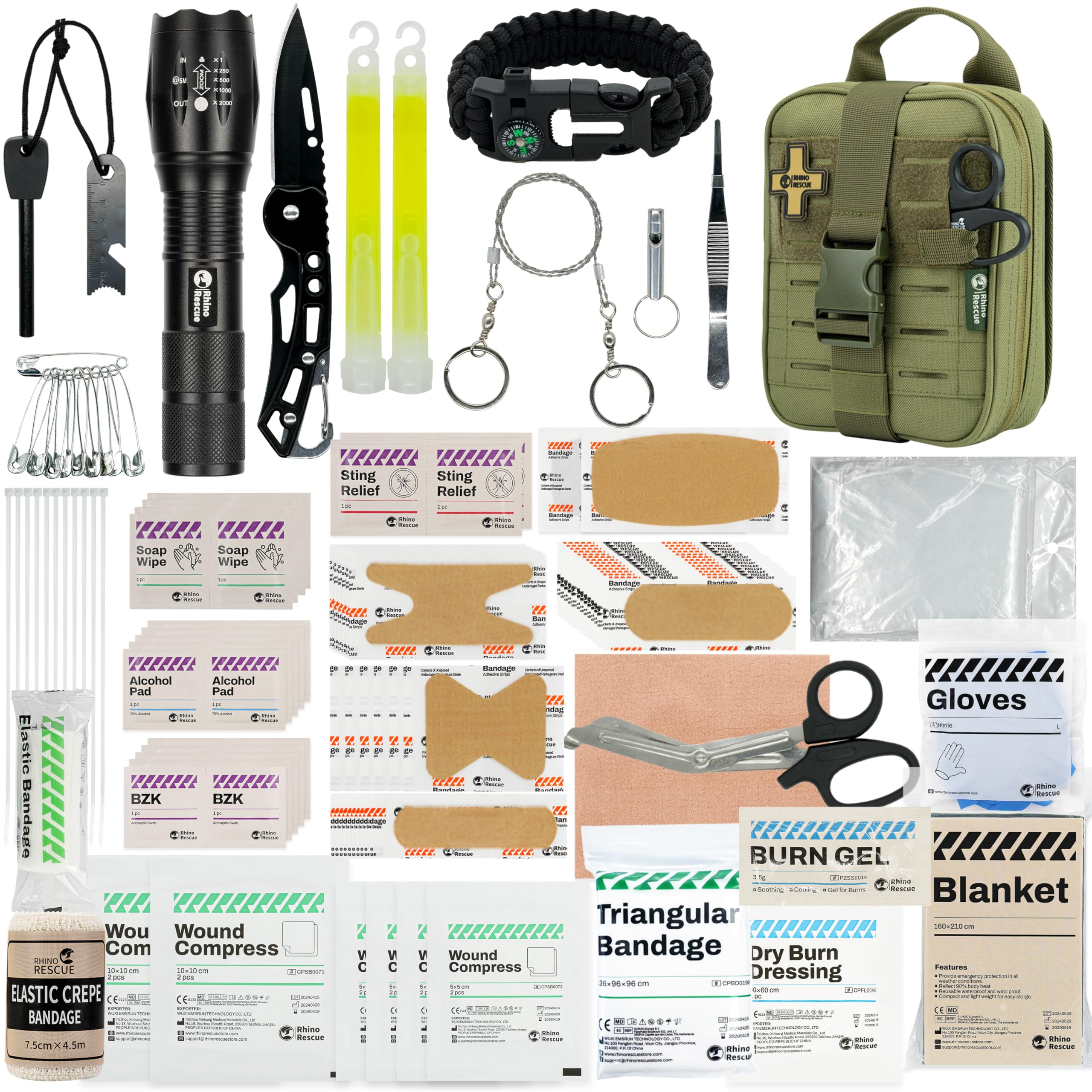
RHINO Rescue IFAK Kit

93 /100
Traveler Score Outstanding

Key details

Weight
2.2 lb
Capacity
124 pieces
Packability
MOLLE pouch, extra room
Trail Contents
First aid, 20+ survival tools
Check Details on Amazon

RHINO RESCUE's IFAK kit stands out in this trail-focused lineup: it pairs a 124-piece first-aid load-out with survival tools in a MOLLE-ready 600D nylon pouch. The multi-tool, flashlight, whistle, and emergency blanket sit alongside wound care, so the kit is positioned for camp and vehicle use rather than ounce-counting backpacks. That positioning separates it from the dedicated hiking kits in this set.

This pouch suits hunters, campers, and overlanders who want one kit to handle both medical and survival needs. The first-aid supplies cover genuine trail basics, and the extra interior room leaves space for personal additions. The tradeoff: at about 2.2 lb it is the heaviest kit in this roundup, so it only makes sense when you need the bundled survival tools. If your pack is already carrying a lightweight first aid kit, the slimmer options in this set will serve you better.

Pros

  • 600D MOLLE pouch packs 124 pieces into a compact, sturdy case for camp or vehicle use.
  • Combines first aid with a multi-tool, flashlight, whistle, and emergency blanket in one grab-and-go kit.
  • MOLLE straps let you mount the pouch to a pack or vehicle panel instead of losing backpack volume.

Cons

  • For backpackers who already carry a multi-tool and flashlight, the bundled versions duplicate gear.
  • Flashlight and battery performance can vary between units, so check them before a trip.
Our verdict

This hybrid fits naturally in a truck, camp box, or hunting pack where first aid and survival tools share space.

Check Latest Price
5

Best Budget Backup Kit

Thrive Mini First Aid Kit

94 /100
Traveler Score Outstanding

Key details

Weight
3.99 oz
Capacity
66 pieces
Packability
Pocket, purse, pack fit
Trail Contents
Basic bandages, wipes
Check Details on Amazon

The Thrive Mini covers the basics at an entry-level price: 66 pieces in a 3.99 oz zip pouch that slips into a pack side pocket, glove box, or classroom drawer. It does not try to match the watertight, blister-focused trail kit at the top of this guide; instead, it gives budget-conscious hikers a lightweight backup for standard minor-scrape basics.

Budget-conscious backpackers who already own a trail-primary kit are the main fit, since this is best as a spare for the car, commute bag, or child's backpack. Expect basic tools and generic supplies, so it handles minor everyday scrapes rather than serious backcountry wounds. The 66-piece count still gives enough bandage sizes and wipes for a handful of small mishaps, and it makes an easy loaner for group trips without risking your primary supplies.

Pros

  • Compact 3.99 oz pouch tucks into a pack pocket, glove box, or carry-on without adding bulk.
  • Covers everyday cuts and scrapes with useful quantities of bandages, wipes, and safety pins.
  • Budget-friendly enough to keep one in every bag, car, and classroom without a big spend.

Cons

  • Included scissors, tweezers, and tape are basic; for regular use, carry your own.
  • No blister moleskin or trauma pad, so trail injuries beyond small scrapes are outside its scope.
Our verdict

Budget-conscious hikers and parents get a genuinely useful spare for the car, office, or classroom without spending much per bag.

Check Latest Price

How to Choose

Weight

Listed weights in this category range from about 3.5 ounces to more than two pounds, and the word 'compact' does not separate them.

Every extra ounce in the kit shifts the pack's center of gravity and adds load to your hips and lower back for every mile.

Weigh the actual kit on a kitchen scale before you pack it.

Capacity

A person/day rating is a service interval, not a guarantee: it assumes typical use, minor injuries, and no need to re-dress a wound repeatedly.

A 2-person/2-day kit works for a solo overnight, but a wet, muddy fall can burn through dressings fast.

When in doubt, add a few trauma dressings and an elastic bandage rather than relying on the rated count.

Water Resistance

A sealed DryFlex bag keeps contents dry even when the outer shell is soaked; a water-resistant outer shell only sheds light rain.

Zippers are the usual entry point for moisture, so a water-resistant pouch can still wet your gauze in a downpour.

On river crossings or wet switchbacks, a dry bandage is the difference between a clean dressing and a useless one.

Trail-Specific Contents

Hiking injuries cluster around blisters, cuts, burns, and sprains, but general-purpose kits are often stocked for kitchen scrapes.

That is why trail kits should lead with moleskin, antiseptic wipes, a splinter picker, and basic medications.

If you travel beyond well-marked day trails, add a trauma pad and elastic bandage so the kit can handle a larger wound without improvising.

Pouch Organization

A soft pouch compresses and molds around other pack items, which is ideal for ultralight packing but can leave supplies hard to find.

A hard EVA case holds its shape and lays flat for quick visual checks, yet it takes up fixed space that does not compress.

Match the case style to how you actually pack: soft for dense ultralight loads, hard-shell when quick access matters more than volume flexibility.

Frequently Asked Questions