9 Best Solar Power Bank of 2026: Battery Packs You Can Count On

Find a solar power bank that actually keeps your devices charged on the go — without relying on the sun.

Almost every solar power bank on the market promises fast sun-powered charging, but in practice those tiny panels deliver a trickle at best. After a day in direct sunlight, you're lucky to get a single phone charge. That disconnect between marketing and reality frustrates many travelers who expect solar to be a primary power source.

The good news: these devices are excellent standard power banks. Buyers consistently praise their battery capacity, build quality, and ability to charge multiple devices at once. The trick is to ignore the solar hype and judge each product solely on its performance as a portable battery pack. That means focusing on capacity, charging speed, port selection, and durability — not panel count.

This guide prioritizes proven battery reliability over solar gimmicks. The top picks are power banks first, solar extras second, matched to how you actually use them on a trip.

1

Best Overall

SOARAISE 48000mAh

87 /100
Traveler Score Excellent

Key details

Ruggedness
Waterproof
Solar Panels
4 panels
Fast Charging
PD QC 3.0
Built-in Cables
4 cables, wireless
Check Details on Amazon

The SOARAISE 48000mAh packs enough power to recharge a smartphone over a dozen times, and its three USB ports plus four built-in cables and wireless charging let you top up multiple devices at once. The build feels dense and solid, with a rugged exterior that holds up to being tossed in a camp bag or emergency kit.

Where this unit stands apart from smaller solar banks is the sheer capacity and charging flexibility. Seven devices can be connected simultaneously — phones, tablets, earbuds, even a small fan — without juggling cables. The PD and QC 3.0 fast charging keeps drain time reasonable despite the large battery.

The four integrated solar panels are marketed as a five-times-faster recharge, but in practice they deliver very little. Under direct sunlight the bank gains charge at a trickle; in overcast or partial shade it may not add meaningful power over a day. This is a standard power bank with a solar bonus, not a self-sufficient solar charger. For multi-day camping or emergency kits, treat the solar as a last-resort top-off and rely on the USB-C input for primary charging.

Long-term reliability varies between units. Some owners report the bank stops holding a charge or loses a port after a few months of use, while others have had theirs last through multiple seasons. The occasional unit issue means checking return policy is wise, but the large review base suggests that for most buyers the battery itself performs as expected for the first year.

💡 Keep the solar panel exposed to direct sunlight for best results, but rely on USB-C input for primary charging.

Pros

  • Solid build with durable materials that withstand outdoor handling
  • High 48000mAh capacity recharges phones many times over
  • Charges up to seven devices at once via ports, cables, and wireless
  • Carries easily in a pack for hiking and camping

Cons

  • Solar recharging can take days in indirect light and adds little power on a typical outing
  • Some units may lose charging ability or stop working after a short period of use
Our verdict

Best suited for campers and emergency preppers who need a large reserve of power and don't mind charging it via wall outlet before heading out — the solar panels are a bonus, not a primary source.
Check Latest Price
2

Best Value

GOODaaa 24000mAh

88 /100
Traveler Score Excellent

Key details

Ruggedness
Solar Panels
Single
Fast Charging
15W USB-C
Built-in Cables
4 cables, 5 ports
Check Details on Amazon

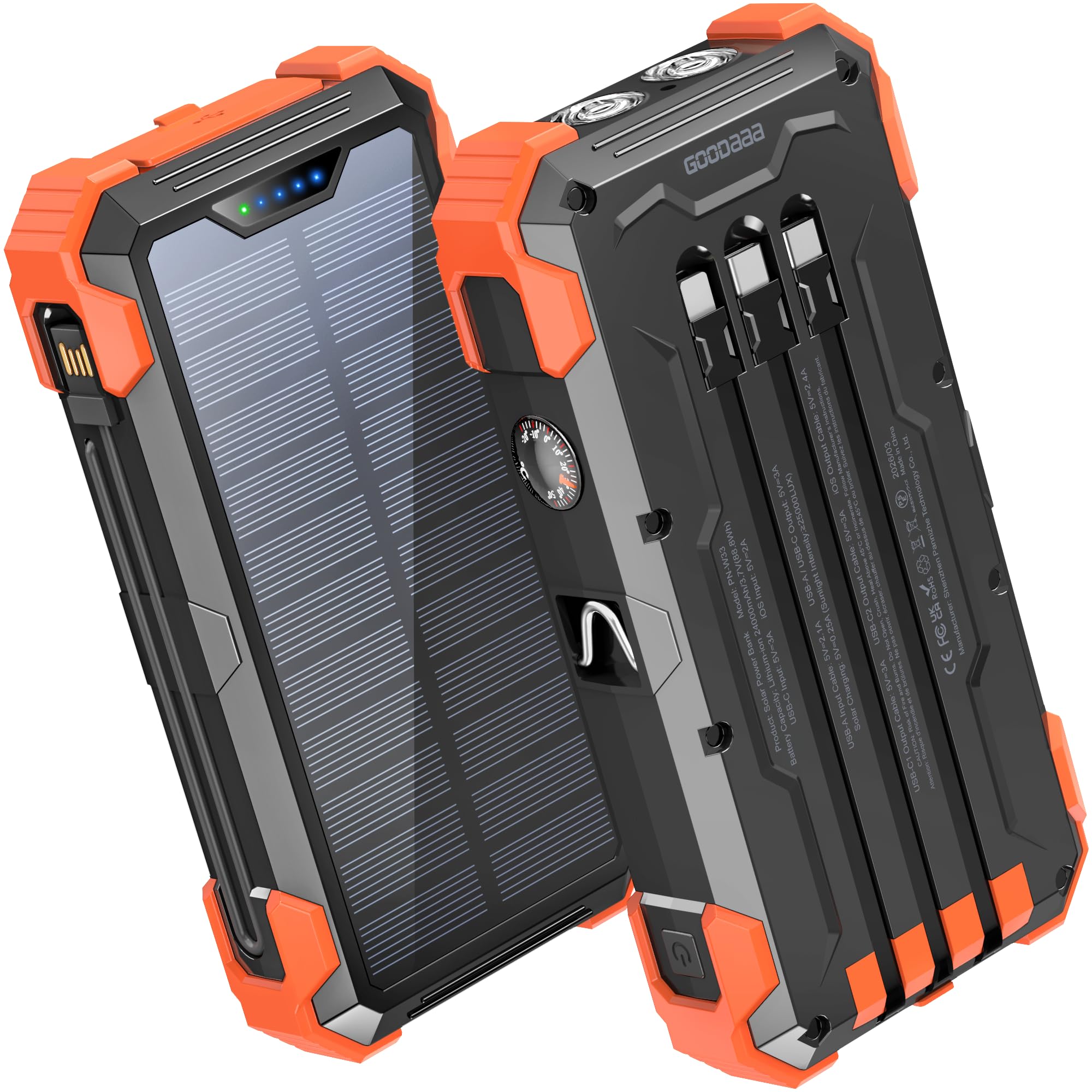
With 24,000mAh capacity, four built-in cables, a thermometer, carabiner, and SOS flashlight, this power bank packs useful extras at a budget-friendly price. Unlike the top pick, it includes built-in cables for each of the most common device types, reducing the need to carry separate cords.

Charging multiple devices simultaneously works well, and the built-in cables handle phones, tablets, and other USB gadgets without fuss. The solar panel, however, will not recharge the battery in a reasonable timeframe — it is a bonus feature that does not deliver usable power under typical conditions.

This unit suits everyday backup power and light camping where solar is not relied upon. If you need solar as a primary charging method, look elsewhere. As a standard power bank with convenient built-in cables and extra features, it offers good value for its price.

💡 Keep the unit charged via USB-C for dependable power; the solar panel is best reserved for emergency top-ups in direct sunlight.

Pros

  • Built-in cables for four device types simplify charging without extra cords.
  • Compact size fits easily in a bag for travel or hiking.
  • Charges multiple devices simultaneously, including phones and tablets.

Cons

  • Charging speed may be slower than advertised for some smartphones.
  • Charging consistency can vary across units, with some losing function over time.
  • Solar panel does not provide meaningful recharge under normal sunlight.
Our verdict

For buyers who prioritize built-in cables and extra features over solar charging, this is a cost-effective option — but treat the solar panel as a backup that may not deliver.

Check Latest Price
3

Best High-Capacity

FEELLE 50000mAh Hand Crank

89 /100
Traveler Score Excellent

Key details

Ruggedness
Solar Panels
4 panels
Fast Charging
PD QC 3.0
Built-in Cables
4 cables, 3 ports, wireless
Check Details on Amazon

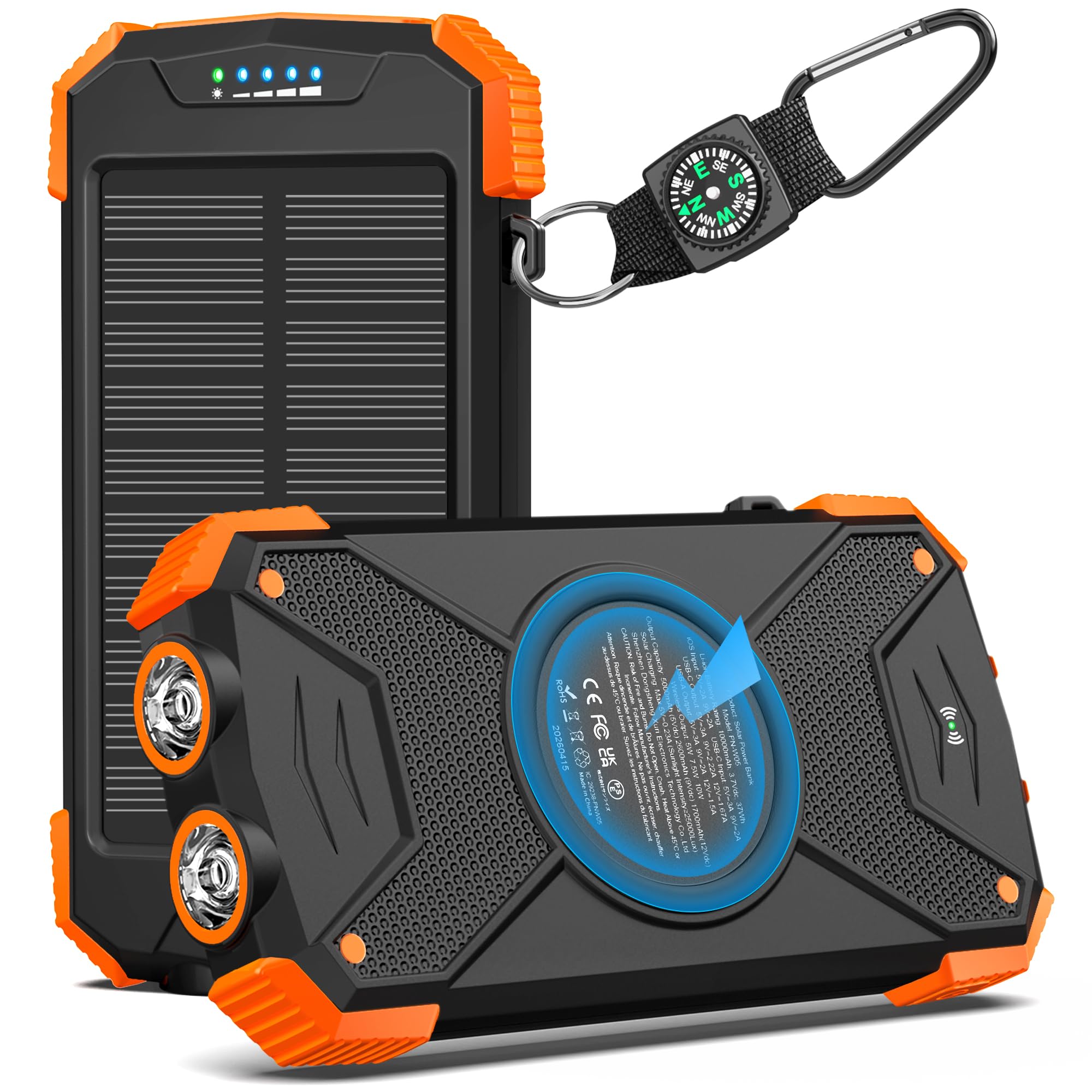
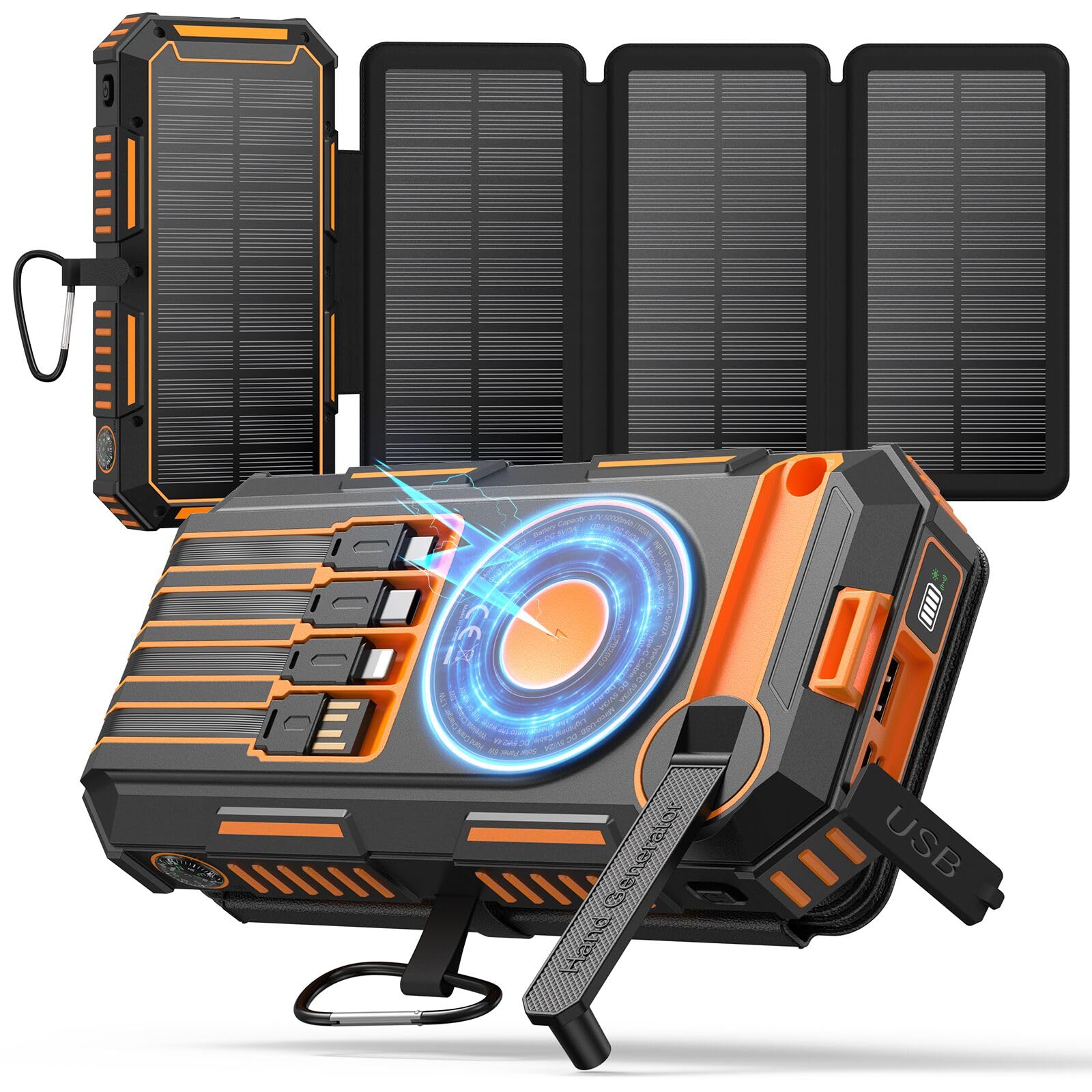
With a massive 50,000mAh battery and a built-in hand crank generator, the FEELLE offers more backup capacity than the top-pick SOARAISE. Its four built-in cables, magnetic wireless charging, and compass add convenience for multi-device scenarios. The hand crank can provide a trickle charge even when solar panels aren't an option - a distinct advantage for emergencies or cloudy weather.

This power bank suits preppers and adventurers who need a high-capacity battery they can charge via wall or car before heading out, and who want the security of a hand crank as a last-resort power source. The solar panels can help extend battery life in direct sun, but their performance has been inconsistent on some units, and occasional durability issues have been noted. If you need a reliable solar charger, consider a dedicated panel instead. For anyone packing for multi-day trips without grid access, the FEELLE's raw capacity and hand crank make it a strong backup option.

💡 Rely on wall or car charging to fill the battery; use the hand crank for emergency top-ups and consider the solar panels a low-priority bonus.

Pros

  • Massive 50,000mAh capacity provides days of phone and tablet charging
  • Hand crank generator works without sunlight, ideal for emergencies
  • Portable design considering the capacity - folds compactly for backpacking
  • Built-in cables and magnetic wireless reduce cable clutter

Cons

  • Charging speed from the battery is slower than some high-power devices - best for overnight charging
  • Solar panel performance is inconsistent; in some cases it may stop working entirely
  • A small number of units have stopped charging after several months of use
Our verdict

For off-grid backup where maximum battery capacity and a manual charging option matter, the FEELLE delivers - but treat the solar panels as an extra, not a primary charging method.

Check Latest Price
4

Most Portable

BLAVOR 10000mAh Slim

88 /100
Traveler Score Excellent

Key details

Ruggedness
Solar Panels
Single
Fast Charging
20W USB-C
Built-in Cables
Cables, wireless
Check Details on Amazon

The BLAVOR 10000mAh Slim packs built-in USB-C, micro USB, and Lightning cables plus a wireless charging pad into a frame barely larger than a credit card stack. It's the lightest power bank in this comparison, a clear advantage for daypacks and jacket pockets. Capacity is modest at 10,000mAh, enough for a full phone charge and a half, but not for multi-device trips.

This model suits budget-minded travelers heading out for a day where an outlet is available overnight. The solar panel on one face is essentially decorative — it won't meaningfully recharge the battery in sunlight. Buyers who need sun-based charging should look at models with larger functional panels.

For the price, it delivers dependable backup power in a truly pocket-friendly size — as long as you don't expect solar charging or multi-day endurance.

💡 Charge via wall outlet or USB — the solar panel won't recharge the battery in any practical timeframe.

Pros

  • Build quality is solid for a budget power bank.
  • Compact and lightweight design fits in any pocket or small bag.
  • Charges a phone to full multiple times from a single charge.
  • Built-in cables and wireless charging eliminate the need for extra cords.

Cons

  • Charging speeds can be slower than expected, especially when using the wireless pad or multiple ports simultaneously.
  • The battery may lose its ability to hold a full charge after several months of use in some cases.
Our verdict

An affordable, ultra-portable power bank that works best as a daily backup for short trips — skip it if you need multi-day off-grid power or useful solar charging.

Check Latest Price
5

Best Solar Performance (Newcomer)

SolarTred 20000mAh 4-Panel

92 /100
Traveler Score Outstanding

Key details

Ruggedness
IP67
Solar Panels
4 panels
Fast Charging
15W USB-C
Built-in Cables
3 cables, USB-C
Check Details on Amazon

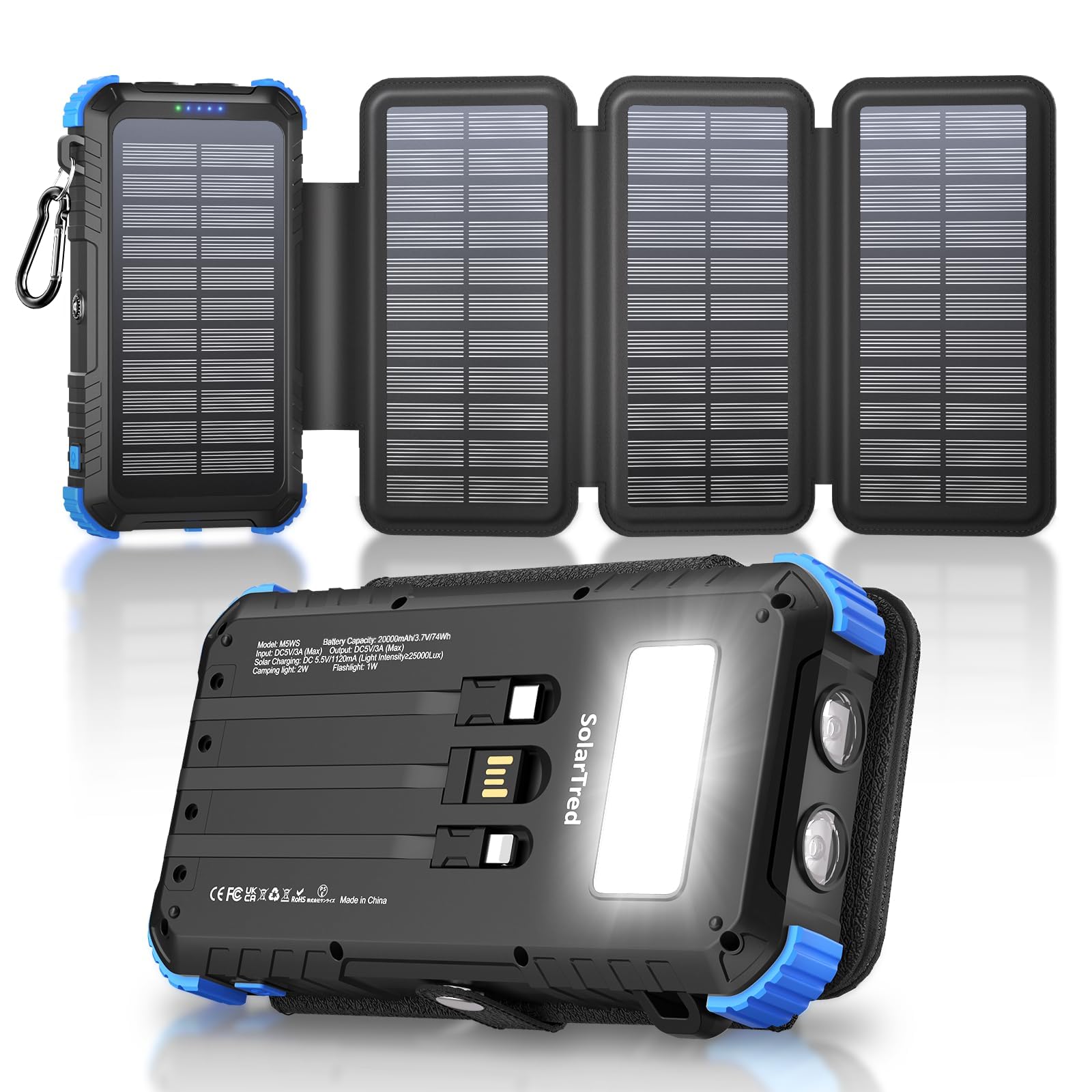
The SolarTred 20000mAh stands apart from typical solar power banks by integrating four separate panels that generate a usable trickle charge in direct sunlight. While most built-in solar cells are too slow to rely on, this unit’s design makes it a viable backup charging method during a camping trip or emergency.

The 20000mAh battery capacity provides multiple full phone charges, and the three built-in cables (USB-C, Lightning, microUSB) eliminate the need to carry extra cords. The IP67 waterproof rating adds confidence for outdoor use, and the flashlight and camping light modes are practical extras. USB-C input/output at 15W keeps recharging times reasonable.

This power bank suits early adopters and campers who want a solar function that actually works. Its long-term performance beyond initial use is still being observed, so buyers who need a proven track record should consider the more established top pick with thousands of reviews.

Pros

  • Charging capacity and build quality receive consistent positive feedback from early users.
  • Portable design easily fits in a backpack for outdoor trips.
  • Solar panels effectively trickle charge the battery under direct sunlight.

Cons

No notable drawbacks to flag.

Our verdict

If your priority is a solar power bank where the panels actually contribute to recharging, the SolarTred delivers. For a safer bet with a larger reliability track record, the higher-capacity alternative is the better choice.

Check Latest Price
6

Best Rugged

ToughTested 24000mAh Rugged

82 /100
Traveler Score Excellent

Key details

Ruggedness
IP66
Solar Panels
Built-in
Fast Charging
18W PD USB-C
Built-in Cables
3 ports
Check Details on Amazon

ToughTested's 24000mAh power bank stands out as the only model in this roundup with an IP66 rating and shockproof construction. Unlike the slimmer solar-focused alternatives, this one prioritizes surviving drops, dust, and water spray over portability — a natural fit for construction sites and vehicle emergency kits.

This is the right pick if you need a battery that can take a beating and still deliver power to phones and tablets. The premium price reflects its build quality, but the integrated solar panel is too slow to meaningfully recharge the battery — treat it as a backup, not a primary source. The unit is heavy (over a pound) and some owners have noted that after a year of use the battery may stop holding a charge. Buyers who need a lightweight pack for hiking should look elsewhere.

When charging from a wall outlet, the 18W USB-C PD port recharges phones quickly, and the two additional USB-A ports allow simultaneous device charging. The 24000mAh capacity can refill a typical smartphone four to five times. The 18W PD input also recharges the power bank itself in a few hours, making it practical for overnight top-ups. For job site use where AC power is limited, this power bank performs well as a standard battery pack.

💡 Keep the power bank charged via wall outlet before heading out — the solar panel is too slow to rely on.

Pros

  • Rugged build handles drops, dust, and water spray
  • USB-C PD and USB-A ports provide consistent charging for devices
  • High 24000mAh capacity delivers multiple full phone charges

Cons

  • At over a pound, the weight limits its carry options for hiking
  • Solar panel recharges the battery very slowly and may not keep up with usage
  • Some units may stop holding a charge after extended use
Our verdict

This rugged power bank suits buyers who need durability on the job or in emergency kits and don't rely on solar charging. If you need functional solar panels, consider the alternative with buyer-verified performance.

Check Latest Price
7

Budget Travelers

BLAVOR 20000mAh Watch

87 /100
Traveler Score Excellent

Key details

Ruggedness
Solar Panels
Built-in
Fast Charging
20W PD, 15W wireless
Built-in Cables
4 cables, 3 ports, wireless
Check Details on Amazon

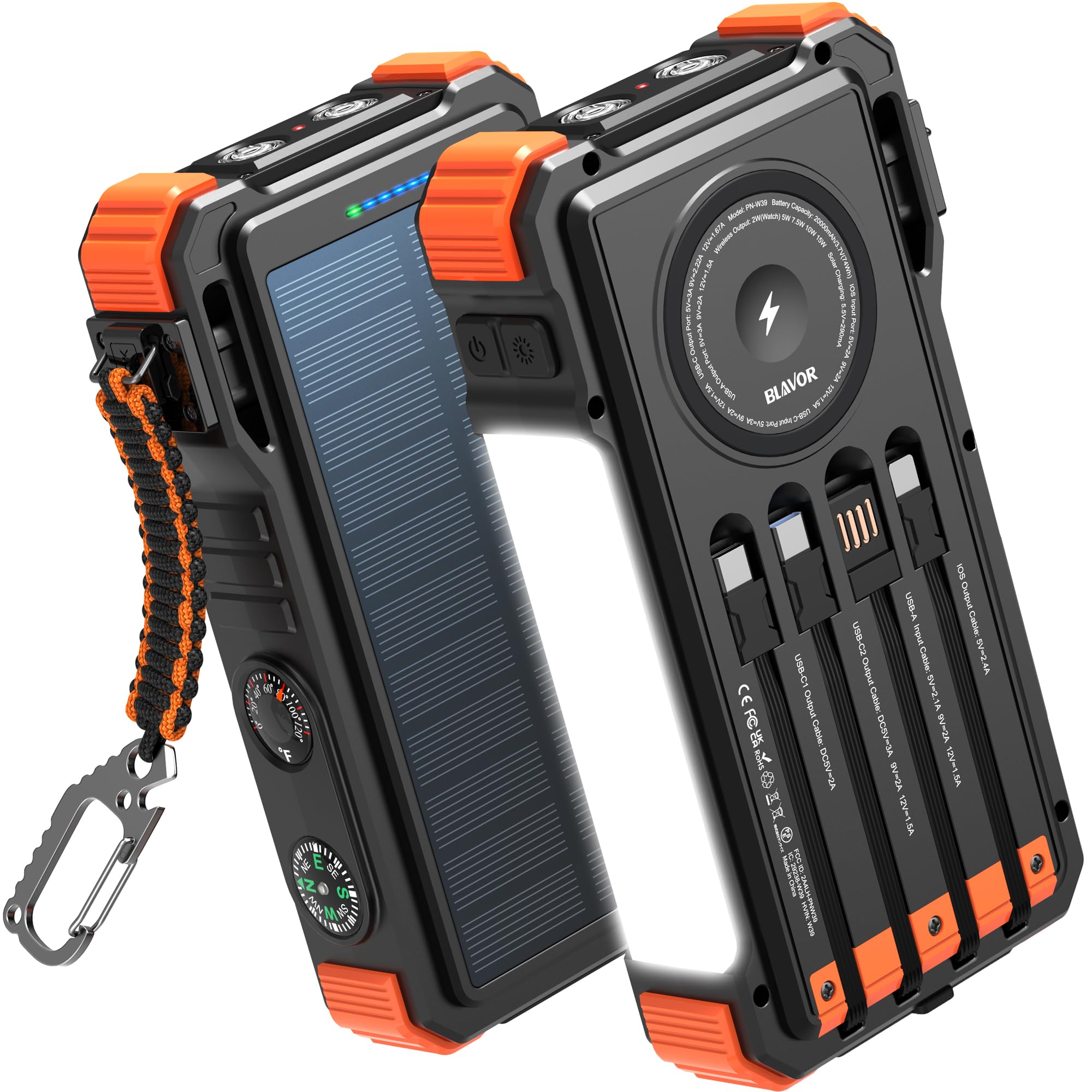
This BLAVOR power bank delivers a budget-friendly multi-device backup with built-in cables for USB-C, Lightning, and Micro-USB, plus a dedicated wireless pad for Apple Watch. Extras like a flashlight and thermometer add travel convenience. However, the solar panel is too small to meaningfully recharge the battery in typical use, so plan on wall or car charging. The unit is heavier than many 20000mAh banks, noticeable when packing light. It compares similarly to the top pick in this category but has fewer customer experiences documented; still a solid alternative if a built-in watch charger is a priority.

Pros

  • Solid build quality with built-in cables for most common devices.
  • Useful for travel with multi-port and wireless charging options.
  • Dedicated Apple Watch charger integrated into the unit.

Cons

  • Solar panel may not significantly recharge the battery under normal conditions.
  • Heavier than many 20000mAh power banks, especially when packing for camping.
Our verdict

Best for travelers who want an affordable backup battery with Apple Watch charging and don't plan to rely on solar.

Check Latest Price
8

Budget High-Capacity

YELOMIN 38800mAh

83 /100
Traveler Score Excellent

Key details

Ruggedness
IP65
Solar Panels
Single
Fast Charging
22.5W USB-C
Built-in Cables
4 cables, USB-A
Check Details on Amazon

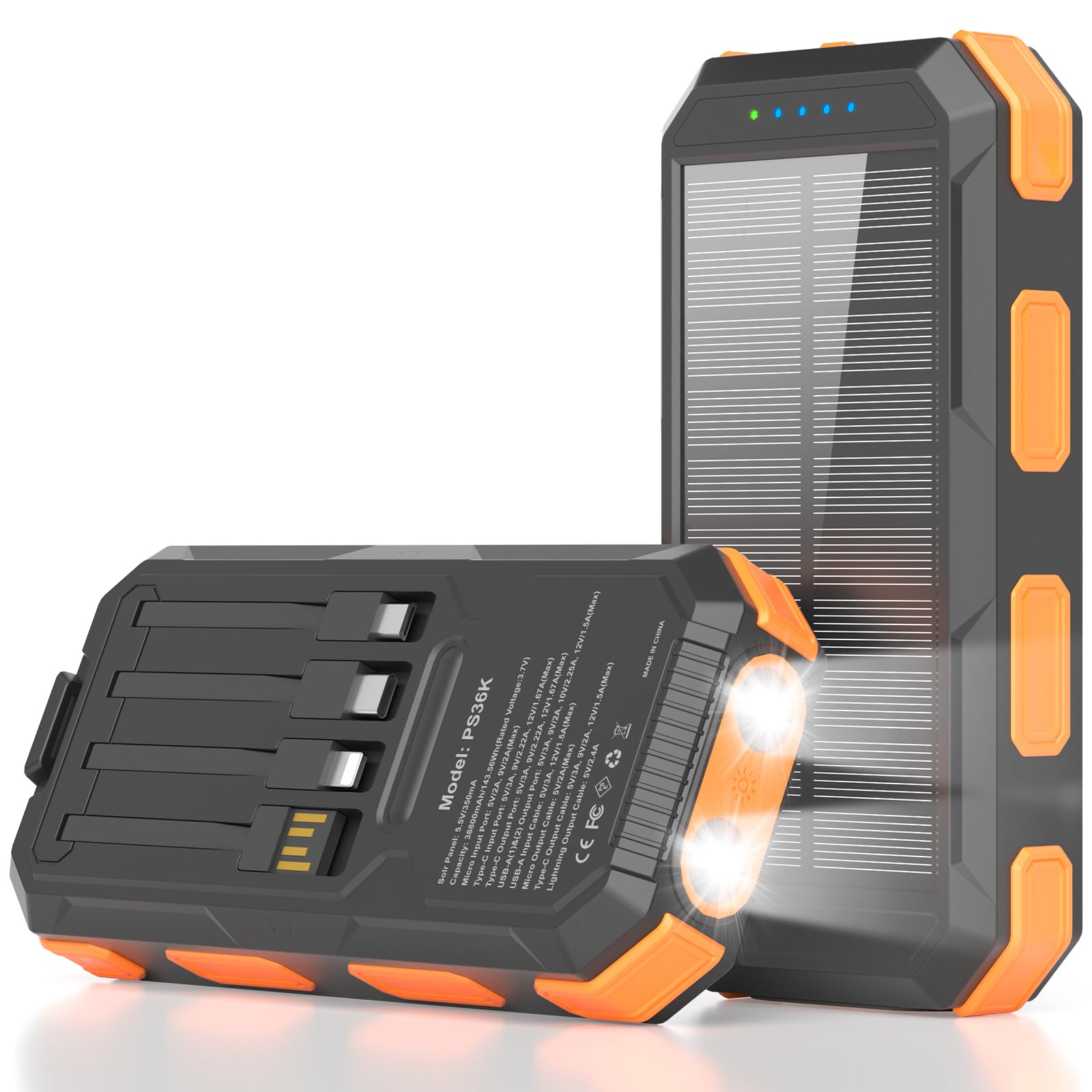
The YELOMIN delivers solid performance as a standard power bank, with 22.5W USB-C fast charging and built-in cables for convenient device charging. Its 38800mAh capacity and IP65 rating make it a practical choice for camping or emergencies where you can top it up via wall or car. However, the built-in solar panel is slow and may not provide useful recharge even in direct sunlight – some users report no solar charging at all. Build quality can also vary, with occasional issues affecting the flashlight. While the specs are appealing and early feedback is positive, the solar shortfalls and unverified long-term durability prevent it from being a top-tier pick.

💡 Treat the solar panel as a trickle top-up; rely on USB-C charging for full recharges.

Pros

  • 22.5W USB-C fast charging provides quick device top-ups.
  • Built-in cables and IP65 rating make it convenient for camping.

Cons

  • Solar charging is very slow and may not recharge the battery in sunlight at all.
  • Build quality can vary, with occasional issues affecting the flashlight.
Our verdict

A budget-friendly high-capacity power bank for those who prioritize wall or car charging and can accept the solar panel as an occasional bonus that may not always work – best for occasional outdoor use where grid power is available.

Check Latest Price
9

Occasional Use

MINRISE 40000mAh

83 /100
Traveler Score Excellent

Key details

Ruggedness
Waterproof
Solar Panels
Single 1.8W
Fast Charging
20W PD USB-C
Built-in Cables
4 cables, 3 ports
Check Details on Amazon

With a 40000mAh capacity, PD 20W fast charging, four built-in cables, and dual flashlights at an entry-level price, the MINRISE offers a lot of features for the money. The solar panel, however, is too weak to recharge the battery in any practical timeframe, and some units can become non-operational after limited use. This makes it suitable as an occasional-use backup power bank when you can charge from a wall outlet, but not for reliable solar-dependent or daily use.

Pros

  • Consistent wired charging for phones and tablets via USB-C PD 20W.
  • Portable design with built-in cables and dual flashlights suits camping and travel.

Cons

  • Solar panel is too small to meaningfully recharge the battery in direct sunlight.
  • Possible early malfunction
Our verdict

Best for occasional use where solar is not expected and you're willing to accept the possibility of early malfunction.

Check Latest Price

How to Choose

Battery Capacity

Capacity (mAh) determines how many times you can recharge your phone or tablet. A 10,000mAh bank refills a typical smartphone 2-3 times; 20,000mAh covers a weekend for one person; 50,000mAh can keep a small group powered for days.

Higher capacity means more weight and bulk. If you're backpacking, 10,000mAh is a practical trade-off. For car camping or emergency kits, 40,000mAh+ makes sense. The hidden trade-off: larger batteries take forever to recharge via solar — sometimes a full week of direct sun.

Solar Panels

Most built-in solar panels are small (1-2W) and require hours of direct sunlight to add meaningful charge. A single panel under best conditions might deliver 500mAh per hour — about 10% of a phone battery per hour. In reality, shading, angle, and cloud cover can cut that to zero.

Multiple panels or larger surface area help, but the physics limit output. The only product in this category with early user confirmation of functional solar is the SolarTred 4-panel model. For everyone else, treat solar as a last-resort emergency top-up, not a daily charging solution.

Built-in Cables

Built-in cables eliminate the need to carry separate cords, but they are usually short (6-8 inches) and fixed. That means you hold the power bank and device close together, which can be awkward. Some power banks include a mix of Lightning, USB-C, and Micro-USB cables to cover different devices.

The convenience is real for quick top-ups, but if you need to charge while the bank is in a bag or at a distance, bring your own longer cable. Also, built-in cables are sometimes the first component to fail if the unit is dropped repeatedly.

Fast Charging

Fast charging standards (USB-C PD, Qualcomm QC) cut the time to refill a phone from 2+ hours to under an hour. Most modern phones support 18-20W PD, so look for a power bank that outputs at least 18W on its USB-C port.

Wireless charging (Qi) is slower (typically 5-15W) and generates heat, which wastes energy. It's convenient for overnight charging but not efficient when you need a quick boost. The hidden trade-off: fast charging drains the power bank's own battery faster, so you get fewer total charges per cycle.

Ruggedness

IP ratings (Ingress Protection) indicate dust and water resistance. IP66 means dust-tight and protected from powerful water jets. IP67 is dust-tight and can survive immersion in 1 meter of water for 30 minutes. IP65 is dust-tight and protected from low-pressure water jets.

Rugged power banks are heavier and bulkier. If you're hiking in dry conditions, a non-rated pack may be fine. For beach, boat, or construction use, an IP66/67 rating provides peace of mind. The trade-off: rugged cases often trap heat, which can slightly reduce battery efficiency during fast charging.

Frequently Asked Questions