8 Best Solar Laptop Power Bank of 2026: With Panel Included

The best solar laptop power banks for travelers who want a real panel in the box, fast USB-C laptop charging, and a size that fits the trip.

A solar laptop power bank only solves your problem if the panel is actually in the box and sized for the battery. Many compact stations advertise solar input but ship with no panel, and the ones that do bundle one often pair a 40W panel with a 200Wh-plus battery — a combination that needs most of a day to refill.

That makes the first decision about use case: do you want a ready-to-go USB-C kit, a station with AC outlets for a range of gear, or an under-100Wh battery that passes airline carry-on rules? Each choice changes weight, capacity, and charging speed in ways that matter more than the advertised wattage.

This guide sorts those trade-offs into clear picks so you can match a station to your travel style — and avoid buying a separate panel you did not plan for.

1

Best Overall Solar Laptop Kit

Anker SOLIX C200 DC

90 /100
Traveler Score Outstanding

Key details

Battery
LiFePO4
Capacity
192Wh
Solar Setup
60W panel included
Carry-On Fit
4.2 lb, above 100Wh
Check Details on Amazon

The C200 arrives as a complete solar-laptop kit: the 60W panel and all cables are in the box, so there is no separate solar purchase to track down. That separates it from compact stations that advertise solar input but treat the panel as a paid add-on. The included cable set is matched to the panel and the USB-C port, which keeps the usual grab-bag of adapters out of the picture.

The USB-C port is the workhorse. It delivers 100W output, enough for a full-size laptop while in use, and it accepts 140W input for faster refills when a USB-C wall adapter is available. The same two-way PD port takes charge from the solar panel and sends power to a laptop, so the physical connector stays consistent across solar, wall, and device cables. The 192Wh LiFePO4 pack provides a meaningful runtime for USB-C gear without the weight of an AC-inverter station.

The included 60W panel is compact and effective in direct sun, and the short included cables remove the adapter shuffle that comes with third-party solar rigs. A 60W panel is a realistic match for a 192Wh battery: you are not filling an RV bank, but you are also not waiting days to see progress. Treat the C200 as a daily top-up system rather than a rapid refueling station. Cloud cover extends the timeline, so plan around the panel as a slow drip rather than a fire hose.

The 39% smaller form factor shows up when packing. This unit sits in a duffel corner instead of demanding its own bag, and the panel folds into a slab about the size of a laptop sleeve. At 4.2 lb, the whole package is a one-hand carry from car to campsite.

The right buyer is a traveler who wants one box solar plus USB-C laptop charging, or a car camper/RV user with DC gear. Strict carry-on-only travelers who need under 100Wh should pass; the 192Wh pack sits above that ceiling without airline approval. For anyone who already runs on USB-C laptops and DC appliances, the solar panel in the box closes the gap between having a battery and having a charging kit.

Pros

  • Complete solar kit in the box: 60W panel plus cables, no separate panel to buy.
  • USB-C PD handles 100W output and 140W input for laptops and DC gear.
  • 4.2 lb frame with a 39% smaller form factor for travel.
  • 192Wh LiFePO4 chemistry balances capacity with pack weight.

Cons

  • The 140W wall adapter is sold separately, so full-speed home refills add cost beyond the box.
  • No AC outlet: 110V appliances are off the table, leaving USB-C and DC gear as the working range.
Our verdict

The C200 is the quickest route from one box to solar-powered laptop charging for USB-C and DC gear.
Check Latest Price
2

Best AC All-Rounder

Jackery Explorer 300

93 /100
Traveler Score Outstanding

Key details

Battery
LiFePO4
Capacity
292Wh
Solar Setup
Panel sold separately
Carry-On Fit
7.1 lb, above 100Wh
Check Details on Amazon

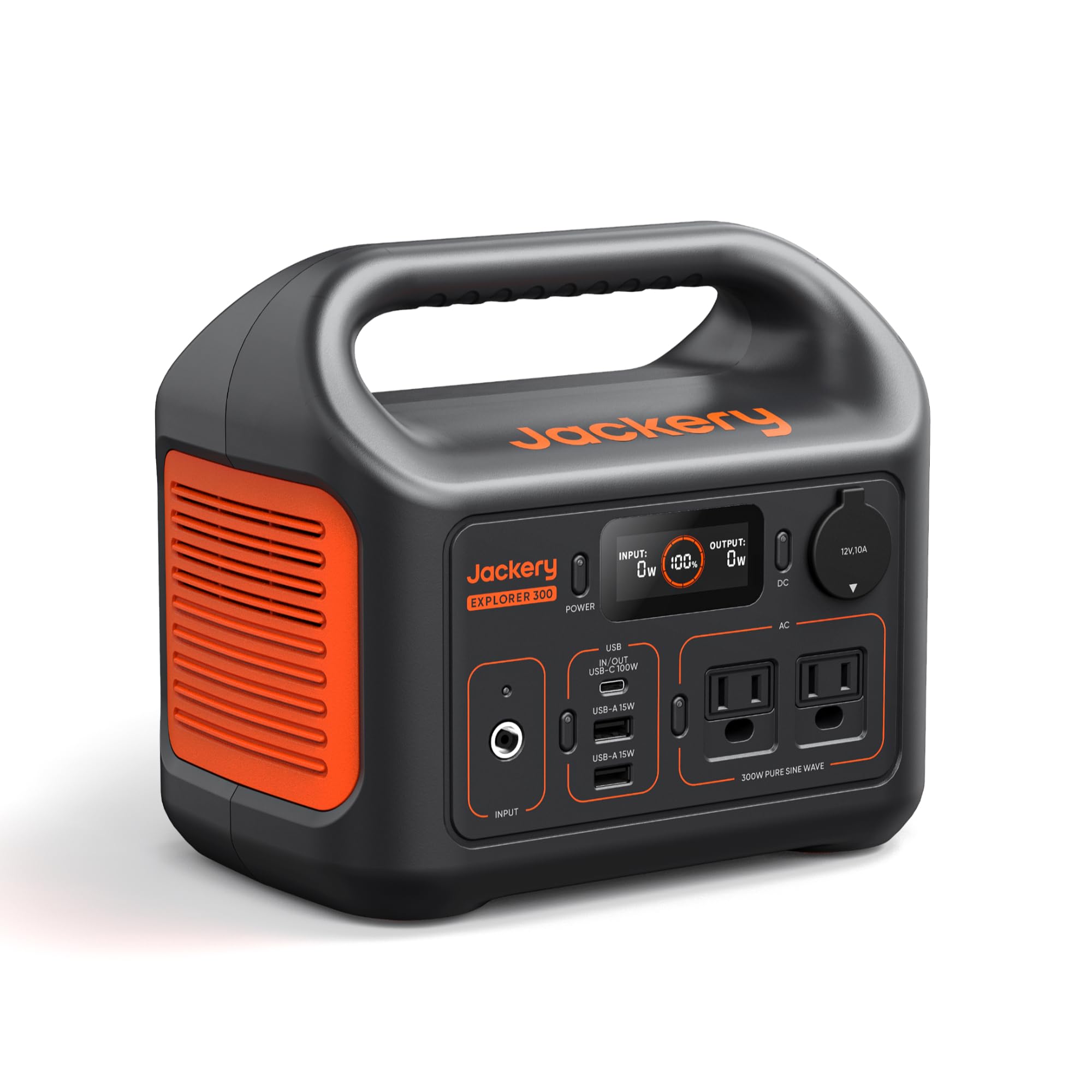
The Explorer 300 packs a 292Wh LiFePO4 battery into a 7.1 lb shell with two 300W AC outlets and a 100W USB-C PD port, making it the AC all-rounder among compact portable stations. The 300W continuous output and 600W peak cover CPAP machines, laptops, small coolers, and phone charging without overloading. It suits camping, road trips, CPAP use, and outage backup rather than ultralight backpacking.

That capacity supports an all-night CPAP session or several laptop top-ups before recharging. The 7.1 lb weight and compact shape fit a car trunk or RV cabinet, and the LiFePO4 chemistry brings longer cycle life than older lithium-ion packs. For CPAP users, the AC outlet means no proprietary DC adapter is needed, and 300W continuous output handles typical machines.

No solar panel is included, and USB-C PD can occasionally negotiate poorly with certain laptops; using the AC outlet avoids that. This is the right pick for buyers who already have a solar panel or plan to buy one separately, and for anyone who wants AC outlets without moving up to a heavier station. The DC-only top pick remains the better one-box solution when solar has to be in the box.

Pros

  • Long battery life supports all-night CPAP use and multi-device charging.
  • Two 300W AC outlets and 100W USB-C PD cover laptops, CPAP machines, and small appliances.
  • 7.1 lb build is easy to carry for this capacity.

Cons

  • USB-C PD negotiation can be finicky with certain laptops.
  • Charging faults may surface over time on individual units.
Our verdict

For campers, CPAP users, and road-trippers, this is the AC-capable station for a trunk or RV cabinet. The DC-only top pick remains the simpler route when solar has to arrive in the same box.

Check Latest Price
3

Premium AC Powerhouse

Anker SOLIX C300

91 /100
Traveler Score Outstanding

Key details

Battery
LiFePO4
Capacity
288Wh
Solar Setup
Panel sold separately
Carry-On Fit
9.1 lb, above 100Wh
Check Details on Amazon

Three AC outlets and dual 140W USB-C ports set the C300 apart from panel-first solar kits. The 288Wh LiFePO4 battery drives a 300W AC inverter, so laptops, CPAP, and small appliances can share the same station without juggling adapters. The 5-year warranty adds long-term support, and the shell stays quiet enough to sit beside a tent.

Charging speed holds up under mixed use: the USB-C ports are strong enough for modern laptops, and the AC outlets run small appliances without the generator-like noise you get from larger power stations. The 288Wh capacity can carry a CPAP through the night or top off laptops across a multi-day trip. Heavy AC loads will drain it faster, so load management matters; for typical camping loads the tradeoff is easy to live with.

This is a premium-priced station for family campers who want long warranty support and can park a 9.1 lb unit in a car trunk. Solar recharging is possible, but the panel is not in the box, so the all-in-one solar buyer should look at the bundled-panel alternative. Backpackers, carry-on travelers, and budget-focused shoppers will see the weight and price as boundaries rather than surprises.

💡 Keep AC loads under 300W; laptops and CPAP are fine, but high-draw appliances are outside its range.

Pros

  • Three AC outlets plus dual 140W USB-C let laptops, CPAP, and small appliances run at the same time.
  • A 288Wh LiFePO4 battery carries CPAP and laptop loads over multi-day trips.
  • Compact size and low noise make it easy to place near a tent or campsite table.

Cons

  • At 9.1 lb, the station works in a car trunk but not in a hiking pack.
  • The premium price and separate solar panel make the upfront cost higher than bundled solar kits.
Our verdict

The C300 is the right station when AC outlets and dual 140W USB-C matter more than an all-in-one solar bundle.

Check Latest Price
4

Best Solar Kit with AC Outlets

DaranEner NEO 350W

86 /100
Traveler Score Excellent

Key details

Battery
LiFePO4
Capacity
288Wh
Solar Setup
40W panel included
Carry-On Fit
8.2 lb, above 100Wh
Check Details on Amazon

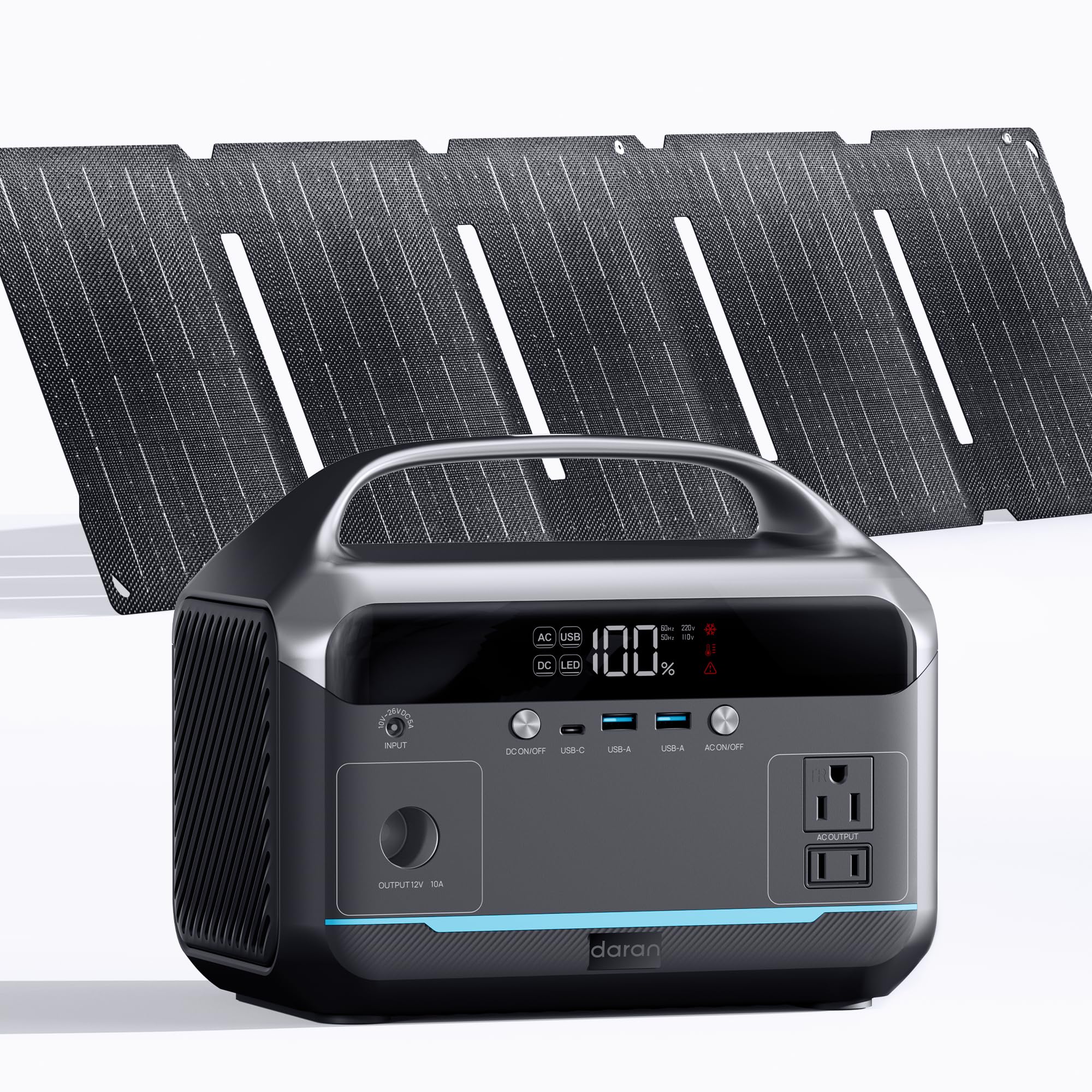
The NEO 350W pairs a 288Wh LiFePO4 battery with two 350W AC outlets and a 40W solar panel at a mid-range price, so the solar piece is already in the box. Unlike the compact Daran unit in this lineup, this one ships with a panel rather than treating solar as an add-on.

Output is genuinely useful: the 350W AC side can run a laptop and a projector at once, and the 60W USB-C PD port tops off a laptop without the inverter. Wall recharge is quick enough for daily use, and the 8.2 lb weight with a handle makes it easy to carry from car to campsite.

This is for car campers and emergency home backup where AC outlets and solar in one purchase matter more than speed. The bundled 40W panel is small relative to 288Wh, so a full solar recharge takes many hours, and a few early units have shown charging faults. At 8.2 lb, it belongs in a car trunk, not a carry-on or backpack.

Pros

  • Two 350W AC outlets handle laptops and projectors without tripping.
  • 60W USB-C PD delivers laptop charging, so the inverter isn't required for daily top-offs.
  • LiFePO4 chemistry holds up well through repeated charge cycles.
  • At 8.2 lb, it's easy to move between car, tent, and kitchen.

Cons

  • The 40W panel needs many hours of direct sun to refill 288Wh.
  • A small number of units may develop charging faults in the first months.
Our verdict

This is a capable AC-plus-solar bundle for car campers who value a single-box solution over the fastest recharge.

Check Latest Price
5

Best TSA-Friendly Budget Pick

HOWEASY H120 Max

83 /100
Traveler Score Excellent

Key details

Battery
Li-ion
Capacity
98Wh
Solar Setup
Panel sold separately
Carry-On Fit
2.3 lb, under 100Wh
Check Details on Amazon

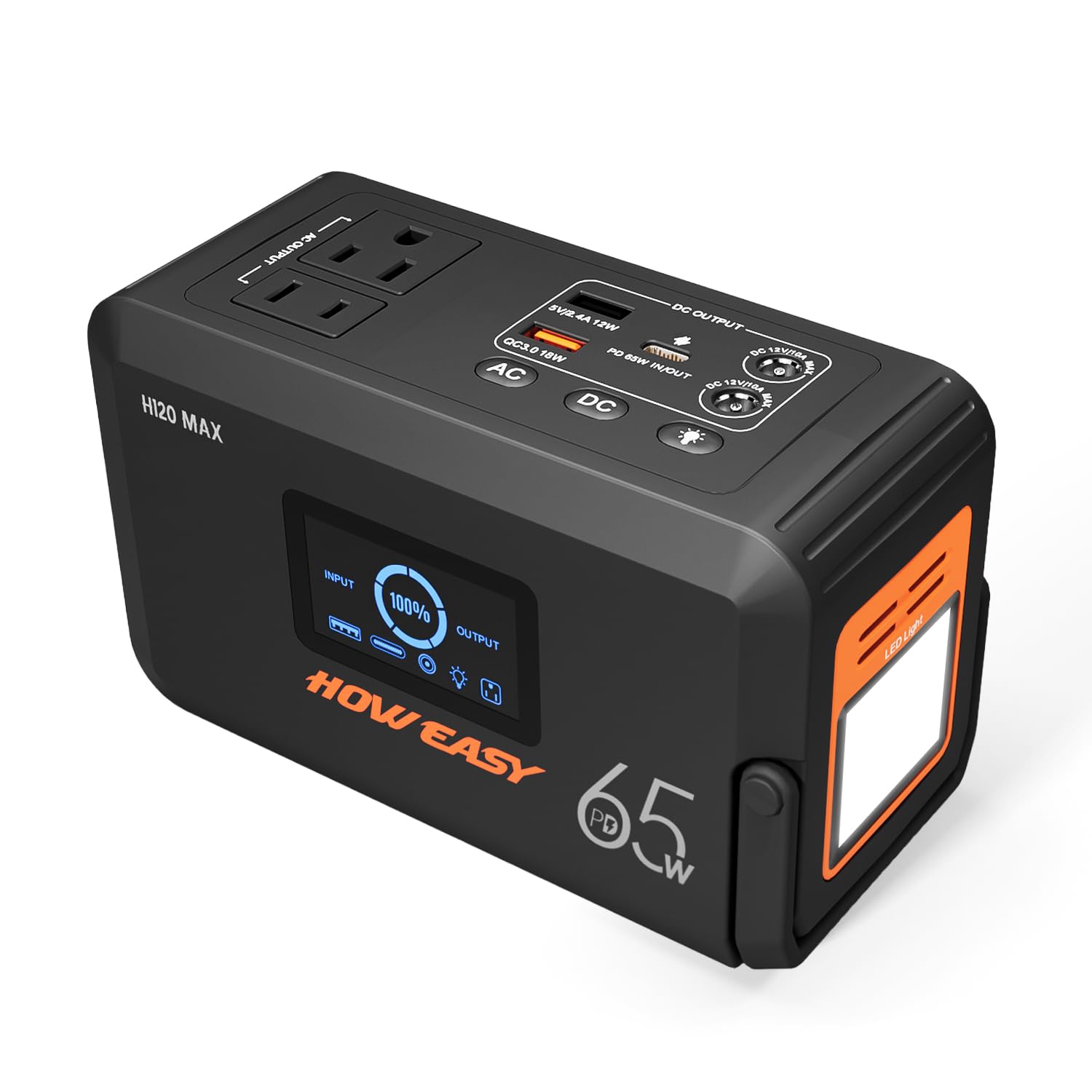
The HOWEASY H120 Max threads the carry-on needle with 98Wh, a 2.3 lb frame, 65W USB-C PD, and a 135W AC outlet. Laptops charge over USB-C while small travel accessories can use the AC side, and the whole package stays under the common 100Wh airline limit. That combination is easy to find in bigger boxes, but rare at this weight and budget-friendly price. At this size, the balance of output ports and weight is the main appeal.

Weekend use centers on phones, small fans, air mattresses, and laptop top-ups. The 65W PD port is the main draw in this size class, giving USB-C laptops a real fast-charge path that entry-level 18W ports cannot match. The dual AC outlets sit in the same compact shell, so a travel fan and a phone charger can run together without a separate adapter.

This is for the budget-conscious traveler who wants one carry-on-safe battery for a laptop and small gear on short trips. Solar input is available, but the panel is a separate purchase, and battery consistency can vary between units, so weekend scope fits better than long off-grid plans. Pack it for a long weekend and leave the heavier AC station at home. That combination makes it a strong value for a specific carry-on travel setup, not a general-purpose power station.

💡 Check the wattage of any AC device before plugging in; 135W covers small fans and laptop chargers, not hair dryers.

Pros

  • TSA-friendly 98Wh capacity slips into a carry-on at 2.3 lb.
  • 65W USB-C PD charges laptops quickly without adding much weight.
  • AC and DC outlets cover small travel gear like fans, air mattresses, and phones.

Cons

  • Solar input requires a separately purchased panel, so the solar-ready label is not a complete kit.
  • Battery capacity can vary between units, which matters more for outage backup than weekend trips.
Our verdict

For a weekend carry-on laptop kit, this is the budget pick when you want both USB-C PD and an AC outlet without exceeding 100Wh.

Check Latest Price
6

Budget LFP Travel

Daran 89.6Wh Station

85 /100
Traveler Score Excellent

Key details

Battery
LiFePO4
Capacity
89.6Wh
Solar Setup
Panel sold separately
Carry-On Fit
2.5 lb, under 100Wh
Check Details on Amazon

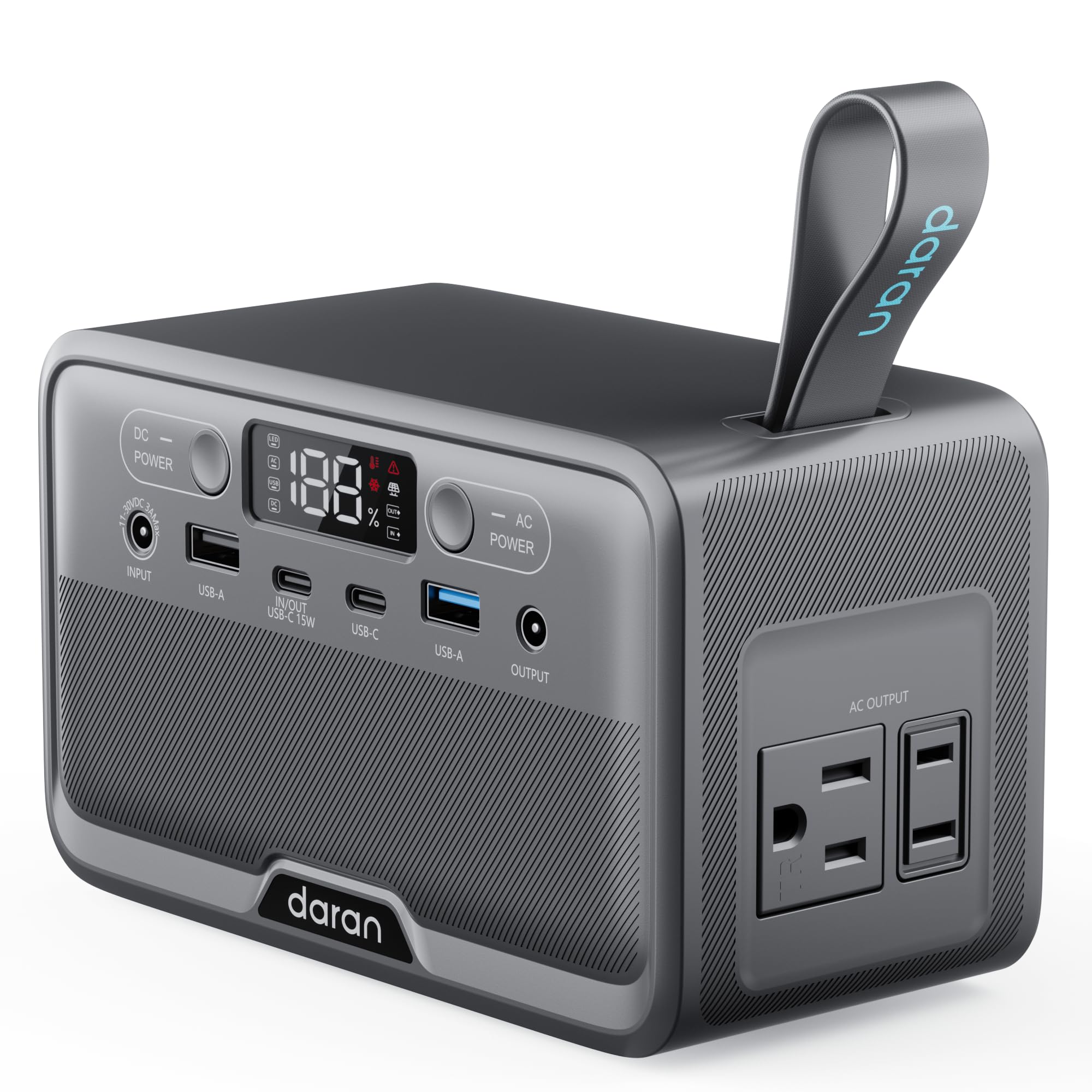
At 2.5 lb with an AC outlet and 45W USB-C PD, this LiFePO4 station fits a light laptop top-up kit. The solar panel is sold separately, and solar recharge is slow, so it is not an all-in-one solar kit. Small capacity limits heavy use; the role here is emergency phone charging, small-device power, and laptop top-offs where a wall outlet is unavailable. For that job, the 89.6Wh battery and backpack-friendly size make it a budget-conscious companion. Travelers who keep expectations modest get a useful emergency layer without the bulk of a larger station.

Pros

  • 2.5 lb shell with AC outlet and 45W USB-C PD fits a light laptop kit.
  • Backpack-friendly size is easy to carry in a travel or emergency bag.
  • LiFePO4 chemistry at a budget-friendly price.

Cons

  • Standby charge loss can occur when the station sits unused for days.
  • High-drain AC appliances are beyond the 100W outlet's ceiling.
Our verdict

Travelers who need AC plus USB-C PD in a small bag will get along with this Daran, as long as their gear list stays light.

Check Latest Price
7

Budget Solar Kit

ZeroKor 300W Solar Kit

86 /100
Traveler Score Excellent

Key details

Battery
Li-ion
Capacity
280Wh
Solar Setup
60W panel included
Carry-On Fit
5.1 lb, above 100Wh
Check Details on Amazon

This kit pairs a 280Wh battery, a 300W AC inverter, and a 60W panel in one box, so laptop charging can run through the AC outlet without an extra solar purchase. The 5.1 lb body fits car-camping loads, and the AC output covers small appliances during outage prep. The included panel is a slow refill source, and long-term capacity can vary between units, which is why this sits below the top tier despite its value. It suits budget car campers who want solar plus AC in a single purchase and don't expect rapid solar top-ups.

Pros

  • Complete AC plus solar bundle in one box; laptop charging works through the 300W AC outlet.
  • Compact 5.1 lb body with a 280Wh capacity fits car camping and home outage storage.
  • AC output pairs with the included panel for a single-purchase outage backup setup.

Cons

  • For campers expecting a quick top-up, the included 60W panel is a slow refill source.
  • Capacity can settle unevenly over months of regular use, so longevity is a point to verify.
Our verdict

Buy this if you want a single-box solar and AC kit for car camping and hurricane-season backup, and you can accept slow solar refills. For fast solar input or a carry-on-safe travel battery, this is not the fit.

Check Latest Price
8

Emergency Backup

Apowking R100 146Wh

82 /100
Traveler Score Excellent

Key details

Battery
Li-ion
Capacity
146Wh
Solar Setup
Panel sold separately
Carry-On Fit
3.3 lb, above 100Wh
Check Details on Amazon

At a budget-friendly price, this 146Wh station brings a 100W AC outlet, multiple ports, and enough capacity for emergency radio, phone, tablet, and light laptop backup. The compact shell slips into a go-bag or closet shelf without drama. For emergency-kit use, it behaves like a short-term reserve: keep it topped off and it covers brief outages and small charging jobs. Laptop charging happens through the AC outlet. Unit consistency is the boundary here: this is a budget reserve, not a long-term off-grid tool. If the search goal is a bundled solar panel, this station isn't that answer - but for AC-based backup on a tight budget, it still fits.

Pros

  • Compact 146Wh station with a 100W AC outlet covers small laptop and radio backup without taking much space.
  • Multiple ports plus an AC outlet handle phone, tablet, and small laptop charging during outages.
  • Entry-level pricing makes it a low-cost way to get AC backup into an emergency kit.

Cons

  • USB-C tops out at 18W, so laptops charge through the 100W AC outlet rather than a direct USB-C cable.
  • Charge retention can slip after a few months, making it a budget gamble for long-term emergency readiness.
Our verdict

For a go-bag emergency reserve that only needs radio, lights, and occasional laptop top-ups via AC, this budget-friendly station fits. If you need a bundled solar panel, look elsewhere.

Check Latest Price

How to Choose

Capacity and Trip Length

Watt-hours is the total energy the battery holds, and it predicts how many laptop top-ups you get. A 45W laptop drains a 100Wh station in about two hours before conversion losses; the same workload leaves a 288Wh station with most of its charge for the next day.

For a weekend, plan for at least twice your daily laptop draw. For a day trip, an under-100Wh battery covers a few top-ups and stays carry-on legal.

Laptop Charging Path

The charging path matters more than total wattage. USB-C PD below your laptop's input will trickle-charge with the screen off or slowly drain while you work. 65W covers most ultrabooks; 100W/140W leaves headroom for larger laptops and phones.

An AC outlet bypasses compatibility because you plug in your laptop's own charger. The cost is extra bag bulk and about 10-15% conversion loss. Choose AC for varied gear; choose USB-C PD for the lightest, most efficient laptop path.

Solar Panel Size

Bundled panels are convenient, but recharge speed comes from the panel wattage, not battery size. A 40W panel needs seven or more hours of strong sun to refill a 288Wh battery; a 60W panel needs about five. Real-world times run longer with clouds or imperfect panel angle.

Treat solar as a top-up, not a full recharge. For multi-day off-grid laptop power, use a 60W or higher panel input and carry a wall charger for cafe stops.

Battery Chemistry

LiFePO4 holds 3000 or more cycles before meaningful capacity loss; Li-ion degrades noticeably after a few hundred. For weekly use, LiFePO4 costs more upfront and avoids early replacement. The trade-off is weight: LFP cells are denser, so a 288Wh station often weighs more than a Li-ion equivalent.

Weight and Airline Rules

Most airlines cap carry-on batteries at 100Wh, so 146Wh and 288Wh stations require approval and may not board. At 98Wh, a station fits standard carry-on rules. If you fly regularly, an under-100Wh station with 65W PD is more useful than a heavier station you cannot take aboard.

Frequently Asked Questions