9 Best Solar Charger for Backpacking of 2026: Panels That Deliver Real Sun Power

Find the right lightweight solar panel for backpacking – one that actually charges your gear without dead weight or gimmicks.

A surprising number of solar chargers sold for hiking are heavy power banks with tiny solar panels that barely trickle-charge in a full day. The real tool for backpacking is a dedicated foldable panel that turns sunlight into usable power without adding pounds to your pack.

The challenge is balancing weight, real-world wattage, and durability. A panel that charges fast may weigh too much for a thru-hike, while an ultralight model might not keep up with a power-hungry phone. This guide focuses on panels that earn their place on the trail, not marketing claims.

For most backpackers, the decision comes down to whether you prioritize every gram or every minute of charging speed. Either way, the right panel will keep your devices alive without becoming a burden.

1

Best Overall

BigBlue 28W Panel

89 /100
Traveler Score Excellent

Key details

Ports
2 USB-C, 1 USB-A
Weight
1.48 lbs
Water Resistance
IP44 (panel)
Check Details on Amazon

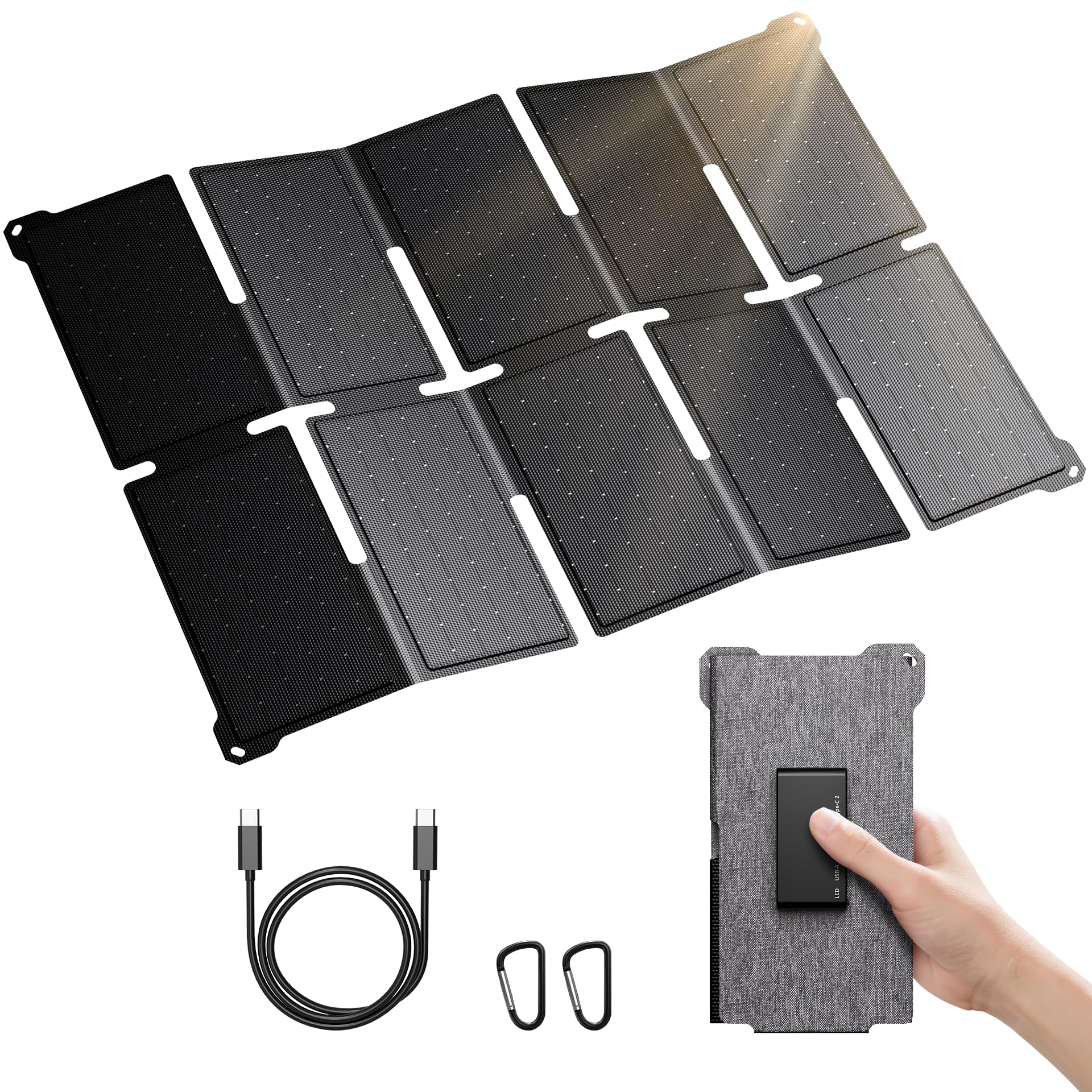
The BigBlue 28W has earned a strong following among backpackers who need a simple, effective way to keep phones and power banks topped off on the trail. At 1.48 pounds with three ports — two USB-C and one USB-A — it covers modern devices without adding bulk. The 25.4% efficient cells convert sunlight well, making it a reliable companion for sunny stretches.

In direct sun, the panel delivers steady charge rates that match its 28W rating. Partial shade or overcast skies slow things down considerably — a limitation common to single-junction panels at this price. On a cloudy afternoon, expect longer charging times or consider a midday break in a sunny clearing. The included USB ports are standard, but Apple users will need to supply their own Lightning cable.

This panel suits budget-conscious backpackers who prioritize proven performance over ultralight grams. First-time solar buyers will appreciate the straightforward setup and ample community feedback. It is not for those chasing sub-1-pound setups or needing fast simultaneous tablet charging. Some users report junction box failures after months of regular use — an occasional issue worth being aware of if you plan heavy, long-term deployment.

Priced under $60, the BigBlue 28W delivers solid value for a dedicated solar panel that actually works as advertised. It avoids the gimmicks of solar power banks that barely trickle-charge themselves. For the typical backpacker stopping for lunch or camp setup, it provides enough top-up power to keep small electronics running for days.

Pros

  • Charges phones and power banks steadily in direct sunlight.
  • Lightweight enough for multi-day backpacking at 1.48 lbs.
  • Solid build and good value for the price.
  • Three USB ports (two USB-C, one USB-A) cover modern devices.

Cons

  • No Lightning cable included
  • Charging slows considerably in overcast conditions or partial shade.
  • Some units develop junction box issues after months of use
Our verdict

For backpackers who want a straightforward, affordable solar panel that reliably charges small electronics, the BigBlue 28W is a well-tested entry point.

Check Latest Price
2

Ultralight Favorite

BigBlue 25W Ultra

83 /100
Traveler Score Excellent

Key details

Ports
USB-A 2.4A, USB-C 3A
Weight
0.84 lbs
Water Resistance
IP68 (panel)
Check Details on Amazon

At 0.84 lbs, the BigBlue 25W Ultra is the lightest panel in this set — small enough to slide into a side pocket of a backpack. Its 25W output charges a phone at roughly 1% per minute in full sun, a pace that suits hikers who take extended breaks rather than quick top-offs. Compared to the faster 35W BigBlue model, you save over half a pound but add an hour or two to a full charge.

Charging a phone from 20% to full takes around two to three hours of direct sunlight, which aligns with a long lunch or afternoon rest. The panel's build quality is solid, with an IP68 rating that handles rain and dust. Some units have had port issues or stopped working after a year of heavy use, so it's wise to check the warranty before relying on it for long-distance treks.

This panel is for ultralight thru-hikers and day hikers who count every ounce and accept slower charging as the tradeoff. If you need to charge multiple devices quickly or power a tablet, the heavier 35W model is a better fit.

💡 Angle the panel directly at the sun; even partial shade cuts output significantly.

Pros

  • Weighs only 0.84 lbs
  • Dual USB-A (2.4A) and USB-C (3A) ports let you charge two devices simultaneously.
  • Charges small devices efficiently; a phone gains about 1% per minute in full sun.

Cons

  • Charging is slow
  • Port defects or complete failure may occur after a year of use in some units.
Our verdict

For gram-counting backpackers, this is the lightest functional solar panel available — just plan your charging around longer breaks.

Check Latest Price
3

Fastest Charging

BigBlue 35W Panel

88 /100
Traveler Score Excellent

Key details

Ports
2 USB-C, 1 USB-A (PD 25W)
Weight
1.54 lbs
Water Resistance
IP68 (panel)
Check Details on Amazon

The BigBlue 35W panel cuts charging time compared to the 28W standard-bearer, with PD 25W USB-C output that refills a phone noticeably faster during a short break. That speed comes from higher wattage and efficient cells, making it the quickest option in this set for direct device charging.

This panel suits backpackers who carry non-Apple gadgets and prioritize charge speed over ultralight packing. At 1.54 pounds it sits just above the sub-1.5 lb threshold, and the USB-C1 port does not support Apple devices – a quirk that may catch some buyers off guard. Additionally, placing a charging device directly behind the panel can cause overheating and stop charging, so the phone or bank needs to stay in front.

Build quality is solid, with durable materials that hold up to trail dust and light rain (the panel is IP68-rated, though the junction box is not). The 35W output holds well in full sun, delivering the advertised speed for most USB-C devices that accept PD.

💡 Keep the device you're charging in front of the panel to avoid overheating and charging interruptions.

Pros

  • PD 25W USB-C charges phones faster than any panel in this comparison.
  • Compact folding design fits easily into a backpack side pocket.
  • High build quality with durable materials and IP68 panel rating.

Cons

  • Weighs just over 1.5 pounds
  • USB-C1 port is not compatible with Apple devices, which can lead to confusion.
Our verdict

For non-Apple users who want the fastest direct charging and can accept a slightly heavier pack, the 35W BigBlue is a capable alternative to the 28W standard-bearer – just remember to keep your phone in front of the panel.

Check Latest Price
4

Tech-Enthusiast Pick

BigBlue 28W Ammeter

86 /100
Traveler Score Excellent

Key details

Ports
USB-A 2.4A, USB-C 3A
Weight
1.31 lbs
Water Resistance
IP44 (panel)
Check Details on Amazon

The BigBlue 28W distinguishes itself from the standard model with a built-in ammeter that shows exact charging current in milliamps. While most panels leave you guessing whether shade or angle is costing you power, this display lets you adjust on the fly and see the impact immediately.

This panel is best for backpackers who want to understand their solar setup's behavior and are comfortable with a slower charge in less-than-ideal light. Some units have shown junction box wear after extended use, and the ammeter screen may arrive with scratches that reduce readability. That said, the core charging function remains solid in direct sun, and the 1.31 lb weight fits a sub-1.5 lb pack.

Under full sun, the 28W output tops up a phone or power bank at a reasonable pace. In overcast conditions or low-angle winter light, the panel still produces usable current, though the rate drops noticeably. The USB-C port delivers up to 3A, making it compatible with modern devices without extra adapters.

Pros

  • Real-time ammeter display lets you optimize panel angle for maximum current.
  • Weighs under 1.5 lbs and folds into a compact shape for backpack storage.
  • High conversion efficiency provides usable power even under cloud cover.
  • Cost-effective for the wattage and monitoring feature compared to similar panels.

Cons

  • In partial shade or low sun angles, charging speed drops notably
  • The ammeter screen may arrive scratched, which can obscure the display and reduce its utility.
Our verdict

For backpackers who value real-time insight into their solar harvest and can accept a slower charge in marginal light, the BigBlue 28W Ammeter delivers a unique monitoring feature without adding extra weight.

Check Latest Price
5

Weekend Backpackers

Goal Zero Nomad 10

89 /100
Traveler Score Excellent

Key details

Ports
USB 5V
Weight
1.12 lbs
Water Resistance
None
Check Details on Amazon

Goal Zero's Nomad 10 delivers the brand's signature build quality in a compact, portable package. However, at only 10W output, charging is very slow — expect to trickle-charge a single phone over a full day of sunlight. The price per watt is high, and the panel lacks USB-C or fast-charging support. This is a purpose-built accessory for users already invested in Goal Zero's Flip or Sherpa batteries, not a general-purpose solar charger for faster needs.

Pros

  • Robust construction with adjustable kickstand for optimal sun angles.
  • Lightweight at 1.12 lbs, easy to pack for short backpacking trips.

Cons

  • 10W output is very slow; insufficient for power banks or multiple devices.
  • Expensive for the wattage
Our verdict

Best for Goal Zero ecosystem users who need a lightweight trickle charger for a single phone on short trips.

Check Latest Price
6

Budget Shoppers

FlexSolar 25W

85 /100
Traveler Score Excellent

Key details

Ports
USB-A, USB-C
Weight
Water Resistance
IP67
Check Details on Amazon

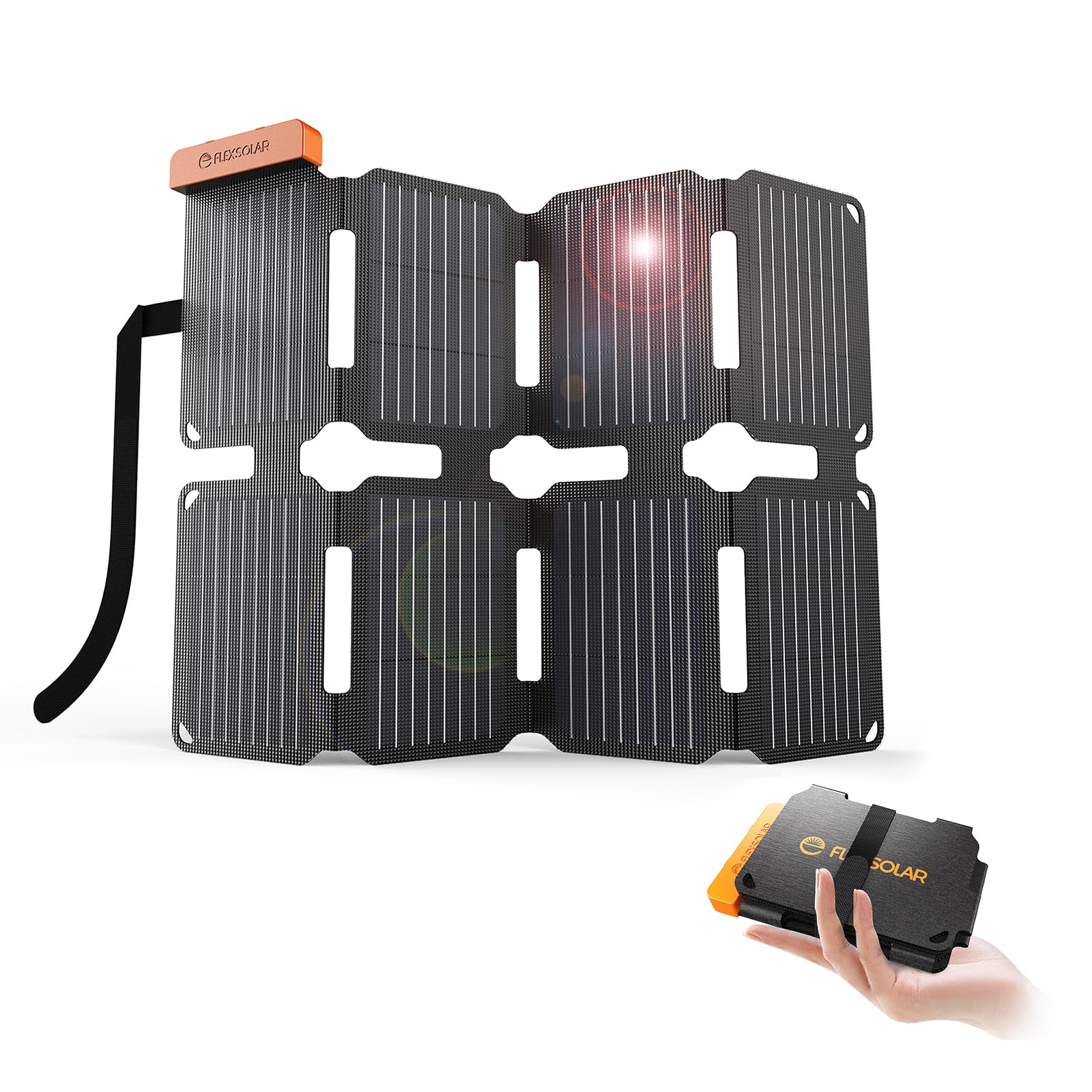
The FlexSolar 25W delivers an IP67-rated panel at a very low price, folding down to a 7.7x5.1 inch package that stows easily in a daypack or glovebox. Its USB-A and USB-C ports let you plug phones and power banks directly. For light emergency backup in a vehicle or as a low-risk budget experiment, the specs are promising. However, long-term durability under sustained outdoor exposure remains unconfirmed, and some users notice it's a bit heavier than ultralight alternatives — a tradeoff that matters if every ounce counts on the trail.

Pros

  • Ultra-compact folded size fits in small pockets or glovebox.
  • IP67 weatherproofing handles rain and dust without issue.
  • Built-in USB-A and USB-C ports for direct device charging.

Cons

  • For backpackers counting ounces, weight is slightly higher than other 25W panels.
  • Long-term reliability in wet or dusty conditions is unconfirmed due to limited field use.
Our verdict

Best suited as an affordable emergency backup for vehicle use or for budget shoppers willing to accept unproven long-term performance.

Check Latest Price
7

Car Camping

BLAVOR 20K Power Bank

88 /100
Traveler Score Excellent

Key details

Ports
2 USB-A, 1 USB-C PD
Weight
1.3 lbs
Water Resistance
IPX5
Check Details on Amazon

The BLAVOR 20K Power Bank packs 20,000mAh capacity and three output ports (two USB-A, one USB-C with 18W PD) into a solidly built package. Its built-in flashlight and compass add emergency utility, and the 1.3 lb weight is fine for a car trunk or basecamp bag. The solar panel, however, is a backup at best – four small panels that at 1.2A max produce negligible charge in real daylight, making this a standard power bank with a solar gimmick rather than a backpacking solar charger. For hiking, the weight and solar inefficiency disqualify it; for short trips, everyday carry, or emergency preparedness where you don't need to recharge the bank itself from the sun, it performs decently as a high-capacity battery.

Pros

  • High 20,000mAh capacity charges a phone several times and can slowly top up a laptop.
  • Solid build quality with a sturdy feel and IPX5 water resistance.
  • Integrated flashlight and compass add convenience for emergency kits.

Cons

  • Solar charging is too slow to meaningfully recharge the battery in the field
  • USB-C output limited to 18W; modern phones and tablets can charge faster with other power banks.
  • Port cover may loosen after months of use, and some units develop irregularities over time.
Our verdict

Keep this in the car or emergency kit where its weight and slow solar don't matter, but reach for a dedicated foldable panel for actual backpacking.

Check Latest Price
8

Emergency Kits

FEELLE 50000mAh

89 /100
Traveler Score Excellent

Key details

Ports
Built-in cables, wireless
Weight
Water Resistance
Check Details on Amazon

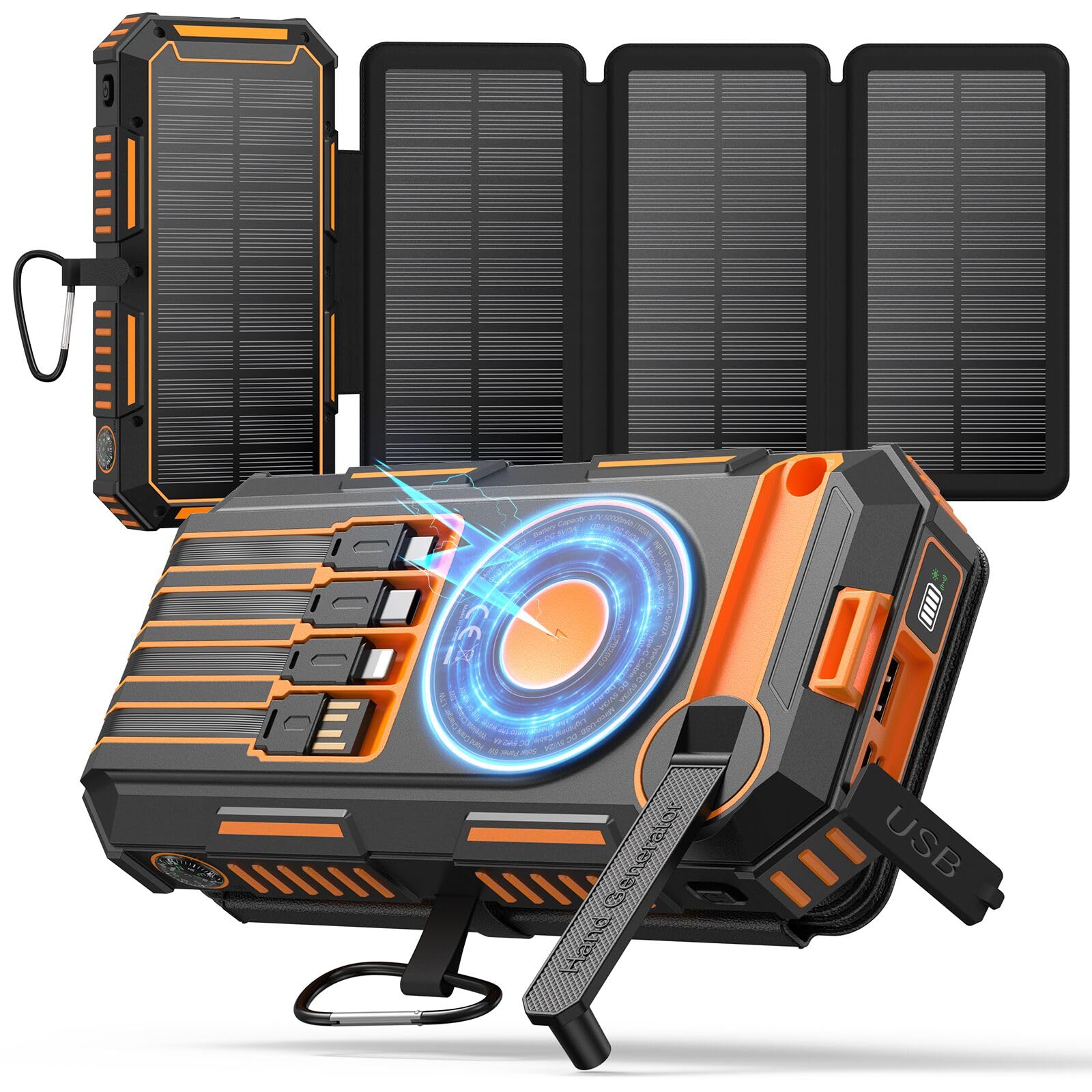
The FEELLE 50,000mAh power bank delivers an immense capacity for charging multiple devices and includes a hand crank for manual power generation. However, its weight exceeds two pounds and the built-in solar panels are too slow to recharge the battery within a typical day, making this unsuitable for backpacking. Durability can vary, with some units losing capacity during long-term storage. This works best as a home or car emergency backup or for group camping where the weight can be shared.

Pros

  • Enormous 50,000mAh capacity can charge phones, tablets, and other devices for days.
  • Magnetic wireless charging and built-in cables eliminate the need for extra cords.
  • Hand crank provides emergency power when no other source is available.

Cons

  • Solar charging may not keep up with the 50,000mAh battery in daylight; wall charging needed for full refills.
  • Long-term storage may reduce battery capacity; periodic recharging is advisable.
Our verdict

Best suited for car emergency kits and base camp setups where the hand crank provides an extra layer of security and weight is not a limiting factor.

Check Latest Price
9

Everyday Carry

BLAVOR 10K Power Bank

88 /100
Traveler Score Excellent

Key details

Ports
USB-C 20W, wireless
Weight
Water Resistance
Check Details on Amazon

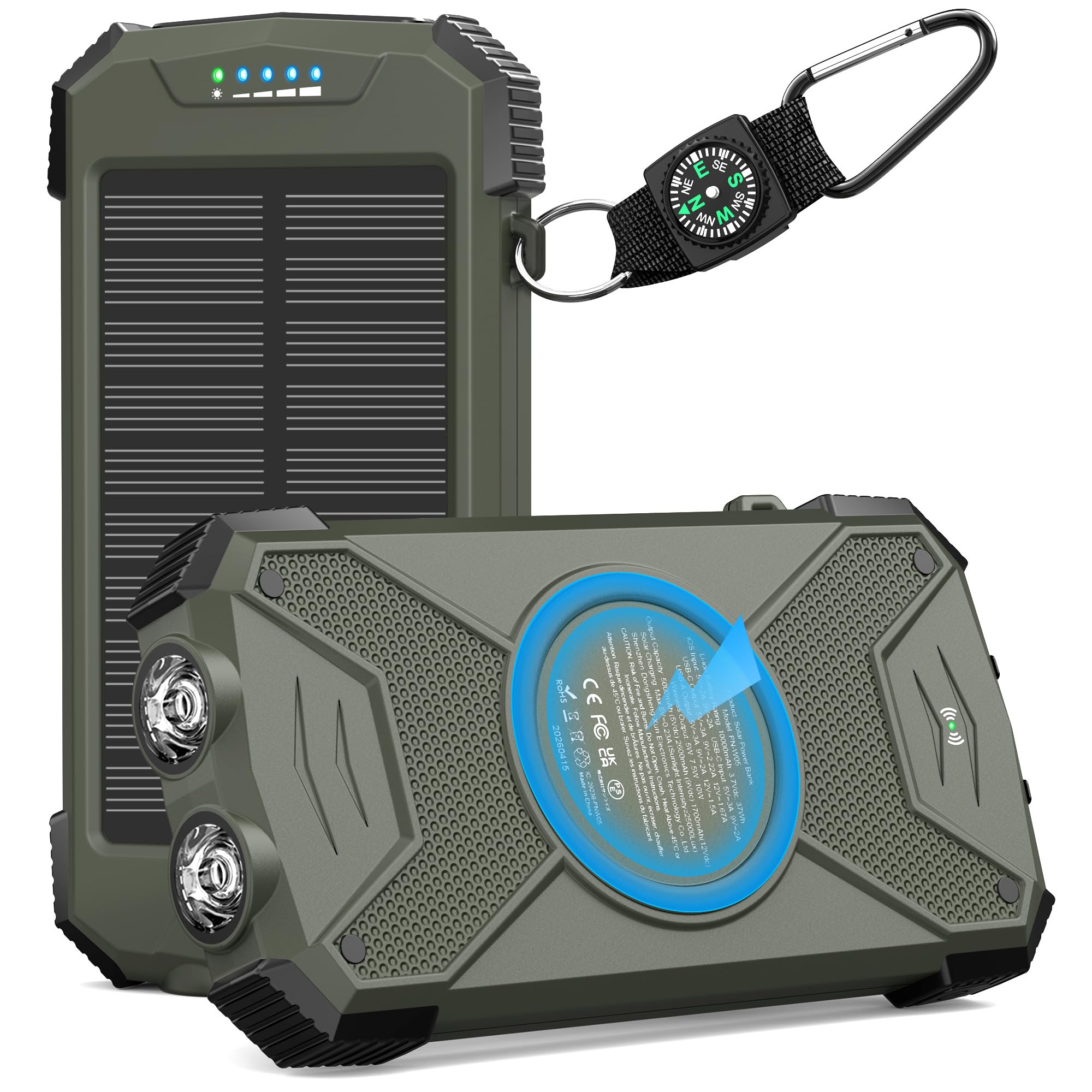
The BLAVOR Solar Power Bank packs 10,000mAh of capacity and 20W USB-C fast charging into a compact frame that fits easily in a pocket or daypack. Its wireless charging pad and multiple ports make it a practical companion for everyday phone top-ups or car camping convenience. The integrated solar panel, however, is small — it can trickle charge the internal battery over many hours of direct sunlight, but it will not meaningfully offset your power needs on a backpacking trip where weight and efficiency matter. No detailed feedback specific to trail use is available, and the solar function is best treated as a backup gimmick rather than a primary charging method for remote outings.

Pros

  • Compact and lightweight for a 10,000mAh power bank with wireless charging.
  • 20W USB-C fast charging and wireless pad offer flexible device topping-up.

Cons

  • Solar charging speed is very slow due to the small panel surface area.
  • Panel design lacks the foldable, efficient layout needed for genuine trail-side solar recharging.
Our verdict

Useful as a backup power bank for short trips where solar is a bonus, not a primary charging source.

Check Latest Price

How to Choose

Weight

Every ounce matters when you're carrying gear for days. A panel under 1.5 lbs is the sweet spot for most backpackers, allowing you to charge devices without feeling the burden. Ultralight hikers should target sub-1 lb panels, but be prepared for slower charging.

Heavier panels may offer higher wattage, but that extra power only matters if you're willing to carry it. Prioritize weight first, then look at output to match your charging needs.

Power Output

Wattage determines how fast your devices charge. A 28W panel in full sun can top off a phone in about two hours, while a 10W panel takes all day. But real-world output often falls short of advertised numbers due to clouds, angle, and temperature.

Look for panels with high efficiency (above 23%) and USB-C Power Delivery for faster direct charging. If you plan to charge a power bank or tablet, aim for at least 25W to get meaningful gains during breaks.

Portability

A foldable panel that packs down to the size of a paperback book or smaller is ideal for backpacking. Panels with multiple folds and a carrying case make it easy to strap them to the outside of your pack without taking up internal space.

Consider how you'll attach it while hiking. Panels with grommets or clips allow you to hang them from your pack or a tree, keeping them exposed to the sun even when you're on the move.

Durability

Backpacking involves dust, rain, and rough handling. A water-resistant panel (IP67 or higher) can handle sudden downpours without damaging the solar cells or USB ports. Avoid panels with exposed junction boxes that aren't sealed.

The panel material matters too. Nylon or polyester fabric-backed panels are tougher than plastic laminates and resist tearing when stuffed into a pack with other gear.

Port Compatibility

USB-A ports are standard, but USB-C with Power Delivery enables faster charging for modern phones and power banks. Some panels offer dual USB-A and USB-C, allowing you to charge two devices simultaneously at lower speeds.

Check if the panel includes cables for your devices. Missing Apple cables or short USB cords can be an inconvenience on the trail. A panel with both USB-A and USB-C gives you the most flexibility.

Frequently Asked Questions