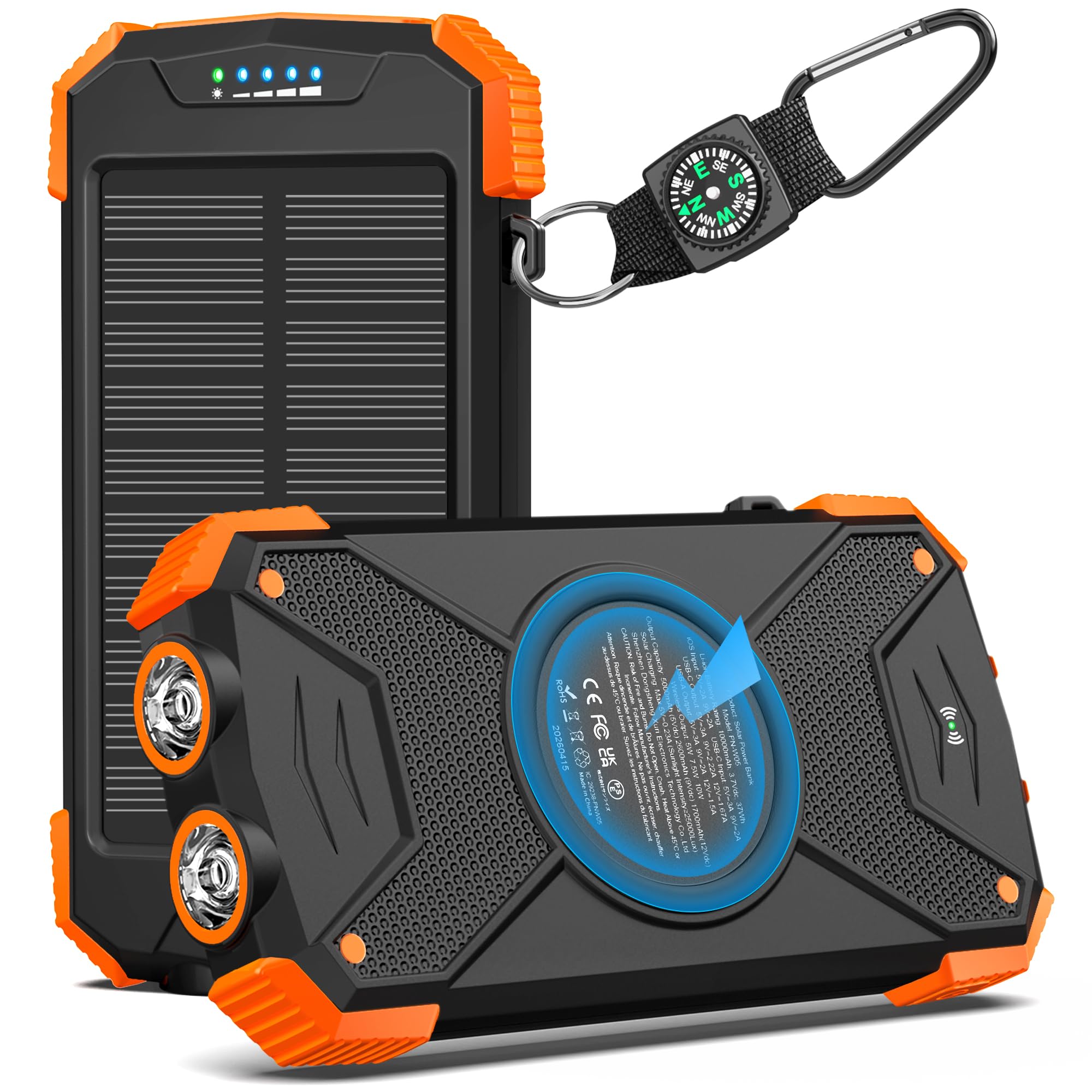
13 Best Solar Charger for Phone Camping 2026: Panels That Actually Recharge

Find the best solar charger for phone camping that actually charges your phone - standalone folding panels that deliver real off-grid power.

Many campers buy a solar power bank expecting to top up in the sun, only to find the built-in panel barely keeps the device alive after a full day. That's because most integrated solar panels are too small to deliver meaningful charge. The marketing promises off-grid freedom, but the reality is a trickle at best.

The proven alternative is a separate folding solar panel paired with a power bank. These panels use larger, high-efficiency cells that can recharge a phone or power bank in a few hours of direct sunlight. However, there is a trade-off between faster charging speeds and long-term reliability across different brands.

This guide cuts through the marketing to focus on standalone panels and pre-charged power banks that actually deliver real off-grid power for camping. Whether you are a weekend car camper or a thru-hiker, the right setup depends on how you weigh speed, weight, and durability.

1

Best Overall

BigBlue 28W Foldable Solar Panel

89 /100
Traveler Score Excellent

Key details

Ports
2 USB-C, 1 USB-A
Efficiency
25.4%
Power Spec
28W
Waterproof
IP44
Check Details on Amazon

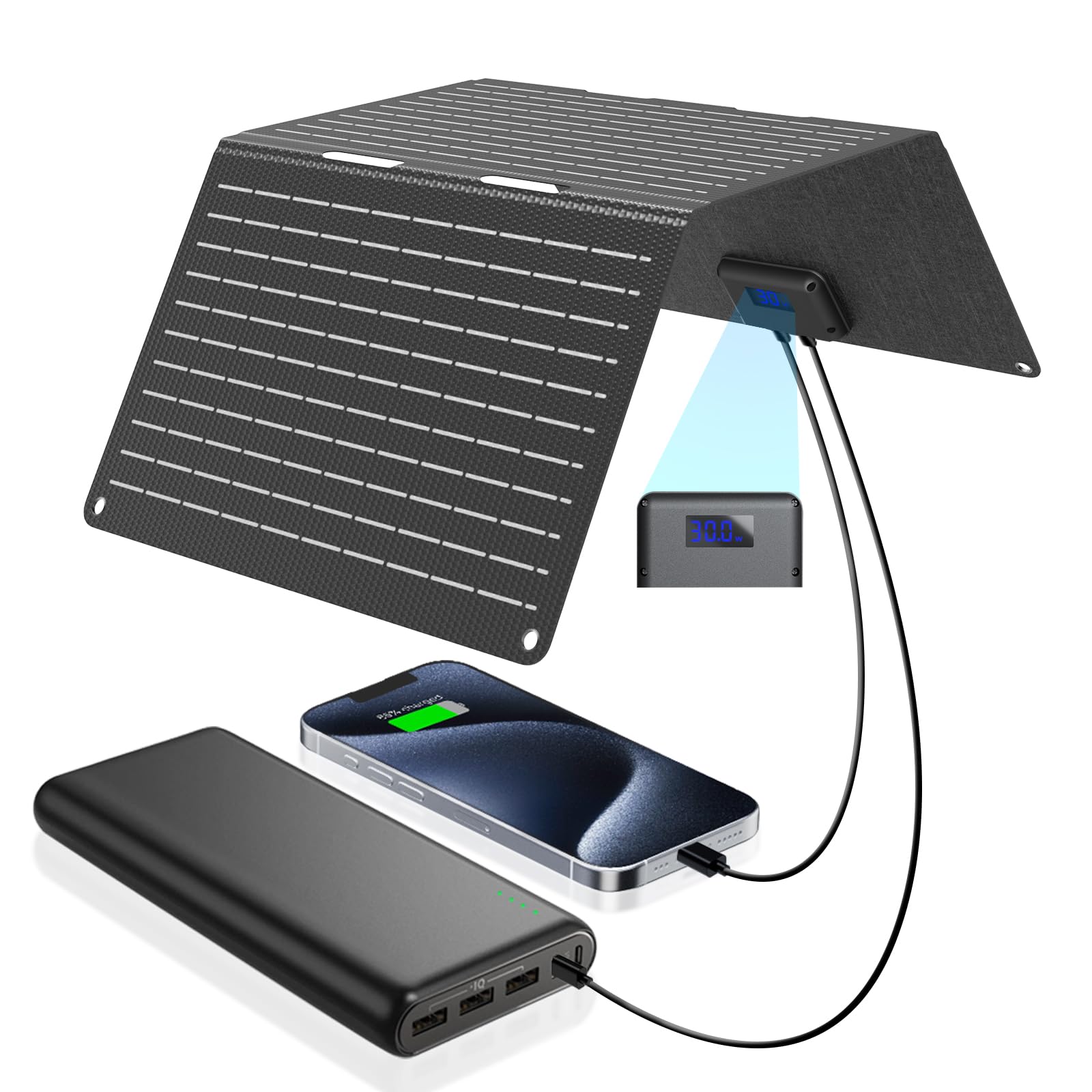
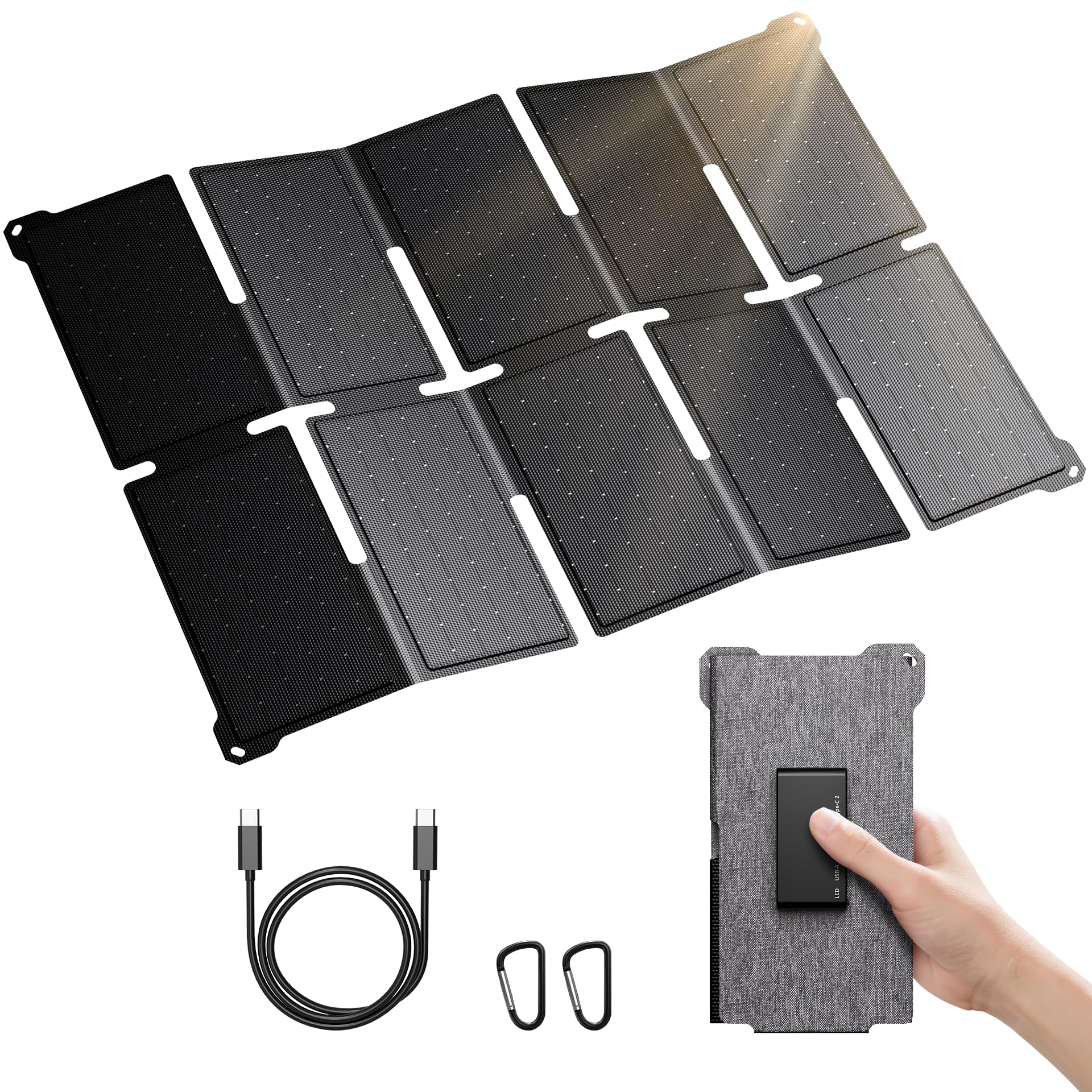
The BigBlue 28W pairs a 25.4% efficient monocrystalline panel with dual USB-C and a USB-A port, offering enough juice to top off a phone or power bank over a few hours of direct sun. Its 1.5-pound folded package slides into most pack pockets, and the IP44 rating handles light rain without fuss.

In real-world use, the panel charges a typical phone from 0% to about 60-70% in two hours of full sun, but that number drops sharply in partial shade — a single cloud or tree branch can cut output by half or more. Owners who set it up in an open field or on a tent roof consistently get usable power; those expecting trickle charging under overcast skies are left waiting.

This panel suits backpackers who carry a separate power bank and want to recharge it during the day at camp. It does not store power internally, so you must plug a device or battery directly into it while the sun shines. If you need a self-contained unit that charges overnight or in low light, this is not that product.

The build quality stands out among folding panels in this price range — the reinforced fabric outer and solid kickstand hold up to repeated folding and rocky campsites. The included USB-C cable supports PD negotiation, though actual charging speed depends on the device connected.

💡 Position the panel flat in direct sunlight and angle it toward the sun every hour or so for best results.

Pros

  • Charges phones and power banks reliably in direct sunlight with its high-efficiency 28W panel.
  • Folds down to 11x6x1.4 inches and weighs 1.5 lbs, easy to pack in any backpack.
  • Dual USB-C and USB-A ports let you charge two devices simultaneously without conflict.
  • IP44 water resistance protects against splashes and light rain during outdoor use.

Cons

  • Charging slows considerably in partial shade or overcast conditions
  • No internal battery means you must connect a device or external power bank during daylight hours.
Our verdict

For campers who understand the sun-dependent tradeoff, this panel delivers real output at a rational price — a workable piece of gear, not a magic bullet.
Check Latest Price
2

Best for Fast Charging

BigBlue 35W Solar Panel

88 /100
Traveler Score Excellent

Key details

Ports
2 USB-C, 1 USB-A
Efficiency
25.4%
Power Spec
35W
Waterproof
IP68
Check Details on Amazon

The BigBlue 35W panel stands out for its PD 25W USB-C output, which charges a smartphone at the same speed as a wall adapter when placed in full sun. Its dual parallel circuit reduces power loss under partial shade, a noticeable advantage when branches or clouds interrupt sunlight.

Real-world output can settle around 25W rather than the advertised 35W, still enough for fast phone charging but not a leap over the 28W model. The high-speed USB-C1 port is not compatible with Apple devices, forcing iPhone owners to use the slower USB-C2 or USB-A ports.

This panel fits tech-savvy Android campers who want the fastest possible direct solar charging in a compact, waterproof package. Backpackers will appreciate the IP68 rating and folded size. That said, the premium price over the 28W model and the Apple compatibility quirk make it a niche choice rather than a universal recommendation.

💡 Plug iOS devices into the USB-C2 or USB-A port; the fast Type-C1 port is reserved for non-Apple gadgets.

Pros

  • PD 25W USB-C port charges phones at wall speed in direct sunlight.
  • Dual parallel circuit maintains charging under partial shade better than single-panel designs.
  • Compact at 1.54 lbs and fully waterproof with IP68 rating.
  • Two USB-C ports plus USB-A allow charging multiple devices simultaneously.

Cons

  • High-speed USB-C1 port is incompatible with Apple devices, requiring a workaround for iPhone users.
  • Output can fall to around 25W in real-world conditions, below the 35W rating.
  • Premium-priced compared to the 28W model with similar real-world charging speed.
Our verdict

For Android users who want the fastest compact solar charging available, the BigBlue 35W does the job. iPhone owners will find better value and fewer complications in the 28W model.

Check Latest Price
3

Best Large Capacity Power Bank

SOARAISE 48,000mAh Solar Power Bank

87 /100
Traveler Score Excellent

Key details

Ports
4 cables, wireless
Efficiency
Power Spec
48,000mAh
Waterproof
Yes (claimed)
Check Details on Amazon

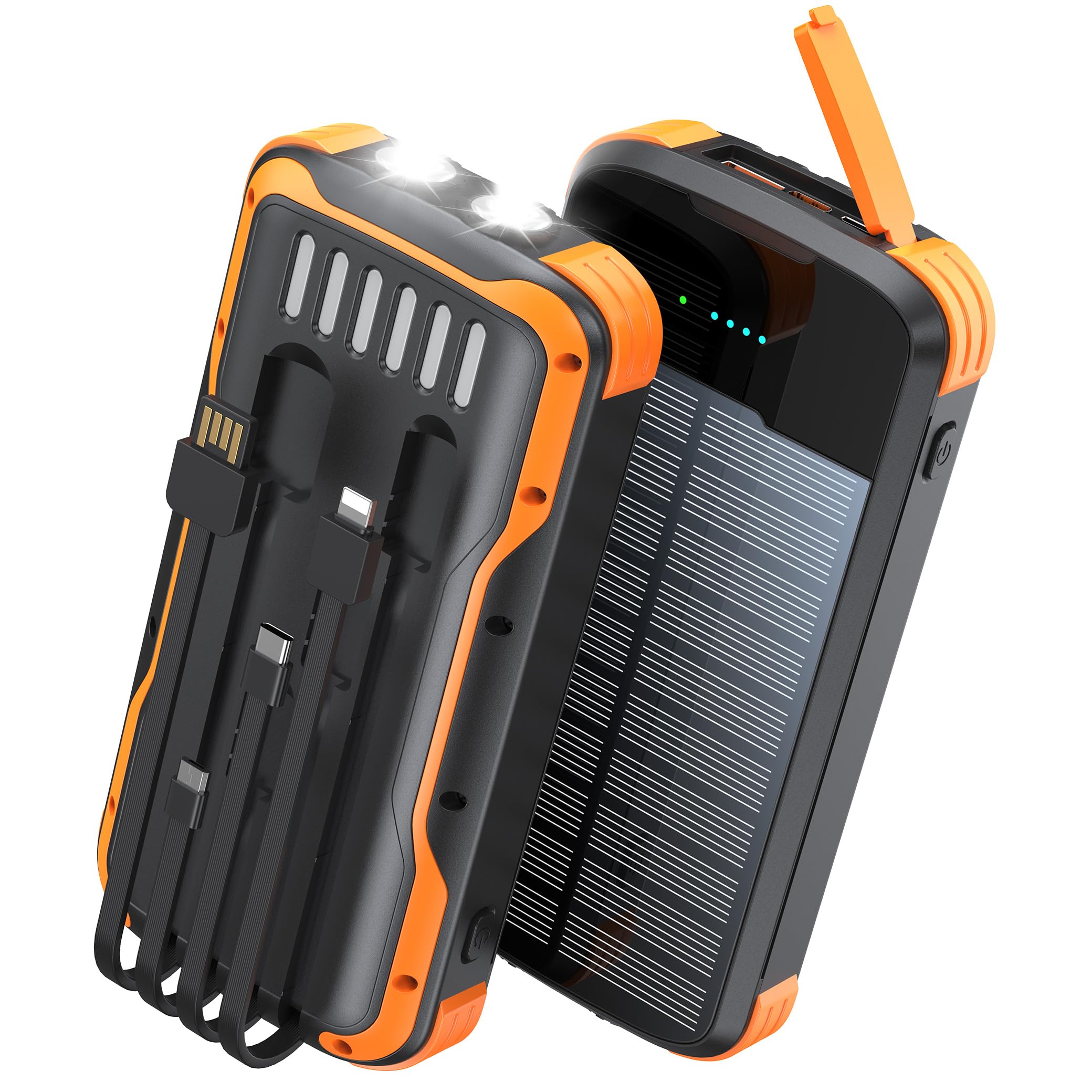
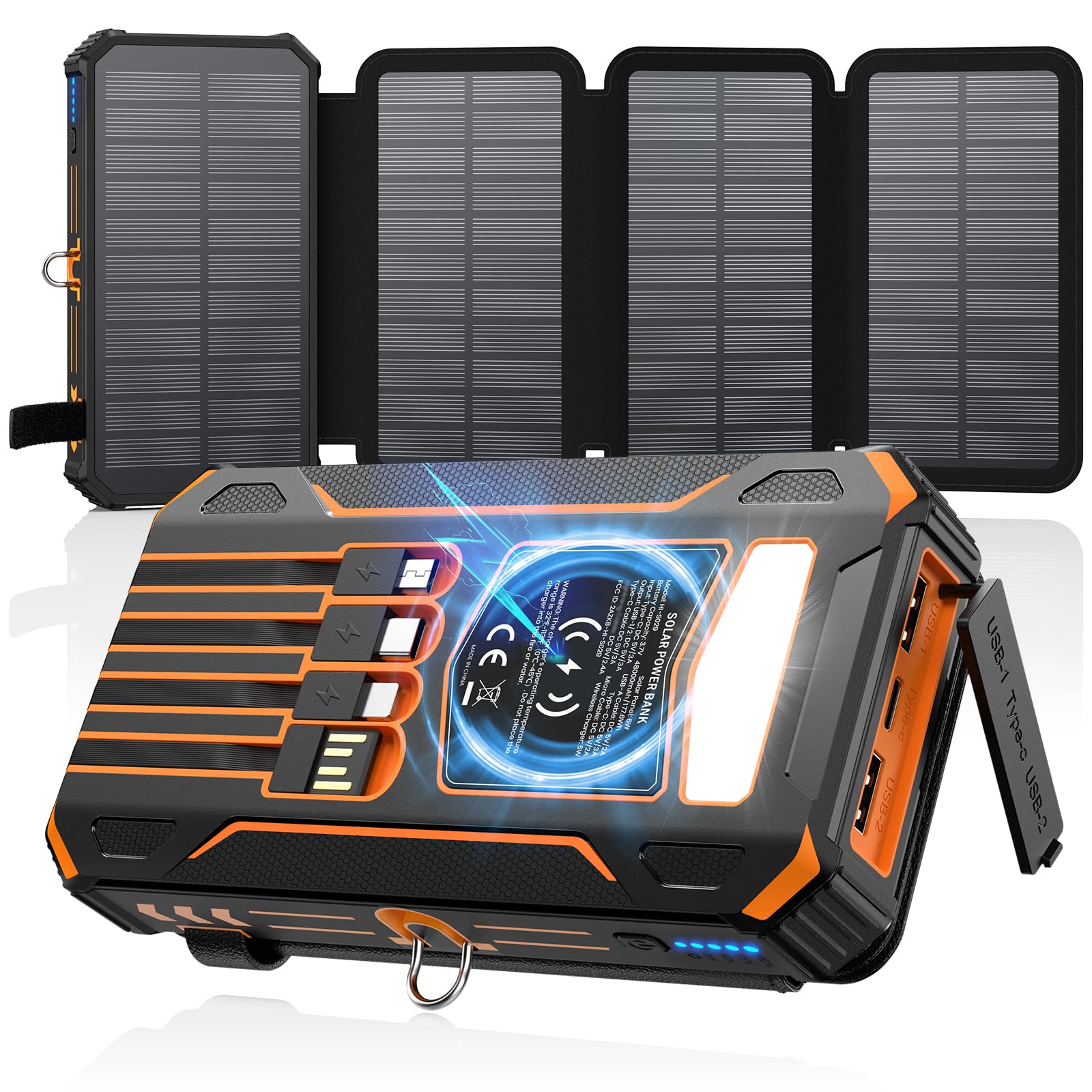
The SOARAISE power bank offers a massive 48,000mAh capacity, enough to charge multiple phones and tablets over several days. Built-in cables and wireless charging reduce cord clutter for group trips.

Solar recharging is very slow — the bank itself needs direct sun for many hours to gain meaningful charge, so it works best as a pre-charged battery. The 1.5-pound weight is manageable for car camping but a burden for backpacking.

This is suited for group camping trips at a base camp where weight isn’t critical and you can charge it before leaving home. If you need off-grid solar charging, a separate folding panel is a more effective solution.

💡 Plug the bank into a wall outlet at home ahead of your trip to take full advantage of its capacity.

Pros

  • Massive 48,000mAh capacity keeps phones and tablets charged for days.
  • Built-in cables and wireless charging reduce the need to carry extra cords.
  • Despite its size, it fits well in backpacks for camping and hiking.

Cons

  • Solar recharging is slow and may not effectively charge the bank in direct sunlight.
  • At roughly 1.5 pounds, the bank adds noticeable weight for backpackers.
Our verdict

Best used as a pre-charged power bank for group car camping—ignore the solar feature and rely on its massive capacity to keep devices running for days.

Check Latest Price
4

Best Mid-Range Panel (40W)

FlexSolar 40W Foldable Panel

87 /100
Traveler Score Excellent

Key details

Ports
USB-A, USB-C, DC
Efficiency
Power Spec
40W
Waterproof
IP67
Check Details on Amazon

The FlexSolar 40W panel puts out a consistent 30-33W in direct sunlight, noticeably higher than many panels in its size class, and includes both QC3.0 USB-A and PD USB-C ports for simultaneous charging of a power bank and phone.

This panel suits backpackers who want more power than a 28W panel without jumping to a heavier 35W model. However, the occasional quality control issue — a USB port that doesn’t work out of the box, for example — means it’s worth testing before a long trip. Inconsistent output in less-than-ideal light also means you’ll want to position it carefully.

The 1.76 lb weight and compact folded size (8x11x1.8 inches) make it easy to stow in a pack side pocket. The ETFE coating and IP67 rating add peace of mind for damp campsites or sudden rain.

💡 Test the panel at home under full sun to confirm output before relying on it in the backcountry.

Pros

  • Delivers 30-33W in direct sun, close to its 40W rating.
  • At 1.76 lbs, packs small for overnight trips.
  • ETFE coating and IP67 waterproofing hold up in wet conditions.

Cons

  • USB port breakage or output failures have been noted on some units.
  • Under partial shade or overcast skies, output drops below 30W.
Our verdict

For campers who prioritize raw wattage over perfect reliability, the FlexSolar 40W offers solid performance at a mid-range price — just double-check the ports before heading out.

Check Latest Price
5

Most Portable

BigBlue 25W Ultra-Light Panel

83 /100
Traveler Score Excellent

Key details

Ports
USB-A, USB-C
Efficiency
Power Spec
25W
Waterproof
IP68
Check Details on Amazon

Weighing just 0.84 lbs, the BigBlue 25W folds smaller than a paperback book — a feat no other panel in our lineup matches. This ultra-light design makes it a standout for backpackers who count every gram. However, the lower wattage means slower charging than the 28W model we recommend as top pick, and occasional port failures have been noted in some units.

This panel suits thru-hikers and day-trippers who need a solar charger that disappears into a pocket and won't add noticeable weight. In full sun, it delivers a steady trickle charge to phones and power banks — enough to top up a smartphone over an afternoon. The IP68 waterproof rating means rain isn't a concern, a practical advantage for exposed campsites.

Build quality is good for its weight class; the foldable design holds up to repeated packing. Just be aware that charging speed depends heavily on direct sunlight — partial shade drops output significantly. For weight-conscious hikers, this tradeoff is acceptable; for those needing faster charging, a heavier panel like the 28W or 35W is a better fit.

💡 Test the panel at home before a multi-day trip to confirm ports and output are functioning.

Pros

  • Weighs only 0.84 lbs and folds pocket-small
  • Sturdy foldable build that holds up to regular packing and unpacking.
  • Charges a phone or power bank at useful speed when placed in full sunlight.
  • IP68 waterproof rating protects against rain and splashes.

Cons

  • In partial shade or overcast conditions, real-world output drops noticeably below the 25W rating.
  • Some units may develop port connectivity issues or cease output after limited use.
Our verdict

For backpackers who count every gram, the 25W BigBlue is the lightest way to keep devices alive on trail — just plan for slower charging and check unit quality before heading out.

Check Latest Price
6

Best for Multi-Device Households

BLAVOR 20,000mAh Power Bank

87 /100
Traveler Score Excellent

Key details

Ports
4 cables, wireless
Efficiency
Power Spec
20,000mAh
Waterproof
Yes (claimed)
Check Details on Amazon

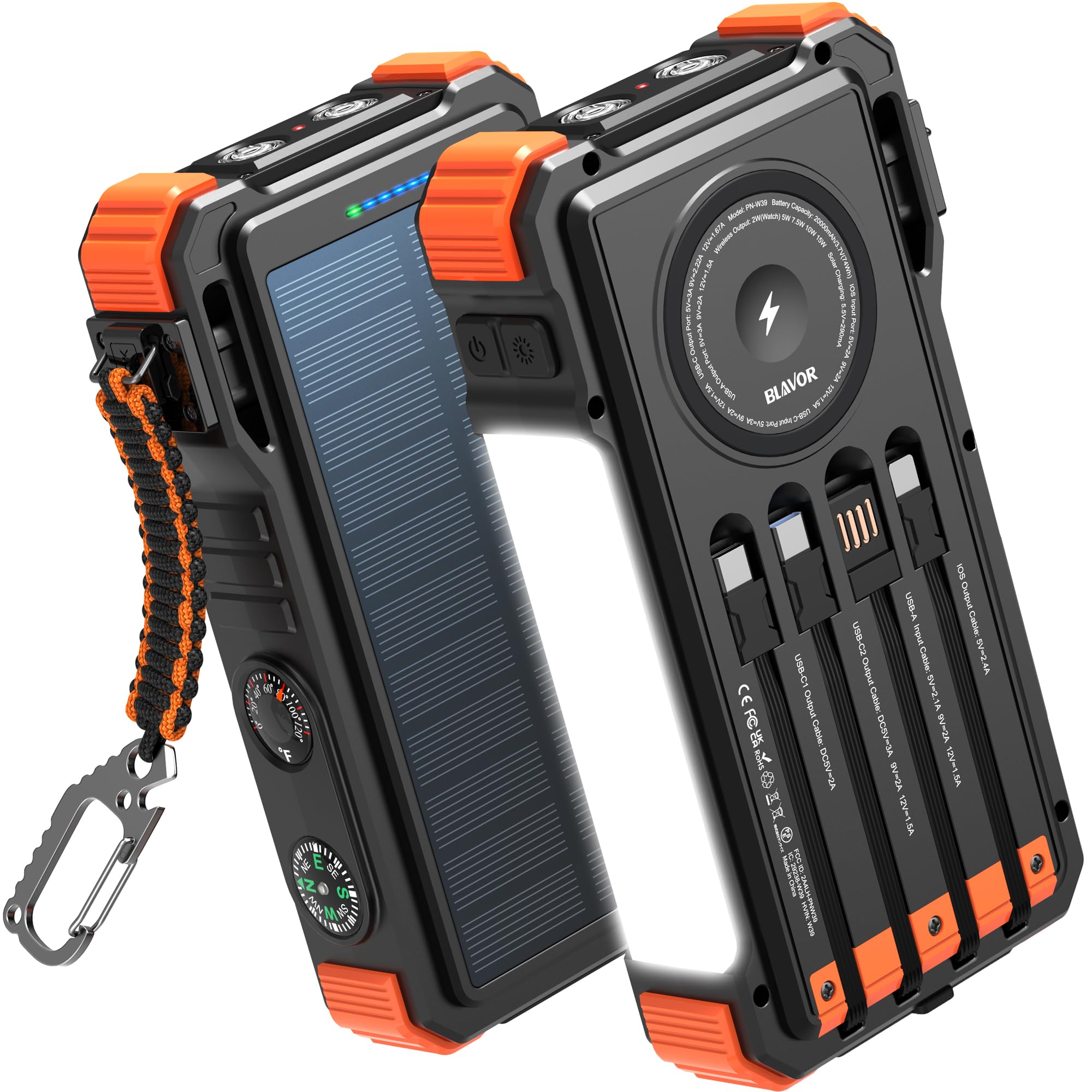
Charges up to six devices simultaneously, including an Apple Watch, via four built-in cables, three ports, and wireless charging – no need to pack separate chargers for each device.

This power bank suits families or groups car camping who need to keep multiple device types topped off. The built-in Apple Watch charger is a rare perk for mixed-device households. However, the solar panel on the back does not meaningfully recharge the battery under direct sunlight – treat it as a standard power bank that you charge from a wall outlet. At 1.72 lbs, the weight is acceptable for car camping or glamping but too heavy for backpacking trips where every ounce matters.

The integrated cables eliminate the hassle of carrying extra cords, and the 20,000mAh capacity provides several full phone charges plus a few for a tablet. Wireless charging adds convenience for compatible phones, though charging speeds are moderate. The key tradeoff: rely on pre-charging, not solar, for off-grid use.

💡 Keep the bank charged before your trip; the solar panel will not top it off in the field.

Pros

  • Charges up to six devices including Apple Watch simultaneously
  • Practical for travel and camping
  • Built-in cables are convenient and reduce clutter

Cons

  • Solar panel does not deliver usable charge
  • At nearly 1.7 pounds, the weight is noticeable for hiking
Our verdict

A feature-packed power bank for group camping if solar is not a priority – pre-charge before you go.

Check Latest Price
7

Travel Backup

YOLOSKS 49,800mAh Power Bank

86 /100
Traveler Score Excellent

Key details

Ports
4 cables, wireless
Efficiency
Power Spec
49,800mAh
Waterproof
IP65
Check Details on Amazon

Massive 49,800mAh capacity with six output options (four cables, two ports, plus wireless) at a budget price. The integrated solar panel recharges too slowly to rely on for camping — treat this as a high-capacity standard power bank and pre-charge before heading out.

Pros

  • Very high 49,800mAh capacity with six output options (four cables, two ports, plus wireless).
  • Wireless charging works reliably for compatible phones, adding convenience.

Cons

  • Solar charging is slow; hours in sun may yield negligible charge, making it impractical for off-grid use.
Our verdict

A good pick for travelers who want one power bank with all cables built in, as long as you plan to charge it from a wall outlet beforehand.

Check Latest Price
8

Budget Backup

SOXONO 40,000mAh Power Bank

84 /100
Traveler Score Excellent

Key details

Ports
4 cables, 3 ports
Efficiency
Power Spec
40,000mAh
Waterproof
IP67
Check Details on Amazon

The SOXONO power bank packs a massive 40,000mAh capacity at an entry-level price, making it tempting for campers who want lots of juice without spending much. It includes four built-in cables and three ports, so charging multiple phones and tablets from a single device is convenient. However, the solar panel is too slow to be useful for off-grid charging—it's best as a wall-charged battery pack. More critically, unit reliability can vary; some may stop working after a few uses, so this is best viewed as a budget backup rather than a primary power source.

Pros

  • Massive 40,000mAh capacity at a budget-friendly price
  • Built-in cables and multiple ports reduce the need for extra cords

Cons

  • Reliability can vary between units; some may stop functioning after limited use
  • Solar charging is very slow—intended only as an emergency top-up, not for primary off-grid use
Our verdict

A sensible choice for budget-focused campers who need a large backup battery and can accept occasional unit variance—best pre-charged at home, not as a solar-dependent solution.

Check Latest Price
9

Car Camping

SOLUPUP 30W Foldable Panel

85 /100
Traveler Score Excellent

Key details

Ports
USB-A, USB-C
Efficiency
Power Spec
30W
Waterproof
IPX5
Check Details on Amazon

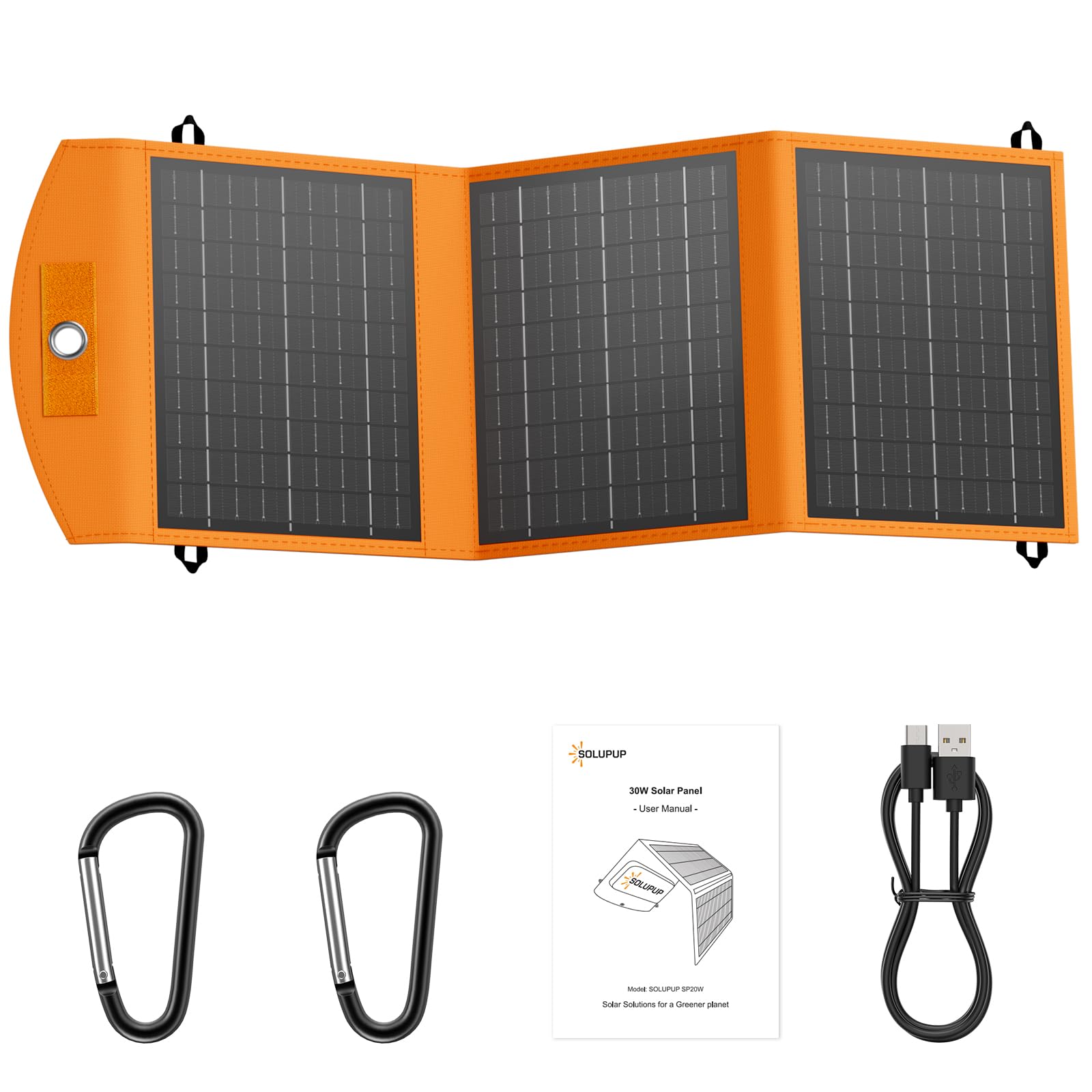
The SOLUPUP 30W panel offers convenient kickstand setup and decent charging for phones and power banks in full sun. However, its 2.4 lb weight puts it on the heavier side for its wattage class, and actual output can be noticeably lower than 30W — partial shade cuts it further. That makes it a reasonable pick for base camp or car camping where weight isn't critical, but less ideal for backpackers seeking efficiency per ounce.

Pros

  • Charges phones and power banks quickly in direct sunlight
  • Built-in kickstand makes setup simple on uneven ground

Cons

  • Output can fall significantly below the rated 30W in real-world use
  • At 2.4 lbs, it is heavier than many similarly rated panels
Our verdict

Suitable for car campers who want a straightforward panel with a kickstand, provided they do not need maximum portability or consistent high wattage.

Check Latest Price
10

Occasional Use

Ryno Tuff 21W Solar Panel

86 /100
Traveler Score Excellent

Key details

Ports
2 USB-A
Efficiency
Power Spec
21W
Waterproof
Water-resistant
Check Details on Amazon

It charges a phone at roughly 1% per minute under full sunlight, and the durable 600D PVC build holds up through seasons of camping. The 21W output, however, means charging tablets or multiple devices is noticeably slower than newer panels. USB ports aren't sealed against rain — you'll need to keep them covered. For occasional weekend trips where a single phone top-off suffices, this panel's simplicity and lifetime warranty offer solid value, but for faster charging or wet conditions, higher-wattage models are a better fit.

Pros

  • Charges a phone at roughly 1% per minute in direct sunlight.
  • Lifetime warranty covers defects and long-term wear.
  • Folds to 6x12 inches for easy packing in a daypack.

Cons

  • 21W output means charging tablets or multiple devices is slower than newer panels.
  • USB ports are not waterproof
Our verdict

If your camping trips are mostly sunny and you only need to charge a single phone occasionally, this panel's durability and lifetime warranty make it a low-risk choice — but for faster charging or multiple devices, consider a higher-wattage model.

Check Latest Price
11

Day Hikes

Ecosonique 30W Solar Panel

84 /100
Traveler Score Excellent

Key details

Ports
USB-C, USB-A
Efficiency
Power Spec
30W
Waterproof
IP67
Check Details on Amazon

The Ecosonique 30W panel charges phones and USB devices quickly in direct sunlight and even maintains output under light cloud cover, making it a reliable companion for day hikes or car camping. Its ETFE laminate and IP67 waterproofing give it a quality feel that punches above the price point.

Where it falls short is in long-term field validation — this panel lacks the years of user feedback that established models like BigBlue's 28W have. If you need a panel for extended trips where dependability is non-negotiable, spending a bit more on a proven option gives more peace of mind. For casual weekend use, the Ecosonique delivers solid value.

Pros

  • Charges quickly in direct sun and works under clouds
  • Good build quality with durable ETFE laminate

Cons

No notable drawbacks to flag.

Our verdict

A capable budget choice for day trips and light camping where you can accept less community track record; step up to a higher-reviewed panel for serious backcountry reliability.

Check Latest Price
12

Emergency Backup

BLAVOR 10,000mAh Solar Power Bank

88 /100
Traveler Score Excellent

Key details

Ports
USB-A, USB-C, Wireless
Efficiency
Power Spec
10,000mAh
Waterproof
IPX5
Check Details on Amazon

Small enough to slip into a pocket, this power bank charges phones wirelessly and includes a built-in dual flashlight for campsite convenience. When pre-charged from a wall outlet, it tops off a phone multiple times over. The solar panel, however, delivers such a trickle that it cannot meaningfully recharge the internal battery in direct sunlight - treat it as a standard power bank that needs grid power. That makes it a poor fit for anyone relying on solar while camping, but works well in an emergency kit or for short trips where you charge at home and want a backup with extra features.

Pros

  • Compact size and light weight make it easy to pack for backpacking
  • Wireless charging eliminates needing an extra cable for compatible phones
  • Integrated dual flashlight is handy for campsite or emergency use

Cons

  • Solar charging is too slow to be useful - expect no meaningful charge after a full day in sunlight
Our verdict

Best for campers who pre-charge at home and want a compact backup with wireless charging and flashlight - not for solar-dependent use.

Check Latest Price
13

Budget Backup

Mregb 42,800mAh Power Bank

87 /100
Traveler Score Excellent

Key details

Ports
2 USB-A, USB-C
Efficiency
Power Spec
42,800mAh
Waterproof
IP67
Check Details on Amazon

The Mregb offers enormous battery capacity for the money, with a rugged IP67 build and a built-in flashlight that makes it a solid option for emergency kits. However, the solar panel is too slow to meaningfully recharge the 42,800mAh battery in sunlight - treat it as a standard power bank that you charge from a wall outlet before heading out. The lack of detailed user experience data makes it a risk for critical camping needs where reliable power is essential.

Pros

  • Massive 42,800mAh capacity at a budget-friendly price
  • Rugged design with IP67 water resistance and built-in flashlight

Cons

  • Solar charging is too slow to recharge the battery during a day hike - best used as a pre-charged backup.
Our verdict

Fits well in an emergency kit or as a large backup battery for occasional use where solar charging isn't relied upon. Not the choice for off-grid camping that depends on solar recharging.

Check Latest Price

How to Choose

Wattage vs. Capacity

For folding solar panels, wattage determines how fast they can charge devices under ideal sunlight. A 28W panel can charge a phone in 2-3 hours, while a 40W panel cuts that time by about 30%. But higher wattage often means heavier panels and larger folded size, which matters for backpacking.

For power banks, capacity (mAh) tells you how many full charges you get. A 10,000mAh bank charges a phone about 2-3 times, while 48,000mAh can handle 10+ charges. However, high capacity adds weight and bulk, and the built-in solar panel on these banks is too small to meaningfully recharge them in the field.

Ports and Charging Standards

USB-C PD (Power Delivery) enables fast charging from solar panels to devices. A panel with a PD 25W USB-C port can charge a phone at wall-socket speed, bypassing the slow trickle from standard USB-A. Panels without PD limit output to 5V/3A (15W max).

For power banks, multiple ports allow charging several devices simultaneously, but the total output is shared. A bank with 6 outputs may only deliver 2.4A total, so charging three phones at once will be slower than charging one. Prioritize banks with at least one fast-charging USB-C port.

Waterproof Rating

Waterproof ratings from IPX4 (splash-resistant) to IP68 (submersible) indicate how well the device handles rain and splashes. For camping, IPX5 or higher is recommended as panels and power banks may be left out in damp conditions. However, fully sealed ports can reduce heat dissipation, potentially affecting charging efficiency in direct sun.

Most standalone panels with IP67 or IP68 can handle heavy rain, but the USB ports often have rubber covers that must be closed to maintain protection. Power banks with IP67 can survive brief immersion, but prolonged exposure is still risky.

Weight and Portability

Weight is critical for backpackers. A 25W panel at 0.84 lbs is ideal for ultralight trips, but its lower wattage means slower charging. Heavier 28W or 40W panels (1.5-1.8 lbs) offer faster charging but take up more pack space. For car camping, weight is less important, and a larger panel with a built-in kickstand can be easier to set up.

Power banks range from 9 oz (10,000mAh) to over 1.5 lbs (48,000mAh). The lighter ones are great for day hikes; the heavy ones suit base camps or group trips where multiple devices need charging. Always check folded size for panels — a compact fold like the BigBlue 25W (4.65 x 6.42 in) easily fits in a side pocket.

Solar Efficiency

Solar conversion efficiency (often 20-25%) measures how much sunlight the panel converts into electricity. Higher efficiency means more power from the same surface area, which is crucial for backpackers with limited packing space. Panels with 25% efficiency, like the BigBlue 28W, deliver better performance in suboptimal light compared to cheaper 18% panels.

However, efficiency ratings are measured in lab conditions. Real-world output depends on cloud cover, panel angle, and temperature. A panel with 25% efficiency may still only produce 60-70% of its rated wattage on a partly cloudy day. Focus on proven real-world performance from user reviews rather than the percentage alone.

Frequently Asked Questions