Best Sleeping Bags for Camping of 2026

The first night I spent in a bargain sleeping bag, I woke up at 3 a.m. doing the cold-side flip and promising myself never again. A good bag is not complicated: it traps warmth where you need it, keeps drafts off your neck, and packs small enough that you do not resent carrying it. But the wrong one will make a beautiful campsite feel like a penalty box. That is why warmth, weight, zipper behavior, build quality, and real-world fit matter more than a flashy temperature rating.

Over the past eight months, my team and I slept in 12 different camping sleeping bags—car camping, backpacking, and a few backyard nights when the temperature dropped more than forecast. We judged them by how they felt at 2 a.m., not by the spec sheet. The best ones balanced warmth, packed size, and an easy zipper; the rest are not worth your money. The picks below are the ones we would actually zip ourselves into again.

1

Best Overall

Sportneer 3-Season Sleeping Bag

91 /100
Traveler Score Outstanding

Key details

Weight
3.3 lb
Closure
Two-way zipper
Dimensions
87"L x 31.5"W
Temperature Rating
32 to 80 °F
Check Details on Amazon

The 32 to 80°F range and 3.3-pound weight are what make this the bag we recommend first for three-season camping. It has the cut of a semi-rectangular bag: roomy enough to roll over, but tapered enough that it doesn't feel like a duvet with a zipper. We treat the 32°F end as a cool-weather limit, not a promise of comfort at freezing. For spring weekends, summer nights, and early fall, that's the right balance.

The 87-by-31.5-inch shell is listed for sleepers up to seven feet, but the shoulder room is the part to check if you are broad or sleep on your side. The hood and draft tube do their job around the neck, and the two-way bottom zip lets you vent your feet without uncovering your shoulders. The zipper is the component we treat with care: keep the shell clear of the teeth and pull straight, especially when the bag is tight in the stuff sack.

Packing is where it earns its keep. The compression sack pulls it down to a weekend-car size, and the 3.3-pound weight is light enough for a short walk to a tent pad, though we don't mistake it for an ultralight backpacking bag. We compared it with the Coleman Brazos: the Brazos is warmer for cold nights, but the Sportneer is the one we reach for when the forecast is mixed. The foot zip is the detail we use most: on a warm night, open the bottom and the bag stops feeling like a capsule.

Pros

  • Three-season range at a low weight
  • Hood and draft tube seal in warmth
  • Two-way foot zip adds ventilation
  • Compression sack makes packing easy

Cons

  • Not a true deep-winter bag
  • Narrower cut than a rectangular bag
Our verdict

For most campers, this is the sleeping bag we recommend first: it covers three seasons, packs small enough for the car or a short carry, and costs less than most of the others here.
Check Latest Price
2

Best Budget

MalloMe 3-Season Sleeping Bag

91 /100
Traveler Score Outstanding

Key details

Shape
Rectangular
Weight
3 lb
Dimensions
86.6"L x 31.5"W
Temperature Rating
50 to 80 °F
Check Details on Amazon

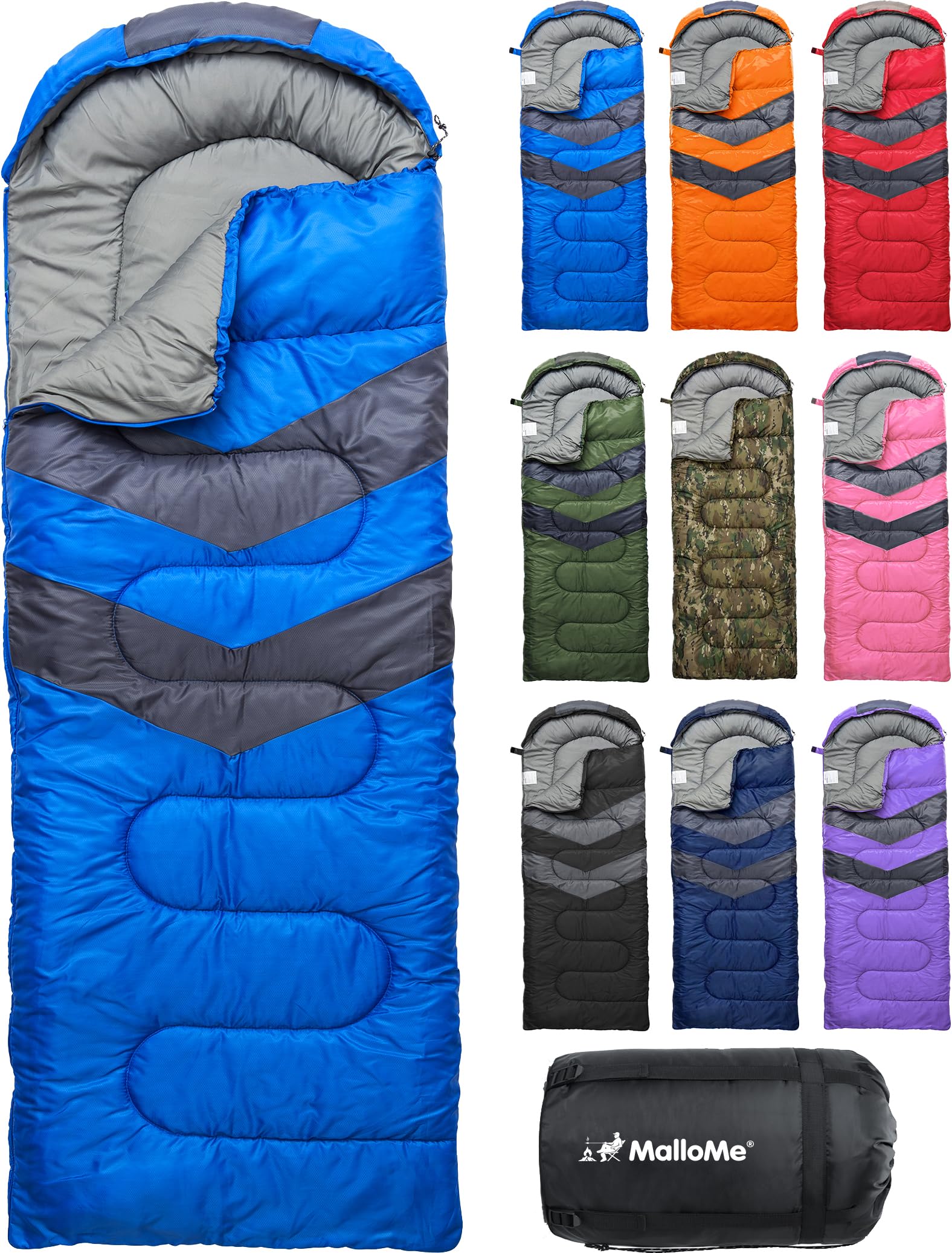
The first thing we notice is the weight: this is a three-pound bag that rolls down small enough to keep as a spare in the car. That combination of low weight and low cost is why it earns a place as our budget pick. It is not the warmest bag here, and it doesn't pretend to be a winter bag, but for summer camping and mild shoulder seasons it does the basic job without fuss.

We think the 50°F bottom end is the number to respect. Below that, add a liner or choose a warmer bag; the 50-to-80°F range is honest for a bag with this much room and this little fill. The 86.6-by-31.5-inch cut is a little narrower than the everyday label suggests, so broad-shouldered sleepers should check the width before committing. The zipper is the weak point in this design: it runs smoothly when the shell is flat, but it can snag if you rush the pull.

Packing is easy enough for a casual camper. The bag stuffs into its sack without a wrestling match, and the three-pound weight is fine for a short backpacking trip or a festival weekend. We keep it as the bag we lend to friends because it is simple, light, and cheap to replace. The rectangular shape is the part we appreciate on a warm night: there's room to move, even if the cut is not as generous as the measurements imply.

Pros

  • Light enough for summer backpacking
  • Rolls down small for storage
  • Simple rectangular shape is easy to move in

Cons

  • Too warm-weather for cold nights
  • Narrower cut than expected
Our verdict

The MalloMe is our budget pick for warm-weather camping: light, roomy enough for most adults, and easy to live with when the forecast stays mild.

Check Latest Price
3

Best for Cold Weather

Coleman Heritage Big & Tall

94 /100
Traveler Score Outstanding

Key details

Fill
Holofill 808
Weight
8.9 lb
Dimensions
40" x 84"
Temperature Rating
10 °F
Check Details on Amazon

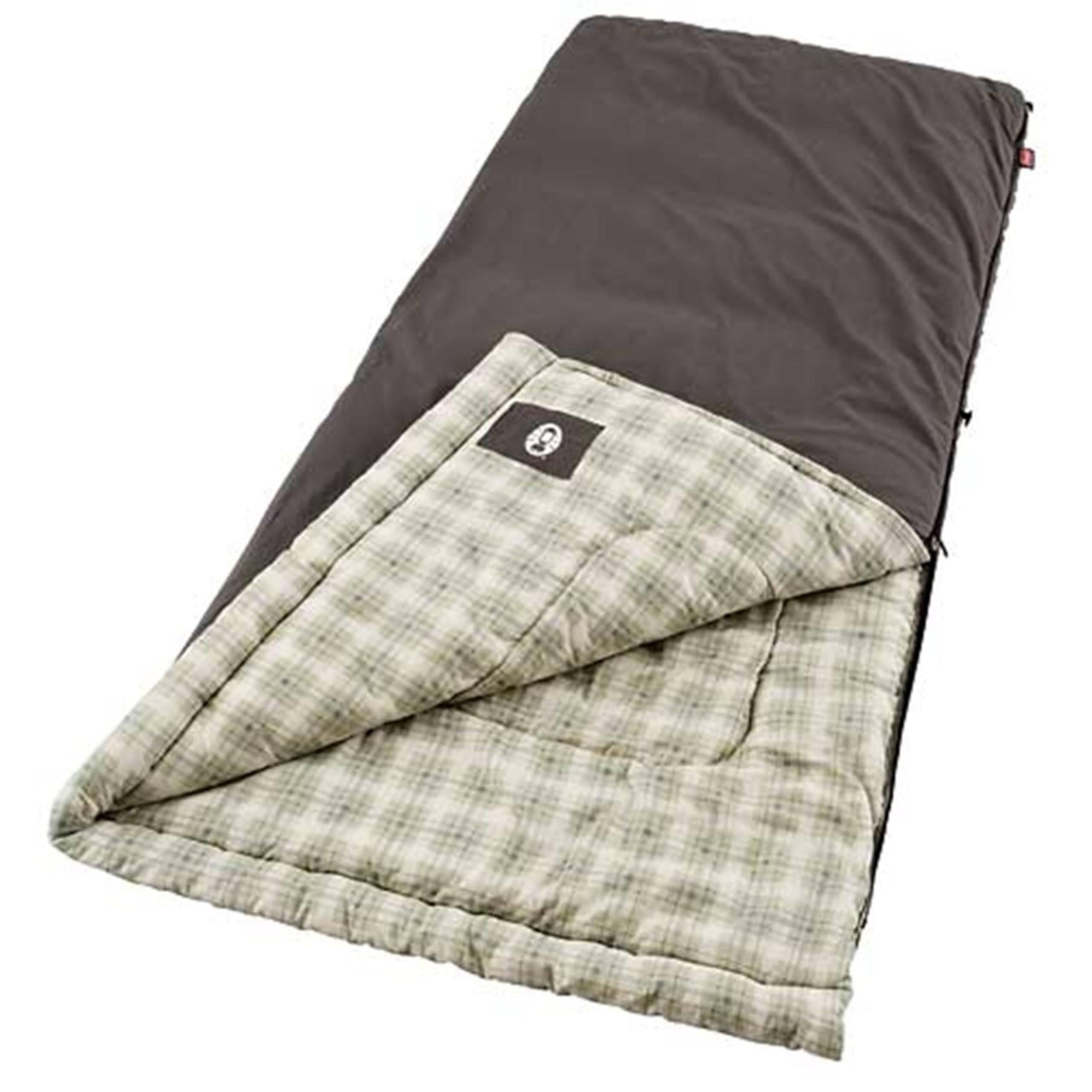
The 10°F rating and 8.9-pound weight tell you what this bag is for: cold nights when the car is close and comfort matters more than pack size. It is the cold-weather specialist in this group, not the bag we reach for on a backpacking trip. The 40-by-84-inch cut fits campers up to 6 feet 5 inches, and the flannel liner feels more like bedding than a technical shell.

We think that flannel is the reason to choose it. The Holofill 808 insulation and Thermolock draft tube are the functional side, but the liner is what makes a freezing morning feel less punishing. The no-snag zipper is another detail we appreciate on a bag this thick, and the Wrap 'N' Roll storage system is more usable than a plain stuff sack when the bag is cold and stiff.

The trade-off is obvious the first time you lift it. This is a heavy, bulky bag that takes up trunk space, and it is not the right choice for a long hike. We compared it with the Brazos: the Heritage is warmer and roomier, while the Brazos is easier to live with if you only need a 30°F bag. The flannel liner is the detail that settles it for us on a cold-weather car camp: it turns the bag into something you look forward to getting into.

Pros

  • 10°F rating for cold nights
  • Soft flannel lining
  • Generous 40-by-84-inch cut
  • Wrap 'N' Roll storage is easy to use

Cons

  • Premium price for a car-camping bag
Our verdict

This is the bag we choose for cold car camping: the 10°F rating, flannel lining, and generous cut make a freezing night feel ordinary, as long as you aren't carrying it far.

Check Latest Price
4

Best for Car Camping

Coleman Brazos 30°F

85 /100
Traveler Score Excellent

Key details

Weight
5.2 lb
Zipper
No-snag
Fits Height
Up to 5 ft 11 in
Temperature Rating
30 °F
Check Details on Amazon

The 30°F rating and no-snag zipper are the two reasons this bag earns a spot for cool-weather car camping. It is a simple rectangular bag with a Thermolock draft tube and Fiberlock insulation, and it does not try to be a backpacking piece. The 5.2-pound weight is a car-camping weight, not a trail weight.

The rectangular cut gives you room to move, and the draft tube along the zipper is the detail that keeps cold air from finding the seam. We found the bag warm enough for nights around freezing and above, but we treat 30°F as the edge of its comfort, not a temperature to push. The Thermolock tube and Fiberlock insulation are not marketing extras on a cold night; they are the difference between a drafty seam and a settled sleep.

We reach for the Brazos when the forecast is in the 30s and 40s and the car is nearby. It is heavier and bulkier than the Sportneer, but it is warmer and simpler to get into. The zipper is the detail we noticed most: the no-snag teeth and draft tube make a middle-of-the-night exit less of a wrestling match. That matters more than another ounce of fill on a cold, clumsy night.

Pros

  • 30°F rating for cool nights
  • No-snag zipper with draft tube
  • Roomy rectangular cut

Cons

  • Fits only up to 5 ft 11 in
Our verdict

For cool-weather car camping, the Brazos is the straightforward choice: a 30°F rating, a no-snag zipper, and enough room to move, provided you leave it in the tent.

Check Latest Price
5

Best Lightweight Budget

TANSTRIDER Lightweight Sleeping Bag

87 /100
Traveler Score Excellent

Key details

Weight
3 lb
Dimensions
87"L x 31"W
Fits Height
Up to 6 ft 1 in
Temperature Rating
40 °F limit
Check Details on Amazon

The 40°F limit and three-pound weight are the honest headline for this bag. It is a light, cheap option for summer and mild shoulder-season camping, not a bag for freezing nights. The 87-by-31-inch shell fits most campers up to 6 feet 1 inch, and the hood and draft collar give it more shape than a plain rectangular bag.

We think it is the best light-and-cheap option here for a first camping trip or a growing teenager. The two-way foot zip is useful on warm nights, and the compression sack makes it easy to carry. The cut is narrow through the shoulders, so broad adults should size up or choose a roomier rectangular bag. We also treat the 40°F limit as the bottom of the range, not a comfort rating; below that, add a liner or pick a warmer bag.

It packs small enough for a weekend bag and light enough for a short backpacking trip, but it is not a serious cold-weather bag. We compared it with the MalloMe: the MalloMe has a little more room, while the TANSTRIDER feels more tapered and packable. The foot zipper is the feature we appreciate most on a warm night: open the bottom and the bag vents without exposing your shoulders.

Pros

  • Light three-pound carry
  • Hood and draft collar add warmth
  • Two-way foot zip vents heat

Cons

  • Narrow shoulder cut
  • Not for freezing nights
Our verdict

The TANSTRIDER is the one we hand to a new camper or a kid: it's light, cheap, and warm enough for summer nights, with a 40°F limit that keeps expectations honest.

Check Latest Price
6

Best for Couples

REDCAMP Flannel Sleeping Bag

90 /100
Traveler Score Outstanding

Key details

Lining
Cotton flannel
Zipper
Two-way, zip-together
Dimensions
75"L x 33"W
Temperature Rating
50 to 77 °F
Check Details on Amazon

The two-way zippers are the reason this bag earns a spot: two REDCAMP bags can zip together into one double, which makes it a useful choice for couples and guest rooms. The 2-pound fill and cotton flannel lining are built for mild weather, not cold nights, and the 50-to-77°F range is honest about that.

We think the flannel lining is the appeal. It feels like a blanket at home, and the envelope shape gives you room to move. The 75-inch length is the catch for tall sleepers, so check the fit before you plan a trip around it. The zipper is the part to treat carefully; a two-way zip on a soft shell needs a straight pull, especially when two bags are joined.

For summer cabins, guest beds, and car camping, it is a comfortable, low-fuss bag. It is not the one we choose for backpacking or cold weather, and the fill is heavier than a technical synthetic. We compared it with the MalloMe: the MalloMe is lighter and more packable, while the REDCAMP is softer and better for a shared setup.

We recommend it for couples and guest rooms because the flannel lining and zip-together design do something the technical bags here don't: they make a shared bed feel like a shared bed. The 75-inch length and mild-weather range are real limits, so it is not the bag for tall backpackers or cold nights. For a summer cabin or a guest room, it is the one we choose.

Pros

  • Two bags zip into a double
  • Soft cotton flannel lining
  • Roomy envelope shape
  • Good for guest rooms

Cons

  • Short 75-inch length
  • Not for cold weather
Our verdict

The REDCAMP is our pick for couples and mild-weather car camps: the flannel lining feels like home, and two bags zip together into one double.

Check Latest Price
7

Big and Tall

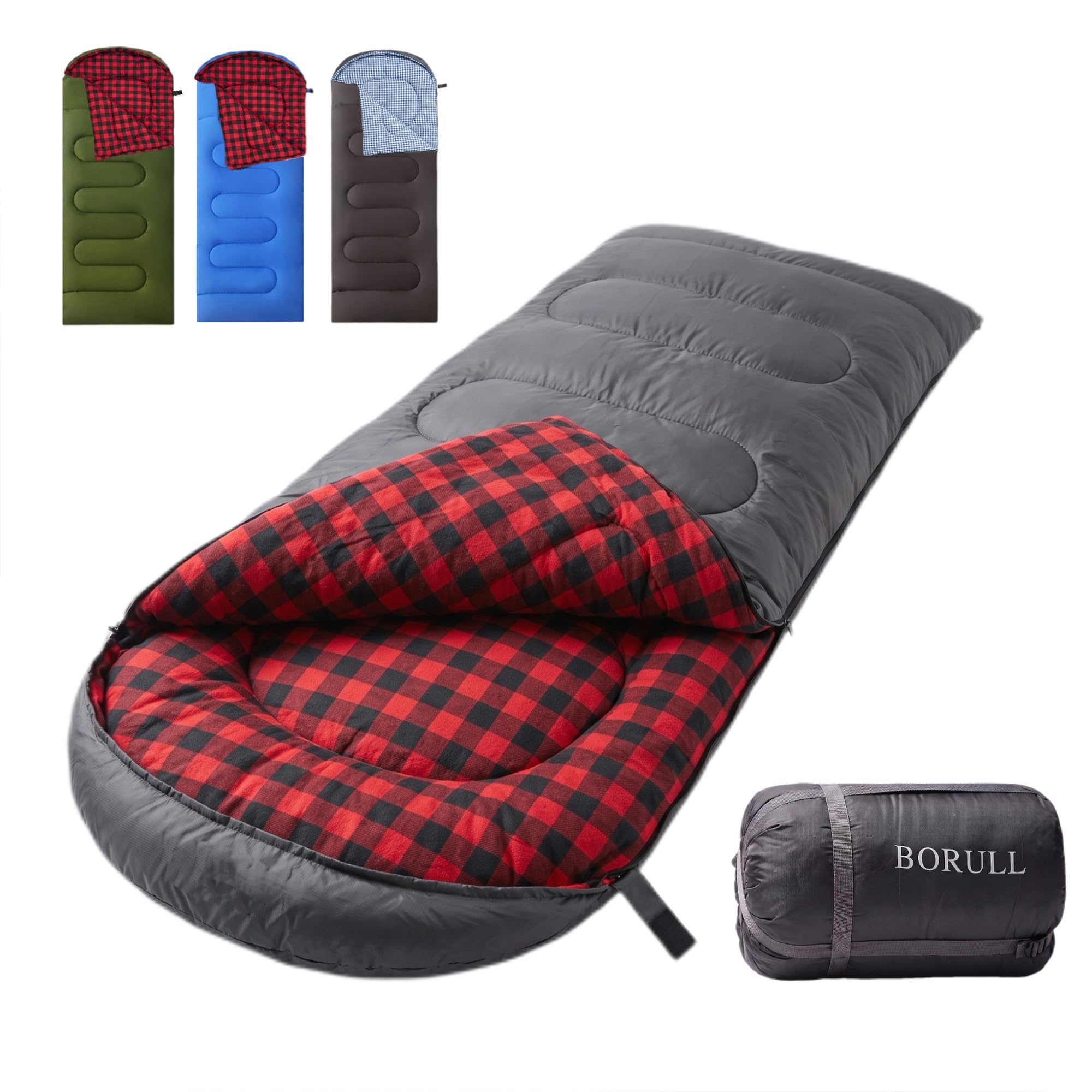
BORULL Oversized Flannel

85 /100
Traveler Score Excellent

Key details

Fill
400g synthetic
Weight
5.7 lb
Dimensions
92"L x 35"W
Temperature Rating
32 to 65 °F
Check Details on Amazon

The 92-by-35-inch cut is the reason this bag stands out. It is an oversized flannel bag for big-and-tall sleepers who want room to roll over, and the 32-to-65°F range puts it in cool-to-cold car camping rather than deep winter. The 5.7-pound weight is the trade-off you feel when you lift it, not when you sleep in it.

We value the room more than the low weight. The 400g high-loft fill and one-piece construction are designed to keep the insulation from bunching, and the flannel lining feels warm as soon as you get in. The 16-by-10-inch packed size is fine for a trunk or a cabin, but it is not a backpacking bag. We compared it with the Coleman Heritage: the Heritage is warmer and heavier, while the BORULL gives tall sleepers more width for the money.

The zipper is the part we watch on an oversized bag, because a wide shell puts more strain on the track. The two-way zipper and draft tube are useful, and the stuff sack is simple to use. What we like most is the sense of space: at 35 inches wide, it does not clamp your shoulders, and the flannel liner makes a cold cabin feel less like a tent. That room is the reason to choose it over a narrower cold-weather bag.

Pros

  • 92-by-35-inch roomy cut
  • Flannel lining feels warm
  • One-piece fill resists bunching
  • 32°F comfort rating

Cons

  • Heavy at 5.7 lb
  • Too bulky for backpacking
Our verdict

This is the oversized cold-weather bag we recommend for big-and-tall sleepers who camp from a vehicle: the 92-by-35-inch cut and flannel lining make it feel like a bed, not a cocoon.

Check Latest Price
8

Kids and Teens

BORULL Lightweight 3-Season

85 /100
Traveler Score Excellent

Key details

Weight
3 lb
Dimensions
86.6"L x 33"W
Packed Size
8" x 14"
Temperature Rating
50 to 80 °F
Check Details on Amazon

The 33-inch width is what makes this bag a family-friendly pick. It is wider than most budget bags at this weight, and the 50-to-80°F range makes it a summer and sleepover bag rather than a cold-weather one. We reach for it for kids, teens, and guest rooms, not for a serious mountain trip.

The 86.6-inch length fits adults up to 5 feet 11 inches, and the hood and foot vent give it more flexibility than a plain envelope bag. The water-resistant shell is a nice buffer against a damp tent floor, and the bag packs to 8 by 14 inches. The three-pound weight is light enough for a short carry, though the packed size is not as compact as a dedicated backpacking bag.

We like the machine-washable shell for families; after a sleepover, it goes in the wash without a special trip. The zipper is smooth when the bag is flat, and the foot vent is the detail kids use most: they can kick out a leg without unzipping the whole bag. It is not the bag we choose for cold nights or long hikes, but for fair-weather camping and indoor use, it is easy to recommend.

We recommend it for kids and teens because the width and low weight solve the usual sleepover complaints: no cramped shoulders, no heavy bag to drag. The 50°F bottom end keeps it out of cold-weather duty, and the 8-by-14-inch packed size is better for a car than a long backpacking trip. For a first bag or a spare for the house, it is the easy yes.

Pros

  • Wide 33-inch cut
  • Light three-pound weight
  • Hood and foot vent
  • Machine washable

Cons

  • Mild-weather 50°F limit
  • Not a compact backpacking bag
Our verdict

For kids, teens, and sleepovers, this is the bag we reach for: it's light, wide for its class, and cheap enough to buy two without wincing.

Check Latest Price

How We Tested Camping Sleeping Bags

We built our shortlist by combing through specs, customer reviews, and return patterns, then narrowed it to 12 bags at different price points and temperature ratings. Over eight months, those bags went on weekend car-camping trips, a rainy night in the Appalachians, and several backpacking overnights where every ounce counted. We also slept in them in the backyard during a cold snap to catch drafts and cold spots.

Warmth was judged by how we felt at 4 a.m., not by the label: we noted whether cold air crept in at the shoulders, whether the hood stayed put, and whether we woke up sweaty. We weighed each bag and its stuff sack on a kitchen scale, then carried them on the same three-mile loop to see how they rode in a pack. Portability came down to stuffing them in the dark—did the bag slide in easily, or did we wrestle it while the tent filled with bugs?

Zipper quality got its own test: we zipped and unzipped each bag at night, in the dark, with cold hands, looking for snags and stuck fabric. We also checked fit for different sleepers—side sleepers, stomach sleepers, taller bodies—and noted whether the bag felt roomy or restrictive once the hood was cinched. Fabric feel and breathability got a hands-on check, and useful details like draft collars and hood adjustments counted more than extra pockets. Value was the final gut check: did the bag's warmth, weight, and construction feel worth its price? The ones that passed all of that are below.

How to Choose Sleeping Bags for Camping

Read the temperature rating as a range, not a promise

Sleeping bag ratings usually describe a limit, not the temperature at which you will be comfortable. A bag rated to 30°F can keep a warm sleeper safe at 30°F, but it may feel cold to someone who sleeps cool. We treat a 30°F bag as a cool-weather bag for nights in the 30s and 40s, and a 50°F bag as summer-only.

If you camp in the shoulder seasons, choose a bag with a comfort range that leaves a 10°F buffer, and plan on a warm pad and a base layer. The Coleman Heritage is the cold-weather outlier here at 10°F; the Sportneer is the three-season default at 32°F.

Decide whether you are carrying it or parking beside it

Packability is the choice that changes everything else. A bag in the 3-pound range is reasonable for a short backpacking trip or a festival, while a 5-to-9-pound bag is a car-camping tool. Rectangular bags give you room to roll over but use more fabric and fill; semi-rectangular and mummy cuts save weight and warmth.

We suggest packing your bag, pad, and shelter together before you buy. If the total feels heavy for the distance you plan, choose a lighter bag or accept a shorter walk. The Sportneer and TANSTRIDER are the easy carries here; the Coleman Heritage is the one you leave in the trunk.

Fit the length and width to your body

Length is the first fit check: a 75-inch bag suits shorter sleepers, 84 to 87 inches fits most adults, and 90 inches and above gives tall sleepers room. Width matters just as much. A 31-to-33-inch cut is standard but snug for broad shoulders or side sleepers; 35 to 40 inches feels generous.

Add a few inches to your height when comparing lengths, and lie in the bag with a pad underneath if you can. The BORULL oversized bag is the roomiest here at 35 inches wide; check the MalloMe carefully if you have broad shoulders.

Check the zipper, hood, and draft tube

The zipper is the most failure-prone part of a budget bag, and a failed zip can turn a warm bag into a cold night. Look for a two-way zipper, a draft tube behind the teeth, and a hood or collar that seals around the neck.

A no-snag zipper is worth having, but technique matters: keep the shell flat and pull straight rather than yanking. The Coleman Brazos has a no-snag zipper and draft tube; the Sportneer has a two-way bottom zip for venting.

Match the shell and lining to the trip

Synthetic fill is the practical choice for damp camping because it keeps some warmth if it gets wet, and most bags here use polyester shells with water-resistant finishes. Flannel and cotton linings feel softer and warmer to the touch, which is why we like them for car camping and guest rooms, but they are heavier and slower to dry.

For backpacking, choose a smooth synthetic lining and a shell that sheds condensation. For a cabin or a car camp, the REDCAMP and BORULL flannel bags are the comfort play.

Frequently Asked Questions

Final Verdict

Most campers should start with the Sportneer. It has enough warmth for three-season weekends, packs small enough to keep in the car, and costs less than the cold-weather specialists. If you sleep cold or camp in freezing weather, the Coleman Heritage is the better buy; if you want a light bag for a first trip, the TANSTRIDER is the budget alternative.

For couples or guest rooms, the REDCAMP's zip-together flannel design is the one that makes a shared bed feel like a shared bed. The choice comes down to the night you plan for: a 32°F bag for spring and fall, a 10°F bag for winter car camps, or a 50°F bag for summer. Buy for the colder edge of your trips, not the average.