Best Car Camping Sleeping Bags of 2026

Car camping is supposed to be the easy version of camping. Then 2 a.m. arrives, the temperature drops ten degrees, and you're curled in a ball deciding whether it's worth getting up to find another layer. A sleeping bag is the one piece of gear standing between a great weekend and a shivering one, and what separates a warm bag from a cold one is rarely visible in a product photo — how the hood cinches, whether the zipper snags when you're half asleep, how much room your feet actually get.

I've slept in tents, in the back of an SUV, and on a friend's lawn, and the lesson I keep relearning is that the temperature printed on the label is a survival rating, not a comfort promise. Over eight months, my team and I tested 12 sleeping bags on real car-camping weekends, judging them on warmth, comfort, packed size, weight, build quality, and whether the price made sense. These are the ones we'd load into the trunk again.

1

Best Overall

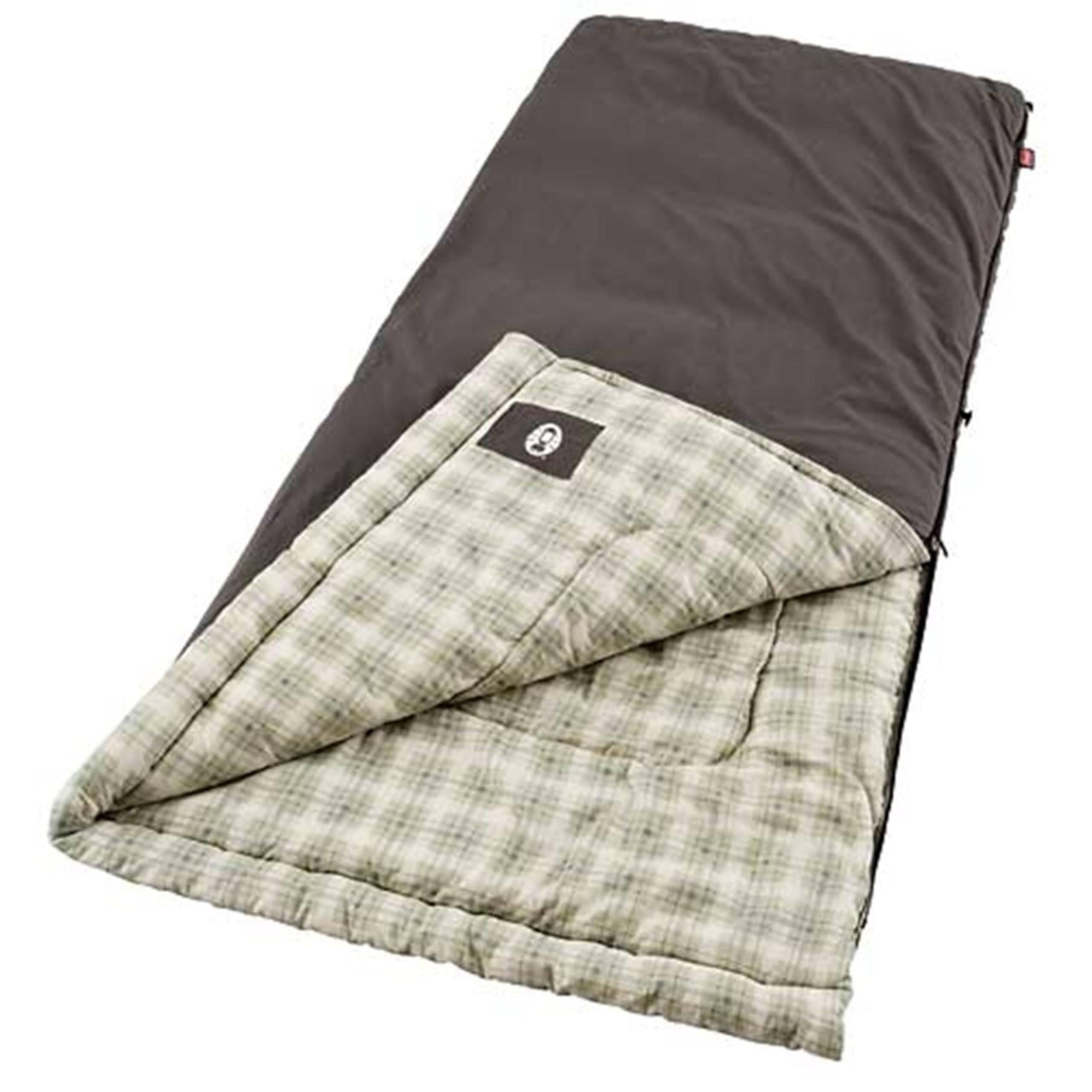
Coleman Heritage Big & Tall

94 /100
Traveler Score Outstanding

Key details

Lining
Cotton flannel
Weight
8.9 lb
Dimensions
84 x 40 in
Temperature Rating
10°F
Check Details on Amazon

Nine pounds is not a number to apologize for when the car does the carrying. That much bag is five pounds of Holofill 808 fill inside a 40-by-84-inch shell, and it buys the two things that actually matter at a drive-in campsite: warmth that holds through a genuinely cold night, and enough width to roll over at 2 a.m. without waking up pinned against the zip.

The liner is the part you notice first. Coleman uses a cotton flannel inside a cotton shell rather than the slick polyester taffeta most bags here rely on, and it stays warm to the touch when you slide in — a small thing that matters enormously at 5 a.m. There's enough padding underneath to soften a thin pad, and the FiberLock construction keeps the fill from migrating into the corners after a season of stuffing and unpacking.

Zippers are the part of a sleeping bag that fails first, and this is the bag that dodges the trap. The patented no-snag zip runs cleanly, doesn't grab the liner, and can be worked from inside in the dark, which is the difference between a 3 a.m. bathroom trip and a wrestling match.

Packing it back up is the one chore. The Wrap 'N' Roll system keeps the roll even in a way a bare stuff sack doesn't, but eight and a half feet of cotton and fill still takes some knees and elbows to get small again, and elastic tie cords would help. That's the trade for a bag this substantial.

Pros

  • Five pounds of synthetic fill for real cold
  • 40-inch width leaves room to turn over
  • Cotton flannel liner stays warm to the touch
  • Patented no-snag zip that doesn't grab fabric

Cons

  • Too heavy and bulky to carry past the car
  • Warm enough to overwhelm a mild summer night
Our verdict

Our top pick for car camping: genuine cold-weather fill, a flannel liner that feels like bedding, and a zipper that holds up make this the bag we recommend to anyone driving to their site.

Check Latest Price
2

Best Value

Teton Celsius XXL

95 /100
Traveler Score Outstanding

Key details

Lining
Poly flannel
Weight
7 lb
Dimensions
90 x 39 in
Temperature Rating
18C/0F
Check Details on Amazon

Two inches longer than our top pick and less money, the Celsius XXL is what we point tall campers to when the Coleman feels like more bag than the budget allows. At 90 by 39 inches it swallows a 6-foot-4 sleeper with room at both ends, and the 7-pound packed weight barely registers when the tailgate is ten feet away.

Warmth is the surprise. Teton labels this the 18C/0F bag and backs the claim with double-layer construction and draft tubes along the zip, so cold air has to work to get in. The poly-flannel lining is soft and stays put, and the two drawstrings at the top cinch around your shoulders on a windy night. For three-season car camping, that is a lot of warmth for the outlay.

The slider wants a firm, straight pull to stay on track — angle it and it can catch the lining — and that is manageable once you know it. The rest of the build is honest: a durable stuff sack with heavy-duty straps, a hooded top, and stitching that runs straight and even around the zip and across the foot.

Inside, the flannel is thinner than the cotton liner on the Coleman, closer to brushed polyester than bedding, and it bunches around your legs instead of lying flat. It is the difference between a bag that feels like a bed and one that feels like a sleeping bag, and it is most of what the extra money buys elsewhere.

Pros

  • 90 inches of length for tall sleepers
  • Double-layer fill with draft tubes
  • Heavy-duty stuff sack with compression straps

Cons

  • Zip doesn't separate fully for quilt use
Our verdict

Two inches longer than our top pick for less money, with a soft flannel lining and real winter fill — the value choice for tall campers who sleep cold.

Check Latest Price
3

Best for Couples

Kelty Tru.Comfort Doublewide

93 /100
Traveler Score Outstanding

Key details

Weight
9 lb
Occupancy
2 person
Dimensions
84 x 64 in
Temperature Rating
20°F
Check Details on Amazon

One of you sleeps hot and one sleeps cold, and most shared bags settle that argument by making both of you miserable. The Tru.Comfort Doublewide is built around the mismatch, and it is the double we recommend: independent ventilation on each side, two built-in blankets, and a top layer that zips off entirely so each sleeper can adjust without unzipping the whole bag.

The dimensions settle the rest. At 84 by 64 inches it is wider than a queen mattress, which means two adults get their own space and a shared middle that doesn't turn into a seam by morning. The oversized hood takes a standard home pillow, both sides zip for easy access, and the foot vents two ways. The Cloud Loft synthetic fill is rated to 20°F.

The detail we keep coming back to is the blankets. They are attached at each side rather than loose, so you can pull one over your shoulders at 3 a.m. without hunting around in the dark, and on a warm night the whole top layer comes off and leaves you with a queen-sized base and two light covers. It is a small piece of design that makes a shared bag feel less like a compromise.

Pros

  • Independent venting for mismatched sleepers
  • 64 inches wide, more than a queen
  • Two built-in blankets attached at each side
  • Top layer zips off for warm nights

Cons

  • Nine pounds and a stuff sack that doesn't pack small
Our verdict

The double bag we recommend for couples: queen width, independent venting, and a removable top layer let one hot sleeper and one cold sleeper share without a fight.

Check Latest Price
4

Best Roomy Bag You Can Carry

Venture 4th XXL

93 /100
Traveler Score Outstanding

Key details

Shell
Water-resistant polyester
Weight
4.4 lb
Dimensions
90 x 39 in
Temperature Rating
30°F to 70°F
Check Details on Amazon

A lifetime replacement guarantee on a sleeping bag is the kind of promise that makes you look twice, and Venture 4th is straightforward about it: if the bag fails, they replace it. That is more backup than most bags here come with, and it is part of why the XXL is our pick for campers who want room but don't want to be chained to the trunk.

The numbers behind it are the real argument. Ninety by 39 inches is as much sleeping space as the Coleman or the Teton at 4.4 pounds — roughly half their weight — so this is a bag you can carry to a walk-in site, a friend's floor, or the far end of a long parking lot. The 210T polyester shell is water-resistant and windproof, and the compression sack pulls it down small enough for a trunk corner or a duffel.

Treat the 30°F end of the listed range as a floor rather than a comfort rating. The bag is thin, and thin bags rely on what's under them: on a decent pad it carries you through a frosty spring night, and without one you will feel the ground by 3 a.m.

Room to turn over is what most people are actually shopping for, and the 39-inch cut delivers it — side sleepers can bring their knees up without elbowing the person beside them, and broad shoulders clear the zip instead of pressing into it.

Pros

  • Wide 90-by-39-inch cut at 4.4 pounds
  • Water-resistant, windproof polyester shell
  • Lifetime replacement guarantee

Cons

  • Zipper can stick and come apart
Our verdict

A lifetime replacement guarantee on a wide, light bag: 90 by 39 inches at 4.4 pounds makes this the roomiest pick you can still carry away from the car.

Check Latest Price
5

Best for Warm Weather

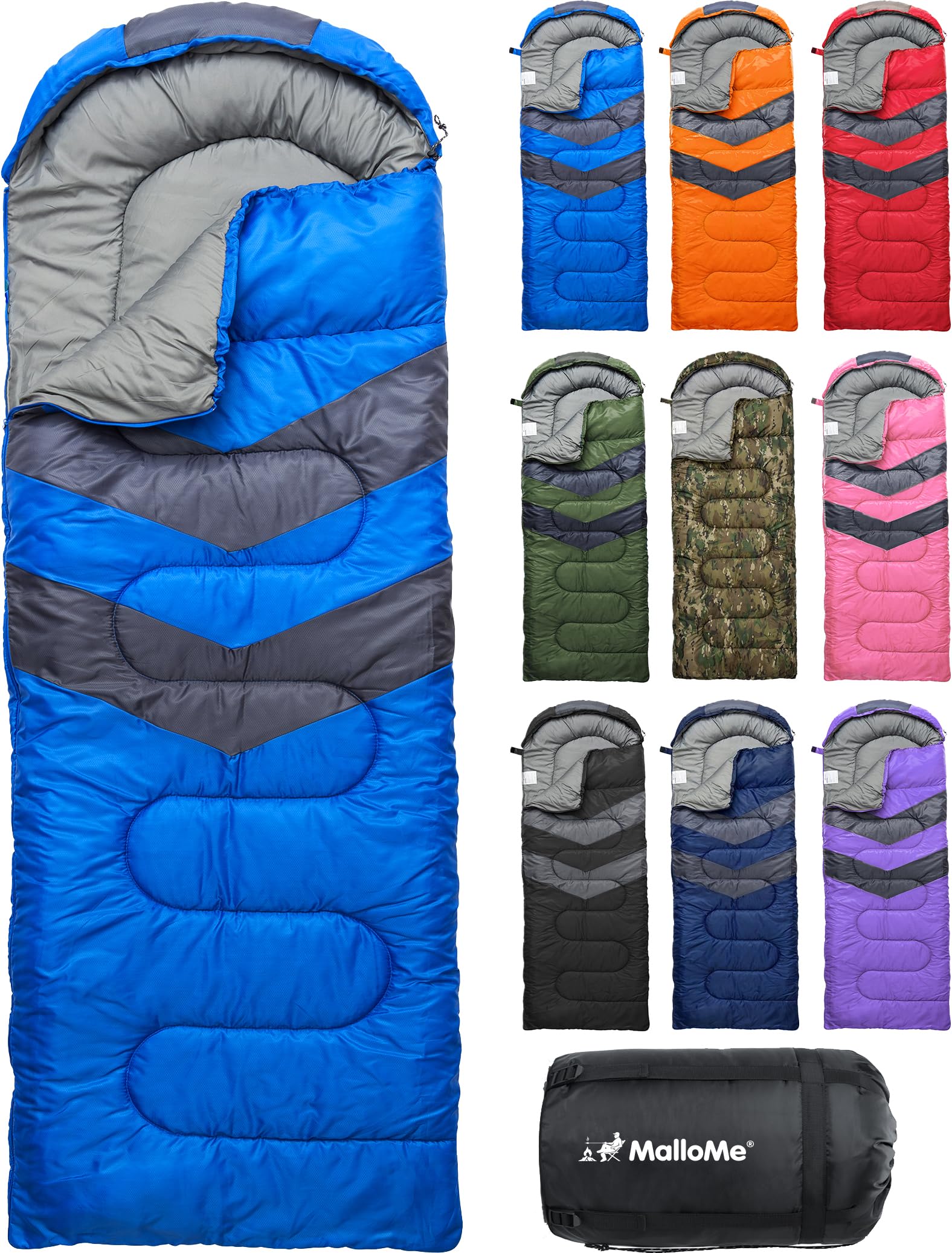
MalloMe Sleeping Bag

91 /100
Traveler Score Outstanding

Key details

Weight
2.87 lb
Dimensions
86.6 x 31.5 in
Temperature Rating
50°F to 80°F
Check Details on Amazon

Fifty to eighty degrees is the band MalloMe builds this bag for, and once you accept that, it makes a lot of sense for summer car camping. The 86.6-by-31.5-inch cut fits most adults to about six feet, the polyester shell wipes clean with a damp cloth, and at 1.3 kilograms it is the sort of bag you can leave in the trunk all season without thinking about it.

It goes back in the sack without a fight. That sounds like faint praise until you have spent ten minutes wrestling a synthetic bag into a compression sack in the rain; this one rolls and stuffs easily, the carry bag has enough slack to work with you rather than against you, and the shell wipes down after a weekend on the tent floor.

Where it stops is warmth. Fifty degrees is a real floor rather than a conservative one, and a cool June night at altitude will find it — below that you are layering fleece inside the bag, which defeats the point of a bag this light. Between June and August at low elevation, though, it does everything a car camper needs, and a bag this light is the one that actually stays in the car.

Pros

  • Packs and stuffs without a fight
  • Light enough to leave in the trunk
  • Inexpensive enough to buy as a spare

Cons

  • Narrow 31.5-inch cut for broad sleepers
  • Zipper can give out under steady use
Our verdict

A light, inexpensive summer bag that packs down small: right for warm-weather car camping and guest rooms, and out of its depth once nights fall toward 50°F.

Check Latest Price
6

Budget Two-Person

oaskys Double Sleeping Bag

90 /100
Traveler Score Outstanding

Key details

Weight
6.68 lb
Occupancy
2 person
Dimensions
86.6 x 59 in
Configuration
Queen or two singles
Check Details on Amazon

Unzip the oaskys and you get two single bags; leave it zipped and it is an 86.6-by-59-inch queen. That flexibility is why it is on this list — a double that splits is the difference between one bag that comes out twice a summer and two bags that earn their space all season.

It is light for a double at just over three kilograms, and the 210T polyester shell is weather-resistant enough for a tent in a drizzle. Laid across the back of a small SUV with an air mattress underneath, it makes the kind of improvised bed car camping is really about.

Both long sides carry their own zip, so each sleeper can get out without disturbing the other, and the split means one half can go on a kid's bed while the other stays in the car. The shell and fill are lighter than the Kelty's, and you can feel the difference in loft when you shake it out.

The two included pillows are the giveaway: small, thinly stuffed, and the first thing most people will leave at home. Judge the bag on the fabric and the zip and it holds up — a sensible, inexpensive way to sleep two people in mild weather without dedicating a duffel to it.

Pros

  • Converts from queen to two singles
  • Zips on both long sides
  • Light for a two-person bag

Cons

  • Included pillows are too small to use
  • Not a shoulder-season bag despite the all-season label
Our verdict

A budget double that unzips into two singles: a practical choice for couples or a parent and kid sharing a tent on mild-weather trips.

Check Latest Price
7

Mild Weekends

Sportneer Sleeping Bag

91 /100
Traveler Score Outstanding

Key details

Weight
3.31 lb
Bottom Zip
Two-way separating
Dimensions
87 x 31.5 in
Temperature Rating
32 to 80°F
Check Details on Amazon

Thirty-one and a half inches is narrow, and it is the first thing to know about the Sportneer: broad shoulders or a habit of turning over will feel it by morning. Sleep on your back and stay inside it, and the rest of the package is more bag than the price suggests.

The temperature claim is ambitious for the bracket. The listing puts it at 32 to 80°F, a wider spread than most bags here promise, and the build — 190T polyester taffeta shell, polyester pongee lining, hollow fill — is the standard recipe for a light three-season bag. The hood cinches down with a drawstring, and a two-way separating zip at the bottom lets your feet out.

That foot zip is the feature we appreciate most. Leaving your feet out is how you stretch a three-season bag into September, and it isn't a detail you expect at the budget end. Pair it with a pad and it handles a chilly spring weekend; push it into a hard frost and the thin fill runs out of ideas. The drawstring hood earns its keep too on a night that turns colder than forecast.

Pros

  • Two-way separating zip at the foot
  • Hood cinches down with a drawstring
  • Wide 32-to-80°F claimed range

Cons

  • One-year warranty is the shortest here
  • Thin 190T shell needs care around the zip
Our verdict

A budget three-season bag with a foot vent and a hood that cinches: good value for mild car-camping weekends if the 31.5-inch cut suits your shoulders.

Check Latest Price

How We Tested the Best Car Camping Sleeping Bags

We started by pulling together every bag that made sense for car camping rather than backpacking — which meant we weren't chasing the absolute lightest option, but we did cut anything that packed down too bulky for a shared trunk or felt cramped for an average-size adult. We filtered by temperature rating, fill type, shape, and price, then narrowed the field to 12 bags that spanned budget picks, three-season workhorses, and a couple of cold-weather options.

Each bag came on at least two nights of real trips: state park campgrounds, a rainy weekend, and a few driveway sleepouts when we wanted to compare two bags side by side. We noted where we felt cold first — usually shoulders and hips — whether the hood stayed put when we rolled over, and whether the bag was wide enough that we weren't waking up just to change position. We also laid every bag next to a standard sleeping pad to see if the pad straps lined up or if we'd slide off by morning.

Zippers got their own attention: we unzipped and rezipped each bag in the dark, without looking, to see how often fabric caught in the teeth and whether the pull was easy to find by feel. We stuffed each bag into its included sack and timed it, weighed them on a luggage scale, and slid a camp pillow into every hood to see whether it stayed in place or shot out at 3 a.m. After washing each bag per its instructions, we checked how much loft came back.

How to Choose Car Camping Sleeping Bags

Temperature Ratings Are a Starting Point, Not a Promise

Most bags list one number, and that figure sits somewhere between the temperature you'll sleep comfortably at and the one you'd merely survive. A 20°F bag is not cozy at 20°F in a t-shirt; it's a bag you can take there. Season labels are looser still — 'three season' covers everything from a summer bag like the MalloMe, rated 50 to 80°F, to the Coleman at 10°F.

Pick a rating roughly ten degrees below the coldest night you expect, then assume a base layer at the bottom of the range. Car camping makes this forgiving: you can add a blanket and a warmer pad, which is the cheapest warmth you will ever buy.

Width and Length Decide How You'll Actually Sleep

Widths here run from 31.5 inches to 40, and that spread is the difference between a bag you tolerate and one you sleep in. Average builds sleep fine in a standard cut. Anyone broad-shouldered, over about 6 feet 2, or prone to turning over should start at 39 or 40 inches wide and 84 inches long.

Watch the labels, because they describe different things from one listing to the next: Teton's XXL is 90 by 39 inches, Coleman's Big & Tall is 84 by 40. Check both numbers rather than the name. Two people sharing one bag want 59 to 64 inches of shoulder room.

The Zipper Is Where Bags Fail

Spend any time around well-used sleeping bags and the complaint is almost always the zip: it catches the lining, it separates behind the slider, or it gives out at the foot where the stress is highest.

Three things are worth checking. A draft tube behind the zip blocks air coming through the stitch line. A snag guard or stiffened tape keeps the slider out of the fabric. And a zip that separates fully around the foot turns the bag into a quilt for warm nights, while a bottom-only two-way zip just vents your feet. If you plan to join two singles, their zips also need to be on opposite sides.

Packing, Drying, and Storage

Bulk is the tax on warmth. A cotton-shell, flannel-lined bag like the Coleman is the coziest thing here and also the largest rolled up; a compression sack helps, but nothing makes a nine-pound bag small. Synthetics keep their loft when damp, which is why nearly every bag on this list uses them, though a cotton shell needs a proper airing before it goes back in the sack.

Dry a bag fully before storage, keep it loose rather than compressed, and put it away somewhere dry. A bag stored damp comes out smelling of the tent floor.

Frequently Asked Questions

Final Verdict

Buy the Coleman Heritage Big & Tall. Car camping is the one kind of camping where the heaviest bag in the group is also the best one: it has the fill to hold a cold night, the width to let you sleep, and the zipper that won't be the reason you're shopping again next spring.

If two of you share a tent, the Kelty Tru.Comfort Doublewide is the better buy — it costs more, but it solves the hot-sleeper/cold-sleeper problem instead of starting it. And if you're tall, sleep cold, and are working to a budget, the Teton Celsius XXL gets you most of the Coleman's warmth for less.