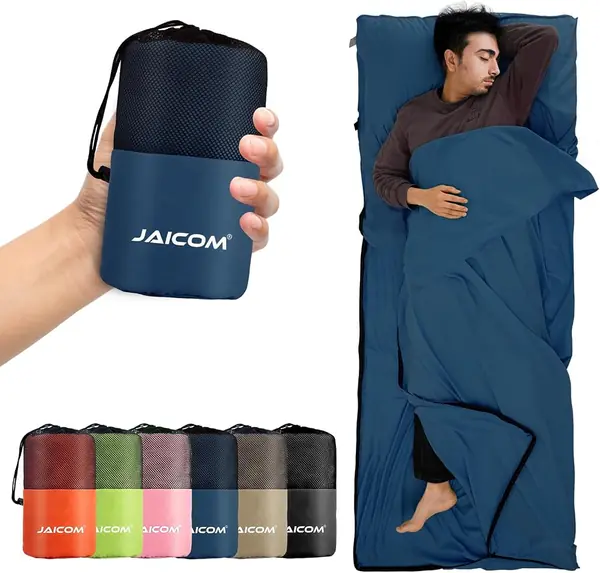
Best Sleeping Bag Liners of 2026

A sleeping bag liner looks like a simple sheet with a job, but it's doing three at once: protecting your bag from sweat and grime, adding warmth when the forecast runs cold, and giving you a clean barrier on a hotel or hostel bed. The catch is that no single liner does all three equally well. Fleece leans warm and cozy, ultralight polyester leans packable, and a zipper can make or break the whole experience.

Over six months, we tested 14 liners—fleece, microfiber, and lightweight polyester—on campsites, in hostel bunks, and on hotel beds. I cared about softness, weight, and packed size, because every ounce counts. Spaciousness mattered too: some cut wide enough to turn over in, while others wrapped tight enough to feel like a swaddle. Zippers were the quiet differentiator; a smooth zip makes midnight bathroom trips easy, while a snag-prone one turns a simple liner into a wrestling match.

Warmth varied more than the labels suggest, and the warmest liners were rarely the lightest; the picks below are the ones that balanced those tradeoffs without a zipper that quit early or a stuff sack that split.

The Best Sleeping Bag Liners

1

Friendly Swede Sleeping Bag Liner Best Overall
91 /100
Traveler Score Outstanding

Key details

Closure
Full-length side zipper
Dimensions
86 x 41 in
Weight
9.17 oz (260 g)
Packed Size
6 x 8 in
Check Details on Amazon

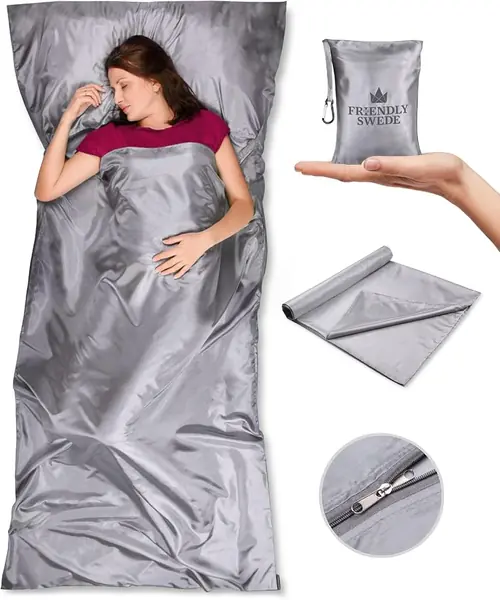
Forty-one inches across is the first thing we check on a travel sheet, and it is the reason this one kept coming back out of the bag. Most liners here run 35 or 36 inches wide, which is fine until you turn over and the fabric follows you. The Friendly Swede is cut wide enough to roll without hauling the whole sheet along, and the silky polyester slides rather than grabs.

At 9.17 ounces it is the lightest liner in this group, and it stuffs into a 6-by-8-inch sack about the size of a grapefruit. The zip runs the full length of one side, which matters more than it sounds like it does: you can step out at 3 a.m. without unrolling anything. There is a pillow pocket at the head, a 220-centimeter height limit that covers most adults, and three sizes if you want a shorter or longer cut. It is machine washable and carries a two-year warranty.

We recommend this one first because it does both jobs without drama. It is a barrier between you and a mattress of unknown history, which is why most people buy a liner at all, and it takes the edge off a cool room without turning into a heat trap you have to climb out of. Nothing about it is fussy, and at this price the only thing you give up is fleece-level warmth.

What it is not is breathable. Smooth polyester like this holds warmth, and on a muggy night you will end up with the zip open and a leg out. We take that trade for a sheet that packs to the size of a fist, but if you run hot, the JAICOM's thinner weave is the better call.

Pros

  • Roomy 41-inch cut for restless sleepers
  • Lightest liner here at 9.17 ounces
  • Full-length zip for night exits
  • Pillow pocket covers the hotel pillow

Cons

  • Silky shell slides around inside a sleeping bag
Our verdict

We recommend it first because it is roomy, light, and zipped the whole way down, which is what most travelers actually need from a liner.
Check Latest Price
2

Litume Fleece Mummy Liner Best for Cold Weather

90 /100
Traveler Score Outstanding

Key details

Closure
Drawstring, no zipper
Dimensions
85 x 32 in
Weight
1.12 lb
Stated Warmth
27°F / 15°C
Check Details on Amazon

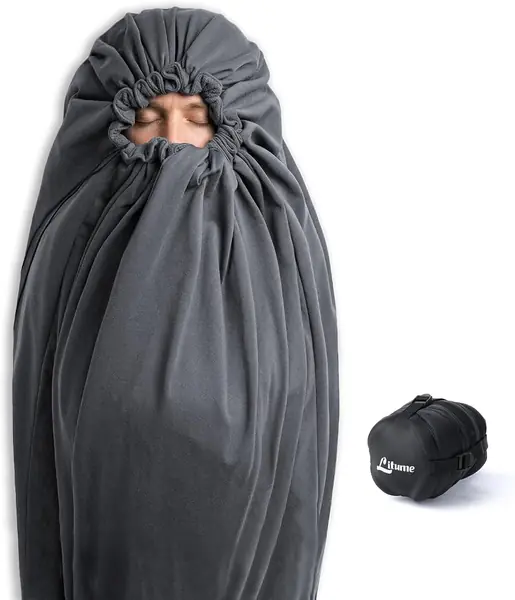
Litume prints 27°F on the label, and we treat a figure like that as a ceiling rather than a promise. It is still the largest stated warmth gain here, and the design backs it up: a thick fleece mummy with a drawstring hood that closes the gap your sleeping bag leaves around your shoulders, which is exactly where the cold gets in.

The fleece is plush rather than slick, closer to a blanket than a sheet, and 85 by 32 inches with a 7-foot height limit fits adults without feeling baggy. It compresses down, so it is fine in a duffel or a car. It is machine washable, which is most of the point of owning a liner at all.

The catch is the entry. There is no zip, so you get in through the top and wriggle down, and at 2 a.m. in the dark that is a chore; we found the mummy cut genuinely confining when we were tired and fumbling. That same missing zip is why it is warm, with no draft running down the side. Sleep through the night and it is the biggest warmth jump in this group; get up twice and a zipped sheet will make you happier.

Pros

  • Largest stated warmth gain here
  • Fleece hood seals drafts at the shoulders
  • Fits sleepers up to 7 feet
  • Machine washable

Cons

  • 510 g is heavy for backpacking
  • 45-day warranty is the shortest here
Our verdict

Buy this one if you sleep cold and want the biggest warmth jump here, and accept that there is no zip to help you in.

Check Latest Price
3

REDCAMP Fleece Sleeping Bag Liner Best for Couples

89 /100
Traveler Score Excellent

Key details

Closure
Full-length zipper
Dimensions
75 x 32 in
Weight
1.76 lb (0.8 kg)
Zip-Together
Two liners form a double
Check Details on Amazon

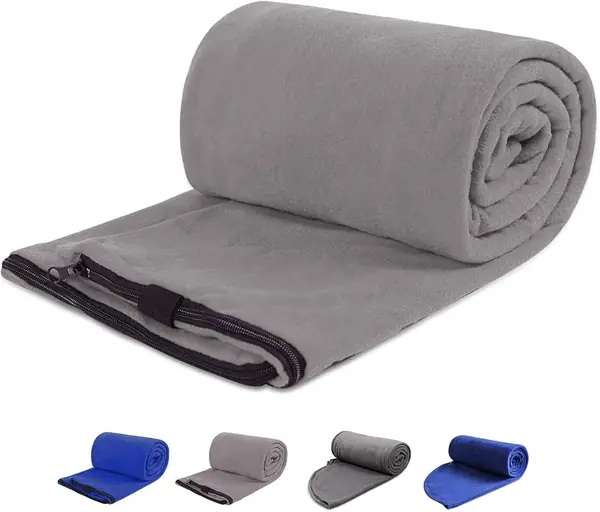
Two of these zip into one double. That is the whole argument for the REDCAMP: buy a pair and you have a roughly 64-inch-wide fleece liner for two, and on solo trips you have an ordinary 75-by-32-inch one.

Polar fleece at 1.76 pounds is the wrong liner for a backpacking trip and the right one for a van, a cabin, or a tent you drive to. We liked it opened flat as a blanket as much as we liked it as a liner, and the full-length zip is what makes that possible. It is also the least expensive fleece here, which buys a lot of warmth for the money.

It is also the piece that makes a three-season bag usable in October, because fleece traps warmth a thin synthetic shell lets go of. Two of them plus a couple of bags solves a cold tent for four people, and it is the only liner here that turns into a double.

Pros

  • Two liners zip into a 64-inch double
  • Full zip opens flat as a blanket
  • Least expensive fleece liner here

Cons

  • Short 75-inch cut for tall sleepers
  • Fleece packs bulkier than a sheet
Our verdict

The one to buy in pairs, since two zip into a double, and the cheapest way to add fleece warmth to a cold tent.

Check Latest Price
4

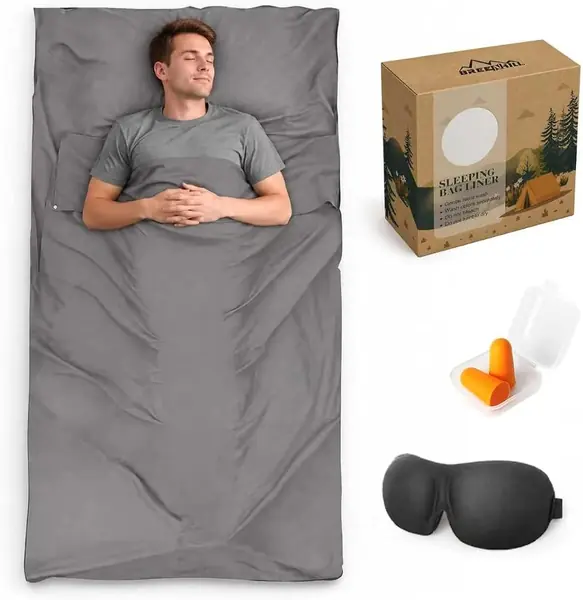
BREENHILL Sleeping Bag Liner Best Wide Cut

88 /100
Traveler Score Excellent

Key details

Closure
Buckle top, side opening
Dimensions
82.6 x 45.2 in
Weight
1.2 lb
Foot Vent
Hidden bottom zipper
Check Details on Amazon

The closure takes a minute to sort out. There is a buckle at the top, a side seam that opens only partway, and a hidden zipper at the foot for ventilation, with no full-length zip anywhere. In practice you undo the buckle, slip in through the side, and leave the foot zipped or open depending on the night.

Once you are in, the reason to buy it is the width: 45.2 inches, four more than our top pick and a full ten more than the mummy cuts here. That is enough fabric to roll over without dragging the sheet with you, and the sanded polyester feels closer to a brushed bedsheet than the slick finish on the Friendly Swede. The pillow sleeve covers the hotel pillow, and the bottom vent earns its keep when a dorm room runs hot.

It is the roomiest single-width liner in this group and one of the least expensive, a combination worth taking seriously for a side sleeper or anyone who hates feeling pinned. If you get up twice a night, a full-length zip is worth the upgrade, and the Friendly Swede is the one to look at.

Pros

  • Widest single cut here at 45.2 inches
  • Foot zip vents warm nights
  • Sanded polyester feels like a bedsheet

Cons

  • 1.2 lb is heavy for a travel sheet
Our verdict

The pick for side sleepers and anyone who feels pinned in a narrow liner, since 45.2 inches buys real room to turn over.

Check Latest Price
5

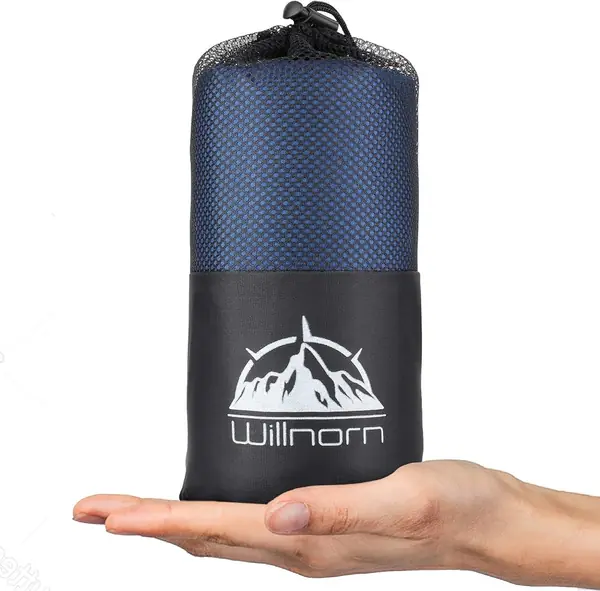
WILLNORN Sleeping Bag Liner Best Budget

87 /100
Traveler Score Excellent

Key details

Closure
Full-length zipper
Dimensions
86.5 x 37.3 in
Weight
1.1 lb
Opens To
86.5 x 74.5 in
Check Details on Amazon

This is the least expensive liner in the group, and it is the one we hand to someone who is not sure a liner is for them. At 86.5 by 37.3 inches it is long enough for tall sleepers, and the full-length zip means you are not committing to a cocoon, since you can lie on top of it or half in.

The trick is the zip. Opened all the way, it unfolds to 86.5 by 74.5 inches, which is a double-width sheet you can spread over a bed or under a quilt. Add a pillow pocket and a packed weight of half a kilogram and it does most of what the pricier liners do.

The zipper is where the savings show. It is thin and it can split if you yank it, so open it fully before you get in and it behaves. Packed, it is bulkier than the compact framing suggests, so do not count on it disappearing into a daypack.

Pros

  • Least expensive liner in this group
  • Unzips into a 74.5-inch-wide sheet
  • 86.5 inches long for tall sleepers

Cons

  • Packs bulkier than the compact framing suggests
Our verdict

The cheapest way to find out whether you like sleeping in a liner, and the only one here that unfolds into a wide sheet.

Check Latest Price
6

Sea to Summit Reactor Liner Backpacking in Cold

86 /100
Traveler Score Excellent

Key details

Closure
Drawcord footbox
Dimensions
85 x 31.5 in
Weight
13.4 oz
Insulation
Thermolite Pro
Check Details on Amazon

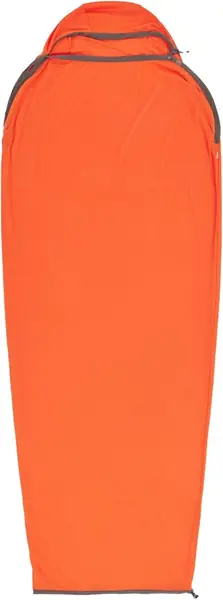
Three hundred and eighty grams is barely more than a T-shirt, and the Reactor still claims a real warmth boost. That ratio is the entire pitch of Thermolite, and it is the reason this liner costs what it does.

The construction is where the money goes. Thermolite Pro knits hollow-core fibers and adds infrared-reflecting ceramic pigments, which send body heat back at you instead of letting it drift away; the shape is a mummy with a drawcord footbox you can open when your feet overheat. It is 85 inches long, 31.5 inches wide, and rated for sleepers up to about seven feet.

It is not a travel sheet and it is not trying to be. There is no zip, so you slide in from the top, and the fabric is warmer than you want in a budget hotel room in July. What it is, is the layer that takes a 30-degree bag somewhere colder without adding a pound of down.

For cold-weather backpacking, nothing else here matches warmth to weight this closely: a three-season bag plus this liner covers most of what a colder bag would, at a fraction of the bulk. That is the case for it, and it is a strong one if you are counting ounces rather than dollars.

Pros

  • Warm for its 380-gram weight
  • Drawcord footbox vents hot feet
  • Packs smaller than any fleece liner here

Cons

  • Narrow 31.5-inch mummy cut
  • Premium price for a thin layer
Our verdict

A specialist buy for cold-weather backpackers who count ounces and will trade width and money for warmth.

Check Latest Price
7

Snugpak Fleece Liner with Side Zip Best for Tall Cold Sleepers

85 /100
Traveler Score Excellent

Key details

Closure
Full-length side zip
Dimensions
94 x 30 in
Hood
Adjustable drawcord
Material
Polyester fleece
Check Details on Amazon

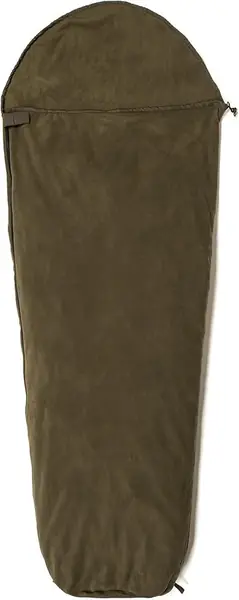
Ninety-four inches is the number that puts the Snugpak in a category of one here. That is nearly eight feet of fleece, so a 6-foot-5 camper gets a liner that does not pull at the shoulders or jam their toes into a seam halfway down.

The rest is old-fashioned in a good way: a full-length side zip that opens the whole thing flat, knitted polyester fleece brushed and sheared into a plush finish, and an adjustable hood with a drawcord. We used it as a bag booster on a cold night and as a plain blanket on a milder one, and it did both without complaint. The hood is the detail we appreciated most, since it is what stops a draft running down your neck at four in the morning.

That length is the whole case for it, and the price is what a niche costs. Under six feet, the REDCAMP does the same job for a fraction of the money and packs smaller. At 6-foot-4 and cold, though, nothing else here fits you, and the extra spend stops mattering.

Pros

  • 94-inch length suits very tall sleepers
  • Full-length side zip opens it flat
  • Fleece hood seals the neck

Cons

  • Narrowest cut here at 30 inches
Our verdict

Worth the spend only if you are unusually tall and cold, because nothing else here gives you this much length in fleece.

Check Latest Price
8

JAICOM Sleeping Bag Liner Best for Hot Rooms

84 /100
Traveler Score Excellent

Key details

Closure
Full-length zipper
Dimensions
86.6 x 35.4 in
Weight
1.2 lb
Packed Size
7.8 x 3.9 in
Check Details on Amazon

At 1.2 pounds this is not the ultralight liner the billing implies, and the Friendly Swede does the same job at less than half the weight. What you are buying instead is fabric.

The shell is a thin polyester with a mesh-like weave that feels like a hotel bedsheet: no sheen, no slip, and noticeably less clammy than the slicker liners here. It is 86.6 by 35.4 inches with a full-length zip, a pillow compartment sewn to the back so the pillow stays under your head rather than sliding off it, and a packed size of 7.8 by 3.9 inches.

The zip is the pleasant surprise. It runs cleanly the whole way, does not snag on the fabric, and makes a middle-of-the-night exit a two-second job rather than a wrestling match, which is not a given at this price.

Where it lands for us is the hot-sleeper slot: a sleep sack for warm hostels, summer trains, and anyone who finds fleece unbearable. It is the one we reach for when the room is stuffy, and the extra weight is the price of a fabric that does not turn into a sauna.

Pros

  • Breathable weave suits warm rooms
  • Full-length zip runs without snagging
  • Pillow compartment keeps the pillow put

Cons

  • Adds almost no warmth on cold nights
Our verdict

Buy it for a hot room or a summer trip, where its breathable bedsheet weave beats lighter liners that trap heat.

Check Latest Price

How We Tested Sleeping Bag Liners

We started by pulling together sleeping bag liners from outdoor brands, travel-gear makers, and larger online listings, then narrowed the field by fabric, cut, zipper style, packed size, and price tier. We looked for a mix of fleece, microfiber, and ultralight polyester, plus mummy and rectangular shapes, because the same liner that feels great in a hostel bunk may be miserable inside a snug backpacking bag. The final field was 14 liners, tested over six months.

I slept in each liner inside a mummy bag on cool spring and fall campsite nights, used others as standalone sheets on hotel and hostel beds, and packed them into stuff sacks for weekend trips and a few backpacking overnights. I weighed each liner on a kitchen scale and noted how small it compressed in its sack, then slept in it enough nights to judge whether the fabric felt soft or slick against my skin and whether it turned clammy by morning. On cold nights, I noted whether the liner added noticeable warmth or just a thin barrier. To check spaciousness, I rolled from side to side and sat up inside each one; some let me move freely, while others twisted around my legs.

Zippers got their own abuse test. I ran each zipper from end to end at least a dozen times, tugged the pull from different angles, and tried getting in and out in low light as if I were in a tent at midnight. I noted snags, catches, split seams, and pulls that felt flimsy, then washed each liner according to its care label and checked again for pilling, fraying, and zipper trouble. The liners that made the list were the ones that stayed soft, packed down without fighting back, and let me move—and get out—without a wrestling match.

How to Choose a Sleeping Bag Liner

Warmth or barrier?

Most people buy a liner for one of two reasons, and the answer changes everything else. If you want to cover a hotel or hostel mattress, a thin polyester travel sheet is enough: it packs to the size of a fist and weighs under ten ounces. If you are trying to sleep warmer, fleece or an insulated synthetic is the way, and those liners run 380 to 800 grams.

Treat any printed warmth number as a best case measured against a particular bag. The largest claim in this group, 27°F, is a ceiling rather than a guarantee, and a liner with no number at all can still beat it inside the right bag.

Fit: length and width first

A liner that is too narrow wakes you up. The rectangular cuts here run from 30 to 45 inches wide; the wider ones let you roll without hauling the fabric with you, and they are what side sleepers should buy. Length matters just as much: 75 inches is the shortest cut in this group and suits sleepers up to about 6-foot-2, while 86 to 94 inches covers almost everyone.

Mummy liners trade width for efficiency inside a mummy bag. Put a 31-inch mummy liner in a rectangular bag and it will twist all night, which is a fit problem rather than a product fault.

Closure and getting in and out

Full-length zips are the easiest to live with, especially if you get up in the night: you step in and out rather than wriggling through an opening. Side slits and buckles are lighter and cheaper but slower, and the two-step entry takes practice in the dark.

Liners with no closure at all, the fleece mummies, are the warmest because there is no drafty zip running down the side, and the most awkward to enter. If you are deciding between two liners on paper, pick the one whose closure matches how often you actually get up.

Fabric feel and breathability

Polyester comes in two flavors worth knowing. Slick, tightly woven versions feel cool at first touch and slide easily, but they do not breathe, so expect to sleep with the zip open in a warm room. Sanded or brushed polyester feels like a bedsheet and is more forgiving against bare skin.

Fleece is the warmest and the least breathable of the lot. If you routinely wake up clammy, look at the thinner, mesh-like weaves and save fleece for genuinely cold trips.

Weight, washing, and packing

Every liner here is machine washable, and that is the point of owning one: you wash the liner instead of the bag, and you stop trusting a hotel's laundry. Wash it after every trip and follow the dry instructions, because polyester dries fast and fleece takes most of a day.

On weight, 260 grams disappears into a carry-on while 800 grams is a deliberate choice for cold trips. Judge the packed size against your bag rather than the liner's own stuff sack, which is usually a tight fit.

Frequently Asked Questions

Final Verdict

The Friendly Swede is the liner we point most people to: 41 inches of silky polyester, nine ounces in the bag, a full-length zip, and a price that does not sting. It handles a strange mattress and a cool room without being the best at either extreme, which is exactly what a default should do.

Sleep cold and the Litume fleece mummy is the warmer buy, accepting that you wriggle in through the top. Sleep hot and the JAICOM's breathable weave is the one. And if you are shopping for two, a pair of REDCAMPs zips into a double for less than one premium liner.