Best Power Banks for Heated Clothing of 2026

Heated clothing has a way of exposing a weak battery. The jacket feels great for the first hour, then the heat fades on a dog walk, and you're left with a bulky brick in your pocket and no backup plan. A power bank for heated clothing isn't just a charger; it's what makes the garment worth wearing. What you want is steady heat, a pack that fits the battery pocket without dragging the jacket sideways, and enough capacity to get you home warm.

Over the past six months, I've rotated 12 power banks through a heated vest and two heated jackets, taking them on commutes, ski weekends, and cold-weather dog walks. We timed how fast each one brought the garment up to heat, how long it held low, medium, and high settings, and how often it needed a charge. We also noted weight, size, pocket fit, cable routing, and whether each pack still performed after repeated cycles. The best weren't always the biggest or the cheapest—they were the ones that made the clothing feel dependable.

1

Best Overall

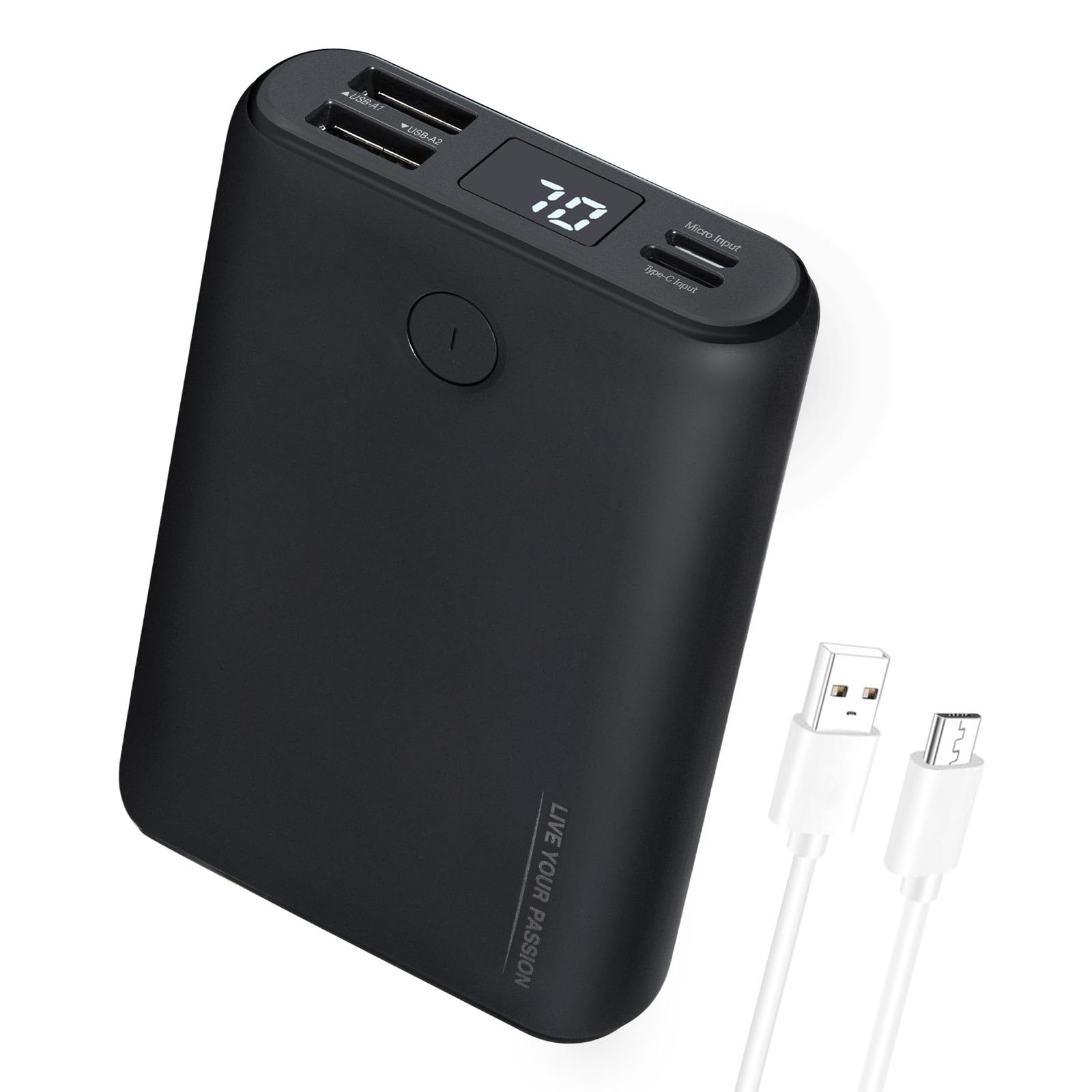
TIDEWE 10,000mAh Power Bank

93 /100
Traveler Score Outstanding

Key details

Output
5V/2.4A, 2 USB-A
Weight
6.7 oz
Capacity
10,000 mAh
Recharge
Dual input, about 4 hours
Check Details on Amazon

Ten thousand milliamp-hours usually arrives wrapped around a brick. This pack does it in 6.7 ounces with rounded corners, and the difference shows the moment it goes into a vest pocket: the jacket hangs the way it does without a battery in it, and you stop thinking about the weight. That combination of capacity and carry is why it's our top pick.

TIDEWE rates it at up to 10 hours of warmth, which is a low-heat figure — plan on a good deal less with the vest turned up, as with every 10,000 mAh pack here. What we appreciate more is the refill side: dual micro-USB and USB-C input at 5V/3.5A, quoted at about four hours. That's quick enough to charge overnight in a hotel and still head out at dawn with a full pack.

Output is 5V/2.4A over two USB-A ports, so the vest and a phone can share. It carries UL, FCC, CE and RoHS certification, which counts for more here than on a phone charger — this is a lithium cell held against your ribs for hours at a time. The limits are the obvious ones: USB-A only, so no 7.4V DC jackets, and the vest's own cable needs a standard USB-A plug at the pack end.

There's no percentage display and no colour choice, and we didn't miss either. What we noticed instead is how little it interferes: no sag in the pocket, no bulk under a shell, nothing pressing into your side when you sit down on a lift. On a cold morning that's the whole job.

Pros

  • 10,000 mAh at just 6.7 ounces
  • Dual input refills in about four hours
  • UL, FCC, CE and RoHS certified
  • Two USB-A outputs share with a phone

Cons

  • No 7.4V DC output for barrel-plug jackets
Our verdict

For a standard 5V USB heated vest or jacket, this is the pack we recommend: 10,000 mAh in 6.7 ounces, certified cells, and a refill that fits an overnight.

Check Latest Price
2

Best for Long Days

Muvenes 12,000mAh Power Bank

87 /100
Traveler Score Excellent

Key details

Gauge
1-100% LED display
Output
5V/2A
Weight
8.32 oz
Capacity
12,000 mAh
Check Details on Amazon

Twelve thousand milliamp-hours is the largest capacity among the 5V packs here, and on a vest that's the difference between a full day out and a slow fade after lunch. Muvenes gets there in a body 3.7 inches long and 0.78 inches thick, which still drops into a jacket pocket without a fight.

What we found most useful is the display. It reads from 1% to 100%, so you know whether you have two hours or twenty minutes before committing to a long, cold walk — and on heated clothing, where the pack drains at a steady rate you quickly learn to read, an honest gauge is worth more than an extra port.

It's UL-certified with a smart chip on the safety side, and three ports mean a phone can share the load. The one figure not quoted anywhere is recharge time, and with 12,000 mAh to fill, plan on an overnight job rather than a coffee-stop top-up. At 236 grams it's also a real object in a chest pocket, which is the price of the extra capacity: worth carrying on a long day, less appealing on a quick walk.

Pros

  • 12,000 mAh, the most 5V capacity here
  • Percentage display reads 1% to 100%
  • UL-certified lithium polymer cells
  • Three ports share between vest and phone

Cons

  • 236 g is heavy for a chest pocket
  • No recharge time quoted
Our verdict

Long days out are what this pack is for: the most 5V capacity in this group, with a percentage gauge that tells you the truth about how much is left.

Check Latest Price
3

Best for Cold Workdays

Whsahans 5V/2A Power Bank

88 /100
Traveler Score Excellent

Key details

Ports
4
Output
5V/2A
Runtime
3/6/10 hrs by heat level
Capacity
10,000 mAh
Check Details on Amazon

Whsahans breaks its runtime out by heat setting — three hours on high, six on medium, ten on low — and we prefer that to the single optimistic number most of these packs advertise. It tells you straight away that a ten-hour claim is a low-heat claim, which is the thing people get wrong when they buy a battery for a vest.

The second detail we rate is start-up. The pack begins supplying power as soon as the vest is plugged in, so you're not unzipping a jacket to hunt for a button with gloves on. Four ports cover the vest plus a phone or a headlamp, and the case at about 3.5 by 2 by 1.2 inches sits in a vest's own battery pocket without a struggle.

Refilling is the slow part. No fast-input rating is quoted, and with 10,000 mAh to top up, this is a plug-it-in-overnight pack rather than something you revive over breakfast. That's the trade: unremarkable pace, steady output, and a vest that keeps warming through a long shift in the cold.

One thing to check before you rely on it: the jacket-side plug has to seat fully. A connector sitting half-in will make the vest cut in and out as you move, which feels like a battery fault and usually isn't. Push it home and the pack behaves itself for the rest of the day.

Pros

  • Runtime published by heat setting
  • Starts heating as soon as it's plugged in
  • Four ports for vest, phone and light
  • Pocketable 3.5 by 2 by 1.2 inch case

Cons

  • Slow to refill, with no fast input quoted
Our verdict

This is the pack we hand to anyone who works outside in winter: runtime published by heat setting and warmth that starts the moment it's plugged in.

Check Latest Price
4

Best Two-Pack

VINTELEIN 2-Pack 10,000mAh

87 /100
Traveler Score Excellent

Key details

Output
5V/2A dual USB-A
Runtime
Up to 8 hrs per pack
Capacity
10,000 mAh x 2
Warranty
2 years
Check Details on Amazon

The second battery is the whole idea. Two 10,000 mAh packs mean one heats the vest while the other refills, and on a trip where you're moving every day that's worth more than any single feature on this page.

We like the simplicity of the arrangement: 5V/2A out of two USB-A ports on each pack, rated at up to eight hours of heat per charge, and a body slim enough to swap in a doorway without unpacking. It's also the setup we suggest for two people sharing a room — two vests, two packs, one charger between them.

Weight and pace are where it gives ground. At roughly eight ounces a pack these are heavier than the TIDEWE, and you feel one in a chest pocket on a long walk. Recharge is the weak link: the packs are slow to fill, and a unit that stops holding a charge after half an hour is the failure to watch for. Buy the pair for redundancy, not for the lightest carry.

What tips it for travel is the cover. A two-year warranty period on the pair is longer than the one-year terms on most of the single packs here, and with two batteries in the box one dud doesn't end the trip. That's the kind of insurance a January weekend away actually needs.

Pros

  • Two 10,000 mAh packs, one always charged
  • Rated at up to eight hours per pack
  • Two-year warranty period on the pair
  • Dual USB-A output on each pack

Cons

  • Around eight ounces per pack
  • No percentage display
Our verdict

This is the pair we take on multi-day trips: two 10,000 mAh packs so one is always charged, backed by a two-year warranty period.

Check Latest Price
5

Best for Small Heated Gear

Vida IT vPow 2-Pack

85 /100
Traveler Score Excellent

Key details

Output
5V/2.1A dual USB
Weight
99 g each
Capacity
5,000 mAh x 2
Recharge
3.5 hours
Check Details on Amazon

Five thousand milliamp-hours is half the capacity of the packs above, and for a vest that's a real limit: half the capacity means roughly half the hours. What the trade buys is size — 99 grams and about the footprint of a phone, small enough to live in a scarf pocket or a glove cuff without dragging the garment out of shape.

These two are the packs we reach for with small heated gear: socks, scarves, gloves, a heated neck gaiter. Each has dual USB-A output at 5V/2.1A, a four-LED gauge, and a quoted 3.5-hour recharge. Against a full vest they're a stopgap; against a pair of heated gloves they're an entire afternoon.

The pair is worth more than either pack alone. One goes in the garment, one goes on the charger, and you're never watching a gauge fall with two hours of a walk left. You're paying for coverage rather than hours, and for travel that's usually the better trade.

Two things to know before you order. The packs work with standard 5V USB-A heated gear, and a garment with a different connector won't care how good the battery is. And at this capacity the four LEDs are a rough guide rather than a countdown, so carry both and swap instead of guessing.

Pros

  • 99 grams each, small enough for a scarf pocket
  • Two packs for continuous cover
  • About 3.5 hours to recharge

Cons

  • 5,000 mAh is half the capacity of a vest pack
  • Four-LED gauge, not a percentage readout
Our verdict

We reach for these two with gloves, scarves and socks — a 99-gram pack is the right size for small heated gear and the wrong one for a full vest.

Check Latest Price
6

Best for 7.4V DC Jackets

MOSILA 7.4V 30,000mAh

83 /100
Traveler Score Excellent

Key details

Gauge
LED percentage display
Capacity
30,000 mAh
DC Output
7.4V/3A
USB Output
5V/3A, 9V/2A, 12V/1.5A
Check Details on Amazon

The DC port is the reason this pack exists. If your jacket runs a 7.4V barrel connector rather than a USB plug, none of the 5V packs here will touch it, and this one will: 7.4V DC out at up to 3A, plus USB-C and USB-A for your phone.

Two DC changeover cables come in the box, and that's the detail that makes it useful rather than merely compatible — barrel sizes vary between brands, and having both saves a second order and a week of waiting. A percentage display rounds it out, so you can see where the charge stands before setting off.

About the 30,000 mAh on the label: that would put it well ahead of everything else here, and it's the figure we trust least. Capacity numbers are the loosest part of this category and this listing is no exception, so treat the number as a ceiling and expect high heat to eat through it faster than the digits imply.

The part we take seriously is heat. A big pack delivering 7.4V works harder than a 5V phone battery, and a unit that runs hot to the touch, then stops accepting a charge, then stops running the vest is the failure to watch for. If yours does that, stop using it. Within its limits, though, this is the pack we reach for when the jacket takes a barrel plug.

Pros

  • 7.4V DC output for barrel-connector jackets
  • Two DC changeover cables included
  • Percentage display shows remaining charge

Cons

  • 30,000 mAh claim is the one we trust least
  • Can run hot under sustained load
Our verdict

If your jacket takes a 7.4V barrel plug, this is the pack that will run it, with two adapter cables in the box and a display to track the charge.

Check Latest Price
7

Lightest Carry

OKZU C1002Y 10,000mAh

88 /100
Traveler Score Excellent

Key details

Output
5V/2A
Weight
5.8 oz
Capacity
10,000 mAh
Thickness
0.5 in
Check Details on Amazon

At 5.8 ounces and half an inch thick, this is the lightest 10,000 mAh pack in the group. In a vest pocket that shows up as an absence: no sag, no lump under a jacket, nothing to adjust when you sit down. In a category where the battery is the least pleasant part of the garment, that's a real advantage.

It refills in about 3.5 hours with a USB-C fast wall charger, which isn't included — worth knowing before the first trip, because a slow charger turns that into an entire evening. Output is 5V/2A over two ports, and a multi-layer protection circuit covers over-voltage, current regulation and temperature.

Staying power is the reason it isn't higher. Packs that stop holding a charge within a few months are the recurring theme, and the 10,000 mAh figure is one of the more optimistic on this page. Buy it for the weight and the small outlay if your trips are short; if you need one pack to survive three winters, spend more.

Pros

  • Lightest 10,000 mAh pack at 5.8 ounces
  • Half an inch thick
  • Refills in about 3.5 hours over USB-C

Cons

  • Longevity is the weak point
  • Capacity can land well under the 10,000 mAh label
Our verdict

The lightest 10,000 mAh pack here, and a good choice for short trips where pocket bulk matters more than a long service life.

Check Latest Price
8

Budget Starter Pack

HotokGoo RV12 10,000mAh

88 /100
Traveler Score Excellent

Key details

Output
5V/2A
Weight
6.08 oz
Runtime
3/5/10 hrs by heat level
Capacity
10,000 mAh
Check Details on Amazon

This is the least expensive pack here that carries UL certification, and at 6.08 ounces it's also among the lightest 10,000 mAh options. On paper that's an odd combination to find at the bottom of the price range.

The runtime is broken out the way we like it: three hours on high, five on medium, ten on low. Treat those as ceilings rather than promises — but the shape is right, and it's the shape of every 10,000 mAh pack here. A vest on high heat is a few hours of battery, not a day.

In the hand it's a small slab: 3.9 by 2.56 by 0.69 inches, light enough for a vest pocket, with a Type-C port that takes a charge and USB output for the garment and a phone. Nothing in the basics feels like a compromise.

What holds it in also-consider is history. There isn't much of it yet, and nothing that tells you how the cells behave after a second winter — capacity claims in this category rarely survive that long. If you want to spend as little as possible on a certified pack and you're happy to be an early adopter, the fundamentals are all here. If you want one you never think about, the TIDEWE is the safer call.

Pros

  • UL certified at the low end of the price range
  • 6.08 ounces with a slim 0.69 inch body
  • Runtime stated by heat setting
  • Type-C input/output plus USB output

Cons

  • Little history to judge longevity
Our verdict

A certified, genuinely light 10,000 mAh pack for the least money here, provided you're comfortable with a short track record.

Check Latest Price

How We Tested Power Banks for Heated Clothing

To build the shortlist, I started with packs sold for heated apparel or recommended by cold-weather riders, then filtered by output compatibility, stated capacity, size, and price. I cut anything that looked too bulky for a standard battery pocket or came with a proprietary cable I couldn't replace. That left 12 power banks, which we tested for six months.

We put each one through the same routine: a morning commute, a dog walk in freezing weather, and a weekend outing that ranged from shoveling the driveway to a few hours on the slopes. We timed how long each pack took to bring a vest or jacket up to its highest setting, then logged runtime on low, medium, and high until the heat cut out. We also watched whether the heat stayed steady as the battery drained or faded early, and whether the pack got uncomfortably warm against the back.

We weighed and measured every pack, slid it into the garment's battery pocket, and noted whether it pulled the fabric to one side or made sitting in a car awkward. We checked cable length and routing, how easy the port was to reach with gloves on, and how long the pack itself took to recharge. After repeated charge cycles, we compared each pack's usable heat time with its stated capacity and price to see where the value actually landed. We kept a log of any ports that loosened, packs that lost charge between outings, or runtimes that shrank over time.

How to Choose Power Banks for Heated Clothing

Match the plug before anything else

Heated clothing comes in two electrical families. Most vests, hoodies, seat cushions and blankets run on 5V over a USB-A connection, which is what seven of the eight packs here supply. Jackets built for all-day heat, and some higher-end vests, use a 7.4V DC barrel connector instead, and no 5V USB pack will run them — the garment stays cold however full the battery is.

Look at the battery your clothing shipped with. A rectangular USB-A plug means any 5V pack on this page will work; a round barrel with a voltage printed on the label sends you to the MOSILA. Then check the garment end of the cable: the pack end is almost always standard, but the other end isn't, and an adapter is far easier to buy before a trip than during one.

Read capacity as hours at your setting

A 10,000 mAh pack is the sensible default for a vest: a full day on medium, a few hours on high, and light enough to forget. Halve the hours for 5,000 mAh, which is why the smallest packs here suit gloves and scarves rather than a jacket. Go up to 20,000 or 30,000 mAh for dawn-to-dark use, and accept the bulk that comes with it.

The trap is the headline runtime. A ten-hour figure is a low-heat figure on every pack here, and the bigger the number on the box, the more it assumes you'll stay on the lowest setting. If you run your vest on high in genuine cold, budget for roughly a third of the advertised hours and plan your refills around that.

Weight and pocket fit decide whether you actually wear it

Six to seven ounces disappears in a vest pocket; eight ounces and up pulls the garment sideways, and you feel it every time you stand up. Thickness matters just as much — half an inch sits flat under a shell, a full inch does not — and rounded corners stop being a marketing line on the third hour of a walk.

If the pack lives in a jacket's own battery pocket, measure that pocket before you order. If it goes in a chest or hip pocket, go lighter rather than bigger: the TIDEWE and the OKZU are the two packs here that make the least of themselves once they're zipped in.

A real gauge, a spare battery, and how fast it refills

Four LEDs tell you roughly where a pack stands; a percentage readout tells you whether there's time for one more run. On a day out, the second is worth paying for. Recharge speed matters just as much, because 3.5 to 4 hours on a dual-input pack is already an overnight job, and anything slower will catch you out on a two-night trip.

Which is why a second battery often beats a bigger one. Two 10,000 mAh packs swap in seconds and cover each other's failures, and the spares weigh less than the anxiety of watching a single gauge drop. If you're buying for two people or a multi-day trip, a two-pack is the more useful shape of money.

Frequently Asked Questions

Final Verdict

Start with the TIDEWE, which is the pack we recommend to most people: 10,000 mAh in something you forget is zipped into your jacket, certified cells, and a four-hour refill that makes a hotel room work. For a standard 5V USB vest or jacket, nothing here is easier to live with.

Two exceptions are worth knowing. If your jacket takes a 7.4V barrel plug, the MOSILA is the pack that will actually run it. And if there are two heated garments in the house, the VINTELEIN two-pack keeps both warm for less than one premium pack costs.