The Best Portable Chargers for Road Trips

The moment the need shows up is never convenient: a phone at 9 percent, a gas station air pump with a dead outlet, and ninety miles before the next town. A portable charger for road trips isn't really about topping up — it's about not planning the day around an outlet, whether you're splitting a three-day drive or keeping a back seat of kids quiet. The right one keeps every phone and tablet in the car alive from driveway to destination.

I've filled a glovebox with chargers over the years, and the differences only surface once you leave the house. Over the past six months, my team and I have run 12 of them through real trips — school runs, a long weekend at the coast, one very cold early start — and the cheap-feeling ones separated from the keepers fast. One thing worth knowing: the capacity printed on the box is measured under near-perfect conditions, so a pack that promises five phone charges often delivers three. The picks below are the ones that delivered.

1

Best Overall

INIU P512

93 /100
Traveler Score Outstanding

Key details

Warranty
3 years
Max Output
22.5W
Recharge Time
5.4 hours
Battery Capacity
20,000 mAh
Check Details on Amazon

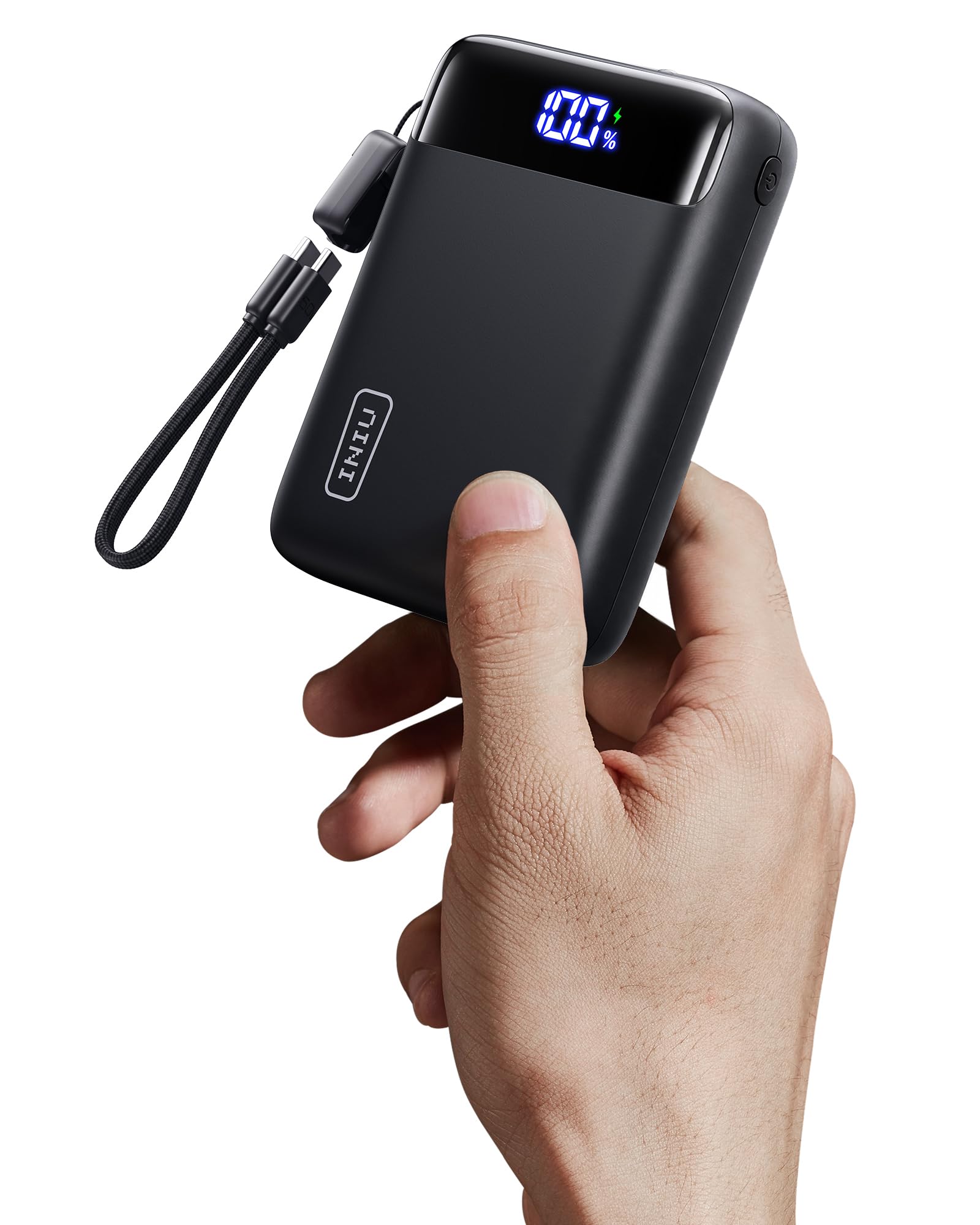
Twenty thousand milliamp-hours in a body measuring 4.1 by 2.8 by 1.1 inches is the reason this INIU is our default for road trips. It takes up about the same console space as the 10,000mAh packs here and roughly doubles the number of phone charges you can carry, which is the whole argument in one line: two phones, a tablet, and a weekend of navigation are covered.

The built-in USB-C cable doubles as a woven lanyard, and that is the detail we keep noticing. Clip it to a bag strap or a seat-back hook and it charges without a loose cord sliding into the footwell. The display gives a percentage instead of four blinking dots, so you know whether there is another full charge in reserve, and the flashlight earns its keep when something rolls under the seat. Three ports and 22.5W mean a phone gains while it runs maps rather than merely holding steady.

It is dense. Twenty thousand milliamp-hours puts real weight in your hand, noticeably more than the slim 10,000mAh packs, and that is the trade for handing a passenger a pack they can use all day without asking for another. The built-in cable is USB-C, so anyone still carrying a Lightning iPhone needs their own cord, which is worth checking before you pull out of the driveway. INIU backs the whole thing with three years.

Pros

  • 20,000mAh without a bigger footprint
  • Built-in USB-C cable doubles as a lanyard
  • Percentage display and a three-year warranty

Cons

  • Takes about 5.4 hours to refill
Our verdict

Our pick for most road trips: 20,000mAh in a pack that fits the console, a cable you cannot leave behind, and a price that undercuts the premium options.

Check Latest Price
2

Best for Laptops

Anker 20,000mAh 87W

91 /100
Traveler Score Outstanding

Key details

Max Output
87W
Recharge Time
1.5 hours
Built-in Cable
USB-C, 10,000-bend rated
Battery Capacity
20,000 mAh
Check Details on Amazon

Eighty-seven watts is a different class of power bank. The total splits across three devices with up to 65W going to a single one, which is enough to run and refill a laptop rather than just top up a phone. Anker rates the built-in USB-C cable for more than 10,000 bends, and that number matters because the cord is usually the first part of a power bank to fail.

It measures 6.2 by 2.89 by 1.02 inches and weighs 15.2 ounces, roughly a thick phone and a half. That is the tax on laptop-class output, and it is the one thing we minded when the pack went into a jacket pocket. The compensation is speed in both directions: a 20,000mAh capacity that sits comfortably inside carry-on limits, and a refill of the pack itself in about 1.5 hours, so a long lunch stop can put it back near full.

Where it earns its slot is a trip with a computer in the bag, or a mirrorless camera, or anything that wants more than 20W. For phones and earbuds alone it is more pack than you need, and our top pick handles that job in a smaller and much lighter body. The built-in cable plus one USB-C and one USB-A port also means the whole family can share it at a rest stop without a fight over outlets.

Pros

  • Charges a laptop at up to 65W
  • Refills in about 1.5 hours
  • Built-in cable rated for 10,000 bends

Cons

  • Costs several times what the phone-first packs do
Our verdict

Buy it if a laptop, camera, or drone travels with you; 87W and a 90-minute refill justify both the weight and the premium.

Check Latest Price
3

Best for Mixed Devices

VRURC T1116

90 /100
Traveler Score Outstanding

Key details

Airline Rating
37Wh
Built-in Cables
USB-C, Lightning, Micro-USB, USB-A
Battery Capacity
10,000 mAh
Simultaneous Devices
Up to 5
Check Details on Amazon

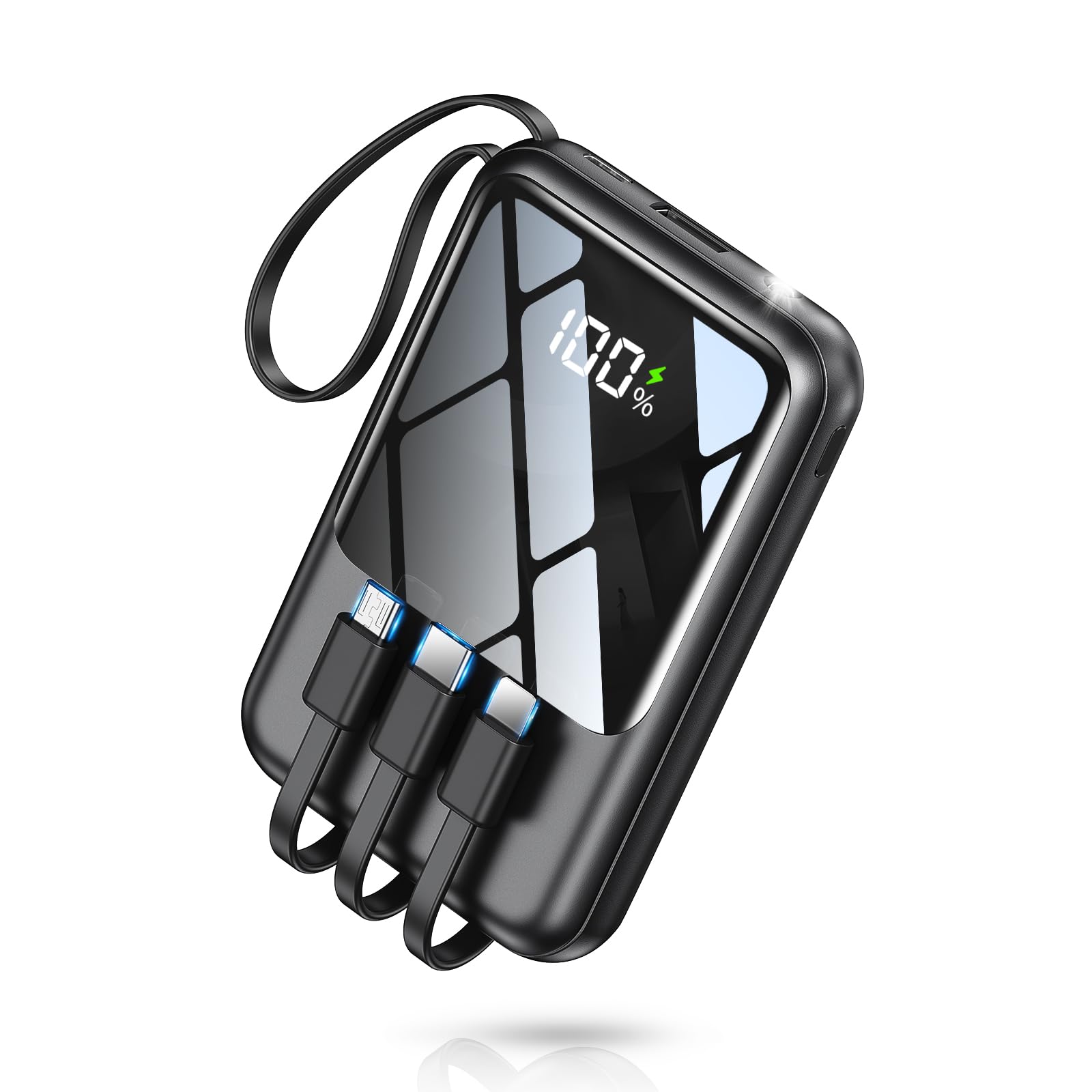
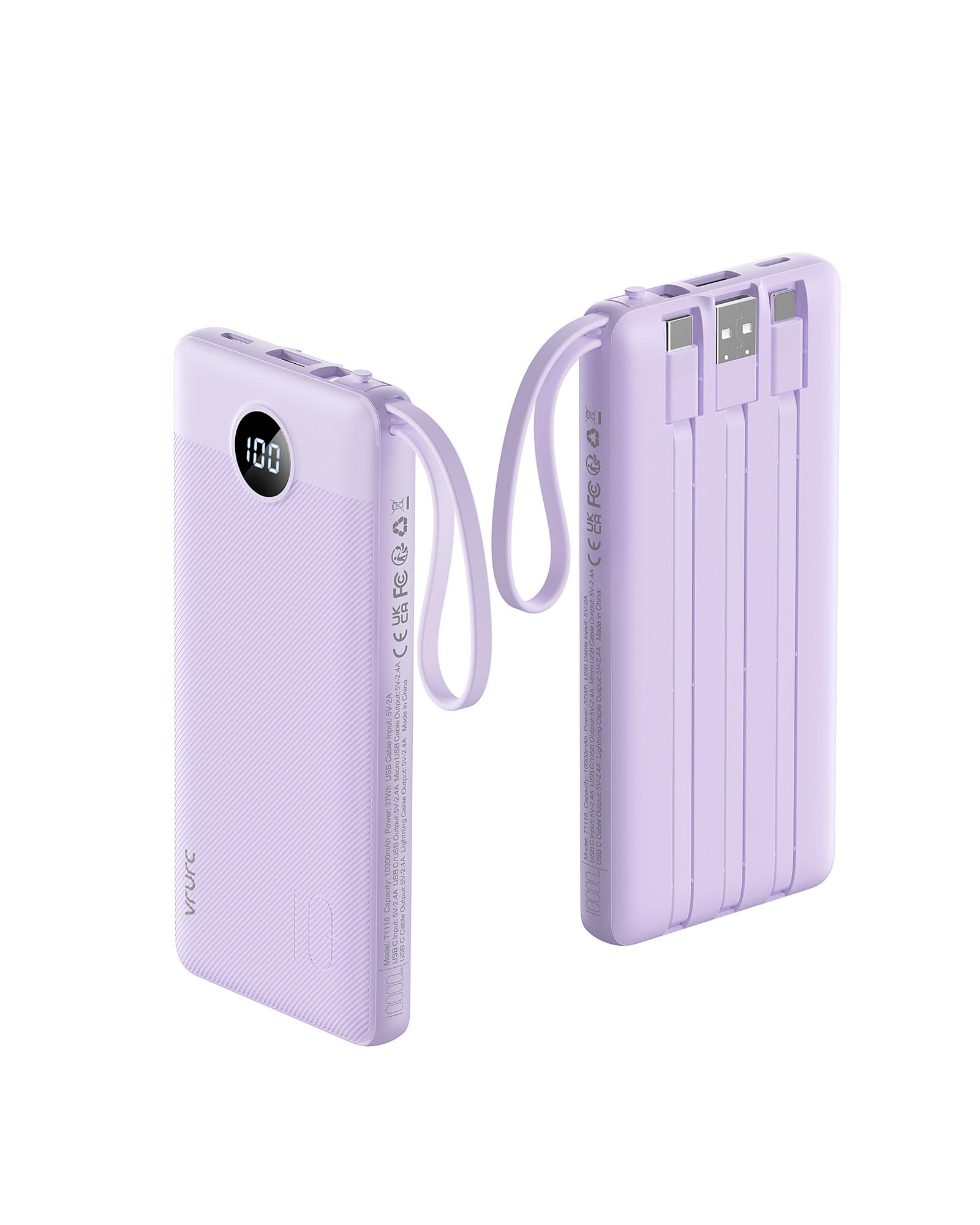
Cables for USB-C, Lightning, Micro-USB, and USB-A are built into this VRURC, one more connector type than anything else here. Think about what that means in a real car: one person on an iPhone, another on an Android, a dash cam or an older action camera in the glovebox, and no bag of cords to sort through at a rest stop.

For a family vehicle that is the feature that matters most, and it is why we recommend this one ahead of the faster 10,000mAh packs. Five devices can charge at once, the digital display shows a percentage, and the whole thing is rated at 37Wh, comfortably inside the airline carry-on limit if the drive ends at an airport. A lanyard is included too, so it can hang from a headrest instead of sliding around the floor.

Speed is where it gives ground. Output is 2.4A, around 12W, so a phone gains steadily rather than dramatically and a ten-minute stop won't add much. Charge it overnight at the motel and use it through the day, and that is a fair trade for never hunting for a cable again, particularly if the older gear in your car still runs on Micro-USB.

Pros

  • Four built-in connectors, including Micro-USB
  • Charges up to five devices at once
  • 37Wh, inside airline carry-on limits

Cons

  • Takes about six hours to refill
Our verdict

For cars carrying a mix of iPhones, Androids, and older gear, the four built-in cables end the hunt for the right cord.

Check Latest Price
4

Best Ultralight

VEGER V1202

89 /100
Traveler Score Excellent

Key details

Weight
6.35 oz
Max Output
22.5W
Built-in Cables
USB-C and Lightning
Battery Capacity
10,000 mAh
Check Details on Amazon

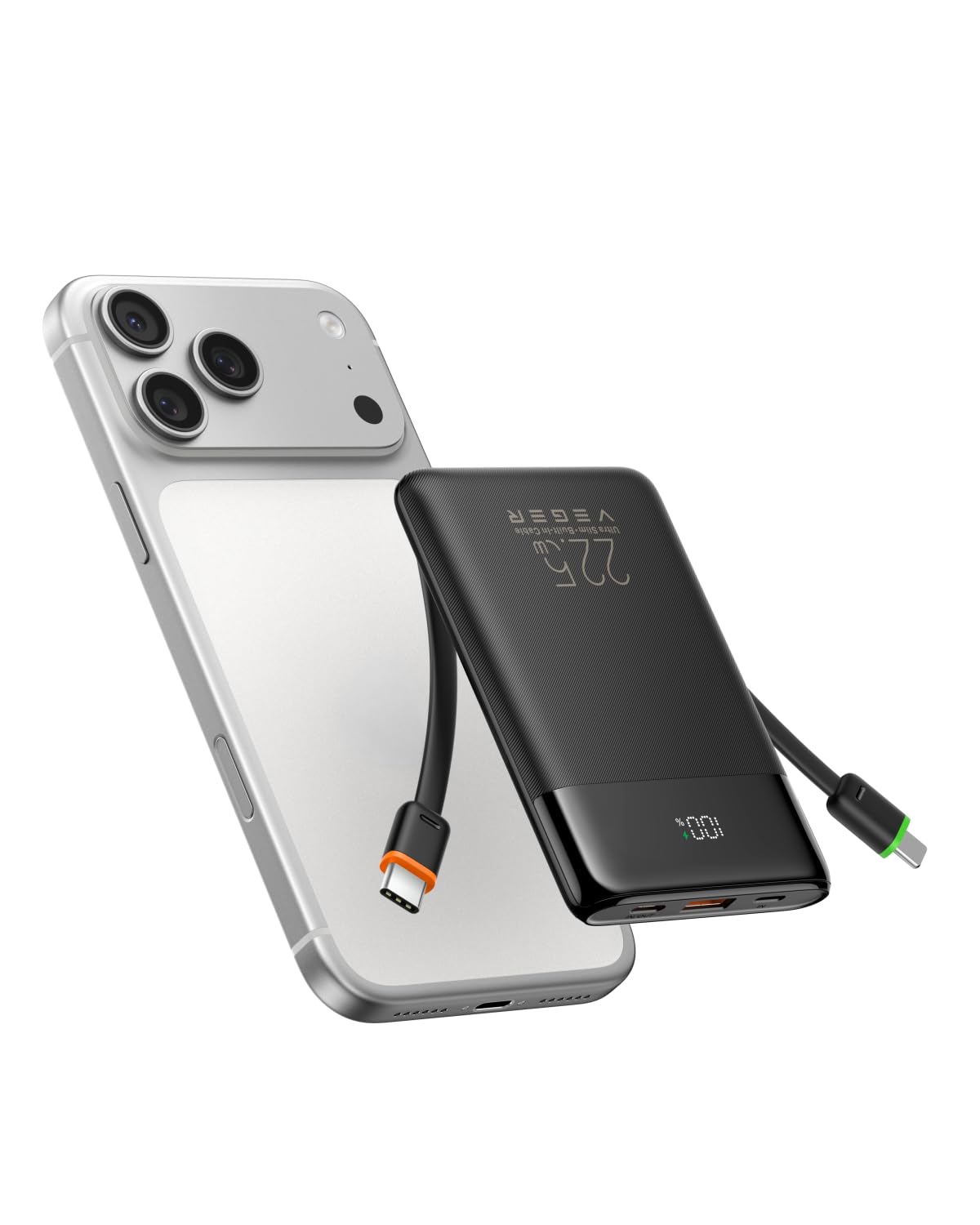
At 6.35 ounces this VEGER weighs less than the phone it charges, and at 0.66 inches thick it vanishes into a jacket pocket. The listing makes a point of leaving out Micro-USB and a bulky USB-A cord, so what is built in is USB-C and a Lightning cable, which covers a current iPhone and anything USB-C.

It is the pack we hand to the person who does not want to think about charging. Output is 22.5W, the display reads a real percentage, and a three-hour refill is the shortest of the 10,000mAh packs here, so it comes back to full between day trips rather than overnight. A low-current mode looks after earbuds and a watch, which turns out to be more useful on a trip than it sounds.

The two built-in cables cover a modern iPhone and USB-C and nothing older, so a Micro-USB headlamp or an old dash cam is on its own and needs its own cord in the bag. If the car carries legacy gear, that is the one argument against this pack; everywhere else, it is the easiest of the small ones to live with.

Pros

  • Lighter than the phone it charges
  • 22.5W output with a three-hour refill
  • Percentage display and low-current mode

Cons

  • Shares only 15W across four devices
Our verdict

The lightest serious pack here: 6.35 ounces, 22.5W, and a three-hour refill make it the one to slip into a jacket for day trips.

Check Latest Price
5

Best for Multi-Day Trips

Sucrosey CP1

87 /100
Traveler Score Excellent

Key details

Max Output
22.5W
Built-in Plug
Folding AC plug
Recharge Time
About 6 hours
Battery Capacity
50,000 mAh
Check Details on Amazon

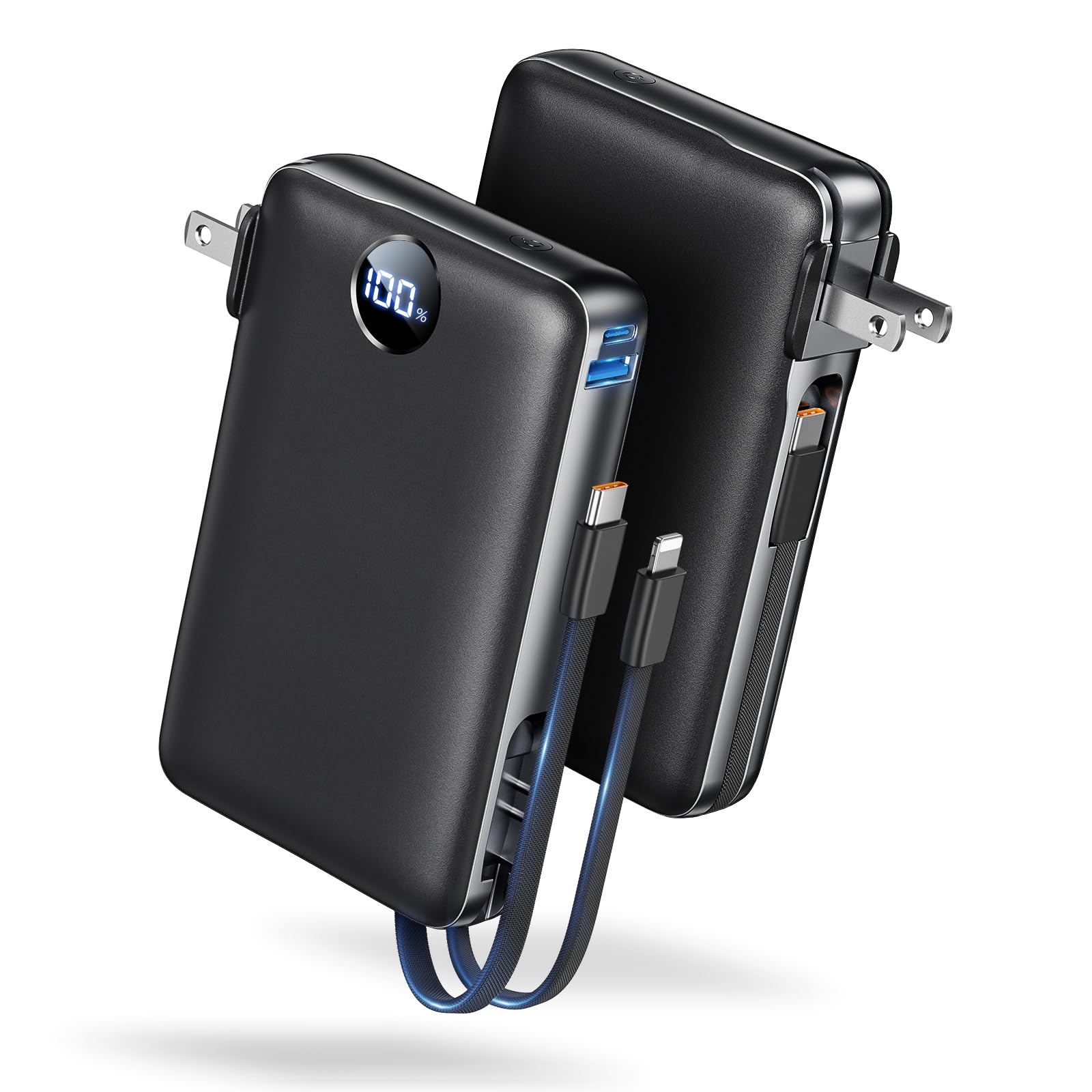
The folding plug on the back is what makes this Sucrosey a road-trip tool rather than another brick. No charger, no cable, no adapter: it goes straight into a motel wall outlet, a campground bathhouse socket, or a friend's kitchen, and a full refill takes about six hours.

The 50,000mAh rating is the other half of the argument, days of phone top-ups rather than hours, with an iPad and a couple of passengers' phones alongside. There is a built-in USB-C cable as well as USB-C and USB-A ports, a percentage display, and a body of 4.6 by 2.8 by 1.2 inches that slides into a door pocket.

This is the pack we leave in the car for the trip where outlets are scarce, and the built-in plug spares you the usual scramble for an adapter at 11 p.m. in a strange town. It is the least fussy way here to arrive somewhere with all your devices full.

The limit is air travel. At 50,000mAh this pack is roughly 185 watt-hours, well past the 100Wh carry-on ceiling most airlines apply without special approval, so on a fly-and-drive trip it waits in the garage. Pack a 20,000mAh model for the flight and keep this one for the driving days.

Pros

  • Folding AC plug recharges it without a charger
  • Huge capacity for multi-day trips
  • Built-in USB-C cable plus a percentage display

Cons

  • 22.5W output is modest for the capacity
Our verdict

Take it on car trips where outlets are scarce: the folding plug and huge capacity earn their space, but it stays home on flights.

Check Latest Price
6

Small Pockets

LISEN P606B

89 /100
Traveler Score Excellent

Key details

Size
3.2 x 2.2 x 1.0 in
Max Output
45W USB-C, 27W USB-A
Certification
UL2056
Battery Capacity
10,000 mAh
Check Details on Amazon

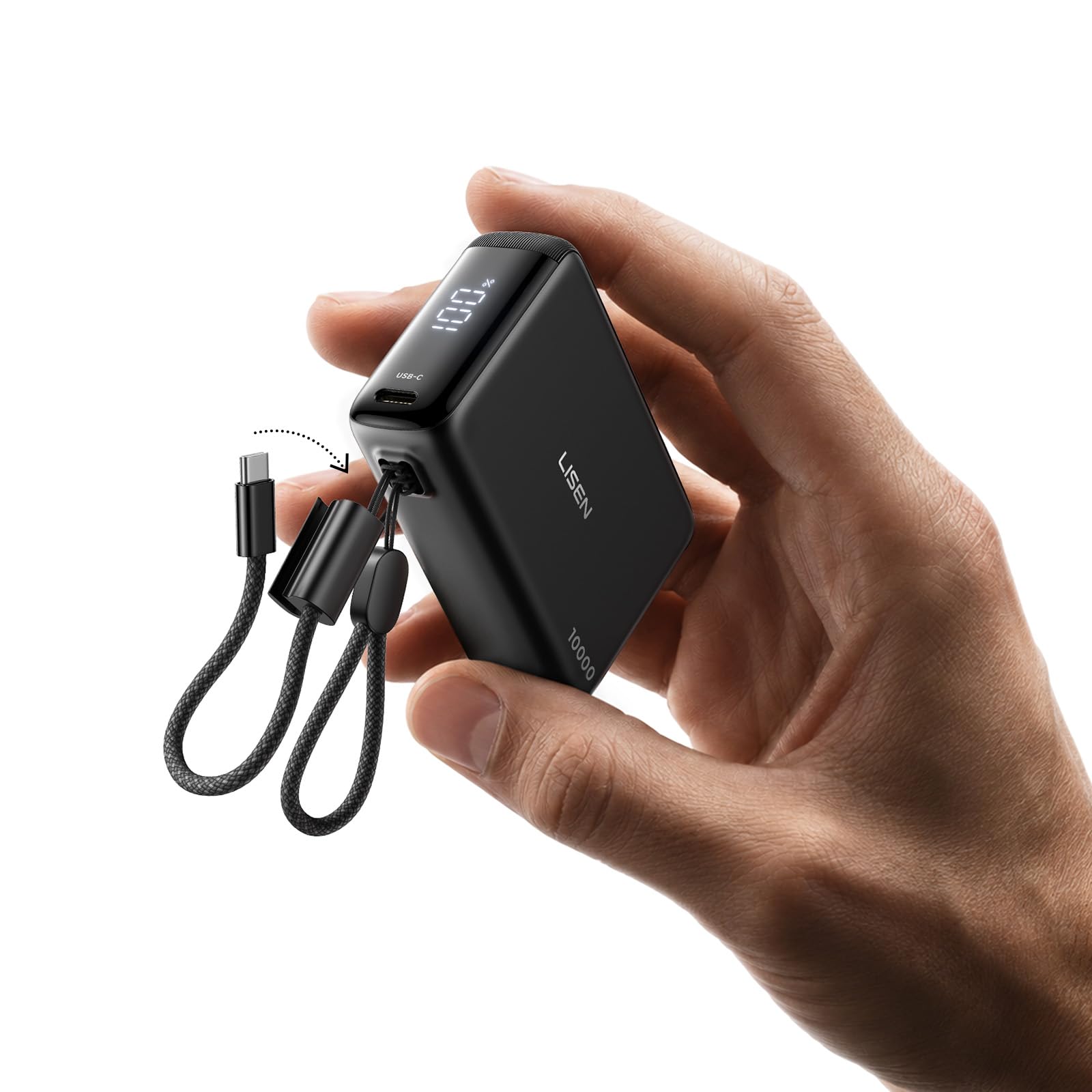
A power bank you can hang from something is a small thing that changes how you use it. The LISEN has two separate fittings, a detachable fast-charge cable and a carry lanyard, so you can loop it on a seat-back hook or a backpack strap and let it charge while your hands are busy. We liked that more than we expected to, especially from the passenger seat with a phone running maps.

The body is 3.2 by 2.2 by 1.0 inches and 205 grams, small enough to disappear in a door pocket, and it delivers 45W over USB-C and 27W over USB-A from a 10,000mAh cell. It is also the only pack here that names a specific safety standard, UL2056, alongside CE, FCC, and UKCA certification, and that counts for something in a device that spends summers in a car.

Two ports is the ceiling, and 45W only helps if the device accepts that much, since a phone capped at 20W will charge at 20W regardless. Where it separates itself from the other 10,000mAh options is the hanging arrangement and the certification rather than raw capacity, so it suits someone who carries a pack every day and wants it out of the way.

Pros

  • Hangs from a hook or strap while charging
  • 45W USB-C in a card-sized body
  • Named UL2056 safety certification

Cons

  • Pricier than the other 10,000mAh packs here
Our verdict

Card-sized, 45W, and certified; it hangs out of the way while it charges, which is exactly what we want in a passenger seat.

Check Latest Price
7

Budget Backup

Tikeyo N13

87 /100
Traveler Score Excellent

Key details

Weight
8.3 oz
Max Output
22.5W USB-A, 20W USB-C
Built-in Cables
USB-C, Lightning, Micro-USB
Battery Capacity
12,000 mAh
Check Details on Amazon

The lowest-priced pack in this group is not the smallest. Tikeyo gives you 12,000mAh, more than the 10,000mAh packs that make up most of this list, in a body of 3.9 by 2.6 by 1.1 inches.

Three cables are built in, USB-C, Lightning, and Micro-USB, alongside a USB-C and a USB-A port, so five devices can be connected at once. The digital display shows an actual percentage rather than guesswork. At 8.3 ounces it is heavier than the slimmest packs here but still small enough to sit in the console under a folded map.

The numbers that don't show on the front of the box are the ones we appreciate: a three-hour refill and a three-year warranty, both better than several packs that ask more money. The flashlight is bright enough to find a dropped phone in a footwell, which is roughly the only time you will need it.

For a second vehicle, a teenager's first pack, or the car that only does school runs, this is the one we point to. It carries more capacity than bigger names here, covers the connectors most families need, and stays covered for three years.

Pros

  • 12,000mAh for the lowest price here
  • Three built-in cables and two extra ports
  • Three-hour refill and three-year warranty

Cons

  • 20W USB-C is phone speed, not laptop speed
Our verdict

Our value pick: more capacity than the 10,000mAh packs, three built-in cables, and a three-year warranty for the lowest price here.

Check Latest Price
8

Two-Car Households

FancyBean M7 2-Pack

86 /100
Traveler Score Excellent

Key details

Size
5.83 x 2.68 x 0.63 in
Warranty
3 years
Built-in Cables
USB-C and Lightning
Battery Capacity
10,000 mAh x 2
Check Details on Amazon

Two packs in one box is its own road-trip argument. One lives in the glovebox, one goes in a bag, and nobody has to remember to move a charger between cars, which is the failure that leaves you with a dead phone at the trailhead.

Each pack is 10,000mAh with Lightning and USB-C cables built in, plus two USB-A ports and a percentage display, and the 0.63-inch body slips into a seat-back pocket. Both sit well inside carry-on limits, so either can fly. What the listing does not quote is wattage, so treat these as top-up packs rather than fast chargers and don't expect laptop-style speed.

Where it wins is household logistics: two cars, two drivers, one purchase, and a three-year warranty on each. They are the plainest packs here, cables and ports and a display without much else, and for a glovebox that is exactly enough.

Pros

  • Two packs cover two vehicles
  • Lightning and USB-C cables built in
  • Percentage display and three-year warranty

Cons

  • Heavier than other slim 10,000mAh packs
Our verdict

Two packs, two vehicles, one purchase: the simplest way to make sure a charger is always in the car you happen to be driving.

Check Latest Price

How We Tested Portable Chargers for Road Trips

We started by reading specs and customer reviews for more than 40 packs, then narrowed to 12 across a range of prices that met the brief: light enough to live in a glovebox, with enough output to charge two devices at once and enough capacity to be worth the space. We skipped anything with a permanently attached cable too short to reach a back seat, and anything that felt better suited to a desk drawer than a car.

Testing ran six months. Each pack went into a rotation covering weekday commutes, a long weekend road trip, and a run of cold mornings, and we used them the way people actually do — plugged in from the passenger seat, in a hotel room with one free outlet, at a trailhead with the phone sitting at 4 percent. We timed how long a dead phone took to reach 50 percent with the screen on and maps running, counted how many full charges each pack really delivered before it quit, and weighed that against what it cost.

Portability and build got the same treatment. We weighed each one packed with its cable, judged whether it slid into a door pocket or fought for space next to a water bottle, and dropped them from seat height onto pavement to see what the corners looked like afterward. We also checked whether ports held their cables over speed bumps and whether the battery indicator could be believed at 80 percent — a small thing that gets irritating when you're deciding how much charge to spend.

How to Choose Portable Chargers for Road Trips

Start With Capacity Per Ounce

The number on the box is the cell's capacity, not what reaches your phone; conversion losses mean you get back roughly two-thirds of it in real charges. A 10,000mAh pack covers about one full phone charge with a little spare, 20,000mAh gets two people through a long day of maps and photos, and 50,000mAh is a multi-day pack that lives in the car.

Then weigh that against size. The INIU P512 puts 20,000mAh into 4.1 by 2.8 inches, while the VEGER trades half that capacity for 6.35 ounces. Match the number to the trip rather than to the biggest figure on the page.

Built-In Cables: Convenience Against a Single Point of Failure

A built-in cable is one less thing to forget and, in a moving car, one less thing to untangle one-handed. The catch is that it is also a single point of failure: if it frays, the pack loses its best trick unless there are ports to fall back on.

Four connectors, as on the VRURC, suit a car with mixed phones and older gear; a detachable cable, as on the LISEN, can at least be replaced. Whatever you choose, confirm there is one spare port for the device your built-in cables don't cover.

Watts Out, Hours In

Output wattage decides how fast a phone gains: 20W and up keeps ahead of navigation drain, while 45W and up starts to be useful for tablets and small laptops. The figure most people overlook is the pack's own refill time. The Anker comes back in about 1.5 hours and the VEGER in three; the INIU needs 5.4.

That gap matters on the road. A big pack bought for a long drive may not refill during a 20-minute fuel stop, so plan on charging it overnight at the motel and topping up phones during the day.

The 100Wh Rule

Most airlines allow power banks up to 100 watt-hours in carry-on without special approval, and the figure is printed on the case. Do the arithmetic once: 10,000mAh is around 37Wh, 20,000mAh around 74Wh, and 50,000mAh around 185Wh.

That makes a 20,000mAh pack the practical ceiling for a fly-and-drive trip and puts the Sucrosey firmly in the car-only category. A pack that never leaves the vehicle can be as big as you like; one that boards a plane cannot.

Displays, Ports, and Sharing With Passengers

A percentage readout is worth more than it sounds: four blinking dots tell you almost nothing at 9 p.m. on a highway, while a number tells you whether it is worth plugging in. Ports matter just as much once passengers share.

Four devices on the VEGER share 15W in total, so everything charges slowly. A pack that states its total output is telling you how the split works, so look at that total rather than the per-port maximum when three people want to charge at once.

Frequently Asked Questions

Final Verdict

The INIU P512 is the recommendation we stand behind for most road trips: double the capacity of the small packs without giving up console space, a cable that can't be left at home, and three years of cover.

Spend more only for a reason. The Anker's 87W earns its place if a laptop travels with you, and the VRURC's four built-in cables win if your passengers carry a mix of iPhones, Androids, and older gear. Otherwise, buy the INIU and put the difference toward the trip.