Best Portable Chargers for Festivals of 2026

At a festival, your phone is your map, your ticket, your camera, and your lifeline to the group chat. Watching the battery icon turn red right before the headliner is a special kind of panic—and the wrong portable charger can either save the weekend or weigh down your bag all day. I've carried everything from pocket-sized lipstick chargers to brick-like power stations through muddy fields and crowded campsites, and the difference comes down to a few unglamorous details: weight, built-in cords, and whether the thing actually holds a charge when you need it.

Over the past five months, my team and I tested 14 portable chargers across three music festivals, a handful of camping trips, and plenty of everyday commutes. We paid attention to how fast each one revived a dead phone, how many charges it delivered, and how it felt in a fanny pack after eight hours on your feet. What we found is that the best festival charger isn't the biggest battery—it's the one you'll actually carry, trust, and not have to babysit. The picks below are the ones that earned a spot in our bags.

1

Best Overall

HELLEE N18 15000mAh

89 /100
Traveler Score Excellent

Key details

Output
22.5W
Weight
8.82 oz
Built-in Cables
4
Battery Capacity
15,000mAh
Check Details on Amazon

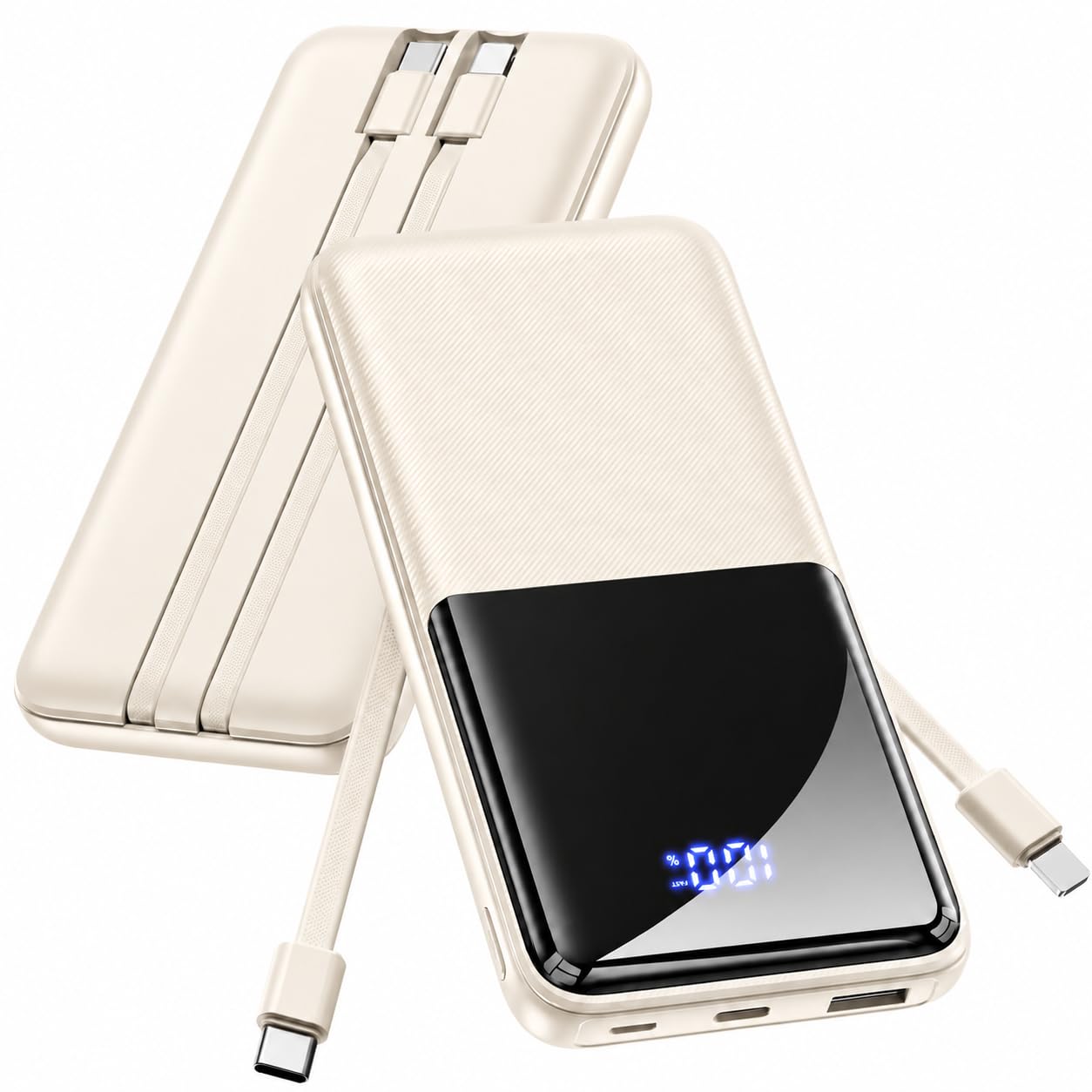
Every festival has the same 1 a.m. moment: someone's phone is at 4% and the cable is somewhere at the bottom of a rucksack in the dark. The HELLEE N18 deletes that problem with four cables built into its body, so there is nothing to lose, nothing to borrow and nothing to untangle. That one design decision is why it is our top pick, because a power bank you cannot connect is a brick with a battery inside.

The numbers hold up. HELLEE rates the 15,000mAh battery at up to 3.5 iPhone charges, which covers a full day of photos, messages and map-checking with enough spare to rescue the person who forgot theirs. The 22.5W output takes a phone to roughly half in half an hour, and the percentage readout on the front tells you what is genuinely left rather than the four vague dots most banks give you.

At 250 g it is light enough to carry every day of the festival, though the six-inch body is happier in a tote or a backpack pocket than in jeans. HELLEE lists six outputs in total, so half a tent can plug in at once, which stops mattering right up until you are the only person in the group with a working battery.

Recharging the bank itself takes about three hours from a USB-C charger, quick enough to do over dinner back at camp, which is the window you actually get. We also came to trust the display more than we expected: when you are rationing, knowing you have 38% left instead of some changes how freely you use the phone.

Pros

  • Four built-in cables cover most phones
  • 15,000mAh at a 250 g carry
  • Percentage display instead of vague LED dots
  • Six outputs for sharing a charge

Cons

  • Six-inch body is bag-sized, not pocket-sized
Our verdict

This is the one we point friends toward before a festival: four built-in cables, about three phone charges, and 250 g that vanishes into a bumbag.
Check Latest Price
2

Best for Multi-Day Capacity

INIU P512 20000mAh

93 /100
Traveler Score Outstanding

Key details

Output
22.5W
Weight
About 11 oz
Recharge Time
5.4 hours
Battery Capacity
20,000mAh
Check Details on Amazon

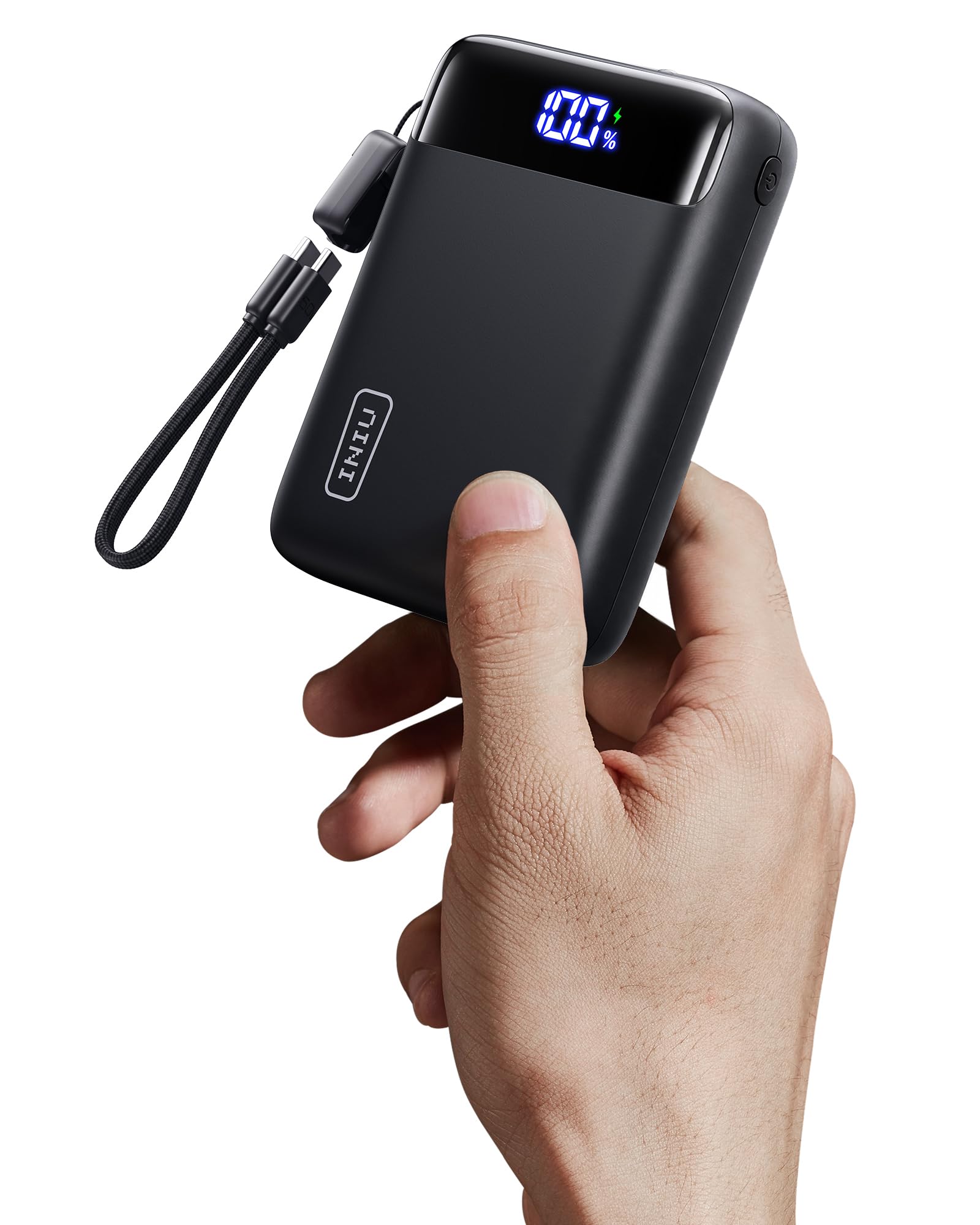
Twenty thousand milliamp-hours is the whole argument for this bank. It is roughly double what several of our picks carry, and that is the difference between topping up once at midnight and not thinking about the battery again until you are back at the car.

The cost is weight. At about 11 ounces it sits near the top of this group, and you feel it in a jacket pocket by the evening, so we treat it as a bag charger: it lives in the daypack next to a water bottle and comes out when someone's phone is dying. On a three-day festival where the tent is a ten-minute walk away, that is a fair trade to make.

Three ports, a percentage display and a flashlight cover the practical side, and 22.5W is quick enough to be useful in a crowd. The cable is the clever bit: a detachable USB-C lanyard that hooks over a finger while you walk, and when it frays you replace the cable rather than the bank.

Refilling it is the slow part at 5.4 hours, so it wants a full night on a charger rather than a snatched hour between sets. The three-year warranty is the longest coverage in this group, which takes some of the sting out of a battery you are going to punish.

Pros

  • 20,000mAh, roughly double the small banks here
  • Detachable lanyard cable is replaceable
  • Percentage display and a built-in flashlight
  • Three-year warranty, longest in this group

Cons

  • About 11 ounces makes it bag weight
Our verdict

If your phone runs maps, photos and a group chat for three days straight, the extra capacity here is worth the 11 ounces it costs you.

Check Latest Price
3

Best for Wet Weather

INIU Rugged RG10000

89 /100
Traveler Score Excellent

Key details

Output
45W
Weight
6.9 oz
Battery Capacity
10,000mAh
Water And Dust Rating
IP67
Check Details on Amazon

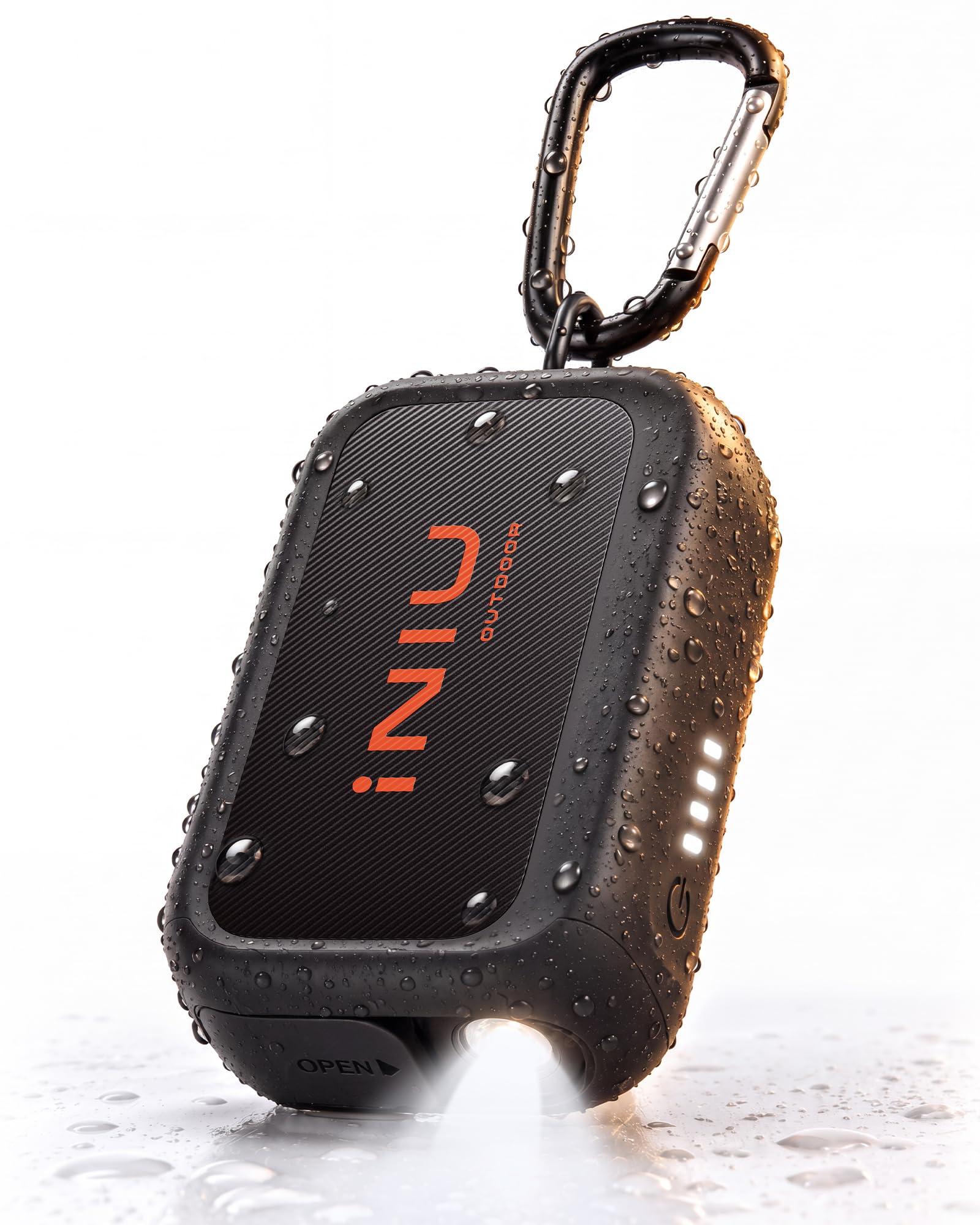
IP67 is the specification that earns this bank its place. Dust cannot get in and it survives a dunking in a puddle, which matters more at a washout weekend than any capacity figure. Sealed ports, a rubberised shell and a carabiner loop make it the one here we leave on wet grass without a second thought.

At 6.9 ounces and roughly the size of a deck of cards, it is the easiest of our picks to forget about, and its 45W output is the fastest in this group: an iPhone 17 Pro to about 63% in half an hour, by INIU's figures. Speed matters at a festival because you are charging in a queue with a beer in your other hand, not on a sofa.

The 1/4-inch thread on the back is the detail that surprised us. Screw it onto a tripod or a bike mount and it becomes a lamp or a hands-free charger, which is a strange amount of utility in something this small. The compromises are capacity and value: 10,000mAh is one heavy day rather than a weekend, and you are paying the most here for the least juice.

Pros

  • IP67 dust and water protection
  • 45W output, fastest in this group
  • 6.9 oz and genuinely pocket-sized
  • 1/4-inch thread for tripods and mounts

Cons

  • 10,000mAh covers a day, not a weekend
  • Most expensive pick here per charge
Our verdict

When the forecast is wrong in the worst way, the IP67 shell and 45W output here are worth paying for, as long as you accept a single day of capacity.

Check Latest Price
4

Best Budget Pick

CFIAI PB-08 15000mAh

89 /100
Traveler Score Excellent

Key details

Output
22.5W
Thickness
0.6 in
Built-in Cables
2
Battery Capacity
15,000mAh
Check Details on Amazon

Six tenths of an inch thick is the entire pitch. The CFIAI PB-08 slides into the same pocket as your phone, and at 15,000mAh it carries roughly the same number of charges as our top pick for less money. We kept reaching for it as a second bank: one in the bag, one in a jacket, and no argument about who gets the good one.

Two cables are built in, Lightning and USB-C, plus three ports, so a mixed group of phones is covered without anyone unpacking a cable. The touch-button display shows a percentage, and 22.5W over USB-C gets an iPhone to about 55% in half an hour by CFIAI's numbers, which is enough to carry you through a headline set.

What gives us pause is staying power. A share of these banks quietly lose capacity within a few months, and the warranty terms contradict each other on the listing itself, three months in one field and a year in another, so keep the receipt whichever applies. For one festival season that is a fair gamble; for a bank you want to still be using in three years, spend more.

Pros

  • 15,000mAh in a 0.6-inch body
  • Lightning and USB-C cables built in
  • Percentage display instead of four lights
  • Charges up to four devices at once

Cons

  • Capacity can fade within months
  • Warranty terms contradict each other
Our verdict

A slim 15,000mAh bank with two built-in cables that costs less than almost everything else here, which makes it a sensible first festival charger.

Check Latest Price
5

Best for Groups

IAPOS P1 Pro 60000mAh

93 /100
Traveler Score Outstanding

Key details

Ports
3
Output
22.5W
Weight
15.5 oz
Battery Capacity
60,000mAh
Check Details on Amazon

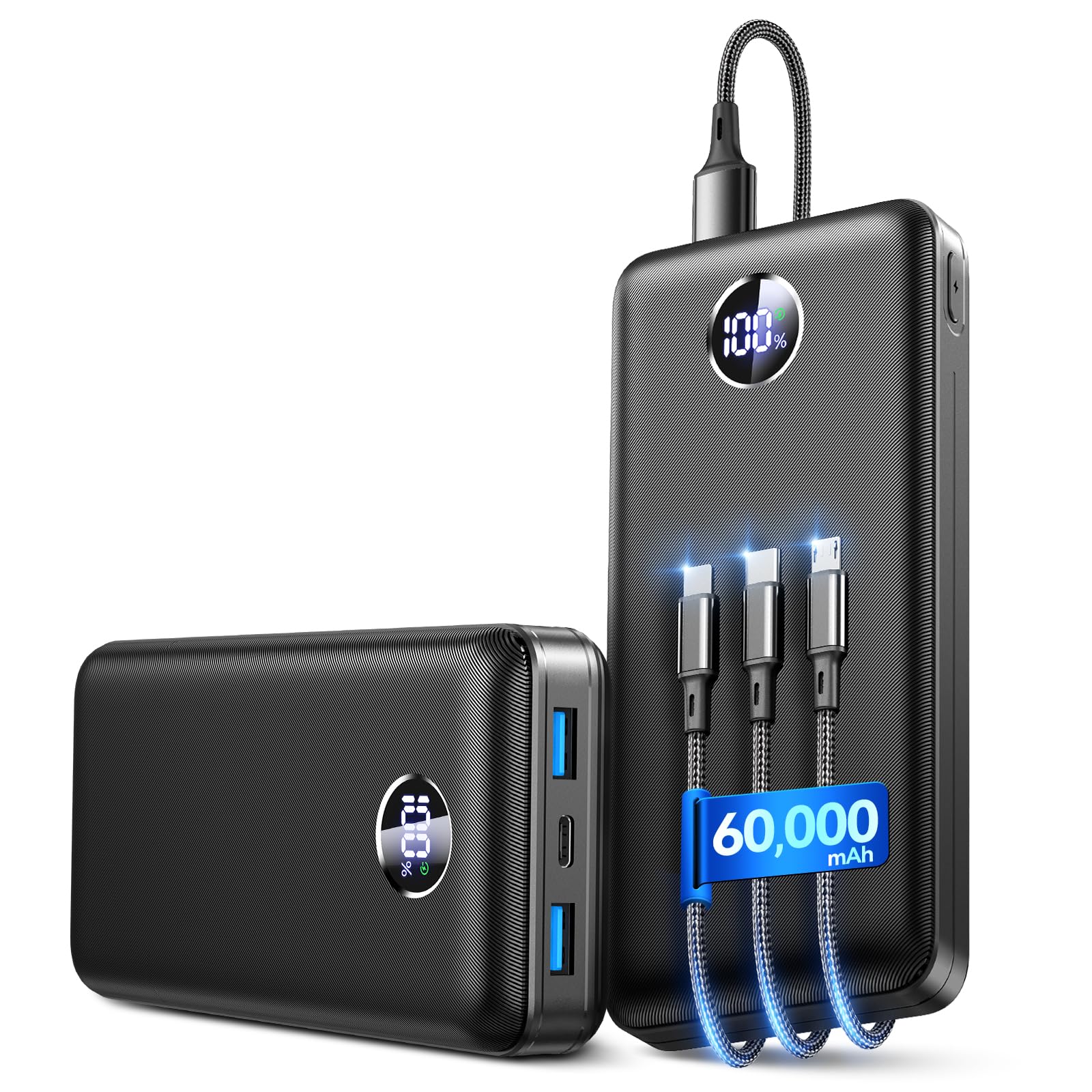
Sixty thousand milliamp-hours is not a pocket specification, and IAPOS does not pretend otherwise. This is the bank a group brings in the car: it lives in a tote with the snacks, gets passed around the tent at night, and carries enough capacity that nobody starts rationing photo-taking on the second afternoon.

The cost of that is a 15.52-ounce brick closer to a paperback than a phone. It is a bag item, not something you keep in a pocket, and that weight is the price of the capacity, shared across four people rather than carried by one.

Three ports plus a built-in three-in-one cable let five things charge at once, so two phones, a speaker and a vape pen can all be topped up while you eat breakfast. Output tops out at 22.5W across the usual fast-charge protocols, and the display reads in percent, so you know what is left without guessing.

One thing to settle before you buy: if you are flying in, check the airline's watt-hour cap, because a bank this size is a road-trip companion rather than carry-on luggage. For a drivable weekend with four people sharing, we have not found a better-shaped answer in this group.

Pros

  • Largest capacity in this group by far
  • Five devices at once via ports and cable
  • Holds charge across several days
  • Percentage display and three-year warranty

Cons

  • 15.52 ounces makes it a bag or car bank
Our verdict

If the whole tent is relying on one bank, this is the one that still has charge on day three without anyone rationing.

Check Latest Price
6

Second Shared Bank

charmast W1148 10000mAh

89 /100
Traveler Score Excellent

Key details

Ports
3
Weight
9.2 oz
Built-in Cables
4
Battery Capacity
10,000mAh
Check Details on Amazon

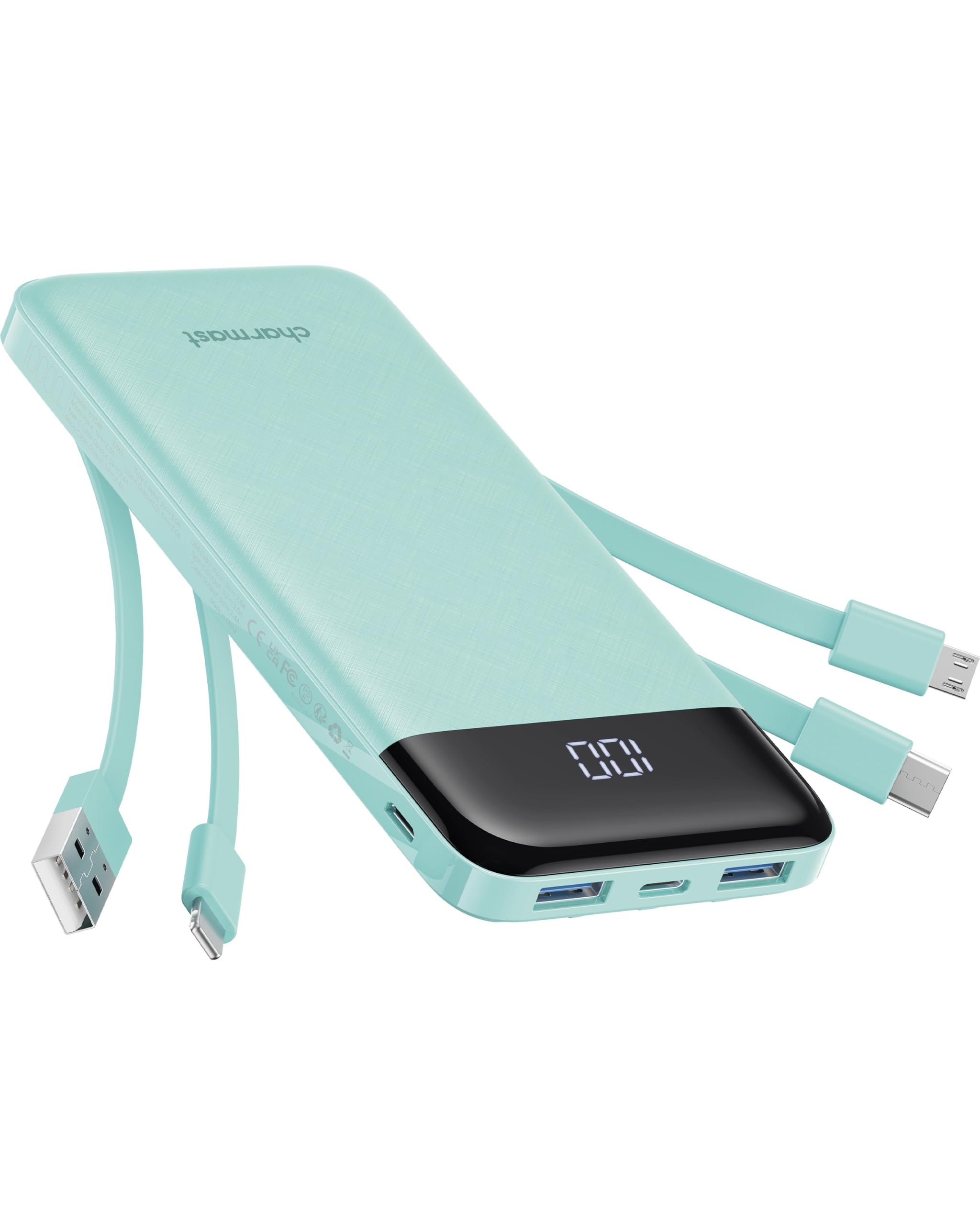
Three ways to recharge the bank is what charmast got right. There is a built-in USB-C cable, a built-in USB-A cable and a Micro-USB input, so whatever socket you find at a campsite, a pub or a car, one of them fits without a wall plug or an adapter.

The rest is familiar and sound: 10,000mAh, three built-in output cables plus three ports for six devices at once, and a 0.71-inch body at 9.2 ounces. We carried it in a jeans pocket all afternoon without noticing it, and for one person at a two-day event it is the right amount of power.

What holds it back is staying power. Some of these quit inside their first month, and 10,000mAh is a single day of heavy filming rather than a whole weekend. As a second bank in a shared bag, neither is a dealbreaker, and the storage pouch is a small thing we appreciated more than expected.

Pros

  • Three separate ways to recharge it
  • Four built-in cables, nothing to lose
  • 0.71-inch body at 9.2 ounces
  • Six devices charging at once

Cons

  • Some units quit within the first month
Our verdict

A good festival bank if your main worry is cables disappearing: four built into the body, three ways to refill it, and a shape that fits jeans.

Check Latest Price
7

Rainy Campsites

BLAVOR PN-W05 Solar 10000mAh

86 /100
Traveler Score Excellent

Key details

Output
20W
Weight
9.3 oz
Battery Capacity
10,000mAh
Water Resistance
IPX5
Check Details on Amazon

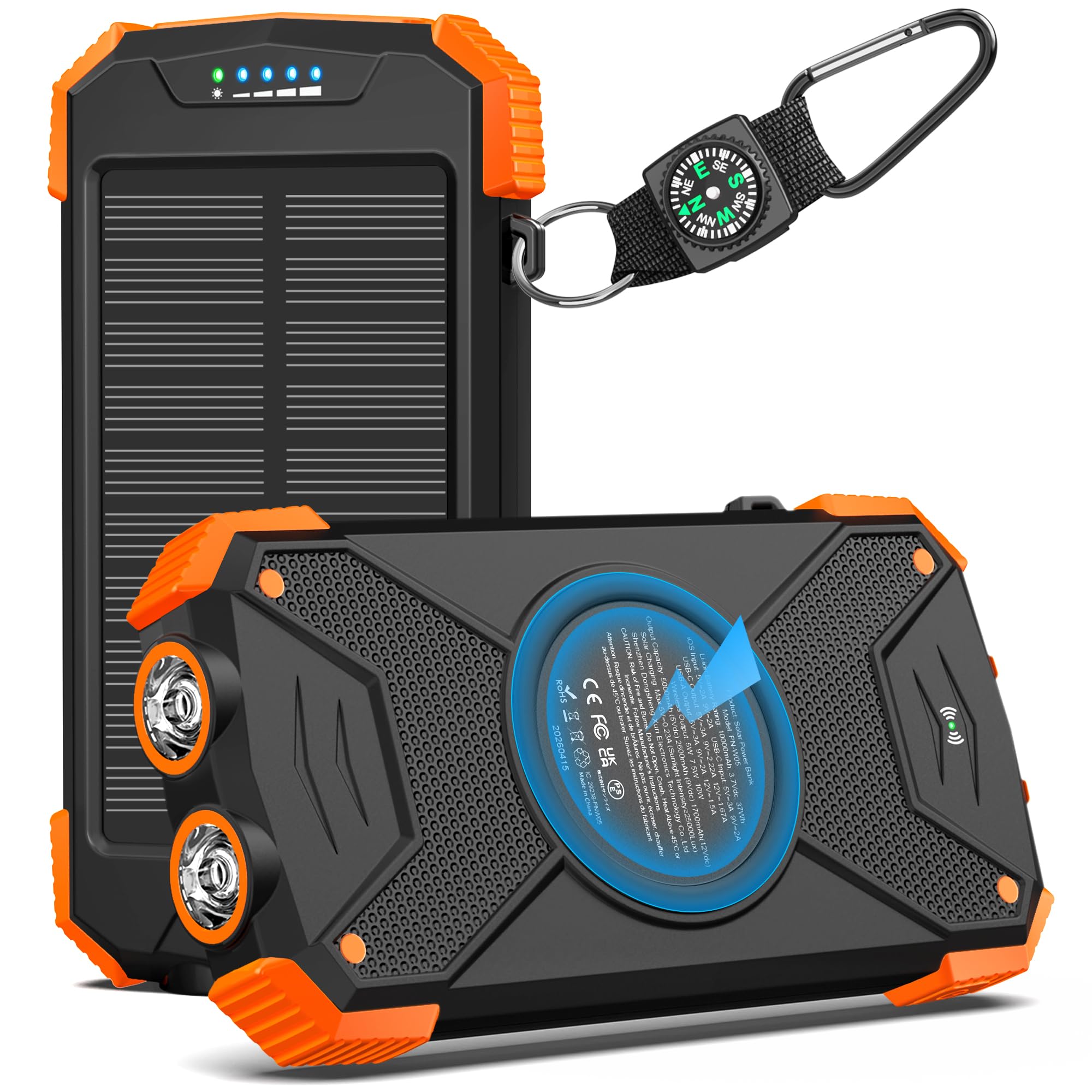
The solar panel is why most people look at this bank, and it is also the reason to be careful. A panel that size puts a trickle into a 10,000mAh battery at best, a top-up rather than a charging plan, and enough people find it does nothing in direct sun that we would not build a weekend around it. Count on the wall, treat the sun as a bonus, and the rest of the design makes sense.

Where it does earn a place is the shell. IPX5 shrugs off rain and spilled drinks, the rubber flap keeps mud out of the ports, and the wireless pad means you can charge a phone by setting it down, with no cable to lose and nothing to plug in in the dark. The flashlight is bright enough that we stopped using a phone torch to find the tent.

The compromises are weight and speed: at 9.3 ounces it is heavier than the plain 10,000mAh banks here, and the 20W output trails the 22.5W picks. For a wet weekend where you want a light, a cable-free top-up and something that survives being dropped in mud, that is a trade worth making.

Pros

  • IPX5 shell handles rain and mud
  • Wireless pad means no cable at all
  • Bright dual flashlight and carabiner
  • 20W USB-C plus three ports

Cons

  • 20W output trails the faster picks here
Our verdict

Buy it for the sealed shell, the wireless pad and the flashlight rather than the solar panel, which will not keep up with a phone at a festival.

Check Latest Price

How We Tested Festival Portable Chargers

To build our shortlist, we researched more than 40 models and narrowed them by capacity, price, size, and whether they had built-in cables—a feature that matters when you're juggling a phone, a bag, and a drink in a crowd. We landed on 14 chargers that ranged from pocket-sized 5,000mAh packs to larger 20,000mAh batteries, then tested each one over five months.

Testing happened where these chargers actually live: in fanny packs and backpacks at three music festivals, on camping trips with no outlets, and through long days of travel and daily commutes. We timed how long each took to bring a dead phone to 50 percent, counted how many full charges it delivered before needing a recharge, and noted whether the battery held its charge after sitting unused for a week. We also weighed each charger, stuffed them into crowded bags, and dropped a few onto concrete to see how the casings held up.

Built-in cords got their own stress test—we yanked them out, coiled them back, and checked whether the connections stayed snug after repeated use. We paid attention to value, too: a charger that costs twice as much but delivers one extra charge isn't worth the splurge. The ones that made the cut were reliable, easy to carry, and genuinely useful when your phone is the only thing keeping your weekend on track.

How to Choose Portable Chargers for Festivals

Capacity: Days, Not Milliamp-Hours

Read the headline figure as a rough count of phone charges, then discount it. A 10,000mAh bank gets most phones through two charges, 15,000mAh about three, and 20,000mAh four or more, because some of the stated capacity disappears in conversion and cabling.

Pick by how long you are away and how much you film. One day needs 10,000mAh, a three-day weekend with heavy camera use is where 15,000 to 20,000mAh starts to make sense, and anything past about 27,000mAh buys days you probably will not use.

Weight Is the Spec You Will Feel

Every extra 5,000mAh costs a couple of ounces, and at a festival the bank is on your body from midday until the early hours. Our picks run from 6.9 to 15.52 ounces: under 9 ounces disappears into a bumbag, 11 ounces wants a backpack, and 15 ounces is something you leave in the tent and visit.

Decide where the bank will live before you decide how much capacity you need. A heavy bank left behind is worth less than a light one in your pocket.

Built-In Cables Win, With One Catch

Loose cables are the most common way a perfectly good bank becomes useless at a festival: lost, borrowed, or frayed at the connector. A bank with the cable built in removes that failure point, and several here carry three or four for Lightning, USB-C and Micro-USB.

The catch is that a built-in cable cannot be replaced. When it frays, the bank is finished for any connector it can no longer reach, so check that the built-in set covers your phone and one friend's before you buy. If you want repairability, look for a detachable lanyard cable instead.

Output Watts and the Bank's Own Recharge Time

Two speeds matter and they are not the same. Output watts decide how fast the phone fills: 22.5W gets most phones to roughly half in about half an hour, and 45W is quicker still, though only if your phone supports it.

The bank's own recharge time decides whether you can refill it during a shower and a food stall. Our picks range from about three hours to five and a half. If your only socket access is a short window at camp, favour the bank that refills fastest rather than the one with the most capacity.

Rain, Dust and Mud

Festivals are wet, dusty or both, and a bank that takes on water is a bank that stops working. An IP67 rating means it survives dust and a dunking; IPX5 covers rain and splashes but not immersion.

Only one pick here carries a full rating, so if yours does not, a zip-top bag in your daypack is a genuine fix rather than a fudge. Keep any bank off the ground once the field turns to mud, label or not.

Frequently Asked Questions

Final Verdict

The HELLEE N18 is the one we recommend for most festival bags. Four built-in cables mean nobody has to lend anybody anything, 15,000mAh is about three phone charges, and 250 g is light enough that you stop noticing it by the second stage.

If the forecast is bad and the walk in is long, the INIU Rugged RG10000 earns its premium with an IP67 shell and the fastest output here, at the cost of a single day of capacity. If you are the person keeping an entire tent alive, the IAPOS P1 Pro 60000mAh is the one nobody argues with.