Best Portable Chargers for Disney Trips of 2026

The moment your phone drops to 8 percent while you're holding a spot in a 40-minute line is the moment a portable charger stops being optional. Everything at a park runs through that little rectangle — tickets, Lightning Lane windows, PhotoPass, the map back to the parking lot — and a dead battery turns a good day into a scavenger hunt for an outlet. The charger you carry has to do more than sit in the bottom of a bag. It has to keep pace with a 14-hour day, ride in a shorts pocket without dragging them down, and survive being set on a bench and knocked onto pavement between rides.

I've been the person politely hovering near a kiosk outlet, so I have opinions. Over the past five months, my team and I put 12 portable chargers through real park days, rope drop to fireworks, and the gaps between them were wider than I expected. The one thing nobody tells a first-time buyer: the mAh printed on the box is measured at a lower voltage than your phone runs at, so usable capacity is always less than advertised, and a hot phone in a hot park will charge slower than the package promises. The picks below are the ones that actually got us to the last show.

1

Best Overall

FuelRod MAX10

88 /100
Traveler Score Excellent

Key details

Weight
7.71 oz
Capacity
10,000 mAh
Charging
Wireless + USB-C
Recharge Time
2.6 hours
Check Details on Amazon

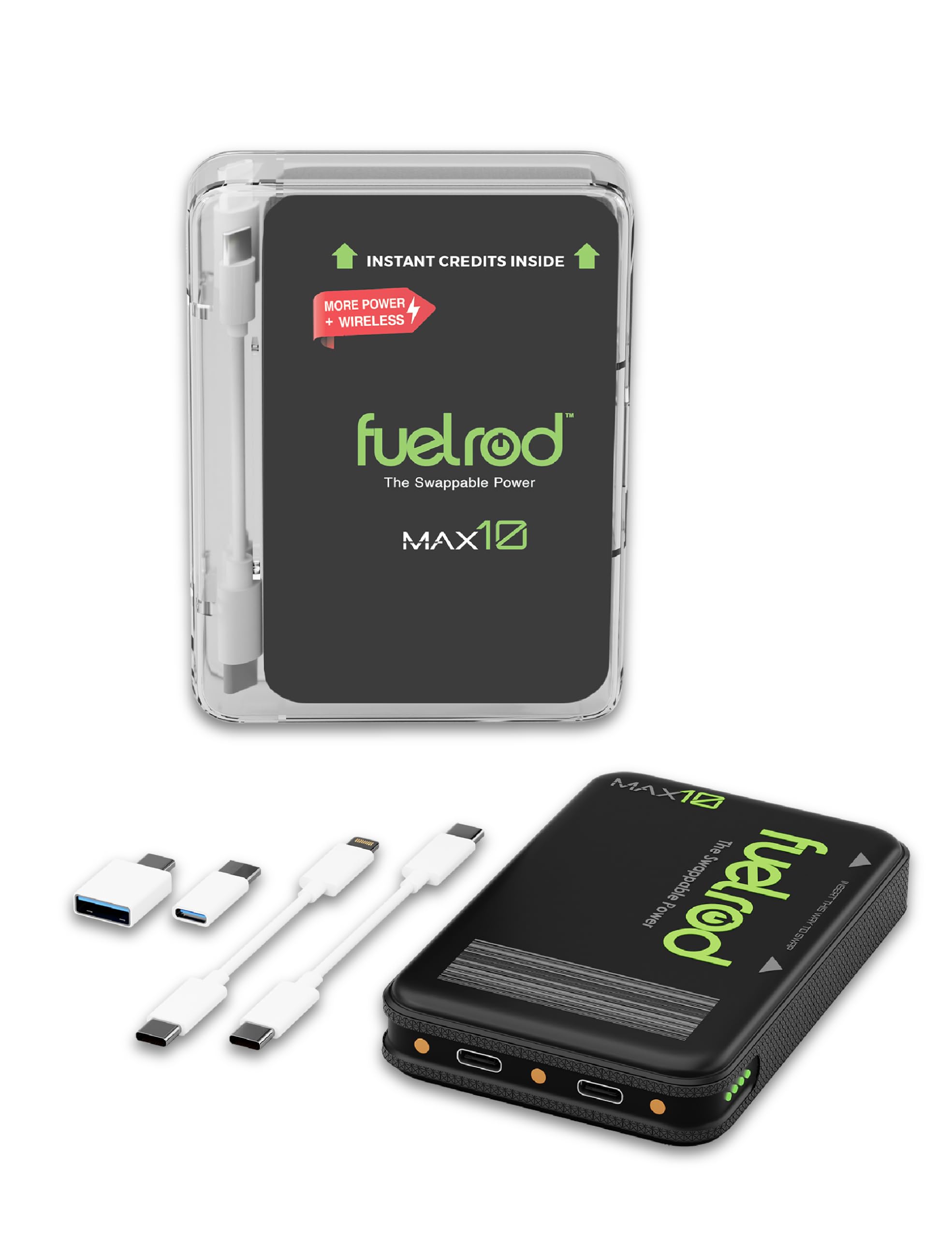
Twelve hours is a long time to keep a phone alive at the Magic Kingdom, and the MAX10 is built around the admission that no battery is big enough for it. There is 10,000mAh inside — a couple of full phone charges — plus magnetic wireless charging and a USB-C port that can run two devices at once. The part that matters is what happens when it is empty: at a participating FuelRod Gen 2 kiosk you hand it over and walk away with a charged one.

That swap is why we put this one first for a Disney trip. A dead battery stops being a decision about whether to leave the park; it becomes a five-minute stop on the way to your next ride. It refills in about 2.6 hours from a wall outlet, which is a hotel-room job rather than a park one, and the magnetic hold means you can leave it stuck to the back of the phone while you are standing in line instead of fishing around in a bag.

The size is the honest trade. At 218.7 grams and just over half an inch thick, it is a bag item rather than something that vanishes into a pocket, and you feel it in a fanny pack by mid-afternoon. Wireless charging also runs warmer than a cable — the phone will feel warm against the pack, which is normal but worth knowing on a hot day.

What we appreciate most is that the MAX10 removes capacity from the argument entirely. You do not have to work out whether 10,000mAh will stretch from rope drop to fireworks, because when it does not, the answer is a kiosk you were walking past anyway. That is a different kind of insurance from a bigger brick, and for a park day it is the kind we want.

Pros

  • Kiosk swap covers a flat battery
  • 10,000mAh with wireless and USB-C
  • Refills in about 2.6 hours
  • Magnetic hold keeps it cable-free

Cons

  • Swaps only at participating Gen 2 kiosks
  • Heavier than a pocket-sized bank
Our verdict

We recommend the MAX10 first because the swap network turns an empty battery into a five-minute errand instead of a walk back to the hotel.
Check Latest Price
2

Best for Charging a Whole Group

INIU P512 20000mAh

93 /100
Traveler Score Outstanding

Key details

Size
4.1 x 2.8 x 1.2 in
Output
22.5W
Capacity
20,000 mAh
Recharge Time
5.4 hours
Check Details on Amazon

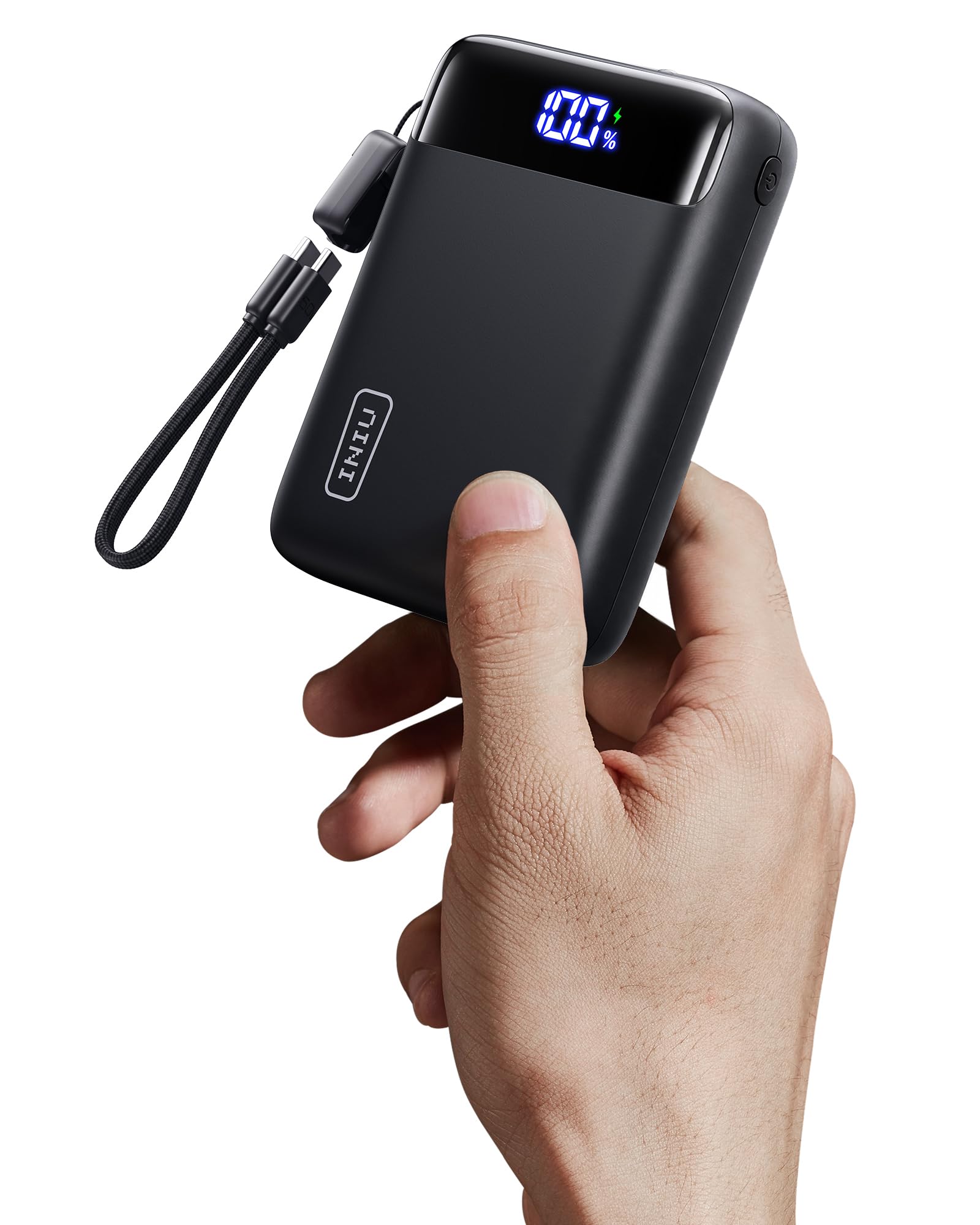
At 1.2 inches thick and nearly three inches wide, the P512 is the pack here you notice. It does not slide into a hip bag the way the slim 10,000mAh banks do; it wants the main compartment of a backpack. That is the cost of 20,000mAh, and whether it is worth paying depends entirely on how many phones you are keeping alive.

What the bulk buys is real: roughly two full recharges of a modern phone, three ports, and 22.5W output that puts a useful amount back in half an hour. The digital display reads an actual percentage rather than four vague dots, which changes how you use the thing — you can see whether there is room to top up a kid's phone or whether it is time to start rationing. The USB-C cable is woven into the lanyard, so it is one less loose thing in the bag, and there is a flashlight if the queue lights go dim.

This is our pick when one bank has to serve a group. Reliability is the strongest of the big-capacity options in this set, and three ports mean a phone, a partner's phone and a pair of earbuds can all be plugged in at once without an argument about whose turn it is.

Two things to plan around. Refilling it takes about 5.4 hours, so it is an overnight job and not something you top up at a quick-service counter, and the cable attached to it is USB-C only. If someone in the party is still on a Lightning iPhone, their cord goes in the bag with it.

Pros

  • Two full phone recharges from 20,000mAh
  • 22.5W output across three ports
  • Digital display shows exact percentage
  • USB-C cable doubles as the lanyard

Cons

  • Heavy and wide for a hip bag
  • No Lightning cable included
Our verdict

If you are the one everyone hands a dead phone to, this is the pick: 20,000mAh, three ports, and enough capacity for the whole group.

Check Latest Price
3

Best Budget All-In-One

VRURC 10000mAh 4-Cable

89 /100
Traveler Score Excellent

Key details

Weight
9.17 oz
Capacity
10,000 mAh
Built-in Cables
4
Simultaneous Devices
Up to 5
Check Details on Amazon

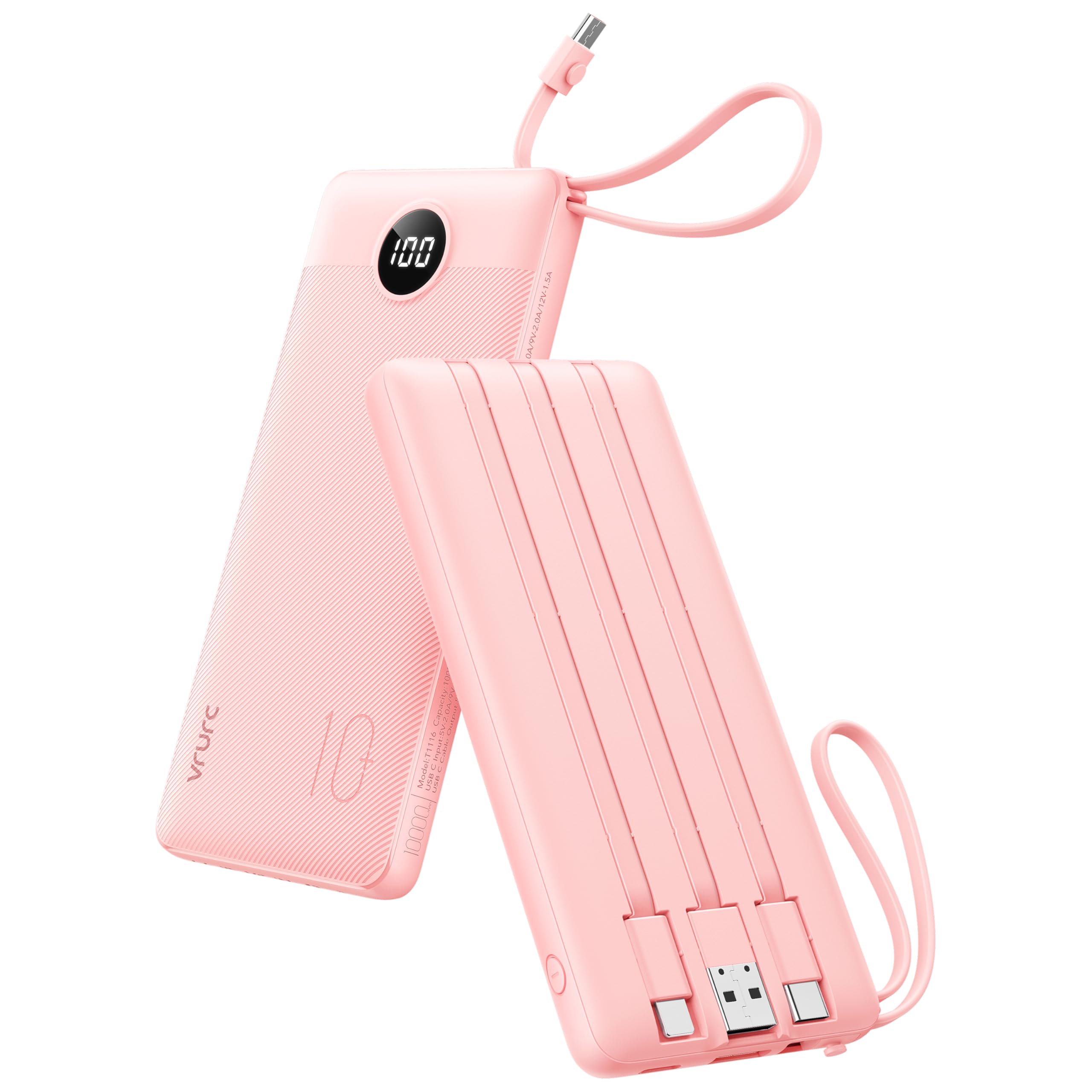
Four cables are built into this thing — USB-C, iPhone, micro-USB and a USB-A — plus two ports, which adds up to five devices charging at once. That is the whole case for it: it is the pack you can hand to a kid in the back seat or pull out in a queue without anyone hunting for the right cord. At 37Wh it also sits comfortably inside the airline carry-on limit, so it flies to Orlando without a second thought.

Speed is where the budget shows. Output tops out at 12W, so a modern phone charges steadily rather than quickly — noticeably behind the 20W and 22.5W packs here — and the bank itself takes around six hours to refill from empty. If you are charging in short bursts between rides, that gap matters more than the capacity figure does.

Longevity is the question mark. A share of units stop holding a charge within a few months, which is why the 36-month warranty is doing real work rather than decorating the box. We are still comfortable recommending it, because at this money the shape is hard to beat: a slim pack with every cable attached and a display that tells you what is left.

Pros

  • Four built-in cables cover most phones
  • Charges up to five devices at once
  • 37Wh, so it flies in a carry-on
  • Slim enough for a small bag

Cons

  • 12W output is slow next to the others
  • Some units stop holding a charge
Our verdict

Our budget pick: four built-in cables, five outputs and a 10,000mAh cell, so nobody in the family has an excuse to run flat.

Check Latest Price
4

Best Disney Souvenir

Belkin Toy Story 5 10K

87 /100
Traveler Score Excellent

Key details

Size
4.05 x 2.51 x 0.95 in
Output
20W
Weight
9.6 oz
Capacity
10,000 mAh
Check Details on Amazon

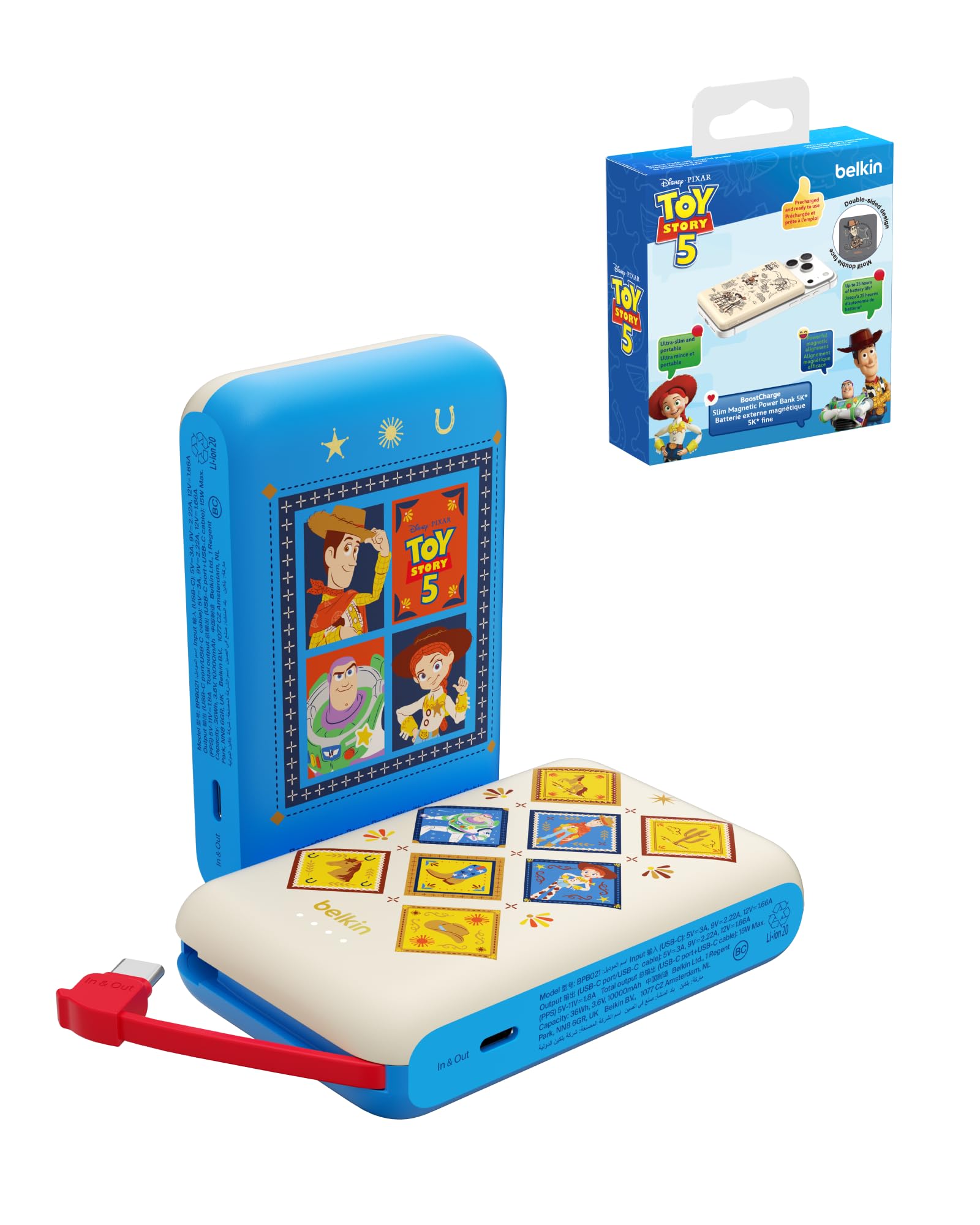
This is the only officially Disney-licensed bank here, and it looks it — Toy Story 5 character art printed across a body a little bigger than a deck of cards. For a kid's first charger, or a gift handed over in the park, that is not a trivial detail. A plain black brick does not get carried with any enthusiasm; this one does.

Underneath the print it is a competent pack: 10,000mAh, 20W output, a built-in USB-C cable and a second USB-C port, with enough punch to take an iPhone 15 Pro to half in about 26 minutes. We think it is the right choice when the charger is meant to be part of the trip rather than a rectangle at the bottom of a bag, and the LED indicator means you can see where it stands without guessing.

Two details worth knowing before you commit. Plug in a second device and the two share 15W, so both charge slowly rather than one quickly. And the built-in cable is USB-C only — if your phone still has a Lightning port, its cable goes in the bag too, which rather undoes the point of a built-in cord.

Pros

  • Official Disney Toy Story artwork
  • 20W output with a built-in USB-C cable
  • LED indicator shows charge status

Cons

  • Heavy and thick for its capacity
  • Built-in cable is very short
Our verdict

The one to buy when the charger is also a souvenir: official Toy Story artwork on a 10,000mAh bank with a built-in USB-C cable.

Check Latest Price
5

Best for iPhone Without a Cable

podoru MagSafe 5000mAh

86 /100
Traveler Score Excellent

Key details

Weight
4.23 oz
Capacity
5,000 mAh
Wired Output
20W USB-C
Wireless Output
15W max
Check Details on Amazon

There is a small, specific pleasure in not untangling anything. The podoru snaps onto the back of a MagSafe iPhone and starts charging, and you can keep texting, photographing the castle or pulling up a mobile order while it does. At 120 grams it barely registers in a pocket, and it is thin enough to leave on the phone between rides instead of stowing it.

Capacity is the catch. 5,000mAh is roughly one solid top-up for a modern iPhone, not a day's worth, and wireless charging is slower and warmer than a cable — 15W at best on paper, and less in practice once the phone heats up. There is a USB-C port for wired charging at up to 20W when you want speed rather than convenience.

We like it as a second battery rather than the only thing in the bag: leave it stuck to the phone for photos and queues, and save a 10,000mAh pack for the day you are shooting video. At this size and weight it is the one that actually comes with you, and a bigger pack left in the hotel room is worth nothing at all.

Two caveats. It needs a MagSafe-compatible case, or no case, to hold properly — a thick non-magnetic case will let the phone slide off. And longevity is the weak spot with packs this small: some units quit within a few months, so treat it as a handy top-up rather than a bank you will still be carrying in three years.

Pros

  • Snaps on with no cable at all
  • 120 g and pocket-thin
  • Wireless plus 20W USB-C

Cons

  • About one phone charge per outing
  • Needs a magnetic case to hold
Our verdict

For an iPhone 12 or newer and a pocket with no room to spare, it is the least fussy way to keep a phone alive between charges.

Check Latest Price
6

Long Park Days

CFIAI PB-08 15000mAh

89 /100
Traveler Score Excellent

Key details

Size
5.9 x 2.69 x 0.6 in
Ports
5
Output
PD 22.5W
Capacity
15,000 mAh
Check Details on Amazon

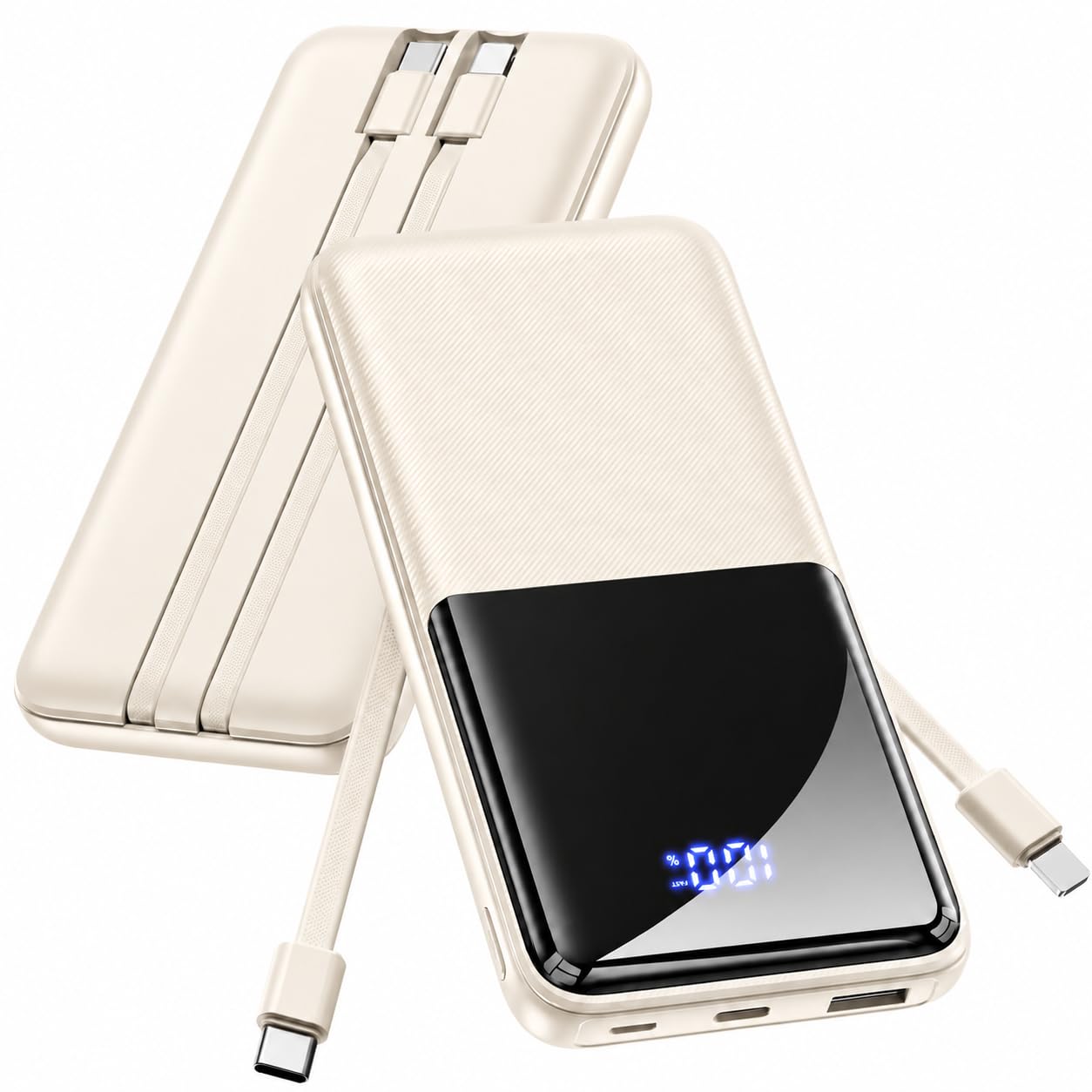
Most 15,000mAh banks are bricks. This one is 0.6 inches thick with about the footprint of a large phone, which is the reason it earns a place here: three to four phone charges in something that still fits a fanny pack. Two cables are built in — Lightning and USB-C — and there are three more ports, enough for four devices if the family piles on at once.

PD 22.5W over the USB-C cable is quick enough that half an hour buys a couple of hours of screen time, and the digital display reads an actual percentage instead of four dots. That display is the detail that changes how you use it: at lunch you can decide whether to top up now or coast until dinner. The built-in cords being permanently attached also means the one thing you cannot forget is the thing you need.

The caveats are the ones that come with a high-capacity budget pack. Some units stop holding their rated capacity within a few months, and the weight is more than the slim profile suggests — it is a bag charger, not a pocket one. But if capacity per inch is what you are optimizing for, this is where we point you.

Pros

  • 15,000mAh at 0.6 inches thick
  • Built-in Lightning and USB-C cables
  • 22.5W PD output
  • Digital percentage display

Cons

  • Some units lose capacity within months
  • Heavier than the slim profile suggests
Our verdict

The most capacity you can carry without switching to a backpack: 15,000mAh, two built-in cables and an exact percentage readout.

Check Latest Price
7

Shared Family Bank

charmast W1148 10000mAh

89 /100
Traveler Score Excellent

Key details

Weight
9.2 oz
Capacity
10,000 mAh
Built-in Cables
4
Simultaneous Devices
Up to 6
Check Details on Amazon

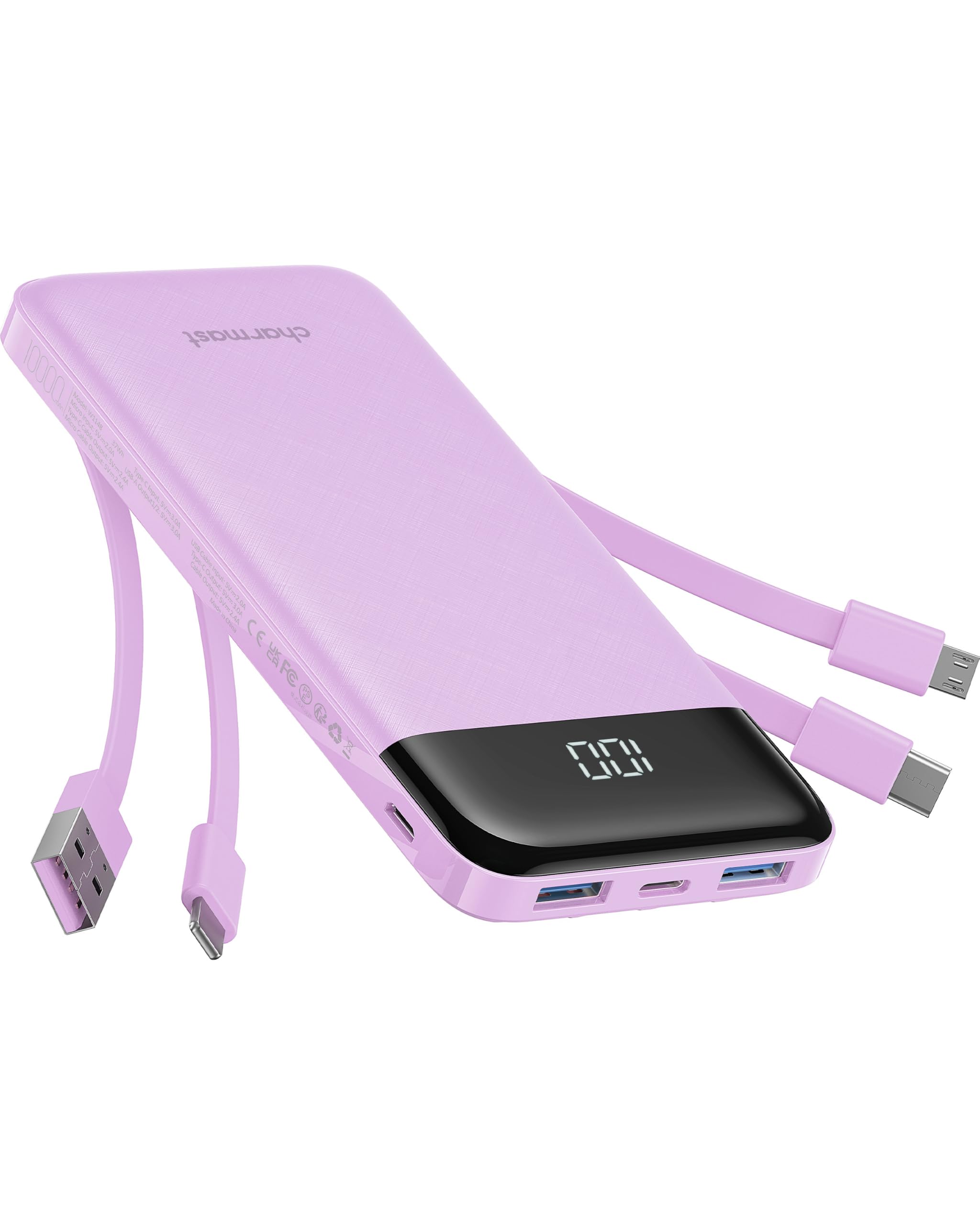
Six devices at once sounds like a specification written for a sticker, but on a family trip it is the point: three built-in output cables plus three spare ports means the whole back seat can plug in without a negotiation about whose turn it is. The cables are reinforced where they leave the body, which is the joint that fails first on packs like this, and they stow flat against the case.

You can also refill it three ways — through the built-in USB-C cable, the built-in USB-A cable or the micro-USB input — so whichever cable is nearest in a hotel room works. At 9.2 ounces and 0.71 inches thick it is a small-bag charger rather than a pocket one, and there is a storage pouch in the box for the whole thing.

The compromises are speed and staying power. Output is modest, so phones charge steadily rather than quickly, and the pack itself takes hours to refill — fine if everything is plugged in overnight, less so if you are relying on a twenty-minute stop. Durability is the murkier question: some units give up within weeks while others run for years, which is exactly the spread that makes a three-year warranty worth having.

Our read is that it makes a good second battery for a family sharing one pack, and a reasonable first charger for a teenager who would otherwise lose a cable a month. It is not the one we would trust as the only power in the bag on a fourteen-hour park day — for that, pay for the capacity and the reliability instead.

Pros

  • Four reinforced built-in cables
  • Charges up to six devices at once
  • Three ways to recharge it
  • Three-year warranty

Cons

  • Slow output and slow refill
  • Some units fail within weeks
Our verdict

A six-device, four-cable pack with a three-year warranty that makes a good second battery for a family, not the only one in the bag.

Check Latest Price
8

Kiosk Swapping

FuelRod 2-Pack Kit

91 /100
Traveler Score Outstanding

Key details

Weight
110 g per rod
Capacity
2,600 mAh per rod
Recharge Time
3 hours
Rods Included
2
Check Details on Amazon

Two rods, every cable and adapter you need, and an exchange at a FuelRod kiosk when one runs flat. The kit exists for exactly one scenario — a theme park with kiosks on the property — and in that scenario it is the lightest thing in this roundup, at 110 grams a rod and small enough to forget in a pocket.

The system works better than the cell size suggests. Each rod holds 2,600mAh, which is a partial charge for a modern phone, but you are not meant to nurse one through the day: you swap it, walk on, and swap again when the next one dies. Two rods also means one can live in a kid's bag while the other stays with you, and the included adapters cover the usual phone connectors so nobody has to borrow a cable.

The catch is the network. Swaps only help where kiosks exist, and the exchange terms are set by whoever runs them, so read the screen at the first kiosk you pass before you build a day around it. Off-property, two rods together still add up to less than one 10,000mAh bank, which makes this a park-specific purchase rather than a general travel one.

Our take: buy it for a multi-day Disney trip where you will pass kiosks again and again, and treat the rods as a shareable top-up rather than a battery you own. For a single visit, or a trip that is not built around the parks, a 10,000mAh pack is the better spend.

Pros

  • Two 110 g rods, easy to split up
  • Swap a dead rod for a charged one
  • Cables and adapters included
  • Easy to share between bags

Cons

  • 2,600mAh per rod is a partial charge
  • Only useful where kiosks are on your route
Our verdict

Worth it only if you will use the kiosks: two 2,600mAh rods that swap for charged ones turn a partial charge into a full day.

Check Latest Price

How We Tested Portable Chargers for Park Days

We built a shortlist of roughly 30 chargers from spec sheets, current customer reviews, and the models people mention most in park-planning threads, then cut anything too heavy to pocket, too slow on paper for the price, or oversized for a small bag. Twelve made the final cut, running from slim 5,000mAh sticks to 20,000mAh bricks with built-in cables.

Each one came to the parks with us over five months, on days that started before opening and ended after the fireworks. We logged phone battery percentage before and after every top-up, timing how much a 30-minute charge added while the phone sat idle versus while we were using it for the map and photos. Size and weight got checked against real life: on a kitchen scale, in a front pocket, and inside a belt bag alongside a phone. Functionality came down to port count, whether the built-in cable cleared a phone case, and whether the charger kept working while we walked with it plugged in.

Durability testing was waist-height drops onto pavement, a week rattling around a bag with keys and a water bottle, and two hours in a hot car to see if the housing warped or the indicator lights got flaky. We measured every cable, including the short built-in ones, to see whether it reached from a crossbody bag to a hand. Reliability meant nightly recharging for the whole period, watching for capacity fade and noting which units stalled or shut off once the phone got warm. Value we scored as cost per full phone charge delivered, not cost per mAh on the label.

How to Choose Portable Chargers for Disney Trips

Match capacity to the length of your day

Nameplate milliamp-hours are a starting point, not an answer. Conversion losses mean a 10,000mAh bank delivers meaningfully less than two full phone charges, and a 5,000mAh pack is closer to one top-up than a day. Anything in the 2,600mAh range is a partial charge — fine as part of a swapping system, thin as your only plan.

For one phone at the parks, 10,000mAh is the sensible floor: it covers a full day of photos, mobile orders and wait-time scrolling with something left over. If you are keeping three phones alive, step up to 20,000mAh and accept the weight that comes with it.

Weigh the pack, not just the cell

The 10,000mAh banks here run from roughly 7.7 to 9.6 ounces — phone-weight, not brick-weight — and that is the class that disappears into a hip bag. The 20,000mAh option is more than an inch thick and wants a backpack compartment, not a pocket.

Our rule is to pick the lightest pack that covers your longest day, and carry a bigger one only if you are the group's charging station. A charger left in the hotel room because it pulled on your shoulder all morning has zero milliamp-hours.

Built-in cables versus the one you will forget

A built-in cable is the difference between charging at the gate and realizing the cord is on the nightstand. It also decides which phones you can rescue: a Lightning cable is dead weight if the whole party has moved to USB-C, and a USB-C cable is no help to an older iPhone.

The trade is length — built-in cords are short, so the phone rides on top of the pack while it charges. Detachable cables can be replaced when they fray and let you swap the plug end; built-in ones cannot, so look for a reinforced joint where the cable leaves the body.

What swapping buys you, and when

A swap system works differently from a big battery: small rods that you exchange for charged ones at a kiosk. Capacity stops being the deciding number, which is exactly what you want on a fourteen-hour park day — but only if the kiosks are where you are walking.

Check the map before you buy. If the parks on your itinerary have kiosks along your normal route, a swappable pack is lighter than a 20,000mAh brick and never needs a hotel-room recharge. If they do not, you are carrying a very small battery. At Disney, the FuelRod MAX10 pairs the swap with a 10,000mAh cell at Gen 2 kiosks.

Speed matters more than the spec sheet makes it look

In a park you are not charging overnight, you are buying usable percentage in twenty-minute windows, so output wattage does real work. A 20W pack puts enough back into a modern iPhone that a lunch stop covers the rest of the afternoon; a 12W pack is fine overnight but slow in a queue.

The 45W class earns its keep only when a tablet or a laptop is in the bag. Check what your phone will accept, too — recent iPhones top out well below 45W, so a big number on the box does not always reach the phone.

Frequently Asked Questions

Final Verdict

Our pick for a park bag is the FuelRod MAX10: 10,000mAh, magnetic and USB-C charging, and a swap at a Gen 2 kiosk when it runs dry. That last part is what wins it, because it turns capacity from a number you calculate into a problem someone else solves.

If you would rather own your charger outright and never depend on a kiosk, the VRURC 10,000mAh gives you four built-in cables and five outputs for the least money here, and the INIU P512 is the pack to carry when you are keeping a whole family topped up.