9 Best Portable Charger for Boat Travel 2026: Real-World Runtime

Find the best portable charger for boat travel that matches your power needs—AC for appliances or USB for phones—without falling for inflated mAh marketing.

Boat travel turns every recharge into a calculation. A power bank that keeps a phone alive at home might barely top off a tablet before going dark when you're away from shore power. And a station claiming 50000mAh can deliver far less usable energy once you factor in voltage conversion and inverter losses.

The real question isn't how big the number on the box looks—it's whether you need AC outlets for a laptop, fan, or CPAP, or whether your entire gadget lineup can run on USB-C. This guide sorts through the noise, matching stations and banks to actual on-the-water usage so you get the runtime you expect.

Durability matters, too. A LiFePO4 battery can outlast a standard lithium pack by years, but it often adds pounds. We weigh that trade-off honestly, helping you choose the right tool for your specific trip profile.

1

Best Overall

Jackery Explorer 300

93 /100
Traveler Score Outstanding

Key details

Ports
2 AC, USB-C PD, 2 USB-A, car port
Weight
7.1 lbs
Capacity
293Wh
Battery Chemistry
LiFePO4
Check Details on Amazon

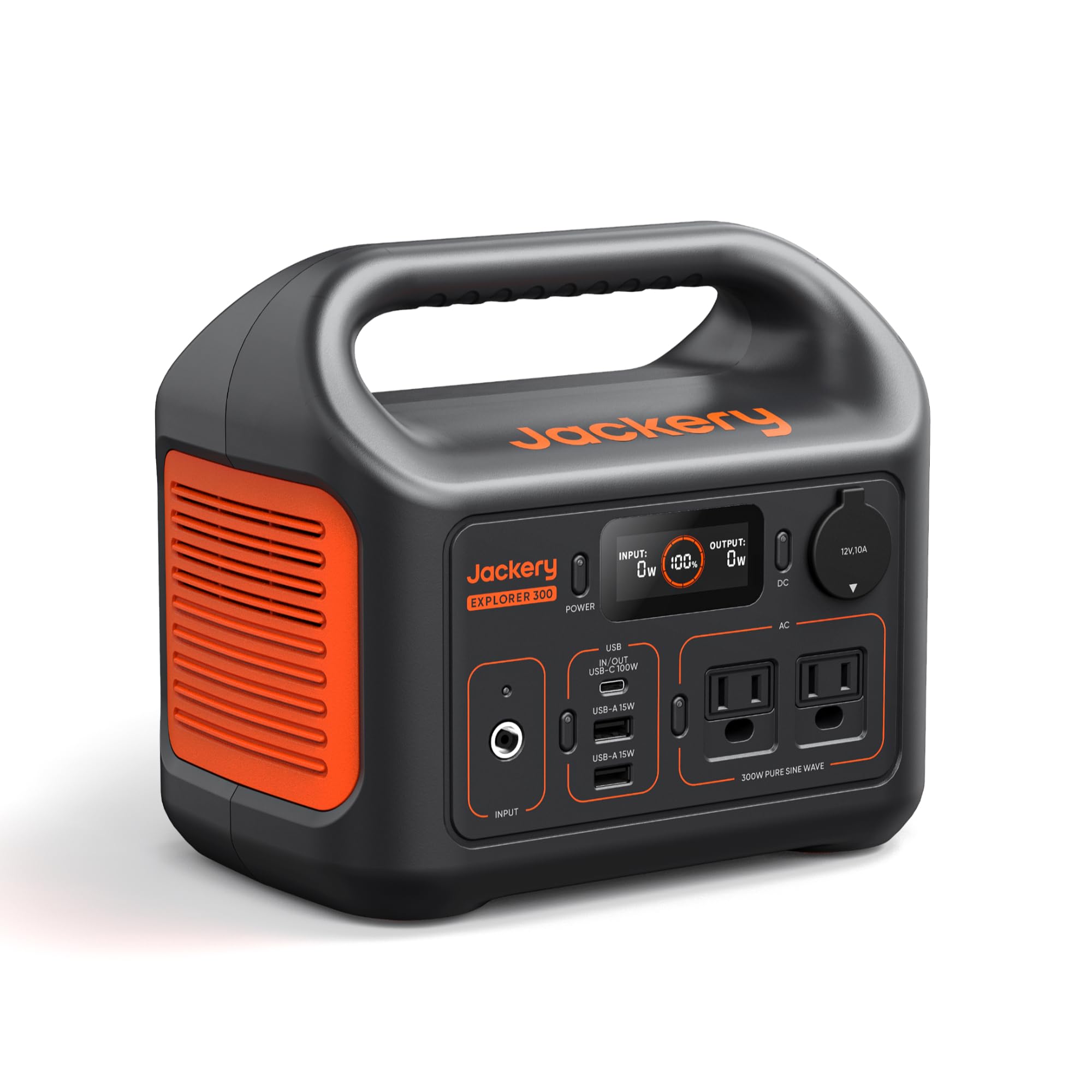
The Explorer 300 puts two pure sine wave AC outlets, a 100-watt USB-C Power Delivery port, and a 12V car socket into a 7.1-pound frame that slips into a backpack or boat locker. That means you can charge a laptop, run a CPAP machine or small fan, and top off a phone — all at once, without a noisy gas generator. Inside, a lithium iron phosphate (LiFePO4) battery holds 293 watt-hours and handles over 4000 charge cycles before dipping to 70% capacity, so it's built for years of weekend trips and seasonal cruising.

Recharging from a wall outlet takes about 4.5 hours, while a 100-watt solar panel can refill it in roughly the same time under good sun. The MPPT charge controller maximizes solar harvest, making it a practical option for off-grid anchoring where a shore-power hookup isn't available.

The sturdy plastic shell shrugs off knocks and spray common on a boat deck, and the battery management system protects against overcharging and overheating — important when you're days from a replacement. That ruggedness pairs with cells that handle temperature swings better than typical lithium-ion packs.

When powering a 60-watt CPAP through the AC port overnight or running a laptop while charging a camera battery, the 293-watt-hour capacity can drain faster than the spec suggests. Continuous AC loads near 300 watts, like a small portable air conditioner or a gaming laptop, will stretch the battery to its limit, requiring a midday recharge if you planned a full day of use.

This station fits boaters, RV travelers, and car campers who need AC power for a few hours each day and can recharge from solar or the vehicle while underway. It's the right tool when you want to keep a laptop, CPAP, or small cooler running without relying on a campsite outlet. Backpackers trimming ounces and anyone who only needs USB ports for phones will find it overbuilt — a pocket-sized power bank handles that job with less weight and bulk.

Pros

  • Light enough at 7.1 pounds to stow in a boat locker or backpack without strain.
  • Recharges from empty in about 4.5 hours and delivers steady pure sine wave power for laptops and medical gear.
  • LiFePO4 cells handle 4000+ charge cycles with minimal degradation, ideal for seasonal cruisers.
  • Simultaneously powers a laptop, a CPAP machine, and a USB speaker without overloading.
  • MPPT solar input lets you replenish the battery efficiently with a 100-watt panel while at anchor.

Cons

  • High-wattage AC loads can drain the battery noticeably quicker than the 293Wh rating implies.
Our verdict

For boaters needing a durable AC power source that recharges from the sun and handles years of use, the Explorer 300 strikes the right balance between portability and capability.
Check Latest Price
2

Best for Laptop Power Users

Anker Prime 26K 300W

91 /100
Traveler Score Outstanding

Key details

Ports
3 USB-C (up to 140W each)
Weight
1.3 lbs
Capacity
26,250mAh (99.75Wh)
Battery Chemistry
Lithium Polymer
Check Details on Amazon

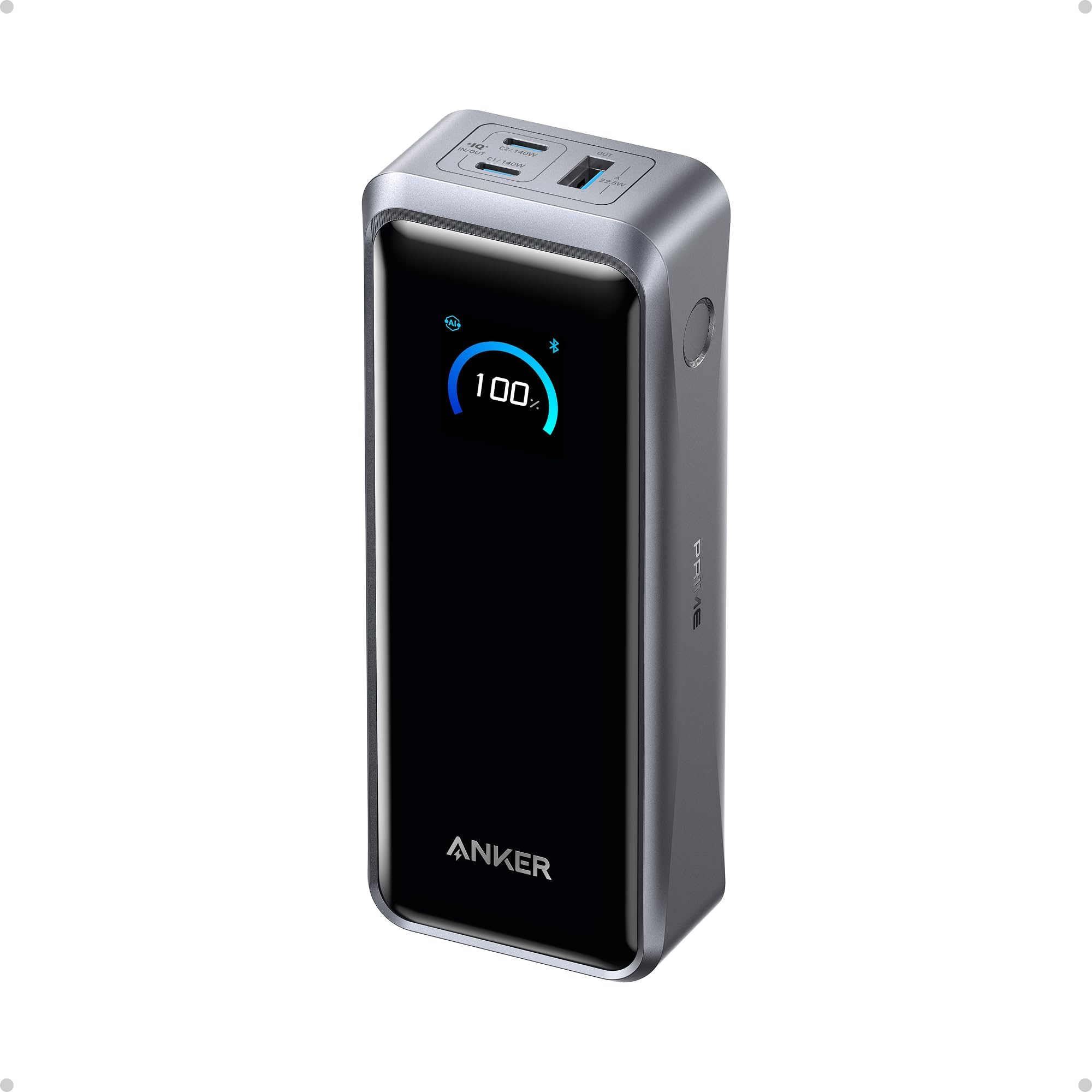
Where the SOLIX C300 DC anchors the cabin with a 288Wh LiFePO4 reservoir, the Anker Prime 26K strips out AC and raw capacity to focus on blistering USB-C speed. Dual 140W ports deliver full laptop power simultaneously, and the 250W dual-input recharge hits 50% in 13 minutes — faster than most lunch breaks ashore.

The companion app sends real-time per-port wattage and battery health to your phone, useful for monitoring charge sessions on a swaying boat. The lithium-polymer cells maintain stable output even when all three ports are loaded, and the enclosure shows no flex or creak after weeks of marine humidity — a sign of thoughtful assembly.

This power bank suits cruisers who travel with USB-C laptops, tablets, and phones — and who value recharge speed over multi-day endurance. The lack of AC means a CPAP machine or a camera battery charger with a wall plug stays behind. At a premium price, casual phone-only users will find it oversized, but for a crew needing to refuel a MacBook and two phones between ports, it’s a precisely targeted tool.

💡 Stow it in a cabin bag rather than a pocket; the weight carries the capacity and speed.

Pros

  • Charges a MacBook Pro 16 at full 140W while simultaneously fast-charging two additional devices.
  • 250W dual-input recharge takes the bank from dead to 50% in 13 minutes, minimizing downtime.
  • Enclosure and cells show consistent build quality, surviving daily knocks in a boat bag.
  • Compact enough for a carry-on, TSA-approved, and packs 99Wh into a dense, flight-safe brick.

Cons

  • The premium price may be hard to justify if you only need to top off a phone occasionally.
  • At 1.3 lbs (600g), it’s heavier than many expect for a USB-C bank
Our verdict

If every device in your kit charges over USB-C, the Anker Prime 26K cuts dock-side downtime to a minimum.

Check Latest Price
3

Best Budget AC Power Station

DaranEner 192Wh Power Station

86 /100
Traveler Score Excellent

Key details

Ports
2 AC, USB-C 60W, 2 USB-A, DC
Weight
5.7 lbs
Capacity
192Wh
Battery Chemistry
LiFePO4
Check Details on Amazon

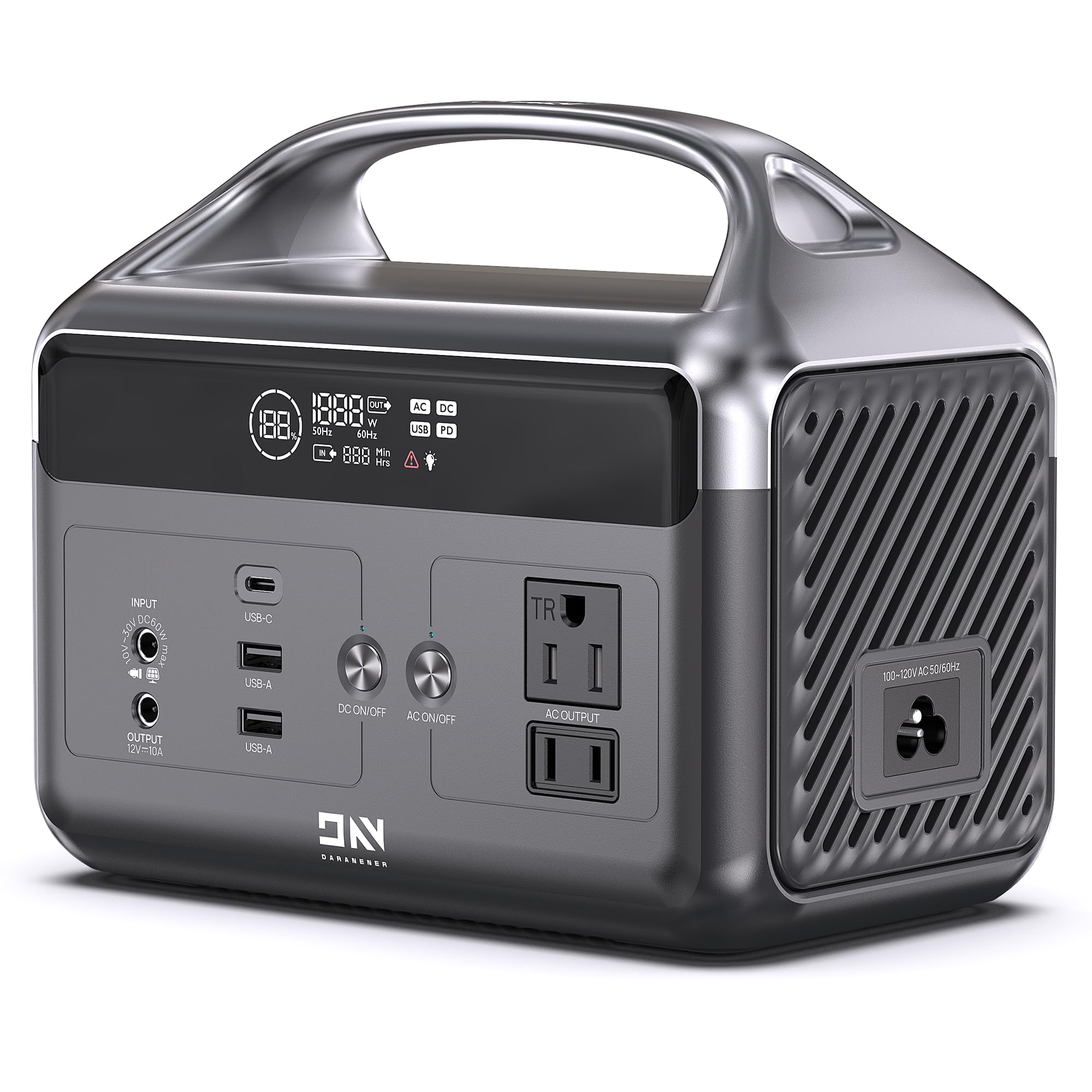
The DaranEner delivers pure sine wave AC and solar charging in a package that weighs just 5.7 pounds, nearly half as much as the top pick. It's a budget-friendly ticket to LiFePO4 longevity and clean power for those who don't need the extra capacity or longer track record of pricier units.

A 192Wh battery can recharge a laptop several times or power a small fan throughout a weekend. The 60W USB-C PD port handles most modern laptops, and the dual AC outlets supply steady pure sine wave output for sensitive electronics. MPPT solar input accepts up to 60W, letting you top off from a deck panel while underway — no DC adapter required.

This station suits boaters who need occasional AC for a laptop, tablet, or LED light on weekend cruises, not those running a mini-fridge or power tools. Campers wanting a quiet, solar-ready generator on a tight budget will appreciate the price, but anyone who expects flawless multi-year reliability should look to the top pick. Some units have developed charging inconsistencies after a few months of use, so it's best treated as a capable but unproven companion.

Pros

  • Lightweight 5.7-lb build takes up minimal space on a boat.
  • Dual pure sine wave AC outlets deliver clean power safe for sensitive electronics.
  • MPPT solar input allows topping up from a deck panel while cruising.
  • Runs a small projector, fan, or CPAP for hours

Cons

  • Occasional instances of units developing charging issues after a few months of use.
Our verdict

An affordable entry into LiFePO4 power stations for light-duty boat use, trading long-term assurance for a lower upfront cost.

Check Latest Price
4

Best Ultra-Portable

INIU 10K 45W Power Bank

91 /100
Traveler Score Outstanding

Key details

Ports
USB-C 45W, USB-A
Weight
6.4 oz
Capacity
10,000mAh (37Wh)
Battery Chemistry
Lithium Polymer
Check Details on Amazon

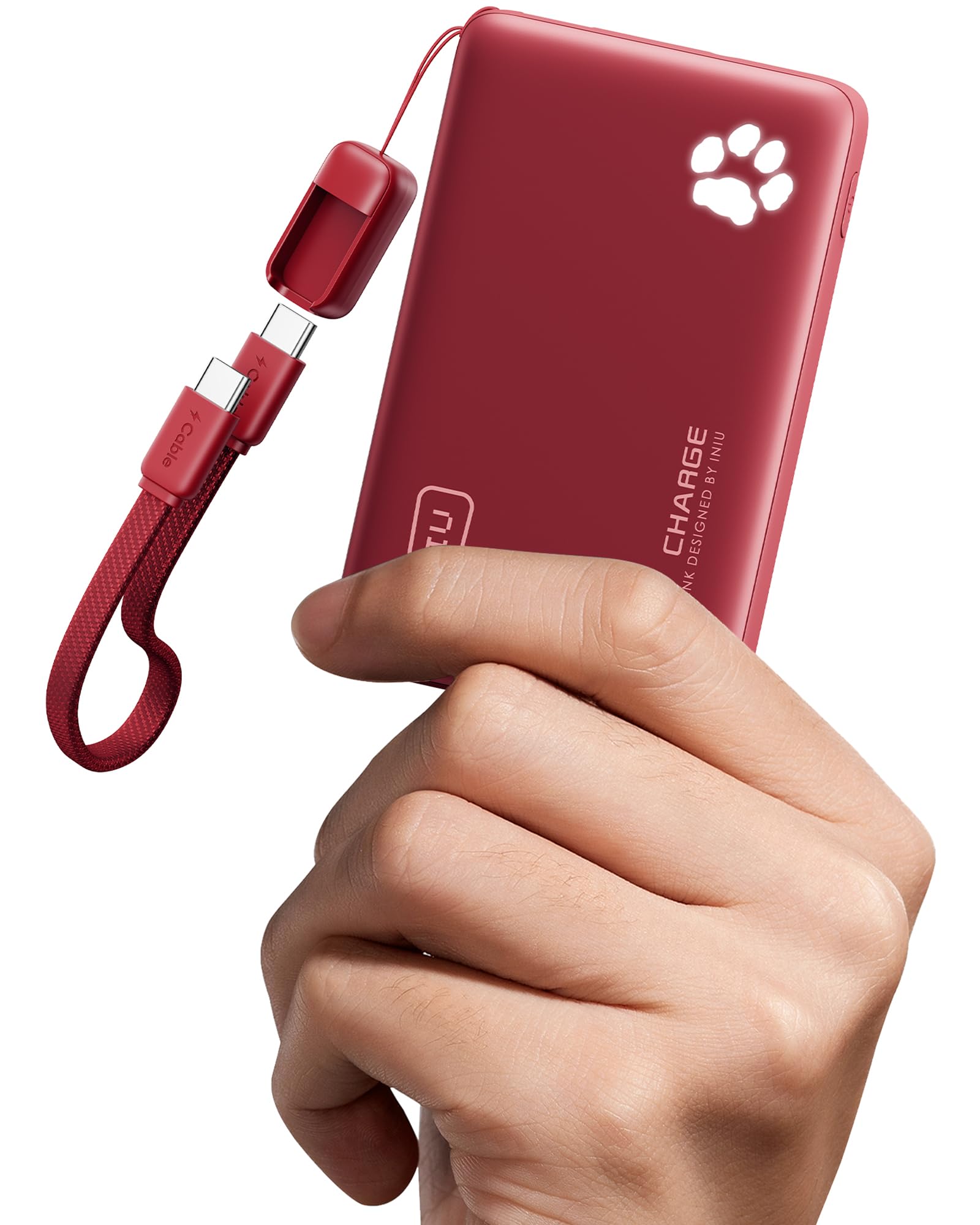
A 45W USB-C output in a 6.4-ounce bank is rare, and the INIU 10K delivers it without bulk. The detachable cable strap doubles as a carrying loop, eliminating the need for a separate cord while keeping the unit streamlined on a cluttered boat.

For a sailor or cruiser needing a phone or tablet boost in an emergency, this charger slips into a pocket and stays forgotten until needed. The 10,000mAh capacity tops up most phones once or twice, and the 45W speed refuels modern iPhones and Samsung devices faster than typical portable chargers — a full top-up happens in well under two hours. It won't charge laptops or multiple devices, and the battery chemistry means daily heavy users may see capacity fade earlier than with lithium iron phosphate alternatives.

Build quality is impressive for its price: the housing feels solid, and the detachable USB-C strap has survived daily grab-and-go handling without loosening. For travel on the water, the compact shape fits easily in a dry bag or cockpit pocket, and the 6.4-ounce weight won't weigh down a life jacket. The occasional longevity concern is manageable if you treat this as a backup rather than a primary daily charger.

Pros

  • Incredibly compact and lightweight
  • Very fast charging for phones and small tablets
  • Solid build quality with a durable detachable USB-C strap that resists wear
  • Detachable USB-C strap eliminates cable clutter and doubles as a carrying loop

Cons

  • When you need to top up a laptop or two devices at once, this bank will not meet that need
  • Under heavy daily cycling, the battery may degrade faster than LiFePO4 alternatives, making it less suited for constant use
Our verdict

The INIU 10K is the most pocketable fast charger for boat travelers who want a quick phone boost and value weight above all else, but those who need a multi-year daily workhorse should consider higher-cycle options.

Check Latest Price
5

Best All-In-One Convenience

HELLEE 15K Built-in Cables

89 /100
Traveler Score Excellent

Key details

Ports
4 built-in cables + extra ports
Weight
7 oz
Capacity
15,000mAh (54Wh)
Battery Chemistry
Lithium Polymer
Check Details on Amazon

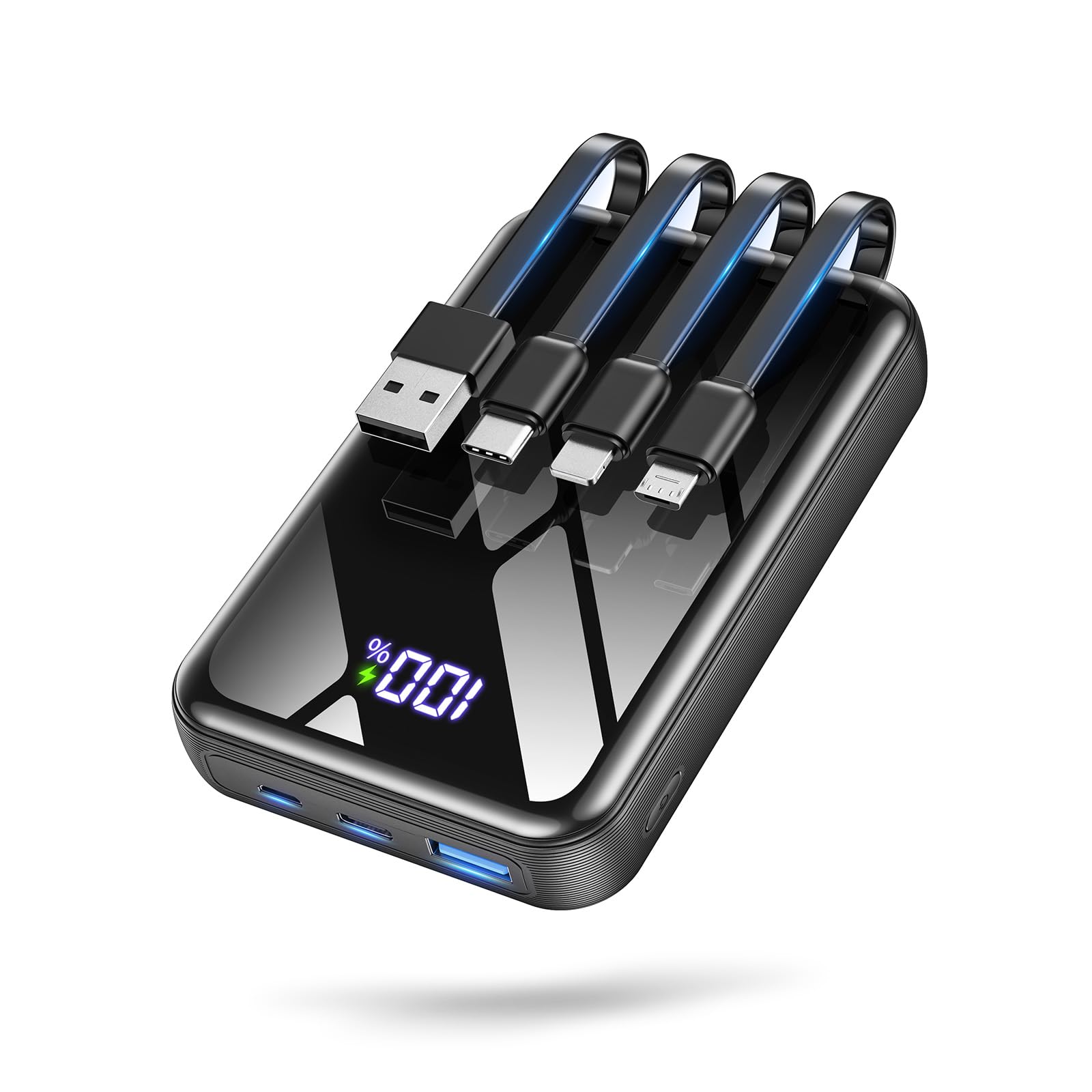
Four attached cables—USB-C, Lightning, Micro-USB, and a built-in USB-A connector—give the HELLEE 15K a unique edge for groups carrying iPhones, Android phones, and legacy gadgets simultaneously. No one needs to remember a specific cord; just unplug the needed cable and hand it over. That simplicity stands out when a crowded boat cabin turns into a spontaneous charging station for multiple devices.

At just 200 grams and slim enough to slide into a jacket pocket, it barely registers in a day bag. The 15,000mAh cell supplies roughly two full phone charges plus a tablet boost, enough to keep multiple small devices alive through a long day on the water. The built-in cables make top-ups truly grab-and-go, and the unit holds its charge well between outings.

There is a tradeoff with those integrated cables: they may not always negotiate full fast-charging speeds with every phone, occasionally defaulting to a slower pace. For boaters who casually maintain battery levels over a full day, the difference is negligible. Those who depend on rapid 30-minute top-ups between excursions might occasionally feel the lack. It also stays firmly in phone-and-tablet territory—the 22.5W output won't serve laptops—and long-term durability can vary with heavy daily cycling, something to weigh if this will be a constant companion for years.

💡 For the fastest possible charge when time is tight, connect your device via the separate USB-C port using its own cable—the built-in cables are best for convenience at standard speed.

Pros

  • Truly pocketable design—slim enough to slip into a jacket or bag without bulk.
  • Four built-in cables cover iOS, Android, and Micro-USB gadgets, eliminating separate cords.
  • Solid daily driver that holds its charge and delivers consistent output for phone and tablet top-ups.

Cons

  • Fast-charging over the built-in cables can be inconsistent—some phones may revert to standard speed.
  • Long-term reliability is uncertain; occasional units may stop holding a charge after months of use.
Our verdict

For mixed-device boat trips where eliminating cable clutter matters more than absolute top speed, the HELLEE 15K packs everything you need into a slim, pocketable frame. Those who depend on consistent fast charging or plan to cycle the bank heavily may want to consider the durability lottery before committing.

Check Latest Price
6

Best Massive Capacity USB Bank

OHOVIV 50K Built-in Cables

89 /100
Traveler Score Excellent

Key details

Ports
4 built-in cables + 3 ports
Weight
21.6 oz
Capacity
50,000mAh (185Wh)
Battery Chemistry
Lithium Polymer
Check Details on Amazon

The OHOVIV 50K crams a massive 50,000mAh cell and four built-in cables into a single brick, making it an instant USB charging station for an entire boat crew without a single extra cord to lose. Unlike generic no-name 50K banks that leave you hunting for cables, this unit arrives ready to share with iOS, USB-C, micro-USB, and full-size USB-A all permanently attached.

The 22.5W output tops up a phone at anchor in about 30 minutes to 55%, and seven total ports — three extra USB-A outputs beyond the built-in cords — let multiple devices charge at once. The permanently attached cables cover all common connectors and reduce clutter, though they aren't indestructible; repeated sharp yanks can loosen them over time. In a cabin environment where the bank stays put, this is a manageable tradeoff.

The OHOVIV 50K is very heavy at over a pound, and its full recharge commonly exceeds 10 hours — characteristics that relegate it to a permanent cabin fixture, not a grab-and-go power bank. For a boat crew that wants a no-cable-hassle charging hub, that's a worthwhile trade-off: stow it in a drawer, plug it in overnight, and let everyone top off their devices on demand.

💡 To extend the life of the built-in cables, avoid yanking them out at sharp angles; a gentle straight pull reduces connector strain.

Pros

  • Massive 50,000mAh capacity with four built-in cables eliminates the need to carry separate cords.
  • Solid build quality holds up to daily use on a boat.
  • Surprisingly portable for a 50K bank, easy to stow in a cabin drawer.

Cons

  • At 1.07 pounds, it’s too heavy for pocket carry
  • A full recharge can be slow; the bank may need 10+ hours to refill from empty.
  • The built-in cables may develop looseness or intermittent connection after repeated daily plugging and unplugging.
Our verdict

For a boat crew that needs a shared USB charging hub with zero cable hunting, the OHOVIV 50K is a hassle-free solution — just leave it in the cabin and top it off overnight.

Check Latest Price
7

USB-C Only Setups

Anker SOLIX C300 DC

90 /100
Traveler Score Outstanding

Key details

Ports
USB-C 140W/100W/15W, USB-A, car
Weight
6.2 lbs
Capacity
288Wh
Battery Chemistry
LiFePO4
Check Details on Amazon

The Anker SOLIX C300 DC packs 288Wh of LiFePO4 capacity into a 6.2-pound frame, recharging to 80% in one hour via dual 140W USB-C inputs while powering two laptops at full speed. It skips AC outlets entirely — a deliberate choice that keeps the unit compact and focused on 12V and USB-C users. For boaters running laptops, tablets, and phones exclusively over USB-C, the endurance and rapid top-ups are a real asset. If you need to run a small AC appliance, this is the wrong station, and you’ll also need to bring your own USB-C charger since none is included.

Pros

  • 288Wh capacity in a 6.2-pound, compact form that stows easily in tight boat cabins.
  • Dual 140W input recharges to 80% in one hour, and 300W total output charges two laptops at full speed.
  • Robust build with sturdy ports and a high-quality finish that holds up in a marine environment.

Cons

  • No AC outlets or included wall charger
  • USB-C ports may, over time, develop connectivity hiccups that require unplugging and reconnecting.
Our verdict

For USB-C-only boaters and van-lifers who value endurance and fast recharge over AC flexibility, the SOLIX C300 DC is a capable, compact energy hub — skip it only if you need to power a wall-plug appliance.

Check Latest Price
8

Occasional Emergency

MARBERO 88Wh Power Station

86 /100
Traveler Score Excellent

Key details

Ports
1 AC, USB-C PD, USB-A QC3.0, DC
Weight
3.2 lbs
Capacity
88Wh (24,000mAh)
Battery Chemistry
Lithium Ion
Check Details on Amazon

The MARBERO 88Wh station gives you an AC outlet at a price that's hard to beat. It weighs just over three pounds and easily stows in a console or under a seat. For topping up smartphones, tablets, and small LED camp lights over a weekend trip, it gets the job done without dragging a heavy brick aboard.

Capacity, however, can feel more like a 40-50Wh battery in practice. Running a laptop or portable fan drains it quickly, and some units may stop holding a charge after just a few outings. That makes this a loaner or an emergency spare, not a daily workhorse. Boaters who accept that risk and only need casual USB charging will find it a passable extra.

Pros

  • Compact and portable for an AC-capable bank, slipping into a boat bag or console without bulk.
  • Keeps phones, tablets, and small camping lights charged through a weekend on the water.

Cons

  • The AC outlet may not deliver sustained power for laptops; runtime can be brief with even modest loads.
  • Some units can stop working after only a few uses, leaving you without backup power unexpectedly.
Our verdict

A low-cost roll of the dice for boaters who only need phone top-ups and a backup light — not for laptops or critical devices. If you carry a 12V charger as a fallback, a sudden shutdown becomes a minor frustration.

Check Latest Price
9

Budget High-Capacity

YBYP 50K Power Bank

87 /100
Traveler Score Excellent

Key details

Ports
4 built-in cables + 3 extra ports
Weight
12 oz
Capacity
50,000mAh (192.5Wh)
Battery Chemistry
Lithium Ion
Check Details on Amazon

With a claimed 50,000mAh and four built-in cables, the YBYP bank can charge a small crew's phones and tablets for days on the water. Its compact 12-ounce build stows easily. Seven total ports (four integrated cables plus three extras) handle multiple devices at once. The catch: little verified performance data exists, so actual charge capacity and speeds are unknown. For casual day sails, that gamble may be tolerable at this price. For critical navigation gear or multi-day trips, the uncertainty around a power source becomes a liability.

💡 Before heading out, run the bank through a full charge cycle with your own devices to gauge actual endurance — it helps avoid surprises on the water.

Pros

  • Built-in cables for USB-C, iOS, USB-A, and Micro-B eliminate the need to carry extra cords.
  • Advertised 50,000mAh capacity can recharge a typical smartphone over 10 times.
  • Compact design at 4.8 x 3.1 x 1.1 inches and 12 oz slips into a boat bag without adding bulk.

Cons

  • No AC outlet, so it cannot power small appliances or laptop chargers that need a wall plug while on the boat.
  • When relying on a single bank for a weekend at anchor, actual runtime may be noticeably shorter than the 50,000mAh label suggests, especially with fast-charging devices.
Our verdict

This is a low-cost experiment for casual day sailors who want a communal USB charger and don't mind the unknown capacity. For any scenario where power certainty matters, step up to a power bank with documented real-world performance.

Check Latest Price

How to Choose

Capacity

Headline milliamp-hour numbers look impressive, but they’re measured at the battery’s internal voltage (usually 3.7V). When converted to 5V USB or 120V AC, you lose a chunk to heat and circuit overhead. A 50,000mAh bank might realistically deliver 5–7 full phone charges, not the 10+ the math suggests.

If you run a laptop drawing 60W continuously, a 300Wh station gives you about 4.5 hours of runtime, assuming no other loads. Match the watt-hour (Wh) rating to your device’s power draw, not the raw mAh sticker.

AC Outlets

A pure sine wave inverter produces clean power that sensitive electronics—CPAP machines, medical devices, some laptop chargers—expect. Modified sine wave inverters found in cheaper stations can cause buzzing, overheating, or outright refusal to run.

Power banks skip inverters entirely, so they’re limited to DC via USB. If any device requires a proprietary AC brick, you must step up to a portable power station with an outlet.

Weight and Size

LiFePO4 chemistry adds thermal stability and cycle life, but it’s inherently less energy-dense than lithium polymer. A 300Wh LiFePO4 station can weigh over 7 pounds, while a polymer power bank of similar watt-hours might weigh half as much—but won’t survive as many charge cycles.

On a boat, a heavier station stays put in a locker; a lightweight bank can live in your backpack. Choose based on whether you prioritize long-term durability or grab-and-go mobility.

Battery Chemistry

LiFePO4 batteries tolerate 3,000–4,000 full cycles before dropping to 70% capacity, outlasting standard lithium-ion packs by a factor of 3–5. They also handle high cabin temperatures better and are far less prone to thermal runaway.

The trade-off is weight and size. Lithium polymer or lithium-ion units pack more power per ounce, but their lifespan can be an issue if you’re recharging daily on a multi-week trip.

Solar Input

Solar input lets you trickle-charge a station from a deck-mounted panel, extending off-grid endurance. Look for MPPT controllers, which harvest 20–30% more energy from the same panel compared to cheaper PWM circuits.

A 100W solar panel can refill a 300Wh station in about 4–5 hours of strong sun—handy if you spend days at anchor without running the engine.

Ports

USB-C Power Delivery (PD) ports negotiate the right voltage with your device; a 100W PD port can fast-charge a MacBook Pro, while a standard USB-A might top out at 12W. When using a power station, dedicated AC outlets free up USB ports for phones and tablets.

Built-in cables eliminate clutter but become a single point of failure. A unit that adds extra ports on top of fixed cables means a broken cord won’t leave you without any way to charge.

Frequently Asked Questions