8 Best One Person Backpacking Tent of 2026: Weight, Space, Dryness

The best one person backpacking tent balances packed weight, usable floor space, and dry nights. This guide helps solo travelers pick by real trail fit, not spec-sheet claims.

Most 1-person backpacking tents look similar on paper: bold waterproof ratings, trail weights, and peak heights. Once pitched, the differences show up fast. Fiberglass poles are the most common durability issue, condensation collects on the fly even when the tent does not leak, and a 35-inch peak height does not mean you can sit up.

The goal is not to find the lightest or cheapest option. It is to match the shelter to how you actually camp and travel: all-day hikes, gear strapped to a motorcycle, or cold shoulder-season nights. Weight, floor dimensions, and pole material matter more than any single advertised spec.

A few extra ounces of aluminum poles are worth more than a rainfly that sags into the inner tent. And floor width, not peak height, determines whether a solo tent feels comfortable after a long day.

1

Best Overall

ALPS Lynx 1

92 /100
Traveler Score Outstanding

Key details

Interior
90x32 in, 36 peak
Waterproof
1500 fly / 2000 floor
Ventilation
Moisture transfer in damp conditions
Trail Weight
3.3 lb
Check Details on Amazon

The Lynx 1 pairs a 3.3-lb trail weight with aluminum poles and a 90-inch floor, giving solo backpackers a free-standing shelter that fits a standard load without dominating the pack. The color-coded poles and clip attachment keep setup fast and repeatable, even in wind or fading daylight. That combination is rare at this price point; comparable tents either cost more or use heavier materials. It also sets up in about the time it takes to sort your sleeping bag, which matters after a long approach.

The 90-inch floor is longer than typical 1P tents in this weight class, so it fits a standard sleeping pad without curling your feet. The 32-inch width is narrow, but it is within the norm for solo shelters. With the fly off, the mesh panels give the tent a wider feel than bivy-style options at similar weights.

On the trail, the 1500 mm fly and 2000 mm floor handle typical three-season rain, and the zippers stay smooth through repeated open-close cycles. On exposed ridgelines, the low silhouette keeps its shape without constant re-tensioning, and the aluminum poles take the kind of handling that fiberglass sets would not. The stress points stay tight in wind, which is where budget tents start to sag or deform.

This tent is best for first-time and regular solo backpackers who want a dependable shelter without chasing ultralight margins. The interior is snug for larger campers โ€” the 36-inch peak height and 32-inch width work for lying down, but not for sitting upright. Damp-weather campers will also want to manage fly condensation, especially when vents are closed. Those two boundaries matter, but they are also the only real compromises in a design that otherwise delivers on its spec sheet. For anyone who treats a tent as a place to sleep rather than a lounge, the tradeoff is easy to accept.

At a mid-range price, the Lynx 1 brings aluminum poles and a 3.3-lb trail weight that comparable tents match only in heavier builds or pricier packages. The packed size stays reasonable for a backpack, and the low profile sheds wind better than taller solo shelters. ALPS Mountaineering's support network also matters when a pole section or clip needs replacing, which is not something every online-only tent brand can say. That combination of measured weight, sturdy hardware, and simple pitch keeps it at the top of the solo-backpacking list.

๐Ÿ’ก If you're over 6 feet, test the 32-inch width with your sleeping pad before a long trip โ€” the 90-inch length is not the limiting dimension.

Pros

  • Color-coded clip poles make setup fast and repeatable, even late in the day.
  • Zippers and stitching hold up through repeated trips and frequent packing.
  • At 3.3 lb, it fits easily in a backpack without forcing gear cuts.
  • The low profile and aluminum poles hold shape in gusty, exposed campsites.
  • Mid-range pricing undercuts comparable tents that don't include aluminum poles.

Cons

  • Rainfly can transfer moisture in damp conditions, with condensation appearing near the vent slots.
  • Interior can feel cramped for sitting up; larger users should verify dimensions before buying.
Our verdict

For solo backpackers who want a no-drama three-season tent at a weight that won't dictate their route, the Lynx 1 is the one to carry.
Check Latest Price
2

Best Value All-Rounder

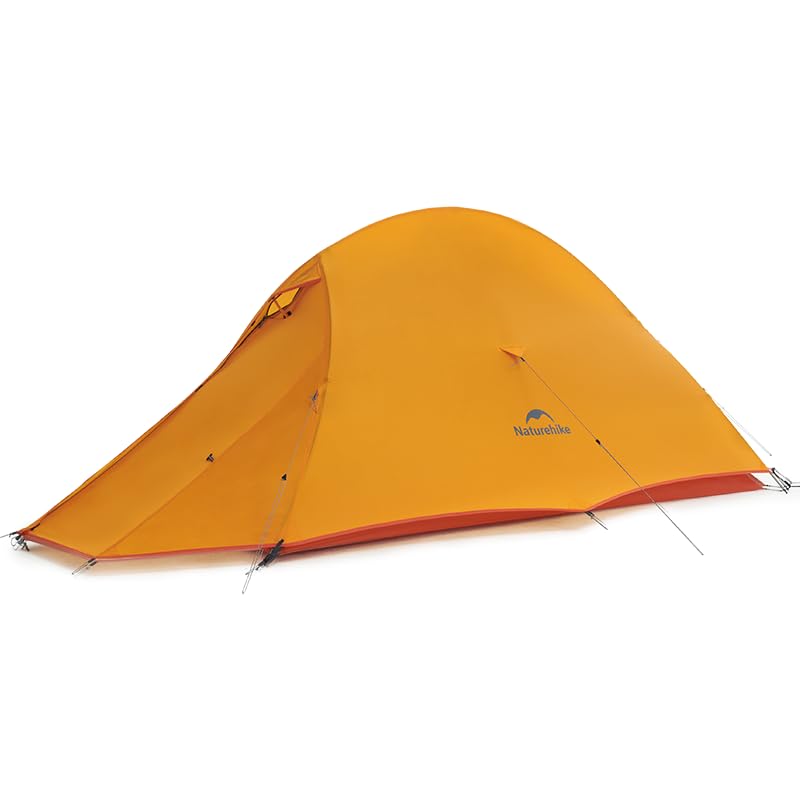
Naturehike Cloud Up 1P

86 /100
Traveler Score Excellent

Key details

Interior
82.7x35.4 in, 43.3 peak
Waterproof
3000+
Ventilation
Airflow limited with fly closed
Trail Weight
3.7 lb
Check Details on Amazon

Aluminum poles and an included footprint put the Cloud Up 1P in the value all-rounder lane for solo backpackers at a mid-range price. Setup is quick once the clip layout is familiar, and the 3.7-lb trail weight keeps it light enough for multi-day trips without chasing the sub-3-lb ultralight specialist's stripped-down priorities.

Cyclists, bikepackers, and first-time backpackers who want one tent for ordinary three-season trips are the natural audience. At 43.3 inches, the peak height lets an average-height user sit up without crowding the mesh. The 82.7-inch floor fits an average-size sleeper, but the 35.4-inch width is snug for larger adults. Lightweight stakes and thinner components can bend, so durability expectations should be moderate; for the intended role as an affordable solo backpacking tent, that tradeoff is acceptable.

The 3000 mm fly holds up in ordinary three-season rain, and the packed size suits the bottom of a loaded backpack. Construction quality is in line with the price point, and the included footprint removes one extra purchase from the first-trip checklist.

Pros

  • Pitching is quick once the clip layout is familiar.
  • Aluminum poles give a sturdier frame than budget fiberglass rivals.
  • At 3.7 lb, the trail weight stays packable for all-day carries.
  • The included footprint cuts one extra expense for new backpackers.

Cons

  • With the rainfly sealed, airflow slows and warm nights feel stuffier.
  • Fly and floor fabrics can wear on abrasive ground, so site selection matters more than with heavier tents.
Our verdict

Solo hikers who accept 3.7 lb as their weight budget get a tent that balances price, durability expectations, and setup ease without pretending to be an ultralight shelter.

Check Latest Price
3

Best Ultra-Budget Pick

Night Cat Upgraded 1P

88 /100
Traveler Score Excellent

Key details

Interior
83x45 in, 45 peak
Waterproof
3000
Ventilation
โ€”
Trail Weight
4.4 lb
Check Details on Amazon

Night Cat's Upgraded 1P is the ultra-budget entry point with a clip-based frame, a 45-inch peak, and an 83x45-inch floor. It doesn't use aluminum poles like the all-rounder in this set, but it offers more interior room and faster setup than the budget starter. For a first overnight trip, that combination matters more than pole material.

The clip frame is the main reason to choose this tent: sections snap into place quickly, and the 83x45-inch floor holds a sleeping pad plus a backpack without feeling cramped. At 4.4 lb, the trail weight suits motorcycle and bike campers, and the 45-inch peak gives enough space to sit up. The three-season build handles moderate weather and packs down smaller than the floor dimensions suggest.

This tent fits first-time backpackers on a tight budget, scouts, teens, and motorcycle or bike campers who want a compact shelter at an entry-level price. The 4.4-lb trail weight is reasonable for a solo shelter with this much floor space. Fiberglass poles and occasional QC variance set the ceiling at moderate tripping rather than repeated heavy-rain expeditions; if you need aluminum-pole durability for alpine weather, the all-rounder in this set is the better direction.

Pros

  • Clip-based frame goes up fast without threading poles
  • Build quality holds up at a budget price
  • 83x45-inch floor fits one camper plus gear
  • 45-inch peak offers useful headroom in a solo shelter

Cons

  • Rain resistance depends on a taut pitch; steady downpours can push moisture into the tent.
  • Pole sections can arrive damaged or sustain damage during setup.
Our verdict

For buyers who want the fastest setup in the budget 1P class and can accept fiberglass poles, this tent delivers more shelter per dollar.

Check Latest Price
4

Best for First-Time Backpackers

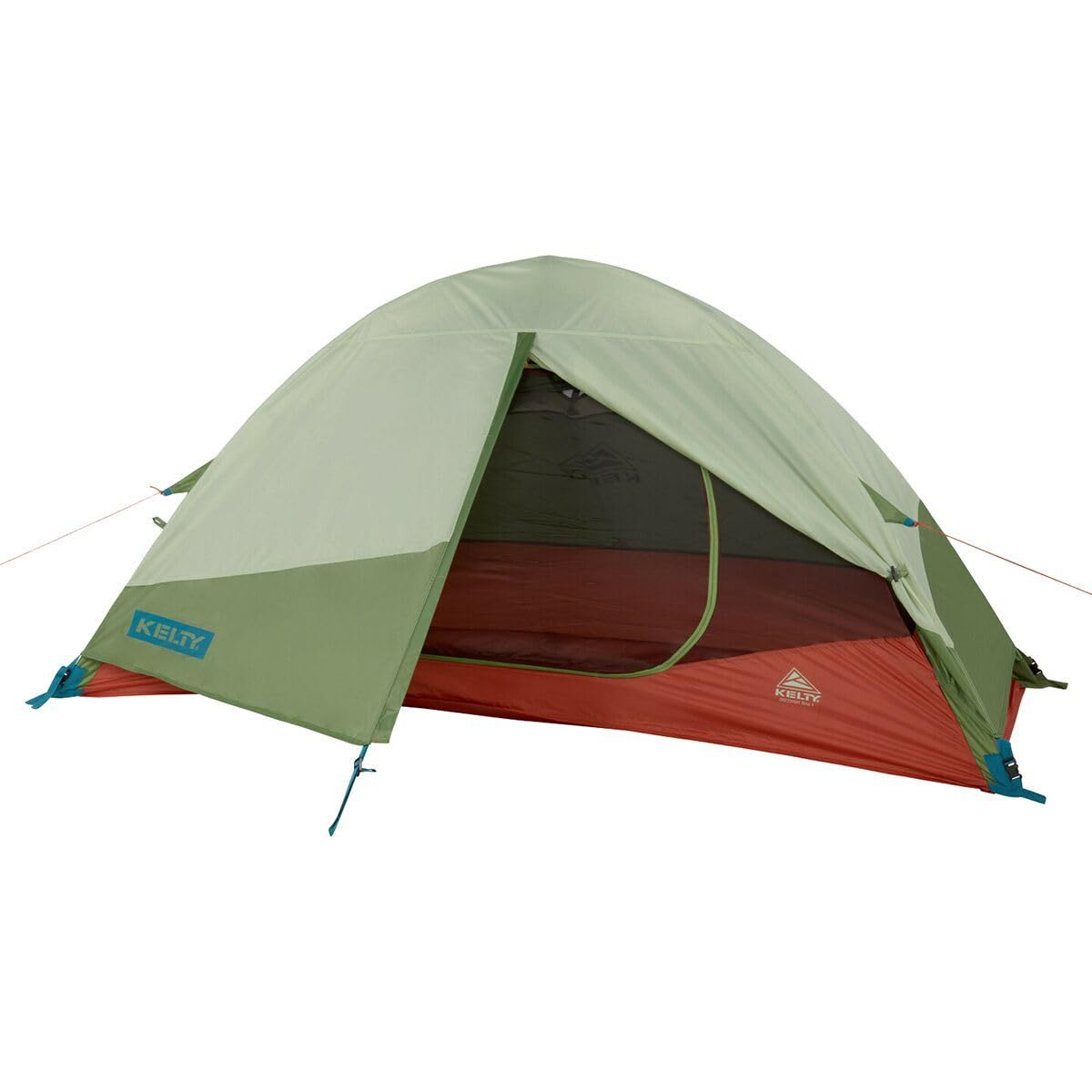
Kelty Discovery Trail 1P

87 /100
Traveler Score Excellent

Key details

Interior
90x31 in, 40 peak
Waterproof
1200
Ventilation
Fly ventilation limited when closed
Trail Weight
3 lb 6 oz
Check Details on Amazon

Pre-attached guylines and color-coded clips make the Kelty Discovery Trail 1P one of the least intimidating solo tents to pitch. The poles are aluminum rather than fiberglass, a step up at this price point. At 3 lb 6 oz it lands in a reasonable zone for weekend packs, so beginners do not need to trim every ounce. Mid-range pricing keeps this affordable for a first tent.

Best suited to beginner backpackers and scout troops, this tent rewards a gentler learning curve. The 1200mm fly is lower than premium tents, so plan around moderate rain rather than all-day downpours. Netting and zipper QC can vary between units, so a quick post-pitch inspection is a sensible habit. A lifetime warranty adds a layer of protection for first-time owners.

The 90-inch floor fits average-height solo campers, and the 40-inch peak allows sitting up without brushing the mesh. The 31-inch width keeps the footprint small on tight tent pads, which helps on crowded campsites. Setup stays quick even on the first try, which is why this tent works well for scout outings or group trips where several shelters go up at once. The interior is functional for sleeping and changing clothes, though it is not a lounge space.

Pros

  • Pre-attached guylines and color-coded clips make the first pitch genuinely quick.
  • 90-inch floor and 31-inch width give average-height solo campers enough room to sleep without feeling squeezed.
  • 3 lb 6 oz trail weight is light enough for weekend backpacking without special gear.
  • Aluminum poles and a lifetime warranty add long-term value at a mid-range price.

Cons

  • Ultralight thru-hikers counting ounces will pass on the 3 lb 6 oz trail weight; it suits weekend packs better.
  • With the fly fully sealed for rain, airflow drops and the interior warms up noticeably.
Our verdict

Beginner backpackers who want a forgiving first 1P tent will find it here. If ultralight or heavy-rain security is the goal, this is not that tent; for learning the basics, the trade is fair.

Check Latest Price
5

Best for Cold-Weather/Winter Camping

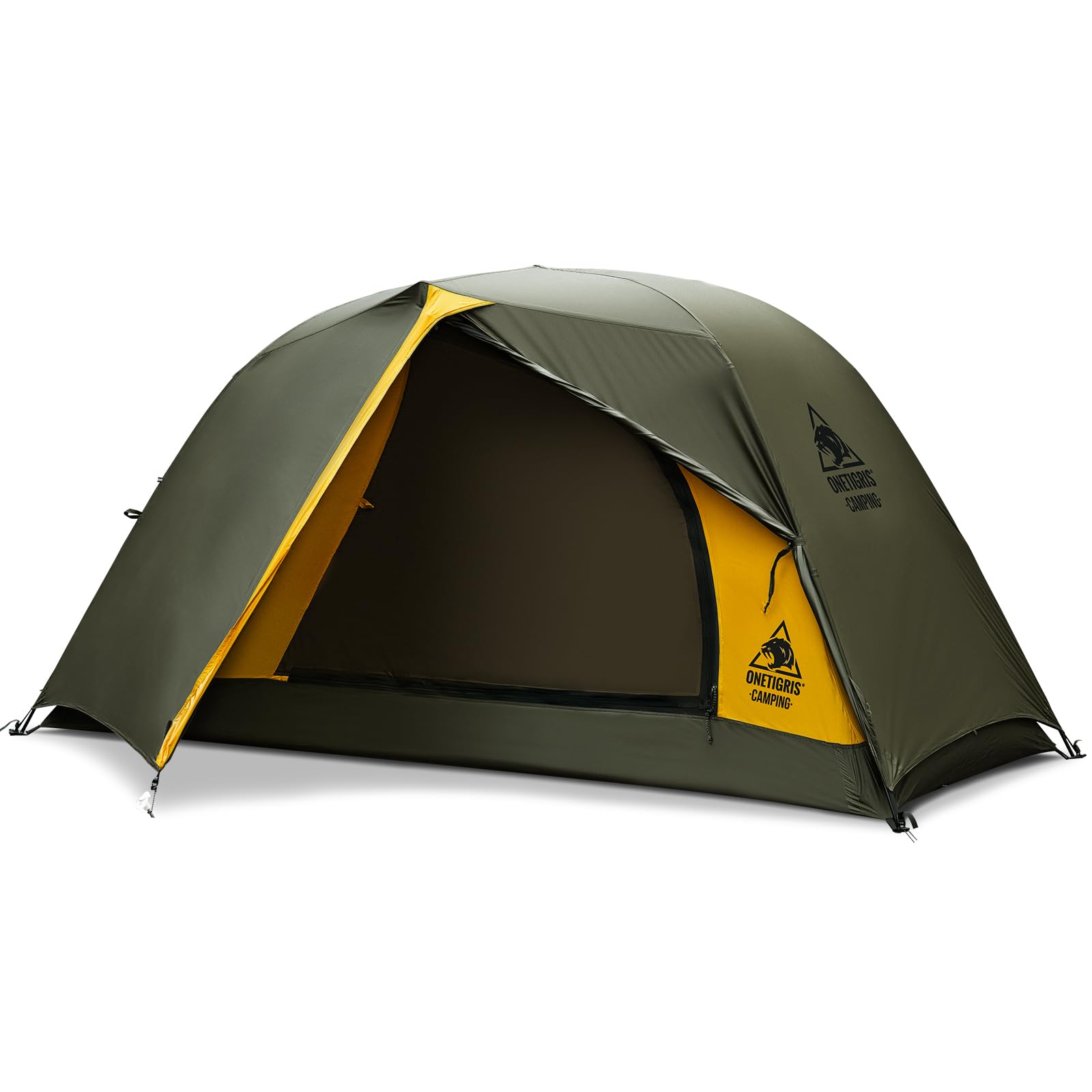
OneTigris Stella 1P

90 /100
Traveler Score Outstanding

Key details

Interior
84.7x41.3 in, 44.5 peak
Waterproof
3000
Ventilation
Condensation with sealed fly
Trail Weight
4.2 lb
Check Details on Amazon

The Stella 1P is a genuinely warm, winter-capable solo shelter with a 44.5-inch peak and a removable blackout fly that holds heat better than the mesh-heavy 3-season tents in this lineup. That makes it the standout pick when the overnight forecast drops below freezing and you still want a 1-person footprint rather than a bulky 2-person winter palace.

Setup is fast: the pole-and-clip frame goes up without guesswork, and the 84.7 x 41.3-inch floor fits a wide pad plus the gear you don't want in the vestibule. The low profile handles gusty ridgelines with minimal sidewall flutter, and the 3000 mm fly has held up in prolonged rain without wetting through. For a 4-season shelter at this weight, the balance of interior comfort and weather protection is higher than the fiberglass pole set might suggest.

For backpackers whose priority is cold-weather capability rather than ultralight pack weight, the Stella is the 4-season counterpoint to the 3-season solo tents in this lineup. At 4.2 lb it is heavier than those options, so ultralight hikers should keep looking. Winter campers and bushcrafters get a reward that shows up below freezing: enough headroom to dress for cold nights and enough heat retention to take the edge off the tent.

Pros

  • Build quality holds up to regular winter use, with durable stitching and a stable pitch.
  • Pole and clip setup goes fast, so a cold-weather camp gets closed in quickly.
  • Interior space fits one person plus gear, with enough headroom to sit up and change layers.
  • Warmth in cold conditions makes this a practical shelter for sub-freezing overnight trips.

Cons

  • When the fly is sealed for warmth, condensation can build on the interior; active venting is part of the routine.
  • The fiberglass pole set is heavier than aluminum-pole alternatives, which matters for long backpacking approaches.
Our verdict

The Stella is the winter-first solo shelter here, best for backpackers who measure weight in warmth rather than ounces.

Check Latest Price
6

Best for Tall Campers

Camppal 1P Tent

85 /100
Traveler Score Excellent

Key details

Interior
98.4x35.4 in, 35.4 peak
Waterproof
3500-4000
Ventilation
โ€”
Trail Weight
3.8 lb
Check Details on Amazon

The Camppal's 98.4-inch floor is the longest in this solo-tent lineup, and the aluminum pole frame keeps trail weight at 3.8 lb. The all-rounder in this set balances headroom and packability, but this tent spends its space on sleeping length. The single-pole setup is quick to manage: stake the corners, lift the pole, clip the body.

This is a sleep-first shelter for tall solo backpackers who rank length above sit-up comfort. The interior is low and side-tapered, so it can feel claustrophobic, and heavy rain is not this tent's strong suit; those boundaries separate it from the all-rounder. If you rarely sit up in camp and want a simple, light pitch, this gets the job done.

The construction is solid and the pitch stays simple, with the aluminum pole adding stiffness that fiberglass rivals at a similar weight lack. For a solo shelter in this price tier, the overall package is easy to live with.

Pros

  • 98.4-inch floor gives tall sleepers room to stretch out.
  • Single aluminum-pole setup pitches fast with minimal fuss.
  • 3.8-lb trail weight is manageable for solo backpacking or motorcycle camping.
  • Aluminum pole and solid build justify the mid-range price.

Cons

  • Interior is long but low, and side-tapered walls make sitting up difficult.
  • Pole sections can vary in length, which may make the frame sit unevenly.
  • Heavy rain can work through seams despite the high waterproof rating.
Our verdict

For tall solo campers who value sleeping length over headroom, the Camppal is a cost-effective choice. If sit-up comfort or weather protection matters more, the all-rounder in this lineup is the safer route.

Check Latest Price
7

Weekend Backpackers

Featherstone UL Obsidian

87 /100
Traveler Score Excellent

Key details

Interior
81x38.4 in, 45 peak
Waterproof
2000 fly / PU floor
Ventilation
โ€”
Trail Weight
3.6 lb
Check Details on Amazon

Aluminum poles, a 45-inch peak, and an included footprint make this one of the more complete lightweight packages at a mid-range price. The 3.6-lb trail weight packs down small enough for weekend backpacks and motorcycle loads, and the 81 x 38.4-inch floor fits a standard pad with room for gear. Assembly is easy, and the 2000 mm fly and PU-coated floor handle ordinary three-season rain. The included footprint and gear loft mean no separate accessories to buy before the first trip. It is light but not ultralight; weekend-pack versatility is its ceiling, not a thru-hiker tool.

Pros

  • Packed size and 3.6-lb trail weight fit weekend packs and motorcycle loads.
  • Aluminum poles, included footprint, and gear loft add real value at a mid-range price.
  • Setup is quick enough for a solo hiker at the end of a long day.

Cons

  • Standard pads fit easily, but wide pads may leave the 38.4-inch floor feeling tight.
  • Solo campers much above six feet may find the 81-inch floor short for stretched-out sleep.
Our verdict

Weekend ridgelines and overnight bike trips are where the included footprint, gear loft, and moderate trail weight pay off.

Check Latest Price
8

Ultralight Hikers

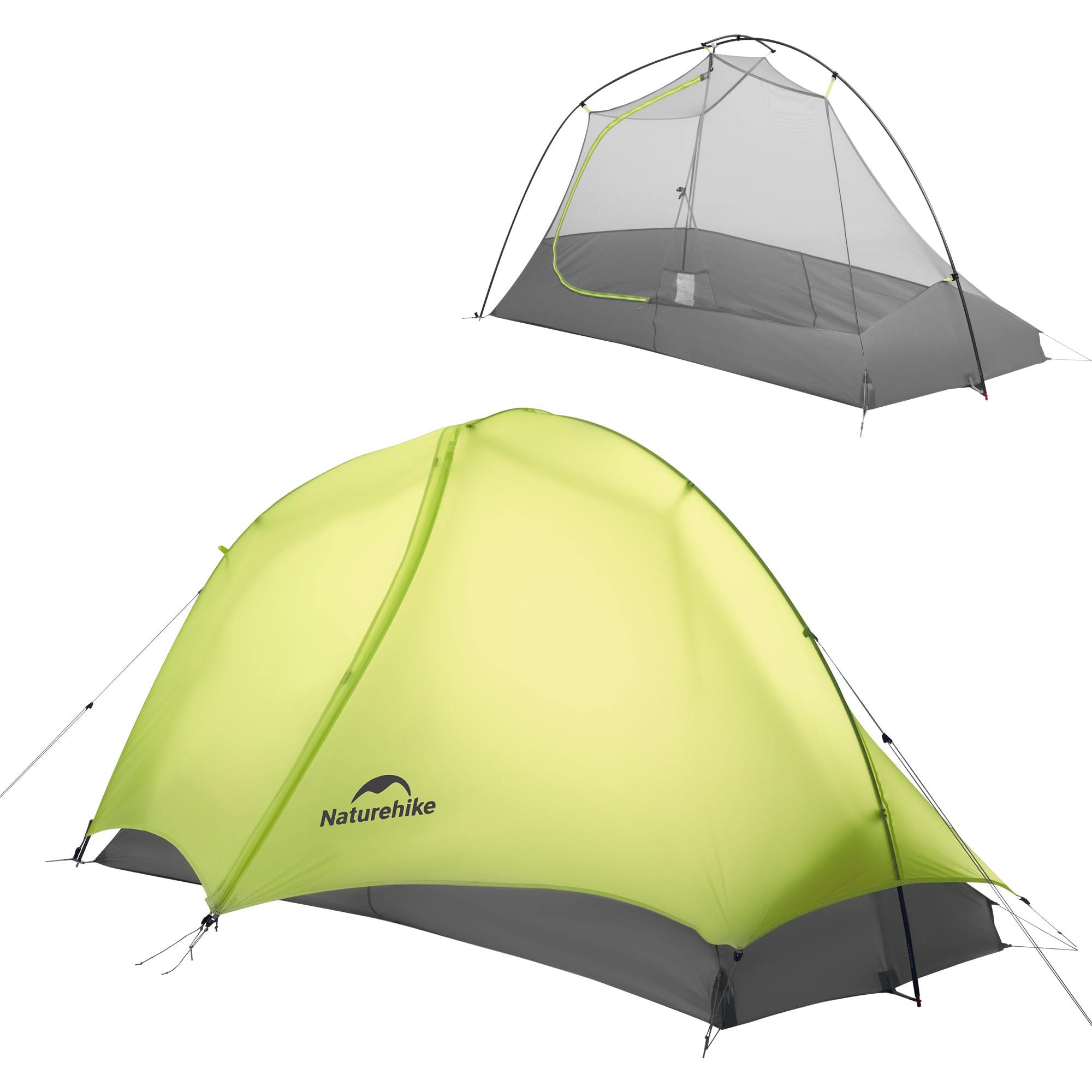
Naturehike Star Trail 1P

83 /100
Traveler Score Excellent

Key details

Interior
86.6x59.1 in, 41.3 peak
Waterproof
1500 fly / 3000 floor
Ventilation
Condensation without top vent
Trail Weight
2.3 lb
Check Details on Amazon

At 2.3 lb, the Star Trail is one of the lighter free-standing three-season solo shelters in this lineup, and the aluminum frame sets up without trekking poles. The 86.6 x 59.1-inch floor suits average-size backpackers, and the packed size fits a bikepacking bag. Those weight savings come with selection tradeoffs: the rainfly has no top vent, so humid nights can leave condensation on the inner surfaces, and taller or broader campers can feel cramped in the tapered floor. That combination keeps it out of the all-rounder picks; it is a specialist for dry-climate thru-hikers and weight-conscious solo travelers who sleep compact.

Pros

  • A free-standing aluminum-pole shelter at 2.3 lb, this keeps pack weight low on multi-day carries.
  • The 86.6 x 59.1-inch floor gives an average-size solo sleeper room for a pad and a small gear bag.
  • Setup is quick because the frame holds its shape without needing trekking poles.

Cons

  • Taller or broader campers can feel cramped in the tapered 59.1-inch-wide floor.
  • On humid nights, the rainfly's lack of a top vent can allow condensation to build on the inner surfaces.
Our verdict

For average-size thru-hikers and bikepackers who count ounces and camp in drier conditions, the Star Trail is the ultralight specialist worth the premium price. If headroom or humid-weather venting matters more than pack weight, another solo tent fits better.

Check Latest Price

How to Choose

Trail Weight

Every ounce cut from a tent comes from somewhere: thinner fabric, shorter poles, or a smaller floor. A 2.5-lb tent feels great on the trail but can mean a tight interior and less durable materials. A 3.5-lb tent is still comfortable to carry and gives you more room and a stronger frame.

Pole Material

Fiberglass poles are cheap and flexible, but they fatigue after repeated bending and can splinter under wind load or a wrong pitch. Aluminum poles bend and return to shape, so they survive mistakes that ruin fiberglass. If you camp more than a few weekends a year, the extra money for aluminum is the most effective upgrade in this category.

Waterproofing

A waterproof rating tells you how much water pressure the fabric can handle before soaking through. It does not tell you whether the seams are sealed, whether the rainfly is pitched taut, or whether the fly touches the inner tent. In practice, condensation from breathing is a more common cause of wet walls than rain, so waterproof numbers alone do not guarantee a dry night.

Interior Fit

Peak height is measured at the very center, so a 43-inch number does not mean you can sit up near the door. Floor width is what decides whether you sleep comfortably or spend the night fighting the walls. Check your sleeping pad width against the tent floor before you commit.

Ventilation

A sealed rainfly keeps rain out but traps the humidity from your breath. Mesh inner walls and fly vents let air move; a fly that drops low over the tent walls will collect condensation and drip back onto you. Keep vents open and stake the fly out to create airflow even in damp weather.

Frequently Asked Questions