Best 2-Person Backpacking Tents of 2026

A two-person tent is usually a one-and-a-half-person tent with optimistic marketing. Put two full-size pads inside most of them and the walls bow, the gear ends up in the doorway, and somebody's shoulder is against damp nylon by 2 a.m. A good one buys you a fast pitch at the end of a long day and enough floor that two adults can sleep without apologizing to each other. I've spent eight months sleeping in, sweating in, and occasionally swearing at 12 of them to find the ones that deliver it.

The spec sheet won't tell you the two things that matter most. Split weight matters more than total weight — a tent that divides into two three-pound bundles carries very differently than one that dumps all of it into a single stuff sack. And check what's missing: a footprint sold separately, stakes that bend on the first trip, a rain fly that needs re-staking when the weather turns. Below are the tents that held up to both the scale and the storm.

1

Best Overall

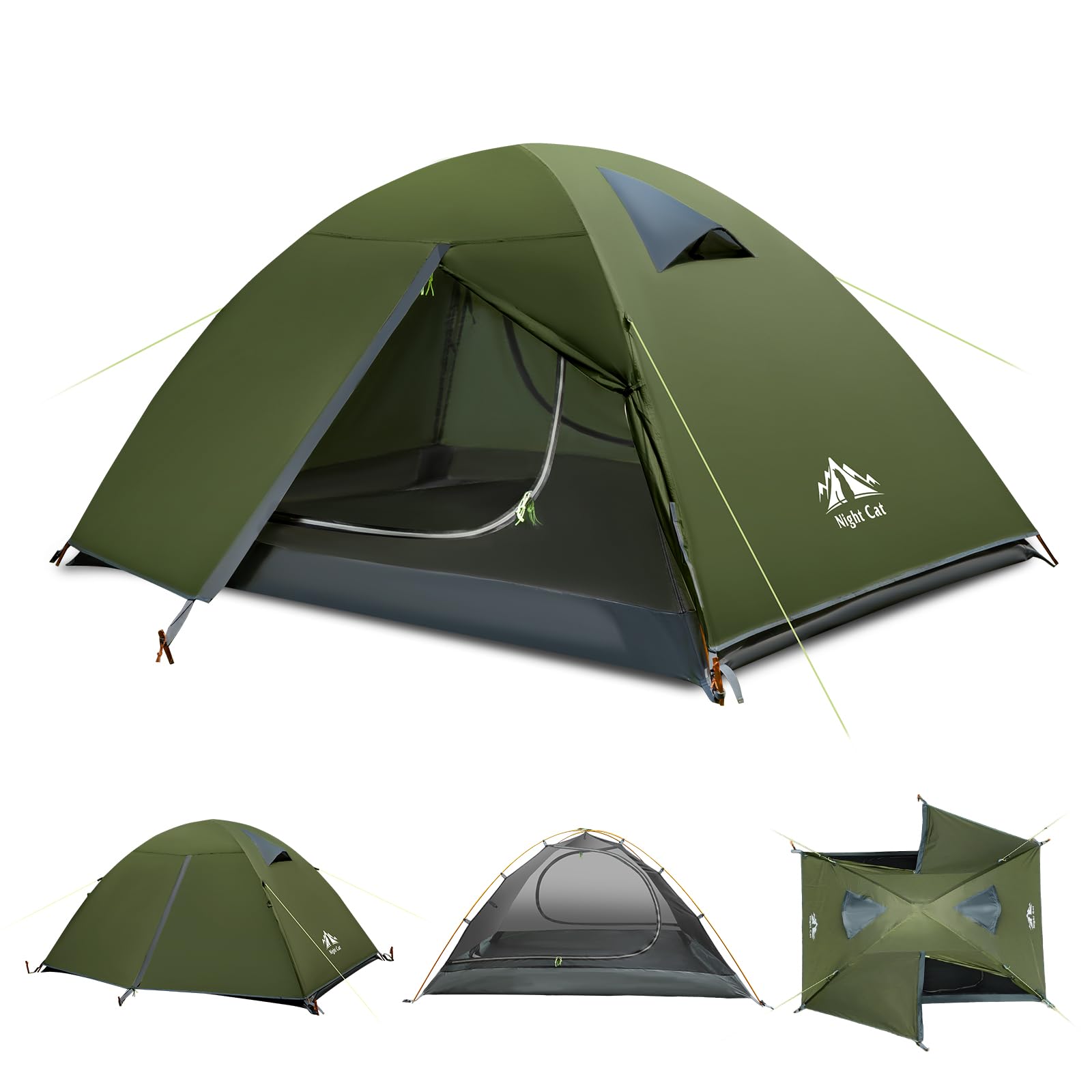
Night Cat 2-Person Backpacking Tent

86 /100
Traveler Score Excellent

Key details

Floor Size
82.6 x 55.1 in
Peak Height
43.3 in
Packed Weight
4.4 lb
Doors And Vestibules
2 doors, 2 vestibules
Check Details on Amazon

Two doors, two vestibules, and 4.4 pounds packed is a combination you don't see much in this group — the other two-door tents here run half a pound to a full pound heavier. Night Cat gets there with a 55.1-inch floor, a door and a small porch on each side, a full-coverage fly with taped seams, and a welded floor tub.

We think the layout is what earns it the top spot, and it's a sleeping question rather than a spec question. Fifty-five inches takes two 25-inch pads with an inch or two to spare, and because the doors sit on opposite sides, nobody crawls over anybody at 2 a.m. Getting that right is the whole job of a two-person tent, and most of the budget ones here don't.

Pitching is two aluminum poles and a set of clips, quick enough to finish in the last of the light. The pole segments are short, which we appreciated when lashing the bag to a bike frame, and the whole package disappears into a pack. In warm, dry weather the fly comes off and leaves a mesh box; when it rains, the fly covers everything and the bathtub floor keeps ground water where it belongs. The hook at the peak earns its keep too — a headlamp hangs there and lights the whole interior.

Split between two packs it's a hair over two pounds apiece, which is the number that matters on a long approach. For two people who each want their own door without dragging five and a half pounds up the trail to get it, this is the tent we hand over.

Pros

  • Two doors and two vestibules at 4.4 lb
  • 55.1-inch floor takes two wide pads
  • Full-coverage fly, taped seams, welded floor

Cons

  • Vestibules fit boots and a daypack, not two packs
  • No footprint in the box
Our verdict

We hand this to two people who want their own door and their own gear porch without carrying a heavier tent — it's the best weight-to-layout balance here.
Check Latest Price
2

Best Lightweight All-Rounder

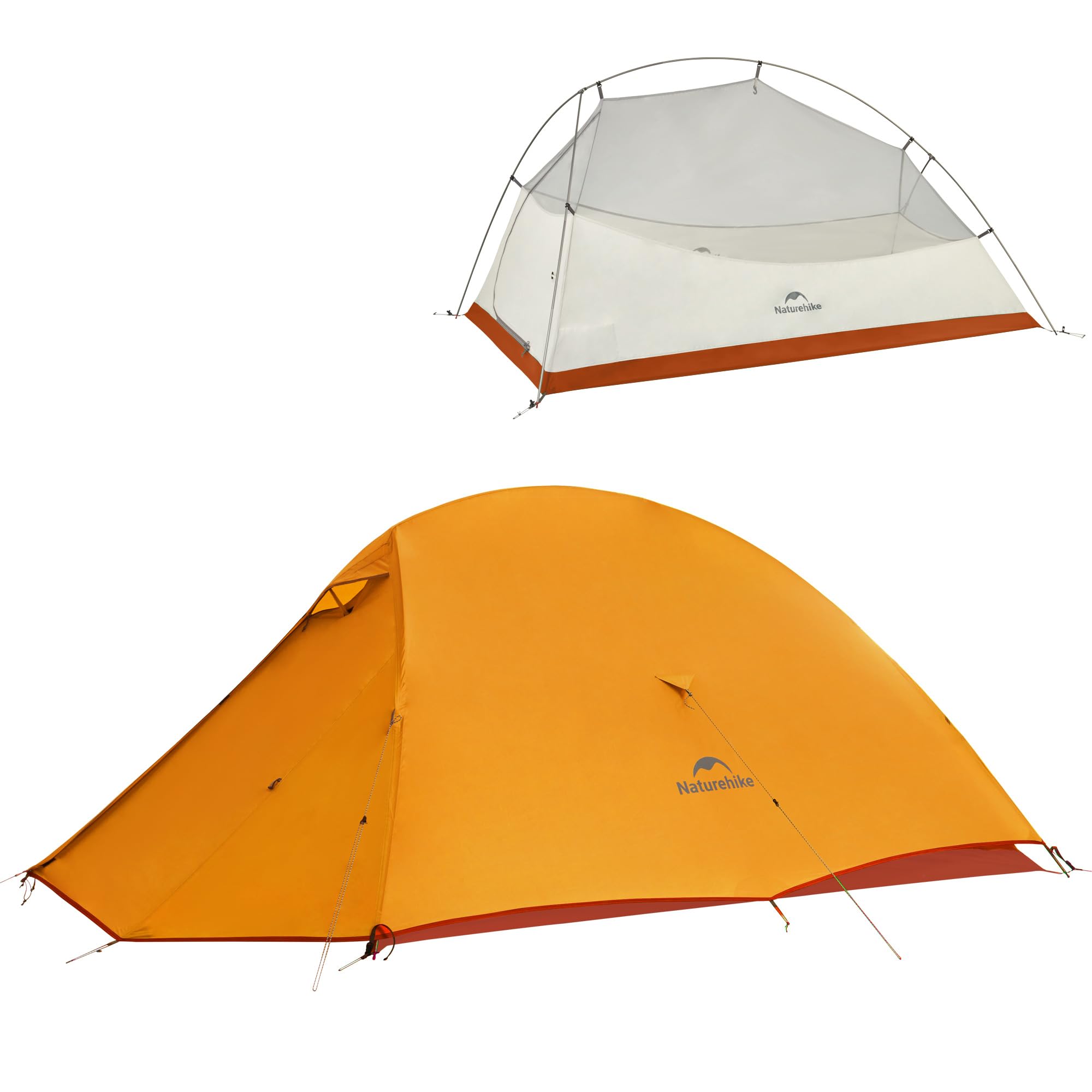
Naturehike Cloud Up 2 Base

90 /100
Traveler Score Outstanding

Key details

Footprint
Included
Floor Size
82.7 x 51.2 in
Packed Weight
4.25 lb
Doors And Vestibules
1 door, 1 vestibule
Check Details on Amazon

Same weight class as our top pick, four inches narrower, and one door instead of two: that's the trade in a sentence. The Cloud Up 2 Base lists 4.25 pounds without the footprint, pitches off a single aluminum pole in about two minutes, and ships with a footprint and 14 stakes — more hardware in the box than most tents here include. We rate it the best lightweight all-rounder of the group, and it's the tent we hand someone who mostly sleeps alone with gear and occasionally shares.

Fifty-one inches of floor is the catch. Two 25-inch pads fill it wall to wall, so you're sleeping shoulder to shoulder with nowhere to put a book, and the single door means one of you climbs out over the other. This Base version adds a vent window above the front door, and with the fly off you get a big mesh panel for hot nights. The fly is 3000mm coated, which is serious protection for a tent this light, and five guylines let you tie it down properly when the wind picks up.

Set it up once at home before a trip. The single-pole frame goes together fast, but threading the fly and staking out five guylines is where two minutes turns into ten the first time. After that it's a tent you can put up in the dark, which is the real test.

Pros

  • 4.25 lb with a footprint in the box
  • Pitches off one pole in about two minutes
  • 3000mm fly coating for a light tent

Cons

  • Single door and a very small vestibule
  • Thin 210T fabric and floor want care
Our verdict

We rate it the best lightweight all-rounder here — 4.25 pounds, a two-minute pitch, and a footprint in the box, with a floor best suited to one sleeper plus gear.

Check Latest Price
3

Best Roomy Budget Pick

Clostnature 2-Person Backpacking Tent

90 /100
Traveler Score Outstanding

Key details

Floor Size
86.6 x 59 in
Packed Weight
5.3 lb
Waterproof Rating
PU 5000mm
Minimum Trail Weight
4.5 lb
Check Details on Amazon

Fifty-nine inches of floor is the widest in this group, and it isn't close: the next widest tents here run 55 inches and the snug ones 51. That width is the whole argument — two 25-inch pads fit with a gap between them, and there's floor left over for a pack you don't want in the vestibule.

Two doors and two vestibules come with it, plus a 5000mm coating on both fly and floor — the highest figure in the set — and a 45.3-inch peak, enough to sit up and pull on a layer. The floor runs 86.6 inches, so a 6-foot-2 sleeper has a couple of inches at each end. Setup is two aluminum poles and clips, and it's done in about three minutes.

We think it's the roomiest bargain here, and the tent to take when comfort at camp matters more than a fast, light pack. Two doors on a floor this wide means you can leave a pack between you and still get out on your own side, and the heavy coating is the margin you want when the forecast is wrong. Short approaches, base camps, and drive-in weekends suit it better than a long thru-hike.

Pros

  • Widest floor here at 59 inches
  • Two doors and two vestibules
  • 5000mm coating on fly and floor
  • 4.5 lb at minimum trail weight

Cons

  • 5.3 lb packed is the heaviest carry here
  • Poles have broken in use
Our verdict

We point anyone who wants elbow room and two doors on a tight budget to this one — 59 inches of floor and a 5000mm coating, at the cost of a heavier pack.

Check Latest Price
4

Best for Taller Campers

Kelty Late Start 2P

87 /100
Traveler Score Excellent

Key details

Floor Size
89 x 54 in
Peak Height
43 in
Packed Weight
4.7 lb
Doors And Vestibules
1 door, 1 vestibule
Check Details on Amazon

Eighty-nine inches is the longest floor here, and that's the reason to look at the Late Start: if you're over six feet, most two-person tents have your head and feet against wet nylon by morning. At 54 inches wide it's still a two-pad floor, but it's the length that separates it.

We think it's the tent for the tall half of a couple. Pre-bent aluminum poles push the walls out at shoulder height instead of tapering in over your face, Kelty's Quick Corners hold the poles upright while you clip, and the color-coded fly goes on without a puzzle. Pitch time is around three minutes, the peak is 43 inches, and one door keeps the weight and the fuss down.

The fly is 68-denier polyester with a 1200mm coating and a built-in vent — the lightest coating in this set. That's fine for a night of steady rain and less reassuring if you're committed to three wet days. The Shark Mouth stuff sack opens at a 45-degree angle, which makes the morning pack-out easier than the tent's size suggests.

Pros

  • 89-inch floor is the longest here
  • Pre-bent poles keep walls off your face
  • Quick Corners and color-coded clips

Cons

  • One door and one vestibule
  • Packed weight sits above the trail figure
Our verdict

It's the tent we point tall backpackers to: an 89-inch floor, walls that stay off your face, and a three-minute pitch — with one door to share.

Check Latest Price
5

Best Premium Two-Door

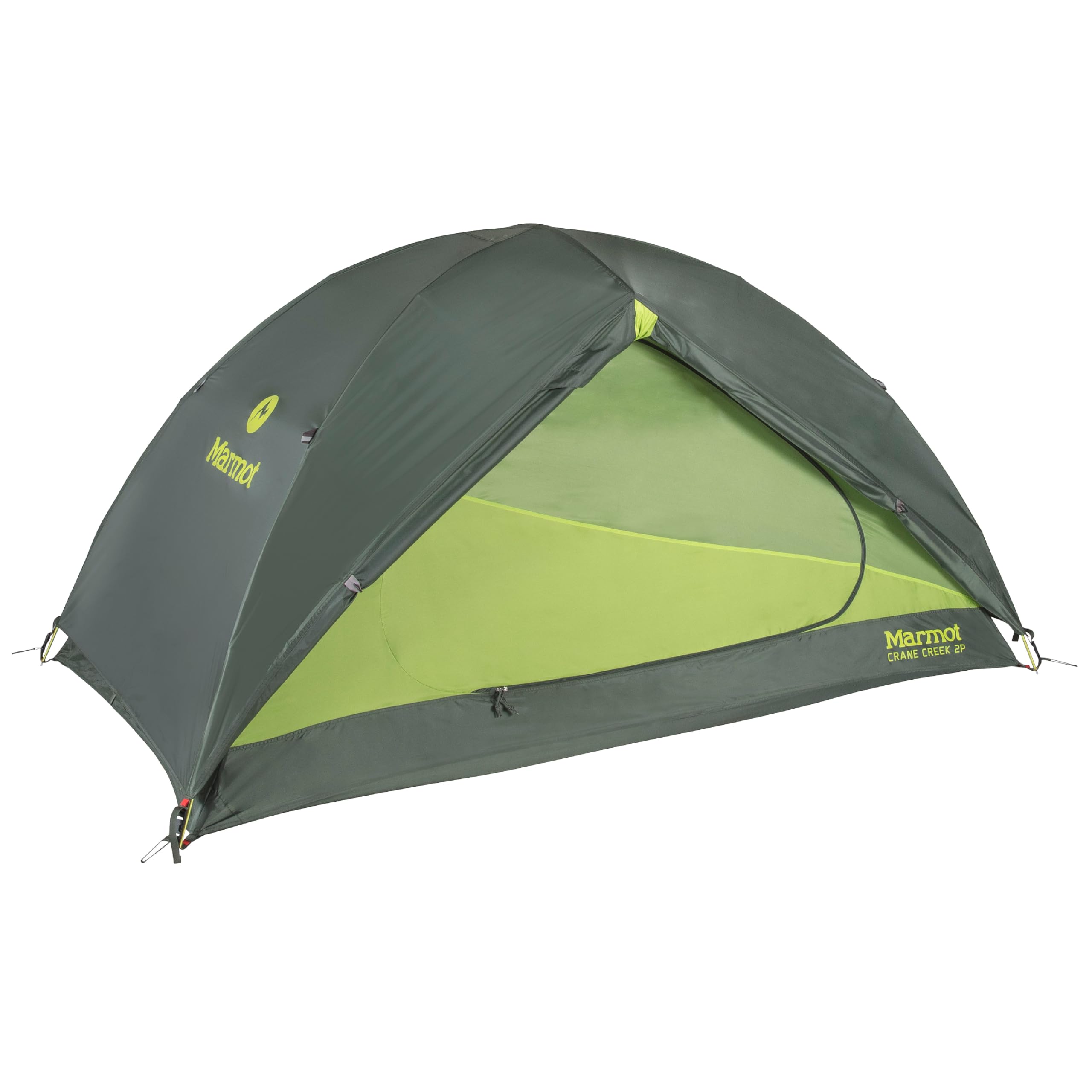
Marmot Crane Creek 2P

90 /100
Traveler Score Outstanding

Key details

Floor Area
32 sq ft
Peak Height
43 in
Packed Weight
5.3 lb
Doors And Vestibules
2 doors, 2 vestibules
Check Details on Amazon

This is the premium tent of the group, and the extra money lands where it should: 7000-series aluminum poles, a seam-taped floor, a seam-taped polyester fly, two doors, two vestibules, and hardware that feels a step more solid than the budget tents here when you set it up.

Wind is where it separates itself. Guyed out properly, it's the tent here we trust most when a front comes through — the pole structure holds its shape instead of flattening, and the low profile sheds gusts rather than catching them. Both sleepers get their own door and their own porch, and the 32 square feet of floor is mid-pack here: fine for two adults who like each other, snug for two who don't.

Setup is straightforward once you've done it once, the peak is 43 inches, and the two vestibules together add about 6 square feet — enough for boots, a stove, and a pack each. It's a tent for trips where the walk in is a few hours rather than a few days.

We think it's the right buy for someone who pitches in exposed places and wants the tent to be the last thing they worry about. The budget tents here will keep you dry in ordinary weather; this one is for the nights when ordinary turns.

Pros

  • Two doors and two vestibules
  • Seam-taped floor and fly
  • 7000-series poles hold up in wind

Cons

  • 5.3 lb packed is a lot to carry far
  • Fabric separation can appear after hard use
Our verdict

We choose it when the weather is the point — two doors, seam-taped protection, and the sturdiest pole set here, at a weight that suits shorter approaches.

Check Latest Price
6

Best Ultralight

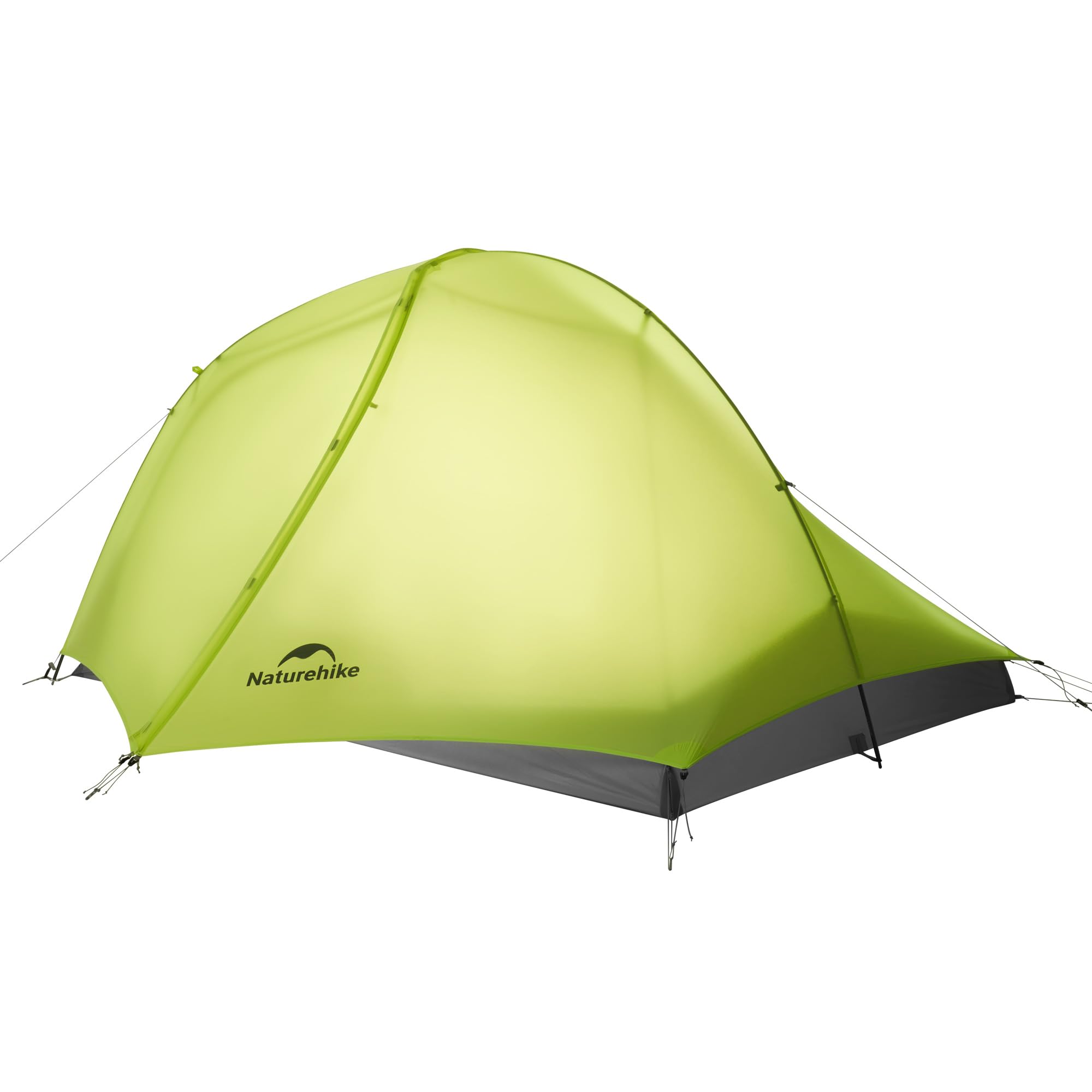
Naturehike Star Trail 2P

82 /100
Traveler Score Excellent

Key details

Footprint
Included
Floor Size
82.7 x 51.2 in
Packed Size
17.7 x 5.1 in
Packed Weight
2.76 lb
Check Details on Amazon

At 2.76 pounds packed, this is the only genuinely ultralight tent in the group, and it packs to 17.7 by 5.1 inches — small enough to disappear into a 40-liter pack. It includes a footprint, gives each sleeper a door, and comes in under the premium tents here. We think it's the obvious answer for anyone counting grams on a long approach.

The fly is 10D nylon with a 1500mm coating and the floor is 20D nylon with 3000mm, so the whole thing feels closer to a wind shirt than a tent when you unfurl it. The inner is full mesh, which vents beautifully on a still night, and the dome sits low enough that it shrugs off weather a taller tent would catch.

Two poles, clips, and about two minutes gets it standing, and the footprint clips in under the floor. For a solo hiker who wants a palace, or a pair who treat a tent as a place to sleep rather than a place to wait out a storm, the weight saving is worth more than the space.

Pros

  • 2.76 lb packed with a footprint
  • Two doors and a full mesh inner
  • Packs to 17.7 by 5.1 inches

Cons

  • 10D fly is delicate and needs careful handling
  • 51-inch floor leaves no spare width for two
Our verdict

We reach for this one when every ounce counts: 2.76 pounds with a footprint and two doors, and a floor that suits one person generously and two closely.

Check Latest Price
7

Stargazing Couples

Kelty Far Out 2P

85 /100
Traveler Score Excellent

Key details

Footprint
Included
Packed Weight
5 lb
Vestibule Area
20 sq ft
Doors And Vestibules
2 doors, 2 vestibules
Check Details on Amazon

The rainfly rolls back over the head end and leaves you under mesh, so you can fall asleep looking at the sky and pull the cover back over from inside when the weather turns. In plenty of tents that's a gimmick. Here it's the reason to choose this one, because on a clear summer trip it turns a small tent into the best seat at camp.

The rest is conventional and sensible: two doors, two vestibules adding up to 20 square feet, 28 square feet of floor, six pockets, pre-attached guylines, and a footprint in the box. The 68-denier polyester and its 1500mm coating are mid-pack for weather protection, and the pre-attached guylines save the fiddly part of pitching in wind.

We think it's the fair-weather couples' tent here, and the one to take when the view is the point of the trip. It's heavier than the Night Cat and gives up a little floor space; what you get back is porch room and a fly that opens the roof. Setup takes a few minutes and rewards doing it once in daylight first.

Pros

  • Rainfly rolls back for an open-sky view
  • Two doors and 20 sq ft of vestibule
  • Footprint included in the box

Cons

  • Footprint stops at the floor, not the porches
Our verdict

We pick it for clear-weather trips with a view: the fly opens the roof, the vestibules swallow two packs, and a footprint comes in the box.

Check Latest Price
8

Warm-Weather Camping

BISINNA 2-Person Backpacking Tent

92 /100
Traveler Score Outstanding

Key details

Doors
2 doors
Floor Area
31.64 sq ft
Peak Height
47.2 in
Vestibule Area
10 sq ft
Check Details on Amazon

Two doors, big mesh panels, and a 47.2-inch peak make this the most livable budget tent here — it's the one you can sit up in, and the one that doesn't turn into a sauna by eight in the morning.

Floor space is 31.6 square feet at 55 inches wide, wide enough for two pads with a little room between them, and the two doors add 10 square feet of vestibule across them. The inner is mostly no-see-um mesh, the poles are aluminum, and the whole thing goes up in a few minutes with two guylines and ten pegs.

The listing gives two weights — 4.7 pounds in the item details and a 6-pound minimum trail weight — and that's a pound and a half of uncertainty. Weigh it yourself before you plan a long carry, and until then treat it as a tent for short approaches and drive-in sites.

We think it's the best of the budget tents here for warm weather, and the ceiling is the reason: 47.2 inches is four inches more than the 43-inch peak most of this group sits at, which is the difference between changing clothes sitting down and lying down. On a still July night the mesh does the rest.

Pros

  • 47.2-inch peak is the tallest here
  • Two doors and large mesh panels
  • 55-inch floor with 10 sq ft of vestibule

Cons

  • Rainfly gaps let wind-driven dust inside
Our verdict

We take it for hot-weather camping where comfort at camp matters more than pack weight — a 47-inch ceiling and mesh walls at a budget price.

Check Latest Price

How We Picked and Tested These Tents

We started with a list of more than 30 tents rated for two people and cut it down by reading the specs closely: packed weight, floor dimensions, peak height, whether a footprint came in the box, and whether replacement poles and clips were actually available for purchase. Price mattered, but only relative to what came with the tent. That left 12 models, which we've been using for eight months.

Testing happened where these tents actually live: on overnight trips in the Blue Ridge, on a handful of cold, wet weekends that turned out to be more useful than the sunny ones, and in the backyard for the setups we wanted to repeat. We timed every pitch solo with a stopwatch, then pitched each tent again after dark with a headlamp to see how it went when we were tired and in a hurry. Twice a season I laid out two 25-inch pads inside, then two 20-inch pads, and loaded each vestibule with a 40-liter pack to see whether both doors still opened without dumping gear.

For weather, we set each tent under a sprinkler for 20 minutes, then ran a hand over the inside of the floor and along the seams. On humid mornings we checked whether condensation was beading on the fly or running down the walls onto sleeping bags. Durability got tracked over repeated pitches — zipper snags, pole sections that stuck, stake loops that frayed. We also weighed each tent packed on a kitchen scale, split the load between two packs, and timed stuffing it back into its sack, which is usually where portability claims fall apart.

How to Choose 2-Person Backpacking Tents

Start With the Floor, Not the Headcount

Two standard sleeping pads are 20 to 25 inches wide, so a 50-inch floor swallows them with nothing left over. That's why the 51-inch tents here feel like a squeeze for two adults while the 55- and 59-inch floors feel generous. Length matters just as much if either of you is over six feet: an 89-inch floor leaves real room at both ends, and an 82-inch floor puts a tall sleeper's head against wet nylon.

Measure your pads before you compare anything else. The label counts bodies, not pads, packs, and boots — and a floor that fits two people who never move in the night is not the same floor that fits two people who do.

Two Doors, or One?

A second door and vestibule is the biggest comfort upgrade for two people sharing a tent: a 2 a.m. exit doesn't involve unzipping over your partner or planting a knee in their pad. One-door designs like the Cloud Up 2 and the Late Start save weight and money for the same floor, and they suit a primary sleeper with gear or a couple who genuinely doesn't mind the shuffle.

On any trip where you're both in the tent through a wet afternoon, the second door earns its weight back. On a fast solo trip where the tent is a place to sleep, it doesn't.

Know Which Weight You're Comparing

Tents are sold with two numbers: packed weight and minimum trail weight. The second one leaves out stakes, the stuff sack, and sometimes the fly, so comparing one tent's trail weight to another's packed weight makes the lighter tent look lighter than it is. The Clostnature here illustrates the gap — 5.3 pounds packed against 4.5 pounds at minimum trail weight.

Then add what you'll actually carry: a footprint, spare stakes, a repair splint. Split between two packs, a five-pound tent is two and a half pounds each, which is why the two of you should decide on the tent together rather than one person absorbing the whole load.

Waterproofing Is a Number and a Build

Coatings in this group run from 1200mm to 5000mm. A 1200mm fly turns steady rain; a 3000mm or 5000mm fly and floor give you margin in a storm that lasts. The figure is only half of it, though — taped seams, a bathtub floor with a raised edge, and a fly that reaches the ground do more for a dry night than a bigger number on a leaky seam.

Look at the floor first. It's the part sitting in the puddle, and it's the part that fails first on a cheap tent.

Poles, Fabric, and the Second Season

Aluminum poles flex and spring back; fiberglass ones snap. Within aluminum, thin 10D and 20D fabrics save serious weight but puncture and abrade easily, while 68-denier and 210T polyester is heavier and far more forgiving. The failures that matter tend to happen at the pole inserts and the zipper sliders, not in the middle of a pole.

Carry a repair splint, dry the tent before it goes back in the sack, and store it loose rather than compressed. That's how a budget tent earns a third season.

Frequently Asked Questions

Final Verdict

Two doors, two vestibules, and a 55-inch floor at 4.4 pounds: that's the balance the Night Cat 2-Person strikes, and nothing else here matches it for a shared backcountry night. Each of you gets an exit, each of you gets a porch, and neither pack has to carry five and a half pounds to make it happen.

Change the requirement and the answer changes. If your partner is over six feet, the Kelty Late Start's 89-inch floor is the reason to switch. If you pitch where the wind gets at you and want the tent to be the last thing you worry about, the Marmot Crane Creek is the one we trust in a gust.