Best Overall

Canon EOS R7
Key details
- Burst
- 30 fps electronic
- Sensor
- 32.5MP APS-C
- Autofocus
- 651-zone Dual Pixel AF II
- Lens Mount
- Canon RF
A 30 fps electronic burst is the number that grabs attention, but the EOS R7 earns its place here because that speed sits on a 32.5MP APS-C sensor with a 1.6x crop and Canon's 651-zone Dual Pixel AF II. For wildlife, that combination is the most useful set of compromises in this group: the crop gives a 300mm lens the framing of roughly a 480mm lens on full frame, while the resolution leaves room to crop again. We prefer it to the full-frame alternatives when the subject is small and the wallet is finite.
The autofocus is the part that kept us comfortable. Animal and vehicle detection are selectable, and the tracking holds a chosen subject well enough to follow it through clutter. In our testing, the 30 fps electronic mode was the one we used for fast movement; the 15 fps mechanical mode is the fallback when rolling shutter is a concern. The 5-axis IBIS is a real help with a long lens, and the dual UHS-II slots make it easier to keep shooting when one card fills.
Handling is deliberately more substantial than the small entry-level Canons. At 1.1 pounds the body has enough grip for a 100-400mm or 150-600mm lens, and the controls fall under the fingers without a menu dive. We did notice the electronic shutter's rolling-shutter risk with very fast wingbeats; the mechanical mode solves it but drops the rate. That is the kind of trade-off we accept on a body this capable.
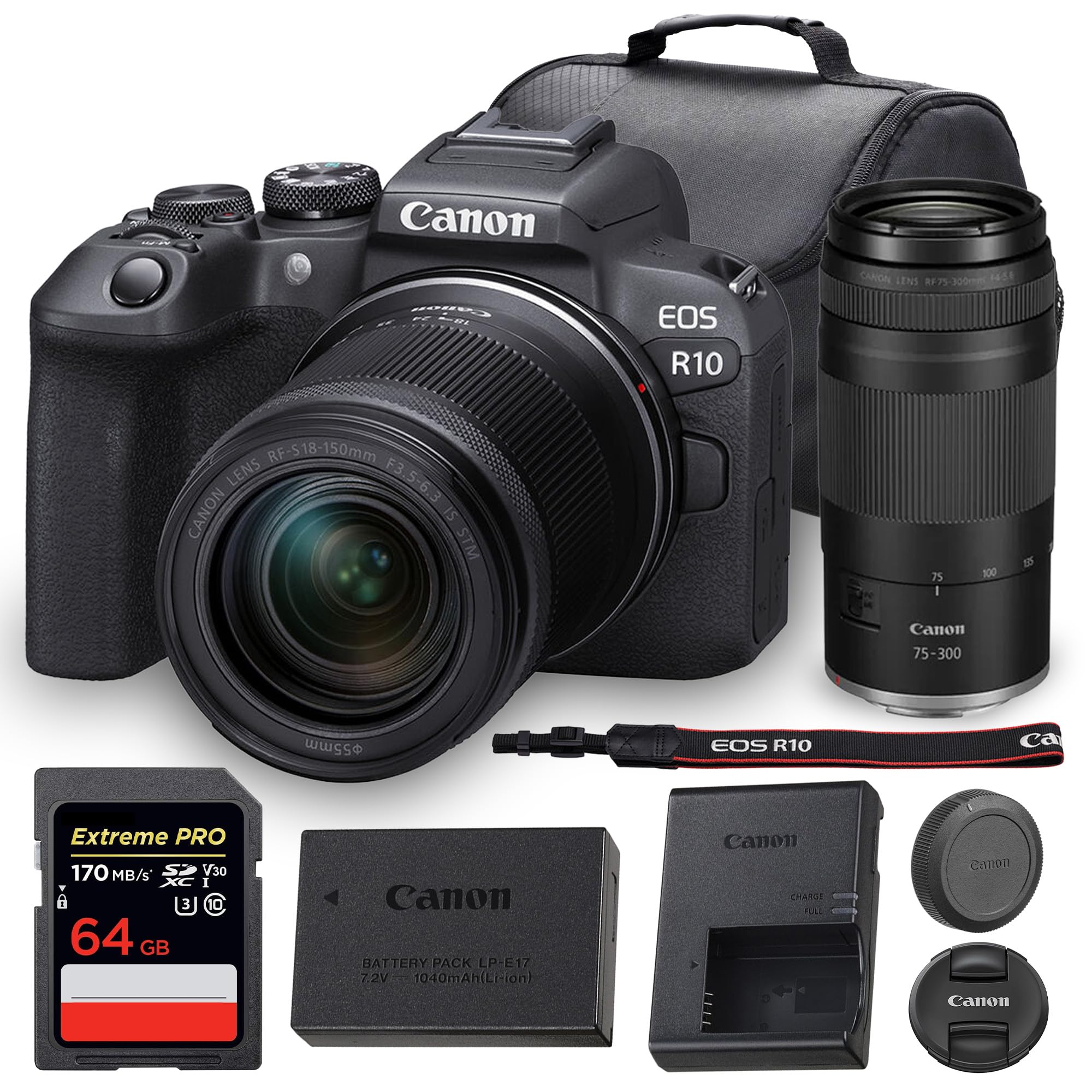
The R7 leaves the lens choice to you, so the final kit depends on the telephoto you pair with it. If you already own RF glass, this is the straightforward upgrade; if you are starting from nothing, the R10 bundle gets you shooting sooner. Either way, the R7 is the body we trust when the subject is small, fast, and a long way off.
Pros
- 32.5MP APS-C sensor adds reach
- 30 fps electronic burst
- 651-zone animal tracking
- 5-axis IBIS and dual UHS-II slots
Cons
- Body only; no lens included
We recommend the EOS R7 as the best wildlife body here for its crop-sensor reach, 30 fps bursts, and animal tracking, provided you budget for RF glass.