Best Long-Distance Binoculars for Travel of 2026

Binoculars are a packing problem wearing an optics costume. The pair that turns a distant hawk into a hawk — feather by feather — is usually the pair that drags on your neck by hour two of a walking tour, and the pocket-sized set that disappears into a jacket often hands you a dim, shaky view at the exact moment things get interesting. The right travel binocular isn't the most powerful one on the shelf; it's the one whose magnification, glass, and weight you'll genuinely carry. Get that balance wrong and the binoculars spend the whole trip in the hotel room.

Over the past eight months my team and I have spent time with 11 pairs of long-distance binoculars, from compact 8x25s to full-size 10x42s, and the differences show up quickly. Here's what first-time buyers rarely hear: the second number matters as much as the first. A 10x42 pulls light out of a dawn whale watch; a 12x50 is glorious until you're holding it one-handed on a moving deck. What follows are the pairs that earned a permanent spot in my carry-on — clear, portable, and worth what they cost.

1

Best Overall

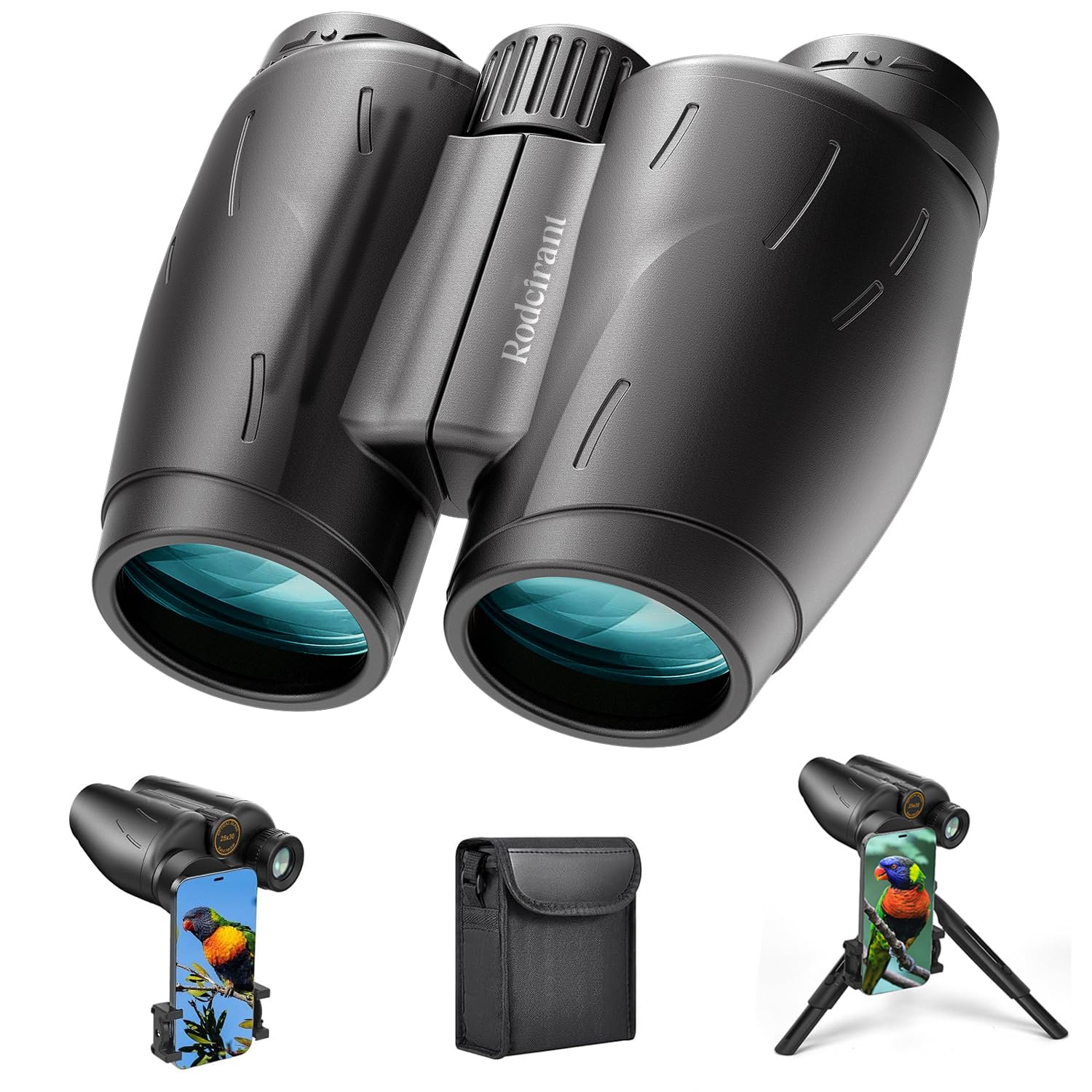
Rodcirant 25x30

90 /100
Traveler Score Outstanding

Key details

Prism
BAK4
Weight
0.6 lb
Magnification
25x
Waterproof Rating
IPX7
Check Details on Amazon

Divide the front lens by the magnification and you get the pool of light each eye works with: 30mm at 25x comes to 1.2mm. That single figure explains this little Rodcirant better than any marketing line. In good daylight it pulls a ridge line, a buoy, or an animal at 300 yards closer than any 10x pocket pair can, and it does it from a glass that folds into a jacket pocket. Late in the afternoon, or under heavy overcast, the view goes flat sooner than a bigger front lens would.

What convinced us it belongs at the top of this list is everything around the optics. The 0.6-pound body is sealed to IPX7, so spray off a ferry deck or rain on a cliff path is not a crisis, and the BAK4 prisms with multi-coating keep the center of the image crisp. There's a tripod mount underneath, which matters more than it sounds at this magnification, and a two-year warranty behind it.

Focus is smooth, and the right-eyepiece diopter lets each eye be set separately, so two people with different prescriptions can share it. Our advice is to brace your elbows on a rail, a pack, or a car roof before you raise them. Freehand glassing at 25x is possible, but the 10x and 12x picks further down are the honest choice for a walked mile.

Pros

  • 25x reach in a 0.6 lb folding body
  • Sealed to IPX7 with a tripod mount
  • Two-year warranty on a mid-priced pair

Cons

  • 25x wants a rail or a steady brace
Our verdict

We reach for this one when the point of the trip is looking at something far away: it packs like a compact and reaches like a full-size, as long as you can brace it.

Check Latest Price
2

Best Compact for Everyday Carrying

Hontry 10x25

91 /100
Traveler Score Outstanding

Key details

Weight
9.6 oz
Warranty
3 years
Magnification
10x
Objective Lens
25 mm
Check Details on Amazon

Three years of warranty on a budget pair is the detail that made us look twice, and it's the reason this Hontry is the one we suggest to anyone who wants a single binocular for every trip. It's sealed, it's small, and it's backed for longer than anything else on this list.

At 9.6 ounces and about four inches folded, it disappears into a jacket pocket, and 10x is the setting where a view stays steady without a rest. The stated field is 362 feet at 1,000 yards, generous for a compact, which makes finding a bird in a hedge quicker than it is with a narrow glass. Eye width runs from 60mm to 75mm, so it passes between adults and older children without a fight.

Porro prisms and fully multi-coated glass do the daylight work asked of them, and the picture is crisp. We found the focus wheel has enough weight to make fine adjustment easy rather than fiddly, which is not something we can say for every small pair here. A case, strap, and cloth come in the box, so it's a complete kit from the start.

Pros

  • Longest warranty in the group
  • Wide 362 ft field at 10x
  • Waterproof, 9.6 oz, 60-75mm eye width

Cons

  • 10mm eye relief is tight with glasses
  • 10x is the shortest reach here
Our verdict

Buy this if you want one small pair for every trip and would rather not think about it again: sealed, steady at 10x, and covered for three years.

Check Latest Price
3

Best for Low Light

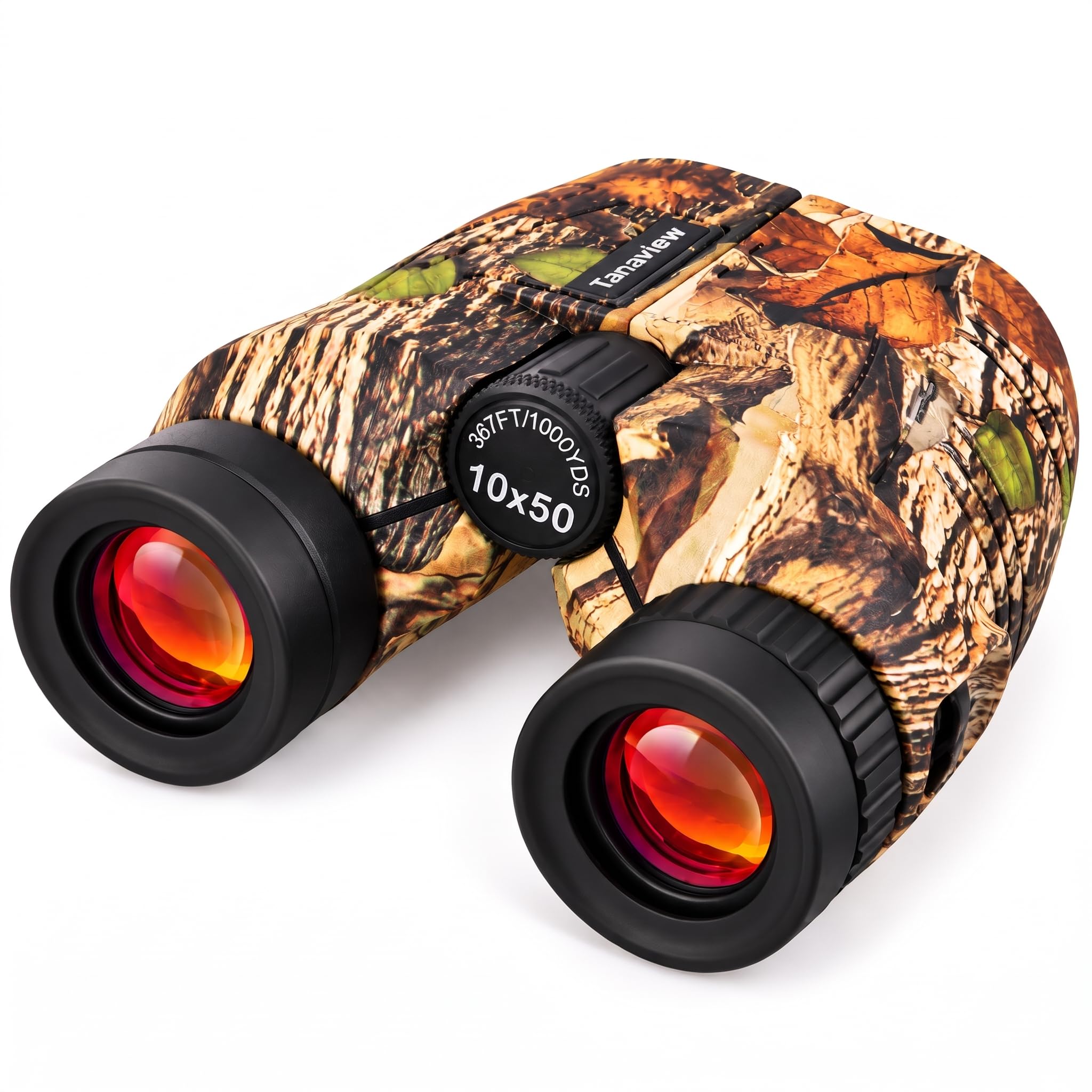
Tanaview 10x50

86 /100
Traveler Score Excellent

Key details

Weight
14.2 oz
Magnification
10x
Objective Lens
50 mm
Water Resistance
Waterproof
Check Details on Amazon

The last hour before dark is when animals move and when most pocket binoculars give up. A 50mm front lens at 10x hands each eye a 5mm circle of light, and that is the difference between a shape in the shadows and an animal you can name.

That's why this Tanaview is our pick for dawn, dusk, and overcast coastal weather. Fully multi-coated Porro glass, a waterproof rubber shell, and 14.24 ounces on the scale, which is light for a 50mm binocular and light enough to ride on a strap all day. Focus is quick and the diopter ring holds its setting between outings, so it's ready when you pull it out of the case.

What it will not do is reach across a canyon. Ten power is a deliberate choice here, trading magnification for brightness and a view you can hold without a rest. If your trips are about identifying something a mile out, go up this list; if they're about seeing clearly at two or three hundred yards in poor light, this is the better instrument.

Pros

  • 50mm lens holds detail into dusk
  • Only 14.24 oz for a 50mm glass
  • Waterproof armor with easy focusing

Cons

  • Narrow view slows finding a moving bird
  • 10x reach runs short on open plains
Our verdict

For dawn, dusk, and gray coastal weather this is the pair we take: a 50mm front lens at a magnification you can still hold steady.

Check Latest Price
4

Best for Photographing Distant Wildlife

Rodcirant 18x50

85 /100
Traveler Score Excellent

Key details

Weight
1.1 lb
Included
Tripod and phone adapter
Magnification
18x
Waterproof Rating
IP67
Check Details on Amazon

Most binoculars arrive with a strap and a cloth. This one arrives with a tripod and a phone adapter, which tells you how Rodcirant expects 18x to be used: set up, watched through for a while, and photographed.

The bones are good. BAK4 prisms, multi-coating, and IP67 sealing in a 50mm body that weighs 1.1 pounds and still folds down for a daypack. The center focus and diopter ring are easy to find by feel, which matters when you're setting up before first light and can't see the markings.

At 18x, hand-holding is optimistic. The tripod is not a bonus; it's how this binocular is meant to be used, and once it's mounted we found the reach genuinely useful for a far shoreline or a treeline on the next ridge. The phone adapter clamps over the eyepiece so a companion can see what you've found. The premium price buys the kit and the sealing rather than exotic glass, and for a traveler who wants a record of the trip, that is a fair trade.

Pros

  • Tripod and phone adapter included
  • IP67 sealing for wet weather
  • 1.1 lb and folds into a bag

Cons

  • Premium price for a travel pair
  • Heaviest of the folding pairs here
Our verdict

If you want a record of what you spot, this is the only pair here that hands you a tripod and a phone mount, and 18x makes the most of both.

Check Latest Price
5

Best Budget Pocket Pair

Occer 12x25

89 /100
Traveler Score Excellent

Key details

Weight
13.8 oz
Eye Relief
20 mm
Magnification
12x
Objective Lens
25 mm
Check Details on Amazon

Sharing a pair between two people is where small binoculars usually fall apart, because the barrels have to match two different faces. This Occer has pull-down rubber eyecups, so the person wearing glasses does not have to take them off, and the right-eyepiece diopter lets each eye be corrected separately. That's why we suggest it for a family trip.

The rest is compact work done well: 12x through a 25mm lens, 273 feet of field at 1,000 yards, a body 4.4 inches long and 0.39 kg on the scale, and a waterproof shell that shrugs off a splash at the pool. Twelve power is a real step over the 10x pairs here, and the bird two trees back becomes a bird you can see.

Weight is where it earns its place in a day bag. It hangs around a neck for an afternoon at a theme park or on a tour bus without complaint, and it arrives with a strap and a case. This is the pair we take when binoculars are an accessory to the trip rather than the reason for it.

Pros

  • 12x in a 4.4-inch waterproof body
  • 20mm eye relief with pull-down eyecups
  • Light enough to wear all afternoon

Cons

  • Barrel spacing doesn't suit every adult face
Our verdict

Splash-proof, glasses-friendly, and small enough for a child to handle: this is the pair we suggest for a family trip where everyone gets a turn.

Check Latest Price
6

Fixed Viewpoints

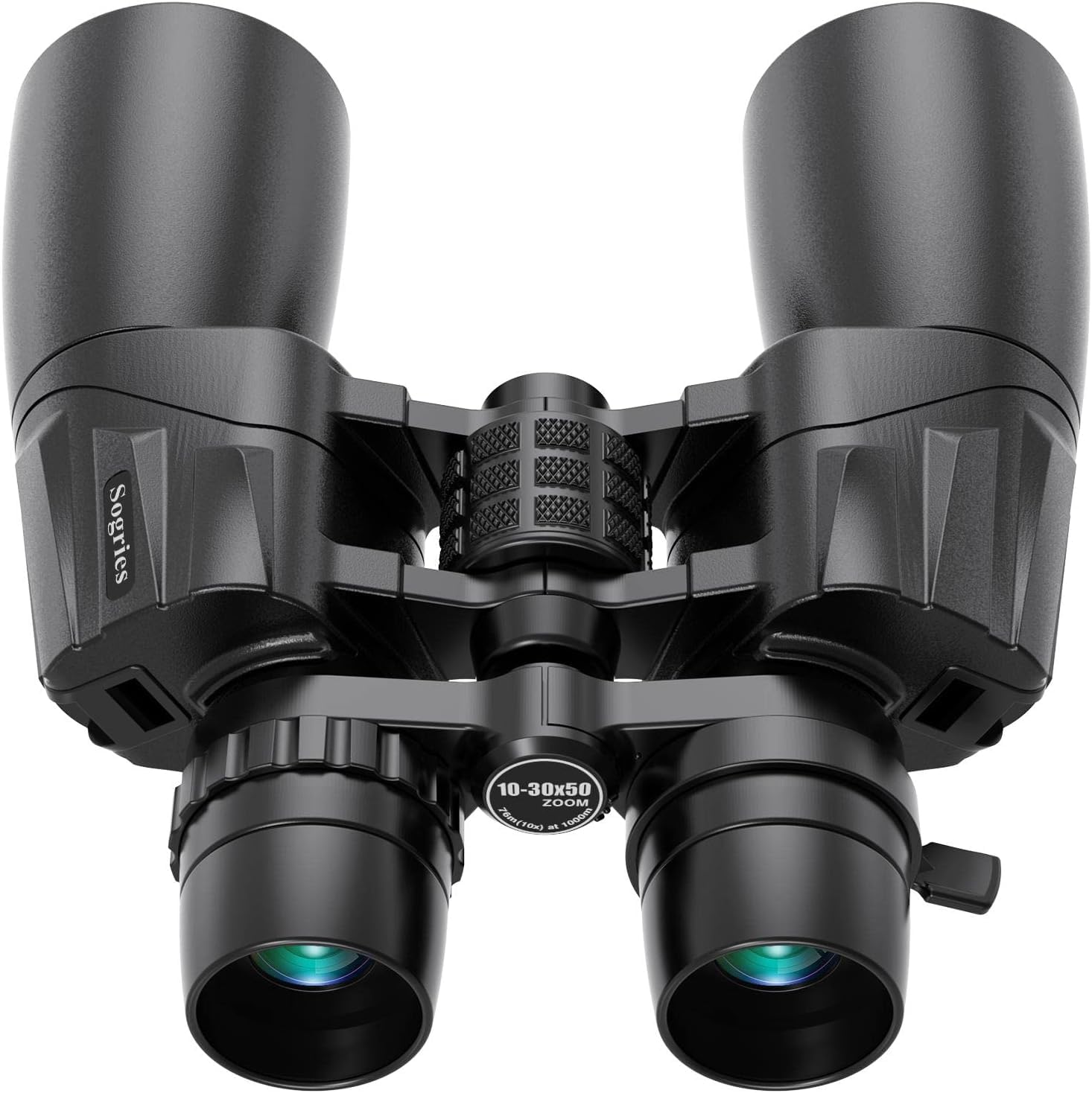
Sogries 10-30x50

87 /100
Traveler Score Excellent

Key details

Weight
2.12 lb
Magnification
10-30x
Objective Lens
50 mm
Water Resistance
Waterproof
Check Details on Amazon

A zoom ring on a binocular is a compromise that most serious glass avoids, and we went in skeptical. What changed our mind was a balcony at dusk: twisting from 10x to 30x without swapping instruments is genuinely useful when what you're watching is drifting out of range.

Behind the ring sit BAK4 prisms and fully multi-coated glass in a sealed, rubber-armored body, with 22mm of eye relief that keeps the full field visible with glasses on, and a two-year warranty. At 0.96 kg it is not a hiking companion, and Sogries says as much by pointing you at a tripod. On a rail, a windowsill, or a safari seat it sits still, and the ring moves smoothly enough to follow a bird as it moves.

Buy it for the trip you're actually taking. If you drive between overlooks and spend evenings on a deck, the range is a pleasure and the outlay is modest. If you're walking five miles a day, leave it in the room and take one of the 25mm pairs instead.

Pros

  • Zoom from 10x to 30x on one barrel
  • 22mm eye relief suits glasses wearers
  • Sealed body with a two-year warranty

Cons

  • About 2.1 lb, so it wants a rail
Our verdict

Worth it if your trip means a balcony, a deck rail, or a safari seat rather than a trail — the zoom range is a pleasure when you aren't carrying it far.

Check Latest Price
7

Backup Pair

POLDR 12x25

88 /100
Traveler Score Excellent

Key details

Weight
5.82 oz
Field Of View
126 ft/1,000 yds
Magnification
12x
Objective Lens
25 mm
Check Details on Amazon

At 165 grams this is the lightest thing on the list, and we noticed the difference the first time we dropped it into a shirt pocket and forgot it was there. The body is magnesium rather than plastic, which is unusual this small, and it is sealed against water.

Optically it's a 12x25 with BAK4 prisms and fully multi-coated glass, and 12x out of a body this size is more reach than we expected. The diopter adjusts across plus or minus five and holds its setting, so a second person can pick it up and get a sharp view in a few seconds.

Focus is the part that asks something of you. This is the fussiest wheel in the group, and locking onto a fast bird takes a beat longer than it does with the Hontry above. Plant it on a feeder or a distant ridge and the patience stops mattering, which is why we treat it as a viewing pair rather than a scanning pair.

Where it earns its keep is as a second pair: it's the cheapest binocular here, light enough to live in a glovebox or a camera bag, and good enough that nobody feels hard done by when it's their turn. The case has a belt loop, so it rides on a hip strap rather than swinging from your neck.

Pros

  • 165 g with a magnesium body
  • Waterproof and genuinely pocket-sized
  • The cheapest pair on this list

Cons

  • Narrow 126 ft field at 1,000 yards
Our verdict

The one we tuck into a second bag as a spare: light enough to forget, modest enough not to worry about, and a real 12x when you need it.

Check Latest Price
8

Dry-Weather Value

Deesoo 20x52

89 /100
Traveler Score Excellent

Key details

Field Of View
168 ft/1,000 yds
Magnification
20x
Objective Lens
52 mm
Water Resistance
Not water resistant
Check Details on Amazon

There is no water-resistance rating on this pair at all, which is the first thing we check on anything headed for a coast. If your trips are dry — high desert, canyon country, a city break — that is a compromise you can live with. If you're packing for a boat, it isn't.

What you get is a full-size 20x52: roof prisms, fully multi-coated glass, a 168-foot field at 1,000 yards, a right-eyepiece diopter, and a tripod mount. Eye relief is listed at 26mm, which is generous for anyone who keeps their glasses on.

Twenty power through a 52mm lens is a lot of reach for the size, and in good light the image is clear and the detail is there. The barrels are long, so it's a two-handed instrument, and holding 20x steady takes the same bracing the Rodcirant above needs.

Our read is that it's the value pick for a dry-climate trip where magnification matters more than weatherproofing. Treat it as the pair that lives in the car or the cabin, ready for a quick look at the ridge, rather than the one you carry up a hill.

Pros

  • 20x through a 52mm lens
  • Roof-prism body with FMC glass
  • 26mm eye relief for glasses

Cons

  • Tight 168 ft field at 1,000 yards
Our verdict

A big-view pair for dry-country trips: 20x and a 52mm lens at the bottom of the price range, provided you keep it out of the rain.

Check Latest Price

How We Tested Long-Distance Binoculars

We started with more than 40 pairs and cut the list by reading spec sheets, owner reviews, and return complaints. Anything promising enormous magnification in a body barely bigger than a deck of cards was out, as was anything too bulky to slide into a daypack's side pocket. That left 11 binoculars, from compact 8x25s to full-size 10x42s, and we spent eight months with them: on a whale-watching boat, in the upper deck of a ballpark, on a rented cabin deck at first light, and through more airport windows than I'd like to admit.

Clarity was judged at the worst time of day, on purpose. We took each pair out at dusk and stared at the same treeline, noting whether individual leaves stayed separate or smeared into one green mass, and whether a distant streetlamp threw a rainbow halo — usually a sign of cheap lens coatings. On the water we counted whale spouts and read hull numbers from the rail, then handed the binoculars to a companion who wears glasses to see whether they could get the full field of view without pressing their lashes against the lens.

Focus got timed: from a deliberately blurred start, we turned the wheel to a sharp sign and counted the seconds, then checked whether it held after a bump. Portability and size were judged on real days out, carried on a strap for six hours or stuffed into a daypack and weighed at the end of the trip. For durability, two pairs were dropped from waist height onto grass and one rode in a bag with keys; we checked for scuffs and whether the two barrels stayed aligned afterward. Value came last — what each pair delivered against everything else in its size range.

How to Choose Long-Distance Binoculars for Travel

Match Magnification to How You'll Hold It

Magnification cuts both ways: it brings the subject closer and it magnifies the shake in your hands. Up to about 12x you can hold a pair steady enough for a crisp view, which is why the 10x and 12x models here are the ones we sling around a neck on a walking trip. From 18x up, the detail is better but the image wobbles, and a rail, a pack, or a tripod stops being optional.

So decide from the itinerary, not the spec sheet. A trip built around decks, balconies, overlooks, and vehicles rewards high power; a trip built around trails rewards 12x or less. If you want both, buy for the walking days and borrow the view on the still ones.

What the Front Lens Actually Buys You

The number that governs brightness is the exit pupil: objective diameter divided by magnification. A 50mm lens at 10x gives 5mm, which holds color and detail into dusk. A 30mm lens at 25x gives 1.2mm, which is superb at noon and flat by dinner. If your days start early or end late, or you're looking over water and through cloud, a bigger front lens is worth the weight.

Read the two figures together rather than shopping magnification alone. A 20x label on a 30mm body is a daylight instrument, whatever the listing implies.

Weight and Packed Size Decide Whether It Comes With You

Our least favorite binocular is the one left in the hotel room. Under a pound and small enough for a jacket pocket, a pair goes everywhere; at two pounds and the size of a paperback, it comes out for special occasions. Picture the weight around your neck for a four-hour walk, not on a spec table.

There's a trap in the word compact. In a listing it often means compact next to a 70mm astronomy binocular rather than pocket-sized, so check the folded dimensions and the stated weight instead of the adjective. A 25mm barrel and a 50mm barrel are very different things in a day bag.

Sealing and Warranty for a Life in a Bag

Binoculars travel next to sand, sunscreen, and a wet swimsuit. A stated IPX7 or IP67 rating means a dunking is survivable; waterproof on its own is a claim worth reading twice; not water resistant is a fair-weather instrument, whatever else it does well. Coastal and boat trips should start with the rating, not the magnification.

Warranty length is the other quiet differentiator. Two or three years of cover is what pays for the eyecup or the focus wheel when it gives trouble, and the longest cover in this group belongs to one of the least expensive pairs.

Glasses, Eye Relief, and Sharing the View

If you keep your glasses on, look for eye relief of at least 15mm and eyecups that fold or twist down; below that you press the lenses against your frames and lose the field. A diopter ring on the right eyepiece lets each eye be corrected separately, which is what makes a shared pair workable between two prescriptions.

Eye width is the other fit variable. Roughly 60mm to 75mm covers most adults, and anyone with a narrow or wide set should try a pair before a long trip rather than after.

Frequently Asked Questions

Final Verdict

Our pick for most trips is the Rodcirant 25x30. It folds into a jacket pocket yet reaches farther than anything else here, and at 0.6 pounds sealed to IPX7 it goes where a full-size pair can't. If you would rather have a view you can hold steady without thinking about it, take the Hontry 10x25; if your days start and end in low light, the Tanaview 10x50's bigger front lens is worth the extra ounces.