Best Laptop Power Banks of 2026

The battery warning always seems to appear at the worst possible moment: gate B12, no outlet in sight, and a slide deck that still needs one more pass. A laptop power bank is the fix, and it's the difference between finishing the work and asking a stranger to borrow a plug. The trouble is that plenty of them advertise enormous capacity and still won't charge a laptop at all, because the port tops out well below what your machine actually draws.

I've carried one in my bag since a dead-battery pitch meeting taught me better, and over the past seven months my team and I have put 11 of them through real workdays rather than bench tests. The number that matters isn't the milliamp-hours on the box; it's the wattage a USB-C port can hold and for how long, and whether the built-in cable is one you'd actually trust in a bag. The picks below are the ones that kept a laptop running, not just trickling.

1

Best Overall

Anker Laptop Power Bank 25K

89 /100
Traveler Score Excellent

Key details

Ports
3 USB-C (2 built-in) + 1 USB-A
Capacity
25,000mAh
Warranty
18 months
Total Output
165W
Check Details on Amazon

Two USB-C cables are built into this pack: one retractable, pulling out to about 2.3 feet on a spring-loaded spool, and a short 0.98-foot one that doubles as a carry handle. Both are rated for 100W. That single design decision removes the small daily failure of travel charging — the hunt through a bag for the right cable — and once this was in the rotation we stopped packing a spare USB-C cable at all.

Underneath the convenience is a genuinely capable bank. Total output is 165W across three USB-C outputs and a USB-A port, so a laptop, a phone and headphones can all be plugged in without anything dropping to a trickle, and a single device can pull a full 100W. The case measures 6.18 by 2.13 by 1.93 inches, a display on the front shows the charge left, and refilling takes about two hours on a 100W charger — which, like most in this group, isn't included.

Capacity is 25,000mAh, close to the ceiling you can carry on a plane, which is the point: it's sized for a long travel day rather than a commute. The cost of that is density. This is a heavy pack for its footprint, the kind you notice at the bottom of a daypack by mid-afternoon, and it is firmly a bag item rather than something you slip into a pocket.

The moving parts are the risk. A retractable spool and a display are two more things that can fail, and those are the parts that give trouble on this model rather than the cells — which is why 18 months of warranty is worth registering on day one. We're still recommending it, because nothing else here removes the cable problem as completely, and this is exactly the sort of fault a warranty exists to cover.

Pros

  • Two built-in 100W USB-C cables
  • 165W across three USB-C outputs
  • 25,000mAh close to the carry-on ceiling
  • Front display shows remaining charge

Cons

  • No wall charger in the box
  • 18-month warranty is the shortest here
Our verdict

We recommend it first because the cables are already on board and three 100W USB-C outputs cover a laptop plus everything else.

Check Latest Price
2

Best Value

UGREEN Nexode 145W

88 /100
Traveler Score Excellent

Key details

Weight
1.11 lb
Capacity
25,000mAh
Total Output
145W
Max Single Port
140W
Check Details on Amazon

One USB-C port on this UGREEN delivers up to 140W, which is the figure that matters if you travel with a 16-inch MacBook Pro rather than an Air. UGREEN quotes 0 to 56% on that machine in half an hour. If your laptop came with a 140W brick, this replaces it rather than merely topping it up.

What makes it the value pick is the price of that speed: midrange money for 140W and 25,000mAh, with two USB-C ports and a USB-A alongside. It refills in about two hours off a 65W wall charger, quick enough to make real use of a lunch break, and the digital display shows remaining percentage and live wattage — handy the first time a cable, rather than the pack, turns out to be the bottleneck. Check the included USB-C cable against a 5A rating before expecting the full 140W.

The compromises are weight and the long game. At 505g and just over six inches long it's a bag pack, not a pocket one, and the failure to know about is a unit that stops accepting a charge after several months rather than anything more dramatic. Two years of warranty is the cover for that, and it's longer than the top pick offers.

Pros

  • 140W on a single USB-C port
  • 25,000mAh at a midrange price
  • Refills in about two hours
  • Live wattage on the display

Cons

  • Heavier than other 25,000mAh picks here
Our verdict

If your laptop's charger is rated above 100W, this is the least expensive way here to match it.

Check Latest Price
3

Most Powerful

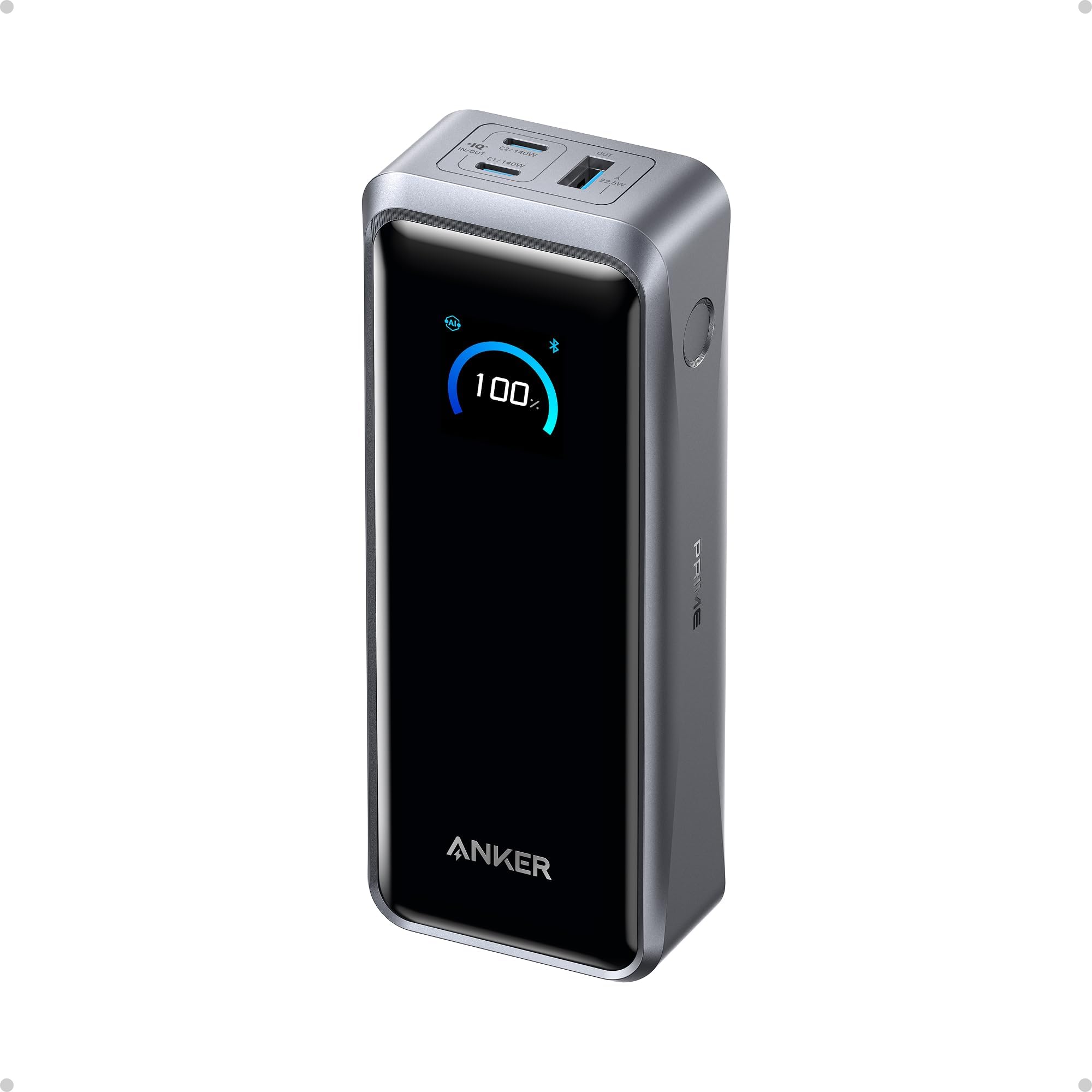
Anker Prime 300W

91 /100
Traveler Score Outstanding

Key details

Ports
2 USB-C + 1 USB-A
Weight
1.32 lb
Capacity
26,250mAh (99.75Wh)
Total Output
300W
Check Details on Amazon

We think the Anker Prime is worth its price for exactly one kind of traveler: someone whose laptop is the work, who moves with two machines, or who bills by the hour and can't spend an afternoon tethered to a socket. For everyone else the 300W total is wasted, and the money belongs on a lighter pack.

That 300W is spread across two USB-C ports and a USB-A, with up to 140W available on a single port. In practice it means a 16-inch machine holds full charging speed while a second device charges hard beside it — the job the 100W packs here can't do, and one the 200W Nexode can only approach.

Capacity is 26,250mAh, or 99.75Wh as Anker puts it: the largest here and a hair under the airline ceiling. Refilling is the other headline, with a 250W dual-port input taking it to half in about 13 minutes on the right charger, which turns a layover into a useful top-up. The display and app control are genuinely good, and at 600g and 1.5 inches thick it owns a corner of a briefcase rather than slipping into a pocket.

Pros

  • 300W total, 140W on one port
  • 99.75Wh, just under the flight limit
  • Half full in about 13 minutes
  • Display plus app control

Cons

  • Most expensive pack here
  • 600 g and bulky for a day bag
Our verdict

We think it earns its price for travelers who move with two machines and can't afford a slow recharge.

Check Latest Price
4

Best for Small Bags

INIU 25,000mAh 100W

89 /100
Traveler Score Excellent

Key details

Ports
2 USB-C + 1 USB-A
Output
100W
Capacity
25,000mAh
Warranty
3 years
Check Details on Amazon

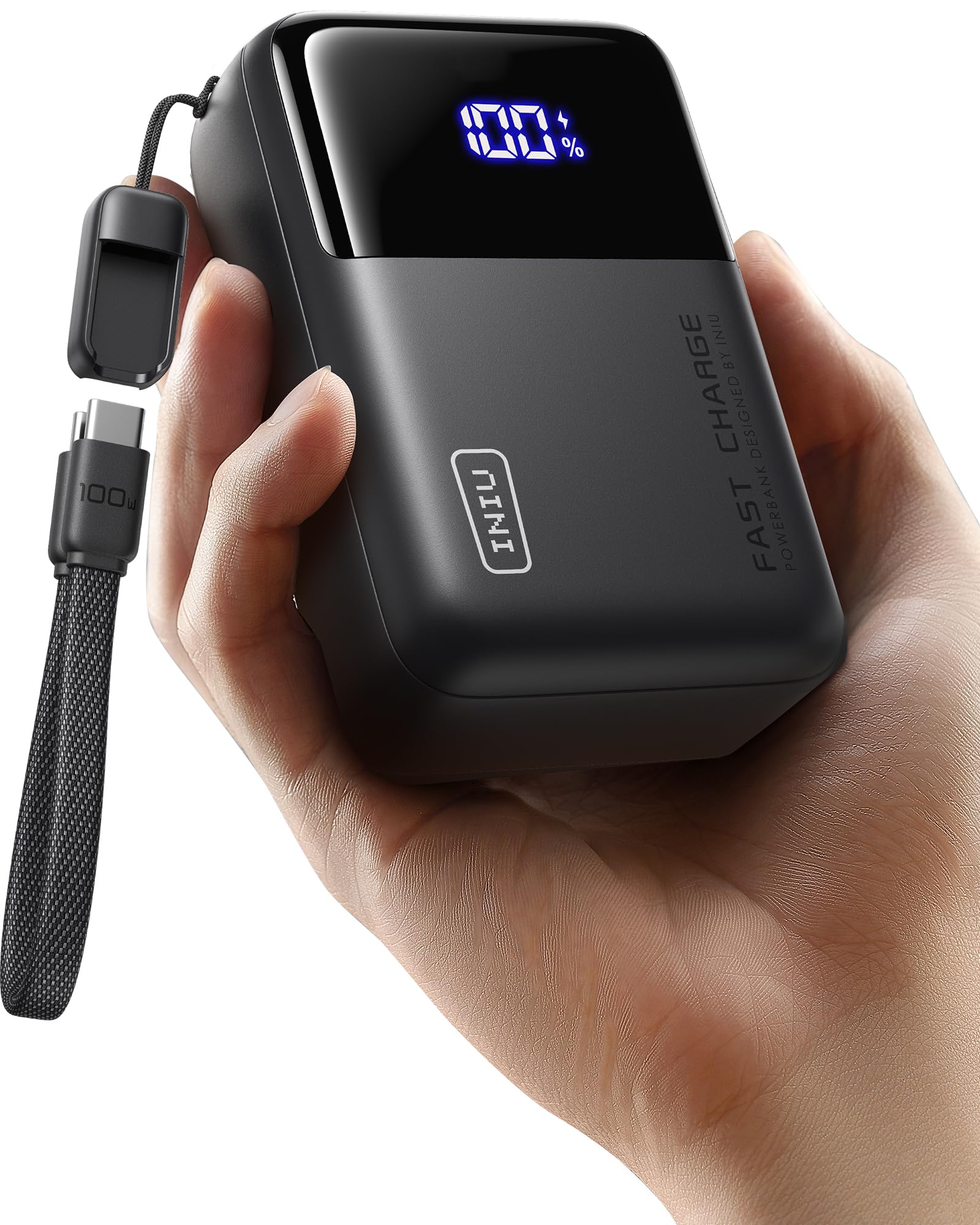
Compared with the Anker, this INIU is the pack that disappears into a small sling. INIU calls it smaller than a soda can and the numbers support the spirit of that: 4.3 by 2.7 by 1.4 inches and 13.8 ounces, holding 25,000mAh and delivering 100W.

100W is the sweet spot for most people on the move. It's enough to fast-charge a 14-inch MacBook Pro — INIU quotes 20 to 72% in half an hour — and to run a Steam Deck at full speed, and it costs well under the 140W packs. The cable is detachable: a 0.4-foot USB-C that clips on as a lanyard, which we prefer to a built-in spool because there's no mechanism to break and you can swap in a longer cable when you need the reach.

The failure to watch for is the pack stopping partway through its own recharge rather than at empty, which is what long-term trouble looks like on this model. That's why the three-year warranty matters — it's the longest here by a wide margin, and it's the reason this stays a recommendation rather than a gamble.

Pros

  • 25,000mAh and 100W in a small body
  • Detachable 100W USB-C lanyard cable
  • Three-year warranty
  • Digital display shows charge left

Cons

  • 100W is short of a 16-inch laptop's peak
Our verdict

If your laptop tops out at 100W, this is the pack to beat — smaller than everything else here at the same capacity.

Check Latest Price
5

Best Slim Profile

Baseus Blade 100W

86 /100
Traveler Score Excellent

Key details

Ports
2 USB-C + 2 USB-A
Output
100W
Capacity
20,000mAh
Dimensions
5.27 x 5.27 x 0.78 in
Check Details on Amazon

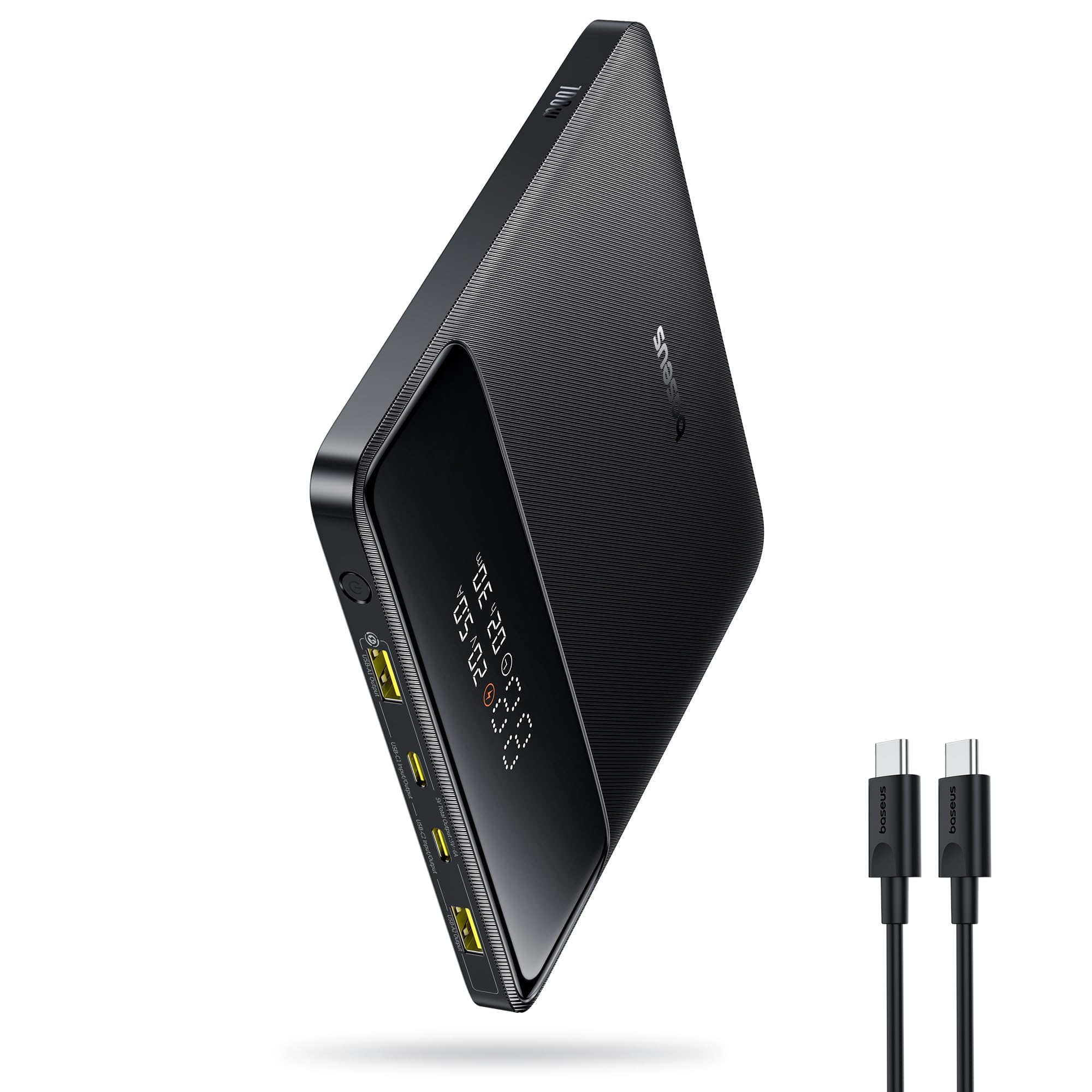
The Blade is flat: 5.27 inches square and 0.78 inch thick. That shape is the entire argument, because it slides into the laptop sleeve next to the machine instead of forming its own lump in the middle of a backpack. At 451g with 20,000mAh and 100W, it packs like a thin book.

We think it's the best pick for anyone who works out of a bag all day. Two USB-C and two USB-A ports mean a laptop, a phone and headphones can all be plugged in together, the display reports live voltage and current so you can see whether a cable is capping you, and a 100W USB-C cable comes in the box. Baseus quotes 50% on a MacBook Pro in half an hour, which is what 100W PD buys.

What you give up is headroom. 20,000mAh is roughly one laptop charge, where the 25,000mAh packs here leave a comfortable margin, so this is a pack for a working day with a known end rather than an off-grid week. It's also not a hand-held object — the square footprint is wider than a phone, so it lives in a bag rather than against the back of your handset.

Pros

  • Flat profile fits a laptop sleeve
  • Two USB-C and two USB-A ports
  • Live wattage readout
  • 100W USB-C cable included

Cons

  • Self-recharge tops out at 60W
Our verdict

For a bag that already carries a laptop, this is the tidiest shape here and the easiest to pack.

Check Latest Price
6

Best Budget Pick

INIU 20,000mAh 65W

88 /100
Traveler Score Excellent

Key details

Ports
2 USB-C + 1 USB-A
Output
65W
Weight
13.4 oz
Capacity
20,000mAh
Check Details on Amazon

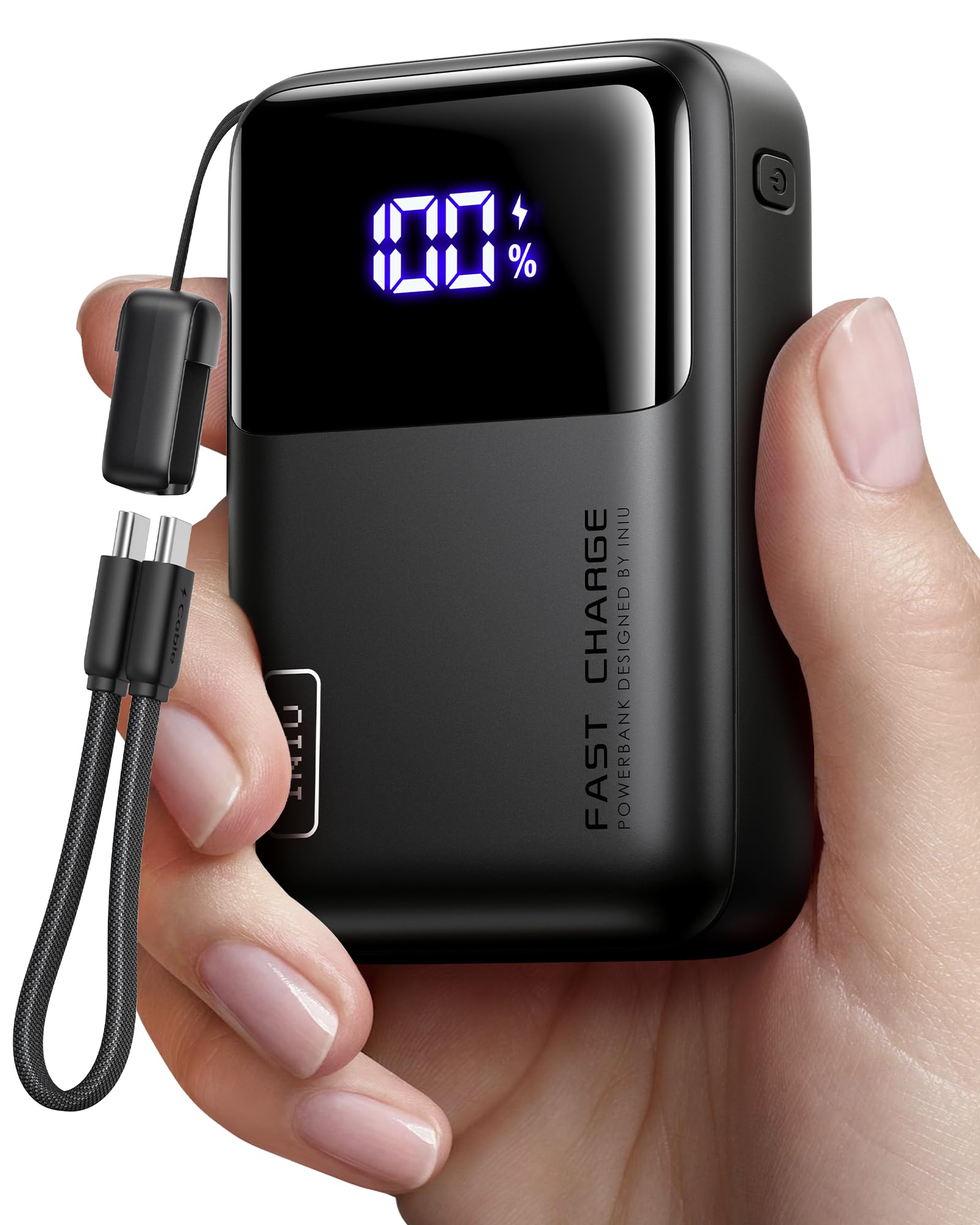
Sixty-five watts is the ceiling here, and it decides who this pack is for. A MacBook Air, a 13-inch ultrabook, a tablet or a Steam Deck charges quickly from it — this is a bank built for the devices people actually carry to a café.

What it gives up in watts it makes back in size. INIU builds it to wallet dimensions — 4.3 by 2.8 by 1.1 inches, 13.4 ounces — with two USB-C ports, a USB-A, a digital display, and a detachable 4.7-inch USB-C cable that clips on as a lanyard. There's a three-year warranty too, longer than packs costing considerably more, and on a battery that is worth more than an extra port.

Pros

  • 20,000mAh in a wallet-sized body
  • Three-year warranty
  • Detachable USB-C lanyard cable
  • Two USB-C plus USB-A

Cons

  • 65W won't keep a big laptop charging under load
  • Fills a jacket pocket, not a jeans pocket
Our verdict

We think this is the best value in the group, as long as your laptop is a light one.

Check Latest Price
7

Best Metal Body

AsperX 165W

88 /100
Traveler Score Excellent

Key details

Ports
2 USB-C + 1 USB-A
Weight
1.47 lb
Capacity
20,000mAh
Total Output
165W
Check Details on Amazon

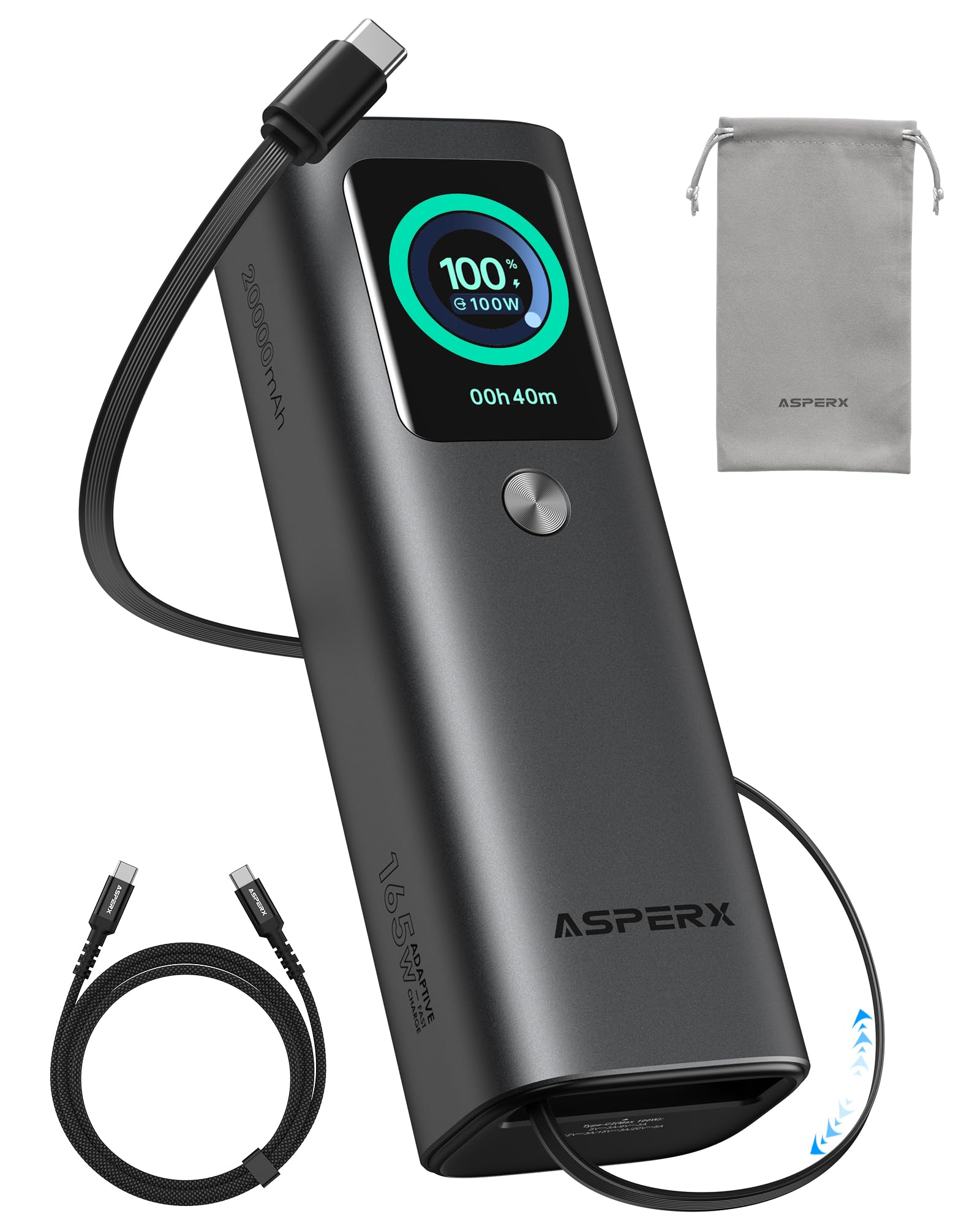
Aluminum, and you feel it the moment you pick it up — cool, rigid, no flex when you squeeze the sides. The AsperX is the only metal-bodied pack in this group, and at 666g it's also the heaviest thing here relative to its 20,000mAh. That's the trade the shell makes for you.

Power is split rather than pooled. The retractable USB-C cable carries 100W on its own, with the rest of the 165W shared across a second USB-C port and a USB-A, so a 14-inch laptop on the cable and a phone on the port both charge at full speed together. That combination is more than the 100W packs here manage.

The retractable cable is the detail we liked most. It pulls out, holds its position, and winds back into the body, so there's no loose cable in the bag and nothing to leave behind on a hotel desk. The TFT display shows charge level and remaining time at a glance, which is more than most of this group offers.

Buy it for the feel and the cable rather than the long haul: the warranty runs 24 months, and that cover is the part of the purchase you're relying on. We rate it as the pick for anyone who wants a pack that feels engineered — the shell and the mechanism are the most solid here — as long as you buy from a seller who'll honour that warranty rather than the cheapest listing you can find.

Pros

  • Aluminum body with a solid feel
  • Retractable 100W USB-C cable
  • 100W and a second port at the same time
  • TFT display with charge and time

Cons

  • Some units stop charging after a few cycles
Our verdict

Buy it if you want a pack that feels engineered: metal body, retractable cable, and enough split output for a laptop and phone together.

Check Latest Price
8

Dual-Device Charging

UGREEN Nexode 200W

87 /100
Traveler Score Excellent

Key details

Ports
2 USB-C + 1 USB-A
Capacity
25,000mAh
Total Output
200W
Max Single Port
140W
Check Details on Amazon

Two high-power ports, each with its own ceiling, is the point of this one: 140W on USB-C1 and 100W on USB-C2, 200W in total, plus a USB-A. Charging a 16-inch laptop at full speed while a tablet pulls 100W is something none of the 100W packs here can do.

At 25,000mAh and 510g it sits in the same bracket as UGREEN's cheaper 145W model, and the extra money buys that second high-wattage port and a TFT display showing percentage, live wattage, voltage and estimated time. That is more information than most people need, though the readout is the clearest in this group and genuinely useful when you're working out whether a device or a cable is the limit.

We think it earns its place only if your second device is another laptop or a tablet that can genuinely take 100W. If the second thing in your bag is a phone, the 145W Nexode does the same job for a lot less money, and the extra port is money you'll never see back.

Pros

  • 200W across two USB-C ports
  • 140W on C1 and 100W on C2
  • Detailed colour display
  • 25,000mAh capacity

Cons

  • Premium price over the 145W version
Our verdict

The only pack here with two high-power ports, which matters only if a second laptop or tablet travels with you.

Check Latest Price

How We Tested the Best Laptop Power Banks

To build the shortlist, I started with spec sheets, including USB-C Power Delivery output, cell capacity, port layout, and whether a cable was built in. Anything that couldn't sustain at least 45 watts to a single port got cut, since below that most laptops either refuse to charge or slowly lose ground while you work. That left 11 banks, which we lived with for seven months.

Each one went into a tote or backpack next to a 14-inch laptop. We weighed every bank on a kitchen scale, checked whether it slid into the same sleeve as the laptop, and noted whether it made a bag feel heavier on a 40-minute commute. Two units came along on a coast-to-coast flight and a long weekend at a rented cabin where four people shared two outlets, which is about as close to a lab bench as this category gets. I also counted how many times each built-in cable survived being coiled and stuffed back into a bag, and whether its plug blocked the port next to it.

Charging speed was timed, not estimated: we drained a laptop to 5 percent, plugged in, and read the battery indicator at 15, 30, and 60 minutes, noting whether the laptop reported that it was charging or merely connected. Battery life got the same treatment, with a looped video call and an open spreadsheet until each bank died, then a tally of how many phone charges were left over. For durability, the banks spent weeks rattling around with keys and cables, took a few deliberate drops onto a wood floor, and got rechecked afterward to see whether capacity had faded or a port had started to loosen.

How to Choose Laptop Power Banks

Match Single-Port Wattage to Your Laptop's Charger

Total output is a budget shared between ports; the per-port rating is what actually reaches your laptop. Look at the charger that came with your machine: 65W covers MacBook Airs and most 13- and 14-inch ultrabooks, while 16-inch machines with discrete graphics want 100W to 140W to hold their charge while you work.

A 165W bank that gives 100W to each of three USB-C ports is a different tool from a 145W bank that puts 140W down one cable. Start with the laptop, then choose the port layout that delivers it.

Capacity, Watt-Hours, and the 100Wh Line

Security counts watt-hours, not milliamp-hours, and 100Wh is the practical ceiling for a battery you carry on without asking. At the usual 3.7V, 20,000mAh is about 74Wh and 25,000mAh about 92Wh, while 27,000mAh lands at roughly 99.9Wh — all of them fly.

The trap is assuming the mAh figure is what gets checked. It isn't; the watt-hour marking on the case is, so keep that label legible and pack the bank in your carry-on rather than a checked bag.

Weight and Shape Decide Whether It Leaves the Room

Everything here falls between roughly 390g and 670g, which sounds abstract until you've carried it for a week. A 20,000mAh pack is a sling-or-jacket object; a 25,000mAh pack is a bag object.

Footprint matters as much as mass: a flat pack like the Baseus Blade disappears into a laptop sleeve, while a denser, taller one takes a corner of its own. Choose the shape that matches where the bank will live, then check the capacity that fits inside it.

Cables, Ports, and What's in the Box

A built-in cable means you'll never arrive without one, but it's also the part most likely to fail, and a retractable spool is a mechanism with moving parts. Detachable cables trade that convenience for repairability — the INIU packs ship with a short one and accept any USB-C cable you already own.

Ports matter too: two USB-C ports let you charge the bank and a device at once, and a USB-A keeps older accessories useful. Check the rating on the cable in the box, because 140W needs a 5A cable and a 3A one will quietly cap you at 100W.

Read the Warranty Before the Star Rating

A battery is the part that fails, so the support window is the honest measure of how long the maker expects the pack to last. That's three years on the INIU models, 24 months on the UGREEN, Baseus and AsperX packs, and 18 months on the Anker 25K.

Buy where the warranty is honoured and keep the order confirmation. A marketplace listing with no stated cover is a real reason to walk away, however good the capacity looks.

Frequently Asked Questions

Final Verdict

The Anker 25K is the pack we hand most travelers: two built-in 100W cables, three USB-C outputs, and 25,000mAh that gets a laptop through a working day without a hunt for an outlet.

If your laptop shipped with a charger above 100W, the UGREEN Nexode 145W matches it for less money than anything else here. If two machines travel with you, the Anker Prime's 300W is the only pack in this group that keeps both at full speed.