10 Best Camera Power Bank of 2026: Match Output, Not Just mAh

Find a camera power bank that matches your camera's USB-C PD needs, so mirrorless, action cam, and phone stay charged in the field.

The phrase 'camera power bank' covers two different products. Compact mountable packs under 10,000mAh are built for GoPros and action cams, while 20,000mAh-plus USB-C PD banks are what actually charge mirrorless bodies, laptops, and phones in the field. Picking based on mAh alone misses the split.

The practical target is a bank with at least 65W USB-C PD and 20,000mAh. It will top up a phone, recharge camera batteries, and still fit a carry-on. Drop to 22.5W and you save money but lose the ability to fast-charge most mirrorless gear; jump to 100W or higher and you gain laptop speed but carry more weight. Match the output to the devices you actually bring.

The right choice depends on your kit: action-cam shooters benefit from a mountable 7800mAh pack, while mirrorless owners need real USB-C PD and enough capacity to last a full day. That distinction separates a useful field battery from one that only works on paper.

1

Best Overall

Anker 20K 87W Power Bank

93 /100
Traveler Score Outstanding

Key details

Mount
No mount
Capacity
20,000mAh
Portability
15.5 oz
Reliability
8.8K reviews
Check Details on Amazon

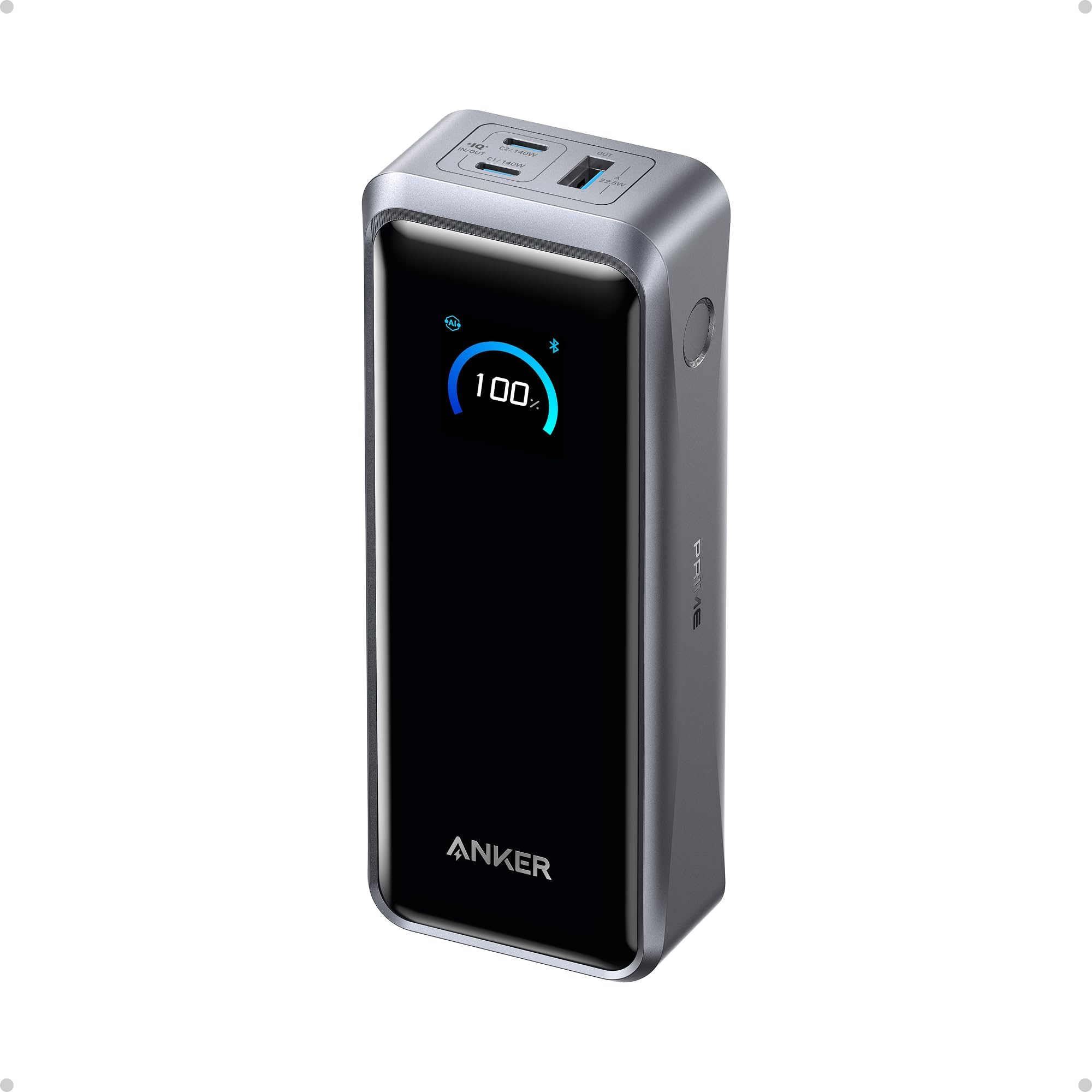
The Anker 20K 87W delivers 65W over USB-C PD, enough to bring a 13-inch laptop or a mirrorless camera body back to full power while the 20,000mAh cell holds reserve capacity for a phone and an action cam. The 87W total output is shared across ports, so a 65W laptop charge and a 20W phone charge can happen in the same session. The built-in USB-C cable is the standout travel feature: it stays attached to the bank, so you are not hunting for a cord in a camera bag. A second USB-C port and a USB-A port expand the same session to a phone and a camera at once.

For a shooting day, the charging sequence is what matters: a phone topped up overnight, a mirrorless body recharged between locations, and a laptop rescued before an editing session. The 20K capacity carries that workload without dropping to zero mid-day, and the 87W total output lets two devices charge at once without slowing to a trickle. In a carry-on, it fits alongside a camera insert without hogging the whole bag. It is flight-safe at 20,000mAh, so it clears airline rules for carry-on bags.

A mirrorless body typically draws under 65W, so this bank does not struggle to power one between shoots. The 20,000mAh capacity translates to multiple full battery refills for a camera body before the bank itself needs a wall outlet.

This is the bank for a photographer who wants one carry-on power source for a camera, a phone, and a laptop, and who can plan around a single charging session. No pass-through charging: you either top up the bank itself or charge a connected device, not both at the same time. That is a boundary in the nightly routine, not a problem during the shooting day. Ultralight hikers counting grams or users who need a single 100W+ port for a pro workstation should look at a smaller bank or a 140W class unit.

The shell feels dense and the integrated cable hinge is solid, so the bank rides in a bag without feeling fragile. The extra ports mean you are not locked into the built-in cable, and the mid-range price undercuts 140W bricks while staying above budget 22.5W packs. At 15.5 ounces, this is heavier than a slim 10K pack but very reasonable for the capacity. For a travel-camera kit, this covers the full charging spread without adding a second brick.

Pros

  • Fast charging tops up a laptop, phone, or mirrorless camera without a wall outlet.
  • Dense shell and solid construction handle life in a packed camera bag.
  • Built-in USB-C cable means one less cord to carry and nothing to lose.
  • 20,000mAh capacity delivers multiple full charges for phones and tablets on a trip.
  • Phone-sized footprint keeps a 20K class bank easy to pack.

Cons

  • The integrated cable cannot be swapped out if it becomes damaged, so the main convenience is gone.
  • No pass-through charging: the bank cannot recharge itself and power a connected device at the same time.
Our verdict

A 20K pack with USB-C PD and a built-in cable is the practical core of a travel camera charging kit. Leave the 140W brick behind unless you are powering a demanding 16-inch workstation.
Check Latest Price
2

Professional Power

Anker Prime 26K 300W Bank

91 /100
Traveler Score Outstanding

Key details

Mount
No mount
Capacity
26,250mAh / 99.75Wh
Portability
600g
Reliability
1.5K reviews
Check Details on Amazon

The Prime 26K 300W is the heavyweight in this field-power group: 300W total output, 140W per port, and a 26,250mAh cell that can handle a mirrorless body, laptop, drone, and phone in one charging session. The 250W dual-input self-recharge rate refills the bank quickly between locations, and the detachable 240W cable carries the full output instead of throttling to 100W. For a field kit that drains multiple devices before lunch, that combination is the difference between staying mobile and waiting on a wall outlet.

The 99.75Wh capacity stays under the usual carry-on ceiling while covering a full day of camera work. A 140W USB-C PD port tops up a 16-inch MacBook, the second USB-C port can keep a camera battery charger running at the same time, and the USB-A port handles smaller accessories. Output stays consistent across repeated high-drain pulls, which is what separates this class of bank from lighter camera-centric packs.

This is the right bank for pro video and photo crews who arrive with several high-power devices that all need power before the next location. It is not the fit for casual travelers or anyone whose kit is just a phone and compact camera; for those loads, the 600g body and premium price are more than the job needs. Crews already carrying a camera bag, tripod, and drone case will absorb the weight more easily than someone trying to travel light.

๐Ÿ’ก Set up the companion app before a shoot so you can adjust charge output without touching the side button.

Pros

  • 300W total output with 140W per port keeps a camera, laptop, drone, and phone charging together.
  • 250W dual-input self-recharging refills the 26,250mAh cell quickly between shoot locations.
  • Battery quality holds up under repeated high-draw charging sessions.
  • Capacity and build suit professional field use without going over carry-on limits.

Cons

  • The detachable 240W cable has to be packed separately; there is no integrated cable to fall back on.
  • The side button or a USB-C port can become unresponsive after months of heavy field use.
Our verdict

Pack the Prime when your camera kit also includes a laptop and drone. That is the scenario where its speed and capacity actually change how your shoot day runs.

Check Latest Price
3

Compact High-Power

INIU 25K 100W Power Bank

89 /100
Traveler Score Excellent

Key details

Mount
No mount
Capacity
25,000mAh
Portability
400g
Reliability
1.3K reviews
Check Details on Amazon

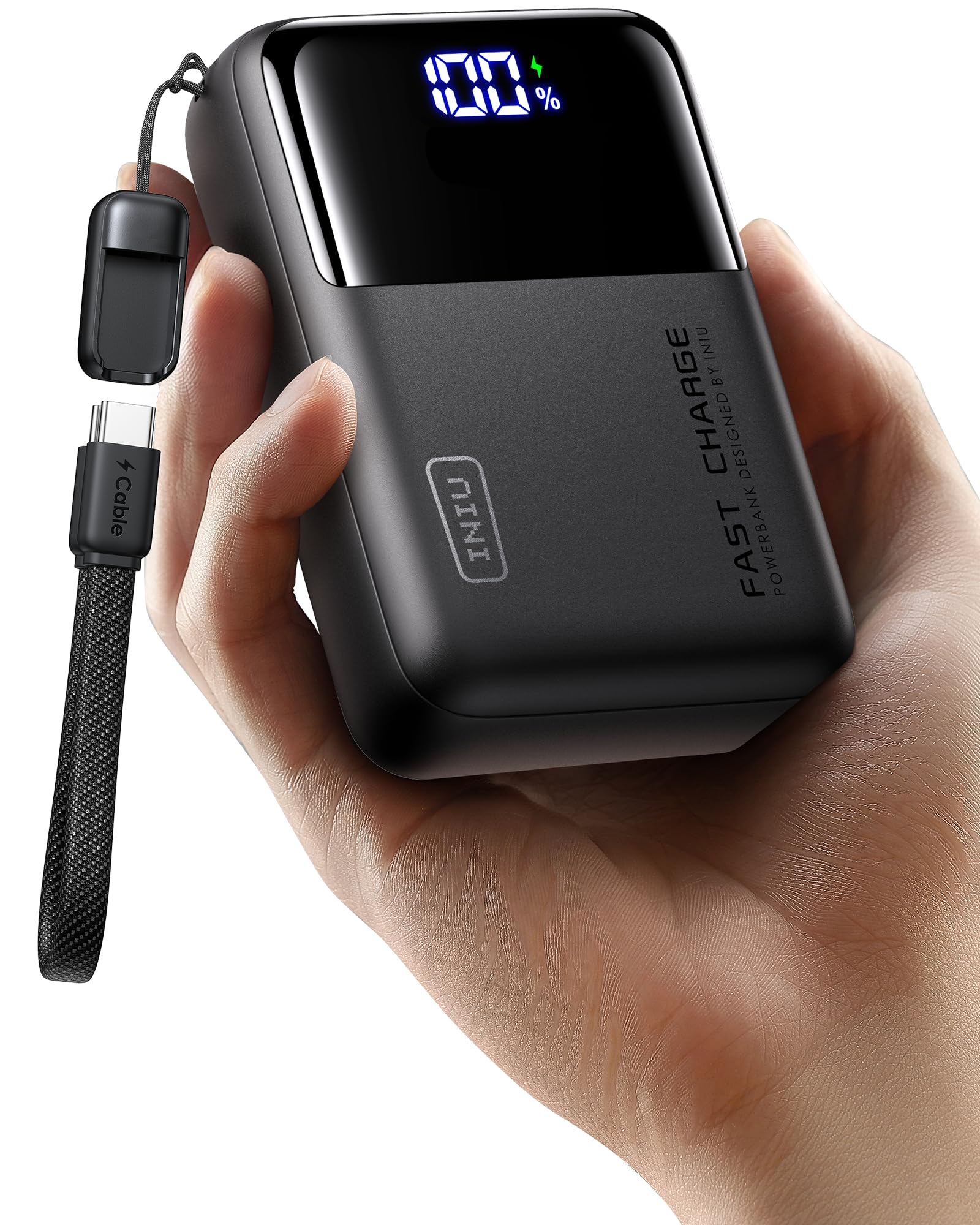
The INIU delivers 100W USB-C PD and 25,000mAh in a 400g body, making it the most packable high-output bank in this field-camera lineup. It undersizes the usual 100W bricks while keeping two USB-C ports and one USB-A port, so a mirrorless body, spare batteries, a phone, and a 100W-class laptop can share the same mid-range accessory.

This bank is for a travel photographer who wants one charger for camera gear and a laptop, not a separate battery plate or a larger power station. The 100W output is above the 22.5W budget option in this set by a wide margin but below the 140W class; a fully loaded 16-inch pro workstation will draw more than a single port can supply. For typical 13- or 14-inch laptops and mirrorless camera kits, that ceiling is not a practical limit.

Unit-level QC can vary, so the smart move is to confirm the supplied USB-C cable is present and run a full discharge/charge cycle before the first trip. A unit that loses capacity early can be replaced, but checking ahead means you won't discover it while in the field.

๐Ÿ’ก Confirm the included cable is in the box and run a full charge cycle before your first shoot.

Pros

  • High-quality battery cells hold capacity for multi-day field work.
  • Compact 400g body carries high output without the usual brick size.
  • Two USB-C and one USB-A port charge a laptop, camera, and phone at once.
  • 100W USB-C PD is enough for most laptops and camera batteries.

Cons

  • A cable can be missing from an otherwise sealed box.
  • A unit may lose charge-holding capacity within months.
  • The 100W max is below the 140W class for a loaded 16-inch pro laptop.
Our verdict

The compact INIU is the field-charging match for photographers who want 100W USB-C PD without a brick; pair it with 100W-class laptops and mirrorless gear, not a 140W-loaded workstation.

Check Latest Price
4

Best Budget Travel

INIU 20K 22.5W Power Bank

93 /100
Traveler Score Outstanding

Key details

Mount
No mount
Capacity
20,000mAh
Portability
320g
Reliability
28.9K reviews
Check Details on Amazon

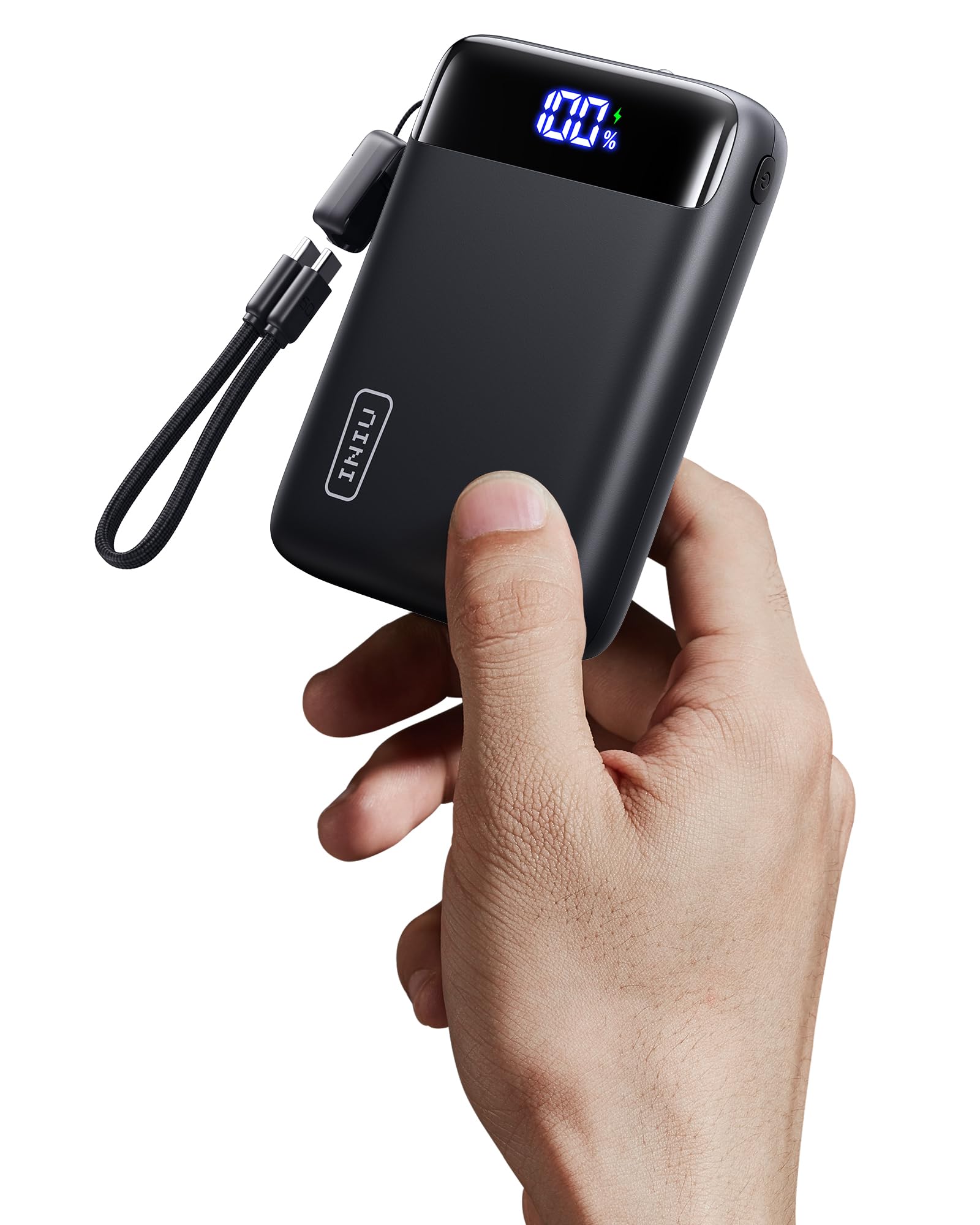
The INIU 20K 22.5W takes the budget tier seriously: a 20,000mAh capacity, a lanyard-style built-in USB-C cable, and a flashlight in a 320g body. That integrated cable is the practical differentiator for travelers who always forget the cord. The higher-output pick in this roundup adds 65W+ USB-C PD for laptops, but this bank keeps the essentials at a lower cost for phone-and-action-cam use.

This is the bank for phone, GoPro, and DJI Osmo-style shooters who want enough capacity for a full day of top-ups without carrying a brick. The 22.5W ceiling is a boundary: it suits small USB-C devices and leaves laptops and larger mirrorless bodies out of the picture. Some units can show a false 0% on the display until you reconnect the bank to input, so check that behavior before relying on the indicator in the field.

The built-in cable and flashlight make it easy to grab in a hurry, and the 20K capacity covers multiple phone recharges plus an action camera. For phone-and-action-cam loads, the bank keeps up with a full day of shooting without needing a mid-day wall outlet. The 320g weight also lets it ride in a day bag without changing the way a kit carries.

๐Ÿ’ก If the display reads 0% after a session, reconnect the bank to input for a moment to reset the indicator.

Pros

  • Holds a charge for days between uses, so it's ready when a shoot or trip comes up.
  • 320g body and lanyard-style built-in USB-C cable make it one of the lighter 20K banks to carry.
  • Build quality is good for the price, with materials that feel like they'll handle daily bag use.
  • Cost-effective entry into 20,000mAh capacity with USB-C PD included.

Cons

  • Percent readout can show a false 0% until you reconnect the bank to input.
  • 22.5W output tops out below the 45W+ that laptops and larger mirrorless bodies need.
Our verdict

For a phone-and-action-cam travel kit, this is the budget pick that gets the job done. Leave the laptop at home or step up to a higher-watt bank.

Check Latest Price
5

Best for Outdoor

ELECOM NESTOUT 15K Rugged

90 /100
Traveler Score Outstanding

Key details

Mount
1/4-20 tripod
Capacity
15,000mAh
Portability
364g
Reliability
1.8K reviews
Check Details on Amazon

The NESTOUT 15K is the field specialist here: IP67-rated sealing keeps rain and dust out of the charging circuit, MIL-STD 810G drop protection covers trail fumbles, and the 1/4-20 mount lets you fix the bank to a tripod or light stand while gear is being charged.

Out on the trail, the 15,000mAh capacity carries a mirrorless camera and phone through a weekend of shooting. The USB-C PD port tops up smaller camera batteries between sets, and the fuel-bottle shell shrugs off the bumps that a backpacking day dishes out.

This is the right call for hikers, backpackers, and travel shooters who expect rain, dust, and rough handling, and who want the bank mounted where the camera is. The everyday travel all-rounder in this roundup offers higher output and a built-in cable for broader device coverage; the NESTOUT swaps that convenience for an IP67 shell and tripod thread. The 32W USB-C PD output limits fast charging for large laptops and power-hungry mirrorless rigs, so treat this as a weatherproof companion for phone, action-cam, and smaller mirrorless charging rather than a universal fast charger.

Pros

  • IP67-rated shell keeps rain, dust, and trail splashes out of the charging circuit.
  • 1/4-20 tripod mount fastens to light stands, tripods, and camera cages for on-site power.
  • Solid build with a fuel-bottle feel handles drops that would crack a typical travel bank.
  • 15,000mAh capacity covers a weekend of phone and mirrorless top-ups in the backcountry.

Cons

  • 32W USB-C PD output is modest; large laptops and high-drain mirrorless rigs won't get fast top-ups.
  • Self-recharging is slow, and in some cases capacity can fade sooner than expected; overnight recharges are the practical workaround.
Our verdict

For hikers and tripod-toting shooters who need weatherproof, mountable power, the NESTOUT 15K is the field bank to carry.

Check Latest Price
6

Best for Action Cameras

JUICEBANK 7800mAh Cam Pack

89 /100
Traveler Score Excellent

Key details

Mount
Built-in cam mount
Capacity
7800mAh
Portability
โ€”
Reliability
313 reviews
Check Details on Amazon

The JUICEBANK is a purpose-built action-cam pack: a 7800mAh bank with a built-in mount plus tripod, flat, curved, and quick-release adapters. That integration makes it a clean field power solution for GoPro, DJI, and Insta360 shooters who want the charger attached to the rig rather than buried in a bag. The mount and adapters remove the need to rig something with tape or straps.

Real-world recording time runs roughly 6-8 hours in moderate use, which covers a full outing of clips. The included mount keeps the pack attached to the rig, so topping up mid-shoot is quick.

The included mounts are not afterthoughts: tripod, flat, curved, and quick-release adapters cover typical rig setups, and the build quality holds up when the bank is mounted and moving with an active shooter. For an action-cam owner, this is a directly usable field kit without hunting for separate accessory parts.

The pack supplements the camera's internal battery, which stays installed for normal operation. It suits action-cam creators who want quick top-ups on a selfie stick or tripod and don't expect a general USB-C PD travel bank for mirrorless cameras or laptops.

๐Ÿ’ก Use the included quick-release adapter to keep the pack mounted during movement; it is more stable than a cable dangling from a pocket.

Pros

  • Built-in mount and included tripod/quick-release adapters attach directly to GoPro, DJI, and Insta360 rigs.
  • Powers action cameras for hours of continuous recording.
  • Real-world runtimes cover 6-8 hours of moderate shooting.

Cons

  • Expecting the GoPro to run without the internal battery can disappoint; this is a range extender, not a replacement.
  • Demanding continuous recording tops out around five hours, so all-day shoots may need a second pack.
Our verdict

For GoPro, DJI, and Insta360 shooters who want the charger on the rig, the JUICEBANK is the mountable field pack with adapters included.

Check Latest Price
7

Group Travelers

JUOVI 20K 45W Power Bank

91 /100
Traveler Score Outstanding

Key details

Mount
No mount
Capacity
20,000mAh
Portability
373g
Reliability
4K reviews
Check Details on Amazon

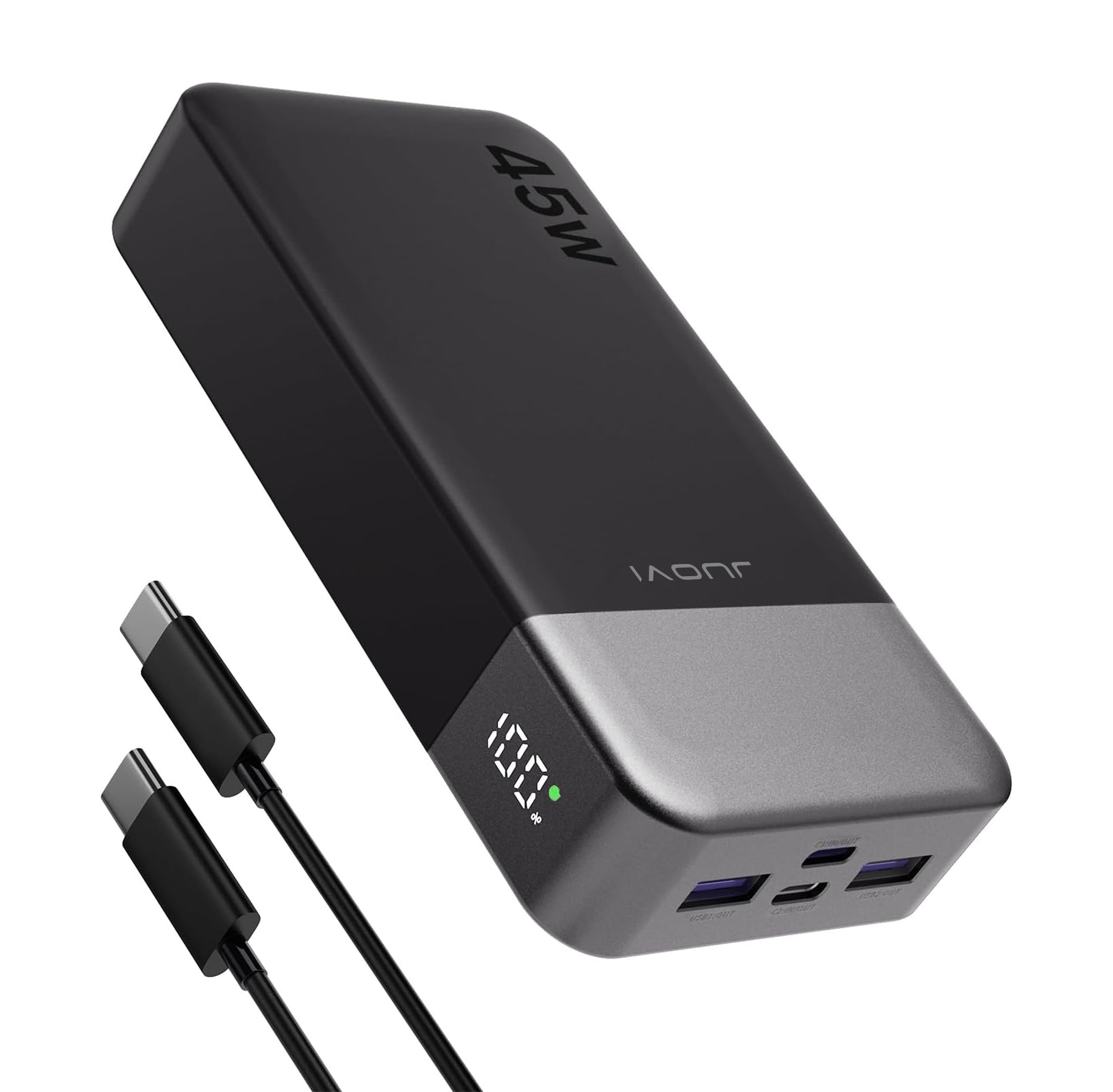
The JUOVI 20K is a budget four-port bank for a group field day: 20,000mAh capacity, a 45W USB-C PD port for a mirrorless camera battery or phone, plus a second USB-C and two USB-A ports for a tablet and earbuds. The LED percentage display keeps charge status clear, and 373g stays manageable in a daypack. Long-term consistency can vary between units, so this suits casual travel more than a critical production. It also sits below the 87W top pick, so laptop-heavy shooters should move up; for field charging of camera gear and everyday devices, the four-port layout and budget-friendly price are the draw.

Pros

  • Four ports and 20,000mAh capacity cover a camera battery, phone, and tablet before the bank needs a wall outlet.
  • Build quality feels solid for the price, and the LED display removes guesswork about remaining charge.
  • 373g body keeps it easy to pack for a field day while still offering group-level capacity.

Cons

  • 45W output is fine for camera batteries and tablets, but not for fast-charging a large laptop.
  • Some units can develop ports that stop charging after a few months; early testing matters before a paid shoot.
Our verdict

For a mixed outing with a small camera kit and several personal devices, the four-port layout is what makes it work.

Check Latest Price
8

GoPro Users

Suptig 7800mAh GoPro Pack

85 /100
Traveler Score Excellent

Key details

Mount
GoPro mount
Capacity
7800mAh
Portability
240g
Reliability
1.1K reviews
Check Details on Amazon

This compact pack mounts directly to a GoPro frame and adds 7800mAh of field top-up power at a budget price. Its 240g body slips into a padded case without adding bulk. The waterproof claim depends on a separate compatible charging housing; with ports open, the bundled setup is not waterproof. Newer GoPro models can show insufficient-power warnings at this output. For a shopper looking for a camera gear power bank, this is a camera-mounted accessory rather than a general-purpose charging solution. Within an existing Suptig/GoPro kit, it remains a low-cost way to stretch a shooting session.

Pros

  • Compact, field-friendly boost that mounts directly to action-cam quick-release frames.
  • Budget-friendly add-on for shooters already in the Suptig/GoPro mount ecosystem.

Cons

  • In GoPro use, the internal battery stays installed; this pack supplements it rather than replacing it.
  • 7800mAh only stretches across one or two action-cam charges; it won't refill a multi-device kit.
Our verdict

If your on-location need is extra GoPro runtime and you already own Suptig mounts, this budget pack fits.

Check Latest Price
9

Outdoor Crews

CUKTECH 30 40K Station

76 /100
Traveler Score Very Good

Key details

Mount
No mount
Capacity
40,000mAh
Portability
โ€”
Reliability
50 reviews
Check Details on Amazon

The CUKTECH 30 is a 40,000mAh field hub with 140W per USB-C port, wireless charging, and a status screen, so an outdoor crew can refill cameras, drones, phones, and laptops from one point. That 144Wh reservoir turns a shoot stop into a basecamp charge station, and the screen tracks charge distribution across ports. It is not the pocket-sized camera power bank this search is built around; it belongs to a different category for a solo photographer who wants a packable field charger.

Pros

  • Two USB-C ports deliver 140W apiece, covering a mirrorless camera, a laptop, and a wireless-charged phone.
  • 40,000mAh capacity gives a multi-device field kit several full camera and phone top-ups before the station needs AC power.

Cons

  • At 144Wh, it may require airline approval before travel
  • The body is closer to a small power station than a compact bank, so shoulder-bag solo shoots feel the weight.
Our verdict

For a two-person outdoor crew working from a vehicle or basecamp, this 144Wh hub covers multiple camera bodies and drones โ€” just not for solo photographers who need a compact bank.

Check Latest Price
10

Road Trippers

LanLuk 40.8K 25W Power Bank

85 /100
Traveler Score Excellent

Key details

Mount
No mount
Capacity
40,800mAh
Portability
410g
Reliability
1K reviews
Check Details on Amazon

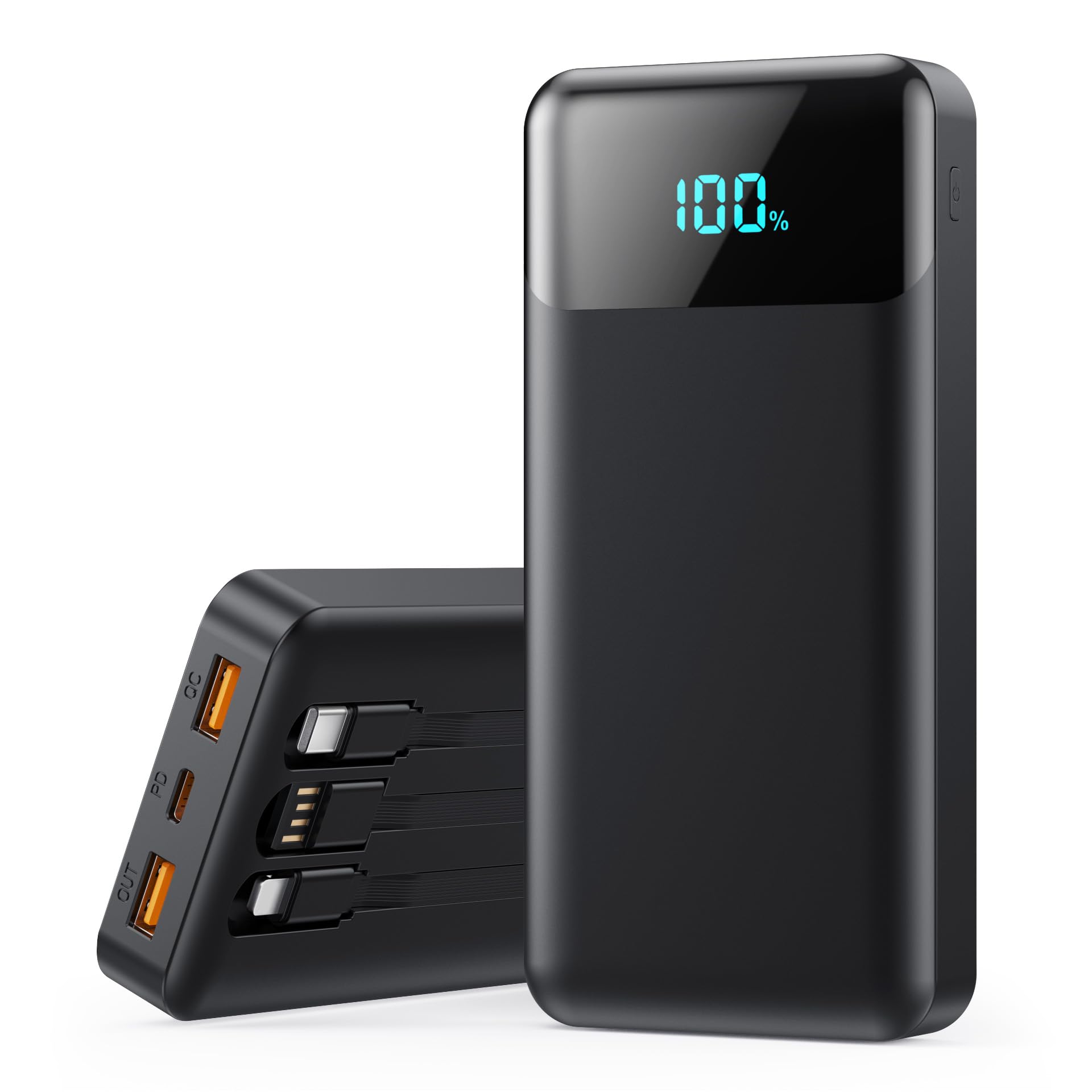
The LanLuk brings 40,800mAh and three built-in cables into a 410g body, so a car-camping crew can spread phone and tablet top-ups across a weekend without a wall outlet. That ground-travel role is the right one for it. The advertised capacity can overstate real-world charges, and charge pauses may require a manual wake-up, so unattended camera charging is not a fit. Those behaviors, alongside a modest 25W output, keep it below the higher-output camera banks in this set.

Pros

  • Three built-in cables and 40,800mAh keep a road-trip group topped up between outlets.
  • Sturdy built-in cables and a solid shell for a budget high-capacity bank.
  • The 410g body packs easily into a travel bag or backpack.

Cons

  • Airline carry-on rules prohibit the 40,800mAh cell, so it is a ground-travel companion only.
  • For larger mirrorless bodies and laptops, the 25W max output is modest and slow.
Our verdict

For road-trip groups charging phones and tablets, the capacity per dollar is strong; camera-first field shooters should choose a higher-output power bank.

Check Latest Price

How to Choose

USB-C PD Output

USB-C PD negotiation is not just 'plug it in.' A camera requests a specific voltage and amperage; if the bank cannot supply that profile, charging slows or stops. A 22.5W phone bank can top up a GoPro but stall a mirrorless body.

Look for at least 45W for mirrorless cameras and 65-100W if you also carry a laptop. Higher wattage does not damage a device that asks for less; USB-C negotiation hands out only what the device requests.

Capacity

Capacity determines how many top-ups you get, but usable energy is lower than the rated number because voltage conversion and heat consume part of the stored power. A 20,000mAh bank typically delivers roughly 12,000-14,000mAh to devices.

For a travel camera kit, 20,000mAh covers a phone plus several camera-battery charges; 10,000mAh is enough for one spare battery and a phone. Above 27,000mAh, weight and airline rules start to matter.

Portability

Portability follows wattage and cell count, not just weight. A 100W bank needs more cells and cooling, so it usually lands around 400g; a 22.5W bank can stay closer to 300g.

Decide where the bank lives: a day pack can handle 400g, while a 600g pro brick fits better in a car, basecamp, or checked gear bag.

Mount Compatibility

Mount compatibility only matters for action-camera rigs. GoPro-style packs under 10,000mAh bolt directly to the camera frame, which works well for helmet, chest, and selfie-stick shooting. General USB-C PD banks cannot mount to an action cam without a separate bracket.

For mirrorless or DSLR use, a built-in action-cam mount is irrelevant, but a 1/4-20 tripod thread on the bank can still help with long-exposure setups. Match the mount to the camera body you actually carry.

Reliability

Reliability is the hardest spec to judge from a listing. Battery chemistry, voltage-regulation circuitry, and connector soldering decide whether a bank holds its charge after months of use. A bank that stops charging mid-shoot can leave a camera dead even when its screen still shows half full.

Choose a bank with consistent charging behavior and a proven track record in the role you need. Avoid using a bargain unit as the only power source for a paid shoot.

Frequently Asked Questions