5 Best Portable Power Banks 2026: Light Picks for Your Carry-On

Which portable power banks stay lightweight enough for daily carry while still charging your phone fast? We cut through the capacity hype to find the ones that actually fit your pocket and your travel plans.

The typical travel power bank is a compromise: more capacity means more weight, and faster charging often comes with a bigger footprint. Many brands advertise 20,000mAh as pocketable, but the reality is a 12-ounce slab that belongs in a bag, not a jeans pocket. Built-in cables add convenience but can become failure points if not well made.

Meanwhile, budget listings frequently exaggerate capacity — a 20,000mAh pack rarely delivers the promised 5-7 phone charges. Real-world performance is closer to 3-4 charges, and the weight difference between a 10,000mAh and 20,000mAh pack is often double. For most travelers, a 10,000mAh pack with fast charging is more useful than a heavy 20,000mAh that stays in the bag.

This guide focuses on three things: real-world capacity, charging speed that matches modern phones, and a weight you'll actually carry. The result is a shortlist that prioritizes everyday usability over spec-sheet hype. No product earns a spot just because it has a high number on the box.

1

Best Overall

INIU 10K 45W (Top)

93 /100
Traveler Score Outstanding

Key details

Weight
6.5 oz
Output Wattage
45W
Built-in Cables
Detachable USB-C lanyard
Battery Capacity
10,000 mAh
Check Details on Amazon

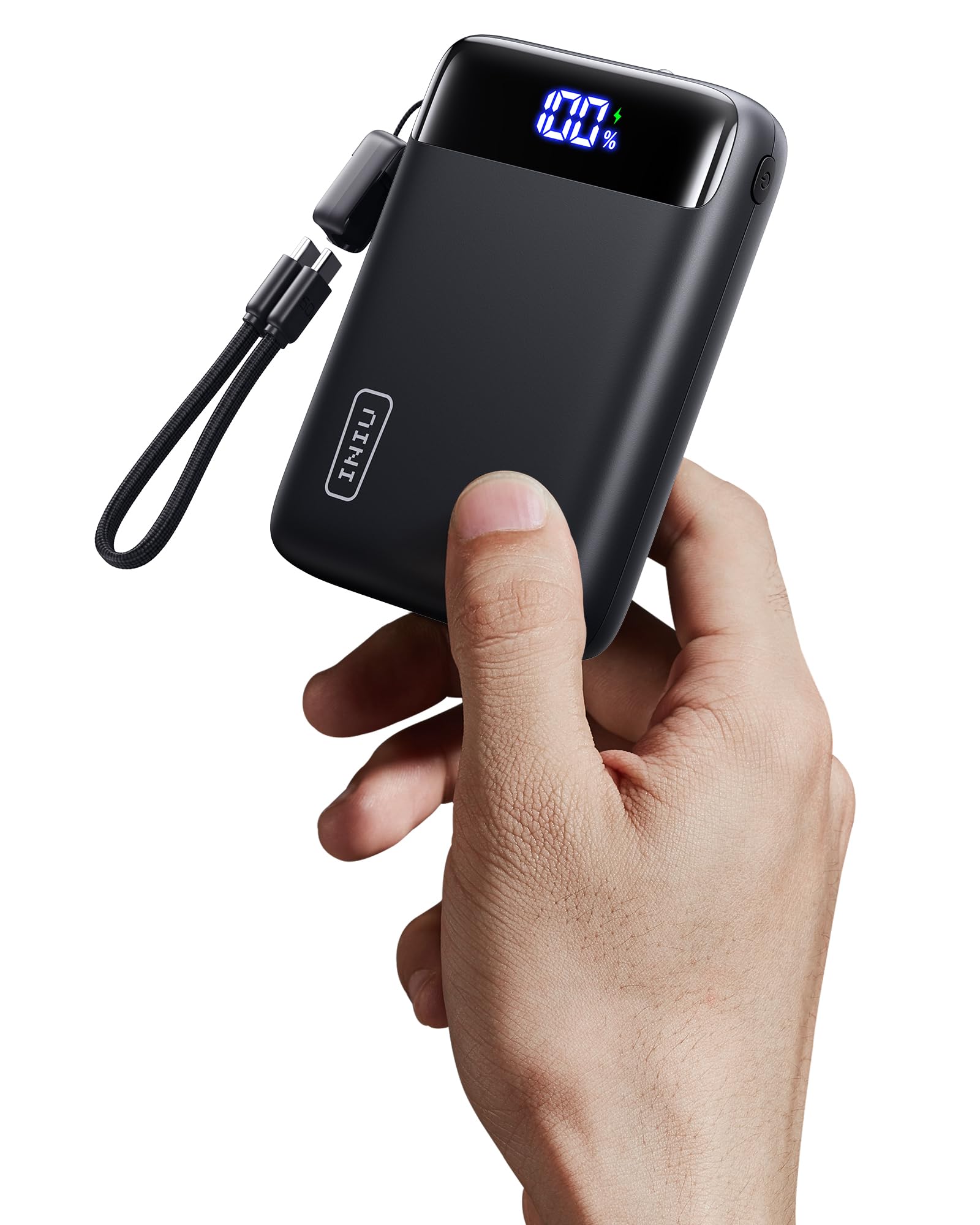
At 6.5 ounces and roughly the size of an original iPhone, the INIU 10K 45W is a power bank you can forget is in your pocket. Its 45W PD output pushes a phone from flat to 65% in about half an hour — fast enough to make a brief coffee stop productive.

The matte plastic shell resists scuffs better than glossy finishes, and the 6.5 oz weight means it hangs from the detachable USB-C lanyard without pulling on your wrist. Two USB-C ports and a USB-A port add flexibility for sharing a charge, though the main cable is the detachable one that also serves as a carry strap.

A built-in kickstand lets you prop up your phone while it charges, and the flashlight helps locate a power port in the dark. The 10,000mAh capacity delivers roughly one full recharge for a typical modern phone, with the pack holding its charge for weeks between uses.

This is built for everyday travelers and minimalist packers who want a power bank they’ll actually carry. If you need to charge a phone more than once between wall outlets, or you’re hoping to top off a laptop, this pack will fall short. For anyone who values pocketability over spare capacity, the tradeoff is worth it.

Pros

  • Ultra-compact at 6.5 oz fits in jeans pockets and small purses.
  • 45W PD fast charging reaches 65% in 30 minutes on modern phones.
  • Detachable USB-C cable doubles as a lanyard for tangle-free carry.
  • Holds charge for weeks when not in use, reducing need to pre-charge.

Cons

  • Capacity delivers roughly one full phone recharge, not enough for heavy users away from outlets for extended periods.
  • Not suitable for laptop charging
Our verdict

This is the power bank to grab when you leave the house every day — fast, light, and easy to carry. Just don't expect it to cover a weekend off-grid.

Check Latest Price
2

Best for Laptop Charging

Anker 20K 87W Power Bank

93 /100
Traveler Score Outstanding

Key details

Weight
15.2 oz
Output Wattage
87W
Built-in Cables
Built-in USB-C cable
Battery Capacity
20,000 mAh
Check Details on Amazon

The Anker 20K 87W stands apart from lighter everyday packs by delivering full laptop charging via an integrated USB-C cable, no extra cord needed. That 65W single-port output matches what many travel chargers offer, so you can top off a phone, tablet, and laptop without juggling multiple power bricks.

This power bank is best for travelers who carry a laptop and want one cable to cover everything. The 20,000 mAh capacity handles multiple device charges on a long flight. The tradeoff: at 15.2 oz it's too heavy for a pocket — it rides comfortably in a cross-body bag or daypack. And charging the bank itself while it powers devices isn't possible, so plan for downtime between uses.

Build quality aligns with Anker's reputation: a durable shell and secure cable connection that stays put. The capacity holds up across several days of moderate use, and the fast charging holds consistent even when the battery level drops. Occasional reports of the built-in cable failing within days point to quality control variance, though most owners find it holds up well through regular travel.

💡 Charge the power bank fully before heading out — it won't recharge while powering your devices.

Pros

  • Charges a laptop at full speed with a single built-in cable.
  • Solid construction that survives being tossed in a bag.
  • Enough capacity for multiple phone charges plus a laptop top-off.

Cons

  • Heavy enough that pocket carry is impractical; best in a bag.
  • Cannot charge devices and recharge the bank at the same time.
  • The built-in cable may stop working in a small number of units.
Our verdict

If your daily carry includes a laptop and you want one cable to charge everything, this Anker delivers speed and capacity in a mid-range package — just know the weight and charging behavior before you buy.

Check Latest Price
3

Best Budget High-Capacity

INIU 20K 22.5W

93 /100
Traveler Score Outstanding

Key details

Weight
11.3 oz
Output Wattage
22.5W
Built-in Cables
Detachable USB-C lanyard
Battery Capacity
20,000 mAh
Check Details on Amazon

The INIU 20K 22.5W delivers 20,000mAh of capacity at a price that undercuts most competitors, making it a strong option for budget-conscious travelers. For the same money as the top pick’s 10K pack, you get twice the battery life — though it gives up the slim pocketable form and faster 45W charging. The compact build for its capacity (83% of owners found it pocket-sized for a 20K) and the included detachable USB-C lanyard add convenience for trips.

This power bank suits budget travelers who need to recharge multiple phones over several days without access to outlets. The 22.5W output means topping up the battery itself takes longer — but for users who charge overnight, this is rarely an issue. At 11.3 oz, it’s not a pocket carry, but it’s manageable in a bag or carry-on. If you prioritize speed or minimal weight in a daily pack, the slimmer 10K option in this set is a better fit.

The battery holds its charge well for weeks, so it’s ready when you need it — a practical feature for infrequent travelers. The three ports (2 USB-C, 1 USB-A) allow simultaneous charging of a phone, earbuds, and a tablet, though total output is limited to 22.5W shared across devices. For the price, the build quality feels solid, and the brand’s reputation adds confidence.

💡 Allow several hours to fully charge the 20,000mAh battery — it's not a quick top-up device.

Pros

  • Compact build for a 20,000mAh pack fits in most bags easily.
  • Battery holds charge for weeks, ideal for occasional or trip use.
  • Very cost-effective for the capacity

Cons

  • At 11.3 oz, it’s heavier than many pocket-sized packs
  • 22.5W charging is slower than rivals; expect longer waits to recharge the power bank itself.
  • Durability can vary between units
Our verdict

If capacity per dollar is the priority and charging speed is secondary, this INIU delivers reliable multi-day phone charging on a budget.

Check Latest Price
4

Best for Group Charging

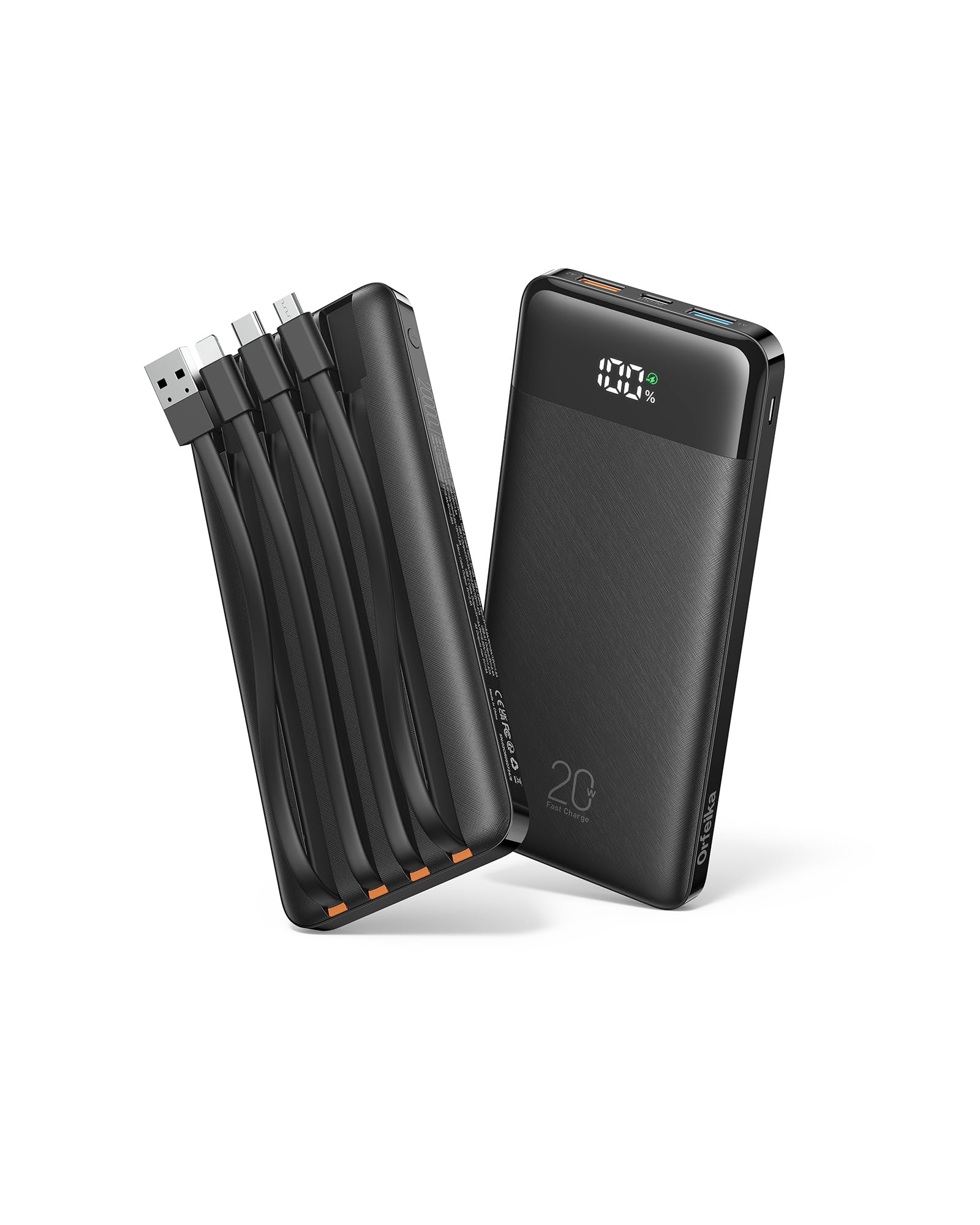
Orfeika 20K Multi-Cable

91 /100
Traveler Score Outstanding

Key details

Weight
11.8 oz
Output Wattage
20W
Built-in Cables
4 built-in cables
Battery Capacity
20,000 mAh
Check Details on Amazon

The Orfeika 20K power bank packs four built-in cables right into the unit: Lightning for iPhones, USB-C for modern Android and tablets, Micro-USB for older devices, and a USB-A output for anything else. This design means you can grab it and go without digging through a bag for the right cord.

This is the ideal pick for families or group travelers who juggle different phone types. The 20W PD output charges an iPhone 16 to half in about 45 minutes, but that speed falls behind packs with 45W or higher – your Android phone capable of 45W charging will take longer than it could. The 11.8 oz weight also makes it better suited for a tote bag than a pocket.

💡 Keep it in a bag or backpack rather than a pocket – the heft is less noticeable that way.

Pros

  • Built-in Lightning, USB-C, Micro, and USB-A cables eliminate separate cords.
  • Charges iPhone 16 to 50% in roughly 45 minutes.
  • Solid build with a sturdy feel.
  • Compact enough to slip into most purses.

Cons

  • At 11.8 oz, the weight is noticeable when carrying in a pocket.
  • 20W output is slower than what some modern phones accept for fast charging.
Our verdict

If you regularly need to charge a mix of iPhones, Androids, and older gadgets without sorting through cables, this pack delivers that convenience. Accept the slower top-up speed and the weight, and it becomes a practical travel companion.

Check Latest Price
5

Digital Nomads

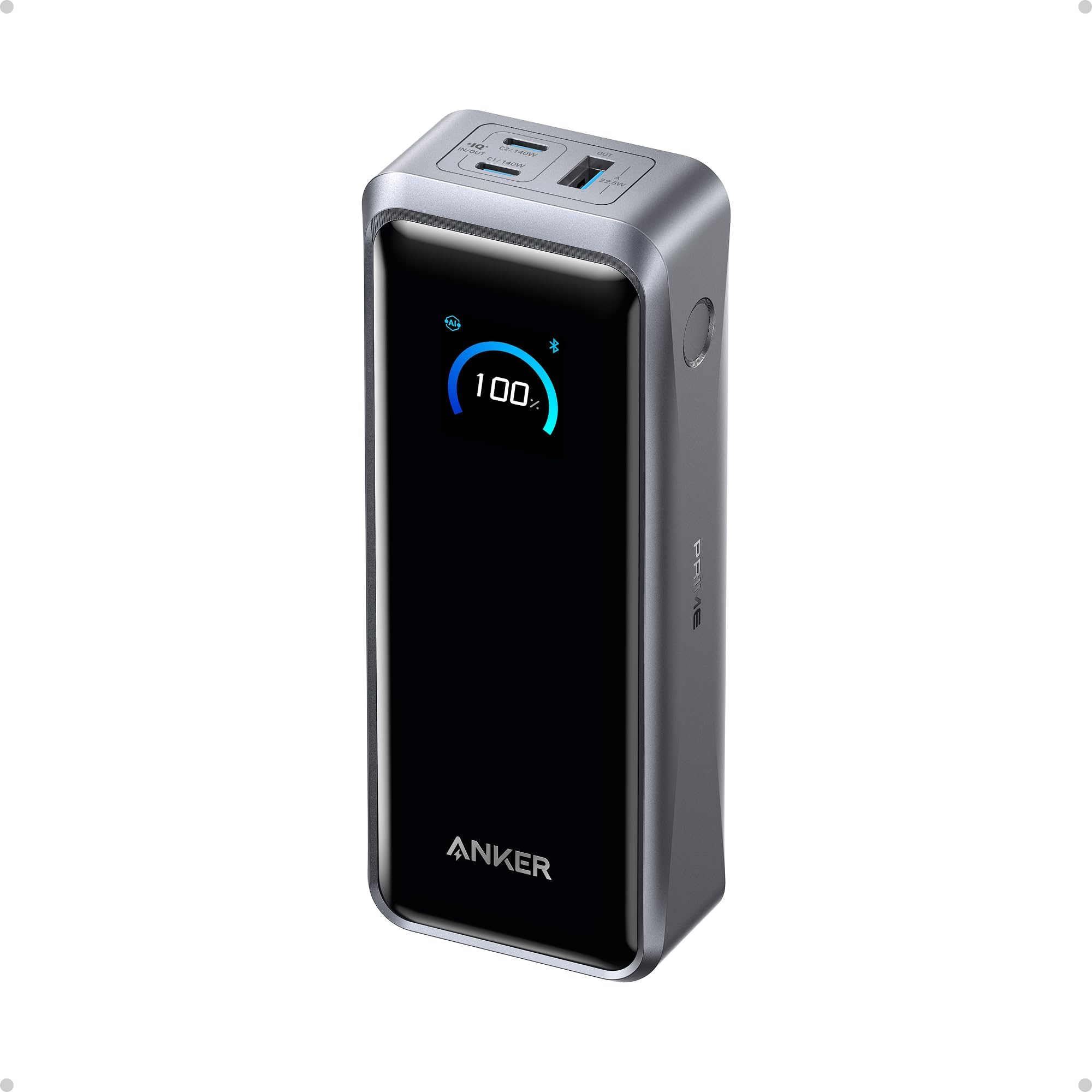
Anker Prime 26K 300W

91 /100
Traveler Score Outstanding

Key details

Weight
1.3 lb
Output Wattage
300W
Built-in Cables
Battery Capacity
26,250 mAh
Check Details on Amazon

Delivers 300W total output, enough to charge a MacBook and a second laptop at full speed simultaneously. The smart display and app control add convenience for tracking charge levels. At a premium price and 1.3 lb weight, this is a specialist tool for professionals who carry multiple laptops daily. For travelers who only charge phones and tablets, the capacity and cost are overkill, but it handles demanding workflows without compromising speed.

Pros

  • Charges a MacBook to 50% in 27 minutes
  • Solid aluminum body with a premium feel
  • 300W total output supports two laptops at once

Cons

  • Premium-priced at $180
  • Heavy at 1.3 lb, not pocketable for daily carry
Our verdict

Ideal for digital nomads or videographers who need to recharge multiple laptops quickly between shoots, but too bulky and expensive for light phone charging needs.

Check Latest Price

How to Choose

Battery Capacity

Capacity measured in mAh tells you how much energy the pack holds, but real-world output is typically 30-40% lower due to voltage conversion and internal resistance. A 20,000mAh pack usually delivers 12,000-14,000mAh to your phone, meaning 3-4 full charges instead of the 5-7 often claimed. For a weekend trip, 10,000mAh covers a phone and earbuds; for longer stays without outlets, 20,000mAh is the practical sweet spot.

Output Wattage

Output wattage determines how fast your devices charge. Phones typically max out at 20-30W, so a 20W pack charges an iPhone 16 to 50% in about 45 minutes, while a 45W pack does it in 27 minutes. Laptops need 45W or more to charge at useful speeds — a 65W port can bring a MacBook from dead to 50% in 40 minutes. Higher wattage also means faster charging of the power bank itself, assuming you have a compatible wall charger.

Weight and Size

Weight is the hidden tradeoff: a 10,000mAh pack typically weighs 5-8 ounces and fits in a pocket or small crossbody. A 20,000mAh pack jumps to 11-15 ounces and belongs in a backpack or large purse. The difference is often double the weight for double the capacity, but the added bulk can make you leave it behind. For daily carry, prioritize a lightweight pack you'll actually bring; for backpack trips, extra weight may be acceptable.

Built-in Cables

Built-in cables eliminate the need to carry a separate charging cord, which is convenient for quick top-ups and reduces clutter. However, they add to the cost and are a potential failure point — if the cable breaks, the pack's main feature is lost. Detachable lanyard cables offer flexibility: you can replace them if they wear out. For groups with mixed devices, multiple built-in cables (Lightning, USB-C, Micro) can be a major time-saver.

Airline Compliance

Airlines limit carry-on power banks to 100Wh (about 27,000mAh). Packs over that must be checked (and most airlines prohibit lithium batteries in checked bags). The sweet spot for travel is 10,000-26,000mAh — enough for multiple charges and compliant globally. Always check the Wh rating printed on the pack; some manufacturers list it, others don't. If in doubt, stick with 20,000mAh or less.

Frequently Asked Questions