9 Best Insoles for Hiking Boots in 2026: Match Your Arch to the Trail

Find hiking boot insoles that stabilize your stride and last through real trail miles, matched to your arch type and load.

Most insoles marketed for hiking boots are actually work-boot or athletic-shoe footbeds with trail language slapped on the box. The real difference shows up on uneven ground: a soft gel insert feels great in the store but packs down after a few rocky descents, while a rigid orthotic shell can feel unbearable if you only wanted cushioning.

The trick is matching the footbed to your foot shape and the kind of hiking you actually do. High arches need a firm, deep heel cup. Flat feet need motion control. Day hikers with supportive boots may only need a light layer of shock absorption. Get that match right, and you avoid the two most common complaints: premature flattening and foot fatigue that no amount of sock layering can fix.

The picks here are organized around that fit-first principle, with the trade-offs stated plainly so you can choose the insole that fits both your boot volume and your trail mileage.

1

Best Overall

PowerStep Pinnacle

91 /100
Traveler Score Outstanding

Key details

Length
Full-length
Heel Cup
Structured
Cushioning
Dual-layer
Arch Support
Moderate orthotic
Check Details on Amazon

PowerStep Pinnacle is the balanced hiking orthotic in this set: structured arch support for plantar fasciitis, dual-layer cushioning, and a full-length no-trim footbed that drops into most hiking boots without adjustment. The arch holds moderate overpronation while the cushioning softens rocky descents, so the ride is firm rather than board-hard. Because the insole is sized by boot size instead of cut-to-fit, the arch sits where it should from the first step.

Long-distance walkers on uneven terrain get the most from the support, and the 30-day money-back guarantee lets you verify the fit before committing. The two caveats to check are the top lining, which can peel or roll in some pairs, and the fit in narrow boots, where the wide footbed can feel crowded. Neither caveat erases the orthotic benefit for the right foot shape.

This is the middle ground between the firmer high-arch footbed and the softer budget comfort options in this set. It suits hikers with plantar fasciitis or moderate overpronation who want podiatrist-style support without custom orthotics, and who prefer a structured ride over plush cushioning. Made in the USA and backed by a 30-day guarantee, it is the most balanced boot-ready support in the group.

πŸ’‘ Order your usual boot size and use the 30-day window to confirm the fit inside your exact hiking boots.

Pros

  • Relieves plantar fasciitis heel pain while holding moderate overpronation in a stable arch.
  • Comfortable for all-day wear on uneven trail miles.
  • No-trim full-length design keeps arch placement correct in most boots.

Cons

  • Top lining can peel or roll in some pairs, so durability varies.
  • Wide footbed can crowd narrow or low-volume hiking boots.
Our verdict

For hikers whose main problem is heel pain and overpronation, the Pinnacle is the structured, no-trim footbed that keeps trail days comfortable without custom orthotics.
Check Latest Price
2

Best for High Arches

Superfeet Green

89 /100
Traveler Score Excellent

Key details

Length
Trim-to-fit
Heel Cup
Deep
Cushioning
Firm foam
Arch Support
High arch
Check Details on Amazon

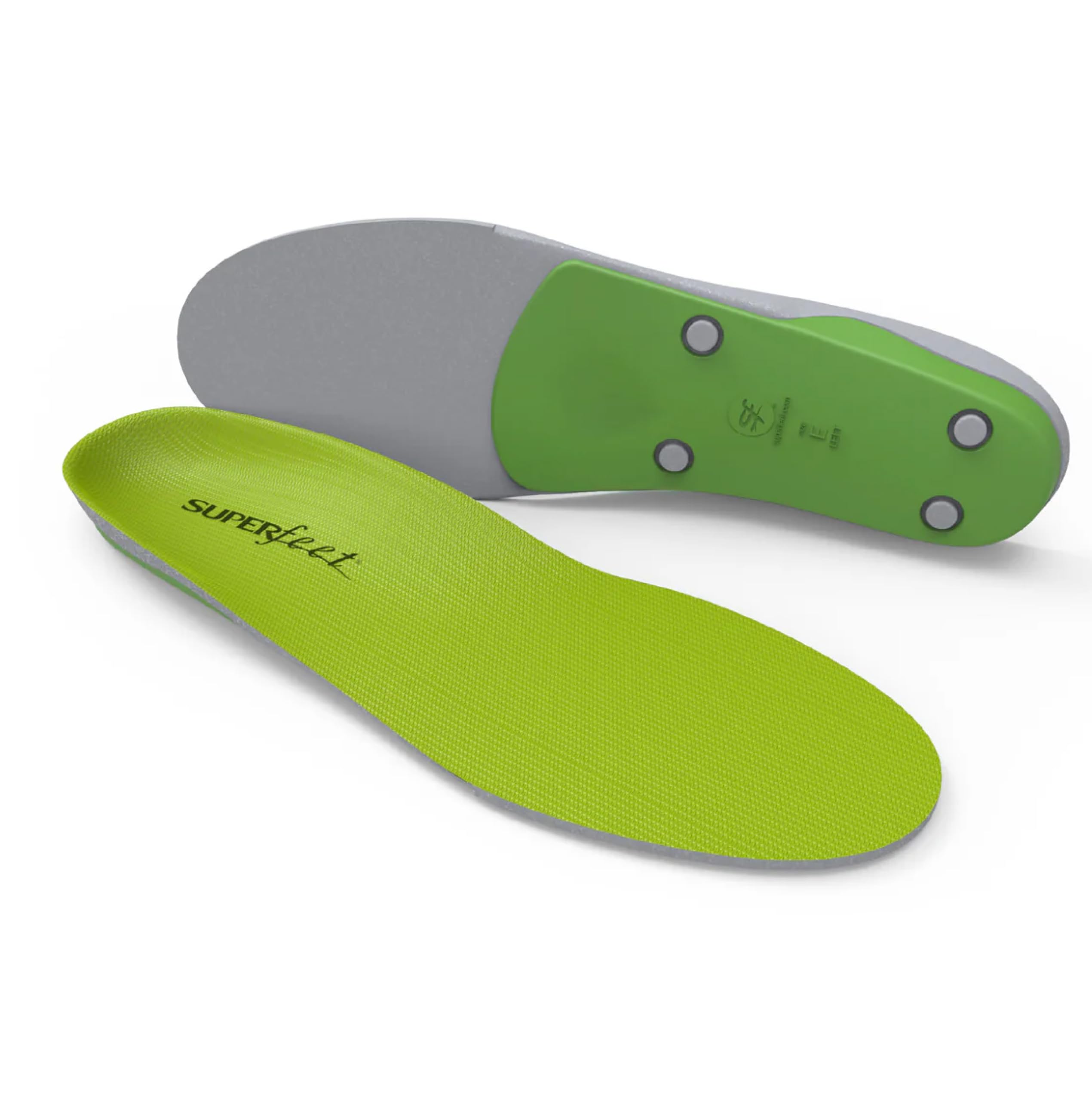
High-density closed-cell foam gives the Superfeet Green a stable platform for high-arch hikers, with a deep heel cup that holds up under heavy packs. It is the firmer, denser option in this set, contrasting with the top pick's softer dual-layer cushioning.

This is for backpackers with roomy boots who want a long-lasting, stable footbed rather than plush padding. The firm foam and minimal forefoot cushioning make the break-in noticeable for hikers used to cushioned insoles; flat-footed hikers should choose a different insole. Once settled, the dense foam keeps supporting mile after mile.

πŸ’‘ Log a few shorter hikes before a long trip so the dense foam can conform to your foot.

Pros

  • High-arch support and deep heel cup keep the foot steady under a loaded pack.
  • Plantar fasciitis and back-pain relief on long trail days.
  • High-density foam holds its shape through years of hiking use.

Cons

  • Minimal forefoot padding leaves the ball of the foot on a firm platform.
Our verdict

Firm, stable, and long-lasting β€” right for high-arch hikers who treat insoles as gear rather than comfort padding.

Check Latest Price
3

Best Budget Plantar Fasciitis Pick

WalkHero Plantar Fasciitis

88 /100
Traveler Score Excellent

Key details

Length
Full-length
Heel Cup
Deep
Cushioning
Firm EVA
Arch Support
Rigid shell
Check Details on Amazon

The WalkHero’s defining feature is a rigid full-length shell with a deep heel cup that holds flat feet steady on uneven trail miles. It supplies orthotic-level arch structure at a budget price, which makes it a direct alternative to the balanced top pick for hikers who need support more than softness.

This is the right insert for hikers with plantar fasciitis or flat feet who are willing to tolerate a firm shell and prefer stability over cushioning. The stiff footbed may feel intrusive in low-volume boots or for hikers who want plush descents, so boot volume matters when swapping out the stock footbed.

πŸ’‘ Give yourself a few shorter hikes before committing to a full day on the trail.

Pros

  • Relieves plantar fasciitis pain during trail hikes
  • Firm arch support steadies flat feet without premium orthotic pricing
  • Budget-friendly pricing for near-orthotic function

Cons

  • Under heavy daily use, the arch support can pack down faster than premium orthotics.
Our verdict

Flat-footed hikers who know they need firm support should put this insert at the top of their try-on list.

Check Latest Price
4

Best for Maximum Stability

PowerStep Pinnacle Maxx

91 /100
Traveler Score Outstanding

Key details

Length
Full-length
Heel Cup
Angled heel
Cushioning
Firm dual-layer
Arch Support
Maximum stability
Check Details on Amazon

The Pinnacle Maxx delivers maximum-stability motion control through a firm, angled heel and stiffer shell that hold flat feet in line under heavy pack loads. It is the most supportive footbed in the PowerStep range, built for hikers whose arches collapse on long descents.

This is for flat-footed backpackers carrying serious weight who choose arch support over plush cushioning. The full-length, no-trim footbed drops into most hiking boots, and the regular Pinnacle remains the better-balanced option for hikers who don't need this level of control.

πŸ’‘ Take a few shorter hikes before trusting this footbed on a big mountain day.

Pros

  • Angled heel and stiffer shell hold flat feet stable on rocky, load-bearing trails.
  • Reduces overuse strain for hikers with plantar fasciitis or arch collapse.

Cons

  • Firm maximum-stability ride can feel hard to hikers who expect cushioning rather than control.
  • Top lining can peel and support can pack down in some pairs before the footbed settles.
Our verdict

Premium-priced for heavy-duty motion control, this is the right footbed when overpronation under load is the problem; the regular Pinnacle covers the rest.

Check Latest Price
5

Best Budget Sport/Trail Upgrade

Dr. Scholl's Sport

91 /100
Traveler Score Outstanding

Key details

Length
Trim-to-fit
Heel Cup
Shallow
Cushioning
Gel + foam
Arch Support
Moderate flexible
Check Details on Amazon

One of the few budget footbeds that feels at home in hiking boots, the Sport crosses from athletic shoes to trail footwear without the bulk of a rigid orthotic. Its flexible side-to-side support and trim-to-fit shape make it a natural match for day hikers who want more cushion under the arch than the stock boot liner provides.

It suits day hikers and casual trail walkers seeking a soft but supportive upgrade in athletic shoes or hiking boots. Hikers with plantar fasciitis who need rigid arch control should pick a firmer footbed, and it is not built for multi-season abuse: heavy backpackers may need replacement sooner than with a premium orthotic.

πŸ’‘ Trim the toe end first and test the fit; if the arch sits too far forward, remove a little more from the heel side.

Pros

  • Cushions hiking boots and athletic shoes with a soft, flexible footbed.
  • Provides genuine arch support for a budget sport insole.
  • Offers strong value for hikers who want a comfort upgrade without high-end pricing.

Cons

  • Arch placement can land slightly off in individual boots, and the surface may feel slick underfoot.
Our verdict

For easy trail days, the Sport gives day hikers the cushion and support they want from a budget boot insole without the stiffness of an orthotic.

Check Latest Price
6

Best Cushioned Work-Boot Insole

Timberland PRO Anti-Fatigue

89 /100
Traveler Score Excellent

Key details

Length
Trim-to-fit
Heel Cup
Moderate
Cushioning
Thick foam
Arch Support
Minimal
Check Details on Amazon

Anti-fatigue foam softens the jarring impact of long descents and hard trail miles, giving roomy work boots a cushioned ride that keeps legs fresher through a full shift. It works as a direct replacement for worn factory insoles in high-volume Timberland-style boots, and the dense construction feels more substantial than typical budget foam.

That makes it a strong match for hikers in high-volume work-style boots who want shock absorption over structure. Sizing runs long and wide and may call for trimming, and the foam can lose some spring before the balanced top pick's denser footbed does, but the anti-fatigue cushioning keeps it a comfortable trail companion for moderate miles.

Pros

  • Cushioned ride absorbs hard impacts and keeps legs fresher through long days.
  • Dense, substantial feel with high perceived quality at a mid-range price.

Cons

  • Arch support is minimal, so it won't correct overpronation or serve as an orthotic.
Our verdict

If you hike in roomy work-style boots and want impact absorption more than arch correction, this is a cost-effective way to refresh tired insoles.

Check Latest Price
7

Rotating Work Boots

Dr. Scholl's Work 2-Pack

91 /100
Traveler Score Outstanding

Key details

Length
Trim-to-fit
Heel Cup
Moderate
Cushioning
Massaging gel
Arch Support
Moderate
Check Details on Amazon

Two pairs of gel-cushion insoles with reinforced arch support and odor control deliver budget-friendly rotation for work-style boots and easy hikes. It is less hiking-specific than the Sport in this lineup, so hikers needing rigid orthotic control should look elsewhere. The toe area can run narrow for wide feet.

Pros

  • Comfortable for long days in work boots and on easy trails, with reinforced arch support.
  • Two pairs in the box mean rotating boots or replacing worn insoles is easier on the budget.

Cons

  • Cushioning can soften after a few months of heavy use in work boots.
Our verdict

For rotating work-style hikers on a budget, this two-pack covers easy trails and boot days without forcing a premium purchase.

Check Latest Price
8

Plush Budget Comfort

Copper Fit Work Gear

91 /100
Traveler Score Outstanding

Key details

Length
Trim-to-fit
Heel Cup
Shallow
Cushioning
Thick foam
Arch Support
Moderate
Check Details on Amazon

Thick foam cushioning delivers plush comfort in work boots and easy trail shoes at a budget price, and the trim-to-fit design helps manage the wide footprint. The very thick construction can make low-volume boots feel tight or numb, and the lack of rigid arch structure leaves it as a cushioning layer for easy trails rather than a hiking orthotic.

Pros

  • Thick foam cushioning absorbs impact underfoot in work boots and casual trail shoes.
  • Cost-effective foam that holds up through regular work-boot use.

Cons

  • Footbed runs wide or large, so it can be too big for snug boots and shoes.
Our verdict

For budget hikers in roomy work-style boots who want plush cushioning on easy trails, this delivers without the cost of an orthotic.

Check Latest Price
9

Square-Toe Work Boots

Ariat ATS Square Toe

93 /100
Traveler Score Outstanding

Key details

Length
Full-length
Heel Cup
Moderate
Cushioning
Gel footbed
Arch Support
Light
Check Details on Amazon

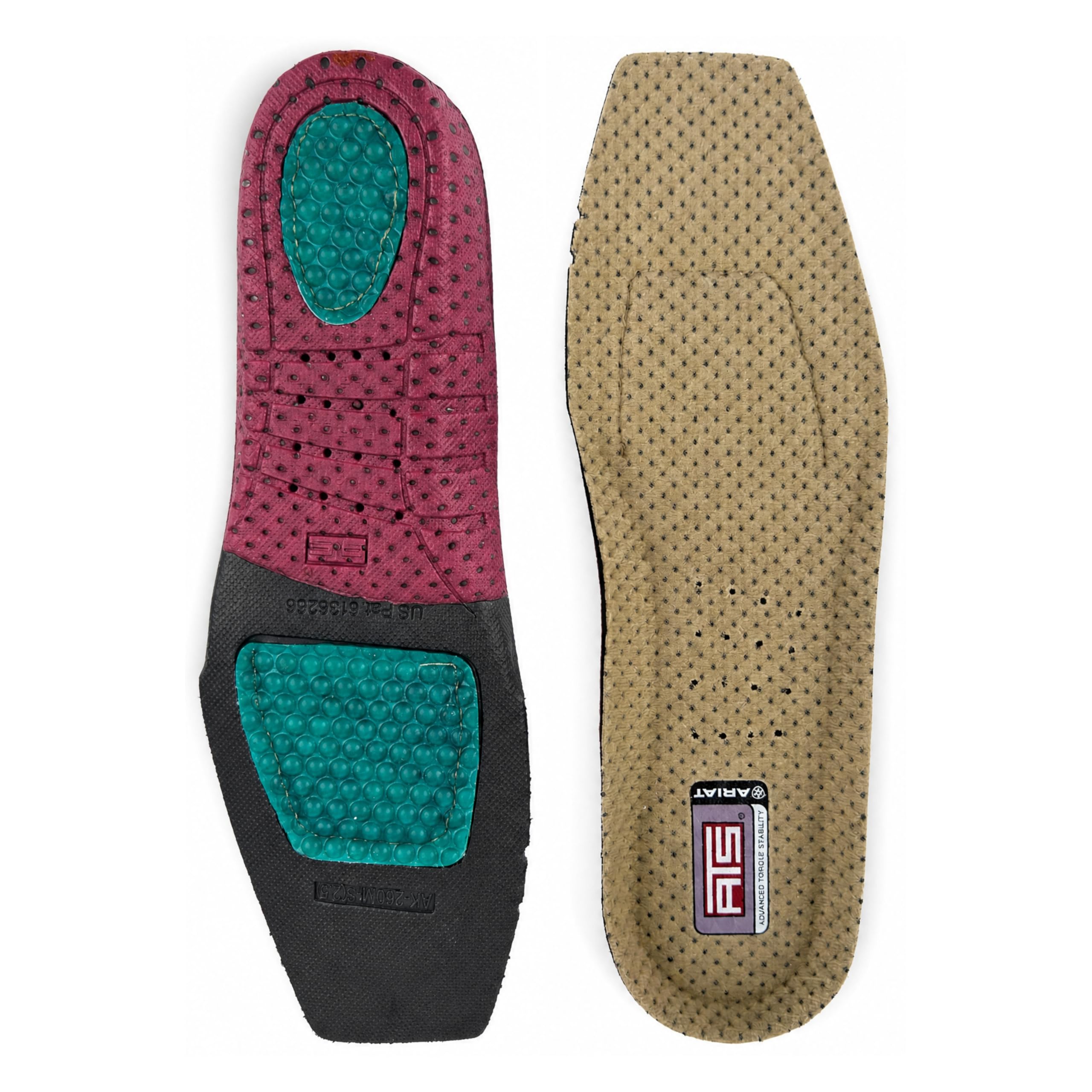
A factory-fit gel footbed for Ariat square-toe work and western boots, this restores the cushioning worn boots lose. It is not a hiking insole: the square-toe shape suits Ariat boots only, and arch support is light next to true orthotics. The top layer can peel before a year in some cases, but owners of the right boots get a glove-like drop-in replacement.

Pros

  • Drops into Ariat square-toe work and western boots without trimming; matches the factory shape.
  • Gel cushioning brings worn work boots back to near-new comfort with minimal break-in.

Cons

  • In daily-wear boots, the top layer can peel before a year of use.
Our verdict

Best left for owners of Ariat square-toe boots who want a factory-matched gel footbed; hikers in standard boots should keep scrolling.

Check Latest Price

How to Choose

Arch Support Structure

A rigid orthotic shell distributes load across the whole foot instead of letting the arch collapse under pack weight. That is why gel-only insoles feel fine for a short walk but leave your feet aching after a 10-mile day.

Choose a rigid shell if you have flat feet, overpronation, or a history of plantar fasciitis. Choose a flexible or gel footbed only if your boots already provide decent arch support and you just want extra comfort.

Heel Cup Depth

A deep heel cup cradles the fat pad under your heel and keeps the foot from sliding forward on descents. When the heel moves inside the boot, you get blisters and bruised toenails even with perfect socks.

Deeper is better for uneven terrain and heavy packs, but it also takes up volume in the boot. If your boots fit snug already, a deep-cup insole can press on the Achilles or crowd the sides.

Insole Length

Full-length insoles distribute pressure evenly and stay put inside the boot. Three-quarter insoles are lighter and free up toe space, but they can slide around unless the boot has a secure fit.

Trim-to-fit insoles need to be cut to the exact factory insole, not to your shoe size, because boot volume varies widely. A trim that is too narrow creates a sloppy edge inside the boot, and one that is too short leaves a pressure ridge under the toes.

Cushioning Thickness

Thick, soft cushioning absorbs shock on hard surfaces but compresses under sustained load. A 200-pound hiker with a 30-pound pack will bottom out a plush gel insole within weeks.

Firm cushioning made from closed-cell foam holds its shape and transfers energy more efficiently on long climbs. The trade-off is a stiffer feel underfoot that takes a few hikes to break in.

Shoe-Volume Fit

High-volume work boots can absorb a thick footbed; low-volume trail shoes cannot. Adding a thick insole to a shallow boot squeezes your foot, restricts blood flow, and causes hot spots on the sides of the foot.

Measure the depth of your boot before buying a thick model, and remember that some insoles run wide or narrow. If the factory insole comes out easily, trace it onto the new insole and trim slightly inside the line for a precise fit.

Frequently Asked Questions